Last Updated on September 24, 2026 by Umar Farooq
How can I remove oil stains from my driveway? Work out what the driveway is made of first, because concrete, asphalt and block paving need three different treatments — and the solvent that rescues one of them dissolves another.
An oil drip is invisible for about six weeks and then permanent. There is no comfortable middle period where it looks like something you might get around to. One morning you reverse off the drive, glance back, and there it is: a dark grey comma that has been quietly soaking in since March.
Almost every guide to this problem writes “driveway” and means “concrete”. That is the mistake that costs people money, because a great many driveways are asphalt, and asphalt is held together by a petroleum binder that responds to a strong solvent the way a candle responds to a hairdryer.
Which Driveway Do You Actually Have?
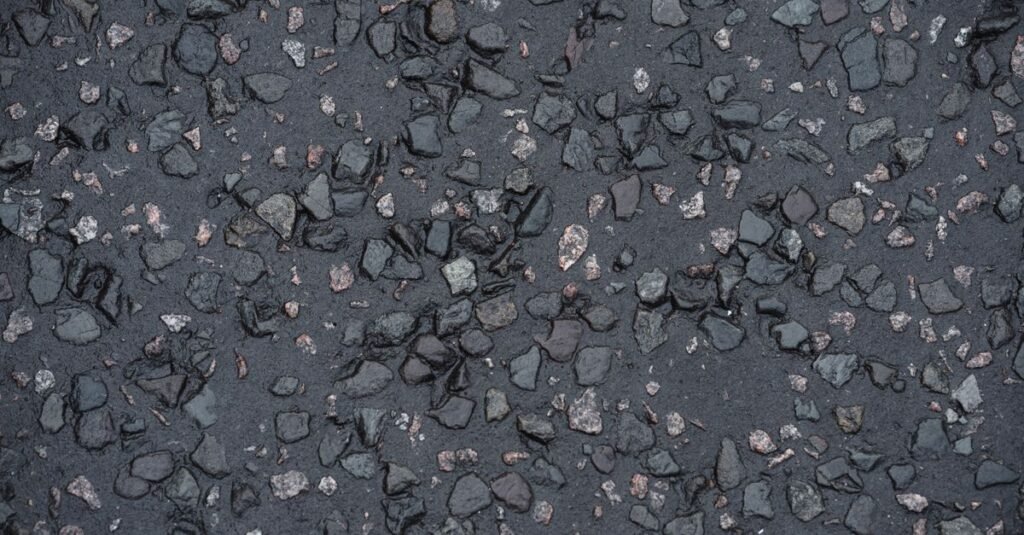
Stand at the kerb and look. Concrete is grey, poured in bays, and has straight tooled joints running across it. Asphalt — tarmac, blacktop, bitmac, depending on where you live — is black, continuous, and slightly tacky underfoot on a hot afternoon. Block paving is made of individual units with sand between them.
If you have asphalt, do one more thing before you buy anything. On a warm day, press a screwdriver tip or a car key firmly into the dark patch. If it stays hard, you have a stain. If it sinks in or crumbles, you do not have a stain at all — you have softened binder, and no cleaning product on earth fixes that. That is a cut-out-and-patch job for a paving contractor.
| Surface | What the oil does | What you must not use | Realistic best outcome |
| Concrete | Wicks into capillary pores, oxidises in place | Muriatic or any strong acid | Fresh: gone. Old: a lighter shadow |
| Asphalt | Dissolves into and softens the bitumen binder | Solvents, acetone, WD-40, strong degreaser | Fresh: mostly gone. Old: a grey patch |
| Block paving | Sits in the block face and the joint sand | Anything that strips the joints out | Near invisible, because you can swap blocks |
The First Twenty Minutes Decide Everything After Them
If the oil is still wet, stop reading and go get the cat litter. Everything else on this page is damage limitation for people who missed this step, and that is most of us.
Pour a generous layer of clay cat litter, dry sand, sawdust or a bagged oil absorbent over the whole wet area — a good inch, spread past the visible edge. Do not wipe it. Do not hose it. Wiping smears a four-inch drip into a two-foot smear, and water pushes oil sideways and downward rather than lifting it out. Grind the absorbent into the surface texture with the sole of your shoe, leave it at least an hour and preferably overnight, then sweep it up. If it comes up dark, do it again.
This one habit is worth more than every product in this article combined. It also works identically on concrete, asphalt and block paving, which nothing else here does.
Then deal with the sweepings properly. Absorbent that is still holding free oil is not ordinary rubbish — the EPA’s guidance on managing and recycling used oil is the place to start, and many councils and auto parts shops take used oil and oily waste at no charge. Bagging it and hoping is not a plan.
Asphalt Drinks the Solvent You Were Reaching For
Here is the part almost nobody tells you, and it is the most useful thing on this page: asphalt is stone held together by bitumen, and bitumen is a petroleum product. Motor oil is a petroleum product. So are diesel, petrol, brake cleaner, mineral spirits, acetone and most of what is inside a can of WD-40. Putting any of them on asphalt does not lift a stain. It thins the glue.
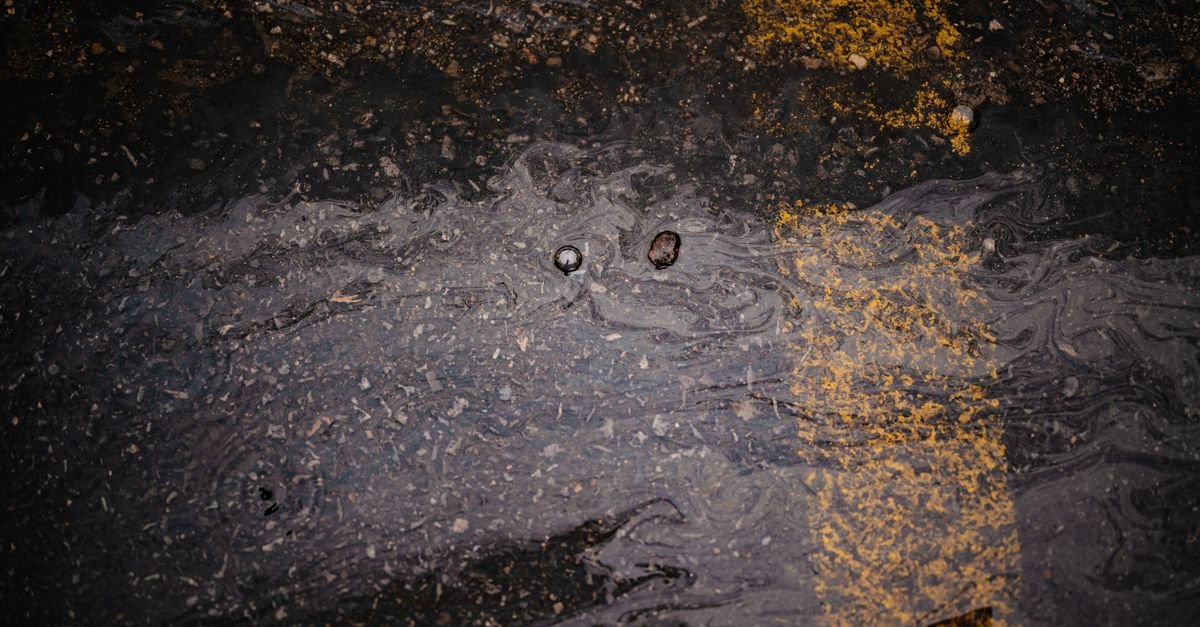
I did not want to take that on trust from paving contractors, all of whom sell repairs, so I went looking for someone with no commercial interest in the answer. What I found was the opposite of a warning, and it made the point better than a warning would have. Road materials researchers deliberately blend waste engine oil into aged asphalt to make it workable again — a molecular dynamics study found that waste engine oil “notably decreased the density, viscosity, and glass transition temperature of aged asphalt binders”, and that it can “effectively increase penetration, reduce the softening point, and decrease the viscosity” of them (waste engine oil in aged asphalt binder). Softening old asphalt is a feature when you are recycling a road. On your driveway it is the entire problem.
So the rule on asphalt is: the mildest thing that works, and nothing stronger. Warm water, a stiff-bristled brush, dish soap or a cleaner that names asphalt on its label, then a rinse. No poultice, no solvent, no heavy-duty concrete degreaser, and no escalating when the first attempt disappoints. Keep the pressure modest too — around 1,000 to 1,500 PSI with a 25 or 40-degree tip, which can you pressure wash an asphalt driveway goes through in detail. Then accept that a cured stain on asphalt usually finishes as a lighter grey patch, because the black you want back is the binder you are trying not to remove.
How Can I Remove Oil Stains From My Driveway Once They Have Cured?
On concrete, a stain older than a week has stopped being a surface problem. Oil has wicked millimetres into the capillary pores, the light fractions have evaporated, and what remains is a tarry residue bonded to pore walls where water simply does not reach. No amount of extra pressure changes that, which is the one opinion I will state flatly: reaching for a bigger machine is the most reliably disappointing hour in driveway cleaning. A 4,000 PSI machine and a 3,000 PSI machine produce the same result on a cured stain, because the limit is reach, not force — and on an untreated stain the bigger number makes things worse by driving oil sideways into clean slab.
The sequence that does work is absorb, degrease, dwell, scrub, then rinse: an alkaline degreaser above pH 11 on pre-wetted concrete, ten to fifteen genuine minutes of dwell without letting it dry, a stiff brush, and only then the washer. Anything older than a month wants a poultice.
I have set that whole method out properly, with a table of what each approach realistically achieves by stain age, in will pressure washing remove oil stains from concrete. If your driveway is concrete, that is the page you want next. All of it applies here, and there is no sense in me typing it twice.
Block Paving Lets You Cheat
Block paving is the one driveway surface where you can win outright, and the reason is that it comes apart.
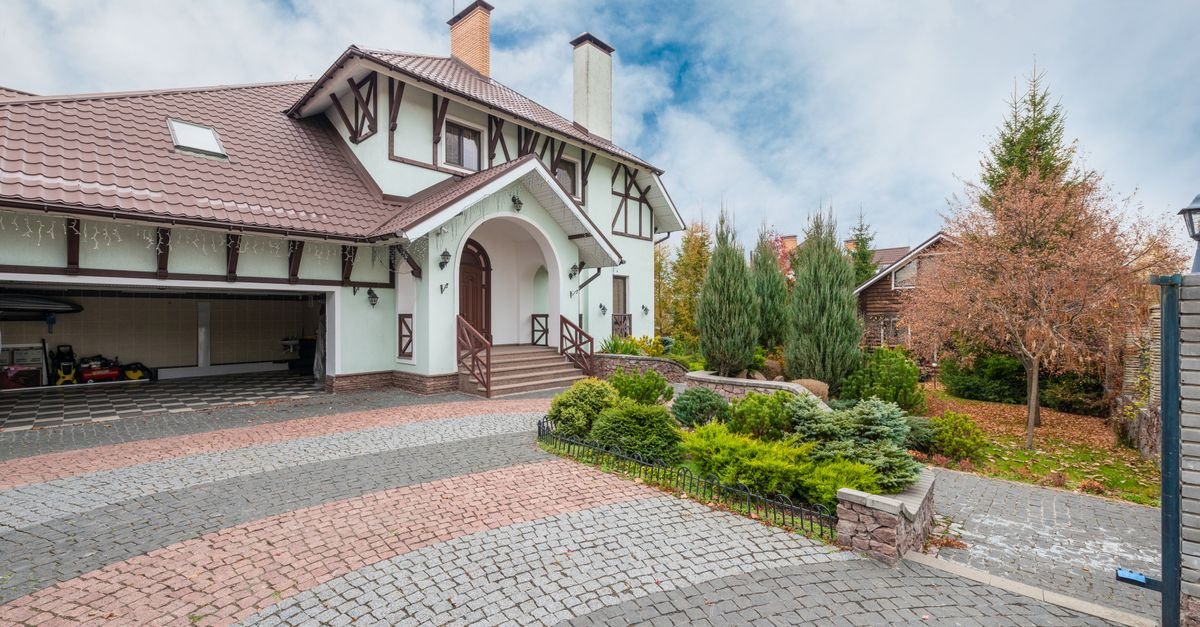
Oil on pavers lives in two places: the face of the block, and the kiln-dried sand in the joints around it. Treat the block face the way you would treat concrete, since most driveway blocks are concrete. Then rake the contaminated joint sand out to about an inch with a screwdriver or a joint rake, and re-sand afterwards — leaving oily sand in place means the stain bleeds back out at the edges within a season and you get to do this twice.
If a block is beyond saving, lift it. Two flat-bladed screwdrivers either side, ease it up, and swap it with a clean one taken from under where the car parks or from a hidden edge by the fence. An hour of quiet swapping makes a stain vanish completely, which is a result no bottle will give you. Keep the washer off the joints while you work; the technique is in how to clean brick patio pavers, and the short version is that a 0-degree tip empties a joint in about a second and refills it with your neighbour’s lawn.
Your Driveway Drains to the Street
This is the real difference between cleaning a driveway and cleaning a garage floor, and it is the part that gets skipped. A garage floor drains somewhere you control. A driveway drains to the kerb, and in most towns the kerb drains to a storm sewer that reaches a creek without passing through treatment of any kind.
That matters more for oil than for most of what you might wash off a slab. The EPA lists “oil, grease and toxic chemicals from motor vehicles” among the pollutants urban runoff carries off paved surfaces into waterways (EPA, urban runoff and low impact development). Emulsified oil is worse in this respect than a puddle of the stuff, because the degreaser has just given it the ability to travel in water.
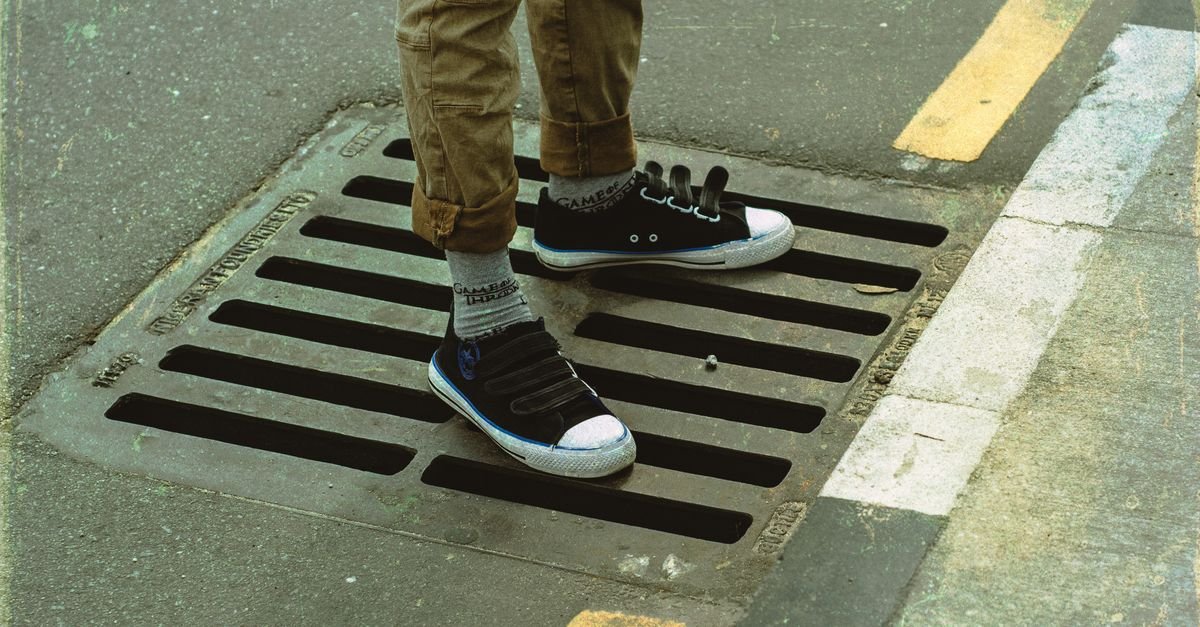
The fix takes two minutes. Before you rinse anything, dam the low end of the treated area — a rolled bath towel, a sock filled with sand, or a length of pipe insulation pressed flat against the surface all work. Wash toward the dam rather than down the slope, then mop or wet-vac what collects and let fresh absorbent finish the job. Your neighbour’s kerb is downhill of yours more often than you would like.
Four Home Remedies That Do Nothing, and One That Half Works
The internet is confident about several products that have never removed an oil stain in their lives.
Cola. The phosphoric acid in it is real but weak, and acid does not touch a hydrocarbon. On concrete it manages to be worse than nothing, because acid attacks the cement paste and leaves a rough, lighter, more porous patch that stains faster next time.
Vinegar. Acetic acid, same problem, same outcome. Vinegar is for mineral deposits and efflorescence. Oil is not a mineral.
Bleach. An oxidiser built for organic growth — mould, algae, the green film on the shaded side. It does close to nothing to petroleum, and it must never meet an acidic cleaner on the same slab.
Baking soda on its own. Mildly alkaline and genuinely useful as an absorbent on a wet spill, which is where the reputation comes from. As a scrub on a dry stain it is a gritty paste with no surfactant, so it moves dirt around and leaves the oil exactly where it was.
Powdered laundry detergent, on the other hand, half works. The alkaline builders in it — carbonates and silicates — do saponify light oil, which is more than the other four can claim. Mix a thick paste with a little hot water, leave it fifteen minutes without letting it dry, and scrub hard. It will visibly lighten a recent stain on concrete or asphalt. It will not reach a cured one, because nothing you mix in a bucket travels four millimetres into a slab.
A word on WD-40, which comes up constantly. On concrete it does dissolve oil, and it is a solvent, so on asphalt you have simply applied thinner to your binder. You also now have WD-40 on the surface and still need a degreaser to lift that off. Two stains, one afternoon.
FAQ
Does WD-40 remove oil stains from a driveway?
On concrete, partly — it is a solvent, so it dissolves the oil it can reach, and you then need dish soap or a degreaser to remove the WD-40 itself afterwards. On asphalt, do not use it. Asphalt’s bitumen binder is a petroleum product and solvents soften it, so you risk trading a dark patch for a soft one.
How do you get oil stains off an asphalt driveway?
Absorb anything still wet with cat litter or sand, then use warm water, dish soap or an asphalt-safe detergent with a stiff brush. Keep pressure at 1,000 to 1,500 PSI with a 25 or 40-degree tip. Avoid solvents, poultices and heavy-duty concrete degreasers entirely. A cured stain usually ends as a lighter grey patch rather than disappearing.
Will cat litter remove an old oil stain?
No. Absorbents only lift oil that is still liquid and still near the surface, so they do almost nothing to a stain that has cured. Their value is entirely preventive — clay litter ground into a fresh spill in the first hour is the difference between no stain and a permanent one.
Can I pressure wash oil off my driveway?
Not on its own, and never first. High-pressure water hitting untreated oil drives it deeper and spreads it sideways, turning a compact spot into a large faint one. The washer belongs at the end of the job, rinsing away oil that a degreaser has already broken into an emulsion.
How long does it take for an oil stain to become permanent?
On unsealed concrete, oil begins wicking into the pores within minutes and is measurably down in the slab within a day. Practically: a spill dealt with in the first hour leaves nothing, one dealt with in the first week comes out almost entirely, and one left a month will leave some shadow whatever you do afterwards.
Can I just seal over an oil stain?
Only once the oil is genuinely gone. Sealers and coatings do not bond to a contaminated surface, so sealing over residual oil buys you a peeling sealer on top of the stain you started with.
Start With the Surface, Not the Stain
Three driveways, three answers. Concrete takes chemistry and patience: absorb, alkaline degreaser, real dwell time, a brush, then the washer as a rinse and nothing more. Asphalt takes the gentlest thing that works, because anything strong enough to shift a cured stain is also strong enough to dissolve the binder holding the driveway together. Block paving takes a screwdriver and a willingness to swap a block, which is frankly cheating, and it is the only route here that ends with the stain actually gone rather than faded.
Whichever you have, the twenty minutes after the drip lands are worth more than everything that follows. Keep a bag of cat litter in the garage. It is the cheapest thing on this page and the only one that ever gives you a perfect result.