Last Updated on September 24, 2026 by Umar Farooq
Cleaning driveway with bleach kills whatever is growing on the concrete and does absolutely nothing to whatever has been driving on it — which is the entire problem, because a driveway usually goes grey from traffic rather than green from algae, and once the surface is wet the two are indistinguishable. Before you mix anything, you need three answers: is it actually organic, how much solution does an area that size need, and where does the bottom of your slope drain to.
A patio is a surface. A driveway is a site with a gradient, a public boundary at one end and a building at the other. Nobody sells a bottle that accounts for any of that, and the instructions on the back of the jug were written by someone imagining a worktop.
Is Your Driveway Growing Something, or Just Dirty?
The cheapest diagnostic on this page costs nothing and takes a minute: go and stand at the top of the drive and look at the *shape* of the dark, not the colour of it.
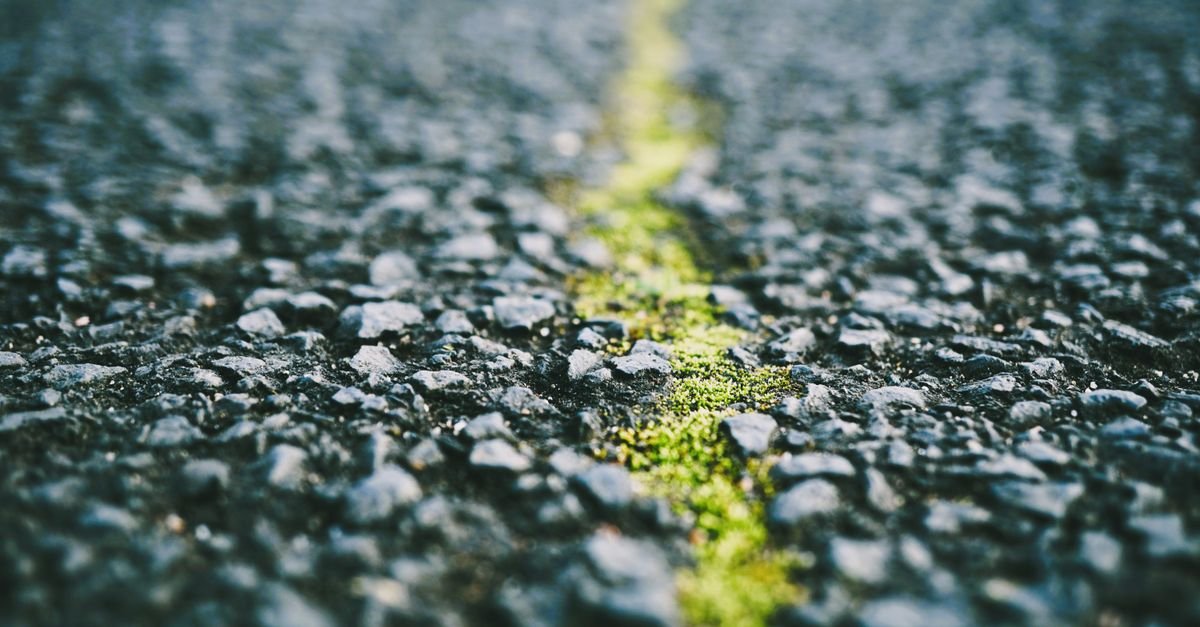
Growth is a map of water and shade. It follows the strip along the fence that never sees midday sun, the low corner where a puddle sits for two days after rain, the line under the gutter overflow, the metre nearest the hedge. It has an edge — you can point at where it stops. If you can draw around it, bleach is the right bottle.
Traffic film is a map of tyres. It sits in two broad parallel bands where the wheels track, it fades out at the sides rather than stopping, and it is darkest in the turning circle by the garage where rubber gets scrubbed sideways into the surface. There is no edge to point at, because it is a gradient. Bleach will not touch it, and you can spend a whole Saturday proving that.
If the two overlap and you genuinely cannot call it, put a capful of neat bleach on a coin-sized patch of the worst area and give it a minute. Organic colour goes pale quickly. Soil, rubber and oil sit there looking at you.
One more check while you are down there: flick water at three or four spots. If it beads, the drive is sealed, and you are about to clean a coating rather than concrete.
Road Dust Is Mostly Mineral, and Bleach Cannot Touch It
Ask the internet what the grey on a driveway is and you will be told tyre rubber, confidently, by about forty pages in a row. I went looking for someone who had actually weighed it.
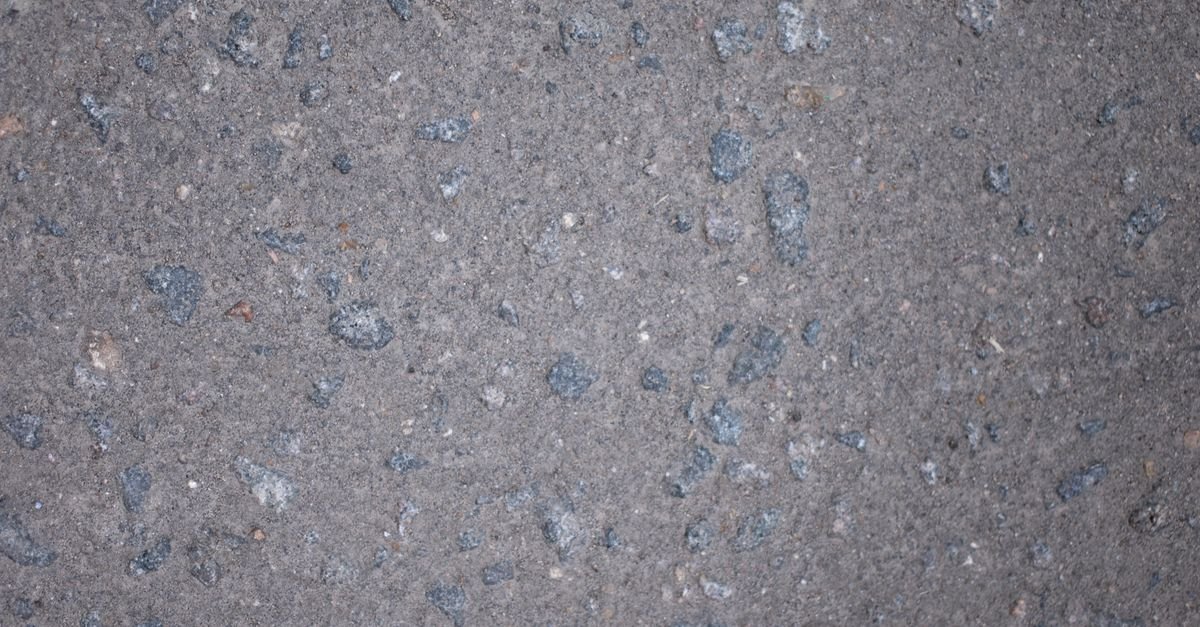
A study separating road dust by density lists what is in it: “Real road dust is composed of various components including TRWPs, asphalt pavement wear particles (APWPs), mineral particles (MPs), glass particles (GPs), glass beads (GBs), plant-related particles (PRPs), road paint wear particles (RPWPs), plastic particles (PPs), and others.” In the size fraction the authors sorted by hand, mineral particles made up 77.2 per cent by weight and tyre-road wear particles made up 0.5 per cent (Classification and Characterization of Tire-Road Wear Particles in Road Dust by Density, PMC8912506). That sampling was done on trafficked roads rather than on domestic drives, so do not take the exact figures to your own concrete. Take the order of magnitude, which is not close.
So the grey is overwhelmingly rock flour, grit and soil, with a dark smear of rubber and soot worked into it. Sodium hypochlorite is an oxidiser. It works by dismantling coloured organic molecules, and there is no coloured organic molecule in a grain of quartz. Chlorine has nothing to react with, so it reacts with nothing.
Here is the position I will defend on this page, and it costs the industry a sale: most driveways that people bleach did not need bleach. They needed a detergent, a stiff brush and a rinse, because what was on them was soil rather than life. The reason bleach gets reached for is that it produces a smell and a fizz of activity and *feels* like chemistry happening, while a bucket of degreaser feels like washing up. If your drive fails the shape test above, put the jug back. The whole sequence of doing it with a machine instead is in the guide on how to pressure wash a driveway, and for the green edges that genuinely are alive, removing moss from a concrete driveway covers the part that has to be scraped rather than dissolved.
Cleaning Driveway With Bleach: The Batch Size Nobody Mentions
Assume the shape test came back organic. The failure that follows is not the ratio. It is the volume.
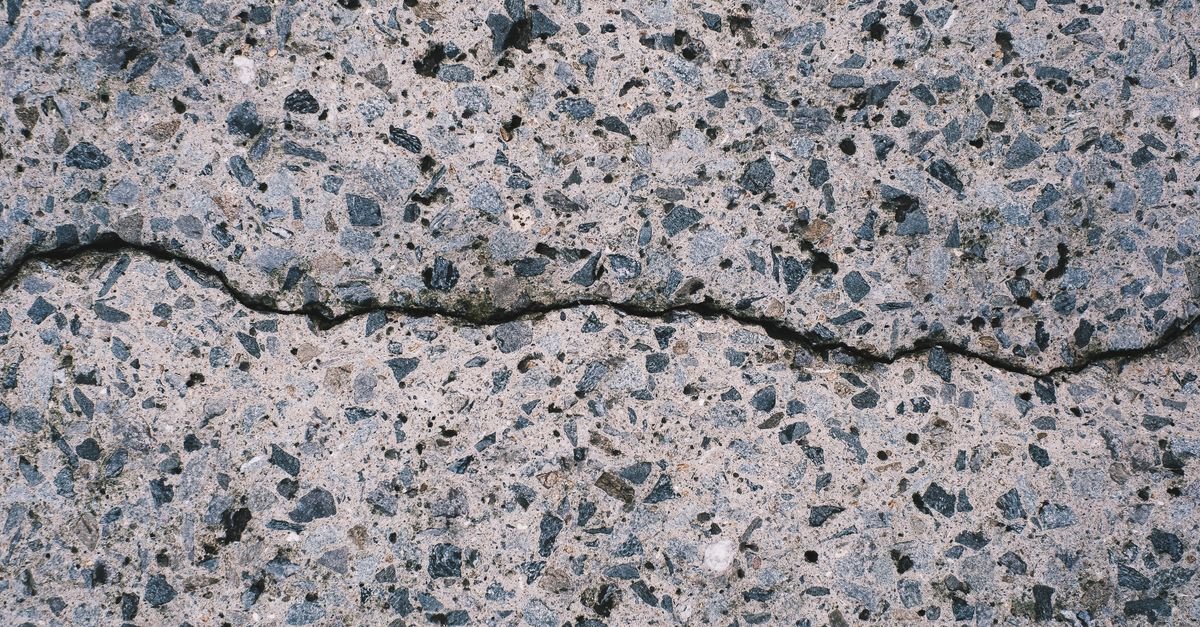
The target on flatwork is roughly 2 to 3 per cent sodium hypochlorite landing on the concrete, which from a standard 6 per cent household jug is one part bleach to one or two parts water, and from 12.5 per cent trade sodium hypochlorite is one part to four or five. Those are surface concentrations, not label concentrations, so check the small print on your jug before you assume — US household bleach has been sold at 5.25, 6, 7.5 and 8.25 per cent over the years and the number moves.
Now the part that catches people. A broom finish is a deliberately corrugated surface — that is what stops a wet drive behaving like an ice rink — and corrugations hold a great deal more liquid than a smooth slab does. Plan on a gallon of mixed solution per 150 to 200 square feet of driveway, applied wet enough to stay wet.
| Driveway | Rough area | Mixed solution | 6% bleach inside it, at 1:2 |
| Single, garage to kerb | ~400 sq ft | 2–2.5 gallons | about 0.8 gallon |
| Double | ~700 sq ft | 4–4.5 gallons | about 1.5 gallons |
| Long or shared | ~1,000 sq ft | 5–6.5 gallons | about 2 gallons |
Look at the right-hand column, then look at the single jug you were planning to use. That gap is why so many drives get treated at roughly the strength of a countertop wipe: people bring one bottle, realise halfway down that it will not cover, and quietly start adding water. A weak mix over the whole area is worse than a correct mix over half of it, because you cannot tell which half failed.
Two practical notes. A drop of dish soap per gallon thickens the solution enough to stop it sheeting straight off a slope, and the full case for surfactants — including what they do to a machine that is not rated for them — is in the guide to sodium hypochlorite for pressure washing. And a two-gallon pump sprayer means three or four refills on a double drive, so mix the whole batch in a bucket first. Mixing four separate sprayer loads by eye gives you four different driveways.
On a Slope, the Mix Gets Weaker as It Travels
A driveway is poured with a fall, because the builder was paid to make water leave it. Everything you spray begins leaving immediately, and that single fact undoes most of what people are taught about dwell time.
On a level patio, solution lands and sits, and the five to ten minutes of dwell is genuinely five to ten minutes of contact at full strength. On a drive, the top of the slope gets that. The bottom gets a moving film that has already been thinned by the rinse of everything above it and partly spent on the organic matter it passed over on the way down. Chlorine is consumed by what it kills, so by the time a mix has travelled thirty feet across a colonised surface, a meaningful fraction of it has already done its work somewhere else.
The visible result is a drive that comes out clearly cleaner at the top than at the bottom. Almost everyone reads that as “not strong enough” and mixes a hotter batch for the second pass. It is not a strength problem. The bottom of the slope never received a dwell at all.
Work in bands across the fall instead, starting at the bottom and moving up, each band no wider than you can spray and re-mist within its own dwell window. A band of already-wet concrete below you is doing no harm; a band of dry concrete below you collects clean streaks that set into the surface and stay visible for months. Keep a second sprayer of plain water in the other hand for the edges as they go matte — on a sunny slab in July the working window is three or four minutes, not ten, and dried hypochlorite has stopped cleaning and started depositing.
Then brush. A stiff deck brush down the grooves changes the result more than any adjustment to the mix, for the straightforward reason that spray droplets arrive at the top of a groove and bristles arrive at the bottom of it.
The Garage Is the Low Corner Where Chlorine Gas Collects
This is the section that matters more than any number above it, and it belongs to driveways specifically because of what is stored at the top of one.
Sodium hypochlorite “releases chlorine gas when it comes in contact with acids.” That is the plain wording of the Agency for Toxic Substances and Disease Registry in its medical management guidelines for chlorine. Not a smell. Not fumes. Chlorine gas, which is heavier than air and therefore pools in the lowest enclosed space available.
On a driveway, the lowest enclosed space available is the garage, and the garage is where the acids live. Almost nobody files them as acids: the rust remover bought for the orange run under where the car drips, the brick acid left over from the patio, the alloy wheel cleaner, the descaler, the masonry cleaner in the unlabelled bottle on the shelf. Every one of those is an acid product sitting in a concrete box with a door that is usually half shut because it is windy.
The two sequences that actually happen:
- You refill the sprayer inside. Hypochlorite mix, an open bottle of wheel cleaner on the bench, a shut door, and a still afternoon.
- You come back for the rust. The drive gets bleached in May. The rust stain by the gatepost gets an acid remover in June. Hypochlorite is still in the pore network of that slab, and the acid goes looking for it at ankle height.
Keep the two apart by days rather than by hours. Rinse the whole drive thoroughly, including the kerb, the apron and any low corner that holds water, and let the concrete dry properly before an acid product comes out of the garage at all. Mix outside, refill outside, and keep the bleach sprayer somewhere the acid bottles are not. Gloves and sealed eye protection every time — splash exposure to hypochlorite is an ophthalmology appointment, and a driveway is the one surface where you are working below the level of your own hands.
Eleven Micrograms Per Litre Is the Number at the Kerb
Every article about driveways says runoff matters. Very few give you a number, so here is the one that made me stop hand-waving about it.
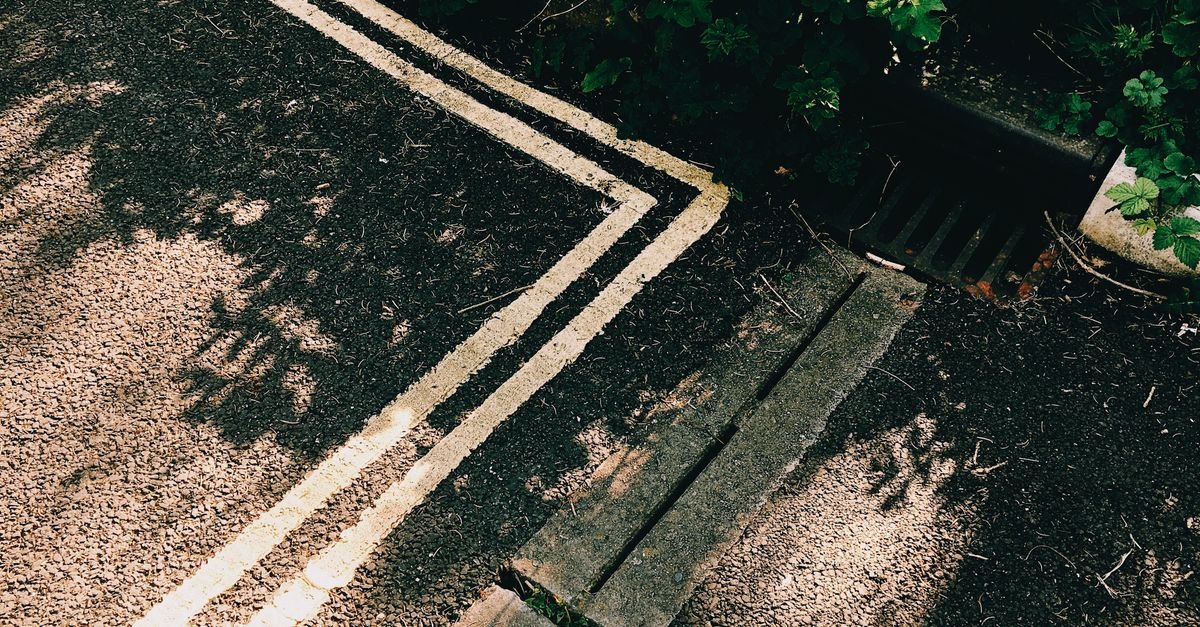
EPA’s national recommended water quality criteria set chlorine’s freshwater limits for aquatic life at a Criterion Maximum Concentration of 19 micrograms per litre and a Criterion Continuous Concentration of 11 micrograms per litre (US EPA, aquatic life criteria table). Micrograms. A driveway mix landing at 2 per cent is 20,000 milligrams per litre, which is about a million times the acute figure.
I am not claiming that a million-fold concentration reaches a creek, and neither should anyone else. It does not. It is diluted by your rinse water, spent on the algae it killed, further spent on everything organic in the gutter, and broken down by sunlight on the way. The useful thing about the number is not the dose — it is the size of the gap, because it tells you how much dilution has to happen before the receiving water stops noticing, and a storm drain does not provide any of it.
Which makes the practical moves obvious, and they are all free:
1. Wash toward soil, not toward the street. Grass and a planting bed are a real buffer — slow, biological, imperfect, and infinitely better than a grate.
2. Dam the kerb end. A length of foam pipe insulation or a rolled towel across the bottom of the slope holds the flow long enough to redirect it.
3. Be generous with water and mean with chlorine. Hypochlorite self-limits: it is consumed by what it oxidises and degraded by UV. A weaker mix followed by a longer hose is a better result at the kerb than the reverse, and it is the better result on the slab too.
4. Pick a dry week. Doing this the evening before a storm flushes the whole lot down untreated while you are asleep, having done none of the work you meant it to do.
Many local authorities treat a deliberate non-stormwater discharge into a storm sewer as an offence in its own right. Rules vary enough that it is worth ten minutes on your own council’s site, but the practical answer is the same everywhere: mix the smallest volume that covers the area, and make sure the last ten feet of the journey is grass.
FAQ
Will bleach damage a concrete driveway?
Bare, unsealed, uncoloured concrete tolerates dilute hypochlorite well — it is an alkaline material and bleach is alkaline, so there is no etching mechanism of the kind an acid brings. What suffers is everything else: sealers haze, coloured and stamped surfaces lighten unevenly, the garage door track and any galvanised fixing corrode, and the border planting dies. Rinse generously and the slab itself will be fine.
How long do you leave bleach on a driveway?
Five to ten minutes of genuinely wet contact, which on a slope means working in bands rather than treating the whole drive as one area. The rule that outranks the number is that it must never dry on the concrete. On a hot slab in direct sun you have three or four minutes before the edges go matte and need re-misting.
How much bleach does a driveway actually take?
Far more than one jug. Budget a gallon of mixed solution per 150 to 200 square feet of broom-finished concrete, which puts a typical double drive at four or more gallons of mix and around a gallon and a half of 6 per cent household bleach inside it. Running out halfway and topping up with water is the most common reason a drive comes out patchy.
Does bleach remove oil stains from a driveway?
No. Hydrocarbons have no coloured organic bond for an oxidiser to break, and oil has usually migrated a few millimetres below the surface where nothing water-based reaches. Oil is an alkaline degreaser and surfactant problem, sometimes a poultice problem, and occasionally a problem you live with.
Will bleach whiten a driveway?
It will lighten a driveway that was dark because something was growing on it, which looks like whitening and is actually removal. It will not brighten grey concrete that is simply old, worn or full of traffic film, and on coloured or stamped concrete a strong mix can lighten the pigment itself — which is whitening, in the sense that nobody wanted.
Will bleach lighten a sealed driveway?
It can, and this is the reason for the water-bead test before you mix. Acrylic and solvent-based sealers can haze, soften or go patchy under a 2 to 3 per cent solution, and the damage shows up as a dull area in exactly the shape you sprayed. On a sealed drive, test a square foot behind the bins and give it a full day to dry before judging it.
Can you run bleach through a pressure washer to clean a driveway?
Only downstream, only diluted, and only if the machine’s injector and seals are rated for it — then flush with clean water afterwards. A pump sprayer for application and the washer purely for rinsing is the simpler arrangement, costs nothing extra, and keeps hypochlorite away from the one component on the machine that is expensive to replace.
Bleach Is for the Green, Not for the Grey
Three checks, in order, before the lid comes off. Does the dark area have an edge you can draw around, or does it fade out under the wheel tracks? Have you mixed enough to cover the whole area at working strength, rather than enough to start it? And where does the bottom ten feet of the slope send everything you are about to apply?
Get those right and the job is unremarkable: bands across the fall, bottom to top, ten wet minutes each, a stiff brush down the grooves, a generous rinse onto grass. Get the first one wrong and you will spend an afternoon killing organisms that were never there, on a stain made of powdered rock, and conclude that bleach does not work on concrete. It works perfectly. It was just answering a question nobody asked it.
And the acid stays on its shelf until the concrete has been rinsed and has dried for days rather than hours. Everything else here costs you an afternoon if you get it wrong. That one costs you a lungful of chlorine, in a closed garage, at knee height.