Last Updated on September 26, 2026 by Umar Farooq
Removing graffiti from masonry is a chemistry job with a low-pressure rinse at the end, and the reason is porosity: on a bare brick, block or stone wall the paint has already soaked below the surface, so there is nothing sitting on top for a jet of water to lift off.
The tag took eleven seconds. That asymmetry is the whole problem, because the aerosol was formulated to flow, and flowing into things is what it did before it dried.
Almost every article on this subject hands you a PSI number and a nozzle colour. The two federal agencies that actually own a great deal of graffiti-covered masonry — the National Park Service and the General Services Administration — publish close to the opposite advice, and their numbers are lower than you are expecting by roughly a factor of five.
Porosity Decides Whether the Paint Sits On the Wall or In It
Spray paint has three parts and only one of them is the colour. The National Park Service sets it out plainly: paints are “composed of pigments that provide color and hiding power; binder that holds the pigments together and to the substrate; and a solvent that allows the pigment/ binder mixture to flow.”
That third component decides your afternoon. “The greater the solvent content of the paint, the greater the flow rate, and thus, the greater the ability of the paint to penetrate into masonry pores” (NPS Preservation Brief 38, *Removing Graffiti from Historic Masonry*). An aerosol is formulated thin enough to atomise, which makes it thin enough to wick, and how far it wicks depends on “the surface tension of the substrate and viscosity of the solvent or vehicle.”
So two walls hit with the same can are two different jobs. The brief contrasts them directly: newly polished granite “is relatively impermeable and paint vehicles tend to stay on the surface rather than penetrate into microscopic pores,” and it “has no pits or crevices that will retain particles of pigment or binder.” Weathered marble or limestone “may be extremely porous and permeable, with a rough surface on which particles of pigment can easily lodge” — and then the sentence that should stop anyone reaching for a wand: “The fragility of such a surface can make it impossible to clean the surface even with a bristle brush without risking severe surface loss.”
Not a pressure washer. A brush.
| Substrate | Where the paint ends up | What that means for you |
| Polished granite, glass, glazed brick or tile, sealed concrete | On top of the surface, in a film | Best case. Solvent or a blade lifts it, usually completely |
| Sound dense fired brick, unweathered | In the top layer of pores on the faces | Poultice work. Faces clean up better than joints |
| Bare concrete, block, cast stone and mortar joints | Wicked in; joints are always the worst of it | Poultice, repeat passes, expect a mark |
| Weathered limestone, sandstone, marble, soft-fired brick | Deep, into a surface that is already failing | Conservator territory. Cleaning removes stone |
| Already-painted masonry | Paint on paint | Often a repaint rather than a removal |
Age matters almost as much as the wall. “For most paints that have been on the surface for several weeks or months, hardening processes are likely to be complete or well-advanced; the solubility of the paint is proportionately reduced and it will be more difficult to remove.” Fresh paint is a solubility problem. Six-month-old paint is a hardened polymer that has also had six months of rain driving the last of its solvent deeper. This is the one variable on the whole page you control by simply being quick.
Removing Graffiti Is Chemistry First and Rinse Second
Here is the opinion I will defend hardest on this page, and it is not a preference — it is what the published pressure limits force. The pressure washer is the rinse stage of removing graffiti, never the removal stage.
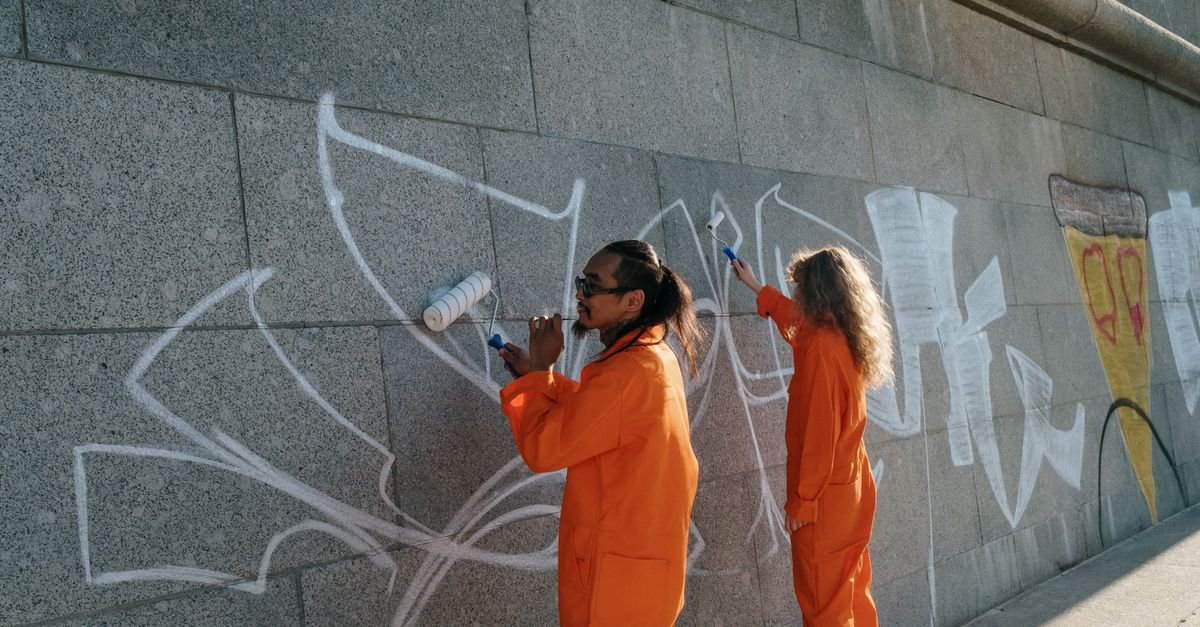
Three separate federal documents put a number on this, and they agree with each other to within a hundred PSI.
The Park Service’s own preservation training centre says: “Always use a low-pressure spray (100-400 psi) that is controlled through a hose and delivery wand, keeping the wand at least 12″ from the surface,” and adds that “some historic materials, such as soft wood or masonry, can easily be damaged even at low pressures” (NCPTT, *Graffiti Removal from Historic Features*, November 2020).
Brief 38 uses the identical bracket, framed as a warning rather than a target: “Some historic masonry materials can be easily damaged by pressure washing even at low or moderate pressures (100-400 psi).”
And the GSA’s technical procedure for the buildings it manages splits the figure by hardness: “Rates of water pressure shall be no greater than 400 psi at 3-6 gpm with minimal saturation for hard masonry or concrete and no higher than 100 psi for soft masonry” (GSA, *Removing Graffiti from Historic Masonry*). Note what else is in that sentence. Three to six gallons a minute at four hundred PSI is a lot of water moving gently — flow to carry the dissolved paint away, not pressure to break it loose. That is the correct shape for the job.
One document says the quiet part out loud, and it is about your machine specifically. NCPTT: “Most power-washing equipment found in hardware stores operate at potentially damaging pressures of 1600-3200 psi.” Your machine’s *lowest* useful output is around four times the ceiling, and most consumer units have no dial for it — you manage it with a 40-degree tip, standoff distance and the soap nozzle, which is a blunt instrument for hitting a hundred PSI.
The gap from normal practice is the striking part. Concrete flatwork is routinely cleaned at 2,500 to 3,000 PSI and a graffitied wall is frequently the same material — but a driveway is a wear surface you may abrade slightly, and a facade is one where a lighter patch is itself the failure. Brick adds its own limit, because the mortar goes long before the brick does; the scratch test and the pressure bands behind that belong to can you pressure wash brick and apply here unchanged.
Why a Poultice Pulls Where a Spray Bottle Pushes
If the pigment has gone into the wall, the tool has to bring it back out. A spray bottle cannot do that. It pushes solvent further in, dissolves the paint deeper down, and lets gravity redistribute the result.
A poultice is the answer and it is embarrassingly low-tech: an absorbent powder — kaolin or sepiolite clay, fuller’s earth, shredded paper, cellulose fluff — mixed with a cleaning solution into a paste, troweled on, and covered with plastic sheeting to slow evaporation. Brief 38 describes its purpose as twofold: “it enables a cleaning solution to be kept in contact with the stained area as long as possible, while allowing the cleaning solution to pull the staining material out of the substrate via the poultice without redepositing it in, or restaining, the masonry.”
Two mechanisms in one wet flannel. Dwell, because a solvent that flashes off in four minutes has done four minutes of work. And direction — as the paste dries it moves liquid outward, so the dissolved pigment travels into the clay rather than sideways into clean brick.
Which is why the brief is blunt about the convenient version: “‘Off-the-shelf’ aerosol graffiti removers generally should not be used because the dissolved paint being removed may run down the wall ‘staining’ a previously clean area; or pigments may also be redistributed by the rinsing and scrubbing recommended by the product manufacturer.” An aerosol remover does not remove paint. It liquefies it and hands it to gravity, and gravity has never once put it somewhere useful.
Four specifics worth having before you start:
- Remove the thick stuff mechanically first. NCPTT advises taking off excess or dimensional paint with a physical method before any solvent, “to minimize the amount of paint that can dissolve and soak into the pores of the material during subsequent removal efforts.” Every drip you scrape off dry is pigment that never gets a chance to wick in.
- Test a patch of six inches by six inches or less, somewhere nobody looks, before committing to a method.
- Solvents go on in poultice or gel form, never neat, specifically “to prevent them from penetrating into the substrate, and permanently discoloring or staining the masonry.”
- Apply it thick and keep it wet. GSA specifies a minimum of 10 mils, applied by soft natural brush, roller or low-pressure spray, and says plainly: do not allow the chemical to dry on the substrate. Dwell time “will increase as temperatures decrease,” which is why a March job outlasts its label. Metal brushes and metal tools are prohibited outright.
- Work small. Coloured paints “may embed themselves in the surface and cause ghosting,” and a small area is one you can still rinse before it dries.
Acid is the family to leave in the shed. Brief 38 notes that “in many instances, acidic cleaning compounds are not effective for graffiti removal and generally should not be used for this purpose” — a cured binder has nothing in it for an acid to attack, so all the acid reaches is the calcium in the stone or the mortar. Acid has genuine jobs on masonry, and this is not one.
Alkaline strippers work, and they come with a tail: a weak acid wash and a water rinse to neutralise afterwards. The strongest ones are a hazard in their own right. Sodium hydroxide removers at pH 13–14 “can cause efflorescence and staining on masonry surfaces, if not properly neutralized,” and potassium hydroxide types can react with iron compounds — Indiana limestone is named specifically — “to form dark brown (rust-colored), or black ferric hydroxide stains, which are very difficult to remove.” Trading a blue tag for a permanent rust-coloured one is a poor deal, and a documented one.
Bleach has one narrow, real role. Calcium hypochlorite in a poultice “can sometimes be used very successfully… to bleach or decolorize certain dyes contained in some paints and inks that cannot readily be removed by other means.” It decolourises a dye; it does not lift a pigment. What hypochlorite does and does not touch on brick is set out in soft washing brick, and graffiti sits in its “untouched” column.
Rinse Bottom to Top, Which Is Backwards From Everything Else Here
Every other cleaning job on this site rinses from the top down. Graffiti removal does not, and both federal documents say so independently.
Brief 38: “Always rinse the cleaning agent off the masonry surface starting at the bottom and moving up. This prevents the cleaning agent from running down and staining a lower surface.” NCPTT gives the same instruction for alkaline removers — wet the surface first, then rinse “starting from the bottom up,” then neutralise.
The logic is that you are not rinsing dirt, you are rinsing a solution carrying dissolved pigment. Start at the top and that solution runs down across masonry that is dry, thirsty and clean, getting one last chance to soak in on the way past. Start at the bottom and everything below the working line is already saturated with clean water, so there is nowhere for the pigment to go except down the wall and away.
Pre-wetting works for the same reason. The brief advises wetting the masonry around a graffitied area “to dilute the effect of any cleaning agents that might be inadvertently splashed or spilled on the unsoiled surface” — with the exception that you do not wet the area itself if the cleaner is solvent-based or incompatible with water.
Then check your work with something other than your eyes. After removal, “the masonry surface should always be tested with pH strips to make sure all the cleaning materials have been completely removed.” A few dollars of non-staining strips is the only way to know whether an alkaline residue is still in the pores, waiting to bloom as efflorescence in a fortnight.
The Ghost That Outlasts the Paint
This is the part the SERP will not tell you, so here it is plainly: removing graffiti from porous masonry very often leaves a visible mark, and no amount of technique reliably prevents it.
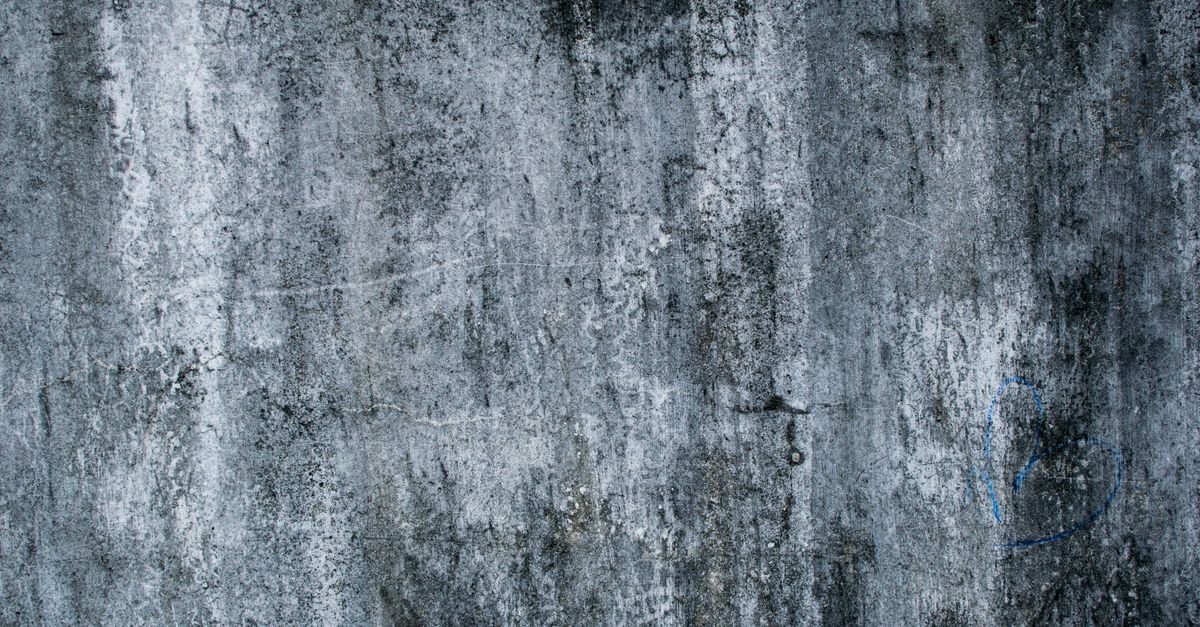
The trade calls it a ghost, and the mechanism is the three-part paint coming apart. Pigment and binder do not have to leave together. “Even the total removal of the pigment or the binder may leave residues of the other component actually in, or below, the surface of the stone. Residual stains, or graffiti ‘ghosts,’ such as those from any kind of red paint or the fine black pigments used in spray paints, may be particularly difficult to remove.” Red and fine black are named because those particles are small enough to lodge in pores nothing will reach.
NCPTT puts it in one sentence: once graffiti is removed from a porous material, “‘ghosting’ of the graffiti can often be seen beneath the surface.” Beneath. Not on.
A poultice will sometimes pull a ghost out and sometimes move it somewhere worse. On very porous stone such as marble, “although a poultice may remove a stain from one side of the stone, stains can pass completely through the stone and be redeposited on the other side of the masonry slab.” A tag on a thin marble panel can reappear on the other face, which is the most alarming sentence in either document.
There is also a ghost that runs the other way, and Historic Environment Scotland’s INFORM guide on graffiti removal names the mechanism: removal “may also remove the patina of surface grime and pollution products on the rest of the stone surface. This can result in a patchy appearance.” A remover strong enough to pull pigment out of pores takes decades of surface soiling with it, so the cleaned patch can end up *lighter* than the wall around it — a pale rectangle roughly the size of the tag, and nothing fixes that except cleaning the whole elevation.
So the honest choice on a porous wall is often not between a clean wall and a marked one. It is between a shadow and a resurfaced wall, and the Park Service comes down on the side of the shadow: “If it is not possible to completely remove all traces of graffiti without removing some of the masonry surface, it may be preferable to leave the masonry alone. Some graffiti ghosts become less noticeable with time due to fading of the dyes used in paints and markers. Sometimes it may be possible to conceal more obvious graffiti ghosts with carefully-matched paint.”
Fading is not a fast result. It is a result that does not cost you the wall, and matched paint is a finish rather than an admission of defeat.
Sandblasting Carves the Tag In Permanently
Abrasive blasting is what most people reach for when the chemistry disappoints them on the second pass. It is also the one method the conservation literature rules out flatly, and the reason is worth understanding rather than just accepting.
Brief 38 groups the whole family together — “dry or wet blasting, using abrasive grits, such as sand, dolomite powder, aluminum oxide, ground-walnut shells, sodium bicarbonate (baking soda), and others; high-pressure water washing; and mechanical sanding or grinding” — and then: “All of these abrasive methods will cause damage to masonry and, in most instances, should never be considered as a method of removing graffiti from historic masonry.”
Read the list again. High-pressure water washing is in it. The Park Service does not classify a pressure washer as a cleaning tool on this job at all; it classifies it as an abrasive, alongside sand and aluminium oxide. That reclassification explains the 100-400 PSI ceiling better than the ceiling explains itself.
The failure mode is specific and permanent: “Abrasive methods used mistakenly by untrained workers to remove graffiti usually result in etching the outline of the graffiti permanently into the masonry.” The mechanism is unavoidable. Blasting removes substrate in order to remove pigment, and the substrate under the paint is shielded by the paint while the substrate beside it is not. Cut until the last of the pigment is gone and you have cut a shallow relief of the tag, in its own handwriting, in negative. A published NPS example shows exactly that on limestone, where the etched outline could not be hidden even by a pigmented coating applied over it later. Same missing-material problem as what sets a stain permanently on concrete, except here you did it deliberately and in a pattern.
Two narrow exceptions exist and both are professional work: micro-abrasion “at low pressures of 35-40 psi with fine abrasives,” slowly and tested first, by a conservator; and a sharp razor blade, but only on polished granite, “which is very hard and generally impervious to scratches.” Thirty-five PSI is less than a garden tap. It is not a setting your machine has.
NCPTT adds one unqualified line — “Power tools, such as grinders, should never be used” — and one caution about the method every trade article calls the modern answer. Laser cleaning does work, but it “can roughen the surface and has been known to cause staining or darkening of some stone surfaces,” and needs a certified operator.
Soda blasting is the softest member of the family and the brief still lists it with the rest. Sodium bicarbonate is softer than aggregate, which earns it a real place on horizontal concrete — and a slab is a different risk calculation from a facade throughout. Paint on flatwork has its own page: cleaning paint off concrete covers the coating families, the strippers and the mechanical ladder.
Do Barrier Coatings Actually Work?
There is an industry attached to this topic and it sells the coating rather than the cleaning, so it is worth quoting what the Park Service says about anti-graffiti and barrier coatings: “for the most part, these coatings are not the panacea that some advertising might suggest. Some of them simply do not work, and others may cause physical or aesthetic changes or damage to the masonry.”
That is not a no. It is a warning that the category is broad and the failure modes are real. The mechanism, where it works, is simple: a transparent coating sits between the masonry and the paint so the paint never reaches the pores, and “graffiti applied over transparent barrier coatings can be removed with low-pressure water and a detergent, or with a solvent.” You have converted a porous wall into a non-porous one — this article’s whole argument, running in reverse.
Three types exist, and the difference decides the maintenance you are signing up for:
| Type | What happens when graffiti is removed | The commitment |
| Temporary or “sacrificial” | The coating comes off with the paint | Reapply after every single cleaning |
| Permanent transparent | Coating survives the solvent or water | Still needs reapplying after several cleanings |
| Two-part (acrylic sealer plus wax topcoat) | Wax layer leaves with the paint, sealer stays | Reapply the wax each time; eventually the sealer too |
None of the three rows says “apply once.” Every one is a recurring job, so the question worth asking before buying any of it is whether the wall gets tagged often enough to justify a maintenance schedule. On a wall hit once in nine years, it is not.
There is also a masonry-physics caution under the aesthetic one. Anything that reduces a wall’s permeability changes how it dries. The brief notes that water-based coatings are less durable than solvent-borne ones but are vapour permeable — breathable — and can be reapplied while the surface is still damp. On solid masonry that is not a spec-sheet nicety; it is the difference between a coating and a moisture trap.
FAQ
Will a pressure washer remove graffiti from brick?
Not on its own, and not safely. The paint is in the pores rather than on them, and the pressure needed to reach it is well past where you start removing brick and mortar. The National Park Service lists high-pressure water washing among abrasive methods that “should never be considered” for graffiti on historic masonry. The washer’s job is the low-pressure rinse after a chemical remover has done the work.
What PSI is safe for removing graffiti from masonry?
GSA specifies no more than 400 PSI at 3-6 GPM for hard masonry or concrete, and no more than 100 PSI for soft masonry. NCPTT gives 100-400 PSI with the wand at least 12 inches out. For context, it also notes that hardware-store machines run 1,600-3,200 PSI — so on a consumer unit the practical answer is the widest tip you own, maximum distance, and the soap nozzle where the job allows it.
Why is there still a shadow after the graffiti is gone?
Because pigment and binder can leave separately, and residue of either can stay in or below the surface. Fine black pigments and red paints are the worst offenders. NCPTT describes ghosting as visible “beneath the surface” of porous material — not a film you failed to scrub, but colour sitting in pores your cleaner never reached.
Does sandblasting remove graffiti from concrete or stone?
It removes the pigment by removing the material underneath, which is why the outline usually ends up etched in permanently: the substrate shielded by the paint and the substrate beside it do not erode at the same rate. Micro-abrasion at 35-40 PSI with fine abrasives is a recognised professional technique. A rented sandblaster on a facade is not the same thing.
How soon should graffiti be removed?
As soon as you reasonably can. Solubility falls as the paint cures, and after several weeks to months “hardening processes are likely to be complete or well-advanced.” Rapid removal is also the standard municipal recommendation for discouraging repeat tagging, which is a separate argument pointing the same way.
Should I just paint over it instead?
Often, yes, and it is not a failure. Where full removal means taking masonry with it, the Park Service says it “may be preferable to leave the masonry alone,” and concealing a ghost with carefully matched paint is a legitimate outcome. On already-painted masonry, repainting is usually the cheapest correct answer — check the existing coating is sound, and use a stain-blocking primer, because markers and some spray paints bleed through a topcoat.
The Lowest Pressure That Rinses, and Nothing Above It
The whole page reduces to one decision, made before anything gets wet: is the paint on this wall, or in it. Sealed, glazed or polished, it is on, and a solvent will take it off cleanly. Bare brick, block, mortar or weathered stone and it is in, at which point the sequence is scrape the thick bits dry, poultice with dwell under plastic, rinse bottom to top at the lowest pressure that actually moves the residue, and check the surface with a pH strip.
Turning the pressure up on the second pass is the one move here that cannot be undone, because an etched outline is not a stain — it is missing wall, in the shape of the tag. So when the chemistry has done everything it is going to do and a shadow is still there, the honest answer is matched paint, or nothing at all.