Last Updated on September 26, 2026 by Umar Farooq
A generator for electric pressure washer duty has to be sized against the machine’s starting surge rather than its running watts, and the surge is around six times the running current — not the three times that gets repeated everywhere. That gap matters, because three is the figure people use to work out how much generator they need, and it lands in roughly the right place by accident.
The number itself is easy to find. Kohler Power Systems, which sells generators to the people who specify standby power for buildings, puts it plainly: “Starting current is typically six times a motor’s rated full-load current, and this inrush current stays high until the motor reaches about 75 percent of rated speed” (Kohler, Sizing Generators for Motor Starting). Read the second half of that sentence twice. The surge is not a spike. It lasts as long as the acceleration lasts, and the acceleration is the thing that can fail.
So the rule of thumb that circulates — buy a generator about three times your machine’s wattage — is a reasonable answer arrived at by the wrong route. Knowing the real route is what tells you when it stops working.
Inrush Is Not a Spike, It Is the Whole Acceleration
An induction motor at standstill produces no back-EMF to oppose the supply, so the current it draws is set by winding impedance rather than by the work it is doing. That is why the surge exists at all. What the consumer material gets wrong is how long it lasts.
Spartan Manufacturing, which builds pressure washers, describes it as under a second: “All electric motors on all types of equipment pull a very high level of amperage for less than one second on start up” (Spartan, using a pressure washer with a portable generator). Kohler describes it as lasting until the motor reaches roughly three-quarters of rated speed. Those are not in conflict — they are the same event measured against different clocks. A motor that accelerates *cleanly* gets to 75 percent of speed inside a second, and the surge is over before you have finished letting go of the switch.
Which puts all the weight on that one word. If the motor does not accelerate, it does not reach 75 percent of speed, the surge does not end, and it just sits there. That is the failure this whole page is about, and it is why the duration matters more than the multiple does.
On house power the size of the surge is largely academic. Kohler again: “When a motor is started on normal utility power, the high inrush current will cause only a small voltage dip because the utility is a more robust voltage source. However, when a motor is started on generator power, the high inrush currents … can result in a large voltage dip that can inhibit the motor from reaching its operating speed.” The grid does not notice your pressure washer. A 2,000-watt generator notices it enormously — Spartan puts the proportion at up to 100 percent of generator capacity, which is a polite way of saying the start is the entire machine.
One more thing from Kohler’s paper that nobody mentions, and it runs the wrong way from what you would hope. The comforting six-times figure is a *large* motor figure. Kohler reproduces the NEMA locked-rotor code letter table and notes that “small motors have a higher NEMA code letter and correspondingly higher LRKVA/hp requirement than large motors.” In its own worked table, motors of 15 horsepower and up sit at code G, around 5.6 to 6.3 kVA per horsepower. Motors of one to two horsepower sit at code L or M — nine to eleven. A pressure washer motor lives in the bottom bracket, which is the worst one. Code letters are a motor-nameplate classification and Kohler’s table does not break out single-phase machines, so take it as direction rather than as a figure: small motors are harder to start than the rule of thumb suggests, not easier.
If your machine is opening the breaker in the house panel rather than stalling a generator, that is a different chain of causes with three different culprits, worked through in pressure washer tripping breaker.
Generator for Electric Pressure Washer: The Two Numbers on the Carton
Every portable generator publishes two wattage figures. One of them is tested to a standard. The other is the one you need.
I read ANSI/PGMA G300, the American national standard for portable generators, to find out what the two numbers actually mean. The Portable Generator Manufacturers’ Association publishes it free, which is more than most standards bodies manage.
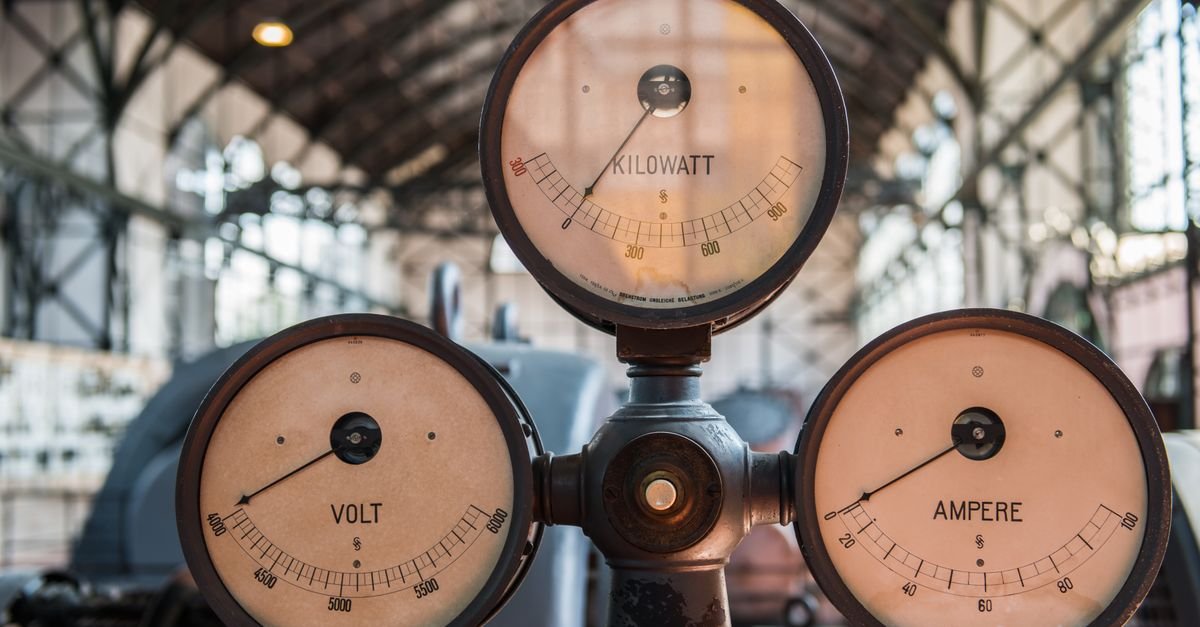
The rated or running figure is defined there as “the output power rating of a portable generator as defined by the manufacturer,” and confirmed by a test with a specific shape. The unit is loaded, warmed until its oil temperature stops moving, and the corrected wattage at that point “shall be a minimum of 90% of Nameplate Rated Wattage.” The load is specified too: a “load bank which applies a purely resistive load” (ANSI/PGMA G300-2018.pdf)).
A box of resistors. It sits there warming up and never once asks for anything suddenly. So the rated figure is a thermal endurance rating, measured against a load with no inrush and no reactive component. It describes how long the generator can keep going, not what it can survive.
Now the interesting part. The standard lists what must appear on the rating plate: manufacturer’s name, nominal frequency, power factor, rated wattage, voltage and amperes, number of phases, rated speed, rated ambient temperature, rated temperature rise. It has requirements about insulation class. It has nothing at all to say about starting watts, surge watts or maximum watts. The larger number printed on the carton — the one that decides whether your pressure washer starts — sits outside what the standard tests and outside what it requires on the plate.
Which brings back the three-times rule and the honest reason it works. Starting current is not drawn at unity power factor — Kohler gives the range as 0.3 to 0.5, increasing towards unity as the motor accelerates — and a poor power factor is, for once, good news: “With a 0.4 power-factor load, a typical generator is capable of producing nearly twice its continuous-rated kVA for the time required to accelerate a motor.” The engine is never asked for six times the horsepower, because low power-factor current does not demand proportional shaft power.
So here is the opinion, and it is the useful half of this page: the three-times rule is right, and every explanation of it I found is wrong. It is not that inrush is three times running. Inrush is six times or worse. The rule works because a generator can briefly supply roughly twice its rated kVA into a low power-factor load, and because a motor will tolerate a real voltage dip while it accelerates. Those are the two mechanisms holding the rule up, and both of them have limits — which is exactly why knowing them beats knowing the rule.
A Positive Displacement Pump Does Not Wait for the Volts
Here is the sentence that made me want to write this page. It sits in a Kohler document aimed at people specifying standby generators for hospitals, and it describes a pressure washer without meaning to.
Kohler first explains why most motor starts on a generator are fine: “If the motor starts unloaded — as most fans, centrifugal pumps, and motors used with elevators do — this torque reduction produces no problem other than a somewhat longer acceleration time.” A fan does not resist much until it is spinning, and a centrifugal pump barely loads its motor at zero flow. These things forgive a sagging supply by taking a little longer.
Then the exception: “Other types of loads, such as positive displacement pumps, may require more torque than the motor can develop at reduced voltage, which prevents the motor from reaching full speed.”
A pressure washer pump is a positive displacement pump. Axial cam, triplex plunger, wobble plate — whichever layout yours uses, it moves a fixed volume of water per revolution and has to push that volume against whatever the nozzle allows, from the very first revolution. There is no gentle build-up. The load is there before the motor is.
So the pressure washer sits in Kohler’s named bad category rather than the forgiving one, and the rest follows from the arithmetic. “Starting kVA is reduced as the square of the voltage dip. A 30 percent voltage dip reduces starting kVA by about 50 percent.” Torque tracks it: “a 30 percent voltage dip that reduces kVA to 49 percent also reduces torque to 49 percent of its rating.” That squared relationship has already been worked through on this site for what a thin extension cord costs a motor, and it behaves identically when the missing volts come from a labouring generator instead of a cable.
Then the loop closes on itself. The generator sags because of the surge, the sag halves the motor’s torque, the pump still wants full torque from the first revolution, so the motor never reaches 75 percent of speed, so the surge never ends, so the sag never recovers. Kohler names the consequences — “tripping of breakers or overheating of the motor” — and sets the working ceiling for a generator supplying motor loads: “never exceed a 35 percent instantaneous voltage dip.”
From where you are standing this looks like a machine that buzzes, strains, and either trips the generator’s own breaker or just sits there making a noise. The version where the motor hums and never turns at all has its own shortlist, and undervoltage is only one item on it — pressure washer motor hums but won’t start works through the rest in order.
Brushed or Brushless Changes What Failure Looks Like
There are two motor types on the electric pressure washer shelf and they fail differently on a marginal generator. Almost nothing written about generator sizing mentions this, and the reason is probably that the motor type is not on the nameplate.
An induction motor is the one everything above describes. No brushes, heavier, quieter, and it has a synchronous speed it must climb toward. That last property is the dangerous one: if the torque is not there, the motor never gets near synchronous speed and sits at locked-rotor current indefinitely. It is not slowly failing. It is parked at the worst point on its own current curve, turning the whole supply into heat in the windings.
A universal motor — brushed, with its field winding in series with the armature — has no synchronous speed to miss. Its speed is whatever balances the load torque, and torque in a series motor rises with the square of the current rather than being tied to a slip figure. Starve it of voltage and it slows down. It does not stand still drawing locked-rotor current waiting for permission, because there is no speed it is trying and failing to reach.
Which points somewhere most people would not guess: the machine with the cheaper motor is the one more likely to limp along on an undersized generator, and the machine with the better motor is the one more likely to refuse outright.
Two honest limits on that. A universal motor’s startup current is still limited only by winding resistance at standstill, so it is not small — just shorter, because these motors are low-inertia and spin up fast. And more importantly, I could not find a single pressure washer manufacturer publishing a starting-current figure, or a minimum generator size, broken down by motor type. The mechanism is textbook. The machine-specific number is nowhere, so I am not going to hand you a multiplier for each type that I cannot stand behind.
What you can establish is which one you have, and the tell is the marketing rather than the plate. Induction motors cost more to build, so manufacturers say so on the specification sheet, loudly, because it justifies the price. If the sheet names an induction motor, it is one. If the sheet does not mention the motor at all, it is almost certainly a universal motor — nobody has ever advertised a cheaper part by keeping quiet about the expensive one.
Whether the Output Is Tied to the Engine Speed
This is the real difference between an inverter generator and a conventional one, and it has nothing to do with clean power for laptops. The standard gives the distinction away in a conditional clause. Among the end-of-line production tests, ANSI/PGMA G300 says “a portable generator which relies on engine speed for control of output frequency shall be tested to confirm its frequency setting.” *Which relies on.* The qualifier tells you the other kind exists: one where output frequency comes from an engine, and one where it does not.
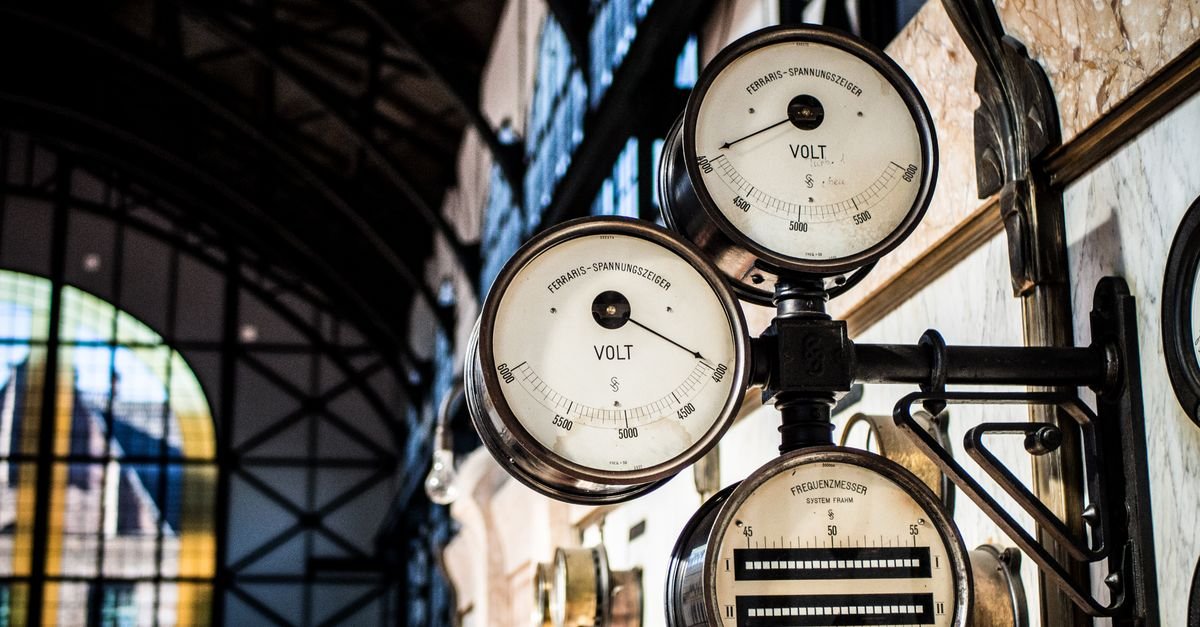
For the engine-driven kind, the same standard shows how frankly the droop is designed in. From the output power test procedure: “For a mechanical governor system, the no-load frequency should be adjusted to be between 62.5 and 63 Hertz.” A conventional generator is deliberately set fast with nothing plugged in, so that it sags down into the 60 Hz region as load arrives. That is not a defect. That is the control strategy, and it depends on the load arriving at a pace the governor can follow.
The permitted band is wider than most people assume. G300 requires that “the voltage shall be within 10% of the nameplate rated voltage and the frequency shall be within 5% of the nameplate rated frequency for all loads from no-load to maximum wattage.” A fully compliant generator can be sitting at 108 volts and 57 hertz under load and be exactly within specification. Your motor was designed around 120 volts at 60 hertz, and it experiences that 10 percent as a squared torque loss.
Then the two sags compound, which is the part that decides it. Kohler: “When the engine slows under load — frequency dips, this in turn, increases the alternator voltage dip.” The engine bogs, the frequency drops, and the voltage drops further because of it. The regulator is chasing all of this from behind — Kohler’s testing found that “voltage regulators and exciters affect voltage dip and recovery,” and that on dips of 35 percent or less a faster-responding excitation system “will start the motor faster.”
An inverter generator breaks that chain at the first link. Its output frequency is synthesised rather than geared to the crankshaft, so the engine is free to lag behind a sudden load without dragging the frequency down with it, and the voltage dip stops getting the extra help the frequency dip was giving it.
That is the mechanism, not a brand preference, and it is also not a free pass. An inverter’s maximum-watt figure is still a maximum-watt figure, and clean power is not extra power — a unit with too little surge capacity just refuses the start in a tidier way.
Working Out the Number for Your Own Machine
Electric pressure washers publish amps. Generators publish watts, in two flavours, one of which the standard does not govern. Reconciling those is most of the work.
| What you are comparing | Where the number comes from | What has to be true |
| Machine running load | Amps on the machine’s data plate, times supply voltage | Below the generator’s rated or running watts, with room left over |
| Machine starting load | The maker’s published surge or starting figure, if it gives one | Below the generator’s starting, surge or maximum watts |
| Generator rated watts | Tested per G300 against a resistive load bank, warmed through | Treat it as a continuous ceiling, not a target |
| Generator starting watts | Declared by the manufacturer, outside the standard’s rating plate | This is the number the start is decided by |
| Everything else plugged in | Add it up honestly, including the radio | Preload makes the dip worse, so ideally nothing |
That last row is a real effect with a published size. Kohler measured it: “a 50 percent preloaded generator may dip an additional 2 percent compared to the published figure.” Two percent does not sound like much until you remember it gets squared on the way to torque, and that it stacks on top of a dip you were already close to the limit of.
Two practical notes that come from the sources rather than from me.
- Use the maker’s own surge figure if it publishes one, and do not derive it. The ratio between running and starting watts is not constant across machines, which is why a fixed multiplier is a guess rather than a calculation.
- The cord between generator and machine is part of the supply, and Spartan specifies it separately from household guidance: “the minimum size of the cord/cable between the generator and pressure washer is 12 gage up to 50 ft. long for motor sizes of 3 H.P. or less.” That is stricter than most people’s garage cable. The general case, including the gauge tables the machine manufacturers publish and what a coiled reel does to a cord, is in pressure washer extension cord problems.
Start It Empty, Load It Second
There is a sequence to this, and getting it wrong wastes the headroom you paid for.
Spartan’s instruction is specific about the order: “The generator must be started with no load and allowed to come up to full speed and stabilize the voltage output (several seconds) before putting any load on it.” The governor and the regulator both need those seconds to settle, so a load applied inside that window meets an output that has not yet reached its own regulation point. You are asking for the hardest start the generator can offer at the one moment it is least able to give it.
So: start the generator with nothing connected. Give it several seconds at speed. Then plug the machine in. Then switch it on. Then pick up the gun.
Where it stands while all that happens is the other half of the setup. G300 requires portable generators to be marked with the use of carbon monoxide alarms and the “direction of engine exhaust, including instructions to direct engine exhaust away from occupied structures,” and to carry a shutoff system intended to cut the engine before a ten-minute rolling average reaches 400 ppm, with an 800 ppm single-value trip as well. Those are the numbers at which a machine gives up on a room. They are not a licence to put it in one.
Spartan is also blunt about what skipping that costs, and it is not just a failed start: if generator capacity “is not enough to handle the inrush current, the electric motor and/or generator can be severely damaged.” Both ends of the cable are at risk, which is unusual. Normally one component is quietly protecting the other.
One thing to know before you spend an afternoon on this. On a machine with a total stop system, releasing and squeezing the trigger switches the motor off and on, so every pass is a fresh start. What repeated starting costs a motor is a separately documented problem, worked through in pressure washer total stop system not working. On a generator the relevance is narrower: you are not sizing for one start. You are sizing for every start, onto an engine that is already warm and already loaded.
FAQ
What size generator do I need to run an electric pressure washer?
Work from your machine’s published starting or surge figure rather than from a multiplier. Take the amps on the data plate for the running load, find the maker’s surge figure, and compare that against the generator’s starting or maximum watts rather than its rated watts. The commonly repeated “three times the machine’s wattage” usually lands somewhere workable, but it is a rule of thumb standing on two mechanisms — low starting power factor and permissible voltage dip — not a description of the surge itself.
Can a 2,000-watt generator run an electric pressure washer?
It depends entirely on which of the generator’s two figures is 2,000 watts. A generator whose rated watts are 2,000 and whose starting watts are higher is a completely different proposition from one whose maximum is 2,000. Since starting watts are not covered by the rating plate requirements in ANSI/PGMA G300, that figure has to come from the manufacturer’s literature rather than from the standard.
Will running a pressure washer damage a generator?
It can damage either end. Spartan Manufacturing states that where generator capacity is not enough to handle the inrush current, the motor, the generator, or both can be severely damaged. The mechanism is that a stalled motor keeps drawing locked-rotor current, so a start that does not complete is not a harmless failed attempt — it is a sustained overload on two machines at once.
Do I need an inverter generator for a pressure washer?
Not necessarily, but the reason inverters help is worth knowing. A conventional generator’s output frequency comes from engine speed, and ANSI/PGMA G300’s test procedure has mechanical-governor units set to 62.5 to 63 Hz at no load precisely so they droop into tolerance under load. When the engine bogs on a motor start, the frequency dip makes the voltage dip worse. An inverter’s frequency is not geared to the crankshaft, so that compounding does not happen. It adds no surge capacity, though — a unit with too small a maximum rating still will not start the machine.
Why does my pressure washer start on house power but not on the generator?
Because the grid is an effectively infinite source and the generator is roughly the same size as the load. Kohler puts it directly: the same inrush that causes only a small dip on utility power can produce a large dip on generator power, one that inhibits the motor from reaching operating speed. Nothing is wrong with the machine. The supply is soft.
Does the generator’s rated watts or its starting watts matter more?
Starting watts, for whether the machine will run at all. Rated watts, for whether it will keep running. The rated figure is the tested one under ANSI/PGMA G300, measured against a purely resistive load bank once the unit has warmed through, so treat it as a continuous ceiling rather than a target. The starting figure decides the first half-second, and it is declared rather than standardised.
Can I run an electric pressure washer from a battery power station instead?
The same surge rule applies, and battery units publish a surge figure for exactly this reason. What changes is that there is no engine and no governor, so the frequency-droop problem disappears. What is left is whether the inverter’s peak output covers the machine’s starting load, so compare surge against surge rather than against the continuous rating.
Size for the Half-Second, Not the Afternoon
One number decides this, and it is not the one either manufacturer prints largest. Running watts tell you very little, because a generator that can supply them all afternoon may still collapse in the first half-second. Rated watts tell you very little either, because they were measured against a box of resistors that never asked for anything suddenly. What decides it is whether the surge — six times the running current, worse on a small motor, lasting until the motor reaches three-quarters of speed — meets a generator with enough momentary headroom to hold its voltage up while a positive displacement pump loads the shaft from the first revolution.
The costliest mistake is the one that looks like success: a generator that starts the machine on the third attempt, every time, and gets used all season anyway. Each of those first two attempts was a stalled motor sitting at locked-rotor current with a governor underneath it hunting for an answer. Neither machine is designed to be used that way, and neither will mention it until one of them stops.