Last Updated on September 25, 2026 by Umar Farooq
When a pressure washer total stop system misbehaves, the switch itself is usually innocent — it is watching for a pressure rise that never arrives because something downstream is leaking, and the machine is reporting that leak in the only language it has.
That sentence covers two of the three ways these systems go wrong, and they look like opposites. One machine will not shut off when you let go of the trigger. Another kicks on and off every few seconds while you stand there holding a gun you are not squeezing. Same fault family. Different leak sizes.
The third one is the switch genuinely dying, and it is the least common of the three, which is inconvenient because it is the one everybody assumes first and the one parts sellers are happiest to help with.
What the Pressure Washer Total Stop System Actually Does
A total stop system — TSS, auto stop, auto start/stop, depending on whose sticker is on the housing — is a pressure switch plumbed into the high-pressure side of the pump. Pull the trigger and water flows, pressure at the switch falls, the contacts close and the motor runs. Release the trigger and the flow stops dead, pressure behind the closed gun spikes within a fraction of a second, the diaphragm in the switch lifts against its spring, and the contacts open. Motor off.
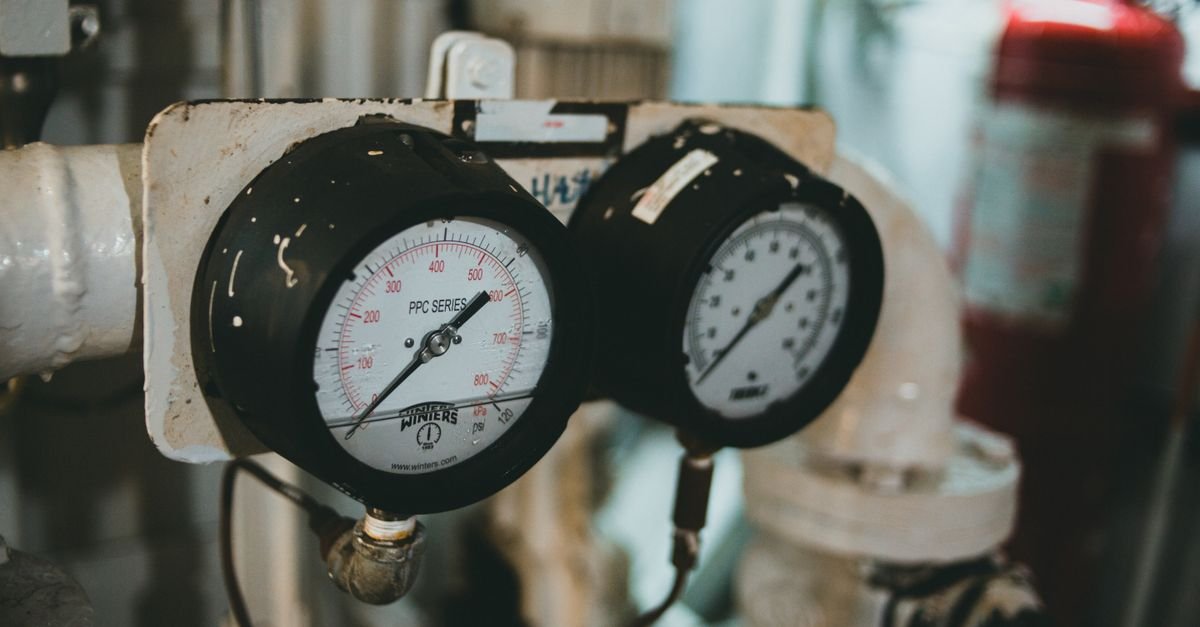
That is the whole device. It is not electronic, it is not clever, and on most consumer machines it does not know anything about your trigger. It knows one number: the pressure in the pipe in front of it.
Which is why the behaviour manufacturers describe as normal catches people out. AR Blue Clean tells owners that “when first connected, if the trigger is not pulled, most machines will power on for 1-2 seconds before powering down,” and recommends you “hold the trigger down while turning the power switch on” (AR Blue Clean FAQ). That one- or two-second burst at switch-on is not a fault. It is the pump filling the hose until the pressure is high enough for the switch to notice and shut it down. Turn the machine on with the gun closed and you will hear it every single time.
Why Electric Machines Need a Switch and Gas Machines Need a Valve
Both classes of machine have the same problem to solve: a positive-displacement pump does not care that you stopped spraying. It keeps pushing the same volume per revolution whether the gun is open or not.
A gas machine solves it hydraulically. The engine runs regardless, so the unloader valve senses the pressure spike and diverts the flow in a loop back through the pump. The water goes round and round instead of out of the nozzle. That is bypass, and it works, but it turns pump friction into heat with nowhere for the heat to go. Simpson’s manuals print a two-minute limit on it in a NOTICE box, twice, and warn that past that point internal pump components can be damaged.
An electric machine has an option a gas machine does not: it can simply stop. Cutting the motor removes the heat source entirely. So TSS is not a convenience feature bolted on to save electricity — it is the electric machine’s answer to bypass heat, and it is a better answer than the one gas machines get. It also has the side effect of making the machine silent between passes, which is the part owners actually notice.
Here is the opinion, and it is the useful one on this page: when a total stop system stops behaving, believe it. It is a pressure gauge with a relay attached. If it will not see the pressure rise, the pressure is not rising, and a pump in good order builds pressure against a closed gun in well under a second. Something is letting the water out. Your job is to find where, not to buy a switch.
Failure One: The Motor Never Stops Running
You release the trigger and nothing happens. The motor carries on. Depending on the machine you may hear the pump note change, or you may hear nothing at all.

Work through these in order, because they are sorted by how often they turn out to be the answer and how little they cost:
1. The trigger gun is passing water. Worn gun seals let a trickle through even with the trigger fully released. The pump then has somewhere to send water forever, and pressure never reaches the switch’s set point. A gun that weeps at the outlet, or that feels soft at the trigger, is the single most common cause. A leaking pressure washer gun covers the seal kits and when a gun is past rebuilding.
2. A fitting is weeping. Quick connects, the hose-to-gun joint, the pump outlet. Dry every connection with a rag, run the machine with the gun closed for ten seconds, then look again. Any wet fitting is your leak.
3. A nozzle that will not seal. An unseated quick-connect nozzle or a worn O-ring at the lance tip bleeds flow past the seat. Pull the nozzle off entirely for the test in the next section.
4. The unloader, on machines that have both. Plenty of mid-range electrics carry an unloader *and* a pressure switch. A worn unloader that cannot hold the diverted flow lets pressure creep away behind the switch.
5. The switch contacts have welded shut. Real, but last on the list. Arcing across contacts that open and close under load eventually fuses them. Once welded, the motor runs whenever the machine is switched on.
Kränzle’s own service note for its total-stop machines starts at exactly the same place: watch the gauge as you release the trigger, because “the gauge should drop to zero, because there’s no pressure in the pump housing when it is in bypass” (Kränzle USA, total stop function troubleshooting). If the pump is not bypassing, they send you to look for debris around the ball bearing at the outlet and at the control piston — not to the switch.
This page is about the component. If your machine has no total stop system at all and simply will not shut down, that is a different and broader problem, covering gas units, seized triggers and stuck unloaders, and it is not this article.
Failure Two: Short-Cycling Every Few Seconds
Same family, smaller hole. The pump builds enough pressure to trip the switch, the motor cuts, the leak bleeds that pressure back down below the reset point, the switch closes again and the motor restarts. Four seconds later it repeats. People describe it as the machine “hunting”, “pulsing” or “turning itself on and off”, and it is the most under-diagnosed symptom on an electric pressure washer. From the far end of the garden it sounds like somebody repeatedly changing their mind about starting work.
The mechanism is worth stating precisely, because it explains why the leak can be so small. A pressure switch does not have one set point, it has two: a cut-out pressure where it opens and a lower cut-in pressure where it closes again. That gap exists deliberately, to stop the switch chattering. Anything that drains the gap — a gun seal passing a few drops a minute, a quick connect that is damp rather than wet — restarts the motor. The trade has described the same failure on unloader valves for years, always pointing at the same culprits: the quick connects and the trigger gun. A weep-type gun, the kind sold to prevent freezing, will do it on purpose.
Two causes belong only to the cycling version rather than the never-stops version:
- Air still in the pump. A machine that has not been purged holds a compressible pocket, so pressure at the switch wobbles instead of holding. Disconnect the high-pressure hose, run water through the pump from the garden hose alone for twenty to thirty seconds until it runs without spitting, then reassemble.
- Thermal expansion in a hot hose. On a hot afternoon with a full hose sitting in the sun, pressure can drift across the switch’s set point on its own. Rare, real, and it goes away when the machine is moved into shade.
If the cycling only happens while you are actually spraying rather than with the gun closed, the switch is not the story at all. That is a supply or restriction problem — an undersized garden hose, a partly closed tap, a nozzle too small for the pump — and no amount of switch replacement will touch it.
Failure Three: A Switch Stuck Closed, or Burned
The opposite complaint. You flip the power switch, pull the trigger, and either nothing happens at all or the motor hums without turning.
A pressure switch on a consumer machine sits where the water is and carries the motor’s full starting current across a pair of small contacts. It can fail in three ways:
- Plunger jammed by scale or corrosion. Hard water and long storage do this. The switch stays in whatever state it was left in. If that state was open, the machine appears dead; if it was closed, the motor runs the moment you power up.
- Contacts burned or pitted. Enough arcing and the surfaces carbonise. The contacts close mechanically but conduct badly or not at all.
- A ruptured diaphragm. Usually announces itself with water where water should not be, which on an electrical component is a diagnosis rather than a symptom.
A stuck-closed switch also imitates a dead start capacitor closely enough to cost people a part they did not need, and the tell is timing: on a healthy total stop machine the motor is silent until you pull the trigger. A hum with the gun closed points at the switch. A pressure washer motor that hums but will not start works through that whole distinction, including the two faults that cost nothing to rule out.
Two Tests That Separate a Leak From a Dead Switch
Neither of these needs a tool you do not already own, and between them they will tell you which of the three failure modes you have.

Test one — close the trigger and count. Water on, machine on, gun closed, safety latch engaged, standing clear of the nozzle. A healthy machine cuts the motor in well under a second. Count what you get:
| What happens with the gun closed | What it means |
| Motor stops in under a second, stays stopped | The system is working. Nothing to fix. |
| Motor runs on and never stops | Pressure is not reaching the set point — leak, or welded contacts |
| Motor stops, restarts within 2-15 seconds, repeats | Small leak bleeding the switch’s reset gap |
| Motor never runs at all, trigger or no trigger | Switch stuck open, or no power reaching it |
| Motor runs the instant you flip the power switch | Contacts stuck closed |
Test two — isolate by capping the outlet. This is the one that settles the argument, because it removes every leak path except the pump and the switch. Shut the machine off and release the pressure by squeezing the trigger. Take off the hose, gun and lance. Fit a blanking cap or a plug rated above your machine’s PSI to the pump outlet — a quick-connect plug with the through-hole blocked will do it. Start the machine.
- Motor now stops cleanly. The switch is fine. Your leak is in the hose, gun or lance, and you can find it by adding one component back at a time.
- Motor still will not stop. The leak is inside the pump or the switch has failed. That is a bench job.
If your machine has a pressure gauge, watch it during both tests. Kränzle’s instruction to look for the needle dropping to zero on trigger release is the fastest single check on the page, and it works on any machine with a gauge fitted.
Every Restart Is an Inrush Event
This is the part that turns short-cycling from an annoyance into a repair bill, and almost nothing written about TSS mentions it.
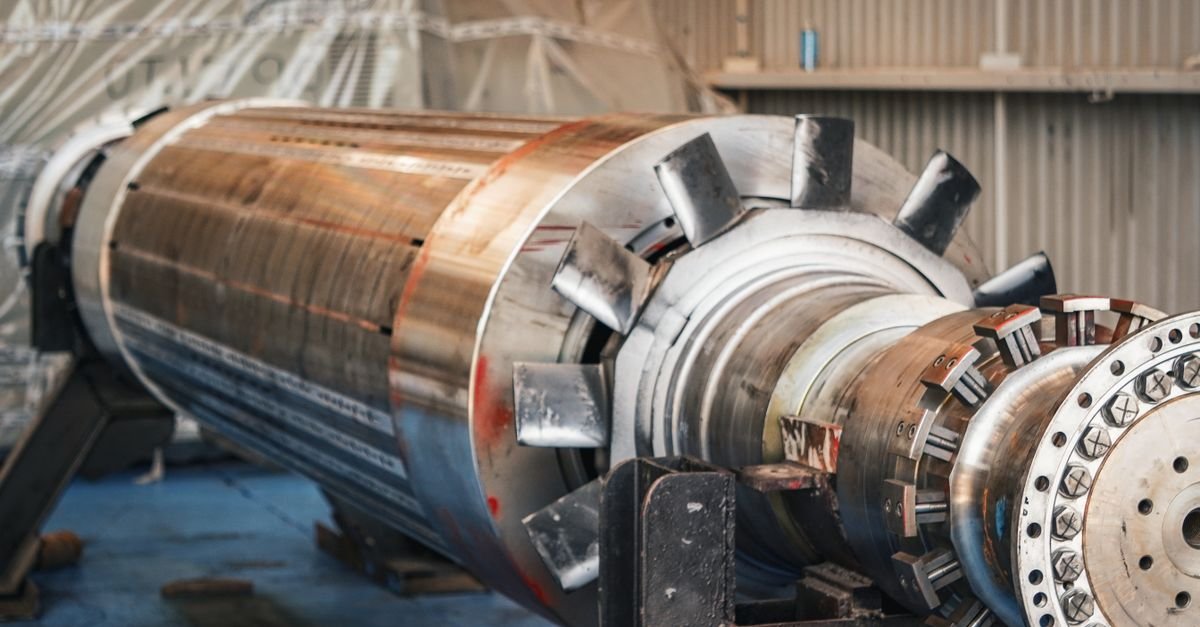
An induction motor at standstill is, electrically, close to a short circuit. Full voltage arrives across windings that are not yet producing back-EMF, so the current drawn during the first fraction of a second is several times the running current, and heating in a winding rises with the square of the current. The slip is 100 percent at the instant of starting and the rotor absorbs the difference as heat until the motor comes up to speed. *Pumps & Systems* puts the consequence plainly: “The amount of stress caused by line starting an alternating current (AC) induction motor has resulted in recommended limits for the number of starts per hour and the minimum amount of time between starts,” and notes that NEMA MG 10 publishes a table of those limits for motors from one horsepower upward (Pumps & Systems, how to mitigate pump motor damage).
Now do the arithmetic on a machine cycling every four seconds. That is 900 starts an hour. Even at a generous fifteen seconds between cycles it is 240 an hour. Against a standard that thinks the number is worth publishing at all — and that prints a minimum interval between starts alongside it — a short-cycling pressure washer is not slowly wearing out from use. It is being worn out by starting.
I went looking for a manufacturer-published starts-per-hour figure for a consumer pressure washer motor specifically and could not find one — no maker of these machines publishes it. So I am not giving you a threshold I cannot stand behind. What I will say is that not one published starts-per-hour allowance I found, for any class of motor, ran to the hundreds, and that a machine left to cycle all afternoon is being asked to do something nobody designed it to do. If yours is cycling, stop using it until the leak is found. It is a two-dollar O-ring problem that turns into a motor.
Can You Bypass It, and Should You
Yes, electrically, on most machines. The switch sits in series with the motor supply and jumpering across it makes the motor run whenever the power switch is on. Forum posts suggest it constantly, usually to somebody who has a stuck switch, half a driveway done and no patience left.
Here is what you get back. Without the switch, the pump runs continuously with the gun closed, and one of two things happens. If the machine also carries an unloader, the flow goes into bypass — and you are now on the clock against the two-minute limit, on a consumer pump that probably has no thermal relief valve, with rubber seals that start to soften around 140 °F. If the machine has no unloader, because the designer expected the switch to do the job, the pump is dead-headed against a closed gun with nowhere at all for the water to go. That is worse.
There is also a safety layer nobody mentions. A TSS machine is silent and stationary between passes. Bypass the switch and the machine is live any time it is plugged in and switched on, which changes what happens if the gun is dropped, or handed to somebody, or if the trigger catches on something.
So: possible, occasionally defensible for the last twenty minutes of a job you have to finish, and a genuinely bad permanent arrangement. A replacement pressure switch is an inexpensive part. Running the pump in bypass all afternoon to avoid buying one is the most expensive way to save that money.
FAQ
What does TSS mean on a pressure washer?
TSS stands for Total Stop System. It is a pressure switch that cuts power to the motor when you release the trigger and restores it when you pull the trigger again, so the pump is not left running against a closed gun. Some manufacturers call the same thing auto stop or auto start/stop.
Why does my pressure washer keep running when I release the trigger?
Because pressure is not reaching the switch’s set point. Nine times out of ten that is a leak — a trigger gun passing water, a weeping quick connect, or a nozzle that is not seating. Dry every fitting, run the machine with the gun closed for ten seconds, and look for the wet one. A welded switch contact causes the same symptom but is much less common.
Why does my electric pressure washer turn on and off by itself?
That is short-cycling, and it is the small-leak version of the same fault. The pump builds enough pressure to trip the switch, the leak bleeds it back down below the reset point, and the switch closes again. Trapped air in a pump that has not been purged does it too, which is why a machine fresh out of the box sometimes cycles until you run water through it.
Is it normal for a pressure washer to run for a second when I switch it on?
Yes. On a machine with a total stop system the pump has to fill the hose before the pressure is high enough for the switch to see it. AR Blue Clean describes a one- to two-second run at power-on as expected behaviour, and recommends holding the trigger while you flip the switch to avoid it entirely.
How do I know if my pressure washer pressure switch is bad?
Cap the pump outlet with a plug rated above the machine’s PSI, with the hose, gun and lance all removed, and start it. If the motor now shuts down cleanly, the switch is good and your leak was downstream. If it still will not stop, the fault is in the pump or the switch. A motor that runs the instant you flip the power switch, before you touch the trigger, points at contacts stuck closed.
Is it bad for a pressure washer to cycle on and off?
Yes, and worse than it sounds. Each start draws several times the running current and dumps that energy into the rotor as heat. Motor standards publish limits on starts per hour for exactly this reason. A machine cycling every four seconds is doing 900 starts an hour, and the damage accumulates in the starting, not the running.
Can you bypass the total stop system on a pressure washer?
Electrically, usually. Sensibly, no. Removing the switch returns you to the problem it was fitted to solve — the pump running continuously against a closed gun, either heating itself in bypass or dead-heading outright — and it leaves the machine live whenever it is switched on. Replace the switch instead.
My machine has both an unloader and a pressure switch. Which one is faulty?
Watch the gauge if you have one. If the needle drops to zero on trigger release, the unloader is bypassing correctly and the problem is electrical. If the needle stays up and the motor keeps running, the unloader is not diverting flow and the switch never gets the signal it needs.
Chase the Leak, Not the Switch
The total stop system is the most misunderstood part on an electric pressure washer, mostly because it fails in two directions and both of them look like the switch. They almost never are. It is a device with exactly one input, and when it stops behaving, something has changed about that input.
So before you order a part: dry every fitting, squeeze the trigger and watch where the water goes, and cap the outlet if you still cannot tell. Most of the time the answer is a worn gun seal or an O-ring that has flattened over a winter, and the machine that seemed broken was the only component in the system telling the truth.