Last Updated on September 25, 2026 by Umar Farooq
Pressure washer tripping breaker faults come in three unrelated varieties, and the fix depends entirely on which one you have: the GFCI built into the machine’s own plug, the circuit breaker in your house panel, or a thermal cut-out inside the motor that is not a trip at all. They feel identical from where you are standing — the machine stops, the driveway is half done, and something somewhere needs pressing. They are not identical. They sense completely different things, and treating one as another is how people end up buying a pump they did not need.
So the first move is not a fix. It is a question: which device actually opened? Walk to the panel and look. Look at the little window on the plug. Touch the motor housing. Ninety seconds of looking will tell you more than an afternoon of resetting.
One thing to settle before we start, because it shapes everything below. Every device in this article exists to interrupt power before something worse happens. None of them is the fault. A breaker that trips is the cheapest, most reliable component in the entire chain, and it has just told you something true. The job is to find out what.
Three Protections, Three Completely Different Faults
An electric pressure washer sits behind three independent guards, and each one watches for something the others cannot see. Getting them confused is the single biggest reason this problem drags on for weeks.
| Device | Where it lives | What it senses | What tripping means |
| GFCI | Moulded into the machine’s own plug, or in the outlet | Current going out that does not come back — leakage to earth | Electricity is escaping the circuit. Often through water |
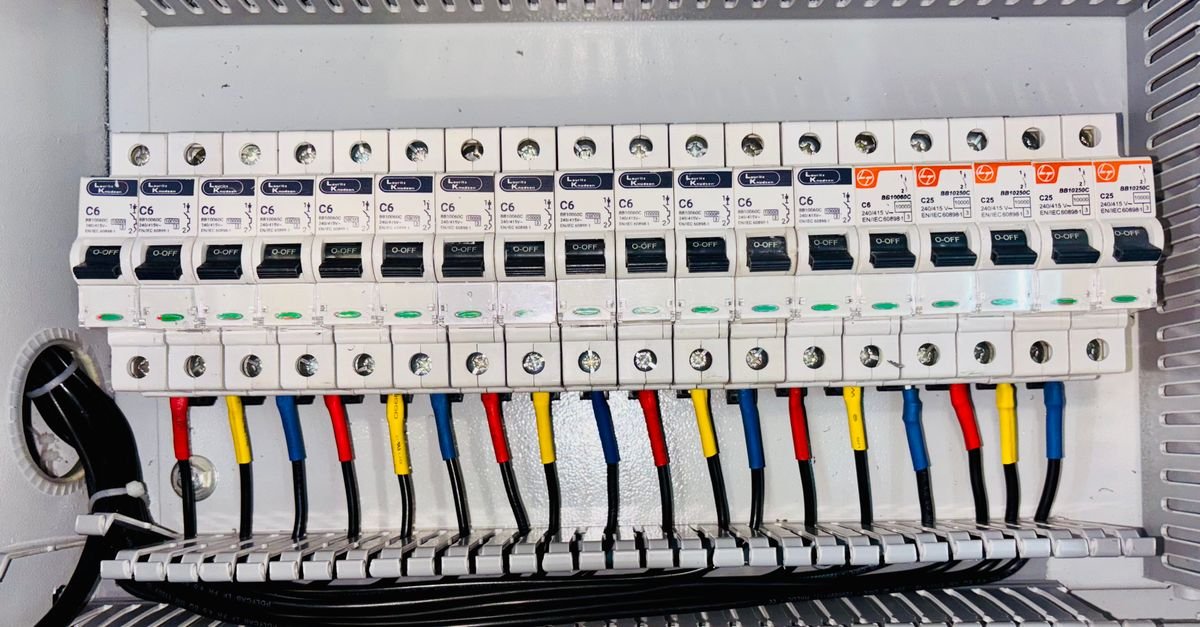
| Circuit breaker | Your house panel | Too much current, or a short | The circuit is being asked for more amps than it is rated to carry |
| Thermal cut-out | Inside the motor windings | Winding temperature | The motor got too hot and stopped itself. Nothing tripped |
Read that middle column again, because it is the whole article. A GFCI does not care how many amps you draw. A breaker does not care where the current goes. And the thermal cut-out does not care about either — it is measuring heat, and it resets on its own when the motor cools, which is why people describe it as “fixing itself,” a phrase that has never once been true of any other electrical fault.
The tell is almost always physical. If the breaker in the panel has flicked to the middle position, that is the house. If the panel is untouched and the little reset button on the plug has popped out, that is the GFCI. If nothing anywhere has moved, nothing tripped, and you are dealing with heat.
Pressure Washer Tripping Breaker: The Ten-Minute Diagnostic Order
Work this in order. Each step is cheap, and each one either clears a suspect or hands you the answer.
1. Identify which device opened. Panel, plug, or neither. Do not proceed until you know. Everything below this step branches on the answer, and guessing here is what costs people a fortnight.
2. Unplug everything else on that circuit. Garage circuits routinely feed a freezer, a door opener and an outside outlet from one 15-amp breaker. The machine may not be the greedy one.
3. Remove the extension cord entirely. Plug the machine straight into a wall outlet. Not a shorter cord. No cord.
4. Dry the plug ends and get them off the ground. Both ends. A puddle under a coupling is a ground-fault path waiting for you to pull the trigger.
5. Try a different circuit — ideally one on the other side of the house, and definitely not a bathroom or kitchen outlet that already has its own GFCI protection.
6. Note when it trips. At the moment of switch-on, at the moment you pull the trigger, or after several minutes of work. Those three timings point at three different causes, and I will take them one at a time below.
7. Feel the motor housing. Uncomfortably hot with nothing tripped is a thermal cut-out, and the repair is a chair and twenty minutes.
If steps 2 to 5 make the problem vanish, the machine was never faulty. It was being fed badly. That accounts for a large share of these cases, and it costs nothing to rule out — unlike the alternative, which is a service quote.
What the Motor Does in the First Half-Second
An induction motor has a rotor that is not moving. At the instant you flip the switch, the motor has no back-EMF opposing the supply, so it draws far more current than it will draw a second later when it is up to speed. That brief surge is inrush, and a standard thermal-magnetic breaker is built to swallow it — the thermal element needs sustained overcurrent to act, not a fraction of a second of it.
The problem is what the inrush is landing on top of. Kärcher’s operator manual for the K2300PS, a fairly ordinary 2,300 PSI homeowner unit, lists the machine at 13 amps on a 120-volt supply (Kärcher K2300PS operator manual). An older Kärcher K 210, at a modest 1,300 PSI, is rated 14 amps (Kärcher K 210 operator manual). Those are running figures, and they sit against a 15-amp breaker.
That is 87 to 93 percent of the breaker’s rating before the machine has done anything interesting. The trade rule of thumb — and it is a rule of thumb, not a number I am going to dress up as a standard — is that a circuit carrying a load continuously should be sized at about 80 percent of the breaker, which on a 15-amp circuit means 12 amps. Your pressure washer is already over that line at idle.
Here is the opinion, and it is not a popular one: most electric pressure washers are sold as plug-anywhere appliances and they are not. A 13-amp continuous motor load with a startup surge on top belongs on a circuit of its own, and the manufacturer agrees more bluntly than any retailer will. Kärcher’s own manual for the K2300PS says, in plain words, “Do not use extension cord with this product. Connect to individual branch circuit only.” That is not cautious legal padding. That is the company that built the motor telling you the machine needs a dedicated 15-amp circuit and no cord, and almost nobody reads it, because the manual is in the box under the wand extension and the driveway is right there.
If your machine trips the house breaker reliably at the moment of switch-on and nothing else is on the circuit, that is the fault. Not a broken machine — a circuit that is too busy or too small for what you plugged into it. The answer is a dedicated outlet, added by an electrician. It is not a bigger breaker, and I will come back to why. If the outlet situation at your house makes that impractical, the power supply trade-offs between the two machine types are set out in the electric vs gas pressure washer comparison.
The Cord Between the Outlet and the Machine
Extension cords deserve one section here and no more, because there is a whole separate discussion about cords causing a machine to lose power and struggle — that is a different symptom with a different diagnosis. What matters on this page is narrower: how a cord makes something trip.

The mechanism is a loop. A thin or long cord drops voltage on the way to the motor. The motor still has the same work to do, so at lower voltage it pulls more current to do it. More current through a thin conductor means more heat and more voltage drop, which means more current again. The motor’s thermal cut-out usually gets there first. Sometimes the breaker does. Either way the cord caused it and the machine takes the blame.
Manufacturers publish the gauge, and they are stricter than the internet is. Kärcher’s K 210 manual gives it as 12/2 AWG up to 25 feet, and 10/2 AWG for 25 to 50 feet, for a 14-amp machine. Most general advice you will find online says 14 gauge is fine. The manual for the actual machine says it is not.
Three practical rules, none of which cost anything:
- Check your own manual first. Some manufacturers, Kärcher’s K2300PS among them, prohibit extension cords outright. Using one there is both a trip risk and a warranty conversation you would rather not have.
- Never daisy-chain two cords. Two 25-foot cords are not a 50-foot cord. Every joint is a resistance and a place for water to sit.
- Uncoil it completely. A cord left looped on its reel under a 13-amp load is a heating element with a plug on the end. If you need more reach, add high-pressure hose after the machine rather than cord before it.
The fastest test in this whole article is free. Plug straight into the wall, no cord at all, and run the machine. If the tripping stops, you have your answer and you never needed a multimeter.
Wet Plug Ends and the Five-Milliamp Threshold
A GFCI is not watching amps. It is comparing the current flowing out along one conductor with the current returning along the other, and if those two numbers stop matching, current is leaving the circuit by some other route. OSHA’s description is the clearest one published: a GFCI “continuously compares the amount of current traveling to electrical equipment with the amount returning from it,” and “when the difference is approximately 5 milliamperes, the GFCI interrupts the circuit,” shutting off power “in as little as 1/40 of a second” (OSHA, Ground-Fault Circuit Interrupters).
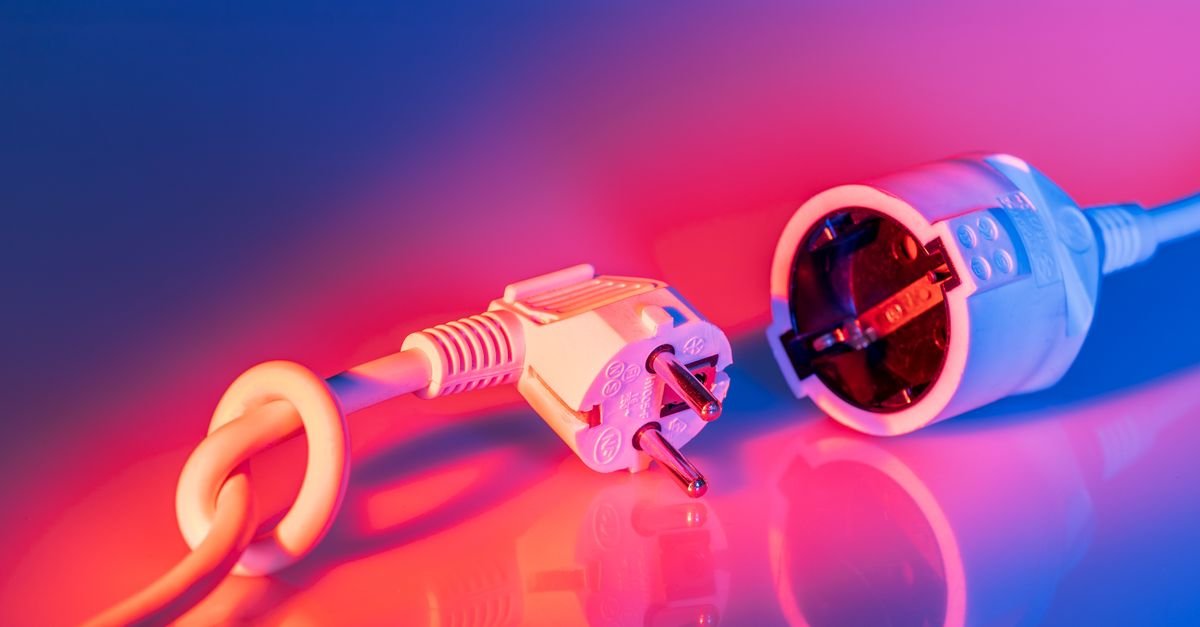
Five milliamperes is 0.005 of an amp. Your machine draws 13. The GFCI is set to notice a leak roughly one two-thousandth the size of the normal working current, because that is the point at which current through a human chest starts interfering with muscle control. The Kärcher cord set is tested to UL 943, the standard that defines that threshold. It is a deliberately twitchy device and it is twitchy for a reason.
Which is why water is the usual answer. Not water on the surface you are cleaning — water at the connections.
- The coupling between cord and machine plug, lying in the runoff. This is the classic. Get every connection off the ground and up on a bucket, a step, anything.
- The outlet itself, if it is an outdoor box with a tired gasket or a cover that no longer closes over the plug.
- Inside the motor housing, if the machine has been stored uncovered, hosed down, or tipped and left with water in it. This one is serious and I will come back to it.
- The GFCI module itself. These fail, and they usually fail by tripping rather than by not tripping, which is the correct way round for a safety device to break.
Sorting the first two from the last two is a matter of sequence. Dry everything, lift every connection clear of the wet, and try again. If it now holds, it was water outside the machine. If it trips instantly with a dry plug and no cord, the leak is inside, and that changes what you do next.
One more thing worth knowing, because it causes a lot of confused diagnosis: if you plug a machine that has its own GFCI into an outlet that is already GFCI-protected, you have two of them in series. That is not prohibited and it usually works fine, but the upstream one can open first, and you are then standing in the garage unable to tell which device saw what. For diagnosis, use a plain grounded outlet on a circuit without its own GFCI — the plug has you covered — and change one variable at a time.
The Cut-Out That Is Not a Trip at All
This is the one people misread constantly, and it is the only item on this list where the correct action is to do nothing.
Electric motors carry a thermal protector in the windings. When winding temperature passes its limit, it opens the circuit and the motor stops dead, mid-job, with no warning. Nothing in the panel moves. The GFCI button stays in. Press the switch and you get silence, which feels far more terminal than a trip does.
The signature is unmistakable once you know it:
- The machine ran normally for a while first — often twenty minutes or more
- Nothing in the house panel has changed position
- The plug’s reset button has not popped
- The motor housing is hot to the touch
- Twenty to thirty minutes later it starts again as if nothing happened
Most of these protectors reset themselves once the windings cool. Some machines have a small manual reset button on the motor body. Unplug it, put it in the shade, and leave it alone — pressing the switch repeatedly keeps feeding current into a motor that is trying to cool down, which is the opposite of the plan.
Why it overheated is its own subject, and overheating in general deserves more room than I will give it here. For this page the useful part is simply that it belongs in a different column from the other two, and that a machine which stops for half an hour and then works perfectly has not developed an electrical fault. If yours stops and stays stopped, the diagnosis runs elsewhere — start with why a pressure washer won’t start, and if it is cutting out repeatedly rather than tripping anything, pressure washer keeps shutting off works through the timing patterns.
Nobody Should Ever Defeat a GFCI
There are three shortcuts that circulate on forums for this exact problem, and all three are worse than the fault.
Bypassing the GFCI plug — cutting it off and fitting a standard plug, or running through an adapter that skips it. You are removing the only device in the chain watching for current leaving a machine that you hold in wet hands while standing on wet ground. The GFCI trips at five thousandths of an amp because that is roughly where current stops being a nuisance and starts being a medical event. Removing it does not stop the leak. It stops you finding out about the leak.
Snapping the ground pin off to fit a two-prong outlet. The ground conductor is the low-resistance path that a fault current is supposed to take instead of taking you. Break it and you have not solved anything — you have deleted the alternative route.
Fitting a bigger breaker to stop nuisance tripping. This is the one that frightens me most, because it sounds so reasonable. The breaker is not sized to protect the pressure washer. It is sized to protect the wire buried in your wall, which on a 15-amp circuit is typically 14 gauge and rated to carry 15 amps and no more. Put a 20-amp breaker on 14-gauge wire and the breaker will now happily let through a current the cable cannot carry. The tripping stops. The overheating does not — it just moves somewhere you cannot see it, inside a wall cavity.
If a circuit keeps tripping under a legitimate load, the answer is a circuit that suits the load, installed by someone qualified. Not a larger number stamped on the same old breaker.
Signs the Machine Itself Has Failed
Sometimes it genuinely is the machine, and there are three patterns worth recognising so you stop spending money on cords.
It trips the GFCI the instant it is plugged in, before the switch is touched. Dry plug, no extension cord, and it still opens. Either the GFCI module has failed or there is a leakage path inside the machine. A replacement cord set is a cheap thing to try; if a new cord set trips the same way, the leak is in the motor.
It trips a few minutes into every run, repeatably, on different circuits. This pattern points at insulation that leaks when it warms, or at water sitting inside the motor housing. Both get worse. Stop using it.
It draws heavy current at start-up and trips the house breaker rather than the GFCI — often with a groan or a buzz from the motor rather than a clean spin-up. A degraded start capacitor is a common cause. Capacitors hold a dangerous charge long after the machine is unplugged, so this one is a service bench job, not a garage job. Note the distinction: a motor that hums and refuses to turn at all is a related but separate symptom with its own diagnosis. What belongs here is the version where it does start, drags, and takes the breaker with it.
Worth ninety seconds before you order anything: search your model number on the CPSC recall database. Electric pressure washers do get recalled for electrical components, and a machine under an active recall is somebody else’s repair to pay for.
Where This Stops Being a Driveway Job
I am generally in favour of homeowners fixing their own equipment. This is the topic where I am least in favour of it, because the failure mode is not an expensive mistake, it is a hospital.
Stop and call a qualified electrician if any of these are true:
- The breaker trips with the pressure washer unplugged, or trips when other appliances run
- The breaker is warm, discoloured, smells hot, or will not stay latched
- The outlet is scorched, loose, cracked, or the plug feels hot after use
- You do not know whether the outlet is properly grounded
- You are considering adding a circuit, changing a breaker, or opening the panel
- The house has no GFCI protection outdoors at all
Stop and call a service centre, rather than an electrician, if the machine trips instantly on a dry plug with no cord, if it trips on multiple separate circuits, if there is any sign of water inside the motor housing, or if you suspect the capacitor. Those are faults in the appliance, and the appliance has to come apart.
And the boundary that is not negotiable: if the machine tripped while you were holding the gun and you felt anything at all — a tingle, a buzz, a jolt — do not reset anything. Unplug it at the outlet and do not use it again until it has been tested. That is the exact scenario the GFCI is built for, and it worked.
FAQ
Why does my pressure washer keep tripping the GFCI on the plug?
A GFCI opens when current leaks out of the circuit, and on a pressure washer that almost always means water where it should not be. Check the coupling between the extension cord and the machine plug first, then the outlet, then the machine itself. If it trips instantly with a dry plug and no extension cord at all, the leakage is inside the machine and it needs servicing rather than resetting.
Can I plug a pressure washer into a GFCI outlet?
Yes, and nothing about it is unsafe. The complication is that your machine’s plug already contains a GFCI, so you have two in series and you cannot tell which one opened when something goes wrong. For fault-finding, use an ordinary grounded outlet on a circuit that does not have its own GFCI protection. The plug-mounted device is the one the manufacturer supplied and tested with the machine.
What size breaker does an electric pressure washer need?
Most 120-volt homeowner machines draw 13 to 15 amps, so a 15-amp circuit is the minimum and a 20-amp circuit gives useful headroom. What matters more than the number is that nothing else is on it. Kärcher’s manual for the K2300PS instructs owners to connect to an individual branch circuit only, which is the manufacturer’s way of saying it wants the circuit to itself.
Can an extension cord cause a pressure washer to trip the breaker?
Very often, yes. A thin or overlong cord drops voltage, the motor compensates by drawing more current, and the extra current heats both the cord and the windings until something opens. Kärcher specifies 12/2 AWG up to 25 feet and 10/2 AWG for 25 to 50 feet on a 14-amp machine. Some manufacturers prohibit extension cords entirely, so check your own manual before you blame the machine.
Why does my pressure washer only trip the breaker when I pull the trigger?
Releasing and pulling the trigger switches the motor on and off on many electric machines, so pulling the trigger is a fresh start-up each time, with the current surge that goes with it. If the circuit is marginal, that surge is what pushes it over. Try the machine alone on a circuit with nothing else connected before assuming the motor is faulty.
Is it safe to keep resetting the breaker?
Resetting once to see whether it was a one-off is reasonable. Resetting repeatedly is not. Every reset re-energises a circuit that has already reported a problem, and if the fault is a ground leak or an overloaded conductor, nothing about it improves with repetition. If it trips twice in a row, stop and work through the causes instead.
Does a pressure washer need its own dedicated circuit?
It is the most reliable way to solve a genuine overload, and at least one manufacturer instructs it outright. A 13-amp continuous motor load sits above the 12-amp figure normally used for continuous loads on a 15-amp circuit, so sharing that circuit with a freezer or a shop light leaves no margin for the start-up surge. If you use the machine regularly, a dedicated outdoor outlet is money well spent.
A Breaker That Trips Is the Part Doing Its Job
Three protections, three unrelated faults, and one response that is safe in every case: find what is causing the trip and remove it. Never remove the thing that noticed.
Nine times out of ten the cause is boring — a shared circuit, an extension cord that was in the garage anyway, or a coupling sitting in the runoff from the job you are doing. All three are free to rule out and take about ten minutes between them. The machine is the last suspect, not the first, and I would check the cord twice before I would check the motor once.
If you have already reset it four times and it has tripped four times, that is not a stubborn breaker. That is a device being unusually patient with you.