Last Updated on September 25, 2026 by Umar Farooq
Pressure washer belt slipping means the belt is sliding in the pulley groove instead of gripping it, so the pump turns slower than the engine is asking it to — and the first thing you lose is pressure, not the belt. The squeal comes second, and the belt itself usually survives long enough to be tightened.
A piece of honesty most pages on this subject skip: this may not be your problem at all. The great majority of machines sold to homeowners are direct drive, with the pump bolted straight onto the engine or motor shaft and no belt anywhere in the system. If that is what you own, a belt cannot be slipping, because there isn’t one. The people who do have belt drive are running something bigger — a commercial skid, a hot-water unit, a trailer rig — and that smaller audience has been fobbed off with two-paragraph answers for years. This page is written for them.
Ten Seconds to Tell Belt Drive From Direct Drive
Look for a guard. On a belt-drive machine there is a sheet-metal or moulded cover sitting between the engine and the pump, usually with warning decals on it, and it exists for the obvious reason. Simpson’s belt-drive operator’s manual puts the safety symbols directly on that panel and is blunt about the rule: “Never operate machine without Belt Guard securely in place,” and among the pictograms on the guard itself, “Do not touch belt or moving parts during operation.”
If there is no guard, look at how the pump meets the engine. Two quick tells:
- Direct drive. The pump is bolted flat against the engine’s face, nose to nose, sharing a single shaft line. Nothing sits between them. The whole assembly is short and compact.
- Belt drive. The engine and the pump sit side by side on a frame, each on its own feet, each with a pulley on its shaft, with a belt looping between them. The machine is noticeably longer, and the pump usually sits on slotted rails so it can slide.
One difference matters when something breaks: a direct-drive machine has no belt to slip, but it does have a coupler between the two shafts, and a sheared coupler gives total loss of pressure rather than the sagging, squealing partial loss a belt gives you. Different fault, different feel.
Why Anyone Puts a Belt Between the Engine and the Pump
The belt is not there because the engineers ran out of ideas. It is there to make the pump turn slower than the engine, and that single fact is most of the argument for belt drive.
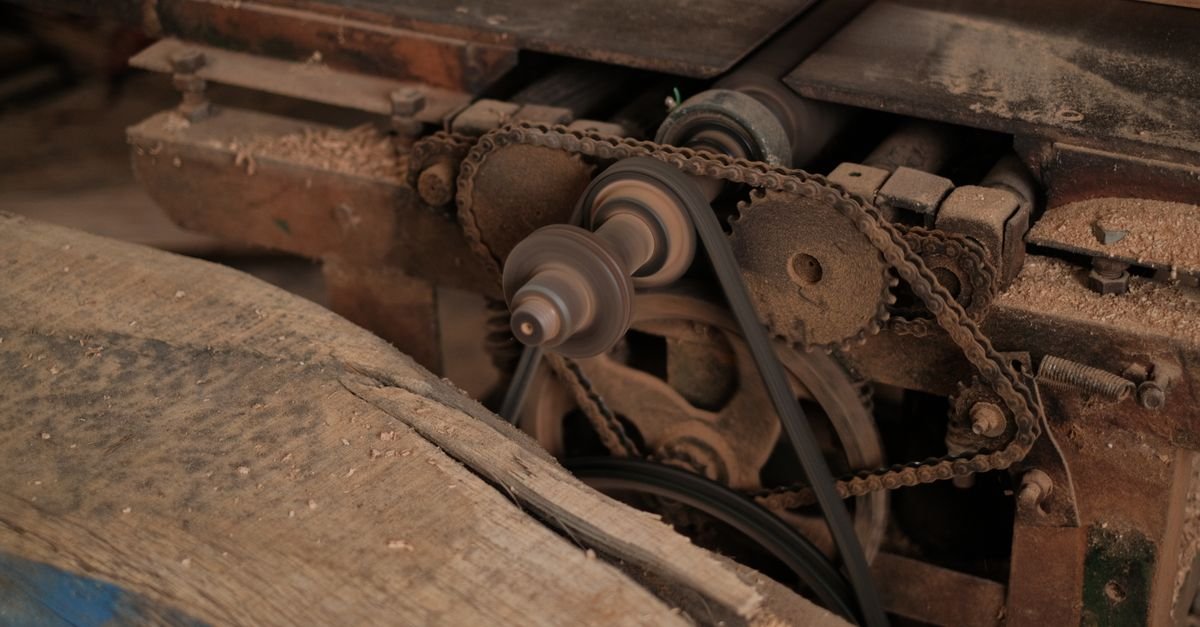
A standard industrial electric motor runs near 3,450 RPM, and a direct-drive pump bolted to it runs at exactly that. Put a small pulley on the motor and a large one on the pump, and you can drop the pump to a fraction of that speed. Multi PSI, which builds high-pressure equipment, gives the working range plainly: a motor spinning at 3,450 RPM “can drive a pump at an optimized speed of 1100 to 1450 RPM.” Hydro Tek draws the same line from the other direction in its operations manual, describing its slow units as “Belt driven, low speed pumps (less than 1750 RPM).”
Halve the speed and you halve the number of times every seal, plunger and valve in that pump does its job per minute. A packing sliding at half the rate generates roughly half the friction heat, and heat is what hardens seals and cooks pump oil. The same flow at half the speed also means bigger plungers and a longer stroke, which is why belt-drive pumps look enormous next to the axial unit on a homeowner machine. Multi PSI makes the temperature point too: the distance between engine and pump “eliminates direct thermal conduction,” so the pump is not bolted to a hot engine block absorbing its heat all afternoon.
That is the whole trade. You accept a consumable rubber loop and two pulleys that need checking, and the pump lives several times longer. If you have read the page on pressure washer pumps you know the position here — you are buying a pump with an engine attached, not the other way round — and belt drive is the arrangement that takes that idea seriously.
The Five Signs of Pressure Washer Belt Slipping
Slip is unusually easy to identify, because it produces a very specific cluster of symptoms and nothing else on the machine produces the same set.
| Sign | What it looks or sounds like | Why slip causes it |
| Pressure sags under load | Fine for a second, then falls away while the trigger is held | Belt grips until torque demand rises, then lets go |
| A squeal that tracks demand | Rises the instant you pull the trigger, often easing once it catches | Rubber sliding on steel at speed |
| Black dust | Fine dark powder inside the guard and on the frame below the belt | The belt is being abraded away |
| A glazed belt face | The flanks are shiny and hard rather than matte and grippy | Heat has case-hardened the rubber surface |
| Heat and smell | Belt too hot to hold after shutdown, burnt rubber in the air | Friction energy with nowhere to go |
The one to trust most is the first. A slipping belt costs you pump speed, pump speed is flow, and flow is what sets pressure against a fixed nozzle orifice. So belt slip reads on the gauge as a pressure loss that appears under load and recovers in bypass — which is a genuinely useful split, because most of the other causes on the pressure washer low pressure list are present the whole time.
There is a sixth sign that costs nothing and almost nobody uses. On a healthy belt machine, pulling the trigger audibly loads the engine and the note drops. If the belt is slipping badly, the engine barely notices the pump is there, because the slip is absorbing the torque before it arrives. An engine that sounds unbothered while the gauge falls is telling you the power is being lost between the two shafts.
The squeal deserves one caveat. A high note on a pressure washer has only two possible sources, and the other one is a bearing. The separating question is covered in full on the page about pressure washer pump noise, and it takes ten seconds: a belt squeal answers to the trigger, a bearing whine does not.
What Actually Stops a Belt Gripping
A V-belt does not hang on its pulley the way a rope hangs on a hook. It wedges. The belt’s angled flanks are pulled down into a matching V-groove by tension, and the harder the load pulls, the harder it wedges. Every cause of slip is a failure of that wedge, and there are five of them.
1. Tension has dropped. New belts seat into their grooves and stretch during their first hours of running, then keep creeping slowly for the rest of their life. This is the commonest cause and the cheapest fix, and it is the reason every belt-drive manual tells you to check tension periodically rather than once.
2. The belt face is glazed. A belt that has been slipping gets hot, and hot rubber hardens at the surface. The flanks go shiny and slick, which means the belt has lost the microscopic compliance that let it grip. Glazing is self-feeding: slip makes glaze, glaze makes more slip. A glazed belt cannot be rescued by tension, only replaced.
3. Something oily got into the groove. Pump oil from a weeping crankcase seal, engine oil from an overfill, chain lube from a helpful neighbour, or concentrated detergent that got splashed. It takes very little. Oil in the groove turns the friction wedge into a hydrodynamic film, and the belt hydroplanes on its own pulley. Clean the grooves with a degreaser and a rag, fix the leak that put it there, and expect to replace the belt — rubber absorbs oil and swells.
4. The pulley grooves are worn. This is the one people miss. A V-belt grips on its two flanks and should never touch the bottom of the groove. As grooves wear, they widen, and the belt sinks. Once the belt’s base is riding on the groove floor, the wedge is gone and no amount of tension restores it, because you are now trying to grip a flat surface. Check by eye with the belt fitted: the top of the belt should sit level with or slightly above the rim of the pulley. If it has disappeared into the groove, the pulley is finished, and a new belt fitted to a worn pulley will be finished shortly afterwards.
5. The pump has got harder to turn. A belt is sized to transmit a known torque. If the pump starts demanding more — cold thick oil on a winter morning, a bearing beginning to seize, ice in the head, a blocked discharge, a plunger dragging in hardened packings — the belt hits its limit and gives up. The belt is not the fault here. It is only reporting one, and tightening it is like turning up the radio to stop a rattle.
The Belt Is Meant to Be the Weakest Link
Here is the opinion, and it runs against the instinct of everyone who has ever stood over a squealing machine with a spanner: a belt that slips under a genuine overload is doing its job correctly, and the right response is almost never to tighten it until it physically cannot.
The belt is the cheapest item in the drivetrain by an enormous margin. Manufacturers say so out loud in the place where it costs them money to say it — Hydro Tek’s warranty excludes “normal wear items such as discharge hose, guns, wands, spray arms, nozzles, quick couplers, o-rings, motor & generator brushes, filters, fuses, belts, & tires.” A belt sits in the same sentence as a fuse, and that is not an accident of alphabetisation.
Multi PSI describes the mechanism directly: when the pump encounters a sudden spike or a jam, “the belts slip or absorb the impact, protecting the motor shaft from major mechanical failure,” acting as “a mechanical fuse to protect the more expensive components (motor and pump).”
Consider the alternative. A direct-drive pump that seizes has nowhere to send the energy, so it goes into the coupler, the keyway, or the crankshaft. A belt-drive pump that seizes squeals, smokes, throws the belt, and stops. One of those outcomes is a cheap rubber loop and an afternoon. The other is a new engine.
So the honest sequence when a belt starts slipping is: find out why first, tension second. If the answer turns out to be a pump that has become stiff, the cheapest part on the machine has just handed you a warning, and cranking the tensioner converts that warning into a bearing failure.
Tension Is a Deflection Measurement, Not a Feeling
“Tight enough” is not a specification, and the guesswork is where most belt-drive machines get ruined. Manufacturers publish an actual number, and it is a deflection figure rather than a tightness.
Hydro Tek’s operations manual gives both the method and the target in one instruction: “Tighten belts by loosening the mounting bolts on the pump and generator to permit them to slide. Turn the horizontal rail adjusting bolts to tighten belts until they deflect ¼” to ½” with finger pressure.” Press down on the middle of the free span with one finger, and the belt should move roughly a quarter to half an inch. Not two inches. Not nothing.
The order of operations matters more than the number:
1. Shut it down and isolate it. Hydro Tek is explicit: “Shut unit off and disconnect power before removing belt guards or electrical covers.” Pull the plug lead on a gas machine, unplug an electric one at the wall — some units have auto-start, and the same safety list warns to “keep hands clear of belts” for that reason.
2. Loosen the pump’s mounting bolts so it can slide on its rails, rather than forcing tension in against clamped feet.
3. Take up the adjusting bolts evenly, a turn at a time on each side, so the pump moves square rather than cocking on the rails.
4. Check deflection and alignment, re-tighten the mounting bolts, then check deflection again — clamping the feet usually pulls the pump slightly and changes it.
5. Refit the guard before you start it. Every time.
6. Re-check after the first hour. A new belt does most of its seating in that hour, and the tension you set cold is not the tension you will have afterwards.
Now the part that costs people pumps. Past the correct figure, extra tension does not buy extra grip — it converts into a permanent side load on two bearings. A pump crankshaft bearing is sized for the loads of pumping, not for being pulled sideways by a rubber band all day. Bearings do not fail dramatically from this. They fail quietly and early, and the owner concludes the pump was rubbish. An over-tight belt also runs hotter, because the flanks are forced deeper into the groove than the geometry wants, so it wears out faster while it is killing the bearing. There is no upside anywhere in the exchange.
Lay a Straight Edge Across Both Pulleys
Tension is only half of it, and Hydro Tek lists them together for a reason: “Check belt condition, alignment and tension periodically.” A perfectly tensioned belt on two pulleys that are not in the same plane will still slip, because it is being forced to enter the groove at an angle and can only make partial contact with one flank.
There are two ways to be misaligned, and they need different fixes:
- Parallel offset. The shafts are parallel but the pulleys sit at different distances along them, so the belt runs diagonally. Fix by sliding one pulley along its shaft — loosen the set screw or the taper bush and move it.
- Angular. The shafts themselves are not parallel, so the pulleys are tilted relative to each other. Fix at the pump’s mounting rails, by moving one side more than the other.
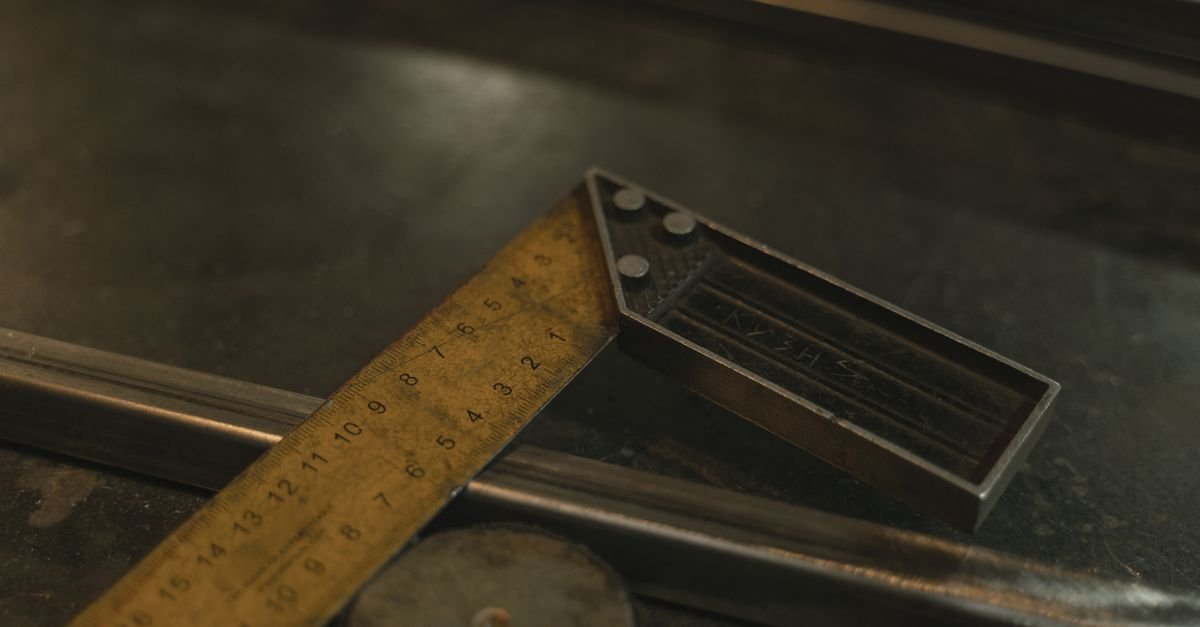
The check needs nothing more exotic than a long steel rule or a straight length of angle. Lay it across the machined outer faces of both pulleys with the machine off. A correctly aligned pair touches at four points — both edges of both pulleys — with no gap you can see light through. Rotate each pulley a half turn and check again, because a pulley running out on a bent shaft will touch at four points in one position and three in another.
The belt tells you about misalignment too, if you look before you adjust: dust collecting on one side of the guard rather than evenly, a wear stripe polished onto one flank and not the other, fraying along one edge. Those are contact-angle problems, not tension problems, and tightening the belt makes the wear faster rather than slower.
Tension It Twice, Then Buy a Belt
There is a point at which adjustment stops being maintenance and starts being denial. My rule, and it is a rule about adjustment rather than about age: if you have taken up the tension twice in a season and it has gone slack again both times, the belt has stretched past its useful range and a third adjustment is postponing the inevitable by about a fortnight.
Replace, rather than adjust, when any of these is true:
- The flanks are shiny and glazed, or hardened enough that a thumbnail leaves no mark.
- There are cracks across the inside face, or the fabric cover has split and cord is visible.
- Oil has soaked into it, even after the leak is fixed and the grooves are clean.
- It sits at or below the rim of the pulley groove — though in that case check whether the pulley is the thing that is worn, because a new belt will sink into the same worn groove within weeks.
- The adjustment has run out of travel.
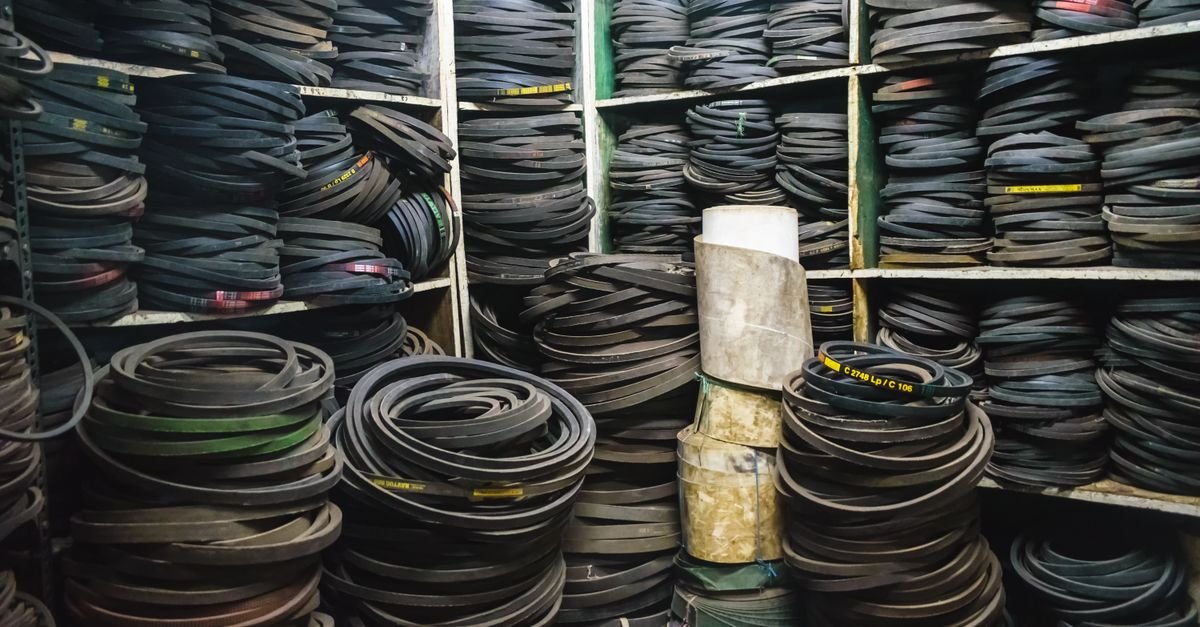
Buying the right one is easier than people expect, because the belt tells you what it is: the section and length are moulded into the outer face, and that code is the part number. Hydro Tek’s troubleshooting table lists belt slippage with the remedy “Tighten or replace with correct belt,” and Simpson’s belt-drive manual splits the same fault across two rows — improper belt tension as a cause of low pressure, and “Broken Belts” as a cause of no pressure at all. The word *correct* is carrying weight in Hydro Tek’s version. A belt of the wrong section rides at the wrong depth in the groove and slips no matter how you tension it, which is an annoying thing to discover after you have refitted the guard.
Two habits worth keeping. On a machine running two or more belts, replace them as a matched set — pair a stretched belt with a new one and the new one carries almost everything until it stretches to match, which it does by wearing. And inspect the pulley grooves whenever the belt is off, since that is the only time you will see them properly. A fingertip down the groove flank should feel smooth and flat, not dished or polished to a mirror.
FAQ
Why is my pressure washer belt squealing?
Because it is sliding rather than gripping. A V-belt transmits power by wedging its angled flanks into a matching groove, and when that grip fails the rubber skids across steel at several thousand feet per minute. The timing is the giveaway: belt squeal peaks the instant you pull the trigger, then often quietens once the belt catches. A bearing whine tracks engine speed and ignores the trigger entirely.
How tight should a pressure washer belt be?
Tight enough that pressing the middle of the free span with one finger moves it about a quarter to half an inch, which is the figure Hydro Tek publishes in its operations manual. That is a deflection measurement rather than a feel, and it is worth measuring rather than guessing, because a belt tightened past that point puts a permanent side load on the pump and engine bearings without gripping any better.
Can a slipping belt cause low pressure?
Yes, and it is one of the cleanest diagnoses on a belt machine. Belt slip drops pump RPM, pump RPM sets flow, and flow against a fixed nozzle orifice sets pressure. The pattern is distinctive: pressure looks normal for a moment, then sags while the trigger is held. Both Hydro Tek’s and Simpson’s troubleshooting tables list belt tension under low pressure for exactly this reason.
How do I know if my pressure washer is belt drive or direct drive?
Look for a belt guard between the engine and the pump. If there is a cover with warning decals and the two components sit side by side on a frame with a pulley on each shaft, it is belt drive. If the pump is bolted flat against the engine’s face with nothing between them, it is direct drive, and no belt exists to slip. Most machines sold for home use are direct drive.
Does belt dressing fix a slipping belt?
It stops the noise and it does not fix anything. Belt dressing is a tacky spray that temporarily increases friction, which means it masks the symptom that was about to tell you the tension had gone, the pulley was worn, or the pump was stiffening. It also leaves a residue in the groove that attracts dust and eventually makes the slip worse. Diagnose the cause, then tension or replace.
How often should pressure washer belts be replaced?
There is no published hour figure, which is why manufacturers give a condition test instead of an interval — Hydro Tek’s instruction is to replace belts when they show signs of wear or cracking, and to check condition, alignment and tension periodically. In practice, inspect whenever you have the guard off for anything else, and replace on evidence: glazing, cracking, oil soak, or an adjustment that has run out of travel.
What happens if a pressure washer belt breaks while it is running?
The engine keeps running at full speed, the pump stops dead, and you get no water pressure at all — Simpson’s troubleshooting table lists broken belts under “no pressure” rather than low pressure for that reason. It is not usually dangerous with the guard in place, which is the whole argument for never running the machine without one. What matters afterwards is asking why it broke, because a belt that shears rather than slipping usually means something jammed.
Ask What Made It Slip
Almost every page on this subject ends at “tighten or replace the belt.” Sometimes that is the whole answer. The rest of the time the belt is reporting on something else: a pulley groove worn wide, two shafts that stopped being parallel, oil arriving from a seal that is weeping, or a pump that has quietly become harder to turn than it was last season.
So do it in this order. Look at the belt face and the pulley grooves before you touch a spanner. Lay a straight edge across the pulleys. Turn the pump over by hand with the belt off and notice whether it feels the way it used to. Only then set the deflection, and set it to the quarter-to-half-inch the manual asks for rather than to whatever feels reassuring.
The belt is the cheapest thing in that drivetrain and it is positioned to give up first on purpose. When it does, it has just done you a favour. The least you can do is find out what it was warning you about.