Last Updated on September 25, 2026 by Umar Farooq
A pressure washer trigger stuck down and refusing to spring back means the wand in your hand is live, and the machine has to be shut off before anything else happens; a pressure washer trigger stuck shut and refusing to squeeze is usually trapped pressure in the hose holding the valve closed rather than a broken gun.
Two faults, opposite in every way, and people describe both of them with exactly the same four words. That is not carelessness on the reader’s part — from the outside they look identical. A lever that will not do what your finger tells it to.
One of them is an emergency. The other is an inconvenience with a two-minute fix. Knowing which you have takes about ninety seconds and costs nothing, so let us start there rather than at the parts catalogue.
One quick boundary, because the search results for this blur it: if your machine keeps *running* after you let go and the gun shuts off cleanly, that is the unloader or the pressure switch failing to put the pump into bypass, and the trigger is innocent. This article is about the lever itself not moving as it should.
Power Off, Water Off, Trigger Squeezed: Do This First
There is a sequence, it is short, and skipping the third step is what makes the other two useless. Shut the engine or motor off. Shut the water off at the tap. Then point the gun somewhere harmless and squeeze the trigger until the flow stops.
That third step is not tidying up. Pressure-Pro puts it in its own manual as a caution rather than a suggestion: “after turning off your pressure washer and water supply, there is still high pressure water trapped in the system. You must release the pressure by triggering the gun after the engine/motor has completely stopped” (Pressure-Pro pressure washer operations manual, PDF).
Read that again with your problem in mind. The hose between the pump and the gun is still at working pressure after everything is switched off, and that pressure is pushing on the same valve your trigger is trying to lift. Turning the machine off does not make the gun safe and it does not make the trigger free. Only the squeeze does both.
If the trigger will not move at all, you cannot perform the squeeze — which is the trap this fault sets. In that case crack the high-pressure hose loose at the *pump* end, slowly, with a rag over the fitting and your face somewhere else. The pressure goes out there instead.
Stuck Down or Stuck Shut? Two Faults, One Set of Words
Now sort yourself into a column. The symptoms diverge completely once you look at them side by side, and so do the causes.

| What you see | What it is called | Usual causes | Urgency |
| Lever pulled in and will not come back out | Stuck down, stuck open | Broken or unseated return spring, grit in the lever pivot, a distorted safety catch fouling the travel | Wand is live. Stop now. |
| Lever will not move inward at all | Stuck shut, stuck closed | Trapped pressure behind the valve, safety catch engaged, seized plunger from scale or corrosion, ice | Annoying, not dangerous |
| Lever moves but needs both hands | Heavy, stiff | Mineral scale on the stem, a rough seat, a gun underspecified for the pump | Fix before it becomes the first row |
| Lever moves with no crisp end point | Spongy | Air in the system, or a seat that is no longer sealing | Diagnose before use |
The middle two rows are the ones that quietly turn into the top row. A trigger that has been getting heavier for three months is a spring and a stem working against friction that was not in the design, and springs lose that argument eventually.
Three Free Checks Before You Order a Single Part
Nothing below costs anything, and between them they resolve a decent share of stuck triggers before a part number gets typed into a search box.
Check one: is the safety catch actually off? It sounds insulting. It is also the first thing a repair shop checks, because the catch on most guns is a small moulded tab with two positions and no labelling worth the name, and it can end up half-engaged where it blocks the lever without looking blocked. Work it fully both ways with your thumb and watch the lever, not the catch. If the catch itself is cracked, bent or gritty, it can foul the trigger in either direction — including holding it *in*.
Check two: does it free up with the machine off and the pressure released? Run the shutdown sequence above. If the trigger goes from immovable to normal the moment the hose is empty, you have not got a faulty gun. You have got a system that traps pressure, which is the next section.
Check three: does the trigger move with the gun disconnected from the hose? Take the gun off entirely, hold it over a bucket, and work the lever. A gun that operates perfectly in your hand and jams the moment it is plumbed in is reporting a pressure problem, not a mechanical one. A gun that is stiff or dead on the bench has something wrong inside it, and now you can work on it without a charged hose attached to your wrist.
Those three checks, in that order. I have read a great many forum threads that jump straight to “replace the trigger assembly”, and a fair number of them end several posts later with somebody quietly discovering the safety catch.
Why a Pressure Washer Trigger Stuck Shut Is Often the Unloader’s Doing
Here is the mechanism nobody explains, and it is the reason check two works.
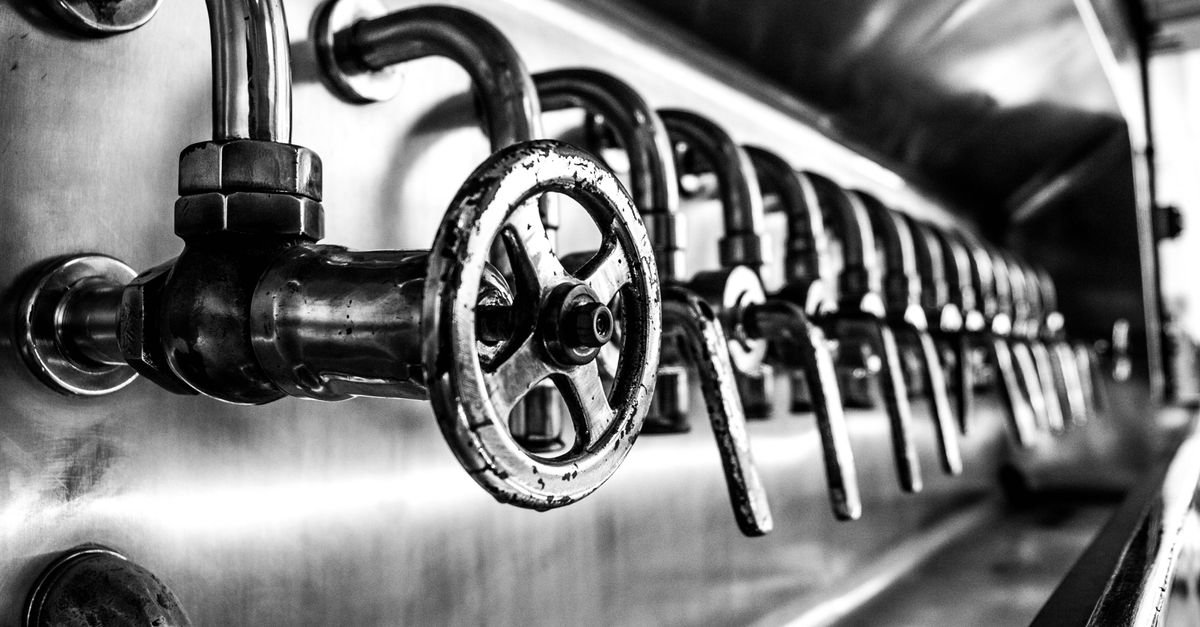
Most consumer machines use a pressure-actuated unloader, known in the trade as a trapped-pressure unloader. When you release the trigger, it diverts the pump’s output into a bypass loop — and it does something else at the same time. EnviroSpec describes the design plainly: the check valve in the outlet “also traps the pressure in the hose giving the characteristic pop of pressure when the trigger gun is opened that is associated with a pressure-type unloader” (EnviroSpec, all about unloaders). They also list the downside without softening it: “It can be dangerous when the operator is working from a ladder; it also spikes the pressure within the equipment.”
So by design, your hose stays full of high-pressure water between squeezes. That pressure sits on the back of the trigger valve’s ball, and your finger has to lift the ball against it every single time. On a healthy system that is a firm pull. When the unloader is set too high, or the bypass path is partly blocked by debris, the trapped pressure is higher than the gun was ever meant to fight, and the trigger goes from firm to genuinely immovable.
The tell is that a gun in this state is not damaged. Release the pressure and it works. Reconnect and it jams again. If that is your pattern, the gun is the messenger, and the conversation moves to pressure washer unloader valve adjustment — where the instruction is always to come *down* to a setting rather than up to one.
The flow-actuated type behaves differently, for what it is worth: with no check valve holding pressure back into the unloader, EnviroSpec notes “the pressure throughout the system is relieved each time the unloader cycles”, so the gun opens against very little. That is also why a flow-actuated machine feels soft off the line, which people then complain about. You cannot have both.
The Lever That Goes Down and Stays There
This is the row in the table with the warning attached, so it gets treated properly.
A trigger gun returns to the closed position on a spring, assisted by the water pressure behind the ball. When the lever stays in, one of three things has happened.
The return spring has failed or come off its perch. Springs in a wetted, occasionally frozen, sometimes scaled environment do not last forever, and a spring that has lost a coil or slipped its location does not weaken gradually — it stops. The lever then feels loose and floppy rather than stuck, which is a useful distinction: a floppy trigger that stays in is a spring; a solid trigger that stays in is something jammed.
Grit has parked itself in the lever pivot or behind the plunger. The inlet screen on a consumer machine is a coarse filter by design. Pressure-Pro’s own guidance sets the expectation for water quality bluntly — “your water should not contain particles larger than 80 microns” — which is a lot finer than what arrives from a bucket, a tank or a site standpipe. Anything that gets past goes to the only precision moving part you are holding.
The safety catch is fouling the return. A cracked catch, or one that has been forced while the trigger was held, can sit against the lever’s return path.
Whichever it is, the consequence is the same and it is the part that matters: the gun is no longer a shut-off valve. The wand will keep firing for as long as the pump runs, and it will keep firing weakly for a second or two afterwards while the hose empties. Do not put it down, do not pass it to anyone, and do not pick it up by the far end to look at the nozzle. Shut the machine off first, every time, and keep in mind that high-pressure water breaks skin at close range through an entry wound you could easily mistake for a thorn scratch. If a jet ever does break your skin, that is an emergency room the same day rather than a plaster and a wait-and-see.
The fix, once the system is depressurised, is a strip and a flush, or a new gun. It is not a fix you apply with the hose still connected.
Heavy, Gritty or Spongy: What the Feel Is Telling You
A trigger that has become hard work is telling you something specific, and it is worth listening before it becomes the section above.
Heavy and smooth is usually scale on the sliding surfaces. Hard water deposits calcium carbonate on every wetted part, and the valve stem is a close-tolerance sliding fit with no clearance to spare. A soak and a flush, rather than a part.
Heavy and gritty — you can feel individual particles as the lever travels — is debris between the stem and its bore. Flushing backwards through the gun with the machine disconnected shifts most of it.
Heavy from new, or heavy on a machine you have just upsized is not a fault at all. It is a gun that is underspecified for the pressure it is fighting, and nobody publishes a trigger pull force in pounds for these things, so you have nothing to compare against except your own hand. What manufacturers do publish is a reduction. Suttner’s catalogue claims its Relax-Action guns “reduce trigger pulling force by 40% and holding force up to 90% compared to standard spray guns” (Suttner product catalogue, page 20). That is a marketing figure and I would not build a diagnosis on it — but a manufacturer does not engineer a 90% reduction in holding force for a problem that does not exist.
Spongy — travel with no crisp end point — is either air still in the system after a restart, or a seat that has stopped sealing. Purge the air first: water on, machine off, trigger held open until the flow runs steady. If it is still spongy after that, the seat is going and you are now reading the wrong article, because the next symptom is a drip. That one lives in pressure washer gun leaking.
And now the opinion, because the internet’s standard answer to this is wrong. Search “stuck pressure washer trigger” and the first advice you meet is to spray penetrating oil into the mechanism and work it back and forth. Do not. Two reasons, both mechanical. First, if the trigger is stuck because the hose is charged, oil does nothing about pressure and you have just spent ten minutes forcing a lever on a gun that is still live. Second, the gun’s seals are nitrile or EPDM and the seat relies on a clean, dry-fitting contact; petroleum distillates swell nitrile and strip the silicone grease that the O-rings were assembled with, so the trigger that felt better on Saturday weeps on Sunday. Water, vinegar for scale, and silicone grease on reassembly. The penetrating oil belongs on the hinges of the gate, not inside the only off switch the machine has.
A Frozen Gun Does Not Announce Itself
A gun that has spent a night below freezing with water in it will not always look any different, and the first sign is a trigger that has gone solid.
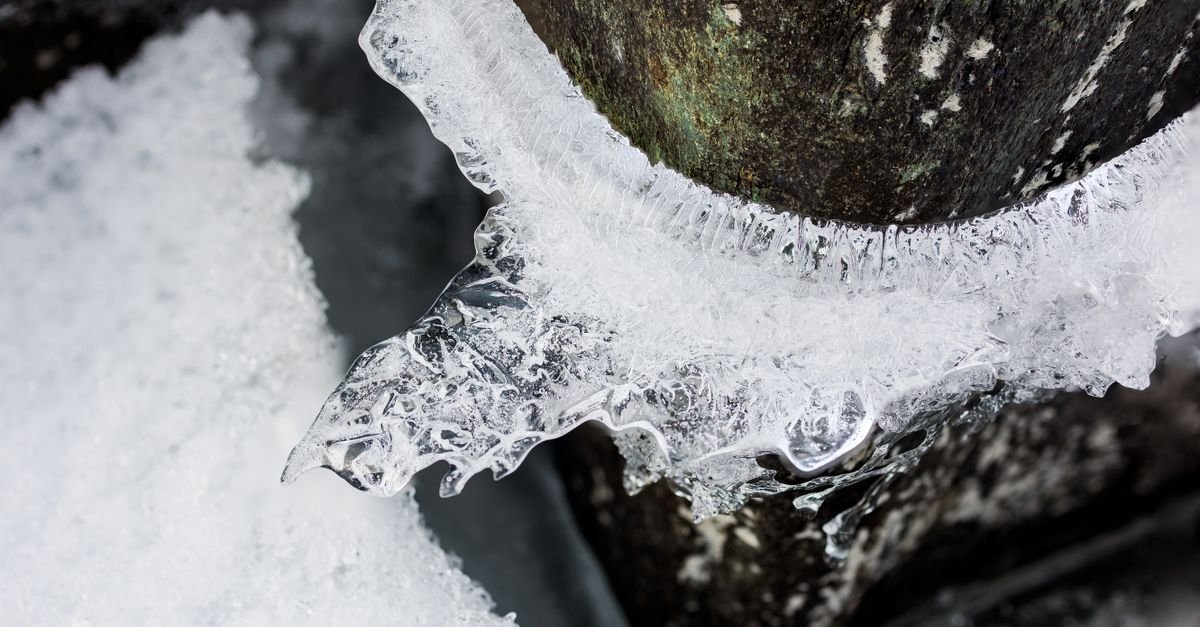
Ice in the valve cavity locks the ball to its seat, and ice in the stem bore locks the stem. Neither of those responds to force, and force is the wrong instinct here for a reason people underestimate: the internals are brass and plastic in a plastic shell, and the lever gives you enough mechanical advantage to snap a pivot without feeling like you tried hard. If the gun came out of an unheated shed in January and the trigger will not budge, the first hypothesis is ice, not failure.
Bring it indoors and let it thaw at room temperature. Not a heat gun, not boiling water, not the engine’s exhaust — rapid local heating on a part that is partly frozen is how you get a cracked body to go with your stuck trigger. It takes as long as it takes, which is usually an hour or two for a gun.
Then check the rest of the machine before you run it, because a gun cold enough to freeze was attached to a pump in the same weather, and the pump is the expensive half of that sentence. Turn the pump over by hand where you can, look along the head for hairline cracks, and do all of it before you touch the starter cord rather than after.
FAQ
Why is my pressure washer trigger stuck?
Almost always one of four things: the safety catch is engaged or fouling the lever, trapped pressure in the hose is holding the valve shut, mineral scale or grit has seized the sliding stem, or the return spring has failed and left the lever pulled in. Work through them in that order — the first two are free to check and account for a large share of cases.
How do I release the pressure from a pressure washer gun?
Shut the engine or motor off, shut the water off at the tap, point the gun somewhere harmless and squeeze the trigger until the water stops. Manufacturers put this in their manuals as a caution because the hose stays at working pressure after shutdown. If the trigger will not move, loosen the high-pressure hose at the pump end slowly instead, with a cloth over the fitting.
Can I spray WD-40 on a stuck pressure washer trigger?
It is the most common advice online and it is a poor idea. Penetrating oils swell nitrile seals and wash out the grease the O-rings were built with, so a gun that loosens today may leak next week. Flush with clean water, soak in white vinegar if the cause is hard-water scale, and use silicone grease on reassembly.
Why won’t my pressure washer trigger go back up after I let go?
Either the return spring has broken or slipped, grit is jammed in the pivot or stem, or a damaged safety catch is blocking the return. The gun has stopped being a shut-off valve in all three cases, so the wand stays live while the pump runs. Shut the machine down and relieve the hose before investigating.
Is it safe to carry on using a pressure washer if the trigger sticks?
A trigger that is merely stiff can be finished with, though it is worth fixing before it seizes. A trigger that stays pulled in cannot, because you no longer have a way to stop the jet other than switching the machine off. That is not a working shut-off and the job waits.
Can a stuck trigger stop the engine from starting?
On a gas machine, yes, and it catches people out. Pressure-Pro’s troubleshooting table lists “pressure built up in system” as a cause of an engine that will not start or crank over, with the remedy “squeeze trigger gun to relieve pressure”. A pump trying to work against a dead-headed hose is a load the starter has to overcome.
Does the safety lock make a stuck trigger safe to handle?
No. The lock is a mechanical block on the lever, and it does nothing about water already stored in the hose or about a valve that is jammed open internally. A locked gun with a stuck-open valve is still a live wand.
Most Stuck Triggers Are Not Broken Triggers
The thing that makes this fault confusing is that the trigger is the only part you can feel, so it gets the blame for conditions it is merely reporting. Trapped pressure, a half-engaged catch, a night below freezing, an unloader wound up too far — the lever is the last link in a chain, and it stiffens when anything earlier in that chain goes wrong.
So run the free checks before the parts. Shut it down, shut the water off, squeeze until it stops, then see what the lever does with an empty hose. If the answer is “works perfectly”, your gun was never the problem and the wider anatomy of that chain is laid out in the guide to the pressure washer gun and hose.
And if the answer is that the lever is still sitting there pulled in, staring at you — that is the machine telling you it has lost the ability to stop, and it is the one fault on the whole rig you genuinely cannot work around for the rest of the afternoon.