Last Updated on September 25, 2026 by Umar Farooq
A pressure washer flooded engine has more petrol sitting in the cylinder than will burn, and the fix is to stop pulling, shut the fuel off, take the plug out, open the choke and the throttle fully, and crank the surplus out through the plug hole. That part takes about five minutes and costs nothing.
What almost nobody tells you is what happens next. Clearing a flooded cylinder is not a repair. It puts the machine back exactly where it was ten minutes before you flooded it — which, if it was already refusing to start then, is not where you wanted to be. So this page covers the clearing procedure properly, and then covers the more useful question of why the cylinder filled up at all.
The Three Signs That Say Flooded and Not Something Else
Petrol smell on its own proves very little. A cranked engine always smells faintly of fuel, and so does one with a weeping carburettor bowl. You want all three of these together before you take anything off.
One: it smells of raw petrol at the air filter housing. Not the tank, not the ground underneath — the intake. Unburnt fuel has a sharp, wet smell quite unlike exhaust, and smelling it with your head near the filter cover means there is liquid where there should be vapour.
Two: the plug comes out wet. Pull the lead, undo the plug, look at the firing end. Wet and shiny with fuel is the diagnosis; dry sends you somewhere else entirely. (Reading the deposits is a separate exercise. For today, wet means flooded, and that is all you need from it.)
Three: it fired once, or coughed, and has not fired since. This is the sign people skip and the most diagnostic of the three. A flooding engine usually catches briefly on the pull where the mixture happened to pass through the narrow band that would burn. After that the cylinder is wetter still, the plug is soaked, and it goes silent no matter how hard you work. An engine that has never made a sound, from the very first pull, is more likely short of spark than drowning in fuel.
One free tell on top of those: a flooded engine spins *easily*. The cord feels light and fast, because liquid fuel in the cylinder spoils what compression sealing you had. If the cord has gone heavy instead, you have a different problem, and pressure washer hard to start sorts a heavy pull from a light one.
Pressure Washer Flooded Engine: The Two Ways People Get There
There are only two routes in, and they are not equally common.
Route one: too much choke on an engine that did not need it. The choke plate closes off the intake, dropping the pressure downstream and pulling extra fuel through the jets. That is exactly what a cold cylinder wants, because cold metal condenses petrol out of the mixture faster than it burns. A warm engine wants none of it. Close the choke on a machine that has been running twenty minutes, or leave it shut after the engine has already fired, and you are over-fuelling a cylinder that was rich to begin with. This is the version everybody writes about, and the less interesting one.
Route two: repeated pulls with the choke closed, after the engine failed to start for some entirely different reason. This is the common one. The machine will not go. You close the choke, because that is what you do when something will not start. You pull. Nothing. You pull again. Nothing. Each of those pulls draws in a full charge of very rich mixture, and because the engine is not firing, none of it leaves. Ten pulls later the cylinder is wet, the plug is soaked, and you have manufactured a second fault on top of the one you came out here with.
Kohler’s service manual makes this uncomfortably clear without meaning to. Its published procedure for testing whether fuel is reaching the combustion chamber reads: “Disconnect and ground spark plug lead. Close choke on carburetor. Crank engine several times. Remove spark plug and check for fuel at tip” (Kohler CH245-CH440 service manual). Close the choke, crank several times, find fuel at the plug. That is the manufacturer’s test for a working fuel system, and it is also, word for word, how you flood an engine. The only difference between the test and the mistake is whether you meant to do it.
Flooding Is Usually the Second Fault, Not the First
Here is the opinion, and it is what the rest of the internet leaves out of this topic: on a machine that would not start before you flooded it, flooding is a consequence rather than a cause. Clearing the cylinder is housekeeping. It is not the fix, and treating it as the fix is how people end up doing this three weekends in a row.
The mechanism is simple enough to hold in your head. An engine needs spark, compression and a burnable mixture at once, at the miserable speed a human arm can turn a crankshaft. Flooding breaks the mixture leg — far too much fuel, not enough air to burn any of it — and it breaks the spark leg too, because liquid petrol bridging the electrodes gives the current an easy conductive path instead of making it jump the gap. A flooded engine fails on two counts at the same time, which is why it feels so absolutely dead.
Clear it and you restore both. But if the original complaint was a plugged pilot jet, a blocked tank cap vent, a stale tank or a dead coil, none of that has been touched. The engine fails again, you reach for the choke again, and you flood it again — faster this time, because the plug is now marginal. So: clear the cylinder, then diagnose, and treat the ten wasted pulls as information. The machine has told you it has spark of some sort and a fuel supply that works well enough to over-deliver, which narrows things considerably.
Fuel Off, Choke Open, Throttle Wide: the Clearing Sequence
Six steps. The order matters more than the speed.
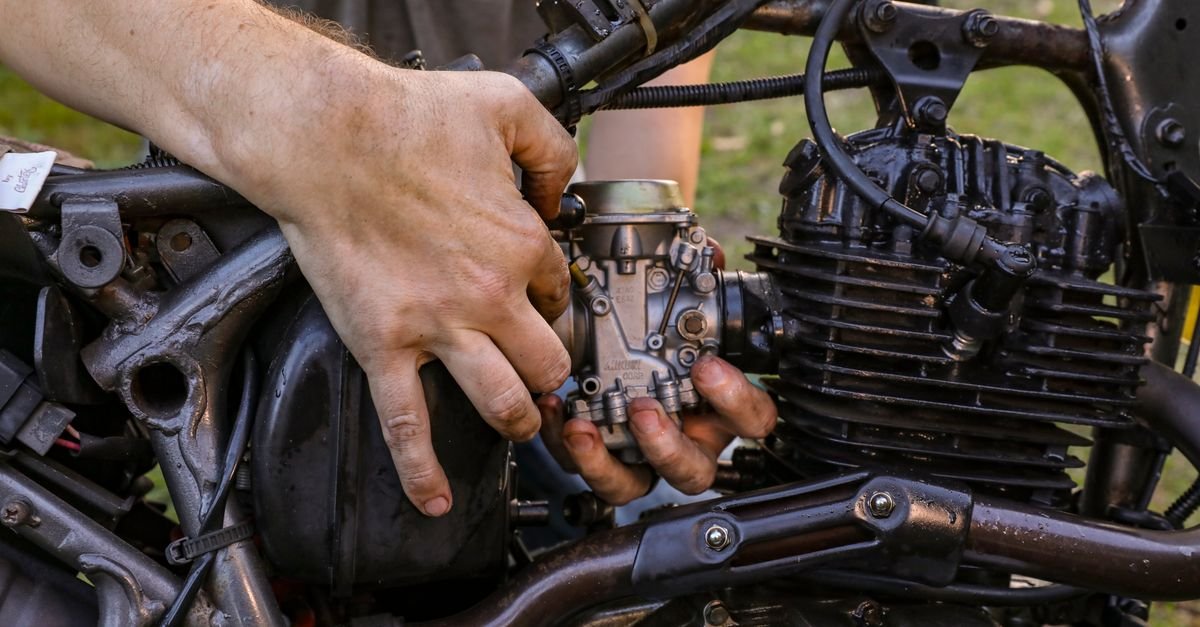
1. Shut the fuel tap. If the machine has one, turn it off now. You are about to crank the engine repeatedly, and every one of those revolutions is another chance to draw more fuel through a carburettor that has already proved it will over-deliver.
2. Open the choke fully. Not half. All the way to run. The point of everything that follows is moving as much air through the cylinder as possible, and a closed choke plate is a lid on the air supply.
3. Open the throttle wide. Honda’s troubleshooting guidance for a flooded GX engine is exactly this — dry and reinstall the spark plug, then “start engine with throttle lever in MAX. position” (Honda GX160 troubleshooting). Wide open throttle puts the butterfly out of the way so the cylinder gets an unrestricted lungful on every intake stroke, which is how the surplus goes out of the exhaust.
4. Remove the plug and crank it out. Pull the recoil six to ten unhurried times with the plug out. A fine mist coming from the plug hole is the job working; lay a rag loosely over the hole if you would rather not wear it.
5. Dry the plug, or fit a new one. Wipe the firing end and leave it in the sun for a few minutes. A plug soaked repeatedly over a season is worth replacing rather than nursing.
6. Refit and start it normally — no choke. Plug in, lead on, fuel tap back on, throttle still wide, choke still open. Treat it as a warm start, because as far as fuelling is concerned it is one. Expect a puff of smoke on the first fire as the last of the surplus burns off.
One safety point, said once. You are about to push petrol vapour out of an open hole in the cylinder head while an ignition coil a few inches away makes sparks. Kohler prints the same warning on every fuel-system page of that manual: petrol “is extremely flammable and its vapors can explode if ignited,” and “spilled fuel could ignite if it comes in contact with hot parts or sparks from ignition.” So follow Kohler’s own first instruction and ground the plug lead — clip it to bare metal on the engine, or, if you are leaving the plug attached to check for spark, lay the plug on bare metal as far from the plug hole as the lead will reach. Never hold the plug in your hand, and never leave the lead loose near the open hole where it can arc.
If you would rather not crank at all, the lazy version works: plug out, choke and throttle open, walk away for fifteen to twenty minutes. Petrol evaporates. It is slower and less thorough and asks nothing of you but patience, which is occasionally the correct repair.
Why Another Ten Pulls Makes It Worse
The instinct, when a machine will not start, is to pull harder and more often. On a flooded engine that is the one response guaranteed to make things worse, and it is worth knowing why rather than just being told.
Each additional pull with fuel available does three things. It draws another over-rich charge into a cylinder that already holds more than it can burn. It drags the plug through more liquid fuel, so the conductive bridge across the electrodes gets more reliable rather than less. And — the one that costs money — it washes the oil film off the cylinder wall.
That last one is a monitored condition in the lubrication trade rather than a curiosity. Noria’s oil-analysis guidance puts it plainly: “the fuel will also lead to cylinder liner washdown in which the fuel removes the oil and additive films from the cylinder wall,” and once fuel has thinned the oil, it “cannot support the load in the engine or build a sufficient film to keep the engine parts separated.” The trade’s own thresholds for fuel in oil are “a recommended cautionary limit of 1.5 percent and a critical limit of less than 5 percent” (Machinery Lubrication, Best Tests to Detect Fuel Dilution). Those numbers come from larger engines, and I could not find published dilution figures for a splash-lubricated pressure washer engine, so take them as the mechanism rather than a limit for yours.
The direction is not in dispute, though, and a splash-lubricated engine has no reserve — the pool in the crankcase is the whole system. No pump, no filter, no pressure gallery holding a film in place. Petrol that gets past the rings has nowhere to hide. Which is the real argument for stopping at ten pulls: you are not being told to give up, you are being told that the next twenty cannot start the engine, because the cylinder is already too wet and adding wetness is not a plan.
A Float Needle That Never Shuts Floods It While It Sits
Everything above assumes you flooded it. There is a version where the machine floods itself overnight, with the fuel tap open, while you are asleep and entirely blameless.
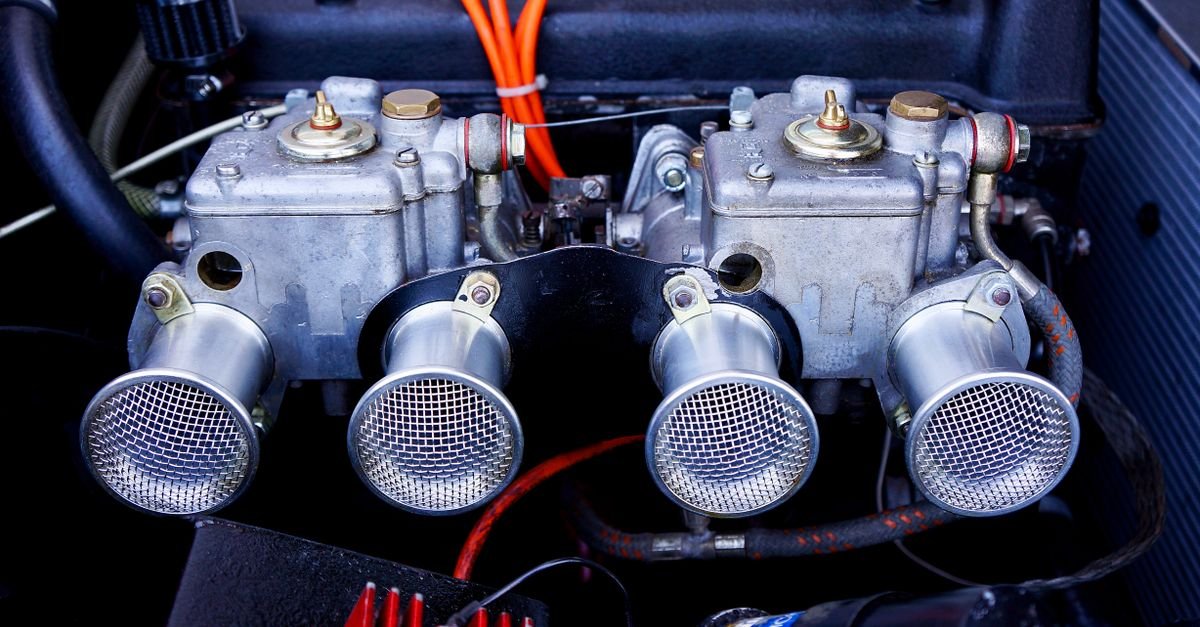
The carburettor bowl keeps its level the way a toilet cistern does: a float rises, a needle presses into a seat, the supply stops. Put a speck of grit under that needle, glaze the seat with varnish over a winter, or crack the float so it fills with fuel, and the supply never stops. Fuel keeps arriving — and if the inlet valve happened to be open when the engine stopped, one of the places it arrives is the cylinder. Kohler’s carburettor table lists “dirt under fuel inlet needle” as a cause of running rich, and the remedy it gives is as plain as you could want: remove the needle, clean the needle and the seat. Not a rebuild. A clean.
Here is the boundary, because two articles on this site touch the same part from different sides. If the symptom is fuel appearing where it should not be — a wet patch under the machine, petrol in the air filter, a smell in the garage — that is a leak, and pressure washer fuel leaking is the page for it. This page owns the same failure when it presents as a no-start: tap left on, stood for a fortnight, now the plug is wet and the machine will not fire.
Two things worth knowing about that version. First, check the engine oil before anything else. Fuel that overfills the bowl can work past the rings into the crankcase, and a dipstick reading *above* full that smells of petrol is not an overfill — it is diluted oil, and it needs changing before the engine runs again. Second, if the recoil will not move at all — not heavy, genuinely locked — stop pulling. That is the one case where liquid in the cylinder is enough to lock it hydraulically, and forcing it bends things. Plug out, fuel out, turn it over by hand.
If the needle and seat turn out to be glazed rather than merely gritty, the full strip is set out step by step in pressure washer carburetor cleaning.
What to Check in the First Minute After It Fires
Do not put the tools away. The engine is running now, and telling you things it could not while it was silent.
Does it need the choke to keep running? If the engine only stays alive with the choke partly closed after several minutes, it is not being helped, it is being propped up. Something is restricting the fuel circuit or letting unmetered air in, and you will be back here.
Is it running rich? Kohler lists the causes in order, and the first two are free to check: a clogged air cleaner, and a choke partially closed during operation. Third is that fuel inlet needle again. If the machine you have just unflooded is blowing black and hunting, the air filter takes thirty seconds and is the cheapest thing in the diagnosis. A puff of smoke on the first fire is the leftover flood burning off and is expected; continuous smoke a minute later is a different conversation.
What is on the dipstick? Level, colour and smell. Diluted oil looks thin and smells of petrol, and if the machine has been flooding itself while parked, this is where the evidence is.
And why did it not start the first time? Fuel age is the usual answer on a machine that has sat since last season, and a blocked tank-cap vent is free to test — loosen the cap and see whether it behaves differently. Neither is glamorous. Both are likelier than anything expensive.
FAQ
How do you tell if a pressure washer engine is flooded?
Take the spark plug out and look at the firing end. Wet and shiny with fuel means flooded; dry means the problem is elsewhere. Two supporting signs make it near-certain: a raw petrol smell around the air filter housing rather than the tank, and a machine that coughed or fired once and has been silent since. A flooded engine also spins easily on the recoil, because the liquid fuel spoils the compression you would otherwise be fighting.
How long do you wait for a flooded engine to clear?
Fifteen to twenty minutes with the plug out, the choke open and the throttle wide is usually enough for the petrol to evaporate. Longer does no harm. Cranking six to ten times with the plug removed does the same job in a couple of minutes by pumping air through the cylinder, and is more thorough because it clears the intake tract too.
Can you flood a pressure washer by pulling it too many times?
Yes, and it is the usual way it happens. Every pull with the choke closed draws in another very rich charge, and if the engine is not firing, none of it leaves. Ten or fifteen pulls on a machine that was refusing to start for an unrelated reason will wet the plug. Stopping at about ten and working out what is actually wrong saves the extra half hour.
Do you use the choke to start a flooded engine?
No. The choke makes the mixture richer, and a flooded engine’s whole problem is that it is already far too rich. Open the choke fully, open the throttle wide, and start it as though the engine were warm. Honda’s published instruction for a flooded GX engine is to dry and refit the plug and start with the throttle lever at maximum, with no mention of the choke at all.
Why does my pressure washer smell like gas and won’t start?
Usually because the cylinder is flooded, which is what the smell is telling you; check the plug, and wet confirms it. But a petrol smell with a wet patch under the machine, or fuel soaking the air filter, is a leak rather than a flood — and a leak is a fire risk that gets dealt with before any starting attempt. Shut the fuel tap and work out which one you have before pulling the cord again.
Will a flooded engine damage a pressure washer?
Cleared promptly, no. Flooded and cranked repeatedly over a season, yes — raw fuel washes the oil film off the cylinder wall and some ends up in the crankcase, thinning oil that a splash-lubricated engine has no backup for. The version that does immediate damage is a float needle that has let fuel fill the cylinder while the machine sat: if the recoil will not move at all, stop pulling and take the plug out before you bend something.
Do I need a new spark plug after flooding the engine?
Not necessarily. Wiping the firing end dry and letting it air for a few minutes is usually enough. Replace it if it is more than a couple of seasons old, if it has been soaked several times, or if the engine fires on the dried plug and then misfires. A plug is a few dollars and it removes one variable from a diagnosis that still has others in it.
The Cylinder Was Never the Problem
Getting a flooded engine running again is genuinely easy, which is why most of what is written about it stops there. Fuel off, choke open, throttle wide, plug out, crank it dry, plug back in. Five minutes, no parts, and the machine runs.
The second half is worth doing because on most of these machines the flood was never the fault. It was what happened while someone patiently tried to start something with a stale tank, a blocked vent or a dirty jet, and the tenth pull on a closed choke did exactly what the tenth pull on a closed choke does. Clear the cylinder and stop, and you have removed the symptom you created and left the one you arrived with.
So clear it, then spend ten minutes on the boring questions — how old is the fuel, does the cap vent, does it need the choke to stay alive, what is on the dipstick. And put the plug down on bare metal well away from the hole it came out of. Petrol vapour and a spark are a combination that only needs to be interesting once.