Last Updated on September 25, 2026 by Umar Farooq
**A pressure washer low oil shutdown trips on oil *level* measured at one spot inside the crankcase — not on how much oil you poured in — which is why a correctly filled engine sitting on a sloped driveway, a van ramp or a tilted trolley will quietly kill its own ignition with a full sump.**
That single distinction explains almost every version of this complaint. You checked the dipstick. It read fine. You topped it up anyway, because everyone does, and it still dies four seconds after it catches. The sensor is not being unreasonable. It is measuring something slightly different from the thing you measured, and it is measuring it where it happens to sit.
What follows is the order I would work it in: the honest one, where the sensor is presumed right until you have genuinely ruled it out. If the machine is cutting out for reasons that have nothing to do with oil — fuel, heat, cords, water supply — the full fault tree lives in pressure washer keeps shutting off. This page is about the sensor itself.
What the Low Oil Shutdown Actually Measures
There is no clever electronics in here. On a residential pressure washer engine the low oil shutdown is a float on a short arm sitting in the oil bath, with a magnet in it and a reed switch above it. Oil holds the float up. Drop the oil and the float drops, the magnet swings past the switch, and the switch closes a circuit to ground.
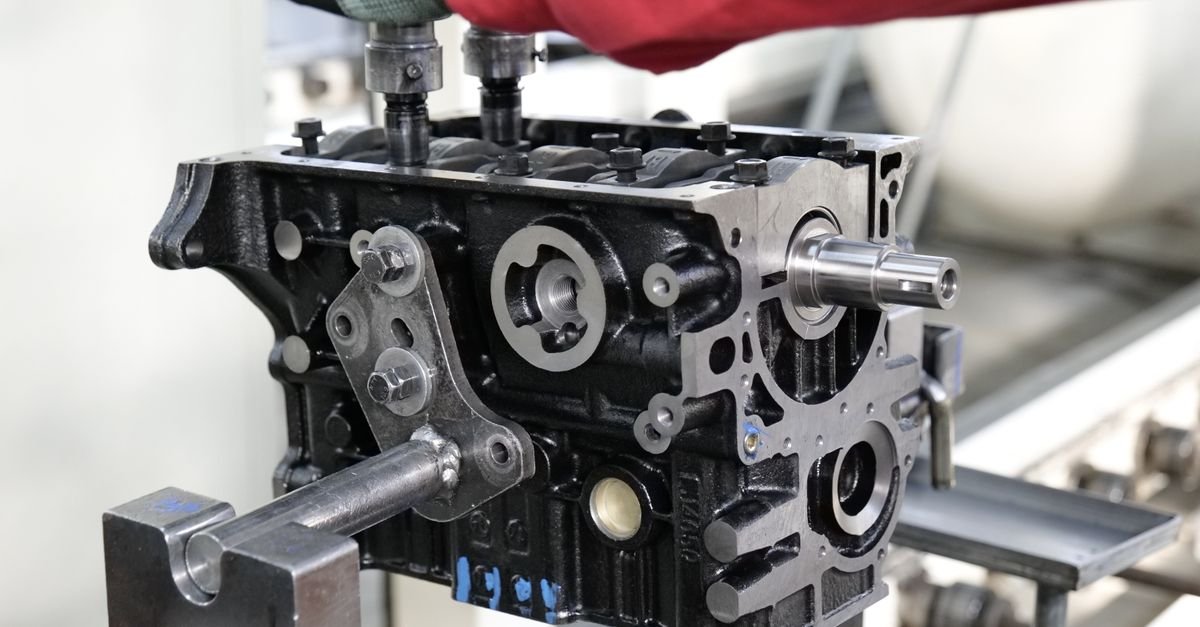
What that circuit grounds is the ignition kill wire — the same wire the on/off switch on the panel uses. That is worth holding onto, because it explains why the machine gives you nothing at all. There is no beep, no light, no limp-home mode on most pressure washers. The engine simply stops the way it stops when somebody flicks the switch, which is exactly what has happened. Something flicked the switch, and it was a magnet.
Honda’s version is called Oil Alert and the company describes it in two sentences worth reading carefully: the system “is designed to prevent engine damage caused by an insufficient amount of oil in the engine,” and “before the oil level in the engine can fall below a safe limit, the Oil Alert indicator comes on and the Oil Alert system automatically will stop the engine” (Honda, Oil Alert system). Note the word *level*, twice, and note that the shutdown happens before the safe limit is reached. It is a margin, deliberately set early.
Bigger pressure-lubricated engines — mostly commercial and hot-water machines — use a different sensor entirely: an oil *pressure* switch screwed into the block, which trips when the pump stops making pressure rather than when the oil surface drops. Kohler calls this Oil Sentry. It is the more informative of the two, because it reacts to oil that is not circulating as well as to oil that is not there. Almost no homeowner pressure washer has one.
Either way, here is the honest scope of the thing:
| It can detect | It cannot detect |
| Oil level below the float, at the float’s location | How much oil is in the engine overall |
| A crankcase that has genuinely run dry | Oil that is black, acidic or a decade old |
| The machine tilted far enough to uncover the float | Oil diluted with fuel, unless the level moves |
| Oil that has drained out through a leaking seal | Anything at all happening in the pump |
That last row is the one nobody mentions, and it gets its own section further down.
Read the Dipstick Properly Before You Blame the Sensor
The sensor is right far more often than it is wrong. I am going to keep saying that, because the comment sections for this fault are full of people who replaced a switch and then replaced an engine.
Check it like this. Machine on genuinely flat ground, engine off, and give it two or three minutes — oil that was flung around the crankcase at running speed needs time to drain back down, and a dipstick read thirty seconds after shutdown reads low on almost any small engine. Wipe the stick, put it back in fully, pull it out, read it.
The detail that creates false readings: some engines want the dipstick resting in the filler neck rather than screwed down, and Honda’s GX manuals say so explicitly. Screw it in on an engine that wants it resting and you read low by a useful fraction of the range, top up a level that was already correct, and arrive at an overfill — which causes the same shutdown from the opposite direction. The crank whips an over-full sump into foam, and a float cannot ride on foam any more than a boat can float on beer.
The quantities involved are small, which is why a modest error matters. A Honda GX200 — a very common pressure washer engine — takes 0.6 litres. There is no margin in that for guessing, and no engine anywhere rewards an eyeballed pour.
Two more things while you have it out. Look at the colour: milky, grey or coffee-coloured means water in the crankcase, and the machine should not run until it is changed. And smell it. That one takes a section of its own.
Grade matters as well. Generac’s guidance for its own pressure washers is SAE 30 for the first five hours of break-in, then 5W-30 synthetic across a span from -22°F to 104°F, with the note that plain SAE 30 performs well at high temperatures but can cause hard starts below 50°F, and a blunt instruction to use the dipstick or fill opening “to verify the final oil level and avoid overfilling” (Generac, what type of oil should I use in my pressure washer).
Slope Is the Reason It Trips With a Full Crankcase
Here is the part the search results miss almost completely, and it is the single most common answer to “the oil is full and it still shuts off.”

A horizontal-shaft small engine holds its oil in a shallow bath under the crank — wide and flat, only a couple of centimetres deep. The float sits at one end of that bath. Tilt the whole engine and the oil surface stays level, because oil is unimpressed by your driveway, while the case rotates around it. The end the float lives in goes shallow first. Enough tilt and the float is sitting in air with most of the oil still in the engine, twenty centimetres away, doing nothing for it.
The amount of tilt required is smaller than people expect, and it is smallest on the machines with the shallowest sumps. Driveways are not flat by accident either; they are graded to shed water away from the house, so the surface you naturally work on is the one most likely to trip the sensor.
The test costs nothing and settles it in ninety seconds. Move the machine to the flattest ground you own — a garage floor, a patio, a sheet of plywood on the lawn — and start it there. If it runs, your oil was always fine and your driveway was always the problem.
The situations that catch people out, in rough order of how often they come up:
- The apron in front of the garage, which usually falls away harder than the rest of the drive.
- A van or truck ramp. People start the machine on the ramp to move it under its own noise. Ramps are steep by definition.
- A folding trolley or dolly with the machine strapped on and tipped back.
- Grass. One wheel in a dip is enough on a small engine, and grass hides the dip.
- A machine parked nose-down on a hill so it does not roll, which is sensible, and which is also exactly the wrong orientation if the float is at the front.
Your manual publishes a maximum operating angle for the engine. Look yours up rather than trusting a number from a blog — I went looking for a single figure that covers pressure washer engines generally, and there is not one, because it depends on sump depth and on where in that sump the float happens to sit. A wedge of timber under the low wheels is a fix that costs nothing and works on every machine ever made.
When the Oil Is the Right Amount and the Wrong Stuff
Level correct, substance wrong. Three versions, and the first one surprises people because the level goes *up*.
Fuel in the crankcase. If the carburetor float needle stops sealing, fuel keeps flowing after the bowl is full, runs down the intake and past the rings into the sump. The dipstick now reads *above* the mark and smells of petrol. Pull it and sniff it — that is the entire test, and it is free. Diluted oil has a fraction of the viscosity it should, it foams readily, and a foamed sump does not hold a float up. The stuck float needle behind it is a fuel-system fault covered in pressure washer starts then dies; the crankcase full of petrol is the part that concerns this page, and the answer is to drain it rather than run on it.
That is not a cosmetic problem. Motorservice, which manufactures the pistons and bearings this happens to, describes the mechanism plainly: the oil film breaks down “often only locally, because of the high temperatures or because of fuel flooding,” after which “the surfaces of the piston, piston rings and cylinder running surface then rub against each other without any lubrication, which soon causes seizure” (Motorservice Technipedia, seizures due to lack of lubrication). Fuel flooding and a low level arrive at the same damage by different routes.
Water in the crankcase. Milky oil, from condensation after short runs in cold weather or from a failed seal. It emulsifies, the foam problem returns, and the bearing damage starts well before anything sounds wrong.
Wrong grade. Too thin for the temperature and it thins further at running heat, aerates more easily and settles lower and more mobile in the sump. Too thick for a cold morning and the engine is hard to start before the sensor is even involved. Neither is likely to be your only fault, and both stack on top of a marginal level.
Overfilled. Worth repeating because it runs against instinct: too much oil trips the same shutdown as too little. Counterweights slapping through liquid instead of skimming it turn the sump into aerated froth, crankcase pressure rises, and the float has nothing solid to sit on.
Is the Sensor Itself Dead?
Now, and only now. Flat ground confirmed, level correct, oil smelled and looked at. If it still stops in seconds, the switch or its wiring has earned your attention.
The sensor is usually a single wire — yellow on a great many engines — running from the side of the crankcase into the kill circuit. Because it works by grounding, anything else that grounds that wire produces an identical shutdown. A chafed spot where the loom crosses the frame. A wire that has drifted against the muffler heat shield and melted through its insulation. A connector that has spent three winters in a shed quietly filling with corrosion.
The pattern of the shutdown separates the candidates better than any part swap:
| What you observe | Most likely | Why |
| Dies when you nudge or roll the machine, fine when still | Chafed wire touching frame | Movement makes and breaks the contact |
| Dies at the same point after every start, repeatably | Genuine level, or a failed switch | Consistency points at a real measurement |
| Runs cold, dies once hot | Insulation softening on hot metal, or a real level fault at temperature | Heat changes both the wire and the oil |
| Started the day you serviced it | Something you disturbed | Check what your hands were near |
| Dies only under load, never at idle | Not the oil sensor at all | Look at fuel and air, not the crankcase |
The proper diagnosis is a measurement rather than a guess: with the engine off and the spark plug lead pulled, the switch should read open with the oil at level and closed to ground with the sump drained. If you have no meter and no easy access to the connector, a service shop will do that in about ten minutes, and it is worth the ten minutes rather than the alternative in the next section. A failed low oil switch is a named, orderable part on every engine that has one.
Bypassing It Trades a Free Warning for a New Engine
This is where I will be unambiguous, because the top of the search results for this problem is substantially made up of threads and videos explaining how to jumper the wire, and none of them cost anything to make.
Work out what the trade actually is. If your oil really is fine and the sensor really has failed, bypassing it gains you nothing except the removal of a warning you were not going to need. If your oil is *not* fine — and it is not fine more often than people believe, because slope and fuel dilution both hide from a casual dipstick read — then the bypass is the only thing standing between a five-minute top-up and a seized engine.
The seizure is not a distant theoretical possibility either. Lubrication in these engines is splash: a dipper on the connecting rod throws oil onto the bore and the bearings every revolution, and the whole arrangement depends on there being a pool for it to dip into. Motorservice notes that where the level is low, “the lack of oil affects the entire surface of the cylinder” — not a patch, the whole bore. A Honda GX200 — one of the commonest engines to find under a pressure washer — is rated at 3,600 rpm, which is sixty of those dips every second. An engine that busy does not need long to find out what happens when the pool runs out.
On a homeowner machine the engine is most of what you paid for, so replacing it is very close to replacing the machine. Against that, a low oil switch is a small part and half a litre of oil costs less than lunch. There is no version of this arithmetic where disabling the sensor comes out ahead, which is why there is no bypass procedure on this page.
It Is Not Watching Your Pump
Here is the thing almost nobody says out loud, and it matters more than the rest of this article combined.
The low oil sensor is in the engine crankcase. It knows nothing whatsoever about the pump bolted to the other end of the crankshaft — the part that, on a homeowner pressure washer, is overwhelmingly the thing that dies first.
Generac states the split cleanly: “Pump oil is separate from engine oil,” and “residential pressure washers with axial cam pumps are sealed and do not require pump oil maintenance” (Generac, what type of oil should I use in my pressure washer). Sealed, in this context, means there is nothing to check and nothing watching it. A triplex pump has its own oil and its own sight glass, and nothing watching that either.
So consider what your machine will cheerfully do without a murmur of protest: run dry with no water connected, cook itself in bypass with the trigger released, sit out a frost with water in the manifold, cavitate on a starved hose. Every one of those damages the pump, and not one of them grounds a single wire. The engine has a guardian. The pump has you. The oil half of that job is in pressure washer pump oil.
If the low oil shutdown has irritated you this afternoon, that irritation is the system working. The part with no sensor at all is the one worth worrying about.
FAQ
Why does my pressure washer shut off when the oil is full?
Because the sensor measures level at one point in the crankcase rather than total volume. Tilt the engine on a sloped driveway, a ramp or a trolley and the oil surface stays horizontal while the case rotates, uncovering the float while most of the oil is still in the engine. Move the machine to genuinely flat ground and start it there — if it runs, the slope was the fault, not the sensor.
Can I run a pressure washer with the low oil sensor disconnected?
You can, and it is a poor trade. The sensor exists because splash-lubricated small engines seize quickly once the oil pool stops feeding the rod dipper, and grounding out the switch removes the only warning the machine gives. If the oil genuinely is correct, bypassing gains you nothing. If it is not, it converts a top-up into a replacement engine.
How do I test a low oil sensor on a pressure washer?
With the engine off and the spark plug lead removed, the switch should read as an open circuit with the oil at the correct level and closed to ground with the sump drained. Before you get that far, check the wire itself: it works by grounding the ignition, so a chafe against the frame or a melted patch near the muffler produces exactly the same shutdown as a failed sensor.
Will a pressure washer start if the oil is low?
Often it starts and then stops within a few seconds, because many engines allow a short window for oil to circulate before the shutdown arms. Some models will not fire at all. A machine that catches, runs three or four seconds and dies every single time, on flat ground, is a very common low oil signature.
Does the low oil shutdown protect the pump?
No. It monitors the engine crankcase only. Pump oil is a separate system, and on most residential machines the axial pump is sealed with no oil service at all. Running dry, bypass overheating and freeze damage all kill pumps without triggering anything.
Can the wrong oil cause a low oil shutdown?
Indirectly, yes. Oil that is too thin for the operating temperature aerates more readily and sits lower and more mobile in the sump, which lets a marginal level trip. Oil diluted with petrol from a leaking carburetor float needle is worse — the level rises, the dipstick reads high, and the foam still will not hold the float up.
Why does my pressure washer shut off on a slope but not on the lawn?
Because the lawn is flatter than the driveway, which is graded to shed water away from the house. The float needs only enough tilt to sit above the oil surface at its end of the crankcase, and a shallow sump does not need much. Put a wedge of timber under the low wheels and the problem usually disappears.
Does overfilling the oil cause a shutdown too?
It can. Too much oil puts the crank counterweights through liquid instead of skimming it, whipping the sump into foam and raising crankcase pressure. Foam is not a level, so the float drops. Overfilling and underfilling produce the same symptom, which is why the fix always starts with reading the dipstick properly rather than with adding more.
Level Ground First, Then Argue
The whole diagnosis fits in one line: move it somewhere flat, wait two minutes, read the stick properly, then smell it. Four steps, no tools, and between them they account for the overwhelming majority of machines carried into a shop with a low oil complaint. Only when all four come back clean does the wiring deserve a meter, and only after the meter does a part deserve ordering.
The sensor is not your opponent here. It is a magnet on a float that costs the manufacturer a few dollars and has been quietly saving engines since before most of these machines were designed, and the one move that genuinely makes your situation worse is removing it. Wedge the wheels, not the wire.