Last Updated on September 25, 2026 by Umar Farooq
A pressure washer swivel leaking from the small hole drilled in the side of its body has a worn rotating seal and needs a seal kit now, not next month; a pressure washer swivel leaking from either threaded end has an unsealed thread, which is a fifty-cent problem and not a dying part.
Those two leaks come out of the same lump of stainless steel about four centimetres apart, and they mean completely different things. Telling them apart takes a cloth and thirty seconds, and it is the difference between a seal kit and a new assembly — which, on the trade boards, is roughly the difference between forty dollars and two hundred and seventy-five.
Two Different Parts Share the Word Swivel
Before anything else: there are two components on a pressure washer that everybody calls a swivel, and they have almost nothing in common except that water goes in one end and something turns.
The first is the gun swivel — a short barrel between the hose and the trigger gun handle, there so the hose does not wind up every time your wrist does. It rotates when you rotate, which is to say occasionally, slowly, and through maybe a quarter turn. It is sealed by an ordinary static O-ring, and when it drips, it drips for ordinary static O-ring reasons. That one belongs to the gun, and it is location number two in the six places a trigger gun lets water out.
The second is a rotary union, and it is a genuinely different animal. You will find one at the top of a surface cleaner head, in the centre of a hose reel, at the elbow of a ceiling boom or inside a rotating duct-cleaning tool. It spins continuously while the machine runs — a surface cleaner swivel holds a leak-free seal at 4,000 to 5,000 PSI while turning at over 2,000 RPM (J. Racenstein, surface cleaner swivels). It contains bearings. It has a service life measured in hours.
| Gun swivel | Rotary union | |
| Where | Between hose and gun handle | Surface cleaner, hose reel, boom, rotating lance |
| Motion | A fraction of a turn, when you move | Continuous, up to 2,000+ RPM |
| Seal type | Static O-ring | Rotating face seal on a hardened shaft |
| Typical fix | An O-ring | A seal kit, or the whole assembly |
The test for which one you are holding takes no tools. Turn the water on and watch the part above the leak. If it turns by itself, it is a rotary union and the rest of this article is written for you. If it only turns when you turn it, you have a gun swivel and the fix is a rubber ring. (Search results for this problem mix the two freely, which is why half the advice you will read tells you to replace a twenty-dollar part and the other half tells you to grease a bearing you do not have.)
What Is Actually Turning Inside a Rotary Union
A rotary union is two rooms with a wall between them, and the whole design problem is that the wall has to spin.
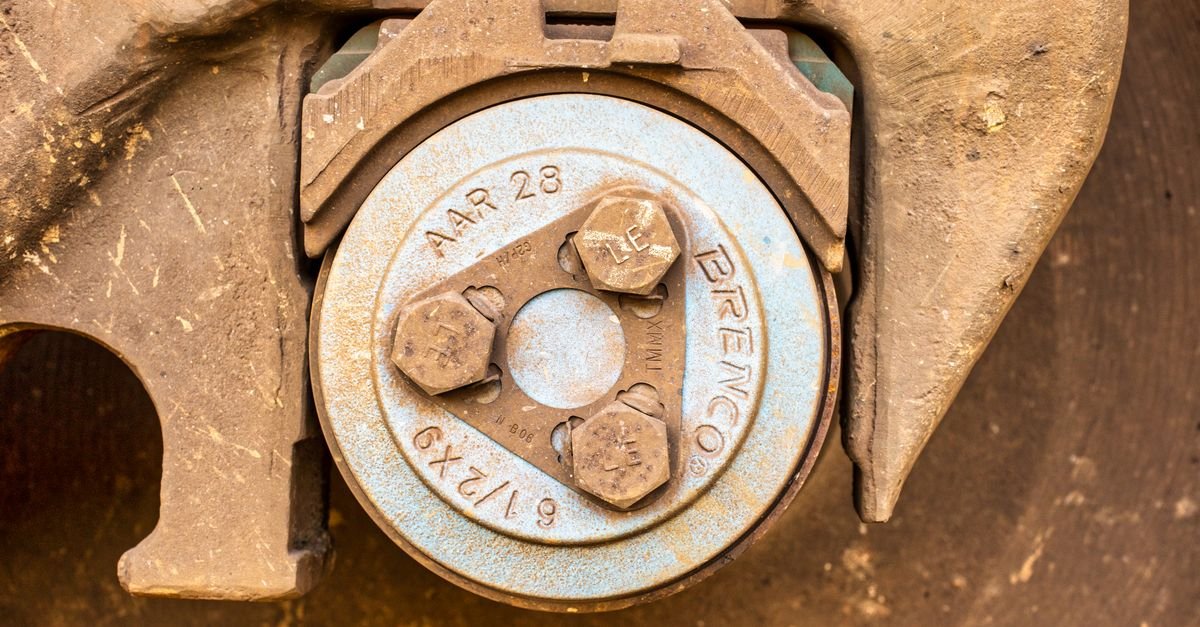
On one side is water at full system pressure. On the other is a bearing compartment packed with grease, which is what lets the thing turn at all under the sideways load of a spray bar. Between them sits the seal stack: on a professional unit, a hardened shaft running through high-load ball bearings, with tungsten carbide or ceramic seal faces pressed together by O-rings and backup rings (J. Racenstein, as above). Cheaper consumer units use plain bushings rather than ball bearings, which is why they do not survive a working day.
Then there is the detail that almost nobody explains, and it is the single most useful thing on this page: many rotary unions have a small hole drilled through the side of the housing on purpose. It is called a weep hole, and it is a drain. It sits downstream of the seal faces and upstream of the bearing compartment, and its entire job is to take any water that gets past the seal and dump it on the floor rather than let it reach the grease.
So there is a hole in the side of your swivel and it is supposed to be there. What matters is what comes out of it.
A Rotating Seal Wears a Groove in Its Own Running Surface
Here is why a swivel does not fail the way anything else on your machine fails.
Every other seal on a pressure washer is static. An O-ring at an M22 joint is squashed between two faces that never move relative to each other. It does not wear; it ages, hardens, splits or gets cut, and then it leaks. The failure is essentially binary — it holds until the day it does not.
A rotating face seal works on a different principle entirely. Two flat, very hard faces are held in contact by a spring and by the water pressure behind them, and one of them turns against the other. They are not dry. They ride on a film of water a few microns thick, and that film is simultaneously the lubricant, the coolant and, unavoidably, the leak. A rotating seal is a controlled leak by design. Deublin, which has built rotating unions for industry since the 1940s, puts the consequence plainly: “Seals eventually wear over time, regardless of technology or materials.”
What that means in practice is that a swivel seal does not snap. It polishes a track into its own running surface, the track gets a fraction deeper every hour, the film gets a fraction thicker, and the leak rate climbs on a curve. Which is why a swivel gives you weeks of notice, and why most people spend those weeks assuming it will hold out.
Two things shorten that curve sharply. Grit is the obvious one. The less obvious one is chemistry: sodium hypochlorite and detergent residue left to dry on a carbide seal face crystallises, and on the next start-up those crystals are an abrasive sitting exactly where the two faces meet. Flushing clean water through the tool after a chemical job costs two minutes and is the difference between the two numbers J. Racenstein publishes — a well-maintained professional swivel typically lasting several hundred operational hours, against a neglected one that can be finished inside a season.
I went looking for a manufacturer-published service life in hours for a swivel seal and did not find one anywhere. Mosmatic’s own position is that there is no fixed interval and it depends on intensity of use, which is honest and completely unhelpful if you are trying to plan. So the weep hole is not a nice-to-have indicator. It is the only service schedule anyone has given you.
Is Your Pressure Washer Swivel Leaking From the Weep Hole or the Joint?
Shut the machine down, squeeze the trigger to bleed the hose, and dry the entire swivel body and both fittings with a cloth. Then run it and watch the part rather than the puddle. A puddle on the ground tells you nothing about which centimetre it came from.
Three places, three different answers:
Water from the small hole in the side of the housing. The face seal is passing water. This is the one with a deadline attached: “Water dripping from the weep hole means a seal kit is due now, before water contaminates the grease”. A faint dampness after a long run is a seal reporting its age. A steady drip or a run is water arriving faster than the drain was sized for, and the surplus has nowhere to go but into the bearing compartment. Once the grease has emulsified, you are no longer buying a seal kit.
Water from a threaded end fitting. Nothing to do with the rotating seal at all. The joint is not sealed, and the next section is about why that is a different rule here than everywhere else on the machine.
Water from the join between the two halves of the housing, or a shaft that visibly wobbles. With the water off, grip the shaft and try to move it sideways and up and down. Any detectable play means the bearings are at the end of their life, and at that point a seal kit is a way of spending forty dollars to find out you needed a swivel.
One symptom is worth calling out because it gets misread constantly. If the leak only appears when the hose has wound itself up and is pulling the joint sideways, that is a thread or a joint O-ring being unloaded by torque — the seal faces are already spinning and are indifferent to which way your hose points. A face seal leak does not come and go with hose position. If yours does, stop diagnosing the swivel and start diagnosing the connection.
Tape Belongs Here and Almost Nowhere Else on This Machine
Everywhere else on a pressure washer, thread tape is wrong. M22 couplers and quick connects seal on a rubber ring, the threads exist only to hold the two halves together, and adding tape there packs the joint out and makes the leak worse.
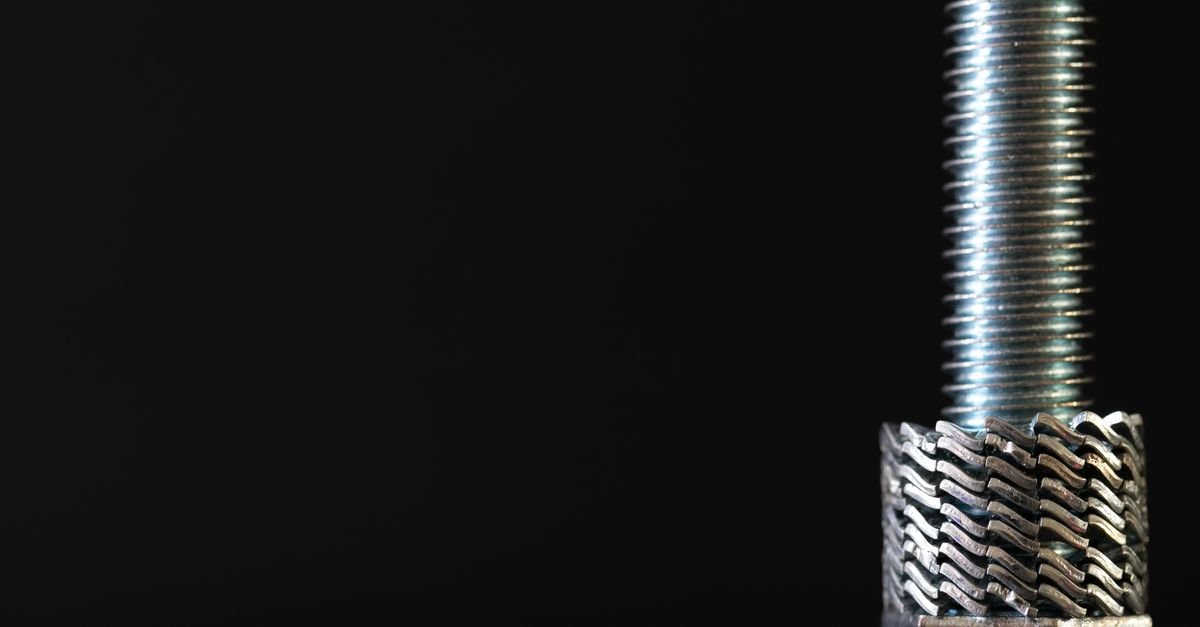
Swivels are the exception, and it catches people out constantly. Professional rotary unions are almost always plumbed in NPT or NPTF — tapered pipe thread, where the male and female cones wedge against each other and the thread itself is the seal. A tapered thread that is not quite perfect leaves a spiral path from one end of the engagement to the other, and the only thing that closes it is a filler. That is what tape and thread paste are for, and on this fitting they are not a bodge.
You can watch it happen in real time on the trade boards. On one thread a contractor fits a brand-new 3/8-inch Mosmatic swivel, finds it weeping at the threads, gets told to use sealant or tape, and reports back that he put tape on it and the leak stopped. A new part, a correct part, leaking because a tapered thread was dry.
Doing it properly:
- Wrap three to four turns, in the direction the fitting screws in, so tightening pulls the tape tighter rather than unwinding it.
- Start one thread back from the open end. Tape that overhangs gets sheared off into the water stream and ends up sitting on a nozzle orifice or a seal face, which is a self-inflicted wound.
- Use paste rather than tape on stainless into stainless, where tape can encourage galling.
- Do not tape a parallel thread, a BSPP fitting with a bonded washer, or anything sealing against an O-ring face. If it came with a rubber ring, the rubber ring is the seal. Which thread is which is broken down in the guide to pressure washer hose fittings.
Seal Kit or New Assembly? The Shaft Decides
This is where the money is, and the answer is not always rebuild.
The numbers first. A contractor on the Pressure Washing Institute board, asked about a leaking surface cleaner swivel, gives the split that everyone in the trade seems to recognise: “if its only leaking it will just need seals only about $40.00 versus $275.00 for a new Swivel assembly”. Those are trade prices from a working user rather than a published list, so treat them as a ratio rather than a quote — but the ratio is about seven to one, and it is why nobody who owns a professional swivel replaces one casually.
The gate is not the seal. It is the surface the seal runs on. J. Racenstein’s guidance is that if the shaft shows scoring or the housing shows erosion, a rebuild kit will fail almost immediately on the compromised surfaces — because a new seal face pressed against a grooved shaft is just a new seal face being machined by a groove. So before you order anything:
1. Strip it and get the shaft out into the light.
2. Drag a fingernail slowly across the seal track. If it catches, drops into a line, or shows a bright polished band with a step at its edge, a kit is money thrown at a surface that will not hold it.
3. Check the housing bore for pitting or a washed-out, eroded look around the seal seat. Erosion means water has been finding a way past for longer than you thought.
4. Check shaft play again. Bearings and seals go in the same box, and a kit that renews only the seals on worn bearings buys you weeks.
One category does not get a decision at all: fully sealed, non-serviceable swivels, which is most of what is fitted to consumer surface cleaners. No kit is published, the housing is not designed to come apart, and they get replaced outright once they leak. Annoying, but not a scandal — it is the same commercial logic that makes the trigger gun in the box a consumable.
Fitting a Swivel You Did Not Have
If you do not own a gun swivel and are wondering whether to add one, here is the honest version, because the accessory listings will not give it to you.
A fixed inlet means the hose takes every degree of twist your wrist produces, all afternoon, and a wound-up hose kinks. A kink is a flow restriction, and flow is what actually cleans. So the swivel is solving a real problem. But it solves it by adding a sealed rotating joint to a hose line that previously had none, and every joint you add is a joint that can weep.
My position: fit one if you work in stretches of twenty minutes or more, and skip it if you do two patios a year. That is not a hedge, it is the mechanism. Hose torsion accumulates with time under load, so the benefit scales with session length while the extra failure point is there from day one. A swivel is also the wrong answer to a hose that kinks because it is cheap, cold and stiff. That hose will still kink, now with a bearing in front of it.
Surface cleaners are a different conversation, because there you do not get a choice. The rotary union is the only reason the bar turns at all, which is covered in the guide to using a pressure washer surface cleaner. On those, the question is never whether to have a swivel. It is whether to buy one rated above your pump’s maximum output, so the seal is not working at the edge of its envelope every time you pull the trigger.
FAQ
Why is my pressure washer swivel leaking from a small hole in the side?
That hole is a weep hole and it is deliberate. It drains water that has passed the rotating seal, so the water leaves the housing instead of reaching the greased bearing compartment. Occasional dampness is normal ageing. A continuous drip means the seal is now passing more than the drain was designed to handle, and a seal kit is overdue.
Can a pressure washer swivel be rebuilt, or do I buy a new one?
It depends on the shaft, not the seal. Professional swivels from makers such as Mosmatic, Deublin and Whisper Wash have published seal kits and are meant to be opened. If the shaft’s seal track is smooth and the housing bore is clean, a kit is the right call. If the shaft is scored or the bore is eroded, a new seal will be destroyed on the surfaces it runs against and you are buying the assembly. Sealed consumer swivels have no kit at all.
Should I use thread tape on a pressure washer swivel?
On the tapered NPT or NPTF threads that most swivels use, yes — the thread is the seal there, and tape or thread paste is the correct filler. Three or four wraps in the tightening direction, starting one thread back from the end so nothing sheds into the water. Do not put tape on M22 connections, quick connects, or any fitting that seals against an O-ring.
How long should a pressure washer swivel last?
No manufacturer publishes an hours figure, and Mosmatic says outright that the interval depends on intensity of use. The most specific guidance I found is a distributor’s: a well-maintained professional swivel typically lasts several hundred operational hours, while a neglected one can be finished in a single season. Flushing clean water through after chemical work is the biggest single lever on which of those you get.
Is it safe to keep using a surface cleaner with a leaking swivel?
Mechanically it will keep working for a while, and a weeping swivel is not the hazard that a trigger gun which will not shut off is. The cost is financial rather than physical: every hour of a running weep is water displacing grease in the bearing compartment, which turns a seal job into an assembly. If the bar has also started to slow, wobble or grind, stop, because the bearings are already involved.
Why does my swivel only leak when the hose twists?
Because that is not the rotating seal. A face seal is already spinning and does not care which way the hose points. A leak that appears when the hose winds up and vanishes when you unwind it is a threaded joint or a joint O-ring being pulled sideways by torque. Bleed the pressure, break that joint, and check the thread type and the ring before touching anything internal.
The Drip Is the Warning, Not the Failure
Almost everything else on a pressure washer fails suddenly. A hose lets go, a nozzle blocks, a capacitor dies on a Tuesday. The swivel is the one component that tells you in advance, in writing, through a hole the manufacturer drilled specifically so it could — and the message is only readable if you dry the housing and look at the part instead of the puddle.
So: dry it, run it, and find out whether the water is coming from the hole in the side or from a thread. One of those is a spool of tape and a coffee. The other is a seal kit that is cheap this week and an assembly next month, because the water is already working on the grease.