Last Updated on September 25, 2026 by Umar Farooq
A pressure washer nozzle blowing off is almost always a quick-connect collar that never fully closed — the tip went in far enough to feel connected, the spring pushed the collar forward against the side of the plug instead of dropping the retaining balls into its groove, and the first squeeze of the trigger fired the tip out of the wand.
That matters because it changes what you do next. If the coupler is broken, you order a part. If the coupler is fine and the tip simply was not home, nothing is broken, nothing needs ordering, and it will happen again on Saturday unless you change one habit.
A tip leaving a wand at working pressure is not a nuisance failure like a dripping O-ring. It is a small, dense object being launched at close range by a machine that is still running. If it hit you, stop reading the troubleshooting and go and get looked at — particularly if it caught an eye, and particularly if the jet that followed it broke skin. The rest of this will still be here afterwards.
Ball Bearings, a Spring, and a Groove Cut in the Tip
Nothing threads together at the business end of a pressure washer. The tip is held in by a mechanical latch, and the latch has exactly four parts: a machined bore in the wand’s socket, a ring of hardened ball bearings sitting in drilled windows around that bore, a spring, and the sliding outer collar you pull back with your thumb.
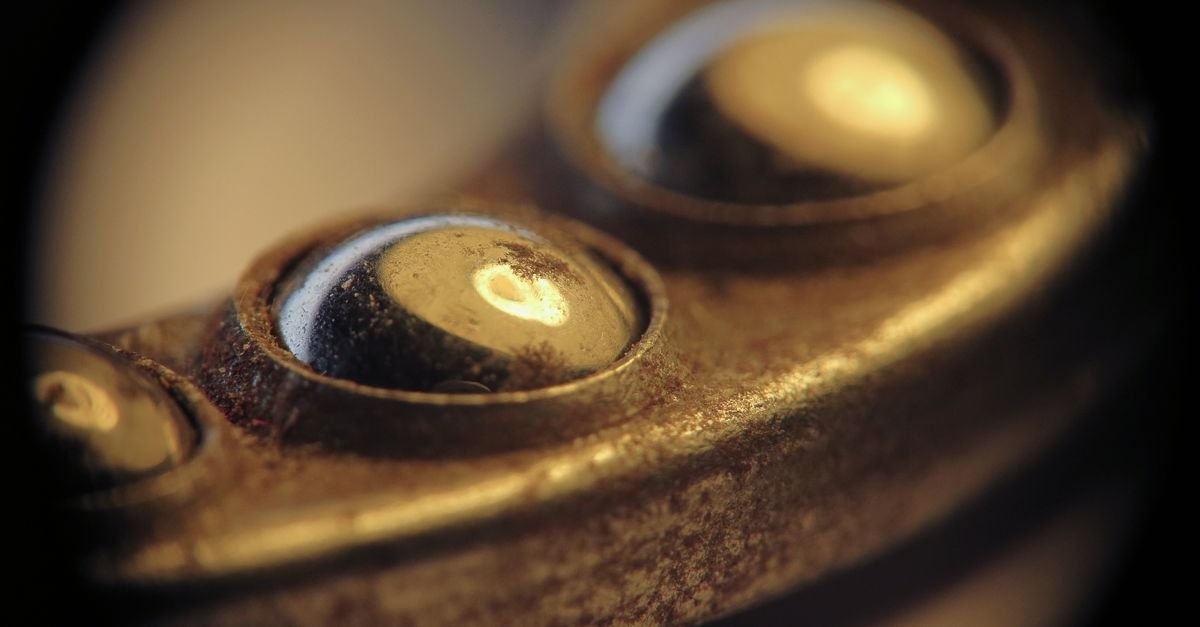
Pull the collar back and the balls are free to roll outward into the space it vacates. Push the tip in until it bottoms out, let the collar go, and the spring drives it forward over the top of the balls, camming them down into an annular groove turned around the tip’s plug. The balls now sit in a channel with metal in front of them and metal behind them. That is the whole retention system, and it is genuinely strong — it is the same arrangement used on hydraulic couplings rated far above anything a homeowner machine produces.
Sealing is a completely separate job done by a single O-ring. This split matters more than it sounds, because it means the two halves fail independently and neither warns you about the other. A coupler with healthy balls and a dead O-ring will hold the tip firmly and weep water down your wrist all afternoon. A coupler with a perfect O-ring and a collar that did not close will seal beautifully for the half second before the tip leaves. The sizes, materials and thread standards behind all of this are covered in our guide to the pressure washer quick connect.
The important consequence: a nozzle blow-off is a retention failure, not a sealing failure. Which is why the internet’s favourite answer to this problem — “you lost the O-ring” — is usually backwards, and I will come back to that.
Why a Pressure Washer Nozzle Blowing Off Is Nearly Always the Collar
Here are the seven things that let a tip go, roughly in the order you should suspect them.
1. The collar never fully seated. By a wide margin the most common cause. The tip was pushed in most of the way, the collar sprang forward and stopped against the shoulder of the plug rather than over it, and the assembly now looks and feels exactly like a locked one.
2. Grit in the sleeve. Sand between the collar and the body, or packed into the ball windows, stops the balls camming fully down into the groove. They end up resting on the plug’s outer diameter, holding it with friction rather than with a mechanical stop.
3. A tired collar spring. Springs take a set. A collar that creeps forward slowly rather than snapping forward can leave the balls only partly engaged, which holds against a tug and lets go against 3,000 PSI.
4. Worn or missing detent balls. They wear a fraction out of round against the groove shoulder over thousands of cycles. A ball that has flattened slightly sits deeper in its window; one that has fallen out entirely leaves the remaining balls doing a job that was designed for all of them.
5. A worn groove on an old tip. The tip is the cheaper half of the pair and usually the one that goes first. The sharp shoulder of the groove rounds off, and a rounded shoulder gives the balls a ramp to climb instead of a wall to stop against.
6. A mismatched plug. Not every 1/4-inch plug on the market is cut to the same groove position or depth. An off-standard tip can bottom out before the groove lines up with the balls, or line up a hair proud of them.
7. A swollen or extruded O-ring. This is the only way sealing rubber causes a blow-off, and it is rare: an O-ring that has swelled in solvent or been pinched into the bore can hold the plug a fraction short of bottoming, so the groove never reaches the balls. A *missing* O-ring does not cause this. It causes a leak.

About that O-ring. Search this problem and you will find forum after forum reporting that the tip shot off and the O-ring had vanished with it. It did not cause the blow-off — it left with the tip, or was dragged out of the bore as the plug went past at speed. Treating a departed O-ring as the diagnosis is how people end up fitting a new seal into a coupler whose real problem is a sleeve full of sand.
And here is the position I will actually defend. This is a design problem that the industry has agreed to call user error. The collar returns to its forward position under spring pressure whether or not the plug is home, so the mechanism produces a lock-shaped result either way. There is no click, no detent, no coloured band that disappears when the latch is closed, and no indicator of any kind on a part that restrains something like 90 pounds of thrust. Every other latch you own that matters — a seatbelt, a carabiner, a trailer hitch — tells you when it is shut. This one asks you to guess, and then the owner’s manual tells you to check by hand. The check works. It is just remarkable that it has to be the safety system.
Push, Release, Pull: The Seating Check That Ends This
Every pressure washer manual I have read prints some version of this, buried in the assembly section where nobody looks twice. It is the single highest-value habit on the machine, it takes about three seconds, and if you do it every time you will not have this problem again.
Do it with the machine shut down and the pressure bled — engine or motor off, tap closed, trigger squeezed until the flow dies to nothing, then the trigger safety on. Changing tips on a live line is how the other half of these incidents happen.
1. Pull the collar fully back. Fully. Not most of the way, and not with a thumb that is also holding the wand.
2. Push the tip in until it stops. You are looking for a hard bottom, not a soft one. If it stops early and springs back slightly, something is in the way.
3. Release the collar. It should snap forward briskly and sit flush against the body. A slow, mushy return is a spring or grit problem, not a normal one.
4. Pull the tip firmly, straight out. This is the whole test. Grip the tip itself and give it a real pull, not a polite wiggle. If it moves at all, it is not locked. Take it out and start again.
If it fails the pull twice with the same tip, try a second tip. A known-good tip that locks properly tells you the first tip’s groove is worn and the tip is what needs replacing. A second tip that also fails tells you the fault is in the wand’s coupler, which is the next section.
One more habit worth having: after connecting anything, point the wand at the ground away from your feet and pull the trigger there first. If something is going to leave, let it leave into the lawn.
How Much Energy Is In a Tip That Leaves the Wand?
It is worth being specific about this, because “be careful, it could fly off” does not convey much and most articles stop there.
A 1/4-inch quick-connect coupler necks the water passage down to roughly 0.2 inches, which gives a sealing face of about 0.03 square inches. Multiply that by a working pressure of 3,000 PSI and you get somewhere near 90 pounds of force trying to push the tip out of the wand, applied instantly the moment the trigger opens. I am rounding hard, and the exact figure depends on your coupler’s sealing diameter and your machine’s actual pressure. The order of magnitude is the point: it is not a gentle nudge, and it is not something friction is going to hold.
What leaves is a solid brass or stainless plug roughly the size of the end of your thumb. Small, dense, blunt, and accelerated over an inch or two of travel with nothing in the way. It is followed immediately by an unrestricted jet, because the wand you are holding is now an open pipe — which is its own hazard, and is why the machine should go off before you go looking for where the tip landed.
Then there is direction, which nobody mentions and which decides most of the outcome. A wand fires the tip along its own axis. If you were rinsing a driveway, the tip goes into the concrete or across the garden. If you were washing soffits, gutters, the top course of siding, or the underside of a vehicle, the wand was pointing up and back toward you, and so is the tip. That is not a coincidence of bad luck — overhead work is exactly the work where you are also most likely to have changed tips in a hurry on a ladder or in an awkward crouch, which is when a collar gets half-closed in the first place.
Eye Protection Stops Being Optional Here
I am generally sceptical of safety advice that just lists protective gear, because listing it is cheap and nobody reads past the third item. So here is the one that carries a number.

The American Academy of Ophthalmology puts it plainly: “Simply wearing protective eyewear can reduce your risk for eye injury by 90 percent.” The same page notes that about half of all eye injuries happen at home, and that only about three out of ten people wear protective eyewear during home projects that could hurt them. Their recommendation is that every household own at least one pair of ANSI-approved protective eyewear — meaning eyewear built to the American National Standards Institute impact standard, not the glasses you already have on (AAO, Eye Safety at Home).
The occupational guidance names the specific hazard rather than the general one. Washington State’s pressure washer tip sheet, archived by CDC Stacks, tells employers to “Provide PPE to employees to prevent wounds from high pressure spray and airborne debris,” and tells operators to “Always wear PPE to protect your eyes, hands, feet, ears, and torso” (Tip Sheet: Handling the Pressure, WA L&I). *Airborne debris* is doing real work in that sentence. The jet is one hazard. What the jet throws — grit, paint flakes, a shard of rotten trim, or your own nozzle — is a second one, and it is the one that finds eyes.
The emergency room data supports the ranking. An estimated 6,057 people were treated in US emergency rooms for pressure washer injuries in a single recent year, 14% of those visits led to hospitalisation, and eye injuries sit alongside lacerations, bruises and punctures among the common injury types (CPSC data, reported via Consumer Reports).
A part leaving a pressure washer at speed is a recognised hazard class rather than a freak event: it is the category regulators file under “projectile,” and the injuries that come with that label are to fingers, hands, faces and eyes. Your quick connect is not defective in the way a recalled component is, and nothing here suggests it is. The point is narrower and worse. A coupler working exactly as designed will still release a tip the moment the collar is not seated, and it will do it with the machine’s full output behind it, in whatever direction the wand happens to be pointing.
Rebuild, Replace, or Retire the Coupler
Once you have established the wand’s coupler is the problem rather than the tip, you get three options and the choice is usually obvious.
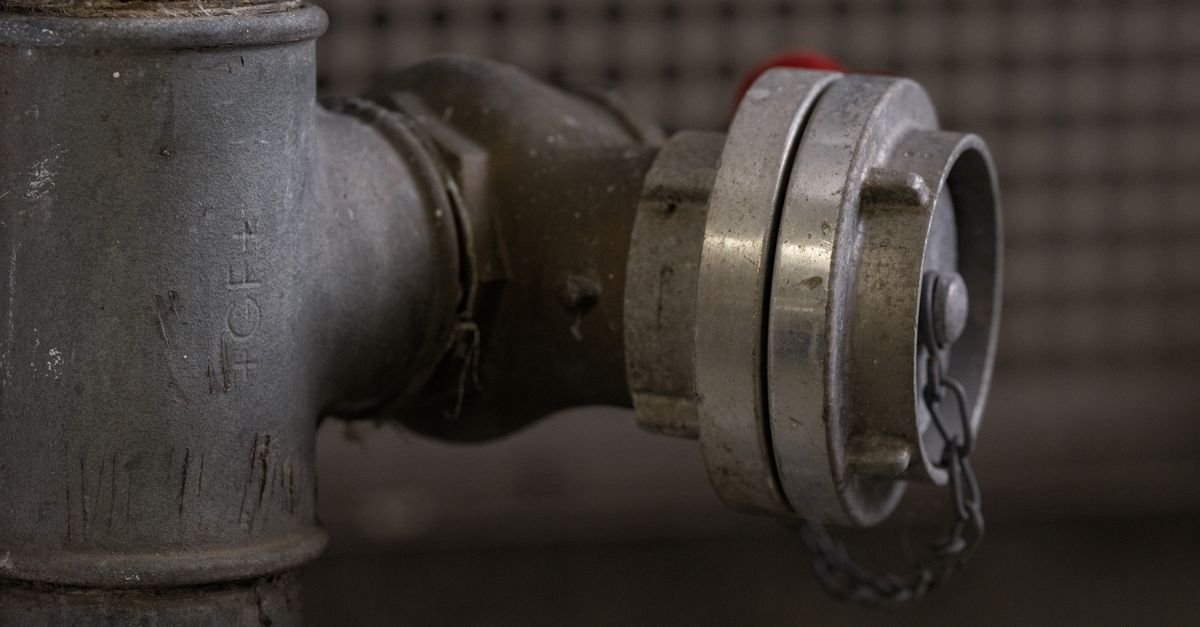
Clean it when the collar is stiff, gritty or slow but everything else looks right. Bleed the line, pull the collar back and flush the bore hard with clean water, work the collar back and forth twenty or thirty times, and finish with a smear of silicone grease on the plug nose rather than a spray of penetrating oil into the mechanism. Most of the time that is the entire repair, because most of the time the problem arrived as sand on somebody’s fingers.
Replace the O-ring if the coupler holds a firm tug reliably and is only leaking. That is a sealing fault, not a retention one, and it belongs in a different repair.
Retire the coupler if any of these are true, and do it without trying to be clever about it:
- The collar does not snap back briskly on its own, even after cleaning and lubrication.
- You can see a ball window that is empty, or balls that are visibly flattened on one side.
- A known-good tip still rocks or rotates loosely when the collar is closed.
- The body is plated zinc and the plating has worn through where the collar rides, because the rust underneath swells and the collar will seize again a week after you free it.
- It has ever let a tip go and you cannot positively identify a cause. A coupler you do not trust is not a coupler.
A replacement 1/4-inch socket is a few dollars and screws onto the end of the wand. There is no sensible case for nursing a worn one, and there is one genuinely bad idea worth naming: do not substitute an air-line quick connect. They look almost identical, they fit, and they are rated for a fraction of the pressure.
The Wand Can Leave the Gun Too
The same failure exists one joint upstream, and it is worse, because what departs is a two-foot metal lance rather than a thumb-sized tip. The wand-to-gun connection is either a threaded M22 fitting, a 3/8-inch quick connect, or a twist-lock collar, depending on the machine.
Threaded joints back off. They do it slowly, over a season, helped along by the recoil pulse every time you release the trigger, and the first sign is usually a thread of water at the joint rather than anything dramatic. Twist-lock collars fail the same way a nozzle collar does — rotated most of the way and not quite into the detent. Quick-connect wand joints fail for all seven reasons listed above.
Check that joint by hand every time you set up, the same way you check the tip: grip the wand and try to pull it straight out of the gun, then try to twist it. If you get movement at the gun rather than at the swivel, that is a joint to sort out before you pull the trigger. A weeping gun, a dripping swivel or a trigger that will not shut off are different faults with different causes, and they are not covered here. Sizing, recoil and the internals of the gun itself are in our guide to the pressure washer gun and hose.
FAQ
Why did my pressure washer nozzle fly off?
In the large majority of cases the quick-connect collar was not fully closed over the groove on the tip. The tip was pushed in short of bottom, the collar sprang forward against the side of the plug instead of over it, and the assembly felt locked. Less often it is grit in the sleeve, a tired collar spring, worn or missing detent balls, or a groove worn round on an old tip.
How do I stop my pressure washer nozzle from popping out?
Push the tip in until it hits a hard stop, release the collar, then grip the tip and pull it firmly straight out. If it moves at all, it is not locked — remove it and repeat. Do this with the machine off and the line bled, every single time you change tips, including the change you are making in a hurry.
Can a pressure washer nozzle injure you?
Yes. It is a solid brass or stainless object launched by roughly 90 pounds of thrust on a 3,000 PSI machine, at arm’s length, and it travels along the axis the wand is pointing — which is up toward your own face if you were washing overhead. It is followed by an unrestricted jet from an open wand. Wear ANSI-rated eye protection and, if the jet broke skin, treat it as an emergency room visit rather than something to watch overnight.
Why won’t my pressure washer nozzle lock into the quick connect?
Try a different tip first. If the second tip locks and passes a firm pull, the original tip’s groove is worn and the tip needs replacing. If no tip locks, the fault is in the wand’s coupler: flush the grit out, work the collar, and if it still will not snap forward and hold, replace the socket.
Do pressure washer nozzles wear out?
They wear in two separate places. The orifice erodes, which costs you pressure gradually and is invisible without a gauge, and the retaining groove rounds off, which is what lets the tip go. The groove is the one that matters for safety, and it is worth running a fingernail along the shoulder of the groove on any tip more than a couple of seasons old. Orifice sizing and the colour code are set out in our pressure washer nozzle chart.
Should the machine be off when I change nozzles?
Off, tap closed, trigger squeezed until the flow stops, and the trigger safety engaged. Pressure stays trapped in the hose after the motor stops, and trapped pressure both loads the detent balls so a coupler will not release and fires the tip the instant it does.
Does a missing O-ring make the nozzle blow off?
Almost never. The O-ring seals; the ball bearings hold. A missing O-ring produces a leak around the tip. The reason so many people find the O-ring gone after a blow-off is that it left with the tip or was stripped out of the bore on the way past, which makes it a symptom rather than a cause.
Tug It Before You Trust It
Everything above reduces to one sentence: the collar tells you nothing, so ask the tip instead. Push, release, pull. Three seconds, no tools, and it catches six of the seven failure modes before the trigger ever gets involved.
If yours has already let go once, do not let the fact that it landed in the hedge decide how seriously you take it. Check the groove on the tip, check the collar snaps back, and if you cannot name the reason it happened, spend the few dollars and fit a new socket. A coupler only has to be wrong once, and it gets to choose the direction.