Last Updated on October 4, 2026 by Umar Farooq
The best pressure washer cart is the one that publishes the distance between its bolt holes — and of ten carts, skids and frames I read above a modest entry threshold, exactly one does, in an assembly PDF you have to go looking for.
Every other listing in the category sells you a load rating and a photograph. The load rating is the number in the title, in capitals, with a unit on it, and I will show you in the next four hundred words that it is almost never the thing that stops you. The photograph shows a machine sitting on a deck. What the photograph cannot show is whether *your* machine’s four feet line up with *that* deck’s four holes, which is the only question in this purchase that has a wrong answer.
So I went and read the category. Fourteen search phrasings through the Amazon product API, every purpose-built cart, skid and frame that came back: ten of them, five on wheels and five without. Then I pulled four generic load-carriers — hand trucks and a wagon — deliberately, as the control group. Then I read the one manufacturer document in the whole set that gives a dimension, and a wheel maker’s own technical guide, because the wheel question turns out to run backwards from the way everybody sells it.
Six Hundred Pounds of Capacity for Seventy Pounds of Engine
Two of the ten purpose-built frames publish a load rating. Both are wheeled carts, and both numbers are enormous.
CANPUMP’s cart frame publishes a “rated carrying capacity up to 600 lbs for stable equipment support”, on a frame measuring 43 inches long by 26 wide by 29 high, with a “pre-drilled mounting base” that “accommodates standard 13 hp gas engines”. Ultimate Washer’s 10 by 20 inch cart publishes 450: “Rated for engine and pump packages up to 450 lb.”
Now put a real engine on it. Honda’s GX series data gives a GX160 a dry weight of 33 lbs, a GX200 35 lbs, and a GX390 — the largest engine either of those carts admits — 69 lbs (Honda, GX Series engines brochure). Ultimate Washer’s own product page for the same part number states the fitment ceiling as “429cc or smaller gas engine”, which puts the GX390 at the very top of what it will take. A direct-drive pump bolted to the flange adds more, and I could not find a published pump weight on a single listing in the census, so I am not going to invent one. It does not matter. The engine the seller says is the biggest you may fit weighs 69 pounds against a rating of 450.
A capacity figure six times larger than anything the frame is permitted to carry is not a specification. It is reassurance with a unit attached.
And here is the part that made me laugh and then made the point for me. All three generic hand trucks in my control group publish the same load rating — 600 lbs — which is the figure the purpose-built pressure washer cart publishes too. The five purpose-built skids, the ones with no wheels, publish no load rating at all, in any form, on any of the five listings. Four of them publish their own weight instead: 9 lbs, 10.5, 11.7 and 22. The object designed for this exact job tells you how heavy *it* is and declines to say how heavy *you* may make it.
Here is the state of disclosure across the ten, counted rather than asserted:
| What the listing publishes | 5 wheeled carts | 5 skids and plates |
| A load rating in pounds | 2 | 0 |
| Its own weight | 0 | 4 |
| Deck or platform dimensions | 1 | 5 |
| A wheel diameter in inches | 2 | — |
| Mounting hole spacing | 1 | 0 |
| Named engines or motor frame sizes | 1 | 4 |
One listing in ten publishes the dimension that decides the purchase. The load rating — published twice, in capitals — cannot refuse anybody. And the skids, which cannot move at all, are the half of the category that reliably tells you how big a plate you are getting.
Three Drill Rectangles Decide Whether the Machine Bolts Down
The exception is worth reading in full, because it is the only document in this category that reads like an engineering drawing instead of a sales page.
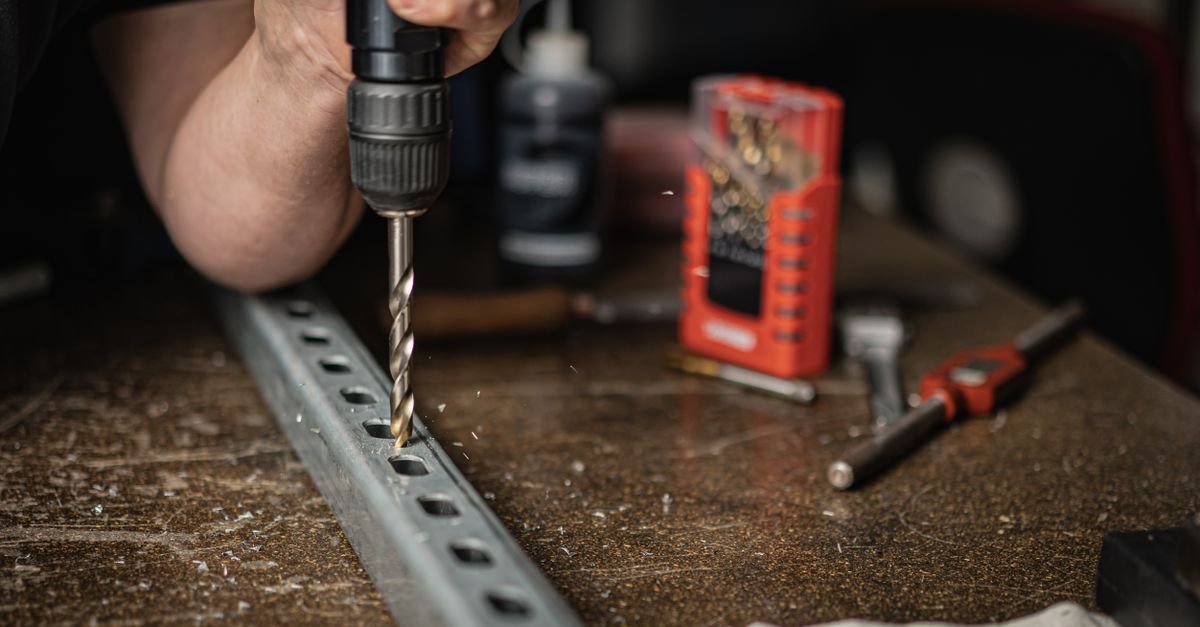
Ultimate Washer’s Amazon bullet for its 10 by 20 cart tells you to go and find the assembly guide on its own website, which is an unusual thing for a listing to do and the single most useful sentence on the page. The guide is nine steps long, seven of which are about attaching one handle bar, and then page six prints this (Ultimate Washer, KCA030 cart kit manual):
LARGE DRILL PATTERN 5.5″ X 8.5″
MEDIUM DRILL PATTERN 3.5″ X 7.75″
SMALL DRILL PATTERN 3.25″ X 6.5″
Three rectangles of hole centres, pre-drilled into one 10 by 20 inch deck, plus a dimensioned sketch giving the wheel as 10 inches and the deck as 20 long. That is the complete compatibility statement for this product, and it is the complete compatibility statement for the category, because nothing else in the category has one.
Measure your machine’s base. If the bolt centres come out at 3.25 by 6.5 inches, or 3.5 by 7.75, or 5.5 by 8.5, the machine drops on and the bolts go through. If they come out at anything else, you are drilling — which is fine, it is a 3/16-inch aluminium plate, but you want to know that before the box arrives rather than while holding a drill over the one part of the purchase that is not returnable.
Now the half that is missing, and it is missing from the engine’s side rather than the cart’s. I went looking for Honda’s published base hole pattern for a GX200, because that is the engine under a large share of the machines people are trying to mount. The GX Series brochure publishes a length, a width, a height and a dry mass. The GX120, GX160 and GX200 owner’s manual specification table — which I read and am attributing without a second link — publishes exactly the same two kinds of figure: an overall envelope and a weight. Neither document gives the distance between the holes in the engine’s own base. The figures that circulate for it live on go-kart and clone-engine parts pages, quoting each other, and a mounting dimension sourced that way is not a dimension I will print.
So the fit check cannot be completed from published figures on either side, and that is the honest finding of this page. The cart publishes three rectangles once in ten listings. The engine maker publishes none. The only instrument that closes the gap is a tape measure, and it is probably already in a kitchen drawer.
One more thing worth noticing about the envelope figures, since they will mislead you if the drill pattern does not. A GX200 measures 14.8 inches wide. The deck it is sold to sit on is 10 inches wide. The engine overhangs the deck by nearly five inches and that is entirely normal — the feet are close together, the cylinder and the recoil housing are not. Do not reject a cart because your machine looks wider than its platform in the photograph. Reject it because the holes do not line up.
Blickle Ranks a Pneumatic Tyre Below Solid Rubber
Two of the five wheeled carts publish a wheel diameter in inches, and both land on 10 or 10.5. Two more describe their tyres only as “oversized”. One says nothing about its wheels at all. So the wheel — the part you can actually see in the photograph — is given as a number by two listings in five, and pneumatic is what the ones that say anything sell. The reason given is always the same: it rolls over everything.
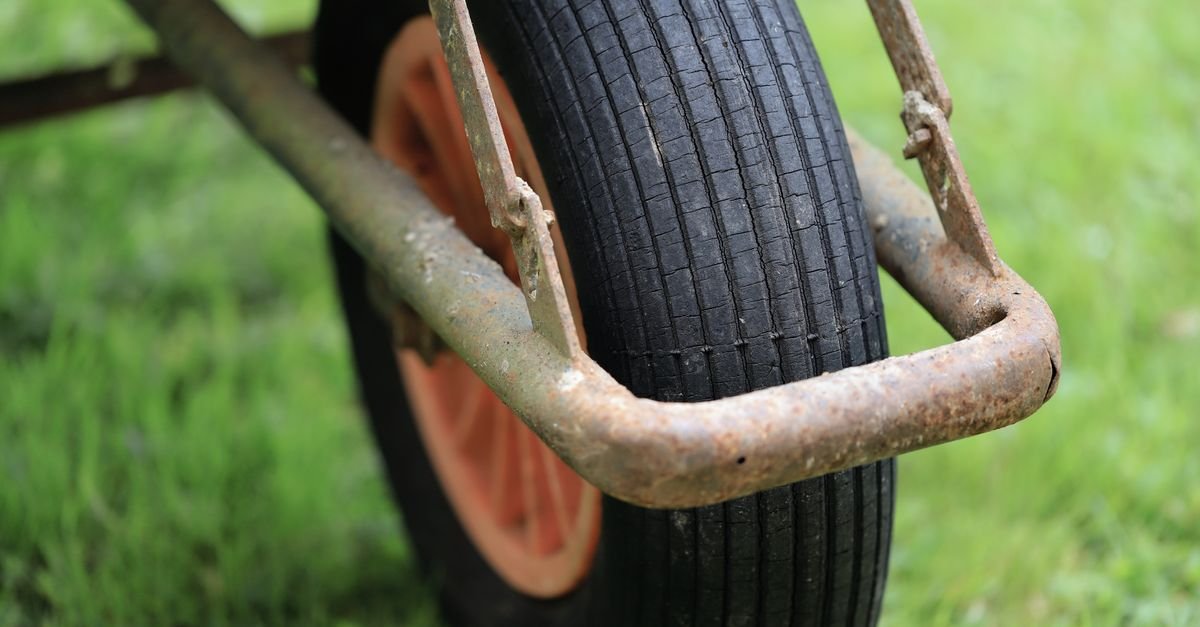
Blickle has been making wheels and castors for a living for a very long time, and its own technical guide ranks tread materials for rolling resistance. Pneumatic tyre and soft rubber: good. Elastic solid rubber: very good. Polypropylene, nylon, cast iron and steel: excellent (Blickle, wheel series info box). The air-filled tyre is beaten by the solid rubber everybody assumes it beats, and by a long way by hard plastic and steel. It is not the worst tread on the list — plain standard solid rubber rates only satisfactory — but it is nowhere near the best, and the reason is in the same document: “Rolling resistance occurs as a result of the constant compression and decompression of the tread while the wheel is rolling (hysteresis).” A tyre that deflects to absorb the ground is a tyre doing work, and that work is the push you feel in your arms.
Read the test conditions before you conclude anything from that ranking, though, because they are the finding. Blickle measures rolling resistance on a test bench under “ideal conditions”: a “level, smooth, steel surface free of dirt and obstacles”, at 4 km/h, at 20 degrees C, loaded to two-thirds of maximum capacity. The guide then says so itself — “Different application conditions (surface quality, temperature, speed, etc.) must be taken into consideration when designing the running gear and can have a significant impact on rolling resistance.”
A level, smooth steel surface free of obstacles is the one surface a pressure washer cart never crosses. The published ranking is measured in the absence of exactly the thing you bought pneumatic tyres for.
What Blickle does publish for the real case is a number I had not seen used in this argument anywhere: average floor pressure, calculated by dividing the radial force by the wheel’s contact area. Pneumatic tyre and soft rubber, 0.8 N/mm². Elastic solid rubber, 1.8. Standard solid rubber and softer polyurethane, 3.5. Hard polyurethane, 11.0. Polypropylene and nylon, 40.0. Cast iron and steel, over 350.
That is the pneumatic tyre’s actual case, and it is a factor of fifty against a nylon wheel. On a lawn, a gravel path, a block-paved drive with open joints or a sealed timber deck, contact pressure is what decides whether the wheel floats across or sinks in and leaves a track. Diameter helps the same way — Blickle lists wheel diameter first among the factors affecting both starting and rolling resistance, and notes that “vehicles tend to be quieter when they have large wheels with soft thick treads.” The ten inches is doing more for you than the air is.
So the honest version, and it is my one strong position on this page: choose pneumatic for soft or broken ground and accept that it is the heavier wheel to push, and choose solid or polyurethane if the machine only ever crosses a flat garage floor and a flat drive. Buying pneumatic because it “rolls easier” gets the mechanism backwards. The same guide rates pneumatic tyre and soft rubber as merely satisfactory for wear resistance, the bottom band it shows, and an air tyre has a failure mode no solid wheel has, which is going flat in February under a machine you now cannot move.
Stairs are not on this list at all. One of the generic hand trucks in my control group advertises “enhanced stair climbing ability” from its 10-inch pneumatic tyres, which is a fair claim about a hand truck with a parcel on it. Nothing in the purpose-built set claims it, and nobody fond of their shins takes a bolted-down engine package down a flight of steps.
Once the machine stops rolling and starts running, the wheels stop being the relevant part and the four rubber blocks under the deck take over. Every skid in this census sells “shock isolating rubber feet”, and why they are deliberately soft — and why strapping a frame down solid makes a vibrating machine worse rather than better — is already worked through on our page about a pressure washer that shakes, which also notes that a soft tyre counts as a dead foot on one corner.
The Chemical Tank Is Where the Rating Starts to Bind
If the load rating is useless against an engine, there is one configuration where it stops being decorative, and it is not the one the listings illustrate.
Start with the thing people assume is heavy. A hundred feet of charged high-pressure hose sounds like a serious load, and the water in it is not: 100 feet of 3/8-inch bore holds about 0.57 gallons, and at 8.34 pounds per gallon that is under five pounds of water — my arithmetic, from two figures this site already publishes. The weight is the hose carcass and the drum it is wound on, not the charge, and a loaded reel can exceed a hundred pounds on its bracket, which is where that side of the question belongs.
Then add the tank, and the arithmetic changes character completely. At 8.34 pounds a gallon, a 15-gallon tank is 125 pounds of liquid before you count the tank. Thirty-five gallons is 292 pounds. Fifty-five is 459, which is over the 450-pound rating of the aluminium cart on its own, with no engine, no pump, no hose and no frame included.
So the published capacity figure describes a cart carrying a full tank, and nothing else in this category describes a cart carrying a full tank. That is worth knowing both ways round. If you are mounting a machine, ignore the rating entirely and read the hole spacing. If you are building a soft-wash rig with a tank on the same deck, the rating is suddenly the binding number, you are going to get within shouting distance of it, and the two things that will complain first are the axle — one cart publishes a 3/4-inch axle, which is the only axle dimension in the whole census — and the tyre, carrying three hundred pounds of sloshing liquid on 0.8 N/mm² of contact pressure.
A tank also moves while you push, which is the one load on this page that fights back. Nothing in the category publishes a baffle.
Skip the Cart If the Machine Already Rolls
Four questions, in the order that most often ends the purchase.
Does your machine already have wheels? Most mid-range gas machines ship on a tubular frame with two wheels and a handle. A cart frame is not an upgrade to that; it is a replacement for it, and the job it does is let you bolt a loose engine-and-pump package onto something. If you have a complete machine on its own frame and the complaint is that the wheels are small and hard, you are looking for a different pair of wheels, not a different frame.
Is the machine going to live on a truck or a trailer? Then you want a skid and not a cart, and one of the steel plates in the census says exactly why in its own bullet: a 3.5-inch low profile “keeps your center of gravity down and fits under trailer shelving where carts cannot go.” A cart on a trailer bed is a cart you have to chock, and wheels on a moving deck are a liability rather than a feature.
Is the machine going down steps? Nothing here is for that. A hand truck is — and every one I pulled publishes both its capacity and the dimensions of the plate your machine would stand on, which is a combination only one of the five purpose-built carts manages.
Does the machine need to stop moving permanently? Then this is the wrong page, and a fixed bracket on a wall is a different purchase with a different set of problems — the circuit, the plumbing and what happens in October. Our buying guide on wall-mounted machines goes through those, and it reaches the opposite conclusion to this one for a good reason: four anchor holes you drill once are the most permanent part of that purchase, while four bolts through a deck are the most temporary part of this one.
If three of those four answers point away from a cart, the honest buy is a drilled plate, four rubber feet and a tape measure. That is most of this category’s traffic and I would rather say so than sell you wheels.
Five Frames Whose Numbers I Could Check
Five products, reviewed one at a time, each with its real limitation stated. No prices here on purpose — the links go to the live pages, where the figure is current.
For a loose engine and pump package that has to cross grass: the Ultimate Washer 10 by 20 aluminium cart frame. This is the only product in the category whose seller publishes a hole spacing, and it publishes three of them — 5.5 by 8.5, 3.5 by 7.75 and 3.25 by 6.5 inches — on a 3/16-inch aircraft-grade aluminium deck, with 10-inch pneumatic tyres on that 3/4-inch axle, a handle that bolts to either side, a five-tip nozzle holder and shock-isolating feet. Aluminium rather than painted steel matters here in a way it does not on a garage shelf: this frame is sold to live under wash chemicals and road salt, and the deck is the part that cannot be replaced without unbolting everything on it.
Three limitations, and the first one is the seller disagreeing with itself. The marketplace listing says 10.5-inch tyres and a 450 lb rating; the same seller’s own product page for the same part number says 10-inch tyres, gives the frame’s weight as 30 lbs, and publishes no load rating at all. I would follow the maker’s page on the tyre and treat the 450 as marketing, for the reason the whole first section of this page gives. Second, the listing admits that “Predator 420 engines need an emissions-box relocation” — a specific, honest warning, and also a job you were not expecting. Third, three pre-drilled rectangles is three, and if your base is a fourth you are drilling.
For the biggest frame with a published rating: the CANPUMP gas cart frame. 43 by 26 by 29 inches overall, 600 lb rated, oversized pneumatic tyres, a detachable push handle, a five-slot nozzle holder, rubber foot stops and — the detail I liked most — a “built-in oil drain access hole” so an oil change does not start with unbolting the engine. A maintenance provision designed into a bare frame tells you who the frame is for.
Its limitations are all about what it will not tell you. It publishes an overall envelope and no deck dimension, so you cannot work out the usable platform from the listing. “Accommodates standard 13 hp gas engines” is a power band, not a hole spacing, and a power band cannot be checked with a tape measure. And the 600 lbs is the figure that will not stop you — useful only if a full tank is going on with the machine, and if that is the plan, do the tank arithmetic above first.
For a machine that will live on a truck bed: the American Pressure Inc. aluminium skid plate. A 3/16-inch base measuring 11.25 by 22 inches, four rubber shock-isolating feet, 22 lbs on its own, and a “multi-bolt pattern design” the listing says “accepts different gas and electric motor configurations” for GX200, GX240 and GX390 engines and for electric motors. It is the longest deck in the skid group, which is what you want under a direct-drive assembly with a pump hanging off one end.
Its limitation is that “multi-bolt pattern” is not a dimension. The idea is right — more holes, more patterns, more chance yours is one of them — but it cannot be checked before the plate arrives, so you are buying the claim rather than the measurement and you may still be drilling. The second limitation belongs to the whole product class: no wheels. If the machine has to reach the far end of a lawn, this is the wrong object and no amount of aluminium fixes it.
For a small engine or an electric motor, and the clearest fitment statement in the census: the Ultimate Washer 10 by 16 aluminium skid plate. Nine pounds, pre-drilled, and the only listing here that gives its ceiling in two vocabularies you can resolve. It names the engines — “Honda GC160, GC190, GX160, GX190, GX200, Kohler 6.5 HP and other gas engines 208cc or smaller” — and then names a motor frame: “NEMA 56C-frame electric motors”. A NEMA frame designation is a mounting standard rather than a description, so an electric buyer can check theirs against it. I have not read the standard and will not print dimensions out of it, but the classification is free to look up, which is more than a displacement ceiling gives you.
Its limitation comes from the same seller’s other listing. This bullet says “GX240 and larger engines belong on our 10×20 cart instead.” A different Ultimate Washer skid — painted steel, 13.75 by 16.25 inches, 11.7 lbs, 11 pre-drilled holes — claims “GX160, GX190, GX200, GX240, GX340, GX390” on a *smaller* deck than this one. Same company, and they cannot both be right about the GX240. I would follow the narrower claim. A seller that volunteers where its own product stops is the seller doing the harder thing.
And for the reader whose real problem is moving a complete machine twice a year: the Strongway aluminium hand truck. This one is in the category by accident, and it is the right answer for more people than I expected when I started counting. It publishes 600 lbs of capacity, a 7.5 by 18-inch toe plate, 10-inch polyurethane tyres, 18.11 by 20.08 by 50 inches overall and its own weight at 22.5 lbs. More checkable numbers than any purpose-built cart in this census, on a product that needs no drilling and does not care what your bolt spacing is, because the machine simply stands on it.
Two limitations, and both are the wheels. Polyurethane sits at 3.5 N/mm² average floor pressure against the pneumatic tyre’s 0.8 on Blickle’s own table, so it will sink into a lawn where an air tyre floats across. And a hand truck carries a machine rather than becoming part of one: nothing is bolted down, so you unload it to use it, and a machine running off a deck for hours at a time wants a skid under it instead.
Three Listings That Would Not Publish a Dimension
Three listings here failed the standard the rest of this page is built on, and one of them is the most expensive thing in the category. I read all three in full and will not link any of them.
The sand blaster accessory cart, and the reason is a safety claim rather than a specification. It topped every one of my fourteen searches on money, and it is not a cart for a pressure washer at all — it is a 50-pound media hopper with a blast wand and a hose, on an aluminium frame with wheels. That alone explains why one product name spans the range it does: at one end you are buying a drilled plate, and at the other you are buying an attachment that happens to arrive on a frame. But the disqualification is this bullet: “Normal air powered sand blasters generate dangerous, carcinogenic dust clouds, but out design eliminates that risk using the water from your pressure washer.” Spelling theirs. The only field measurements I have read on wet abrasive blasting do not support the word *eliminates*. A CPWR-funded study of a water-induction blast nozzle — the air-propelled cousin of this idea, so scope the transfer accordingly — measured a geometric mean of 0.062 mg/m³ of respirable crystalline silica, and stated flatly that its levels “exceed both the NIOSH REL of 0.05 mg/m3 and the ACGIH TLV (0.065 mg/m3)”. Its conclusion was that a half-mask respirator would do, not that none was needed. Water cuts the exposure by a real and useful factor; it does not eliminate it. It also publishes no load rating, no frame dimension and no wheel diameter, describing the tyres only as “oversized”. No link.
A cart and hose reel sold on the word “seamlessly”. Its platform bullet reads: “Pre-drilled platform fits every Active pressure washer model and accommodates other standard units seamlessly.” There is no deck dimension, no hole spacing, no load rating, and the wheel is given as 10 inches with no tread material named. “Other standard units” is doing an enormous amount of work in that sentence, and a pre-drilled platform that will not say where its holes are is the exact failure this page exists to name. Reviewed as a warning. No link.
A cart kit that fits one thing and says nothing else. General Pump’s cart kit publishes four bullets in total: it fits all DHRA hose reels, it is for portable applications, the hardware is stainless and the construction is solid steel. No capacity, no wheel diameter, no overall dimension, no reel weight it is rated to carry. It may well be an excellent frame — General Pump publishes properly elsewhere — but a reel cart is a reel decision rather than a cart decision, and four bullets is not enough to recommend a frame on. No link.
And one gap with nothing in it. Not one listing in the category publishes an axle rating, a tyre load rating or a tyre pressure, and only one publishes an axle diameter at all. If you are building a tank rig and you want to know what the running gear under it is rated for, that number is not on sale here. It is a question for a trailer or castor supplier, where load ratings are the product.
FAQ
What is the best pressure washer cart?
The one that publishes its mounting hole spacing, because that is the only specification in the category that can tell you the purchase will not work. Of ten purpose-built carts, skids and frames I read, one publishes a hole spacing — three pre-drilled rectangles at 5.5 by 8.5, 3.5 by 7.75 and 3.25 by 6.5 inches — and it does so in an assembly guide rather than on the listing. Everything else sells a load rating, a photograph, or an engine power band, none of which can be checked with a tape measure.
Will any pressure washer bolt onto any cart?
No, and neither side of the purchase publishes enough for you to know in advance. The cart that does publish its patterns gives three, which means there is a fourth spacing it will not take without a drill. On the engine side, Honda’s brochure and its GX120/160/200 owner’s manual both publish an overall length, width, height and dry weight, and neither gives the distance between the holes in the engine’s own base. Measure your machine’s bolt centres yourself and compare those numbers; it takes a minute.
Should I get pneumatic or solid wheels on a pressure washer cart?
Pneumatic for soft or broken ground, solid or polyurethane for flat hard surfaces. The reason is not rolling resistance — Blickle’s own technical guide rates a pneumatic tyre *below* elastic solid rubber and well below nylon or steel for that, because a deflecting tread is a tread doing work. The pneumatic tyre’s real advantage is contact pressure: 0.8 N/mm² of average floor pressure against 3.5 for softer polyurethane and 40 for nylon. That is what stops a wheel sinking into a lawn or marking a sealed deck.
How much weight does a pressure washer cart need to carry?
Far less than the ratings suggest, unless a tank is going on. The largest engine either rated cart admits is a 429cc class unit, and Honda publishes the GX390 at 69 lbs dry — against ratings of 450 and 600 lbs. Add a chemical tank and the picture inverts: at 8.34 pounds per gallon, 35 gallons of liquid alone is 292 lbs and 55 gallons is 459, which is over the 450-pound cart’s rating before the machine is counted.
Do I need a cart if my pressure washer already has wheels?
Usually not. A cart frame is a platform for bolting down a loose engine-and-pump package; it replaces a machine’s frame rather than improving it. If your complaint is that the existing wheels are small and hard on gravel, that is a wheel problem and not a frame problem. The cases where a frame genuinely earns its place are a bare pump-and-engine build, a machine moving onto a truck or trailer deck where a low skid beats a cart, and a soft-wash rig where the tank and the machine have to travel together.
Take a Tape Measure to Your Own Base Plate First
Three rectangles, in inches, on page six of an assembly guide, are the only published fitment dimension in this entire product category — and they describe the cart rather than your machine. Everything else on sale here will tell you how many hundreds of pounds it can hold, which is a number no pressure washer has ever come close to testing, and will show you a photograph of somebody else’s engine sitting exactly where yours is supposed to go.
Go out to the machine before you compare a single frame. Find the four bolts holding the engine to whatever it is sitting on now, and measure between the hole centres in both directions. Write the two numbers on the back of your hand. Then read the listings, and watch how few of them can answer you.