Last Updated on September 25, 2026 by Umar Farooq
Hose reel pressure washing is not a tidiness upgrade — a reel exists to stop the hose kinking, and a kinked high-pressure hose is a pump problem long before it is a hose problem.
Everybody arrives at the same place eventually. You finish the driveway, you are pleased with yourself, and then you look at fifty feet of stiff black hose lying across the lawn in a shape that has no name in geometry. You gather it into loops. The loops fight you. The bundle goes into the garage as a bundle and comes out next spring as a knot with three permanent creases in it.
A reel fixes the knot. That is the visible part. Nobody writes about what those creases were doing to the machine.
A Kink Is Not a Tidiness Problem — It Is a Pressure Problem
There are two hoses on a pressure washer and a kink does something different to each.
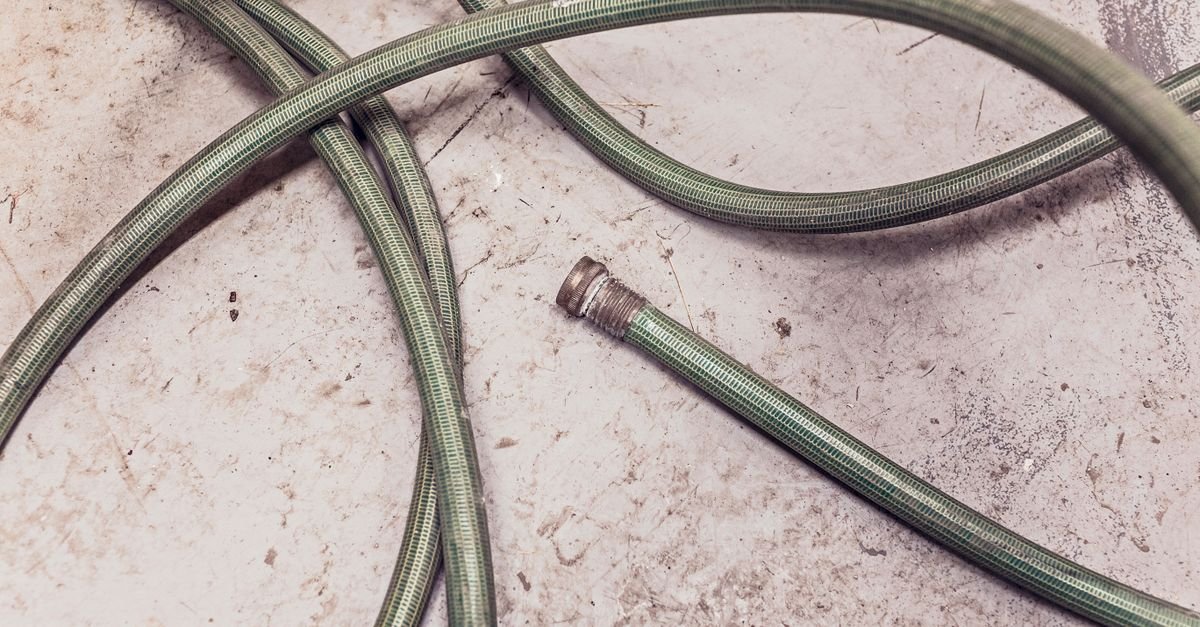
Kink the inlet hose and you starve the pump. A pump will try to move its rated gallons per minute whether or not the water is there, and when it cannot get enough in it starts pulling air instead. Those bubbles collapse inside the pump with surprising violence — thousands of tiny impacts a second, landing on the same metal. That is cavitation, and it quietly wrecks pumps that were fine last weekend. A crushed garden hose is one of the first things to check when you have lost pressure at the gun.
Kink the high-pressure hose and the problem runs the other way. Now there is a restriction downstream of the pump, so the unloader does what it is built to do and dumps flow into bypass, recirculating the same water through the pump head instead of sending it out the gun. Water going round in circles picks up heat. Heat is what kills seals.
Then there is the hose itself. A high-pressure hose is a wire or polyester braid with a liner inside and a cover outside. Crease the braid and the strands take a set — they do not straighten out. That spot becomes the weak point, and the weak point becomes a pinhole. A pinhole at 3,000 PSI is not a leak, it is a jet you cannot see — which is why you run a gloved hand along a suspect hose only with the machine off, never under pressure.
So here is my position, and it is the reason this page exists: a hose reel is a pump accessory that happens to look like storage. It is the cheapest thing you can buy that stops the hose forming the creases that cost you pressure, cook your seals, and eventually put a hole in a pressurised line.
Why a Garden Hose Reel Bursts Under 3,000 PSI
The obvious thought is to hang the pressure hose on the green plastic reel already screwed to the wall. Do not.
A garden hose reel has an internal water path designed for mains pressure — call it 40 to 80 PSI at the tap. The swivel is usually moulded plastic with an O-ring and the hose connects over a barb. Perfectly good engineering for the job it has, and being asked to do a job forty times harder the moment a pressure washer is on the other end.
A pressure wash reel is a different object inside. The fluid path is brass or stainless, connections are threaded rather than barbed, and the assembly carries a published pressure rating. AR’s manual 50-foot reel is rated to 3,000 PSI with 3/8-inch brass connections, male inlet and female outlet (AR Blue Clean AR5701). Coxreels publishes ratings up to 4,000 PSI on its 100 Series (Coxreels pressure wash reels).
The rule is simple: the reel’s rating must equal or beat your machine’s *maximum* PSI, not its working PSI, and between two ratings you take the higher one. The unloader spikes above working pressure every time you release the trigger.
One useful exception. The garden hose reel is not useless — it is on the wrong end of the machine. Put your inlet hose on it. That hose runs at tap pressure, kinks more readily than the high-pressure line, and keeping it off the floor is worth doing for the cavitation reason above.
Hose Reel Pressure Washing Options: Hand Crank, Spring and Powered
| Type | How it rewinds | Main failure point | Best for |
| Hand crank | You turn the handle | Almost nothing; the swivel | 25–100 ft, homeowners, even wraps |
| Spring retract | Latch releases, spring pulls | The spring, and uncontrolled rewind | Frequent short deployments |
| Motor driven | 12V or mains motor | Wiring, gearbox, cost | 150–300 ft on commercial rigs |
Hand crank is what most working operators keep. Fewest parts that can fail, and it gives you something the other two do not: control of the wind. You can lay the hose on in flat, even wraps instead of letting it pile up in one corner. Piled wraps are how a hose gets pinched between the drum flange and the frame.
Spring retract is genuinely nicer to use, and it carries a hazard the marketing does not lead with — a 3/8-inch steel coupler travelling drumwards under spring load, at shin height. Coxreels sells a patented slow-retract system as a named safety feature, which tells you what the default behaviour is. If you buy spring, buy controlled rewind, and walk the hose in rather than letting go from thirty feet.
Motor driven is for people pulling 200 feet off a trailer forty times a day. It needs a fused supply, a switch you can work with wet hands, and space. If your entire hose run is the 25 feet that came in the box, a motorised reel is an expensive way to save eleven seconds.
The Swivel Is the Part That Leaks First
Water has to get from a fixed inlet into a drum that spins. The part that performs that trick is the swivel, and it is the only component in the whole setup that rotates while holding full pressure.
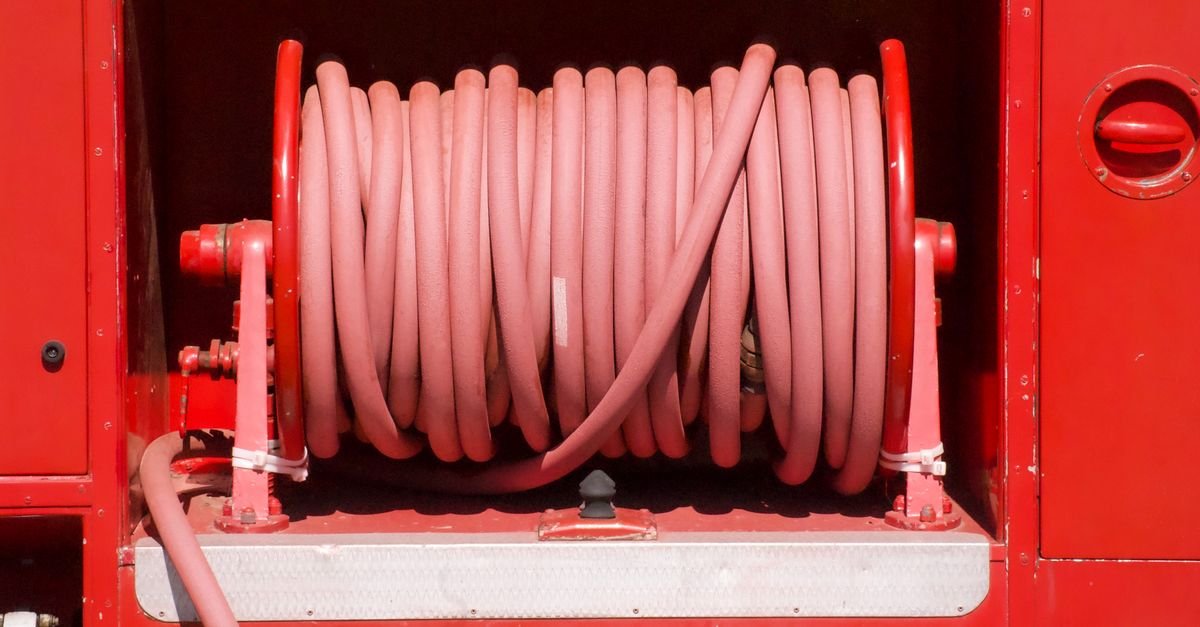
Inside it, a seal rides on a polished shaft. Every time you pay hose out and crank it back, that seal wipes across the shaft under 3,000 PSI, carrying whatever your water supply carries. Four things wear it out, roughly in order:
1. Grit. Sand and sediment, particularly on well water, lap the shaft like fine abrasive paper. An inlet filter that actually gets cleaned is the cheapest swivel insurance there is.
2. Dry rotation. Cranking the reel with no water in it runs the seal dry. Small thing, done often.
3. Side load. Wind the hose into a heap on one side and the shaft carries a bending force it was not designed for. Even wraps again.
4. Age. Seals are consumables. Better reels use brass swivels with stainless fluid paths and a grease fitting on the bearing precisely because this part is expected to be serviced.
Diagnosis is easier than people expect. Water weeping from the centre of the reel while the drum is stationary is the swivel, and swivels take rebuild kits — you are replacing a seal, not a reel. Water appearing anywhere along the hose is the hose, and a leaking high-pressure hose is not repairable. It gets replaced that day, for the pinhole reason above.
Where to Bolt It: Wall, Cart or Trailer
A reel loaded with 100 feet of 3/8-inch hose and the water inside it is heavy — commercial rigs routinely exceed 100 pounds on the bracket. That number settles most of the mounting question.
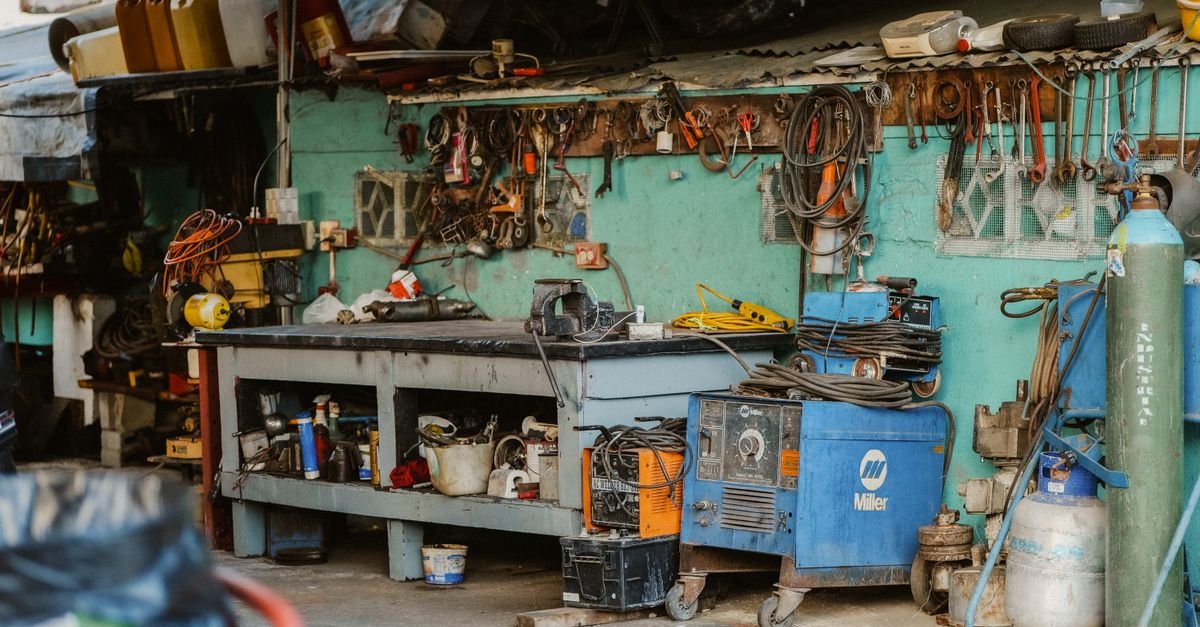
Wall mount. Into studs or masonry, with through-bolts or proper anchors. Not drywall, not thin cladding, not the back of a plywood shelf. High enough that the hose does not drag on the floor as it pays out, low enough to reach the crank, and with a full 360 degrees of clearance for the handle. That last one sounds obvious and is the most commonly discovered-too-late constraint in any garage.
Cart or frame mount. Most mid-range gas machines have a spot on the handle frame. Check what is actually fitted before assuming yours has a reel — a moulded hook the hose loops over is storage, not a reel, and it puts a bend in the same place every time.
Trailer or truck. Orientation is everything: the reel should pay out toward the work, and nothing sharp should sit in the hose’s path as it unspools.
Wherever it lives, the reel now holds water you cannot see. The swivel and the internal path hold a small amount permanently, and water left in anything over winter expands when it freezes. When you winterize the machine, the reel is part of the machine.
Drum Capacity by Hose Diameter and Length
Reels are sold as a pair — a diameter and a length — and the pair is not decorative. Fifty feet by 3/8 inch is the common homeowner spec and what both reels cited above are built around. Thinner 1/4-inch hose takes less drum space, so the same frame swallows considerably more of it; 1/2-inch commercial line needs a drum the size of a dustbin lid for a 200-foot run.
I went looking for a clean formula to convert a 50-foot 3/8 rating into its 1/4-inch equivalent and found mostly people guessing at each other, so I am not going to hand you a number I cannot stand behind. Manufacturers publish the figure for every drum they sell. Use theirs, and buy the reel around the hose you already own rather than the other way round.
Two things hold regardless of size. Do not fill past the flange — hose wrapped higher than the outer rim falls off the side on the next unwind and gets pinched between drum and frame, producing exactly the crease the reel was bought to prevent. And every extra foot on the drum is an extra foot of friction loss whether you walk it out or not, which matters when you are working out how much flow your machine needs.
Can You Run the Machine With Hose Still on the Drum?
Short answer: it works, and it should not become a habit. Three reasons, in the order they bite.
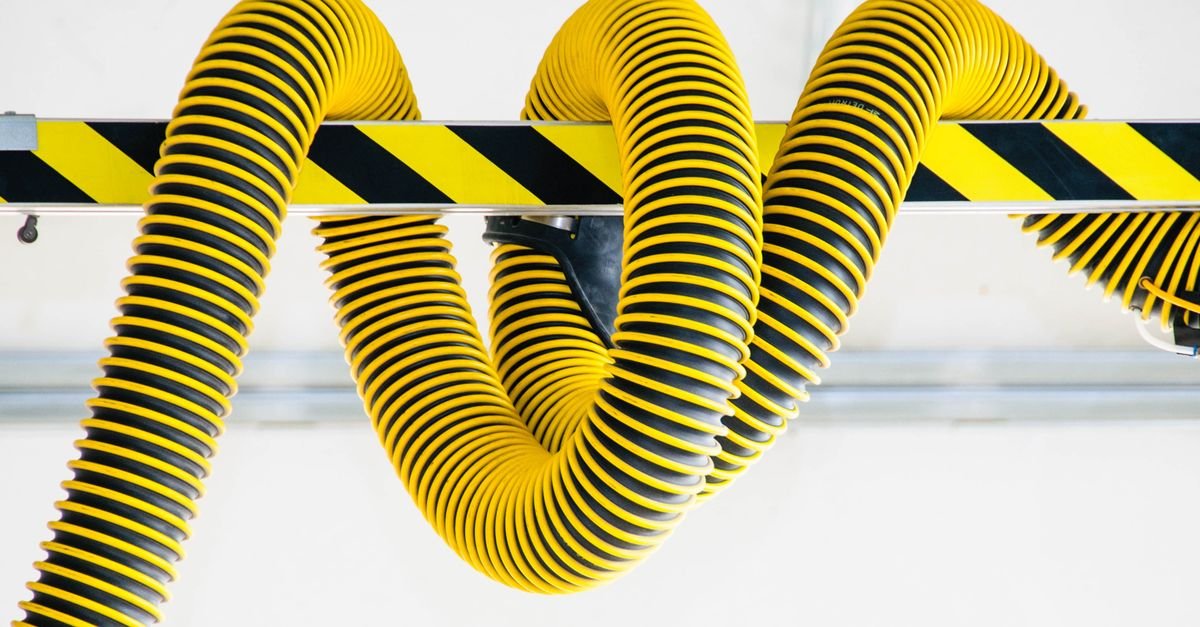
You pay for the whole hose either way. Friction loss happens per foot of hose, not per foot of hose you have unwound. If 100 feet is plumbed to your gun, the water travels 100 feet, and the pressure drop arrives at the nozzle whether the last 80 feet are stretched across the drive or stacked six inches from the pump. Wrapping adds bend losses on top.
Heat has nowhere to go. A hose lying loose sheds heat to the air along its whole length. A hose wound tight on a drum is insulating itself with itself. Add an unloader sitting in bypass because you are standing there with the trigger off, and the hottest water in the system is circulating through the most heat-trapped part of it.
The wraps abrade each other. A pressurised hose swells slightly and moves. Wound tight, each wrap works against its neighbours every time you pull the trigger, wearing the cover at the contact points. That is where flat spots come from on a hose that has never once been kinked.
The workable rule: pull off what you will use plus a few feet of slack, and do not leave a running machine idling against a fully wound drum.
FAQ
Do I really need a hose reel for a pressure washer?
Not for a 25-foot hose you use twice a year. Past about 50 feet, or if the hose is stored somewhere it gets walked on, the reel pays for itself the first time it prevents a crease in the braid. A reel costs well below a replacement high-pressure hose, and far below a pump seal job.
Can I use a garden hose reel for a pressure washer hose?
No. Garden hose reels have plastic swivels and barbed connections built for tap pressure — roughly 40 to 80 PSI. A pressure wash reel carries a published rating in the 3,000 to 4,000 PSI range with a brass or stainless fluid path. Put the inlet hose on the garden reel instead; that is the end it suits.
Why is my hose reel leaking from the middle?
That is the swivel, and it is the expected failure. The seal inside rotates against a shaft under full pressure every time you wind the hose in, and grit in the water supply usually finishes it. Most reels take a swivel rebuild kit. A leak anywhere along the hose itself is a different matter — replace the hose rather than patching it.
Should I get a manual or a spring-retract reel?
Manual, for most people. Fewer parts, no spring to fatigue, and you control how the hose lays on the drum, which is what actually protects it. Spring retract earns its money if you deploy and stow many times a day — buy one with controlled slow rewind rather than a bare spring.
How much hose will a reel hold?
Check the manufacturer’s published diameter-and-length pair rather than estimating. A reel sold as 50 feet by 3/8 inch is telling you exactly what it holds. Overfilling past the outer flange causes wraps to slip off the side and get pinched, which is worse than having a slightly smaller reel.
Pull It All Off Before You Pull the Trigger
A reel does two jobs and only one is visible. The visible one is that your hose stops living on the floor in a shape that takes ten minutes to undo. The invisible one is that the braid inside never takes a permanent crease — no restriction, no unloader stuck in bypass cooking the pump, no pinhole appearing in a line carrying 3,000 PSI.
Buy the rating above your machine, mount it into something structural, crank it on in flat even wraps, and run out the length you need before you start. The hose will outlive two or three of the ones your neighbour keeps buying, and you will never again spend a Saturday morning arguing with a knot that has been thinking about it all winter.