Last Updated on September 25, 2026 by Umar Farooq
A soft wash spray gun is a low-pressure, high-flow valve and nozzle assembly — typically rated somewhere between 100 and 360 PSI at 5 to 18 GPM — and it is the exact inverse of the pressure washer gun it superficially resembles.
That inversion is the whole reason the part exists. On a pressure washer, the gun is a throttle that holds back an enormous pressure through a small passage. On a soft wash rig, the gun is a door: it gets out of the way of a lot of liquid that is not under much pressure, and hands it to a nozzle that decides where it goes. Everything below happens downstream of the pump outlet — the gun, the wand, the tip and the metering valve that sets your mix. The 12V pump that feeds all of it is the other half of the system and has its own arithmetic.
362 PSI and 18 GPM: A Soft Wash Spray Gun Reads Backwards
Pick up a published spec sheet and the numbers look like a misprint. MTM Hydro’s HydroJet soft wash trigger gun is rated at a maximum of 362 PSI and 18 GPM, with 1/2 inch NPT at both the inlet and the outlet and a polypropylene-reinforced body (MTM Hydro, HydroJet Soft Wash Trigger Gun). A homeowner pressure washer gun from the same aisle will be stamped 4,000 PSI and around 8 GPM, in brass and plated steel, with a 3/8 inch connection.
One of those guns is built to survive pressure. The other is built to pass volume. They are not interchangeable, and the reason is the passage through the middle.
| Soft wash gun | Pressure washer gun | |
| Rated pressure | 100–360 PSI | 3,000–5,000 PSI |
| Rated flow | 5–18 GPM | 2–8 GPM |
| Typical connection | 1/2″ NPT | 3/8″ quick connect or M22 |
| Body material | Polypropylene, PVC, stainless | Brass, plated steel |
| The valve’s job | Open a full-bore path | Throttle a small high-pressure seat |
Put 5 GPM of bleach mix through a pressure washer gun and two things happen, neither of them dramatic enough to notice at the time. The narrow seat and 3/8 inch passage eat pressure you needed for reach, so the stream goes soft and short. And the brass starts giving up, because sodium hypochlorite is unkind to copper alloys and aluminium in a way it is not to polypropylene, PVC or stainless. The gun does not fail in a shower of parts. It fails as a gun that sprays 30 feet in May and 18 feet in August, which is a much more annoying way to lose an afternoon.
The Orifice Is Your Pressure Dial
Here is the part that reorganises how you think about the whole rig: on a positive-displacement diaphragm pump, you do not set the pressure. The nozzle sets it. The pump pushes an approximately fixed volume per minute. Whatever hole you give that volume to escape through decides what pressure builds up behind it. Big hole, low pressure, lots of flow. Small hole, pressure climbs, flow drops, and the pump starts diverting through its bypass and getting warm about it.

Agricultural spraying has had this calibrated for decades, and the rule is one line long. University of Nebraska-Lincoln Extension puts it as plainly as it can be put: “Output varies by the square root of the pressure” (UNL Extension G2044, Calibration of Sprayers).
That single sentence answers most soft wash nozzle questions before they are asked.
- A tip rated 2.0 GPM at 40 PSI will flow 2.0 × √(100 ÷ 40) = 3.16 GPM at 100 PSI. That is how you compare tips that publish their flow at different test pressures.
- Going from 60 PSI to 100 PSI gains you √(100 ÷ 60) = 1.29, or 29% more flow. Not 67% more. Twenty-nine.
- To double the flow through a fixed orifice you need four times the pressure. From 100 PSI that is 400 PSI, which is past the rating of the gun in your hand.
So if the stream is weak, turning the pressure up is the slowest available fix. Fit a bigger orifice and the flow goes up in a straight line instead of a square root. Go too far the other way — a tip much too small for the pump — and you get a pump running against itself, a hot motor and a gun that dribbles. Undersized is the common error, because a small tip feels like it should mean a harder stream. It means a harder-working pump.
Fan, Cone or Straight Stream at 100 PSI
Nozzle pattern on a pressure washer is a damage decision. On a soft wash gun it is a delivery decision, because at 100 PSI nothing you fit is going to hurt vinyl. What the pattern decides is how far the solution travels and how much of it arrives on the wall rather than on the shrubs.
A straight stream or pencil tip keeps the liquid in a coherent column for as long as physics allows. It is the only pattern that tops out a second-storey gable from the ground, and it is the worst pattern for even coverage, because you are effectively painting with a very thin brush and moving it fast.
A narrow fan, in the 15 to 25 degree range, is the middle of the wall: enough distance to work from ten or fifteen feet back, enough spread to lay a wet band you can see.
A wide fan or cone at 40 to 60 degrees is close-range work — the ground-floor course, soffits, a gutter face you are standing under. Wide patterns at low pressure make comparatively large, slow droplets that land where you aimed and run down rather than bouncing back at you. Adjustable cone nozzles that rotate from roughly 0 to 60 degrees exist and save you a pocket full of tips, at the cost of one more thing with an O-ring in it.
The honest limit on all of them: a fan sheet at 100 PSI has very little energy holding it together. It breaks into droplets within a few feet of the tip, and after that it is mist with opinions about where it would like to go. That is not a fault. It is the reason you pick the widest pattern that still reaches, rather than the widest pattern available.
What Actually Throws Solution Up to a Second Storey
Reach is the spec everyone buys on and almost nobody reasons about. It does not come from pressure. It comes from volume and from stream coherence — how long the column survives before air shear and surface tension tear it into droplets that stop dead.
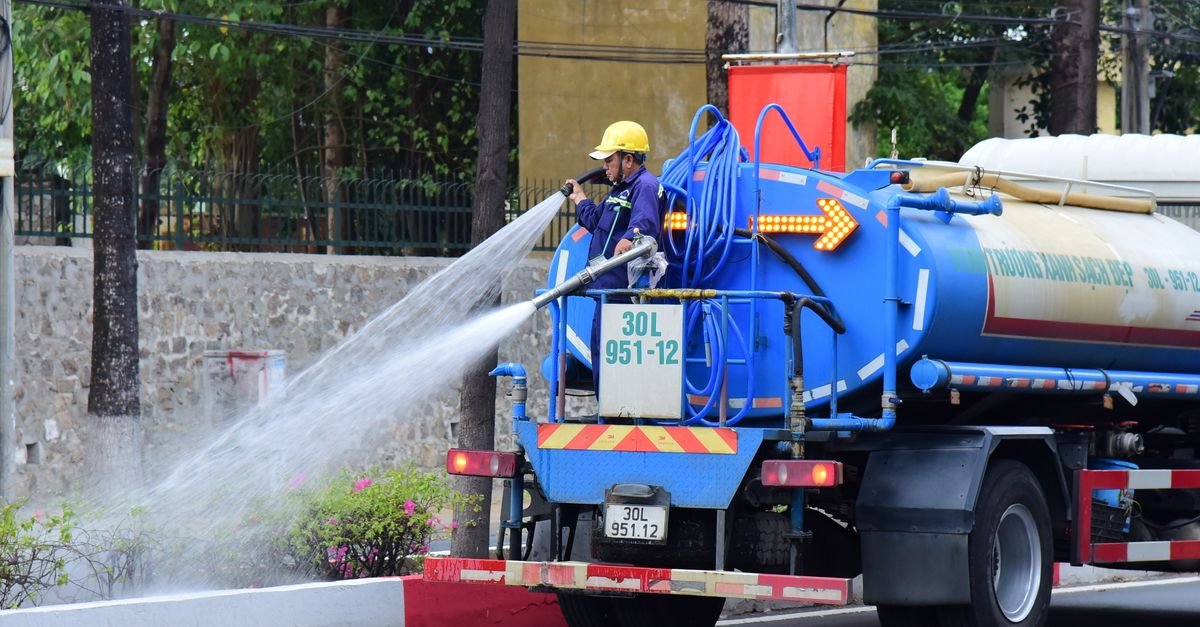
Once the column becomes spray, the throw is over within a few feet, regardless of what the gauge says. A fine droplet has almost no mass and an enormous surface area for its weight, so air drag wins immediately. A thick coherent stream has the mass to keep going. This is why a dedicated soft wash tip has a long straight bore behind the exit rather than the stubby profile of a pressure washer tip: the extra length straightens the flow so it leaves as a column instead of a spreading, tumbling mess.
Three practical consequences:
1. More orifice beats more pressure. Flow scales linearly with orifice area and with the square root of pressure. You already know which of those two is the better deal.
2. Wind is the ceiling, not the pump. A light breeze takes the top off a vertical throw and puts hypochlorite on a car, a hedge or a neighbour. On a gusty day the honest reach of any rig is shorter than its brochure number, and the rinse-down that follows matters more than usual.
3. Reach is a safety feature, not a convenience. Every foot of throw is a foot of ladder you do not climb while holding a wand and looking upward.
Trigger or Ball Valve at the Handle End
Two designs, and the choice is genuinely a preference rather than a right answer.
A trigger gun shuts off when you let go. That is its entire argument and it is a good one. Drop it, trip over the hose, get startled by a dog — the flow stops. The trade is a spring-loaded seat that wears, and a wet trigger seat is where hypochlorite sits all day.
A ball valve gun is a lever on a full-bore ball. Nothing restricts the flow, nothing wears except the seals, and it stays exactly where you set it, which is restful over a long wall and alarming the moment you set it down still open. At 5 GPM, a gun left open empties a 100-gallon tank in twenty minutes, onto whatever it happened to be pointing at.
The wand between gun and nozzle has its own short list. PVC and CPVC are light and completely indifferent to bleach, but they flex at length and go chalky in UV. Aluminium is light, cheap and the wrong answer here — hypochlorite pits it quickly. Stainless survives everything and reminds you of its weight by the third gable. A swivel at the gun inlet stops the hose winding itself into a spiral and taking your wrist with it.
One thing that is not a preference: eye protection, and sealed goggles rather than safety glasses. You are spraying upward, so the overspray comes back down and arrives through the open gap along the top of a pair of glasses, which is the one direction they are not designed for. Dilute hypochlorite in an eye is a genuine emergency room visit rather than a bad afternoon, and goggles cost about the same as a nozzle.
Mixing at the Gun Instead of in the Tank
A proportioner is a metering manifold. Separate lines run from the water tank, the sodium hypochlorite drum and the surfactant jug, each through its own adjustable valve, into a common block that feeds the pump. Turn the valves, change the ratio, spray a different strength on the next surface without emptying anything.
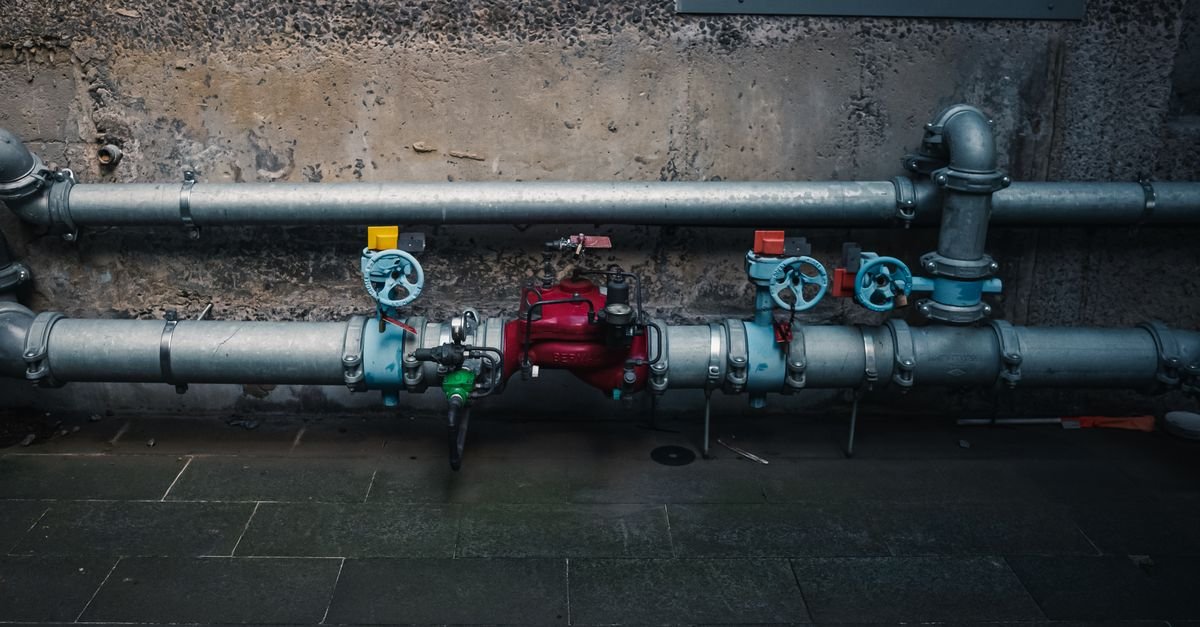
Compare that with the two other ways of setting a mix:
| Method | Where the mixing happens | How you change strength | What drifts |
| Premixed tank | In the tank, before you start | Drain and remix | Nothing, once mixed |
| Downstream injector | At the machine, by venturi suction | Change injector tip or metering valve | Draw falls with hose length and back pressure |
| Proportioner | At the manifold, valve by valve | Turn a valve, spray | Valve settings are ratios, not calibrated percentages |
The middle row is the useful contrast. A downstream chemical injector does its blending at the machine using suction from the water passing by, so the ratio it achieves depends on things you are not holding — hose length, tip size, back pressure. A proportioner does it by valve position ahead of the pump, so hose length changes nothing, and the pump never sees concentrate. That last point quietly extends pump life.
Needle valves beat ball valves on a proportioner for one reason: a needle valve gives you most of a turn of fine adjustment, so “a third open” means the same thing tomorrow. Materials are the usual soft wash list — polypropylene, PVC or CPVC bodies, Viton seals, stainless or plastic trim, and no aluminium anywhere. Each inlet wants a check valve, or the strong line back-feeds the weak one while the pump is off and you arrive to find bleach in the water tank.
And here is where I will talk somebody out of a purchase: if you soft wash your own house once or twice a year, a proportioner is the wrong end of the system to spend money on. A measured mix in a tank is more accurate than any valve setting you have not calibrated, and you can verify it with a measuring jug on a workbench rather than on a ladder. A proportioner is a repeatability tool. It earns its place when the mix genuinely has to change three times before lunch — a roof at one strength, a painted fascia at another, a driveway at a third — and not before. Nobody’s siding has ever come out cleaner because the ratio arrived by manifold.
Bleach Stays in the Parts You Cannot See
An empty hose is not a clean hose, and the gun is where the leftovers hide.
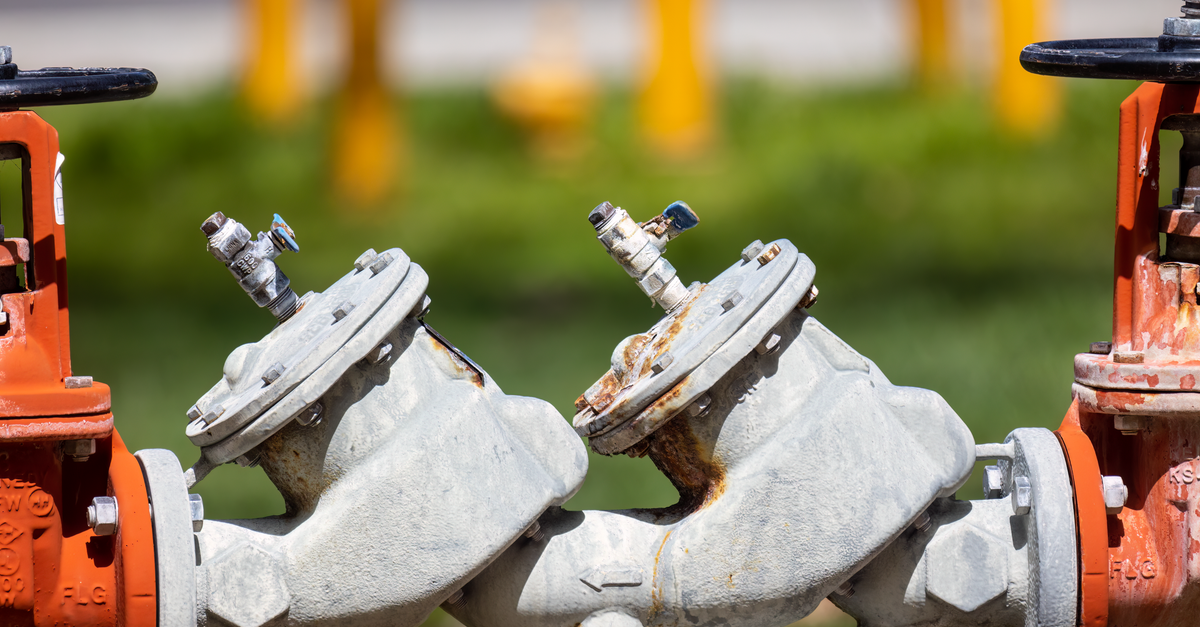
Four places hold solution after the last trigger pull: the trigger or valve seat, the cavity behind a closed ball, the swivel at the inlet, and the bore of the nozzle itself. A ball valve is the worst offender, because when you close it the ball traps a small volume of whatever was passing through, sealed in a plastic chamber, for however many days pass before the next job.
The routine is two minutes and it is not optional:
- Run clean water through the whole assembly with the gun held open until it stops smelling of chlorine.
- Cycle the valve open and closed five or six times while the water is running. This is the step people skip, and it is the only one that flushes the ball cavity and the seat.
- Pull the nozzle off and flush it separately. A tip bore is small enough that one crystal changes its rated flow.
- Store the valve part-open so nothing is sealed in.
Sodium hypochlorite decomposes into salt, so what dries inside a gun is a fine crystalline grit sitting on the sealing faces. That is what makes a trigger stiff over a winter and scores a seat over a season.
One hard safety rule while you are flushing. If the next job needs an acid — a rust remover, a masonry brightener, an oxalic wood cleaner — the gun gets a full water flush first, with the valve cycled, before anything acidic goes near it. ATSDR states it flatly: sodium hypochlorite “releases chlorine gas when it comes in contact with acids” (ATSDR, Medical Management Guidelines for Chlorine). A gun that still has bleach in the ball cavity is a very small, very badly placed reaction vessel held at head height.
FAQ
What PSI should a soft wash gun run at?
Most soft wash work is done between about 60 and 150 PSI at the pump, and soft wash guns are typically rated a good margin above that — MTM Hydro’s published figure for its HydroJet trigger gun is 362 PSI maximum. The gun rating is a ceiling, not a target. What actually lands on the surface is set by the nozzle orifice and the distance, which is covered in detail on low pressure roof cleaning.
Can I use my pressure washer gun for soft washing?
Mechanically it will pass liquid, so yes for a one-off. As a routine, no. A pressure washer gun’s narrow seat and 3/8 inch passage throttle the flow a soft wash rig depends on, which costs you reach, and brass internals corrode in sodium hypochlorite. If you are applying chemical through a pressure washer rather than a dedicated pump, the injector is the right tool, not the gun.
What size nozzle does a soft wash gun need?
Match the nozzle’s rated flow to the pump’s output at the pressure you intend to run. Because output varies with the square root of pressure, a tip rated 2.0 GPM at 40 PSI delivers about 3.16 GPM at 100 PSI. Too small and the pump runs against its own bypass; too large and the pressure collapses along with the reach.
How far will a soft wash spray gun actually reach?
Reach depends on flow and stream coherence far more than on pressure, so a figure quoted for one pump does not transfer to another. Expect a straight-stream tip on a well-matched 5 GPM setup to reach a second storey from the ground in still air, and expect any breeze to shorten that noticeably. If a claimed distance was measured with no wind and a bigger pump than yours, it was measured honestly and it still does not apply to you.
What does a soft wash proportioner valve actually do?
It meters water, sodium hypochlorite and surfactant from separate containers through adjustable valves into a single manifold ahead of the pump, so you set the mix strength by valve position instead of premixing a tank. The pump only ever handles diluted solution, and hose length does not change the ratio the way it changes an injector’s draw.
Why has my soft wash gun lost its reach?
Work backwards from the tip: a worn or partly blocked orifice first, then a clogged inlet strainer, then an air leak on the suction side, then a pump running in bypass because something downstream is restricting it. A gun that sprays fine at five feet and will not reach fifteen is almost always a nozzle problem, not a pump problem.
Do I need a soft wash gun if I already have a garden hose?
A garden hose is closer to soft wash specification than most people expect — roughly 40 to 60 PSI at several GPM — but it has no way to carry chemistry at a controlled strength and no orifice designed for coherent throw. It will rinse. It will not apply, and it will not reach the top of a wall.
Everything That Matters Happens After the Pump Outlet
The pump sets your budget of gallons per minute. The delivery end decides what those gallons do: the orifice sets the pressure, the pattern sets the coverage, the stream’s coherence sets the reach, and the metering valve sets what is actually in the liquid. Not one of those four is adjusted by turning something up.
So when the stream is short, resist the instinct to reach for more pressure — it pays back in square roots, and the tip in your hand is a linear adjustment sitting right there. Change the hole. Then go rinse the gun out, including the bit you cannot see.