Last Updated on September 25, 2026 by Umar Farooq
Soft wash siding cleaning comes down to five things your hands do: apply the solution from the bottom of the wall upward, keep every square foot visibly wet for the whole dwell, work sections small enough that you can get back to them, overlap each pass by about a third, and rinse from the top down at a pressure that could not push water behind a lap if it tried.
The odd thing about the job is how little of it is work. A pressure wash is physical — you lean in, you chase a spot, your forearm knows about it the next morning. A soft wash is mostly standing there holding a trigger at a steady walking pace, and then standing there some more while nothing visibly happens. The wall does not go clean in front of you. It goes wet, then it goes slightly worse-looking, then you rinse it and it is clean. Most of the skill is in not helping.
Your Siding Is Not Dirty, It Is Colonised
Walk up to the wall and look at what is actually on it. Green film is algae. Black speckling is mould. The grey bloom on the north elevation is both, plus whatever the sprinkler has been feeding them. Almost none of it is dirt in the sense of something that landed there and stuck.
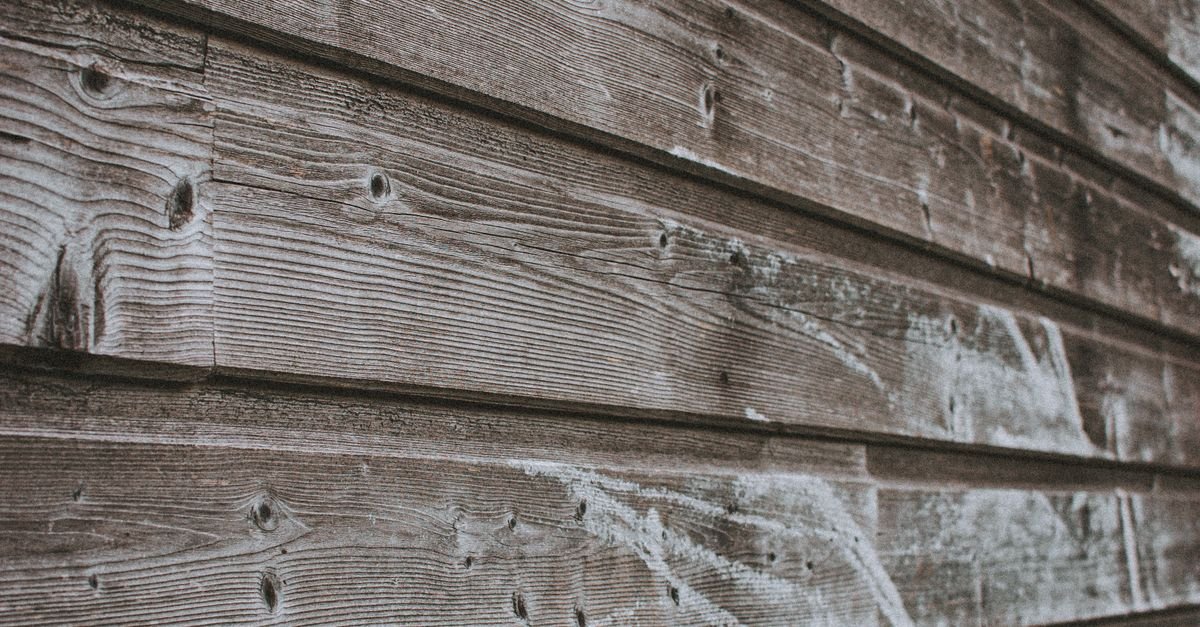
That distinction decides the entire method. Dirt is held on by adhesion, so force removes it. A colony is anchored by filaments that run down into every pore and texture line in the surface, so force removes the part you can see and leaves behind the part that grows it all back. This is why a pressure-washed wall can look spotless in May and speckled again by August while the wall next door, soft washed on the same weekend, is still clean. Nothing on your siding is holding on. It is growing. A living surface layer is a chemistry problem wearing a cleaning problem’s clothes.
So the cleaning happens during the dwell. The spraying is delivery, the rinsing is disposal, and the actual work is done by a wet wall doing nothing for five to ten minutes. That is why soft washing looks so unimpressive to watch, and it is also why it suits siding specifically. A lapped wall sheds water downward by design and has no defence at all against water arriving upward with a pump behind it. The polymeric siding trade body puts it bluntly: hold the washer straight at eye level, and do not aim the stream upward, because water can be driven behind the panels (PEPA, Cleaning and Maintenance).
What goes in the tank, at what strength, and what it does to the plants at the base of the wall is a separate question with real ratios attached — the siding cleaning solution breakdown has the recipes and the one combination that produces chlorine gas. This page is about what happens after the bucket is mixed.
Solution Goes Up the Wall, Water Comes Down It
Two passes, two directions, and they are not interchangeable. Apply from the bottom up. Rinse from the top down.

| Pass | Direction | Why | What goes wrong if you flip it |
| Solution | Bottom to top | Runs land on wall that is already wet | Concentrated runs set as stripes on dry siding |
| Dwell | Nothing moves | Contact time kills the colony | A dry patch is an untreated patch |
| Rinse | Top to bottom | Gravity carries spent solution over loosened growth | Rinsing upward points water at the laps |
The bottom-up rule is the one people get wrong, because every instinct says start at the top and work down the way you would with a paint roller. Here is the mechanism. Dry siding is thirsty — not absorbent exactly, but dry enough that a rivulet of concentrated solution running across it wets a narrow band far more heavily than the fan ever would. That band cleans harder than everything around it, and when the wall dries you get a clean stripe on a less-clean wall. Which is, annoyingly, still a stripe. Wet the bottom first and every run that comes down later lands on ground that is already treated, so it has nothing left to bite into. The trade body’s wording is about as plain as guidance gets: “Start at the bottom of the house and work your way up to prevent streaking.”
The rinse flips for two different reasons. Gravity is the obvious one — water released at the top carries dead growth and spent solution down across surfaces you have already loosened, so every gallon works twice on its way to the ground. The second reason is the better one. Rinsing top-down means the water travels the way rain travels, landing on the face of each course and running out at the lap. Rinsing bottom-up means pointing the stream up underneath those laps, which is the single thing the assembly was never built to survive.
How Much Wall Can You Soap Before It Dries?
This is the question nobody answers with a number, so here is the honest version: section size is not set by your speed, it is set by the weather, and the only reliable measurement is your hand.
Detergent needs five to ten minutes on the surface and must not dry there. The reason it must not dry is not cosmetic. The EPA’s guidance on registered antimicrobials is that the contact time is the time the product must remain on the surface for it to be effective, and that the surface should be visibly wet for the entire contact time, which may mean reapplying (US EPA, Selected EPA-Registered Disinfectants). A dry patch is not a weakly treated patch. It is an untreated patch that looks identical to a treated one until the algae comes back to it first.
So the working rule is this: a section is however much wall you can cover and still return to the starting corner with that corner visibly wet. Go and touch it. If your fingers come away damp, the section is the right size. If they come away dry, halve it and re-wet what you lost.
In practice that lands on two very different answers. On a shaded north wall on a mild, still day, solution sits wet for fifteen minutes or more and you can comfortably run twenty-five or thirty feet of single-storey wall as one section. On a west elevation in full afternoon sun in July, the leading edge can be dry inside three minutes, and the honest section is one bay between two windows with a light re-wetting halfway through the dwell. Same wall, same person, same equipment, section size different by a factor of five.
A light re-application is correct, not a failure. It is exactly what “may need to be reapplied” means, and it beats a wall that dried out and needs the whole sequence again. What it is not is permission to double the strength because the first coat vanished. Working the building around the shade rather than fighting it is a planning problem rather than a technique one, and the whole-house wash lap covers the order to walk the elevations in.
Overlap by a Third, or Explain the Stripes
A fan pattern is not a uniform rectangle of liquid. It is heavy through the middle and feathered at both edges, the way a spray can is. Butt two passes edge to edge and the seam between them receives roughly half a dose from each side — which adds up to a full dose of nothing much.
On the application pass, that half-dosed seam is a vertical line of algae that survives the wash. It will not show while the wall is wet. It shows three days later, in the sun, from the pavement, as a set of evenly spaced stripes that look almost deliberate. On the rinse pass, the same seam is a line of un-rinsed residue that dries to a faint film and then collects dust for the rest of the season.
Overlap each pass by about a third of the pattern width. It is the same rule as rolling a wall of emulsion, for exactly the same reason, and it is the cheapest insurance on the job — a third more passes, set against a wall that otherwise has to be done twice.
Two related habits do most of the remaining damage:
- Keep moving at a steady pace. A pause dumps a double dose in one place, which streaks the other way — a bright vertical band, most visible on older sun-faded siding where the surrounding wall has nothing left to lose.
- Run horizontal passes along the courses. The courses are horizontal, so a horizontal pass keeps the tip naturally level. Vertical sweeps feel efficient and quietly swing the tip upward at the top of every stroke, which is the one angle the wall cannot take.
Distance is your other control, and the one most people forget they have. Impact pressure falls off sharply with distance, so stepping back a foot does more for a delicate section than any tip change — and unlike a tip change, you can do it mid-pass. If you want the working pressures by cladding material rather than the motion, power washing siding has them broken down by material.
The Dry Finger Test for Chalk
Before you mix anything, do this. Pick a sun-exposed section of wall — south or west, above the shade line, where the UV has been landing for fifteen years — and swipe a dry finger down it. If white powder comes away on your fingertip, the siding is oxidised.
This matters more to your technique than to your chemistry. Oxidation is the surface of the vinyl or the paint film breaking down under UV into a fine chalk. A soft wash kills and removes the biological growth sitting on top of that chalk, and then the chalk is still there, so the wall dries lighter, duller and blotchy — and the owner, reasonably, concludes the wash did not work. Worse, if you agitate chalk unevenly with a brush, or hold the rinse in close in one spot, you take it off in patches. A patchily de-chalked wall looks considerably worse than an evenly chalked one.
Oxidised siding needs a dedicated restoration product and light agitation with a soft brush, worked in small sections and rinsed before it dries. It is a restoration rather than a clean, and the realistic outcome on badly oxidised vinyl is an even, slightly flat wall rather than a bright one. That is a genuine improvement. It is just not the one in the photograph.
I went looking for a published manufacturer threshold here — some figure for how much chalk transfer means the wall should not simply be washed. I could not find one. The dry finger is the test the trade uses because nobody has offered a better one, and I would rather tell you that than dress a rule of thumb up as a specification.
Reaching the Top Course Without Leaving the Ground
Here is the part that surprises people, and it is the reason soft washing exists for two-storey walls rather than being merely gentler.
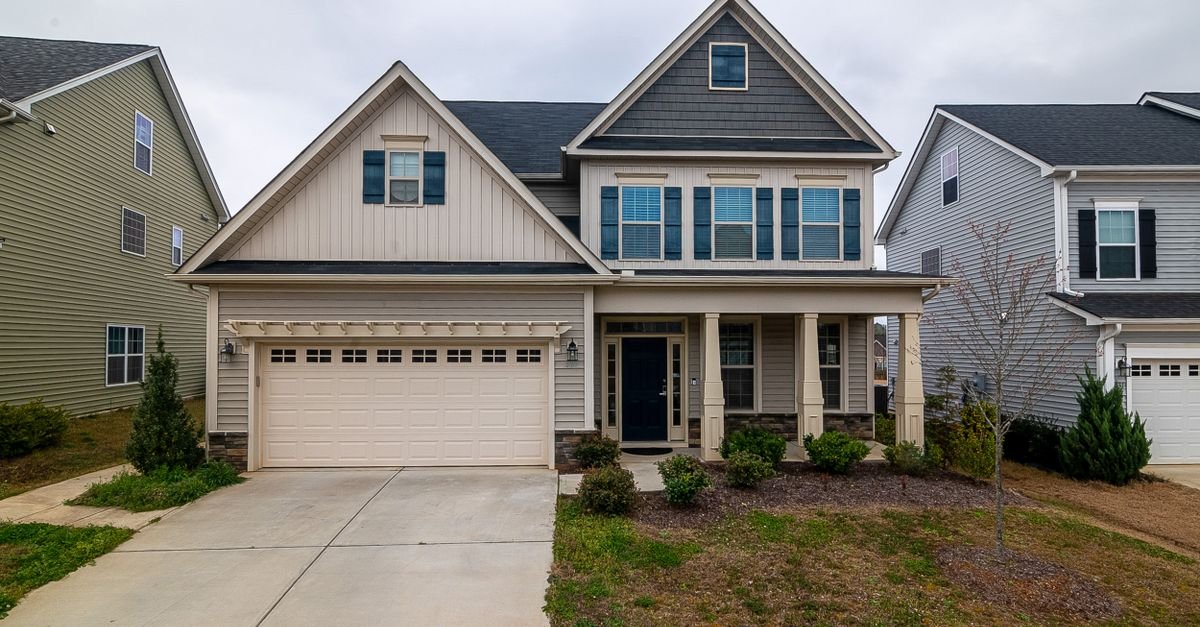
High pressure is bad at reach. A pressure washer forces water through a tiny orifice to make pressure, and the resulting fan atomises — that is the entire point of it — so it breaks into droplets and loses coherence within a few feet. Aim a 40-degree tip at a second-storey gable from the lawn and most of what leaves the nozzle arrives as mist and drift. A soft wash setup does the opposite: modest pressure, large orifice, high volume. It produces a heavy, coherent stream that behaves more like a thumb over a garden hose than a spray, and a coherent stream carries.
That is the trade-off in one line. Pressure buys impact at short range. Volume buys distance. Cleaning a wall needs distance, because the wall is twenty feet up and you are not.
Equipment makers rate soft wash guns by throw, and I will be straight about those numbers: every throw figure I could find traces back to somebody selling the gun, measured in conditions nobody publishes. I have no independent measurement to hand you. What is not in dispute is the direction of the effect — the same machine reaches materially further through a soap tip at low pressure than through a rinse tip at high pressure, and you can demonstrate that to yourself on the driveway in about thirty seconds. Soft wash pump hardware covers what actually governs that on a spec sheet.
Two things change at height. The first is angle: reaching a second-storey course from the ground means your stream arrives at roughly forty-five degrees from below, which is the angle the laps are least happy about. That makes the rinse pressure question non-negotiable up there — volume, arriving softly, working down from above the section rather than up into it. The second is wind. At ground level a breeze moves your overspray a few feet. At twenty-five feet it becomes a distribution system, and the recipient is usually a neighbour’s car.
What you should not do is take a ladder to it. That is not caution for its own sake, it is arithmetic. A prospective study that followed 134 ladder-fall patients through two emergency departments found 71% of the injuries happened in non-occupational settings rather than at work, 78% of the home falls were outdoors, and 86% were from more than a metre up. Of the people who did return to work, the median time off was eight weeks (ladder-related injury outcomes, PMC7310734). Eight weeks is not a scare figure. It is just a very expensive way to save the price of an extension wand.
FAQ
What is soft wash siding cleaning?
Soft wash siding cleaning is applying a cleaning solution to a wall at roughly garden-hose pressure, letting it dwell for five to ten minutes so it kills the algae and mould growing on the surface, then rinsing it off at low pressure. The chemistry does the cleaning; the water only removes what the chemistry killed. A dedicated soft wash pump typically delivers around 100 PSI, which is deliberately too low to force water behind a lap.
What pressure is safe for soft washing siding?
Low enough that the stream cannot travel past an overlap. In practice that means a dedicated soft wash pump at around 100 PSI, or a pressure washer running through the black soap nozzle, which has the widest orifice and drops system pressure far enough for a downstream injector to draw at all. For comparison, ordinary pressure washing of vinyl sits at 1,300–1,600 PSI — an order of magnitude more, aimed at a surface that is not being cleaned by impact anyway.
Do you have to rinse siding after soft washing?
Yes. Roofs are sometimes left for the rain to rinse; walls are not. A wall is at eye level, the spent solution dries to a visible film, and the runoff lands in the beds at the base rather than draining away down a slope. Rinse top to bottom, and water the plants both before you start and after you finish.
Why does my siding still have streaks after soft washing?
Almost always one of three things. You applied top-down, so concentrated runs set on dry wall below. You butted your passes instead of overlapping them, so there is a half-dosed seam every pattern width. Or a section dried during the dwell and never got its full contact time. All three look identical while the wall is wet and only appear once it dries, which is why the wet-finger check partway through the dwell is worth the walk.
Can you soft wash siding in direct sun?
You can, but your section size collapses. Solution that stays wet for fifteen minutes in shade can dry in three on a sunlit wall, and a dry patch is an untreated patch. If you have no choice, halve the sections, build a re-wetting pass into the routine, and expect the same wall to take longer rather than less time.
How long should the solution sit on siding before rinsing?
Five to ten minutes, and it needs to be visibly wet for all of it. Longer is not better once the surface has dried — at that point the clock has stopped and the only fix is reapplying. Shorter leaves live growth, which will be the first thing to come back.
Can you soft wash siding without a pressure washer?
On a single-storey wall, yes. A garden hose, a pump sprayer for the solution and a long-handled soft brush will clean a wall properly with no pressure involved anywhere in the process. It is slower, and your shoulders will file a complaint. The reason people move to a soft wash pump is reach and volume on taller walls, not cleaning strength on short ones.
Let the Rinse Be Boring
If there is one thing worth carrying away from this page, it is where the method usually fails. Not the mix, and not the dwell. It is the last ten minutes, when the solution has done its job, the dead growth is still faintly visible, and the thought arrives: I will just give it a quick go with the pressure washer.
That decision undoes the entire reason for soft washing in the first place. An applicator at around 100 PSI has no mechanism for pushing water past an overlapping course. A 40-degree tip at 1,500 PSI aimed upward at a second-storey lap has several, and the high ground is exactly where you will be tempted to use it — the one part of the wall where nothing behind it can drain, dry, or be looked at. You would have spent the whole afternoon being careful and then ten minutes undoing it, and the wall would have looked much the same either way.
If it still is not clean after the rinse, the answer is a second application, not a harder one. Dwell time is free. Siding is not, and neither is whatever is behind it.
So let the rinse be dull. Start at the eave, work down, keep the water going the way rain goes, and make the last thing you do to the wall the gentlest thing you did all day.