Last Updated on September 24, 2026 by Umar Farooq
Driveway cleaning chemicals are chosen by two things that have nothing to do with the stain: what the driveway is made of, and where the water goes when you rinse. Get those two right and almost any reasonable product works. Get them wrong and you can soften the driveway, bleach the pavers, kill the border, or send a slug of undiluted chemistry into a storm drain, all within the same hour.
A driveway is not a surface. It is a site. It is the only thing on your property deliberately graded to send whatever you put on it somewhere else, it usually turns out to be made of two materials rather than one, and it has living plants along both edges waiting for the overspray. A garage floor forgives a bad decision because the bad decision stays in the garage. A driveway does not.
If you want the chemistry itself — what an oxidiser does that a degreaser cannot, and why pH is the number on the label that matters — that is covered in the four families of power washing chemicals. This page assumes you already know what is in the bottle and asks a different question: will your driveway put up with it, and where does it end up afterwards?
Most Driveways Are Two Materials Pretending to Be One
Go and stand at the bottom of yours and actually look, because there is a decent chance it is not one thing.
The common arrangement is an asphalt run with a concrete apron at the garage door, because asphalt does badly under a car that turns its wheels while stationary. Plenty of drives have a block-paved border, a concrete kerb crossing at the pavement, a gravel strip down one side where the bins live, and a painted or sealed section that behaves differently again. Nobody sells a bottle labelled “for the third of your driveway that is a different material.”
This matters more than it sounds, because chemistry does not stop at the seam. If you mix a strong alkaline degreaser for the concrete apron at the top of the slope, gravity delivers it to the asphalt below at whatever dilution it feels like, and gives it as long a dwell time as it takes you to walk back for the hose.
One more thing to check while you are down there. Flick some water onto a few spots. If it beads and sits, the surface is sealed, and you are cleaning the sealer rather than the driveway — which changes the answer, because most of what strips a stain also strips a coating.
Driveway Cleaning Chemicals, Surface by Surface
Here is the whole thing in one table. Read down your own material, not across.
| Chemical family | Concrete | Asphalt | Block paving | Gravel |
| Alkaline degreaser (pH 11–14) | Fine. The default for oil | Mild only. Strong caustic emulsifies the binder | Fine on the blocks, rinse the joints | Pointless |
| Sodium hypochlorite | Fine for organic growth | Dilute only. Will dull and lighten | Fine, but test coloured pavers first | Pointless |
| Oxygen bleach (percarbonate) | Fine, slower | The safest oxidiser here | Fine, kindest to joint sand | Pointless |
| Acid (muriatic, phosphoric) | Attacks the cement paste — last resort | No reason to and it eats the aggregate | No. Strips pigment and jointing | Pointless |
| Solvent degreaser, brake cleaner, WD-40 | Works, but the runoff is the problem | Never. Dissolves the driveway | Avoid — it wicks into the joints | Pointless |
Four of the five families are genuinely useless on gravel, which is not a flaw in the products. What struck me going through a shelf’s worth of driveway cleaner labels, hunting for the word asphalt, is how rarely it appears. The front of the bottle says driveway. The back says concrete, masonry, brick or stone. Asphalt is named on almost none of them, and a surface a manufacturer declines to mention is a surface it has not tested.
That is the one opinion I will put plainly. A bottle that says “driveway cleaner” on the front almost always means concrete driveway cleaner. The actives are caustics and acids, both of which concrete shrugs off and asphalt does not, and the label is written for the surface the manufacturer expects rather than the one you have. Turn the bottle over and find your material named before you buy it. If it is not named, it is not approved, and nobody at the company has tested it on your drive.
Asphalt: The Binder Is the Thing You Are Cleaning
Concrete is stone held together by cement, which is a mineral. Asphalt is stone held together by bitumen, which is a petroleum product — and that single difference inverts most of the advice written for driveways.
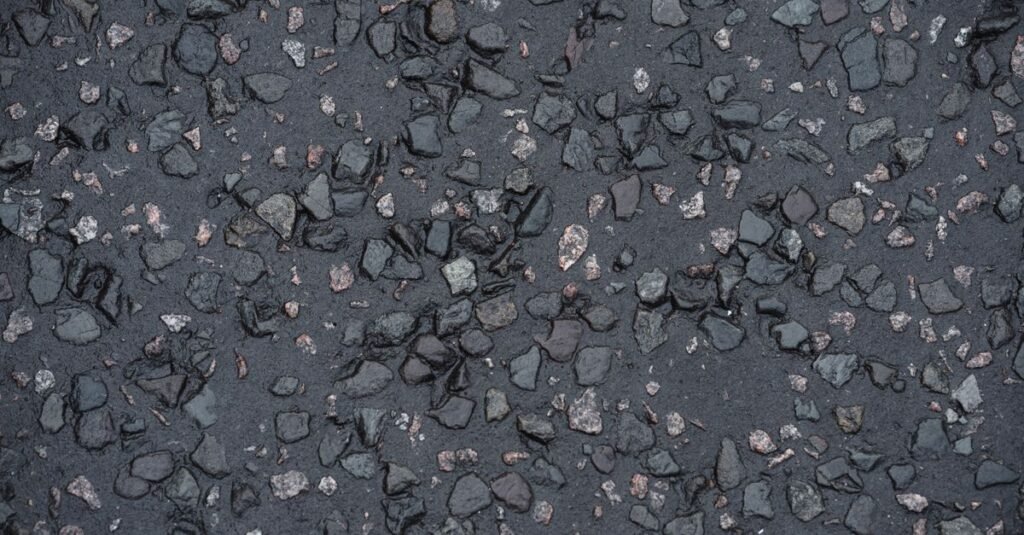
I wanted this from somebody who sells no repairs, so I went to the trade body. The Asphalt Institute states it without hedging: “Since asphalt cement is a petroleum product, it can be dissolved by many other petroleum-derived products, such as gasoline and car oil,” and describes fuel contact as causing “a softening of the asphalt binder that can result in a degradation of the HMA pavement surface” (Asphalt Institute, engineering FAQs). Dissolved. That is the trade body’s word for what your solvent degreaser is doing.
So the banned list on asphalt is longer than the permitted one: petrol, diesel, paraffin, mineral spirits, acetone, brake cleaner, WD-40, and any degreaser whose label mentions solvents or citrus terpenes. Strong caustic belongs on that list too, at working strength — high pH emulsifies bitumen, which is exactly the reaction you want in a recycling plant and exactly the one you do not want under your car.
What does work is unexciting, which is the point. A mild detergent that names asphalt, warm water, a stiff brush, and patience. For the green film on the shaded side, dilute sodium hypochlorite or an oxygen bleach, both of which attack organic colour rather than hydrocarbons and leave the binder alone — though hypochlorite will fade a sealcoat, so test it somewhere the bins normally stand. Then keep the pressure sensible when you rinse, which whether you can pressure wash an asphalt driveway sets out properly.
And accept the ceiling. On asphalt, the strongest thing that works and the strongest thing that is safe are usually not the same product, so you stop at the safe one and live with a slightly lighter patch.
Block Paving Holds the Chemical in the Joints
Pavers look like small pieces of concrete, and mostly they are, so people treat them like a slab. The blocks are not the issue. The joints are.
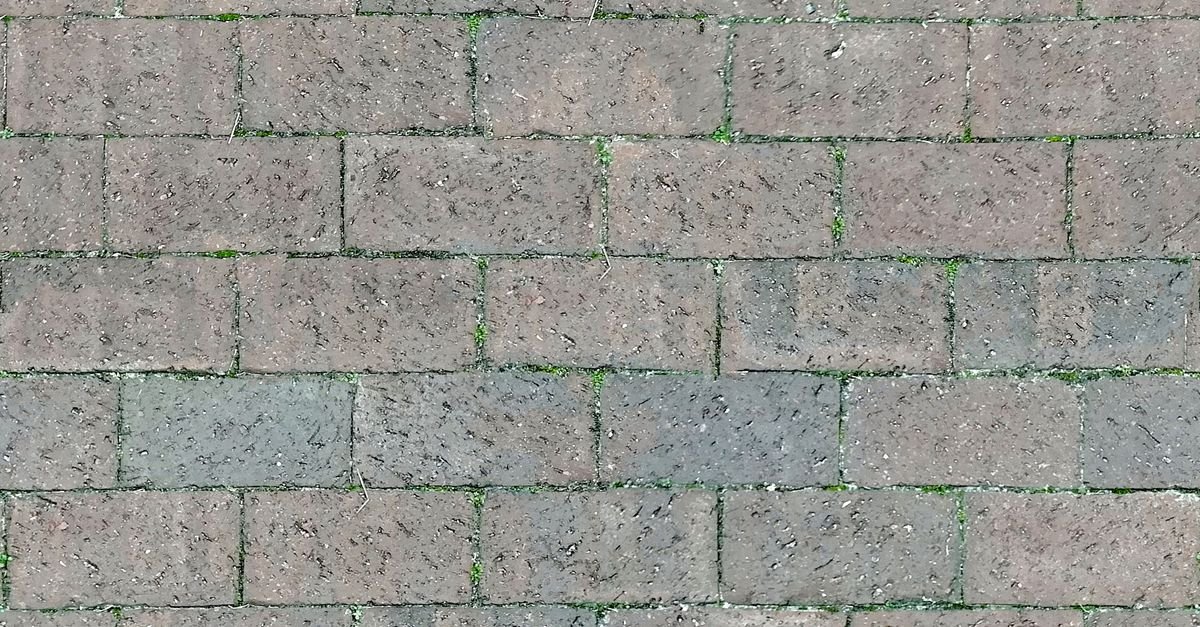
Every square metre of block paving has metres of open sand joint running through it, several inches deep, and whatever you pour on the surface drains into that sand and stays there. A degreaser that you rinsed off the blocks in thirty seconds is still sitting in the joints an hour later, in contact with the sides of every block, which is the part the manufacturer never finished. Acid is the worst offender: it works on the block edges from the inside, and on polymeric jointing it attacks the binder that holds the sand together, so the joints wash out the moment you rinse.
Two habits fix nearly all of it. Soak the whole area with plain water first until the joints are visibly full, so the chemical has nowhere to sink into. And on coloured or pigmented pavers, test hypochlorite on a block under where the car sits — pigment is a surface treatment on many blocks and an oxidiser does not always distinguish between the black stain and the charcoal colourway.
And Gravel Has No Surface to Clean
Gravel is the one driveway on this page you cannot clean, which in a narrow sense makes it the best one.
There is no surface for a chemical to work on. Anything you spray runs between the stones, through the membrane if there is one, and into the subgrade and the soil beneath, where it is now a garden problem rather than a driveway problem. Oil on gravel is dealt with by shovel — lift the contaminated stone, dispose of it as oily waste, top up from the bag in the shed. Weeds are a herbicide question and not a cleaning one. The only genuine chemistry case is a heavy diesel spill, and that is a call to the council rather than a trip to the hardware store.
The Bottom of the Slope Decides What You Can Spray
Your driveway falls away from the house, because that is what the builder was paid to arrange. Whatever you apply at the top arrives at the kerb, and in most towns the kerb is the start of a system that does not treat anything.
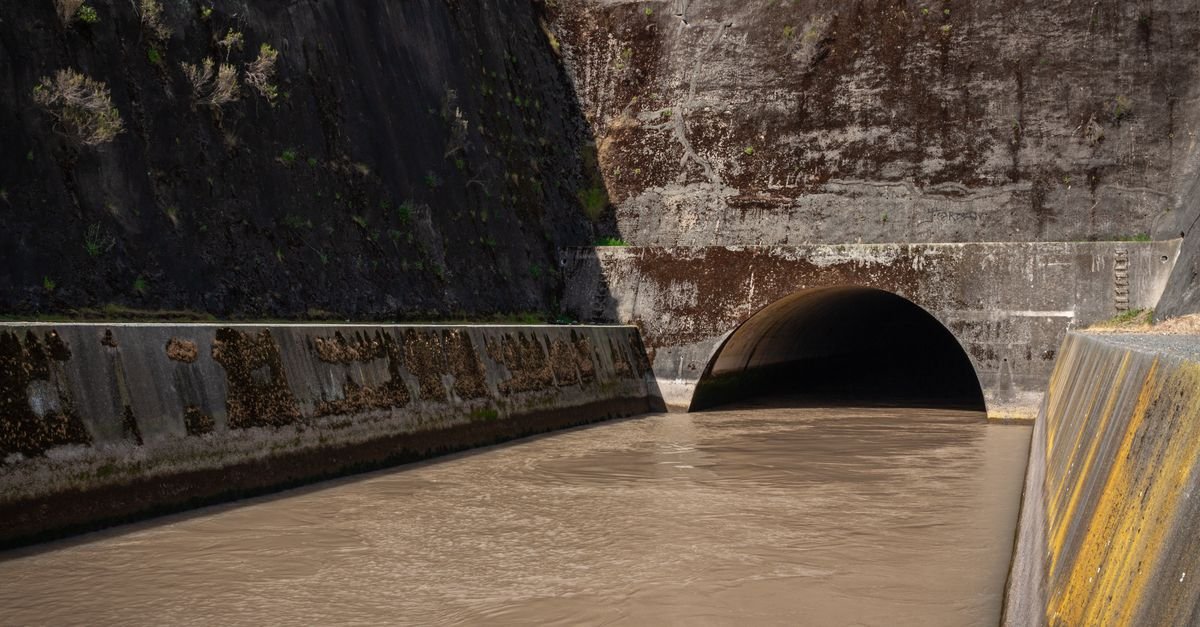
The EPA puts it in one sentence: “Polluted stormwater runoff is commonly transported through municipal separate storm sewer systems (MS4s), and then often discharged, untreated, into local water bodies” (EPA, stormwater discharges from municipal sources). Untreated is the operative word. Nothing between your kerb and the creek is filtering anything, and many local authorities treat a deliberate non-stormwater discharge into that system as an offence in its own right.
The useful part is that this changes which bottle you buy, not just how you rinse afterwards. A chemistry that self-limits is a better fit for a sloped drive than one that does not. Sodium hypochlorite breaks down on contact with organic matter and sunlight, so a dilute mix that has done its job on algae is largely spent by the time it reaches the gutter. A heavy caustic degreaser is not spent — it arrives at the drain as a slug of pH 13, and so does an acid at the other end of the scale. A solvent does not dilute at all; it floats.
So the sequence on a drive that falls to the street is: pick the mildest family that will do the work, mix the smallest volume that covers the area, and spend the rinse water generously rather than the chemical. If you are using something strong, contain it and collect it — a wet-vac and a bucket beat any amount of apologising to a drainage officer. (If your driveway falls toward the house instead, you have a bigger problem than chemistry, and no bottle fixes that one either.)
On a Slope, Two Safe Chemicals Can Meet at the Bottom
This is the hazard that belongs to driveways specifically, and I have not seen it written down anywhere else.
On a flat garage floor, nobody accidentally combines two products — you put one down, you rinse it, you move on. On a slope, you can treat the oil patch by the garage with an alkaline degreaser, walk down and spot-treat the rust run by the gatepost with an acid, and never once think of them as mixed. Gravity thinks otherwise. They meet in the wet strip at the bottom, or in whatever low corner holds a puddle after rain, at whatever concentration is left.
That is survivable for a degreaser and an acid, which mostly just neutralise each other and waste your afternoon. It is not survivable for the other pair. ATSDR states plainly that sodium hypochlorite “releases chlorine gas when it comes in contact with acids” (ATSDR, Medical Management Guidelines for Chlorine). Bleach for the algae at the top, brick acid for the efflorescence at the bottom, both in the same hour, and the gas is generated at ground level on a surface you are kneeling on.
The rule is simple enough to keep: one chemistry per driveway per day. Finish it, rinse the whole slope including the kerb and the low corner, and leave the second job for another weekend. If you genuinely cannot wait, the hypochlorite goes first and the acid never goes on the same day at all — chlorine gas does not care that the two products were forty feet apart when you opened them.
The Green Strip Either Side Takes the Overspray
Everything that does not reach the drain reaches the planting, and the planting is the part of this you can actually protect.
Sodium hypochlorite is the one that does visible damage fastest — it is a plant killer that happens to also clean, and the sodium left behind after the chlorine has gone stays in the soil long after the leaves have recovered. Alkaline degreasers do their harm more slowly and less obviously, by pushing soil pH somewhere the roots did not sign up for.
The protection takes five minutes and works by dilution rather than by barriers. Soak the borders and the grass strip thoroughly before you mix anything — saturated soil and wet leaves take up very little of what lands on them afterwards, because there is no room left. Lay plastic sheeting over anything precious for the duration of the job only, then take it off; a sheet left in the sun for two hours cooks the plants you were protecting, which is a slow and embarrassing way to lose a hedge. Rinse everything at the end with plain water, generously, and do it working away from the border rather than toward it.
The grass strip at the bottom of a drive does genuinely work as a filter, slowing the runoff and letting soil biology deal with some of what passes through. It has limits, and a bucket of neat degreaser is well past them. It is a buffer, not a treatment plant.
FAQ
What is the best chemical to clean a driveway?
For most driveways, an alkaline degreaser for oil and traffic film, and dilute sodium hypochlorite or an oxygen bleach for algae and black organic staining. Those two cover nearly everything on concrete and block paving. On asphalt, drop to a mild detergent that names asphalt on the label and use the oxidisers at lower strength.
Can I use bleach on an asphalt driveway?
Yes, dilute, and with a test patch first. Sodium hypochlorite attacks organic colour rather than hydrocarbons, so it does not dissolve the binder the way a solvent does. What it will do is lighten a sealcoat and dull the surface slightly, so try it somewhere out of sight and never mix it stronger than you need.
Will driveway cleaning chemicals kill my grass?
Sodium hypochlorite will, quickly, and leaves sodium in the soil afterwards. Strong alkaline degreasers will damage plants more slowly by shifting soil pH. Soak the borders with plain water before you start, cover what you can for the duration of the job only, and rinse everything with clean water at the end.
Is it illegal to wash driveway chemicals into a storm drain?
In many places, yes. Storm sewers discharge untreated to local waterways, and deliberate non-stormwater discharges into them are regulated. Rules vary by locality, so check yours — but the practical answer everywhere is to use the mildest chemistry that works and to collect the runoff when you cannot.
Can I use the same cleaner on concrete and block paving?
Usually, with one caution. The blocks themselves are generally concrete and tolerate the same products, but the joints are sand and will hold whatever you apply for far longer than the surface does. Pre-wet the joints until they are full, avoid acid entirely, and expect to re-sand if you have used anything aggressive.
Do driveway cleaning chemicals need a pressure washer?
No. A pump sprayer, a stiff brush and a garden hose will apply and rinse anything on this page, and acid should never go through a machine under pressure. A pressure washer shortens the rinse and lifts what the chemistry has already loosened — it is the last step, not the product.
What should I never put on a driveway?
Solvents on asphalt, acid on block paving, and bleach and acid on the same driveway on the same day. Those three account for most of the damage people do to their own drives, and all three are avoidable by reading the back of the bottle rather than the front.
Read the Driveway Before You Read the Label
The stain is the least useful thing to start with. Work out what the driveway is made of, whether any of it is a second material, whether it is sealed, and which way it drains — four answers you get by walking down to the kerb and back — and the chemical choice narrows to one or two obvious options before you have opened anything.
Concrete tolerates nearly everything and only really objects to acid. Asphalt is held together by the thing your degreaser is designed to dissolve, so it gets the mildest product in the shed. Block paving is fine on the surface and vulnerable in the joints. Gravel cannot be cleaned and should not be treated as though it can.
Then take one look at the bottom of the slope and remember that everything you pour is eventually going there. Whichever bottle you pick, buy the smaller one.