Last Updated on September 24, 2026 by Umar Farooq
Concrete cleaning chemicals come in five families — alkaline degreasers, oxidisers, acids, enzymes and surfactants — and each family attacks exactly one kind of molecule and ignores the rest. Pick the family that matches what is actually on the slab, and the job takes one application. Pick the wrong one and you can scrub for an hour with a product that is, chemically speaking, not even in the conversation.
There is a second thing that makes concrete different from every other surface you will point a machine at, and most guides skip it: concrete is itself a chemical. It is calcium-rich and strongly alkaline, which means an acid does not just attack the stain, it attacks the slab underneath. On vinyl siding the substrate is a bystander. On concrete it is a participant. The four families of power washing chemicals covers the general exterior case; this page is concrete only, because concrete has rules the others do not.
One warning before anything else, because it is the only thing here that can put you in an ambulance. Sodium hypochlorite releases chlorine gas on contact with acids (ATSDR, Medical Management Guidelines for Chlorine). Two of the five families below are hypochlorite and acid. They never share a bucket, a tank, or an afternoon. There is a full section on this further down and it is not optional reading.
Concrete Is Alkaline, and That Is Why Acid Is Dangerous Here
Cement paste is a calcium-based, highly alkaline material. That single fact sets the whole selection framework, because it means the slab is chemically comfortable with high pH and chemically vulnerable to low pH.
The Concrete Masonry and Hardscapes Association is blunt about it in its technical note on cleaning concrete masonry: acids “dissolve the cement matrix at the masonry surface,” which “leaves the face more porous and exposes more aggregate, thereby changing the color and texture of the masonry.” That is not a warning about splashes on your shoes. That is a description of what happens to the slab you are trying to improve.
I went into that document looking for a dilution table and came out with three rules instead, all from the same page. Avoid raw or undiluted acids, and use even diluted acids with caution. Pre-wet the surface first with low water pressure — CMHA gives a maximum of 30 to 50 PSI, which is garden hose territory, not machine territory. And the one everybody ignores: acids should never be applied under pressure. No acid goes through a downstream injector, ever. It goes on cold, by hand, with a plastic sprayer, onto concrete that is already wet.
Pre-wetting is doing real work there, not ceremony. Dry concrete is a sponge — it pulls an acid straight down into the pores where it keeps dissolving paste long after you have stopped looking at it. Wet concrete is already full, so the acid stays on top where you can rinse it off.
Alkaline products get the opposite treatment. They are at home on concrete, which is why degreasers are the default tool for flatwork. CMHA does add one catch: “highly alkaline products require an acidic neutralizing afterwash as well as thorough rinsing.” Hold that sentence. It becomes important in about four sections, and not in a good way.
Where Concrete Cleaning Chemicals Sit on the pH Scale
The pH number tells you what a product attacks. It does not tell you how strong it is — concentration and contact time are separate dials. But if you only get to read one thing on a label, read the pH, and if the bottle does not print one, assume the manufacturer would rather you did not think about it.
| Family | Typical actives | pH band | Attacks | Does nothing to | Risk to the slab |
| Alkaline degreaser | Sodium hydroxide, potassium hydroxide, sodium metasilicate, glycol ethers | 11–14 | Oils, grease, fats, waxes, traffic film | Rust, efflorescence, mineral scale | Low. Can dull or soften a sealer |
| Oxidiser | Sodium hypochlorite, sodium percarbonate | 10–13 | Algae, mould, lichen, moss, tannin — anything with organic colour | Oil, rust, salts, paint | Low on bare concrete. Kills plants, eats seals |
| Acid | Hydrochloric (muriatic), phosphoric, oxalic | 0–3 | Rust, efflorescence, mortar smear, mineral haze | Oil, grease, algae | High. Dissolves cement paste |
| Enzyme / microbial | Lipase and protease enzymes, hydrocarbon-degrading bacteria | 6–8 | Hydrocarbons and organic soils, slowly | Anything mineral. Anything urgent | None |
| Surfactant | Anionic, nonionic, amphoteric blends | Varies — it is a carrier | Nothing alone | Everything alone | None |
Read the table twice and one thing stands out: four of the five families do absolutely nothing to four of the five common stain types. That is not a flaw in the products. It is what “specific chemistry” means, and it is why the aisle has forty bottles instead of one. Working out which stain you are actually holding — colour, edge, shape, what happens when you wet it — is a separate skill. This page assumes you have already done that and starts at the bottle.
Alkaline Degreasers: The Only Thing That Touches a Carbon Chain
An alkaline degreaser does two jobs at once. High pH converts the fatty components of a soil into soap — saponification, the same reaction that made soap in the first place — and the surfactants in the blend wrap the remaining oil droplets so water can carry them off. That is a mechanism built precisely and exclusively for hydrocarbons.
Sodium hydroxide and potassium hydroxide do the heavy lifting. Sodium metasilicate is the quieter ingredient and a genuinely useful one on concrete: it buffers the pH so the product stays alkaline as it works, and it is less aggressive on a sealer than straight caustic. Glycol ether solvents cut the greases saponification leaves behind. If a degreaser smells faintly of something you would strip paint with, that is the butyl.
What it cannot do is worth saying out loud, because people keep trying. It does nothing to rust — iron oxide has no fat to convert. It does nothing to efflorescence, because salt is not a carbon chain. And it does very little to cured paint, which is a film sitting on top of the concrete rather than a soil soaked into it.
Heat is the free multiplier. Hot water drops the viscosity of oil and accelerates the reaction, which is why flatwork crews run hot boxes and why an identical degreaser looks like two different products in January and July. The full treatment for oil, including why it comes back, is in whether pressure washing removes oil stains from concrete.
And keep CMHA’s acidic afterwash line in mind. It is sound advice after a strongly alkaline cleaner. It is also the most common way a homeowner ends up pouring an acid onto a slab that still has something else in its pores.
Oxidisers See Colour, Not Dirt
Sodium hypochlorite does not dissolve anything and does not lift anything. It destroys colour, by tearing apart the double bonds in coloured organic molecules — the pigment in algae, the tannin in a fallen leaf, the melanin-like compounds in the black fungus that lives on damp north-facing concrete. Break the bonds, the colour vanishes, and the dead residue rinses off with plain water.
That mechanism is spectacular on anything that was once alive and irrelevant to everything else. Oil has no chromophore to destroy. Efflorescence is a white salt, so there is no colour to remove. And on rust it is actively counterproductive: iron stains are already oxidised iron, and adding a strong oxidiser pushes them toward a less soluble form. Hypochlorite does not fail to clean a rust stain. It finishes it.
Sodium percarbonate is the quieter member of the family — a solid that releases hydrogen peroxide and soda ash in water. Slower, weaker, far kinder to planting, and genuinely good on tannin and light algae when you would rather not send a cloud of chlorine smell into the neighbour’s garden. It is not a substitute on heavy growth.
One number worth having, because the trade repeats a lot of unsourced ones. In a controlled six-week study, 0.5% hypochlorite solutions kept in opaque bottles at a mean 21 degrees C lost only 6 to 7% of their free available chlorine over five to six weeks, and the authors concluded such solutions “will maintain acceptable FAC concentrations for at least 5 to 6 wk, perhaps longer” (PMC8956213). Dilute bleach kept dark and cool is more stable than you have been told. The jug that went weak on you was sitting in a sunny garage, which is a storage problem, not a shelf-life problem.
Three Acids, Three Completely Different Jobs
Lumping muriatic, phosphoric and oxalic together under “acid” is like lumping a scalpel, a bread knife and a chisel together under “blade.” They are all low pH. That is where the similarity ends.
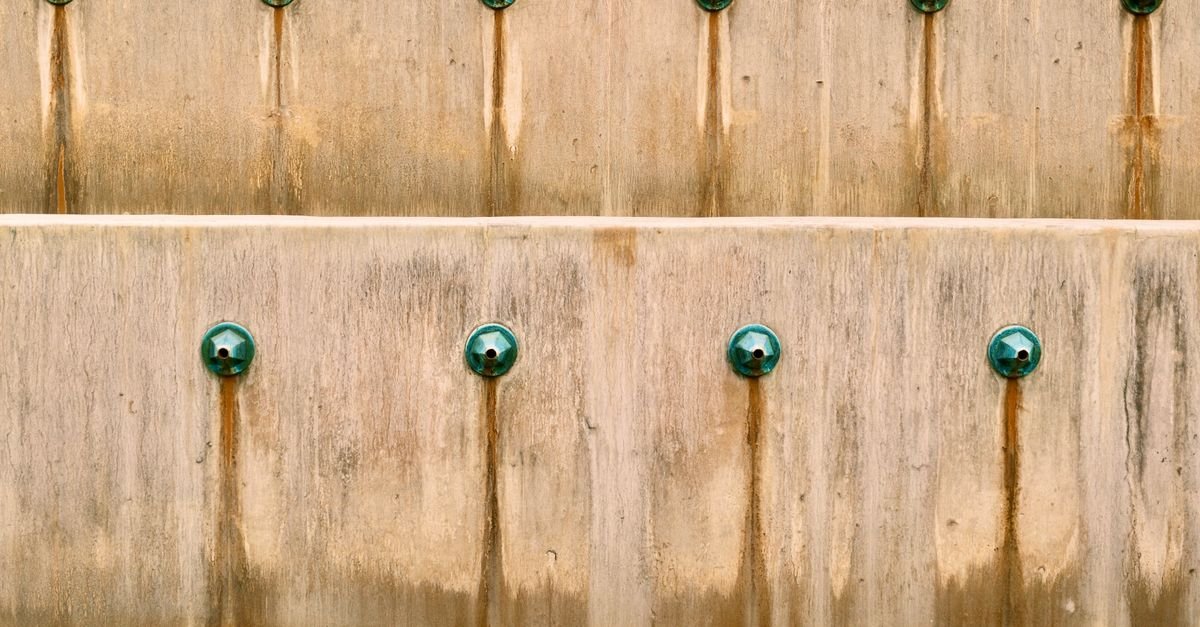
Hydrochloric acid, sold as muriatic, is not a cleaner. It is an etchant. Its job in the concrete trade is profiling a slab before a coating goes on — deliberately dissolving the top layer of paste to give an epoxy something to grip. When a homeowner uses it to “clean” a driveway, it works in exactly the same way, which is the problem. The stain goes because the surface it was in goes with it. What you get back is lighter, rougher, more porous, and will pick up the next stain faster than the concrete around it.
Phosphoric acid is the milder middle option. It converts iron oxide rather than stripping the slab, handles mineral haze and light rust, and is far less punishing on cement paste. It is what is in most of the bottles actually labelled for concrete and masonry rust.
Oxalic acid is the specialist. It chelates iron — it grabs the iron atom and pulls it into a soluble complex that rinses away — which makes it the correct chemistry for a genuine iron stain from a fertiliser spill, a downspout, or a set of patio furniture feet. It is the same active that brightens wood, for the same reason.
Here is the opinion I will defend: on concrete, alkaline should be your default and acid should be your rare exception, and the trade has this the wrong way round because acid is the only family that gives instant visible change. The slab lightens in seconds. It looks like the best product on the shelf. It is doing that by dissolving the cement matrix, exactly as CMHA describes, which means the satisfying speed is the damage. A degreaser that takes ten minutes and a brush is not the weaker product. It is the one that leaves you with the same slab you started with.
All three acids share the same handling rules from the section above: pre-wet at hose pressure, apply cold and by hand, never through the machine, never on dry concrete, and rinse thoroughly to runoff.
Bleach Plus Acid Makes Chlorine Gas: Never the Same Afternoon
This is the section that matters more than the rest of the page combined. ATSDR states it plainly: sodium hypochlorite “releases chlorine gas when it comes in contact with acids” (ATSDR, Medical Management Guidelines for Chlorine).
Nobody sets out to mix them in a bucket. The concrete version of this accident is sequential, and it is far easier to walk into. It goes like this. You oxidise the whole driveway for algae. It comes up beautifully and does nothing at all to the rust streak under the downspout, because of everything in the section above. Twenty minutes later, slab still wet, you fetch the rust remover and spray it on the same square metre.
Concrete is porous. That is the entire point of the material and it is why this is more dangerous on a slab than on siding. A rinsed driveway is not a clean driveway at a chemical level — the pore structure is still holding hypochlorite solution, and you have just introduced an acid directly into it, at ankle height, where the gas forms and stays low. Do that in a garage, a carport, or the narrow run between a house wall and a fence, and there is nowhere for it to go.
The other route in is the one CMHA hands you without meaning to. An acidic neutralising afterwash is correct practice after a strongly alkaline degreaser. It is the wrong thing entirely if the previous product was hypochlorite. Know which alkaline you used.
The rules, and they are short:
- Never in one bucket, one tank, or one injector. Flush the system between chemistries.
- Rinse to runoff, then let the slab dry completely before a different family goes down. Different day, not different hour.
- Ammonia counts too. Some products sold as concrete or patio cleaners contain quaternary ammonium compounds; hypochlorite plus ammonia gives chloramine, which is a different gas and an equally bad afternoon.
- If you smell chlorine while working, you are already downwind of a reaction. Leave the area, get upwind, and do not go back to rinse it.
- Goggles that seal, chemical gloves, and open air. A dust mask is not respiratory protection against a gas.
Treat the two families the way you would treat two dogs that have history. Both fine. Not together.
Enzymes and Microbes Run on a Longer Clock
The fourth family does not react with the stain at all. It eats it. Enzyme cleaners carry lipases and proteases that break fats and proteins into smaller fragments; microbial products carry live hydrocarbon-degrading bacteria that metabolise oil into carbon dioxide and water, given time and damp.
Time is the whole trade-off. A degreaser works in five to ten minutes. A microbial product works over days to weeks, needs to be kept damp, and needs reapplying. In exchange you get something no other family offers: it keeps working down inside the pores after you have gone indoors, which is the one place a surface chemical cannot reach. That makes it the right call in four situations — large areas where a caustic rinse has nowhere sensible to go, concrete next to planting or a storm drain, bin-store and food-service slabs where the soil is organic rather than petroleum, and old oil where two rounds of degreaser have already stalled.
They are also the most fragile family on the shelf. Hypochlorite is a biocide, so it kills a microbial product outright, and strong acid or alkali denatures the enzymes. Nothing goes on top of an enzyme treatment while it is working, and it goes down only after everything else has been rinsed off and the slab has dried. It is the last chemistry in any sequence, and then you leave it alone.
Surfactants Are Delivery, Not Cleaning
A surfactant removes nothing on its own. It lowers the surface tension of water so the chemistry you paid for actually reaches the stain, and on concrete that job is bigger than it sounds.
Look closely at a broom-finished driveway. It is not a flat surface, it is a field of parallel ridges and grooves, and below that the pore mouths where the stain actually lives. Unsurfactanted liquid sits on the tops of the ridges and runs off the slope, which is why a mix can look applied and still have touched maybe half the concrete.
The second job is cling, and it buys dwell time. On a driveway with any fall to it, a thin mix is gone in under a minute, while a properly surfacted one holds for the five to ten minutes the chemistry needs. Dwell time is not something you decide. It is something the surfactant grants you.
One compatibility note that catches people out: sodium hypochlorite destroys many surfactants, so a soft wash mix needs a bleach-stable one or it will separate and stop clinging within the hour. Dish soap is not a substitute — it foams well, rinses badly, and leaves a film that holds dirt.
What Can Follow What on the Same Slab
Most concrete jobs are mixed. A driveway with oil where the car sits, algae along the shaded edge and a rust streak under the downspout needs three different chemistries, and the order is not arbitrary.
| First product | Then this | Safe? | Condition |
| Alkaline degreaser | Oxidiser | Yes | Rinse between. Both alkaline, no reaction |
| Oxidiser | Alkaline degreaser | Yes | Rinse between |
| Oxidiser | Any acid | No | Rinse to runoff and dry the slab fully. Different day |
| Any acid | Oxidiser | No | Same rule. Acid residue stays in the pores |
| Any acid | Alkaline degreaser | Caution | Neutralise and rinse first, or you get a fizzing mess and no cleaning |
| Enzyme or microbial | Anything | No | Whatever you put on kills it. Enzymes go last |
| Surfactant | Anything | Yes | Check it is bleach-stable if hypochlorite is involved |
The default sequence for a mixed slab, then. Degrease the oil spots and rinse. Oxidise the whole slab for the organics and rinse to runoff. Let it dry completely — properly dry, not damp-looking. Then, on another day, spot-treat the rust with the correct acid, by hand, on pre-wet concrete.
Alkaline to neutral first, acid last and alone. That is the sequence, and it is built around the gas rather than around convenience.
Rinse pressure is the last variable and it matters less than people think once the chemistry has worked. Concrete flatwork tolerates a fair amount, and the safe PSI figures for a concrete driveway are worth checking before you fit a tip. On a slab you have already treated, you will usually need less than the maximum, because the chemical has done the part that pressure cannot.
FAQ
What is the best chemical to clean concrete?
There is no single best one, and any product claiming to be a universal concrete cleaner is a surfactant blend with a builder salt and good marketing. For general grime and oil it is an alkaline degreaser. For algae, mould and tannin it is sodium hypochlorite or percarbonate. For rust it is oxalic or phosphoric acid. Those three answers are not interchangeable and no amount of scrubbing makes them so.
Is muriatic acid safe to use on concrete?
Not as a cleaner. Muriatic acid dissolves the cement matrix at the surface, leaving the face more porous, rougher and a different colour, according to CMHA. Its legitimate use is etching a slab to profile it before a coating. If you do use an acid on concrete, pre-wet first at hose pressure, apply it cold by hand, never send it through a pressure washer, and rinse thoroughly.
Can I mix concrete cleaning chemicals together?
No, and one combination is genuinely dangerous. Sodium hypochlorite releases chlorine gas on contact with acids, so bleach and any rust remover, brick cleaner or acidic afterwash must never meet — not in a bucket, not in a tank, and not on a wet slab twenty minutes apart. Hypochlorite plus ammonia or a quaternary ammonium cleaner gives chloramine, which is just as bad. Rinse fully, dry fully, and change family on a different day.
Do concrete cleaning chemicals need to be rinsed off?
Yes, all of them, and to runoff rather than to “looks fine.” Alkaline residue leaves a haze and keeps attacking a sealer. Acid residue sits in the pores and keeps dissolving cement paste after you have packed up. Hypochlorite residue is exactly what makes the next product dangerous. The only exception is a microbial treatment you are deliberately leaving to work.
What chemical removes oil from concrete?
An alkaline degreaser, and heat if you have it. High pH converts the fatty components into soap and surfactants carry the rest away, which is a mechanism aimed squarely at hydrocarbons. Bleach does nothing to oil and acid does nothing to oil. For an old stain that has migrated below the surface, a poultice or a microbial product reaches where a surface chemical cannot.
Will bleach damage a concrete driveway?
Diluted sodium hypochlorite is not a serious threat to sound bare concrete, which is why it is the standard tool for algae on flatwork. The damage it does is elsewhere: it kills planting on the runoff path, degrades pump seals and O-rings if left sitting in a machine, can lighten an acrylic sealer, and makes a rust stain permanent. Soak the garden before you start, flush the machine after, and keep it off anything iron.
How long should concrete cleaning chemicals dwell?
Five to ten minutes for degreasers and oxidisers, and never long enough to dry — a product that dries re-deposits everything it just lifted. Re-mist with a pump sprayer if the edges go matte. Acids are the exception in the other direction: minutes, watched closely, then rinsed, because the longer they sit the more slab they consume. Microbial products run on days.
Match the Chemistry to the Molecule
Five families, one question. Not “what surface is this” — you already know it is concrete — but “what is the stain made of.” Carbon chains go to the degreaser. Organic colour goes to the oxidiser. Metal and mineral go to an acid, chosen carefully and used sparingly. Slow, awkward, environmentally sensitive jobs go to the enzymes. And the surfactant goes in with whichever of those you picked, because it is what gets the chemistry into the grooves.
Then the boring part that keeps you out of trouble: rinse to runoff, let the slab dry, and never let the bleach and the acid meet. Concrete holds onto what you put on it, which is a lovely property in a driveway sealer and a hazardous one in a cleaning sequence.
If you are standing in the aisle holding a bottle with no pH on the label and a sparkling driveway on the front, put it back and find one that tells you what is in it. The slab does not read marketing. It only reacts to chemistry.