Last Updated on September 25, 2026 by Umar Farooq
A 12v soft wash pump is a low-pressure diaphragm pump — typically 3.2 to 5.3 GPM at 60 to 150 PSI — whose only job is to put cleaning solution on a surface at full strength, without the pressure that would wreck it.
That is the opposite of everything the pressure washer aisle teaches you. Here the pressure figure is not a feature, it is a ceiling, and the number you actually care about is flow — because flow is how much chemical lands on the wall per minute, and the chemical is what kills the algae. What follows is the hardware: what is inside one of these pumps, which specs matter, how much battery it eats, and how it all gets plumbed.
Why Soft Washing Runs at 100 PSI Instead of 3,000
Soft washing exists because some surfaces fail before the dirt does. Asphalt shingles are the clearest case. The Asphalt Roofing Manufacturers Association does not hedge about it: “DO NOT use a power washer or any type of brush or broom to clean algae from the roof surface,” and “high-pressure washing systems are likely to damage asphalt roofing and should not be used.” Their replacement method is a bleach-and-water solution, left on for 15 to 20 minutes, then gently rinsed (ARMA, Algae Discoloration of Roofs).

Read that again as an equipment specification. Gently dispersed. Left to dwell. Gently rinsed. Nothing in it needs a pump that can strip paint, and every part of it needs a pump that can keep delivering solution for fifteen minutes without stopping. Here is the gap in plain numbers.
| Machine | Typical PSI | Typical GPM | What the pressure is for |
| 12V soft wash pump | 60–150 | 3.2–5.3 | Throwing solution and making distance |
| Electric pressure washer | 1,300–2,000 | 1.2–1.6 | Breaking the bond mechanically |
| Gas pressure washer, homeowner | 2,000–3,200 | 2.0–2.8 | Breaking the bond mechanically |
A soft wash pump runs at roughly one twentieth of the pressure of the gas machine in the shed — and moves more water while it does it. That inversion is the point. Pressure is doing nothing useful in this job except getting the liquid from the gun to the gable end, so you buy exactly enough of it for that and not a pound more.
What a Pressure Washer’s Injector Cannot Give You
The obvious objection is that a pressure washer already applies chemical. It does — through a downstream chemical injector, and that injector is a dilution device whether you wanted one or not.
A downstream injector works by venturi suction, pulling a fraction of the chemical into the full water stream. Advertised draw rates of 20 to 30% are optimistic; real field performance sits nearer 10 to 14%. Run 12.5% sodium hypochlorite through a 10% draw and what leaves the nozzle is about 1.25% — which, conveniently, is standard house-wash strength. The injector is not in your way. It is doing the mixing for you.
A 12V pump does no such thing. There is no venturi, no draw rate, no back-pressure fade. Whatever is in the tank is what hits the surface, at the strength you mixed it, at foot 200 of the hose the same as at foot 10.
So here is my position, and it will talk some people out of a purchase: if you clean one house a year and already own a pressure washer, you do not need a 12v soft wash pump. Your injector already lands roughly 1.25% SH on the wall, which is the number you were aiming for, and it does it without a second tank, a battery and a fuse holder. The pump earns its place when the mix has to stop being a guess — a roof that wants a specific strength, a hose run long enough that the injector gives up somewhere around 150 feet, or enough jobs a year that measuring beats hoping. Reach is a reason. “It sounds more professional” is not.
Reading the Spec Sheet on a 12v Soft Wash Pump
Seven numbers decide everything, and manufacturers publish all seven. Remco’s 5500 series makes a fair reference point because the whole range is documented: pressure range 60 to 150 PSI, open flow 3.2 to 5.3 GPM, self-priming to 14 feet, dry run capability yes, intermittent duty, maximum liquid temperature 140°F, ports either 3/4″ quick attach or 1/2″ FNPT (Remco Industries, 5500 Series).

The seven, in the order they matter:
1. Open flow, in GPM. Measured with nothing attached. Fit a nozzle and you will see less. This is the honest upper bound, not a promise.
2. Rated pressure, in PSI. On a diaphragm pump this is where the pump gives up, not where it lives. A 60 PSI pump and a 100 PSI pump of the same flow are different tools: the 100 PSI unit buys you vertical throw.
3. Maximum amps at rated pressure. The Remco 5537-2E1-63B is specified at 5.3 GPM, 60 PSI and 16 amps maximum on 12 VDC. That 16 is the number your battery has to live with.
4. Diaphragm and valve material. Santoprene and Viton, or the pump is a consumable.
5. Control type. Demand, bypass, or both. This decides what happens when you release the trigger, and it is covered below.
6. Port size and type. Half-inch FNPT is standard; 3/4″ quick attach exists and is worth having if your flow is at the top of the range.
7. Priming and dry-run. Fourteen feet of self-prime means the pump can lift from a tank standing on the ground beside it. Dry-run capability means an empty tank is an inconvenience rather than an invoice.
For contrast, a Flojet Quad 4300 runs nearer 3.5 GPM at 45 PSI, with a pressure switch set to cut in at 30 and out at 45, self-priming to about 8 feet, Viton valves and a Santoprene diaphragm in a polypropylene body (Xylem, Flojet Quad Series). Same family, smaller everything. It will work, and it will take longer, and on a two-storey gable you will notice.
Viton, Santoprene and the Parts Bleach Destroys First
A diaphragm pump moves liquid by flexing a rubber sheet over a chamber while one-way valves decide which direction it goes. The motor never touches the liquid. On a sealed-motor unit the wet side is a sandwich of diaphragm, valve plate and housing, and the cleaning solution is in contact with all three for every second the pump runs.
Sodium hypochlorite is not kind to elastomers, and the two names that keep appearing on soft wash spec sheets are there for that reason. Santoprene is a thermoplastic vulcanisate used for the diaphragm because it will flex several million times without cracking and shrugs off hypochlorite. Viton — a fluoroelastomer, sometimes written FKM — is used for the valves and O-rings because the valve seat is the part sitting in wet chemical while the pump is switched off. An EPDM or Buna-N build of the same pump exists, is cheaper, and is sold for water. Put concentrate through it and you are conducting a slow experiment with a known result.
The housing is usually glass-filled polypropylene, which is chemically fine and mechanically brittle. Do not overtighten fittings into it. Thread tape and a firm hand, not a wrench and conviction.
Amps, Amp-Hours and How Long the Battery Really Lasts
This is where most home-built setups disappoint, and it is arithmetic rather than bad luck.
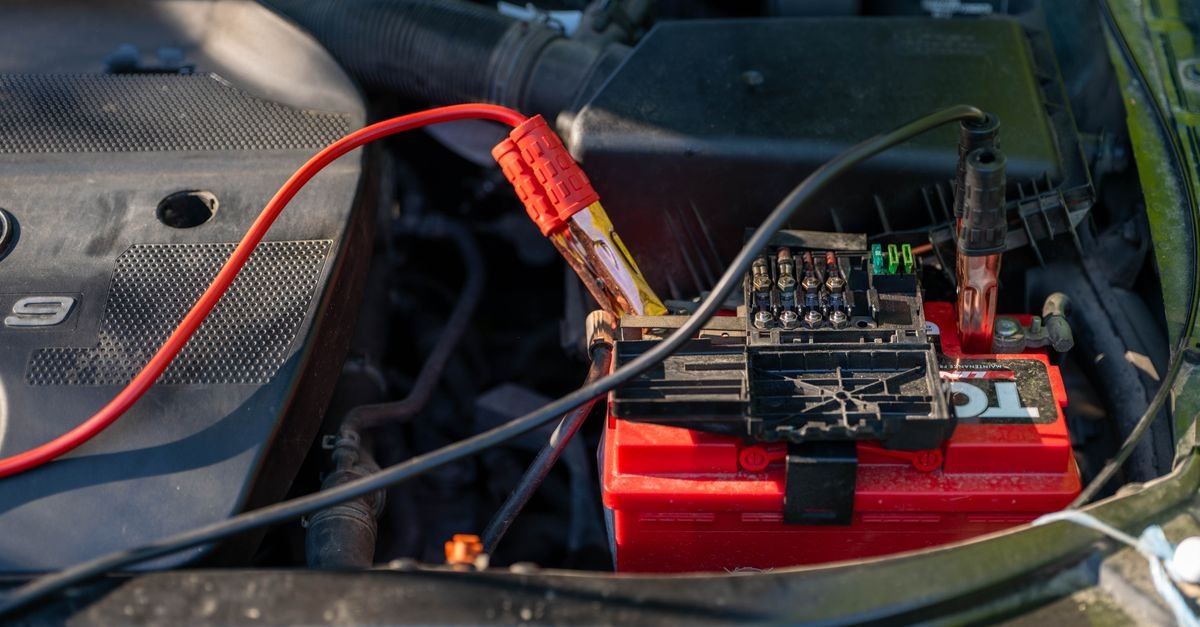
Take the 16-amp figure from that Remco spec sheet. A Group 24 deep-cycle battery holds somewhere around 70 to 85 amp-hours, and a flooded lead-acid battery should not be taken below about half its charge if you would like it to still be a battery next season. So the usable pot is roughly 35 to 42 amp-hours.
| Draw | Usable Ah (Group 24, 50% depth) | Trigger-down runtime |
| 16 A, at rated pressure | 35–42 | about 2.2–2.6 hours |
| 10 A, typical working load | 35–42 | about 3.5–4.2 hours |
Trigger-down is the phrase that matters. You are not spraying continuously — you are spraying, walking, mixing, waiting out a dwell. Real elapsed time is usually two to three times the runtime figure, which is why a single Group 24 gets most people through a day, and why everyone who has run out of power buys a Group 27 next. Three wiring details cause more failures than the pump does:
- Fuse it, near the battery. A 25 A fuse on a 16 A pump is the usual choice. The fuse protects the cable rather than the pump, so it belongs at the power end of the run.
- Use fat enough wire. Manufacturers supply these pumps with 14 AWG leads for a reason. If you extend them, go up a size, not down. Twelve volts is very unforgiving about voltage drop — a long thin run makes the pump slow and the motor hot, and neither symptom announces itself.
- Do not run it off the cranking battery. A starting battery is built to deliver an enormous current for two seconds, not a modest one for two hours. Deep-cycle or nothing. And a parked engine charges nothing, however optimistic the alternator looks from the outside.
Demand or Bypass? The Switch That Decides Pump Life
Every 12V pump needs an answer to one question: what happens when you let go of the trigger?
A demand pump has a pressure switch. Pressure builds with the gun closed, the switch opens at its cut-out figure, the motor stops. Squeeze again, pressure falls to the cut-in figure, motor restarts. The Flojet Quad’s 30 PSI in, 45 PSI out is the textbook example. It is efficient, and it is quiet between shots.
A bypass pump instead opens an internal path back to the inlet, so the motor keeps turning and the liquid loops. It does not cycle, it does not hammer, and on a long job it is easier on both the switch and the diaphragm.
The failure people actually hit is short-cycling: a demand pump on a slightly leaking gun or a pinholed line, clicking on and off every couple of seconds all afternoon. That switch has a finite number of operations in it, and you will find the number. If your gun weeps and your pump ticks, fix the gun before you blame the pump.
Dry-run capability is the other half of this. Remco lists it as a yes across the 5500 series, which means an empty tank will not instantly destroy the pump. It does not mean run it dry for sport. The diaphragm is cooled by what it moves.
From Tank to Gun, and the Strainer Everyone Skips
Plumbing order matters, and the correct one is short:
Tank outlet → shut-off valve → strainer → pump inlet → pump outlet → hose → gun → nozzle.
The strainer is the part that gets left out, and it is the cheapest component in the entire build. A 50-mesh inline strainer ahead of the pump stops tank grit, undissolved surfactant and whatever fell in while the lid was off from reaching the valves. A Viton valve seals by seating on a flat face; one grain of sand parked on that face means the pump pushes liquid back and forth and forward nowhere. A strainer costs a few dollars. A valve kit and an evening do not.
Sizing follows the flow. Half-inch line suits most 12V pumps; at 5.3 GPM over 200 feet, move the main run up to 5/8″ or 3/4″. This line carries volume at low pressure, so internal diameter does all the work and the wall rating barely matters. Keep the suction side short and straight — a diaphragm pump pushes far better than it pulls, and every elbow before the inlet is borrowed from your prime.
The gun is a ball valve with a handle rather than a pressure washer trigger, and the nozzle orifice sets both the throw and the working pressure the pump sees. If you want a tank on the ground to feed the pump rather than fight it, the gravity argument from a pressure washing water tank setup applies here too, with less forgiveness: 12 volts has no headroom to spare.
Flush It Before You Park It
Two minutes of clean water through the pump at the end of the day is the entire maintenance routine, and it is the difference between a pump that lasts years and a pump that becomes a story.
Drop the suction line into a bucket of fresh water, run the pump until the discharge is clear, then hold the gun open until that runs clean too. You are not rinsing the tank. You are rinsing the diaphragm, the valve seats and the hose, which is where the chemical would otherwise sit overnight against the softest parts in the system.
Then the seasonal one. A 12V pump is full of water held in small chambers with thin walls, which is precisely the geometry that cracks when water freezes and expands. If the setup lives anywhere that drops below freezing, it gets drained or it gets antifreeze, on the same principle and for the same reason you would winterize a pressure washer. Garages kill more pumps than jobs do.
FAQ
What PSI is a 12v soft wash pump?
Most run between 60 and 150 PSI. Manufacturer ranges such as Remco’s 5500 series are published as 60 to 150 PSI across the family, with individual models rated at 60 or 100. That is deliberately low — the pressure is there to throw the solution, not to clean with.
How many GPM do I need for soft washing?
Between 4 and 5.5 GPM covers most residential work, and 5.3 GPM is the practical top end for a single 12V pump. Higher flow means more chemical on the surface per minute and more vertical reach through the same nozzle. If you genuinely need more than that, the next step up is a gas-driven or air-operated diaphragm pump, not a bigger 12-volt one.
Can I use a regular 12V water pump for soft washing?
Mechanically yes, chemically no, not for long. An RV or washdown pump with EPDM or Buna-N valves will move a bleach mix perfectly well until the elastomers swell and the valves stop sealing. Check the spec sheet for a Santoprene diaphragm and Viton valves before assuming a pump is suitable.
How long will a 12v soft wash pump run on one battery?
Working from a 16-amp maximum draw and a Group 24 deep-cycle battery discharged no further than half, roughly two to two and a half hours of actual trigger-down running. Because spraying is intermittent, that usually covers a full working day.
What size fuse and wire does a 12V soft wash pump need?
A 25-amp fuse fitted close to the battery suits a pump rated at 16 amps maximum, and 14 AWG is the gauge manufacturers supply as standard leads. Longer runs need heavier wire, not the same wire stretched further.
Do I still need a pressure washer if I have a soft wash pump?
For most people, yes. The 12V pump applies, and the pressure washer rinses, strips concrete and does everything that genuinely needs mechanical force. They are not substitutes for one another — a soft wash pump cannot clean a driveway, and a pressure washer should never be pointed at a shingle roof.
Why is my 12V pump running but not drawing from the tank?
Check the suction side first: a closed valve, a blocked strainer, an air leak at a fitting, or a tank outlet feeding a long run of elbows. These pumps self-prime up to about 14 feet, but only through a sealed line. A pump pulling air runs loudly and delivers nothing, which is a very convincing impression of a broken pump.
Buy the Pump for the Chemical, Not the Pressure
Everything on a 12V spec sheet supports one decision: how much solution you need on a surface per minute, for how long, without damaging anything. Flow answers the first part, amps and battery the second, and Viton and Santoprene answer whether the pump is still doing either in two years.
So if you are deciding between a 3.5 GPM pump and a 5.3 GPM pump, buy the flow. And if you are deciding between a soft wash pump and the pressure washer already in your garage, do the injector arithmetic first — it may already be landing the number you were reaching for.