Last Updated on September 25, 2026 by Umar Farooq
A blocked pressure washer air filter starves the petrol engine of air, and the machine answers by starting badly, smoking black, and dying back the moment you squeeze the trigger — symptoms most people read as a failing pump.
That misdiagnosis is expensive. A replacement axial pump costs more than most homeowners want to spend on a machine they use four weekends a year. A foam element costs less than a takeaway coffee.
What the Air Filter Is Actually Protecting
A small petrol engine drinks roughly fifteen parts air to one part fuel, and all of it arrives through one opening on the side of the engine. Everything suspended in that air arrives with it unless something stops it.
Two things are being protected. The carburetor, with its drillings and needle valve at clearances measured in thousandths of an inch, which silt blocks happily. And the cylinder bore — grit that gets past the filter goes down the intake and then gets dragged up and down honed steel by the piston rings a few thousand times a minute. Honda’s engine manuals are blunt about it: running without a filter, or with a damaged one, lets dirt in and causes rapid wear (Honda GX160 owner’s manuals). There is no economic repair for a scored bore on a machine at this price. There is only a new machine.
One clarification before anyone goes hunting for a part that does not exist: electric pressure washers have no air filter. No combustion, no intake. On an electric unit the only filter is the water inlet screen where the hose connects.
Why a Pressure Washer Eats Filters Faster Than a Mower
Often the same engine, sometimes the same part number, very different working life.

A mower moves. It cuts, it advances, and most of the dust it raises is left behind it. A pressure washer does the opposite: it sits in one spot for forty minutes while you aim a jet at concrete a few feet away. That jet lifts sand, dried algae, mortar dust and moss and turns all of it into an aerosol that then hangs in the air. The intake sits two or three feet off the ground on the side of the frame, which is exactly where that cloud is. Damp makes it worse — dry dust sometimes shakes loose, wet grit sticks, dries, and forms a crust nothing will tap out.
I went looking for a published figure on this and found none. Plenty of forums assert a multiplier. None of them cite anything, so I am not going to give you a number I cannot stand behind. What I will say is that where a manufacturer’s schedule offers a normal column and a dusty-conditions column, a pressure washer lives in the dusty column permanently.
Which Pressure Washer Air Filter Do You Have: Foam, Paper or Both?
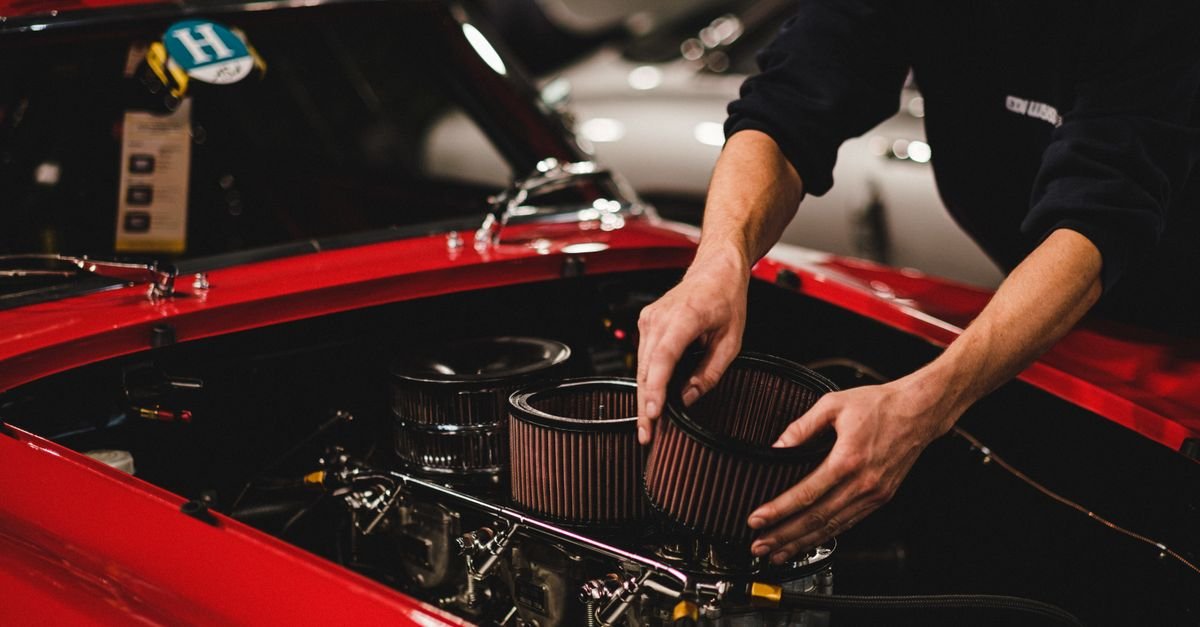
Open the cover — one butterfly nut, one screw, or a plastic tab — and look at what comes out. There are three answers.
| Element | What you are looking at | Washable | Needs oil |
| Foam only | A grey or black sponge, slightly greasy, over a plastic or wire frame | Yes | Yes — always |
| Paper cartridge | Pleated paper in a plastic or metal ring, with a rubber sealing lip | No | No |
| Dual element | A foam sleeve around or on top of a paper cartridge | Foam yes, paper no | Foam only |
On a dual-element setup the foam is a pre-cleaner, there to catch the coarse material so the paper behind it lasts a season instead of a fortnight. Service the paper and ignore the foam and you have thrown away the cheap half of the system while leaving the expensive half to do all the work.
Check the housing while the cover is off. A cracked cover or a perished gasket means unfiltered air walks straight past everything you just cleaned, which is a demoralising way to spend a Saturday.
Washing a Foam Element, and the Oiling Step Everyone Skips
Six steps, ten minutes, most of it waiting for foam to dry.
1. Pull the spark plug boot off first. The engine cannot fire with it disconnected, and your fingers are about to be near the intake.
2. Open the cover and note which way round the element sits. The lip usually folds over the edge of the housing body.
3. Wash in warm water with a little dish soap. Squeeze repeatedly rather than wringing — wringing tears the foam cells, and a torn element is a hole, not a filter.
4. Rinse clear, press dry in a towel, then let it dry completely. Damp foam plus oil makes a paste that blocks airflow beautifully.
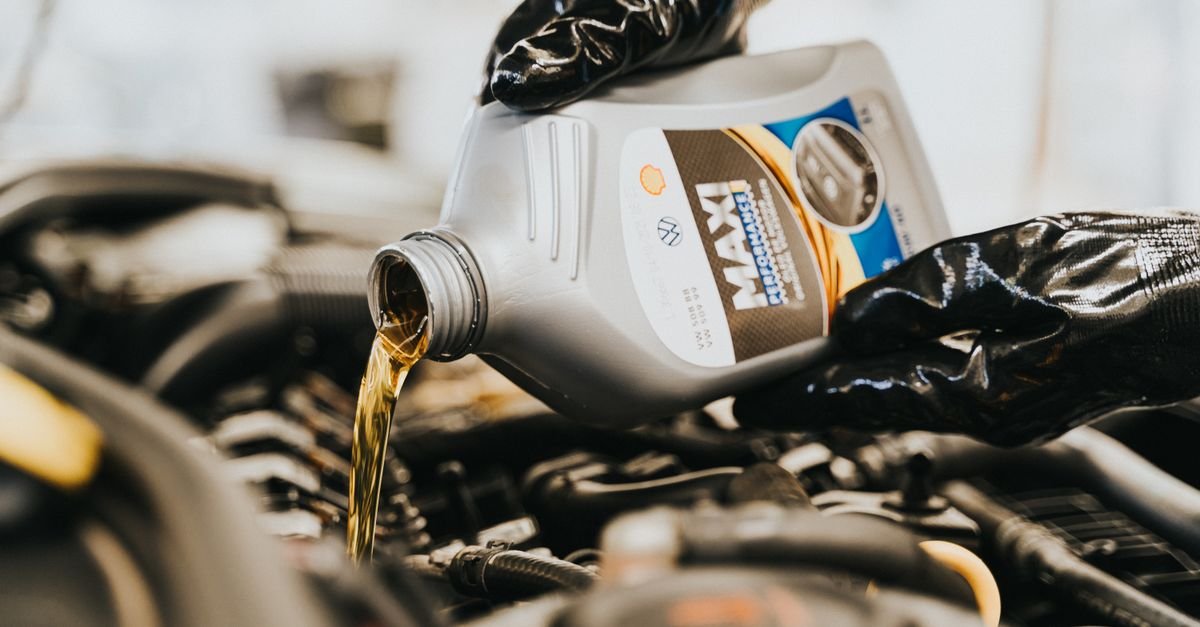
5. Oil it. Briggs & Stratton says to saturate the foam with fresh engine oil, then wrap it in a clean cloth and squeeze out the excess (Briggs & Stratton, replacing a foam air filter). Evenly damp and tacky, not dripping.
6. Refit, seat the lip properly, close the cover, reconnect the plug lead.
Now the part worth arguing about, and the one position I will push hard here: on a foam-only filter, the oil is the filter. The foam is scaffolding. Briggs & Stratton describes the system as trapping debris “through the use of motor oil spread throughout the oil foam holding medium,” and states plainly that “a dry or non-oiled oil foam filter will trap only the largest particles.” So an element that has been carefully washed and reinstalled dry is filtering *worse* than the filthy one it replaced — the filthy one at least had a cake of grit doing the job. That is the whole failure mode. People do the satisfying half and skip the messy half.
Two things not to do: never clean foam with petrol or any low-flash-point solvent, and never put oil near a paper element.
Do Not Tap Out a Paper Element
Everyone does it. Out comes the cartridge, a whack on the wheel arch, a grey cloud, and it looks visibly better. It is not.
Pleated paper traps fine particles inside the fibre matrix, not only on the surface. Tapping removes the surface cake you can see and leaves the embedded dust that is actually causing the restriction. Compressed air aimed from the outside is worse, because it drives that dust deeper and, at shop pressures, splits pleats. If you use air at all, it goes gently from the inside out, and you are buying a few more hours rather than restoring anything.
The honest test takes five seconds: hold the cartridge up to a bright light. If light will not come through the pleats, air will not either.
Replace paper on sight if it is oil-soaked, has been wet, has a crushed or hardened sealing lip, or has a single torn pleat. One torn pleat is an unfiltered opening straight to the carburetor, and it does not care how clean the rest of the cartridge looks.
The Interval Is 25 Hours, Not One Season
Briggs & Stratton’s small-engine schedule calls for cleaning the air filter and pre-cleaner every 25 hours or annually, replacing both annually, and adds: “In dusty conditions or when airborne debris is present, clean more often” (Briggs & Stratton engine maintenance schedule). For foam specifically, replacement is every three months or 25 hours, whichever comes first.
Twenty-five hours sounds generous until you count honestly. A driveway, a patio and the back of the house is six to eight hours across a weekend. Three of those and you are due. Anyone cleaning for money crosses 25 hours inside a month.
| When | What |
| Before every session | Lift the cover, look, close it. Ten seconds. |
| Every 25 hours or 3 months | Wash and re-oil foam; inspect paper against a light |
| Annually | Replace paper and foam regardless of appearance |
| Before winter storage | Service it now, so spring’s first pull is not a diagnostic exercise |
For scale: pump oil generally runs on a 50-hour or annual interval. The air filter is on a clock roughly twice as tight, costs a fraction as much, and gets a fraction of the attention.
Hard Starting, Black Smoke and the Sag Under Load
Five symptoms, one cause. A carburetor meters fuel against airflow through a fixed jet, so restricting the air does not reduce the fuel to match. The mixture goes rich, and rich engines misbehave in a recognisable pattern.
1. Hard starting, or needing more choke than it used to. A blocked filter is already acting like a partly closed choke. The full starting sequence is in why a pressure washer won’t start.
2. Black sooty exhaust and a smell of unburned fuel. The clearest single tell.
3. A dry, black spark plug tip. Sooty and dry means rich. Wet with fuel means flooded, which is a different fault.
4. Power that collapses under load. Idles perfectly, drops revs the instant you pull the trigger, and tip pressure falls with it.
5. Runs a few minutes, then surges or stalls. Starvation plus heat — see why a pressure washer keeps shutting off.
Number four is the one that sends people shopping for pumps, because “loses pressure under load” is also what a worn pump does.
Engine Problem or Water Problem? Two Minutes to Tell
No tools required. Mostly you need your ears.

Listen to the engine note. Throttle on FAST, squeeze the trigger. If the engine audibly bogs as pressure falls, the fault is on the breathing side. If it holds a steady note at full revs and pressure is still poor, the engine is doing its job and the problem is downstream in the water.
Check the open flow. Machine off and depressurised, remove the nozzle, then run it and catch the flow from the bare wand. Strong and steady, with the engine holding revs, means the pump and supply are fine and you are looking at a blocked tip or an unloader.
Time the tap. Fill a five-gallon bucket straight from the spigot. If that takes longer than your machine’s rated GPM allows, no amount of filter servicing will help, and the rest of the water-side order is in pressure washer low pressure.
Confirm it in ten seconds. Remove the air filter entirely and run the machine briefly. If it suddenly starts cleanly, holds revs and makes pressure, you have your answer. Then shut it off and fit a filter — this is a diagnostic step, not a setting, and every second of it sends grit down the intake.
| What you observe | Which side |
| Engine note dips when you pull the trigger | Engine — air, fuel or spark |
| Black smoke, sooty plug, hard starting | Engine — air filter first |
| Engine revs steady, pressure still weak | Water — nozzle, inlet, unloader, pump |
| Pulsing pressure with a steady engine | Water — supply flow or trapped air |
| Improves instantly with the filter removed | Engine — the filter, confirmed |
FAQ
Can I run a pressure washer without an air filter?
Only for the few seconds it takes to confirm a diagnosis. Unfiltered air carries grit into the carburetor and onto the cylinder wall, where it scores the bore and wears the rings. Honda’s manuals warn specifically that running without a filter causes rapid engine wear.
How often should I change a pressure washer air filter?
Briggs & Stratton’s schedule is to clean every 25 hours or annually and replace annually, cleaning more often in dusty conditions. Since a pressure washer works inside its own spray cloud, treat the dusty-conditions guidance as normal rather than as the exception.
Can I wash a paper air filter?
No. Water collapses the pleated media and destroys the fibre structure doing the fine filtering. Paper cartridges get replaced. Gentle low-pressure air from the inside out extends one slightly but does not restore it.
What oil do I use on a foam air filter?
Fresh engine oil in the grade your engine takes. Saturate the foam, wrap it in a clean cloth and squeeze the excess out so it is tacky rather than dripping. Dedicated foam filter oil works too and is less messy.
Does a clogged air filter cause black smoke?
Yes, and it is the most reliable sign. Restricting air without reducing fuel makes the mixture rich, and the unburned carbon leaves as black exhaust. Expect a dry, sooty spark plug tip alongside it.
Do electric pressure washers have an air filter?
No. There is no combustion engine, so there is nothing to filter air for. The only filter on an electric machine is the water inlet screen at the hose connection.
Can a dirty air filter cause low pressure at the nozzle?
Indirectly, yes. A pump only reaches rated pressure at rated engine speed, so anything pulling engine RPM down shows up at the tip as weak pressure. The giveaway is the engine note dropping along with it.
The Cheapest Part on the Machine
Everything else on a gas pressure washer fails in ways that cost real money. The air filter fails in a way that costs a few dollars of foam and ten minutes, and it imitates the expensive faults well enough that people walk straight past it on their way to the pump.
So before you price a rebuild kit: take the cover off, hold the element up to the light, and find out whether your machine has simply been holding its breath all summer.