Last Updated on September 24, 2026 by Umar Farooq
Repair pressure washer faults in symptom order, not in part order: the same three or four cheap components cause most of what looks like catastrophic failure, and the expensive parts are the ones almost nobody actually needs.
This is the page for the moment before you know what is wrong. You have a machine doing something it did not do last summer, a vague suspicion about the pump, and a shopping tab already open. Close the shopping tab. Nine symptoms cover nearly everything a homeowner machine does when it misbehaves, and each one has a first suspect that costs less than a takeaway.
Repair Pressure Washer Faults by Symptom, Not by Guesswork
Work down the “check first” column before you check anything else. It is ordered by cost, not by drama.

| Symptom | Check first | Then | Deeper cause |
| Won’t start or turn over at all | Fuel age, choke, fuel valve, oil level (gas); GFCI and outlet (electric) | Spark plug | Carburettor, low-oil sensor, thermal cutout — see won’t start |
| Starts, runs 2–5 seconds, dies | Choke position and fuel flow | Carburettor jet | Blocked fuel cap vent |
| Runs, but no water comes out at all | Tap fully open, hose kink | Inlet screen, air lock in the pump | Frozen or seized pump — see no water coming out |
| Water flows but pressure is weak | Nozzle, worn or simply the wrong one | Inlet screen, supply GPM | Unloader stuck in bypass, worn pump valves — see low pressure |
| Pressure pulses or surges | Partially blocked nozzle | Air drawn in at an inlet fitting | Unloader piston sticking, failed pump valve |
| Cuts out on its own mid-job | How long it ran before dying | Extension cord gauge (electric), bypass heat | Thermal overload, low-oil sensor — see keeps shutting off |
| Won’t draw detergent | Is the black soap nozzle fitted? | Siphon tube and filter | Blocked downstream injector — see soap dispenser not working |
| Water dripping from a joint or the gun | O-rings at every quick-connect | Gun trigger seal | Cracked fitting or split hose |
| Water or milky oil under the pump | Oil sight glass colour | Pump seals | Cracked pump head, usually terminal |
Two things fall out of that table once you read down it. The first is that the nozzle and the inlet screen appear in four separate rows, which is why the fastest repair on any pressure washer is usually the one that takes a paperclip. The second is that the pump — the part everybody blames on day one — is in the last column every single time.
The detergent row fools people constantly. A downstream injector can only draw soap when system pressure drops, and the black nozzle is the thing that drops it, because it has the widest orifice of the set. A machine that “won’t pull soap” with a green tip fitted is not faulty. It is obeying you.
Depressurise, Disconnect, Then Open Anything
A pressure washer that has been switched off is not a pressure washer that is safe to take apart. The high-pressure hose holds its charge after the engine stops, and it will let go the moment you crack a fitting.
The sequence, in order, every time:
1. Kill the engine or unplug the machine at the wall.
2. Turn off the tap.
3. Squeeze the gun trigger until nothing comes out and the hose goes soft.
4. Gas: pull the spark plug boot off. Small engines kick, and you do not want one doing that with your knuckles near the pulley.
5. Electric: leave it unplugged for a few minutes before opening the housing. Motor capacitors hold charge after the power is gone.
That last point is not hypothetical, as the next section explains.
One more rule, and it is the only one here about your hands rather than the machine. Never check a nozzle or a weeping fitting by putting a finger near the stream. High-pressure injection injuries look like a pinhole and behave like an emergency, and the outcome depends almost entirely on reaching surgery inside six hours. If the jet breaks your skin, the repair can wait. You cannot.
Check the Recall Before You Order a Single Part
This is the step no repair guide includes and the one that occasionally makes the whole job free.
In August 2025, TTI Outdoor Power Equipment recalled roughly 780,000 Ryobi brushless electric pressure washers — models RY142300, RY142300VNM and RY142711VNM — because the motor capacitor could overheat and burst, ejecting parts. TTI had received 135 reports of capacitors overheating, including 41 explosions, resulting in 32 injuries to fingers, hands, faces and eyes. They sold at Home Depot and Direct Tools between July 2017 and June 2024 for about $300 to $400, and the remedy is a free repair kit (CPSC, 28 August 2025).
That is not a reason to distrust Ryobi generally — three models, one component, a free fix. It is a reason to spend ninety seconds searching your model number on the CPSC recall database before you spend an afternoon and a parts order. A machine under an active recall is somebody else’s repair job, and they are obliged to do it.
Find the Model Plate or You Will Order the Wrong Part
Pressure washers carry two identities, and people routinely order parts for the wrong one.
The machine has a model and serial number, usually on a sticker on the frame, under the handle, or on the back of the housing. The pump has its own model number on the pump body, and it is frequently made by a different company entirely — Annovi Reverberi, CAT, General Pump and Comet all supply pumps to brands that put their own badge on the finished machine.
Seals, valves, unloaders and pistons are ordered against the pump number. Engine parts, hoses, guns and trim are ordered against the machine number. Get those two the wrong way round and the parts arrive looking almost right, which is the worst available outcome.
Photograph both plates before you start, while they are still clean and before the machine is in pieces on the floor. Most manufacturers run a support lookup that takes a model number and returns the exploded parts diagram — Generac’s product support lookup is a representative example. That diagram is worth more than any video, because it tells you the order things come apart in.
Four Repairs That Are Genuinely a Garage Job
These four need no specialist tools, no torque figures and no prior experience. Between them they account for most of what gets carried into a repair shop.
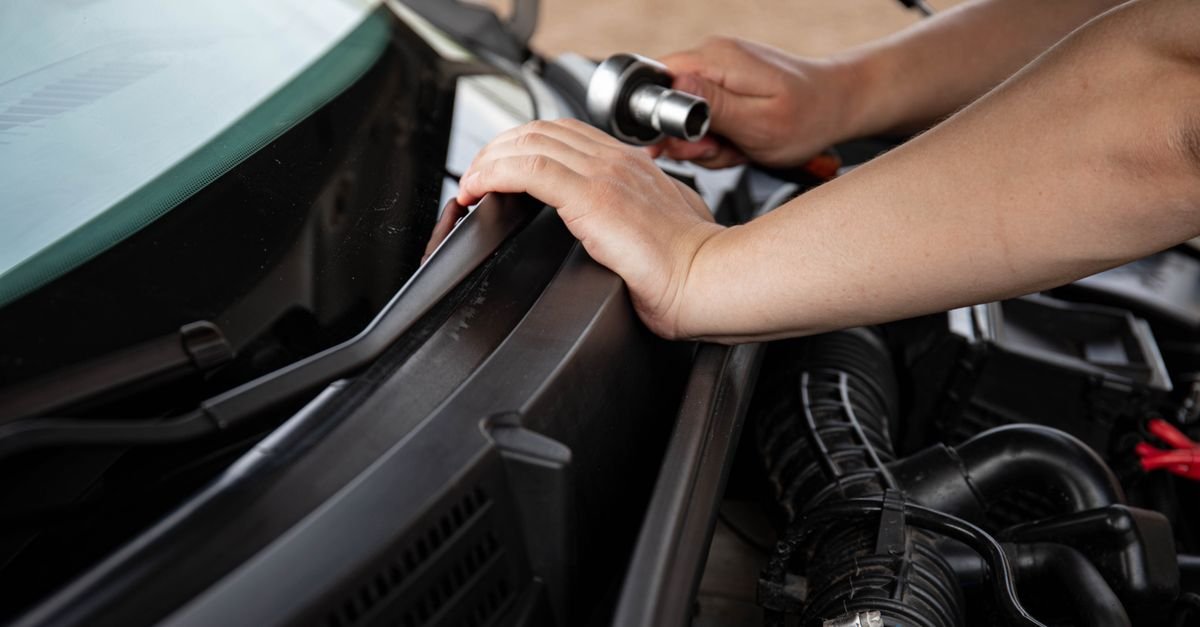
1. The nozzle and the inlet screen. Pull the nozzle, hold it up to the light, and clear it from the back with the wire that came with the machine or a straightened paperclip. Then unscrew the garden hose inlet and pull the screen out. On a machine that has run on well water or through an old hose, it is often a solid disc of grit. Five minutes, no parts, and it resolves a genuinely embarrassing share of “my pump is dead” cases.
2. O-rings at every connection. Every quick-connect, the gun inlet, both hose ends and the nozzle socket seal on a small rubber ring that dries, flattens and cracks. A drip at a joint is an O-ring until proven otherwise. Buy an assortment rather than a single ring, because they fail in clusters — they are all exactly the same age.
3. The trigger gun. Most homeowner guns are sealed units with no spare parts published. When the trigger leaks or the internal valve stops sealing, the repair is the whole gun, and it is a two-minute swap. Treat the gun as a wear part rather than a component.
4. The high-pressure hose. A kinked, crushed or burst hose gets replaced, not mended. Hose menders exist because garden hoses run at tap pressure. A high-pressure hose is a reinforced assembly rated well above what your machine makes, and a splice in it becomes the weakest point in a system you are standing next to.
If all four come back clean and the machine is still wrong, you have properly eliminated the cheap causes. That is progress, not failure.
Repairs That Belong on a Bench or in the Bin
The next tier up is doable, but it wants a flat surface, an afternoon and a parts diagram: an unloader strip and O-ring rebuild, a seal or valve kit on a triplex pump, a carburettor clean, a chemical injector strip, a pump oil change with non-detergent pump oil. None of that is beyond a patient person. All of it goes badly on a driveway in fading light.
Then there is the tier where the honest answer is to stop. A cracked pump head from freezing, a scored swash plate inside a sealed axial pump, a split manifold, a dead electric motor, engine internals. Those are not repairs, they are transplants.
Freeze damage deserves naming, because it is the most common way a perfectly healthy machine dies. Water left in the pump expands as it freezes and splits the head, and the crack is often hairline and invisible until it is under pressure. It is also completely preventable — winterising takes about thirty seconds and costs less than a nozzle.
The Tool Kit That Covers Nearly Every Fix
I went looking for the specialist tooling that pressure washer repair supposedly demands, on the assumption there would be some proprietary spanner I had to warn you about. There mostly is not any. Here is the entire list:
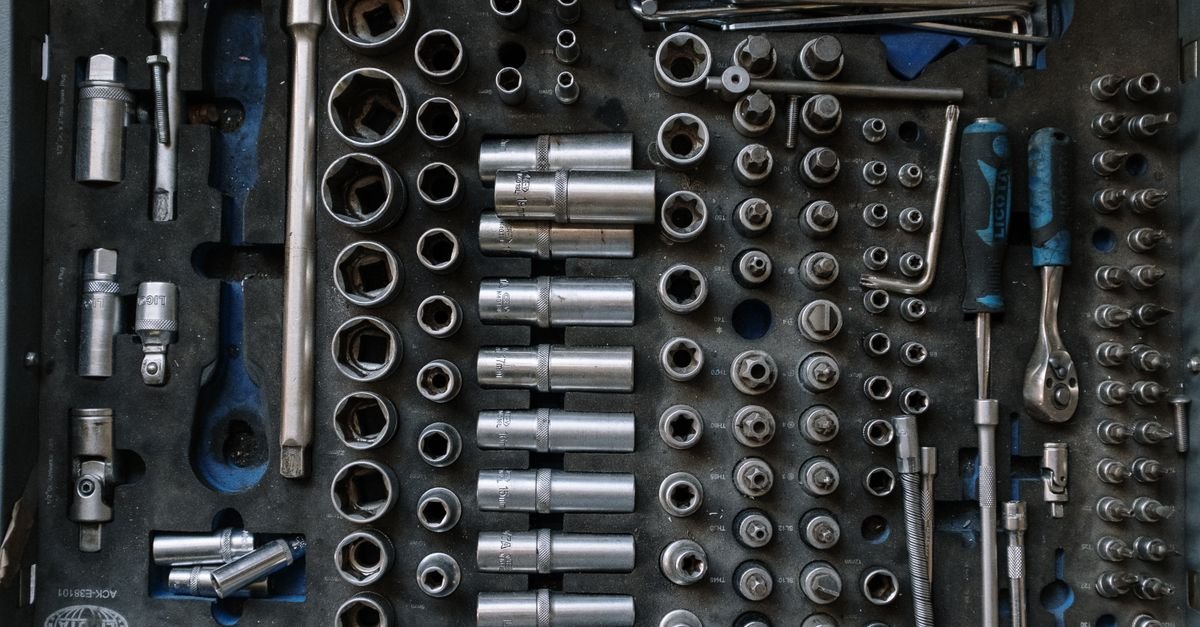
- An adjustable spanner, plus a basic set of combination spanners
- A 3/8-inch socket set, including deep sockets for manifold bolts
- Hex keys — unloaders and pump manifolds are full of them
- Needle-nose pliers and a pick or fine screwdriver for O-rings
- A nozzle cleaning wire, or the paperclip you already own
- An O-ring assortment kit
- PTFE tape for garden-hose threads only, never on the high-pressure fittings, which seal on an O-ring and do not want tape anywhere near them
- Non-detergent pump oil, because motor oil’s detergent additives hold water in suspension inside a pump, which is precisely backwards
- A torque wrench, and only if you are going into a triplex manifold
That is a drawer, not a workshop. The real barrier to repairing a pressure washer was never the tools. It is knowing which of the nine symptoms you actually have, which is what the table at the top of this page is for.
The Price of the Part Against the Price of the Machine
Here is the opinion, and it is the one that saves the most money: you are not repairing a pressure washer, you are repairing a pump with an engine attached — and whether the machine is worth saving is decided almost entirely by which kind of pump it has.
Axial pumps are sealed wobble-plate units. They are built to a price, they are not designed to be opened, and on most homeowner machines the pump is the single most expensive assembly on the frame. When an axial pump is genuinely finished, a replacement commonly lands close enough to the price of a whole new machine that the repair stops making sense. Triplex pumps are the opposite: serviceable valves, serviceable seals, and a working life that outlasts several engines. On a triplex machine, nearly any pump repair is worth doing.
So the calculation is this. Look up the part number for what has actually failed, price it, and compare that to what your exact machine sells for today. If the parts bill passes roughly a third of the current price of the same machine and the pump is involved, you are restoring rather than repairing. Below that line — or anywhere on the engine, hose, gun or unloader — fix it.
I would like to give you an average repair cost here and I am not going to, because I went looking for one and every figure I found traces back to a repair shop quoting its own labour rate on its own blog. That is not data, it is a price list with a headline. Your part number and your machine’s current street price are two real numbers you can get in five minutes, and they beat any average.
FAQ
Is it worth repairing a pressure washer?
Usually, yes, as long as the pump is not the thing that failed. Nozzles, screens, O-rings, hoses, guns, unloaders, spark plugs and carburettors are all cheap and serviceable. A dead sealed axial pump is the one failure that routinely costs more to fix than the machine is worth.
What is the most common pressure washer problem?
A blocked or worn nozzle, followed closely by a clogged inlet screen and stale fuel. All three present as dramatic symptoms — no pressure, surging, refusing to start — and all three are fixed in minutes with nothing bought.
Can I repair a pressure washer pump myself?
It depends on the pump. A triplex pump has published seal and valve kits and is a genuine bench job. A sealed axial pump is not built to be rebuilt, and on most homeowner machines opening one confirms what you already suspected rather than fixing it.
Why does my pressure washer run but not spray water?
Work the order: tap fully open, no kink in the garden hose, inlet screen clear, then bleed trapped air by running water through the machine with the trigger held open and the engine off. Air locks are very common after storage and they imitate a failed pump convincingly.
How long should a pressure washer last?
Longer than most of them do, because the usual cause of death is storage rather than work. A machine drained before winter, run on clean water through a clear inlet screen, and given pump oil at the interval its own manual specifies will outlast several seasons of the identical machine left full of water in an unheated garage.
Most Broken Pressure Washers Are Not Broken
Work the table from the left. Nine times out of ten the fault is in the first column, and the parts bill is a nozzle you cleared with a paperclip and two O-rings. If you do get all the way to the last column and the pump really has gone, at least you will be spending money on the right thing — and you will know, before you order it, whether it is worth spending at all.