Last Updated on October 4, 2026 by Umar Farooq
How do you remove mold from vinyl siding? Wet the wall, apply a diluted sodium hypochlorite or oxygen bleach solution from the bottom up, and let it sit for 10 to 15 minutes. The dwell time kills the organism, not the water pressure. Rinse from the top down at low pressure, then fix the moisture source so the growth does not return.
Learning how to remove mold from vinyl siding is really two jobs, and most homeowners only do the first. Job one is lifting the black staining off the panels. Job two is working out why that wall stays damp long enough for anything to grow on it. Skip job two and you will be back with a bucket next spring.
This guide covers both: how to tell mold from mildew from algae, which solutions actually kill the organism, safe dilution and dwell times, how hard you can spray vinyl, and the moisture sources behind almost every case of repeat growth.
What Mold on Vinyl Siding Actually Is
The black or green stuff on your siding is a living colony, not a stain sitting on the plastic. It is feeding on something. Vinyl is not food, but the film of pollen, dust, tree sap, soot and dead insect matter that settles on siding absolutely is.
That is why the problem is worst on walls that never see direct sun. Sun dries the film. Shade keeps it damp. Damp organic film plus a stable surface equals growth.
This changes how you clean. Blast the colour away and you leave the food film and the living base behind. Kill the organism and remove the film, and you buy years instead of weeks.
Mold vs Mildew vs Algae vs Plain Dirt
Four different things get called “mold”. One chlorine-based wash handles all of them, so you do not need four products. But knowing which you have tells you how urgent it is.
| Growth type | Looks like | Where it appears | Texture | Risk level |
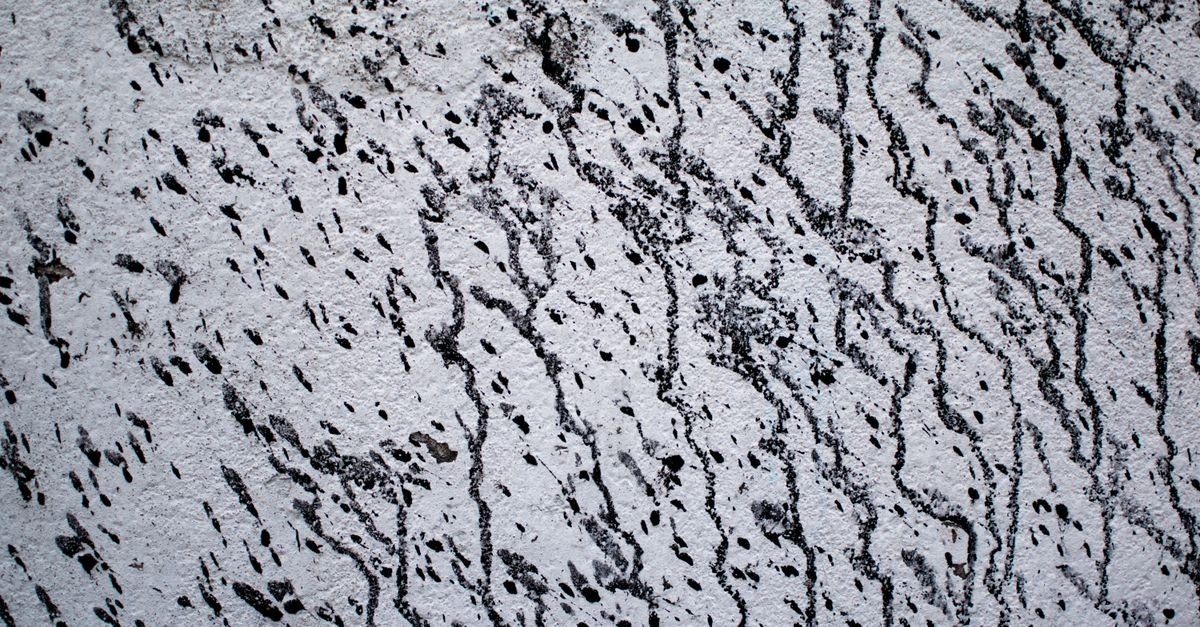
| Mildew | Flat black or grey speckles | Shaded north and east walls, under eaves | Powdery | Cosmetic |
| Mold | Fuzzy black, green or brown patches | Near constant moisture: hose bibs, leaking gutters, vents | Raised, fuzzy | Investigate the source |
| Algae | Even green film, often in streaks | Below gutters, sprinkler zones, splash lines | Slimy when wet | Cosmetic |
| Plain dirt | Grey-brown haze, heaviest low down | Every side, worst near driveways | Gritty | None |
| Artillery fungus | Tiny hard black dots that will not wipe off | Walls beside hardwood mulch beds | Cemented on | Very hard to remove |
The field test: put a drop of household bleach on the spot and wait 60 seconds. Mildew, mold and algae lighten or vanish. Dirt does not change, and neither does artillery fungus, whose dots are spore casings glued to the vinyl.
Mildew and mold are both fungi. Algae is not a fungus at all, it is a simple plant. That is the real biological difference, and for cleaning purposes it does not matter, because the same oxidising wash destroys all three.
Why the Shaded North Wall Is Always Worst
Walk around your house and the north wall is almost always dirtiest, with east second. That is physics, not bad luck.
A north wall gets almost no direct sun. Overnight dew condenses on the panels and stays. On a south wall that dew burns off by mid-morning. On a north wall it can sit until noon. Spores need only a few damp hours a day to establish. Give them eight and they thrive.
Anything blocking airflow makes it worse: a close fence line, overgrown shrubs, a deep porch roof. Look hardest at the top 60 cm under the eave, the strip behind each downspout, and the bottom 30 cm where rain splashes soil onto the panels.
How to Remove Mold From Vinyl Siding: The Solutions That Work
You have three realistic choices, plus a fourth the internet loves that underperforms badly.
| Solution | Typical mix | Dwell | Kills the organism? | Plant safe? | Best for |
| Sodium hypochlorite | 1 part 5-6% bleach to 3-4 parts water, plus dish soap | 10-15 min | Yes | No, pre-wet and rinse plants | Heavy black mildew and mold |
| Manufacturer formula | 1/3 cup detergent + 2/3 cup TSP + 1 qt 5% bleach + 3 qt water | 10 min | Yes | No | Stubborn mildew, warranty-safe |
| Oxygen bleach | 120-180 g per 4 L warm water | 15-20 min | Yes, more slowly | Yes | Walls above beds and ponds |
| White vinegar | 1 part vinegar to 3 parts water | 15 min | Surface only | Mostly | Very light haze only |
Sodium Hypochlorite: The Standard Mix
Chlorine bleach is the workhorse. It oxidises the cell walls of fungi and algae fast. A 1:3 or 1:4 dilution of standard 5 to 6 percent bleach gives roughly 1 to 1.5 percent active chlorine at the wall, the range professional soft washers use on delicate surfaces.
Add about one tablespoon of dish soap per 4 litres. The soap is not there to clean. It is a surfactant that slows run-off so the solution clings to a vertical panel long enough to work.
CertainTeed’s vinyl siding instructions publish a stronger mildew formula: one third cup of detergent, two thirds cup of trisodium phosphate, one quart of 5 percent sodium hypochlorite and three quarts of water. Georgia-Pacific publishes the identical recipe with a warning worth repeating: do not exceed the recommended concentrations, because stronger mixes can damage the panel surface. Never mix bleach with ammonia or acidic cleaners.
Oxygen Bleach: The Plant-Safe Option
Sodium percarbonate dissolves in warm water and releases hydrogen peroxide. It kills fungi and algae by the same basic oxidation, but more slowly and far more gently on the surroundings.
Use it when the wall sits above a flower bed, a vegetable garden, a pond or a lawn you care about. It also will not bleach colour out of nearby awnings or deck stain if it drips.
The trade-off is honest. On heavy black staining, oxygen bleach needs a longer dwell, sometimes two applications, and usually some brushing. Mix it with warm water or it will not fully dissolve.
Why Vinegar Underperforms on Siding
Vinegar appears in almost every article on this topic and it is the weakest option here. Household white vinegar is about 5 percent acetic acid. It knocks back a thin surface film and lightens the visible stain, but it does not reliably kill the colony down in the textured grain of the panel.
The usual result is a wall that looks better for three weeks, then goes darker again, because you removed the pigment and left the organism. For a faint haze it is fine. For real black mildew it wastes an afternoon.
What Vinyl Siding Manufacturers Say About Pressure Washing
This part matters if your siding is still under warranty.
CertainTeed states plainly that they do not recommend power washing vinyl or polymer siding, because it can cause moisture intrusion, damage and discoloration. Their suggested tool is a house-wash attachment on a garden hose.
Georgia-Pacific allows pressure washing inside a narrow window: minimum 1,500 PSI, maximum 2,400 PSI, 40-degree tip. They add the instruction that explains CertainTeed’s caution: do not aim the washer upward, because water can collect behind the siding.
That is the whole risk in one sentence. Vinyl siding is not a sealed skin. It is overlapping panels designed to shed water downward and let the wall breathe. Spray up under a lap and you push water into the cavity, where it soaks sheathing and grows mold you cannot see. See our guides on what PSI to use on vinyl siding and whether you should pressure wash vinyl siding at all.
How to Remove Mold From Vinyl Siding Step by Step
Work in sections of roughly 3 by 3 metres. Soap the whole house at once and the solution dries before you rinse, leaving streaks harder to remove than the mildew was. Pick an overcast, still day: sun dries the solution too fast, wind blows it onto plants.
Step 1: Protect Plants Before You Mix Anything
Soak every shrub, bed and patch of lawn within 2 metres of the wall with plain water. Wet foliage absorbs very little diluted bleach. Cover the most sensitive plants with sheeting.
Move furniture and grills, close all windows and doors, and tape plastic over wall lights and outlets. Wear eye protection, gloves and old clothes, because diluted bleach spots everything it lands on.
Steps 2 and 3: Pre-Wet, Then Apply Bottom to Top
Rinse the section with plain water starting at the bottom edge and working upward. This sounds backwards and it is deliberate. Dry vinyl absorbs solution unevenly, so a dry lower panel soaks up run-off from above and dries into a dark tide line.
Apply the cleaning solution the same way, bottom to top. Run-off then lands on already-wet siding and cannot streak. A pump sprayer works well, as does a soft car-wash brush on a pole. If your machine has a soap injector, the black nozzle applies at low pressure, which is exactly right. Our nozzle chart explains each tip.
Step 4: Let It Dwell, Because Dwell Time Is What Kills It
This is the most important step and the one everyone rushes. Give chlorine solutions 10 to 15 minutes and oxygen bleach 15 to 20. Contact time is what oxidises the colony’s cell walls. You should watch the black speckles fade with no scrubbing at all.
Do not let the solution dry. If the wall goes chalky, mist it lightly with plain water to keep it active. Pressure does not kill fungus; it only removes what is already dead.
Steps 5 to 7: Agitate, Rinse Top to Bottom, Then Inspect
For anything left after dwelling, use a soft-bristled brush on a pole with light pressure. Never use a wire brush, scouring pad or abrasive powder. Vinyl is soft, scratches are permanent, and every scratch holds moisture for the next colony.
Now reverse direction and rinse from the top down, so dirty water runs off rather than over finished sections. Keep the spray straight on or angled down, never upward under a lap. Simple Green’s siding guidance matches this: a 25 to 40 degree nozzle, at least 18 inches away, cleaner applied bottom-to-top and rinsed top-to-bottom.
Rinse the plants again immediately, then look at the wall from 6 metres away. Faint grey shadowing that will not lift is usually oxidation of the vinyl itself, not mildew.
Pressure Washer Settings That Will Not Wreck Vinyl
| Setting | Applying solution | Rinsing panels | Never do this |
| Pressure | 200-500 PSI (soap mode) | 1,300-2,400 PSI | Above 2,500 PSI |
| Nozzle | Black soap tip (65°) | 40° white, or 25° green at distance | 0° red or 15° yellow |
| Distance | 30-60 cm | 45-60 cm minimum | Closer than 30 cm |
| Angle | Slightly downward | Straight on or downward | Upward under a lap |
| Water temp | Cool to warm | Cool | Hot water warps vinyl |
Higher pressure does not clean vinyl faster. It only raises the odds of driving water behind a panel, cracking brittle old vinyl in cold weather, or stripping the factory finish. Our guide on what PSI pressure washer you need explains how to read your machine’s rating honestly.
Why the Mold Comes Back Within Weeks
The wall looks perfect in April. By June the speckles are back on the same north corner. Three things cause that.
First, you removed the pigment but not the colony, which happens when you rely on pressure alone or a weak vinegar mix. Living material stays in the textured grain and regrows.
Second, you removed the colony but left the food film. Spores are in the air constantly and land within days. You cannot stop them arriving, only stop them settling in comfortably.
Third, and most often, the wall is still soaking wet every morning. That is a building problem, not a cleaning problem.
Find the Moisture Source Feeding the Growth
If growth appears as a defined patch, streak or column rather than evenly, there is a water source above it. Find it and cleaning becomes a one-off job.
Gutters, Downspouts and Splash-Back
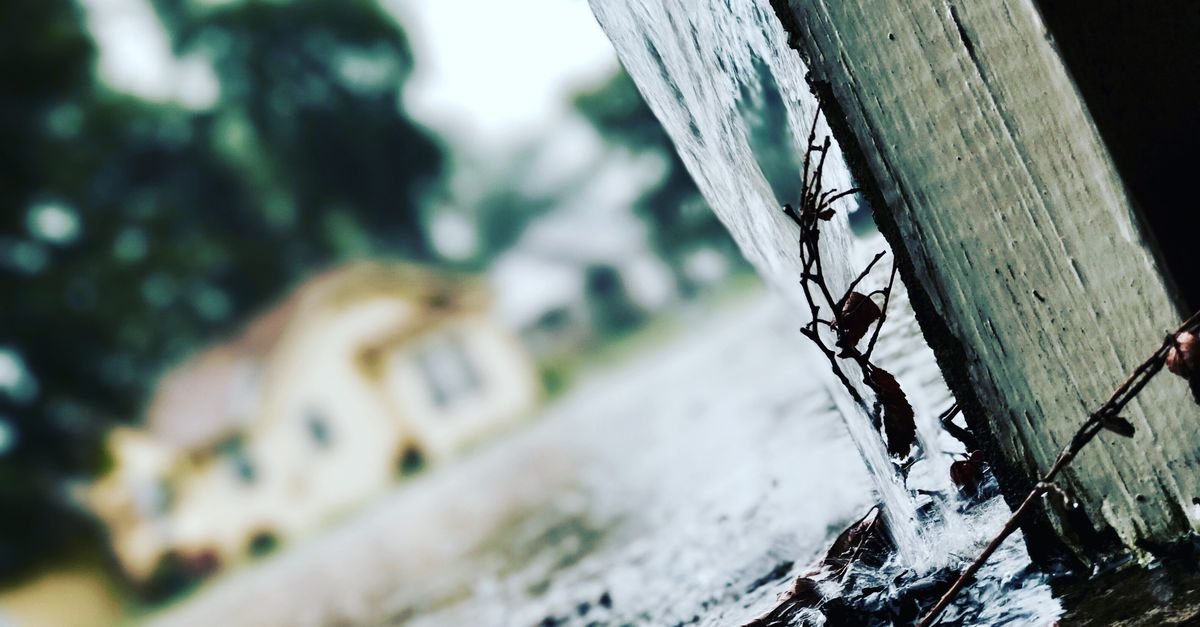
A blocked gutter overflows at the same point in every storm and paints a vertical stripe of permanently wet siding. Growth that starts high and runs straight down is an overflow signature.
Check for downspouts discharging at the foundation. Splash-back throws dirty water onto the lower 30 cm of siding dozens of times a year, and an extension carrying water 1.5 metres away solves it. Also check behind the gutter for a missing drip edge, which soaks the fascia and the top course of siding.
Sprinklers, Branches, Grading and Vents
Run your irrigation and watch it. A misaligned head clipping the wall at 5 am is the most common cause of a mysterious green stripe. Sprinklers should never hit siding.
Overhanging branches drop debris, drip long after the rain stops, and block the sun that would dry the panels. Trimming them back is often the highest-value fix available. Shrubs planted tight to the house kill airflow, so leave 45 to 60 cm of clear space.
Soil should slope away from the house, or the lower siding stays damp and grows a permanent band. Check dryer and bathroom vents too, since warm humid air blown against siding grows a dark halo every winter. If you find fuzzy raised mold in one spot with no external source, suspect a plumbing leak or failed window flashing pushing moisture outward. That needs inspection, not a stronger cleaner.
A Maintenance Schedule That Keeps Siding Clean
| Task | Frequency | Why it matters |
| Plain water rinse of shaded walls | Every 3-4 months | Removes the film that feeds growth |
| Full chemical wash | Every 1-2 years | Kills any established colony |
| Gutter clean-out | Twice a year | Stops overflow stripes |
| Trim shrubs back from wall | Annually | Restores airflow and drying |
| Check sprinkler alignment | Every spring | Heads drift over time |
| Inspect downspout extensions | Twice a year | Cheapest fix on the list |
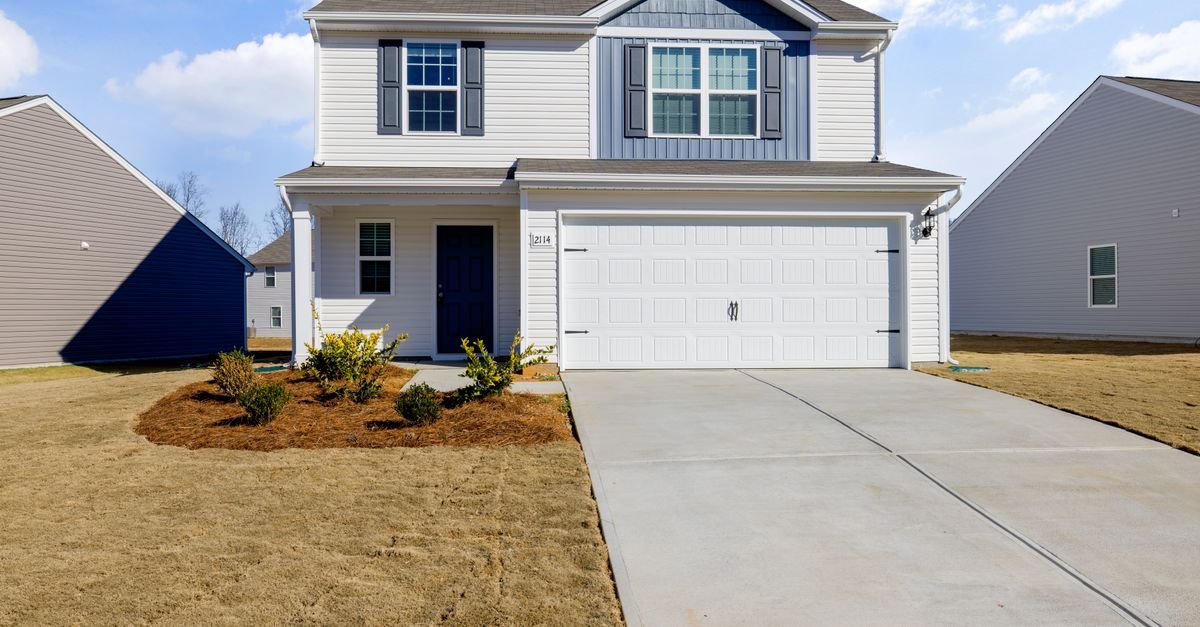
Humid southern climates and wooded lots need the shorter intervals. Dry, sunny, open sites can stretch a full wash to three or four years. The same logic applies elsewhere: if your siding grows mildew, check your roof shingles and your concrete driveway too.
FAQ
Does bleach damage vinyl siding?
Diluted bleach at roughly 1 part bleach to 3 or 4 parts water is safe on vinyl and matches the concentration siding manufacturers publish themselves. Undiluted bleach, or a long dwell in hot direct sun, can dull the finish and fade the colour. Rinse thoroughly and never let the solution dry on the panel.
Can I use a pressure washer to remove mold from vinyl siding?
You can, but check your manufacturer first. CertainTeed does not recommend power washing vinyl at all, while Georgia-Pacific allows 1,500 to 2,400 PSI with a 40-degree tip. Since the chemical does the killing, a low-pressure application and rinse is always safer than a high-pressure blast.
Why does mold keep coming back on the same wall?
Because the wall stays wet. Repeat growth in one spot nearly always means a gutter overflow, a downspout discharging at the foundation, a sprinkler hitting the siding, or branches blocking the sun. Fix the water source and the growth stops returning.
Is mold on vinyl siding dangerous to my health?
Exterior mildew is mainly cosmetic and poses far less risk than indoor mold, because it is outside and not in the air you breathe all day. Still, wear a mask and eye protection while cleaning, since scrubbing releases spores. Fuzzy mold concentrated in one patch can signal a leak inside the wall.
What is the difference between mold and mildew on siding?
Mildew is flat, powdery and usually black or grey, sitting on the surface. Mold is fuzzier, often raised, and can be black, green or brown. Both are fungi from the same damp conditions and both come off with the same chlorine or oxygen bleach wash. Algae, by contrast, is a simple plant that shows up as an even green film.
Will vinegar remove mold from vinyl siding?
Vinegar lightens light surface mildew but rarely kills the colony in the panel texture, so stains usually return within weeks. It is reasonable for a faint haze above a vegetable garden. For genuine black mildew, oxygen bleach is the better plant-safe choice.
How do I protect my plants when cleaning siding?
Soak all nearby plants and lawn with plain water first, cover the sensitive ones with sheeting, then rinse everything again immediately after each section. Wet foliage absorbs far less diluted bleach than dry foliage. If the wall sits directly over a garden bed, use oxygen bleach instead.
How long should the cleaning solution sit on the siding?
Give chlorine solutions 10 to 15 minutes and oxygen bleach 15 to 20 minutes, because that contact time is what kills the organism. Do not let it dry on the wall, and mist lightly with water if it starts drying early. Always apply bottom to top and rinse top to bottom to avoid streaks.
What are the tiny black dots that will not wash off my siding?
Those are almost certainly artillery fungus, which grows in hardwood mulch and shoots spore packets onto walls, where they cement themselves to the vinyl. Neither bleach nor pressure removes them reliably, and scraping each dot by hand is usually the only option. Switching to stone or pine bark mulch near the house prevents new ones.
Bottom to Top, Then Top to Bottom
Knowing how to remove mold from vinyl siding comes down to three ideas. Let the chemical do the work, not the pressure. Apply bottom to top and rinse top to bottom so you never leave a streak. And treat the water source, not just the stain.
A 1:3 bleach mix with a squirt of dish soap, a 10 to 15 minute dwell, a soft brush for stubborn patches and a gentle top-down rinse will clear almost any siding. Oxygen bleach does the same job more slowly where plants matter, and vinegar is rarely worth the afternoon.
What separates a one-time job from an annual chore is the walk-around afterwards. Clear the gutters, extend the downspouts, aim the sprinklers away, cut the branches back and give your shrubs half a metre of breathing room. Do that and the wall you clean this weekend should still look good in three years.