Last Updated on September 25, 2026 by Umar Farooq
A pressure washer hard to start on the eighth or tenth pull almost always has a stacked fault, not a single broken part — and the free fix, squeezing the trigger to dump the pressure the pump is still holding, happens before you touch the cord. An engine that eventually runs has spark, compression and fuel. It is not broken. It is short of margin somewhere, and starting is the one moment when a small shortfall shows.
That is a genuinely different problem from a machine that never fires, and it gets answered as though it were the same one. Here is the middle case, properly.
Hard to Pull or Hard to Fire? Split the Symptom First
Before anything else, work out which of two complaints you actually have. They sound identical when you describe them to someone and they have almost nothing in common mechanically.
| What you notice | What it is | Where it lives |
| The cord itself is heavy. Your arm knows. | A load fault — something is resisting rotation | Pump pressure, compression, cold oil |
| The cord pulls normally, the engine just does not catch | A combustion fault — it spins fine and will not light | Fuel, choke, spark |
| Heavy cord *and* no catch | Usually both, which is why it feels hopeless | Work the load first |
Ask yourself one question: if the spark plug were removed, would the cord pull easily? If yes, the resistance is compression or the pump. If the cord is still heavy with the plug out, something mechanical is dragging.
Two boundaries so you do not read the wrong article. If your machine never fires at all, that is pressure washer won’t start. If it fires, runs for a few seconds and dies, that is pressure washer starts then dies. This page is for the machine that does eventually run, and then runs perfectly, which is somehow the most annoying of the three.
Pressure Washer Hard to Start: The Order That Costs Nothing
Work down this list. The first four cost nothing and take about four minutes between them, and they are in this order because each one removes a variable from the next.
1. Squeeze the trigger before you pull. Water on, gun pointed somewhere harmless, trigger held. Detailed below, and it is the one people skip.
2. Check the choke is actually where you think it is. Levers get knocked. Cables stretch.
3. Look at the fuel. If it has sat since last season, stop diagnosing and drain it.
4. Check the oil on level ground. Wrong grade and wrong level both show up at cranking speed first.
5. Pull the plug and read it. Two minutes with a plug socket.
6. Gap the plug, or replace it. A few dollars.
7. Clean or replace the air filter. Free to check, cheap to fix.
8. Check valve clearance. A feeler gauge and an hour, and the only one on this list that needs a manual.
Here is the opinion, and it is the reason people give up halfway down: a hard-starting engine is usually two small faults stacked, not one big one. Starting is a threshold event. Compression, mixture and spark energy all have to clear one bar at the miserable speed a human arm can turn a crankshaft. Any one of them being slightly down stays under the bar on its own. Two of them slightly down is a machine that takes ten pulls. That is why “I replaced the plug and it did not fix it” is such a common sentence — the plug was probably half the problem, and the other half is still there.
Bleed the Pump Before You Touch the Cord
This is the free one, and the only reason it is not the first thing every search result tells you is that it does not sound like a repair.
Water does not compress. When you switched the machine off last time without squeezing the trigger, the high-pressure hose and the pump head kept their charge, and they have held it ever since. This morning, the crankshaft is not just turning an engine. It is turning three plungers against a column of pressurised water that has nowhere to go. That load is real, it is on every single pull, and it is why the cord feels like it is attached to something heavier than it was in September.
Worse, it compounds. If the engine does not catch on the first pull, each subsequent pull pumps a little more water into a system that is already full, so the tenth pull is genuinely harder than the first. People conclude the engine is getting worse. The engine is fine. You have been inflating a balloon with your shoulder.
The sequence that fixes it:
1. Connect the garden hose and open the tap fully. Leave the machine off.
2. Point the gun in a safe direction and squeeze the trigger. Hold it until water runs steady with no spitting — usually about thirty seconds. That flushes the air out as well as the pressure.
3. Keep holding the trigger and pull the recoil with your other hand.
4. Let go of the trigger a second or two after it fires.
The engine now starts into an open circuit. Nothing to fight. If your machine goes from ten pulls to two the first time you try this, you did not fix anything — you stopped adding a load that was never supposed to be there.
Do the same thing at shutdown and you never have to think about it again: kill the engine, then squeeze the trigger until the gun goes quiet. Ten seconds, and the machine is stored unloaded. A pump left pressurised through a freezing winter is also the pump most likely to crack, which is a separate and much more expensive conversation.
Compression Is What Your Arm Is Fighting
Once the pump is bled and the cord is still heavy, what is left is the engine’s own compression — and on some engines there is a mechanism specifically designed to take it away from you during starting.
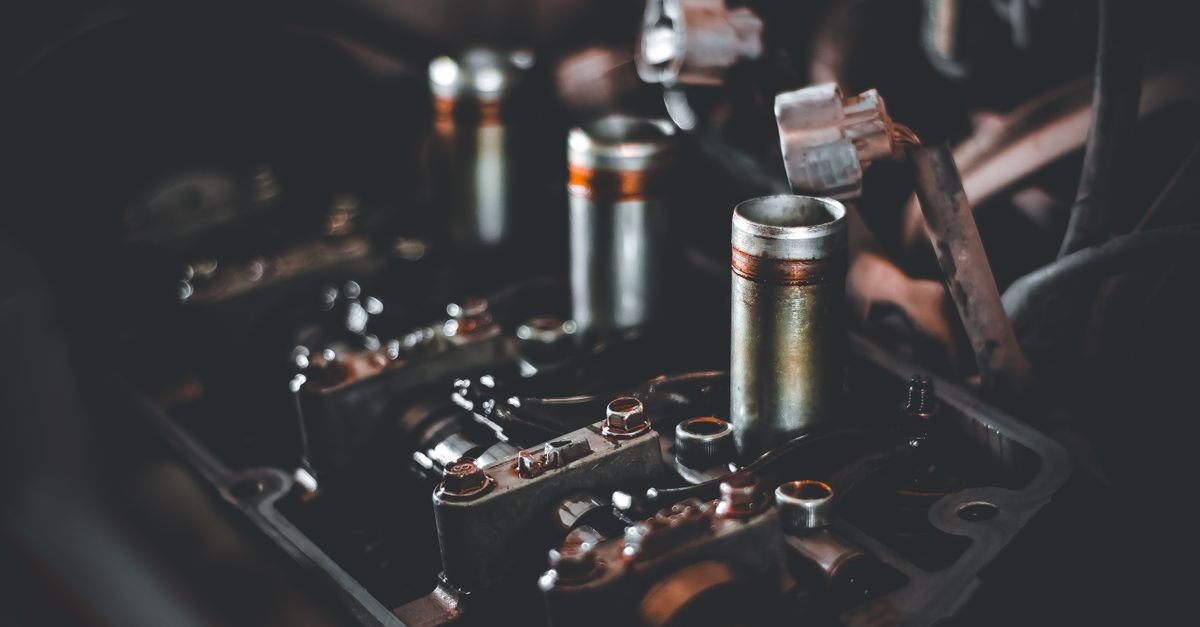
Honda describes its version plainly: the automatic mechanical decompression system “is connected to the camshaft” and “reduces compression by opening the exhaust valve slightly when the engine is being started,” which “reduces the amount of force needed to start the engine.” It “disengages automatically after the engine starts to prevent any power loss during normal operation” (Honda Engines, small engine technology). Other makers build the same idea under names like ACR — automatic compression release.
Two things follow that are worth knowing while you are standing there:
- If your engine has one and it stops working, the machine does not break — it just gets hard to pull. The decompressor is a small lobe or weight riding on the camshaft, and it relies on the exhaust valve being close enough to its seat for that tiny lift to matter. Valve clearance that has drifted wide on the exhaust side effectively cancels it. The engine still runs perfectly once started, which is exactly the symptom this article is about.
- A sudden change in cord weight is information. If it pulled easily all last year and feels like a different machine now, something changed. Cord weight is not a number you can read off a gauge, but your arm has a long memory for it.
The rough compression check, if you want one: remove the plug, put your thumb firmly over the hole, and pull the recoil. Your thumb should be pushed off with some force. Nothing at all means a valve is being held open, and you are in the valve clearance section below.
Old Petrol Loses the Part That Lights First
Everyone knows stale fuel clogs carburettors. Fewer people know the other half, which is the half that matters for a hard start specifically: petrol is a blend, and the lightest fractions — the ones that evaporate readily and give you an ignitable vapour in a cold cylinder — are the first to leave.
So a tank of last year’s fuel is not just dirtier. It is harder to light. The engine turns over on a mixture that is too heavy to catch at cranking speed, gets there eventually on the eighth pull when enough vapour has accumulated, and then runs acceptably because a running engine is warm and forgiving. That is the whole signature: terrible cold start, fine once going.
Honda puts the deterioration floor at as little as 15 days in some conditions; Briggs & Stratton draws its line at 30 days. They disagree about the number and agree about the direction, which means a tank that has sat since last autumn is not borderline — it is well past both. Ethanol makes it worse by pulling water out of the air, and the water sinks to the lowest point in the system, which is the carburettor bowl the jets draw from.
The fix is unglamorous: siphon the tank, drain the carburettor bowl from the bolt underneath, and refill with fresh fuel. If it still starts badly on fresh fuel, the varnish has already set and you are into pressure washer carburetor cleaning, which is a longer afternoon but a genuinely fixable one.
One related check while you are down there: if you can smell fuel before you start, or there is a wet patch under the machine, stop and deal with that first. A leak is a fire risk, not a starting fault.
Three Choke Positions, Two of Them Wrong
The choke restricts incoming air to richen the mixture, which is exactly what a cold cylinder needs and exactly what a warm one does not. Three ways it goes wrong, and the third one is a diagnosis rather than a mistake.
Too little choke. A cold engine on half choke will turn over happily and not catch. Close it fully for the first start of the day, then open it in stages as the engine picks up. On a genuinely cold morning, full choke for the first four or five pulls is normal, not excessive.
Too much choke. Pull repeatedly on full choke and you will wet the plug with liquid fuel, at which point the engine will not start no matter what you do. The tell is a strong petrol smell and a plug that comes out damp. That is a flooded engine and it has its own recovery procedure — for now, open the choke fully, remove the plug, pull the recoil several times to clear the cylinder, dry the plug and refit it.
Choke needed on a warm engine. This is the one to pay attention to. If the machine will only start — or only keep running — with the choke partly closed after it has been running for twenty minutes, the choke is not helping you start. It is compensating for a lean mixture, which means a restricted fuel circuit or an air leak at the carburettor base gasket. Note it, and treat it as a fuel-delivery fault rather than a starting habit.
Read the Plug, Then Gap It
The spark plug is the only component on the machine that keeps a written record of how the engine has been running, and it costs two minutes to read.
Pull it and look at the firing end. Dry and light brown or grey is a healthy engine. Dry black soot means it has been running rich — check the choke and the air filter before you blame anything else. Wet and shiny means fuel, which points back to flooding. White and blistered means lean or hot.
Carbon matters more than it looks. NGK’s own explanation of fouling is that deposits burn off only once the firing end reaches its self-cleaning temperature, around 450°C, and that when enough carbon accumulates “the spark will travel the path of least resistance over the insulator nose to the metal shell instead of jumping across the gap,” which “usually results in a misfire and further fouling” (NGK, spark plug basics). A plug fouled over a season of short, choked, five-minute jobs never gets hot enough to clean itself, and the first casualty is the cold start, because that is when the plug is coldest and the mixture wettest.
Then check the gap against your engine manual — small engines commonly sit around 0.028 to 0.031 inches, but the manual wins over any number on the internet including this one. A gap that has eroded wide needs more voltage to jump, and cranking speed is exactly when your ignition has least to give.
A plug is a few dollars. If yours is more than two seasons old and the machine is hard to start, fit a new one and gap it properly rather than cleaning the old one and hoping.
Long and Steady Beats Short and Fast
Technique is not a fix, but bad technique can make a marginal engine look like a dead one, and it is free to correct.
Short, fast jerks do not work on a four-stroke. The engine only makes a usable spark and a usable mixture if the crankshaft gets past compression with enough speed on the other side, and a sharp yank that stops halfway up the compression stroke gives you neither. What you want is: pull the cord slowly until you feel it go tight against compression, let it settle there, then one long firm pull through and past that point, using your legs and back rather than your forearm.
Three habits that help:
- Take up the slack first. Every recoil has an inch or two of free travel before the pawls engage. Snapping through that is how cords break.
- Let it rewind under control. Do not let the handle fly back. The spring does not enjoy it and neither does the housing.
- Stop at ten. If ten proper pulls have not produced a catch, you are not going to out-pull the problem, and you will flood it trying.
If the cord will not retract, jams, or comes out without resistance at all, that is the recoil assembly itself rather than the engine — a separate repair with its own parts.
Cold Weather Turns the Oil Into the Problem
Cold does three things to a small engine at once, and only one of them is about the fuel.
Petrol vaporises less readily, so the mixture reaching the cylinder is effectively leaner than the carburettor thinks it is. Metal contracts, so clearances change slightly. And the oil thickens — which is the one you can actually feel, because you are the starter motor.
A straight SAE 30 is a perfectly good oil at 30°C and treacle at 0°C. A multigrade such as 5W-30 or 10W-30 flows at the low end while still protecting at the top, and the difference in cranking effort on a genuinely cold morning is not subtle. Generac states outright that SAE 30 causes hard starts below 50°F, which covers most of the year in most of the unheated garages a pressure washer lives in.
So: check what your manual specifies for your temperature range, and if your machine has straight SAE 30 in it because that is what was in the shed, that alone can account for a difficult winter start. It is a cheap experiment.
Two cold-weather things that are not the oil: a pump with ice in it will not turn at all, which is a lock rather than a hard pull, and a machine brought from a freezing garage into sunshine will be much easier to start an hour later. Patience is occasionally a repair.
Valve Clearance Drifts Tight, Slowly
This is the one that creeps up over years, and it is the reason a machine that started on two pulls when it was new takes eight now without anything having obviously happened.
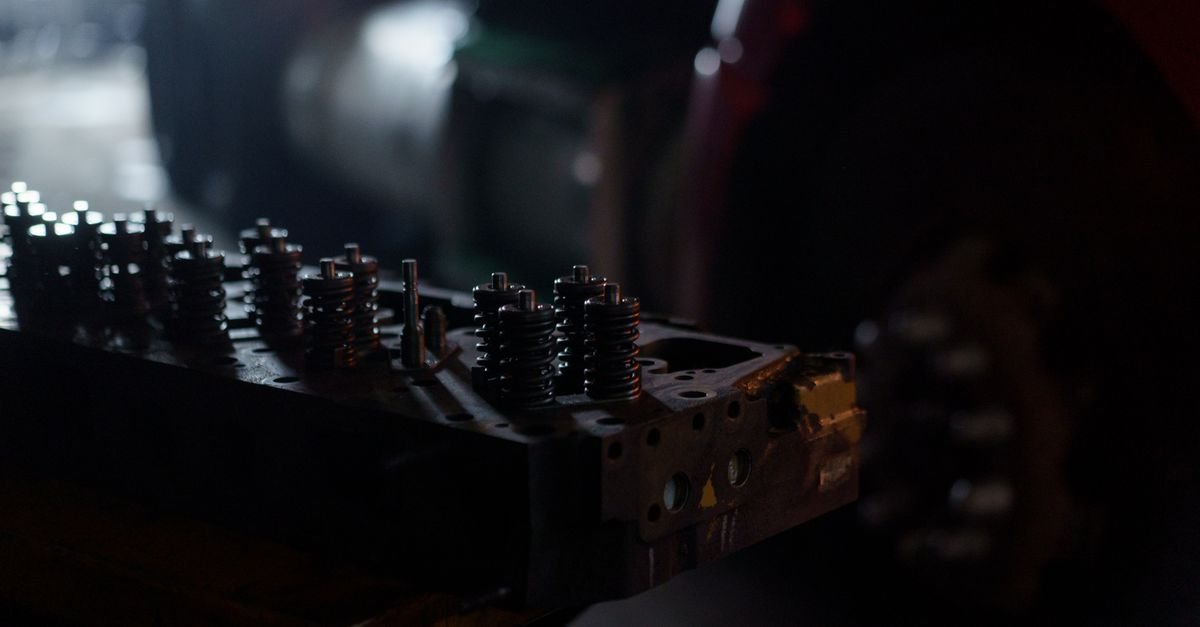
There is a deliberate gap in the valvetrain between the rocker and the valve stem, and it exists so that the valve is guaranteed to seat fully when it is meant to be shut. Over many heat cycles the valve gradually sinks into its seat, and that gap closes up. Once it reaches zero, the valve is being held slightly open all the time.
Motorservice, which manufactures valves and publishes the failure modes, describes the consequence in sequence: where “the valve clearance has been set too tight or the maintenance intervals have been exceeded,” then “the valve no longer closes properly,” and “combustion gases flow past the valve seat and heat up the valve head,” which eventually “causes the valve head to overheat and burns through in the seat area” (Motorservice Technipedia, valve damage and causes). Long before it burns through, though, a valve that does not fully seat leaks compression — and the place a small compression leak shows up first is the cold start, because cranking speed gives the leak the most time to act.
The signature is worth memorising: gets harder to start every season, runs fine once started, and the cord feels light rather than heavy. Light, because you are losing compression rather than fighting it. That is the opposite of the trapped-pump symptom at the top of this article, which is why sorting the two apart matters.
Checking it is a feeler gauge, a socket to remove the valve cover, and the clearance figures from your engine manual — they are engine-specific and typically in the low thousandths of an inch, with intake and exhaust usually different. Set the piston at top dead centre on the compression stroke so both valves are shut, measure, adjust, lock, re-measure. It is fiddly rather than difficult. It is also the only item on this list that benefits from the manual for your exact engine, so find the model number on the engine shroud before you start.
FAQ
Why is my pressure washer so hard to pull start?
Most often because the pump is still holding pressure from the last time it was used, and the engine has to turn against it. Connect the water, squeeze the trigger until the flow runs steady, and keep holding the trigger while you pull the cord. If the cord is still heavy with the spark plug removed, the resistance is mechanical rather than compression.
Why does my pressure washer take so many pulls to start?
Because something is marginal rather than broken. Stale fuel that has lost its light fractions, a carbon-fouled plug, a wide plug gap or valve clearance that has closed up will each leave the engine just short of what it needs at cranking speed. Usually two of those are present together, which is why fixing one thing only helps a little.
Should I hold the trigger while starting a pressure washer?
Yes, on a machine with water connected and the tap open. Holding the trigger opens the circuit through the unloader and lets the pump turn without building pressure, so the engine starts into no load. It also purges air out of the pump, which the pump prefers.
Can cold weather make a pressure washer hard to start?
Considerably. Petrol vaporises less readily, and engine oil thickens enough to make a real difference to how hard the crankshaft is to turn. A straight SAE 30 in a cold garage is much harder work than a 5W-30 or 10W-30. Check the grade your manual specifies for the temperature range you actually store the machine in.
Does a bad spark plug make a pressure washer hard to start rather than not start at all?
It can. A plug with carbon on the insulator or a gap eroded wide will often still fire once the engine is warm and turning fast, but fail repeatedly at cranking speed when the mixture is wet and the ignition has least energy available. Read the firing end, gap it to the manual figure, and replace it if it is more than two seasons old.
How do I know if my pressure washer has low compression?
Remove the spark plug, seal the hole firmly with your thumb and pull the recoil. A healthy engine pushes your thumb off with obvious force. Weak or absent resistance points at valve clearance that has gone tight, a valve not seating, or worn rings — in that order of likelihood on a machine that still runs well once started.
Why is my pressure washer hard to start cold but fine when warm?
That pattern points at mixture and compression margin rather than at a failed part. A warm engine vaporises fuel readily and needs far less help, so it hides small deficits that the cold start exposes. Work through fuel age, choke operation, plug condition and oil grade before assuming anything is broken.
Can low oil stop a pressure washer starting?
It can, and on most gas machines it does so deliberately — the low oil shutdown grounds the ignition before the level falls below safe. That usually produces a complete no-start rather than a hard start, and it can be triggered by a slope as easily as by a genuine shortage. The sensor watches level at one point in the crankcase, so set the machine level before you conclude anything.
Free Things First, Then the Feeler Gauge
The useful thing about a machine that is hard to start is that it has already told you a great deal. It fires, so there is spark. It runs, so there is compression and fuel. Nothing on it is dead. Something on it is merely short.
Start where it costs nothing. Bleed the pump with the trigger and count your pulls again, because that single habit turns a lot of ten-pull machines into two-pull machines and it is not a repair at all. Then fresh fuel, then the plug, then the oil grade. Only when all four of those are honestly ruled out is it worth taking a valve cover off, and by then you will have narrowed it to the one thing that genuinely creeps up over years.
And when you finish the job today, kill the engine and squeeze the trigger until the gun stops hissing. Your shoulder next spring will not know why it had an easy morning, which is the best kind of maintenance there is.