Last Updated on September 25, 2026 by Umar Farooq
Pressure washer surging is a rhythmic rise and fall in pressure or engine speed, and the fastest way to find the cause is to notice exactly when it happens — with the trigger released, with the trigger held open, or regardless of the trigger. Those three answers point at three different parts, and the fixes have nothing in common.
The symptom unnerves people because it has a beat. A machine that has simply failed makes one noise and stops arguing; a surging one repeats itself on a rhythm, which reads as intentional. It is not. It is a control loop that has lost its damping, and that loop is either hydraulic — the unloader valve — or mechanical, which is the engine governor. Almost every page I read while researching this lists the same eight parts in the same order and never says which symptom points at which.
Three Questions That Narrow Pressure Washer Surging to One Part
Before you pick up a tool, run the machine and watch three moments: the trigger released, the trigger held fully open on a wide tip, and the first ten seconds after startup.
| What you observe | What is cycling | Where to look |
| Surges only with the trigger released | Unloader dropping out of bypass and back in | A small leak downstream of the valve |
| Surges only with the trigger held open | Unloader cycling under load | Nozzle size, or a restriction in the line |
| Surges at the same rate whatever the trigger does, engine note rising and falling | The engine governor hunting | Carburetor, governor spring, linkage |
| Ragged stagger rather than a clean beat, with spitting | Air entering on the inlet side | Supply, suction fittings, inlet screen |
| Surges everywhere, and it crept up over a season | Worn unloader seat or tired spring | The valve itself, last |
One more test comes from the trade rather than a manual. Writing in *Cleaner Times*, EnviroSpec president Dan Galvin gives the cleanest supply-versus-valve check I have found: “If you release the trigger gun and the pressure goes up to the correct pressure before the unloader goes into the bypass, it’s a water supply problem. If you release the trigger gun and the pressure goes down, check your engine RPMs.”
Water Surge or Engine Surge? Listen Before You Look
Two different faults share the word. A hydraulic surge is water pressure rising and falling. An engine surge is crankshaft speed rising and falling. From across the yard they sound alike and underneath they have nothing in common.

Start with the easy half. If your machine is electric, it cannot be a governor, because an induction motor does not have one. It runs at the speed the mains gives it or it trips out, so on an electric unit surging is hydraulic every time and you can skip a section of this page.
On a gas machine, two checks separate them in under a minute.
- Put a hand on the high-pressure hose with the trigger released. A hydraulic surge pulses the hose — you feel it stiffen and relax on the beat. A governor surge changes the engine’s pitch while the hose sits there doing nothing.
- Hold the trigger fully open on a 40-degree tip and aim at the lawn. With the gun flowing, the unloader is parked in pressure mode and is not switching at all. If the surge continues anyway, you have eliminated the unloader. If it stops dead, the unloader is your fault.
That second check is thirty seconds long, and I could not find a single competing page that suggests it.
Surging Only When the Trigger Is Released
This is the classic, and the cause is usually not the part everyone blames. A trapped-pressure unloader — fitted to nearly every homeowner machine — holds itself in bypass using the pressure stored in the high-pressure hose after you let go. That stored charge is the signal. Lose it and the piston drops back, the pump builds pressure again, the piston lifts again, and the machine settles into a loop at roughly one beat a second.
So the question is not whether the unloader is bad. It is where the charge is going. Galvin is blunt: “Even a small leak from the hose quick connects, or a leaking trigger gun, will cause the unloader to surge on and off.” A leak far too small to make a puddle will do it, because the valve only needs to lose a few hundred PSI to let go.
1. Shut down with the trigger released, then squeeze the gun. A healthy trapped-pressure system gives a short sharp burst. A dribble means the charge bled away on its own — you have confirmed the leak without finding it yet.
2. Wipe every quick connect dry, run thirty seconds in bypass, then look again with a flashlight. A weeping coupler is the most common finding, and it is usually a perished seal rather than a damaged fitting.
3. Look at the gun. Some trigger guns are deliberately weep-type and will never hold a charge. Fine on a flow-actuated machine, hopeless on a trapped-pressure one.
4. If yours is flow-actuated, the failure mode inverts: those valves need back pressure in the bypass line, and Galvin puts the working window at 43 to 72 PSI. Too little and the valve never commits.
If what you feel is a fine, fast flutter in the wand while you are actively spraying rather than a slow cycle in bypass, that is a gun-side pulsation with its own causes, and the pump’s check valves are where that one starts.
Surging Only While You Are Spraying
Here the unloader is cycling under load, and nine times out of ten it is doing exactly what it was built to do. The tip is the restriction that creates pressure in the first place. Fit one too small for the machine’s flow and system pressure climbs straight past the unloader’s threshold, the valve dumps to bypass, pressure collapses, the valve closes, and it repeats several times a second.

The trade guidance is unambiguous: “A nozzle that’s too small for your pressure washer will cause the unloader to cycle on and off when the trigger gun is depressed.” Orifices are sized to a machine’s GPM, not its PSI, which is why a spare tip set bought on price rather than on spec can turn a healthy machine into a stuttering one.
The five-second version: fit the black soap nozzle, which has the widest orifice in the set and drops system pressure by design. If the surge vanishes the moment it goes on, you have a sizing or restriction problem, not a valve problem. A partial blockage does the same thing as an undersized tip, because the machine cannot tell them apart, so check the lance, gun and chemical injector too. A tip half-choked with scale behaves like a tip two sizes down and does not look blocked — the same mechanism behind a nozzle that keeps clogging, presenting as a rhythm instead of a weak spray.
The Governor Is Chasing a Load That Keeps Moving
Only gas machines get this one, and it gives the fastest, most obviously mechanical surge of the lot: engine note hunting up and down several times a second. Briggs & Stratton describes the part plainly — a governor “does the job for you by detecting changes in the load and adjusting the throttle to compensate”, and a mechanical one “uses flyweights to create a force based off of crankshaft speed which is balanced by the force of the governor spring.”
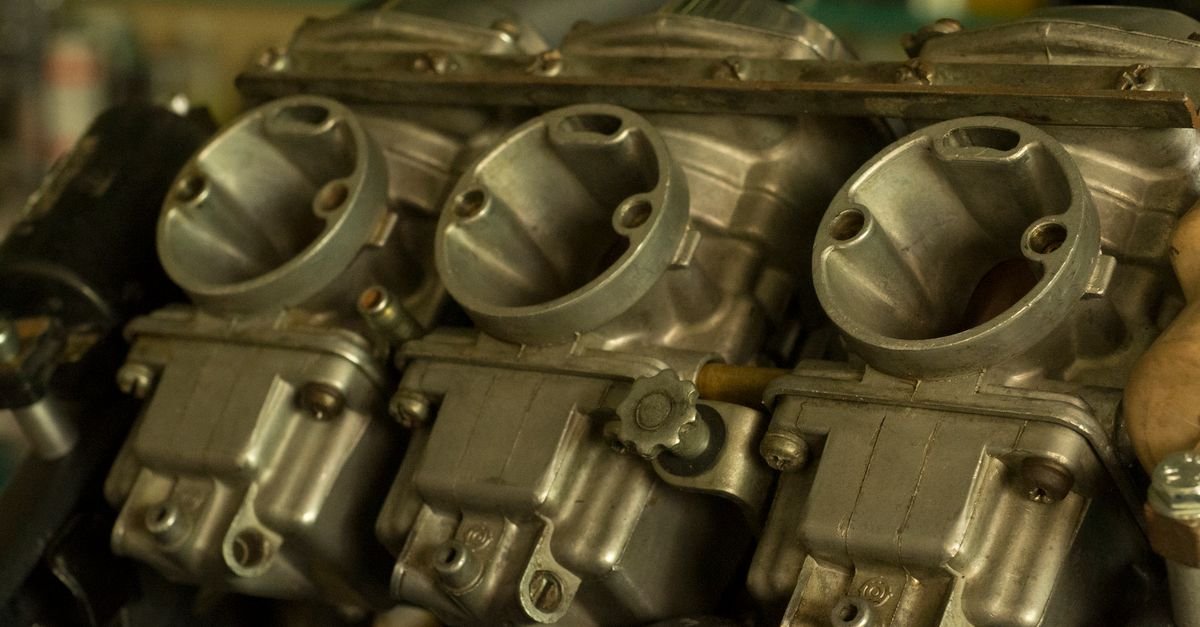
Flyweights balanced against a spring is a feedback loop, and feedback loops oscillate when something upsets them. There are two versions, and they call for completely different afternoons.
The governor is right and the load really is oscillating. If the unloader is cycling, the engine genuinely sees full load and no load two or three times a second and is following that faithfully. Fix the hydraulics and the engine goes quiet. This is why people rebuild carburetors for nothing: the engine was the only part behaving correctly.
The governor is hunting on its own. Usually a lean low-speed circuit — stale fuel, varnish in the pilot jet, a blocked fuel cap vent — or a stretched or wrong governor spring, or a throttle linkage that has gone sticky. The tell is independence: the rate stays identical whether the pump is loaded or not, and it was there before you first pulled the trigger.
One free diagnostic settles it. Apply a little choke to a hunting engine. If the surge smooths out immediately, the mixture is lean and the carburetor is where your evening goes. If choke makes no difference, look at the linkage, the spring, or back at the pump.
Air on the Inlet Side Makes the Pump Breathe
Air gives you a stagger rather than a rhythm. Where an unloader cycle is regular enough to tap your foot to, air produces something ragged — pressure lurching, the nozzle spitting, the pump rattling, and the whole thing getting worse the longer you run.
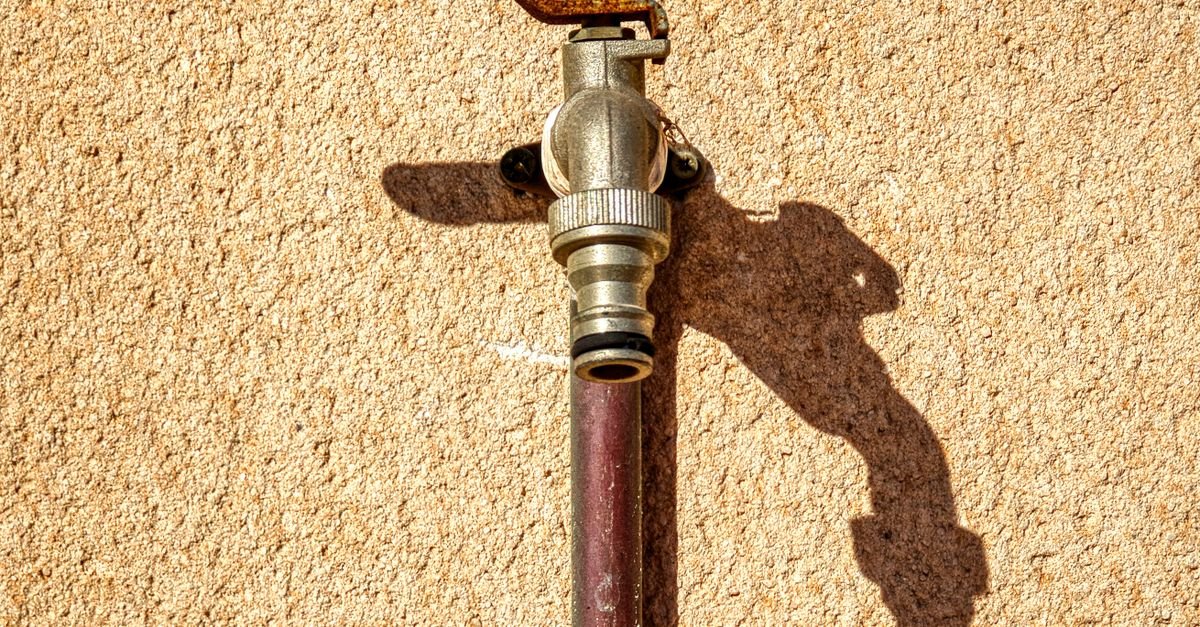
The awkward part is that a suction-side air leak leaves no evidence. Nothing comes out, so there is no puddle to find; air goes in, quietly, through a fitting that looks perfectly dry. Check the garden hose coupler at the machine, the washer inside it, the inlet screen and its seal, and any quick connect between tap and pump inlet.
Then ask whether the tap can feed the machine at all. A pump needs its rated GPM delivered with headroom, and a supply that is merely adequate at the start of a job stops being adequate when someone inside runs a shower. Time it: fill a five-gallon bucket off the open tap using the hose you actually use. A 4 GPM machine needs that bucket full in about 75 seconds; a 2.5 GPM machine has two minutes. Miss the number and the pump pulls air on every stroke no matter what else you fix.
Air drawn in and cavitation are related but not the same event — cavitation is vapour forming and collapsing inside the pump because the inlet cannot keep up, and it does its damage on the valve seats. Both start at the same end of the machine, which is why the checks overlap. To clear air already in there: engine off, tap fully open, trigger held until water runs steadily with no spitting, then start it. That order matters.
When the Unloader Seat Is Simply Worn Out
If the supply is good, the nozzle is right, the couplers are dry and the engine is steady with the trigger open, you are finally entitled to blame the valve. The giveaway is history rather than symptom: it used to switch crisply, it went vague across a season, and now it will not commit to either state.
Inside is a piston in a bore, a spring, and a small sealing face. The face is what fails: one grain of sand or a ring of hard-water scale holds the seat a fraction open, and a fraction open is all a surge needs. Before ordering anything, back the spring tension right off and flush the valve through with the machine running — grit that arrived on the water can leave the same way. If that buys a clean shut-off, reset the pressure and fit an inline filter. If not, a seal kit is next, and our walkthrough on power washer unloader valve repair covers the rebuild and the point where replacing beats rebuilding.
The one thing I would ask you not to do is wind the adjustment knob up until the surging stops. It works, which is the problem. The knob sets the threshold at which the valve dumps to bypass, so raising it lifts the setpoint clear of wherever the machine was cycling and the symptom vanishes on the spot. Nothing has been fixed. Pump, hose, gun and fittings now all sit at a higher working pressure, held there by a valve that has already proved it cannot seal reliably — and the real cause was often an O-ring costing less than a coffee. Unloader adjustment is a procedure with a gauge and a rated ceiling, not a volume control for symptoms.
FAQ
Why does my pressure washer surge when I let go of the trigger?
Because the unloader is losing the pressure charge that holds it in bypass. Releasing the trigger stores pressure in the hose, and that stored pressure keeps the piston over. Any small leak downstream of the valve — a weeping quick connect, a perished O-ring, a weep-type gun — bleeds the charge away, the valve drops back into pressure mode, and it repeats.
Is it normal for a pressure washer to surge for a few seconds?
A brief surge right after you release the trigger is normal on a gas machine. The engine has lost its entire load in an instant and the governor needs a moment to close the throttle. A second or two of hunting before it steadies is the system working. A surge that never settles, or one that appears while you are spraying, is not.
Can a bad unloader valve cause surging?
Yes, but it sits further down the list than most pages suggest. A worn seat, a tired spring or grit under the piston will all surge. The catch is that a perfectly healthy unloader also surges when the nozzle is undersized, when a coupler leaks or when the supply cannot keep up — so condemning the valve first often means buying a part you did not need.
Why does my pressure washer surge at idle with no water running?
If the surge is there before the pump does real work, and holds the same rate whether the trigger is pulled or not, it is the engine rather than the water. That is governor hunting, usually driven by a lean low-speed circuit from stale fuel or varnish in the carburetor. A touch of choke is the quickest test: if the engine smooths out, the mixture is lean.
Will a clogged nozzle make a pressure washer surge?
A partially blocked nozzle behaves exactly like a nozzle two sizes too small, so yes. Pressure climbs past the unloader’s setpoint, the valve dumps, pressure drops, the valve closes, and you get a fast cycle while spraying. Swap to the black soap tip. If the surge stops instantly, the restriction is your answer.
Can low water pressure from the tap cause surging?
It can, and it is a common cause on machines that surge worse as the job goes on. The pump moves a fixed volume per minute and needs the tap to match its rated GPM with room to spare. If a five-gallon bucket takes more than about 75 seconds to fill off your open tap, you cannot feed a 4 GPM machine, and no valve work will change that.
Count the Beats, Then Fix One Thing
The rhythm is the diagnostic. A slow, regular cycle with the trigger released is a valve losing its charge to a leak you have not found yet. A fast cycle only while spraying is a nozzle or a restriction. An engine-note hunt that ignores the trigger is a carburetor and a governor spring. A ragged stagger that worsens as you work is air, and air comes from the inlet.
Change one thing, then run it again. Fixing three at once and having the surge go away teaches you nothing, and you will be back here next season trying to remember which of the three it was.