Last Updated on September 25, 2026 by Umar Farooq
A pressure washer pulsating in your hands — a jet that hammers, judders or stutters instead of holding steady — comes down to six things: a partly blocked nozzle, air that was never purged, a worn pump valve, worn packings, an unloader that has stopped committing, or a supply hose delivering water in gulps. Taking the nozzle off tells you which half of that list to read.
Working down the internet’s usual eight-item list in order is a poor use of an afternoon, because those six causes live in completely different places. Two are outside the machine entirely. One is a five-minute fix with no tools. One is a seal kit.
Worth saying up front: hardly anyone calls this pulsating. They call it pulsing, and after that the words go physical — juddering, hammering, stuttering, shuddering through the lance. Same complaint every time. A rhythm arriving through your wrists that should not be there.
Surging Is Heard, Pulsating Is Felt
Two symptoms share one vocabulary, and separating them saves a lot of wasted searching.
Surging is the cycle you hear with the trigger closed — the machine sitting in bypass, rising and falling roughly once a second, the unloader and the governor arguing about a load that keeps disappearing. It has its own page: pressure washer surging covers the bypass cycle, the governor hunt and the test that splits them.
Pulsating is the beat you feel with the trigger open. The gun is flowing, the machine is doing real work, and the jet arrives in packets rather than a stream. You feel it in your forearms before you see it in the fan.
Not sure which you have? Hold the trigger fully open on a 40-degree tip and aim at the lawn for fifteen seconds. If the beat continues while water is flowing, you are in the right place.
Take the Nozzle Off and Watch What the Beat Does
Before anything comes apart, run three free tests that take about two minutes between them. Each eliminates a chunk of the list rather than confirming a single suspect.
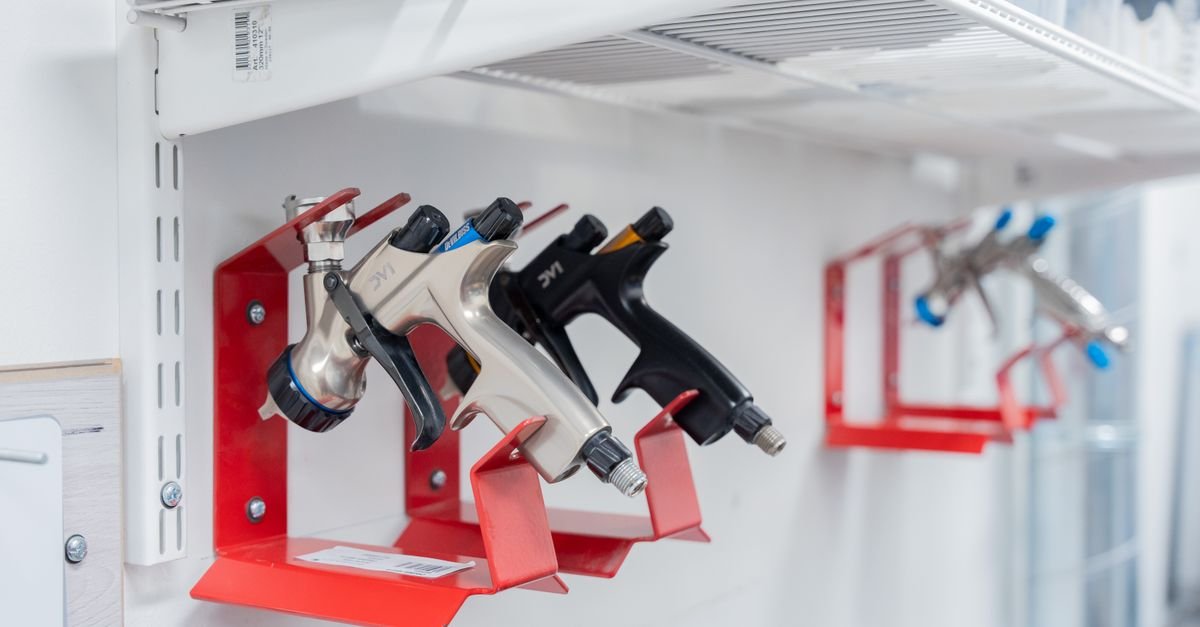
Test one: pull the tip off entirely. With the machine running, release the trigger, remove the quick-connect nozzle from the lance, and squeeze again with the wand pointed at the ground. No tip means no orifice, so there is almost no back pressure — the unloader is not switching and nothing downstream is restricting flow. What you get is a fat, fast, unimpressive gush.
- The beat disappears. The fault is the tip, or something between the pump and the tip.
- The beat survives in that open gush. Nothing downstream is causing it. The fault is the pump or the water going into it, and you can skip two sections.
That is the most useful thirty seconds on this page, and I did not find a competing article that leads with it.
Test two: fit the black soap nozzle. It has the widest orifice in the set, which is why it drops pressure to a dribble by design. If the judder vanishes on the soap tip and returns on the green one, you have a restriction or a sizing problem rather than a mechanical one.
Test three: time it. Does it pulse on the very first trigger pull of the day, or does the first minute feel fine and the beat arrive afterwards? A fault present from cold is geometric — a blocked orifice, a wrong tip, a loose fitting. A fault that turns up once things are warm is wear, and wear lives in the packings and the valve seats.
Now the tip itself. A pressure washer orifice is under a millimetre across, and a grain of sand parked half across it does not look like a blockage when you hold it to the light. Soak the tip in white vinegar for an hour if your water is hard, clear it from the back with the wire that came in the box — never from the front, which drives debris into the taper — and back-flush the wand. If it keeps happening rather than happening once, the supply is feeding grit into the machine, and a nozzle that clogs every weekend is a filter problem wearing a nozzle costume.
A Healthy Triplex Pump Already Pulses, Just Not Where You Can Feel It
Here is the part that reframes the symptom. Your pump is a reciprocating machine. It does not deliver a smooth stream and never has.
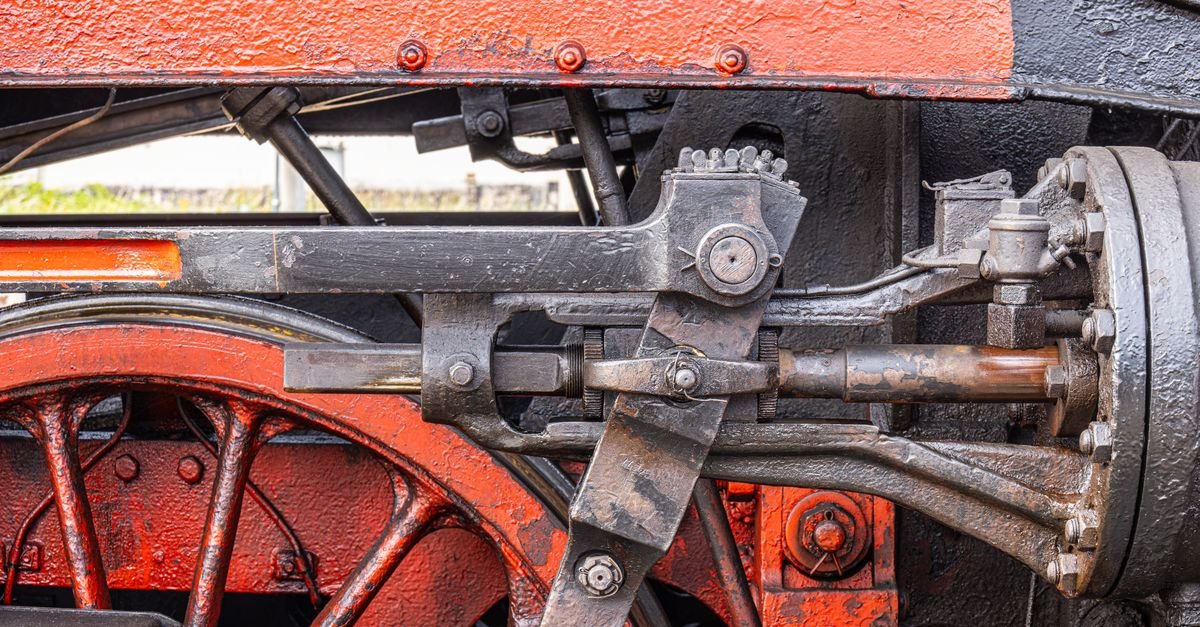
Three plungers sit on one crankshaft at 120 degrees to each other. Each draws on its way back and delivers on its way forward, so at any instant one is pushing hard, one is easing off and one is filling. The overlap is the entire reason anybody uses three instead of one, and it is good but not perfect. Power Zone Equipment publishes the numbers for a triplex: “The flow rate will vary between 82% and 107% of the average flow”, and that variation happens “three times per crankshaft revolution.”
So a perfectly healthy pump already swings between 82 and 107 percent of its rated flow, hundreds of times a second at working speed. You cannot feel that. It is too small, far too fast, and fifty feet of rubber hose absorbs most of what is left.
Which gives you a threshold. Anything you can feel through the lance is not the pump’s normal ripple — it is a fault, and in relative terms a large one. That is why “all pressure washers pulse a bit” manages to be both true and completely useless as advice.
It is also why I would not buy a pulsation dampener for a homeowner machine. Cat Pumps describes one accurately as a device that “reduces fluctuations in system pressure due to the reciprocating action of the pump plungers or pistons” — a real job on an industrial rig plumbed in rigid steel, where that 82-to-107 ripple fatigues fittings. On a domestic machine, fifty feet of rubber hose already is the dampener. Fitting one here muffles a symptom while the cause carries on wearing the pump out.
Pressure Washer Pulsating After a Hose Swap or a Cold Winter Is Air
If the pulsating started the day you changed a hose, moved to a different tap, ran from a tank, or pulled the machine out for the first time since October, stop looking for broken parts. You have air in the pump, and air is compressible in a way water is not.
A plunger arriving on its delivery stroke against a chamber holding an air pocket squeezes the pocket instead of pushing water out. That stroke contributes nothing. The next one, arriving against water, delivers normally. What reaches the gun is a beat with a missing note in it, usually spitting and hissing as well as hammering.
Purging is free, and most people do not do it for anything like long enough:
1. Engine or motor off. Not idling. Off.
2. Open the tap fully and let water run out of the gun with the trigger held open, no tip fitted.
3. Hold that trigger for a full minute. Thirty seconds clears the pump. Fifty feet of high-pressure hose holds a surprising amount of air and is in no hurry to give it up.
4. Wait for silence. The spitting and gurgling stopping is the finish line, not the clock.
5. Then start it, trigger still open, and fit the tip afterwards.
If air keeps coming back after a proper purge, it is getting in on the suction side — the awkward kind of leak, because nothing comes out. There is no puddle to find. Check the garden hose coupler at the machine inlet and the rubber washer inside it, the inlet screen and its seal, and every quick connect between tap and pump. A fitting one thread short of tight will draw air all day and look perfectly dry doing it.
Persistent air on the inlet is also the doorway to something genuinely destructive. When the pump cannot fill properly, vapour bubbles form and collapse against the valve seats, and that is cavitation, which erodes metal rather than merely annoying you. A machine that has pulsated on air for a season often becomes a machine whose valves are the problem in their own right.
When One of the Three Cylinders Stops Contributing
If the beat survived the nozzle-off test, you are inside the pump — and the first suspects are the inlet and discharge valves, not anything expensive.
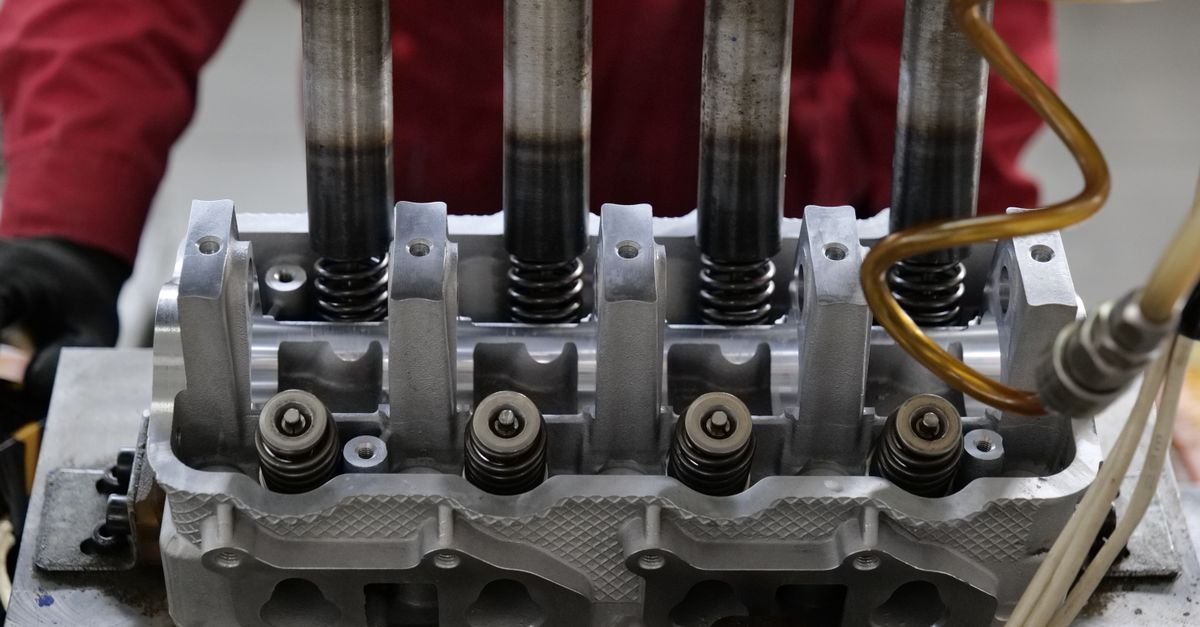
Each plunger has two small spring-loaded check valves above it: one lets water in and closes so it cannot go back out, one lets water out and closes so it cannot come back. A disc, a seat, a light spring — and the only reason a reciprocating pump pumps anything at all.
When one stops sealing, water shuttles back and forth in that chamber instead of leaving through the hose. That cylinder’s stroke produces nothing. What arrives at the gun is two-thirds of the flow with a gap where the third stroke should be, once per crankshaft revolution. That is the beat you can feel.
Cat Pumps names the everyday version, no wear required: “Debris and contamination build-up on valve seat surfaces can disrupt the normal flow through the inlet and discharge valves.” One piece of grit under one sealing face is enough. The remedy in the same entry is unglamorous and cheap: “Remove each valve or valve stack and inspect. Clean or replace as required. Maintain proper system filtration.”
There is a field test for a valve once it is out. Overkill Wash Equipment, which rebuilds these for a living, gives it as: “Blow air through the stainless lip side — you should be able to blow but not suck.” A valve that lets you do both is not a valve any more. It is a hole with a spring in it.
The same shop publishes a diagnostic order worth following rather than arguing with: water inlet, then unloader, then check valves, then packings and seals. Note where the packings sit. Last. The instinct is to jump straight to a seal kit because it sounds like the serious answer, and it is the least likely of the four.
The Judder That Only Arrives Once the Pump Is Warm
This is where test three pays off. A machine that starts clean and develops a beat after a minute or two of work is pointing at something that changes with heat and load. Two candidates.
Worn packings. The high-pressure seals wrap tightly around each plunger and separate the water side from the oil side. As they wear, a little pressure bleeds backwards past the plunger on every delivery stroke — not enough to leave a puddle at first, but enough to soften the stroke. Seal material goes more pliable as it warms, so the bleed worsens the longer you run, which is precisely why the symptom clocks in late. Packing wear also brings company: a general drop in pressure, a weep from under the pump head, or oil gone milky because the traffic runs both ways.
An unloader that has stopped committing. The valve normally makes a clean decision, pressure mode or bypass, and a worn seat or a tired spring leaves it hovering between the two. Felt at the gun with the trigger open it is subtler than the audible bypass cycle and easier to misread — a soft, slow wallow in the jet rather than a sharp hammer, usually with pressure sitting a little below where it used to be. If yours went vague across a season rather than breaking on a Tuesday, that is the profile.
Two things not to do here. Do not reach for the unloader adjustment knob, which will make the symptom disappear by shifting the valve’s threshold clear of wherever it was misbehaving and will do precisely nothing about the worn part. And do not buy a seal kit before you have taken the valves out and looked at them, because the kit is the expensive half of a job whose cheap half you have skipped.
Is the Garden Hose Feeding the Pump, or Gulping?
Two of the six causes never enter the machine at all, and they are the ones most likely to be yours if the beat appeared after you moved to a different tap.
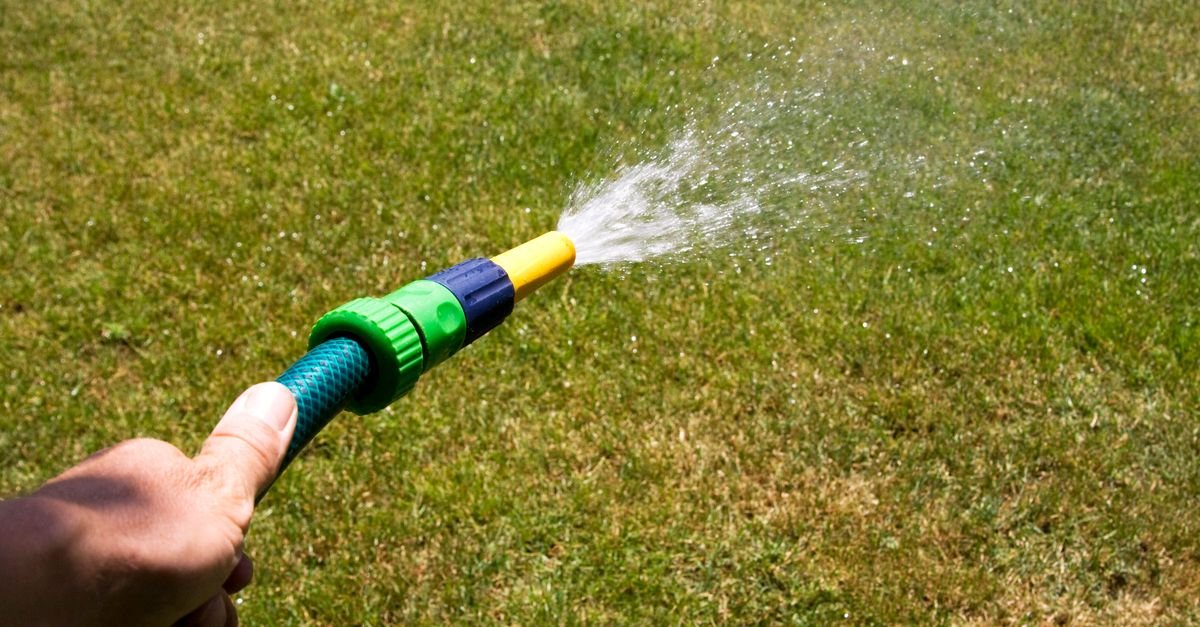
The kink that is not where you are looking. Garden hose collapses under suction far more readily than under pressure, and a pressure washer pulls on its inlet rather than pushing. A hose in a lazy loop behind a planter can close on the draw, spring open as the pump eases, then close again, delivering water in packets. Walk the whole run — both ends, every coil still on the reel, and the bit under the wheel of the machine. Thin-walled hose manages this without ever looking kinked, by sucking its own walls together.
A tap that cannot keep up. A supply that was fine at the start of a job stops being fine when somebody indoors runs a shower. Fill a five-gallon bucket from the fully open tap, using the hose you actually use, and time it. A 4 GPM machine needs that bucket full in about 75 seconds; a 2.5 GPM machine has two minutes. Miss the number and the pump is short on every stroke, and no work inside it will change that. Not enough water supply has the rest of the arithmetic.
A third member of this family is easy to overlook: the inlet screen. A fine-sand filter sitting where the garden hose meets the machine, collecting everything the tap has quietly carried for years, and a half-blocked one starves the pump exactly the way a kink does. It comes out with needle-nose pliers and rinses clean in ten seconds, which makes it the best return on effort anywhere on this page.
FAQ
Why does my pressure washer pulse when I pull the trigger?
Because something is interrupting flow while the pump is under load. The fastest split is to remove the nozzle and squeeze the trigger with the wand pointed at the ground. If the pulsing stops in that open gush, the cause is the tip or a restriction between the pump and the tip. If it continues, the cause is the pump or the water reaching it.
How do I get air out of a pressure washer pump?
With the machine switched off and no nozzle fitted, open the tap fully and hold the trigger open until water runs steadily with no spitting or gurgling — a full minute on a long hose, where most people give up at ten seconds. Start the machine with the trigger still held open, then fit the tip. If air comes back, it is being drawn in through a loose fitting or a missing washer on the inlet side.
How do I know if my pressure washer pump valves are bad?
The signature is a beat you can feel while spraying that does not go away when you take the nozzle off, often alongside a drop in overall pressure. Removing the valves is the only real confirmation. A valve out of the pump should let you blow air through the sealing side but not suck it back; if it does both, it is no longer sealing, and that is why one plunger’s stroke is going to waste.
Why does my pressure washer pulsate only after a few minutes?
A fault that appears with heat and load rather than from cold points at the parts that change as they warm. Worn high-pressure packings bleed pressure back past each plunger and bleed more as the seal material softens. A tired unloader spring behaves the same way. A blocked nozzle or a kinked hose, by contrast, misbehaves on the first trigger pull of the day.
Can a kinked garden hose make a pressure washer pulsate?
Yes, and it is one of the more common causes, because the pump pulls on its inlet rather than pushing. A soft or thin-walled hose can collapse under that suction, open again as the pump eases, and collapse once more, feeding the machine in gulps. It does not have to look kinked to be doing it, so check the whole run including any coils still on the reel.
Is pulsating bad for a pressure washer?
Fix it rather than work around it. A pulsating machine leaves banding on any surface you were hoping to do properly, and the causes involving air or a starved inlet actively damage the pump, because vapour bubbles collapsing against valve seats erode them. The cheap fixes are cheap. The pump you save by doing them is not.
Fix It From the Nozzle Backwards
The order that works is the order of distance from your hand. Tip, then hose and fittings, then the water going in, then the valves, then the seals — which also runs from free to expensive, and from two minutes to an afternoon. Most people start in the middle, because the middle sounds mechanical and therefore serious.
Take the nozzle off first. If the beat goes with it, you were one piece of wire from a fix. If it does not, you now know the answer is inside the machine, and you have stopped shopping for parts that were never the problem.