Last Updated on September 25, 2026 by Umar Farooq
The real benefits of power washing all run through one mechanism: living growth and dissolved salt hold water against a surface, and water is what takes a surface apart — everything else on the usual list is either appearance, which is fine, or a number nobody can show you, which is not.
Search this topic and you get the same ten bullet points from twelve different contractors. Curb appeal. Property value. Family health. Extends the life of your siding. Every one of those lists sits above a quote form, and not one of them sits above a source. So I went looking for the sources. Some are excellent. Several are a contractor repeating a contractor, and the trail goes cold about four hops in, at a page that also has no source and rather more confidence.
Which Benefits of Power Washing Survive a Source Check
The useful split is not good reason versus bad reason. It is mechanical versus cosmetic. A mechanical benefit changes what happens to the material. A cosmetic one changes what you think when you pull into the drive. Both are fair things to buy. Only one of them is an argument.
| The claim | What is actually behind it | Verdict |
| Removes growth that holds moisture | Water availability controls algae, and a biofilm keeps the wall damp after the rain stops | Mechanical |
| Stops algae and lichen degrading masonry | Organic acids in the biofilm dissolve mineral binders | Mechanical, on mineral surfaces only |
| Clears de-icing salt off concrete | Chloride is hygroscopic and amplifies freeze-thaw scaling | Mechanical |
| Prepares a surface for paint | Coatings bond to what you leave behind, not to what was there before | Mechanical |
| Faster than a bucket and a brush | Obvious, and the only benefit nobody oversells | Real, unremarkable |
| Shows you the damage under the dirt | Rot, failed sealant and cracked render are invisible under green | Real |
| Adds a given percentage to property value | Every figure traces back to another blog | Unsourced |
| Adds a given number of years to a roof or to siding | No manufacturer publishes one | Unsourced |
| Improves your family’s health | Plausible, unmeasured outdoors | Unsourced |
| Environmentally friendly | Depends entirely on what reaches the storm drain | Depends |
Six that hold, four that do not. The four that do not are the four every contractor leads with, which tells you something about who has been writing this topic.
Growth Is a Sponge Bolted to Your Wall
This is the benefit everything else hangs off, and almost nobody states it plainly. Green on a wall is not dirt sitting on top of a dry surface. It is a living film with a water content, and it changes how long that wall stays wet after it rains.
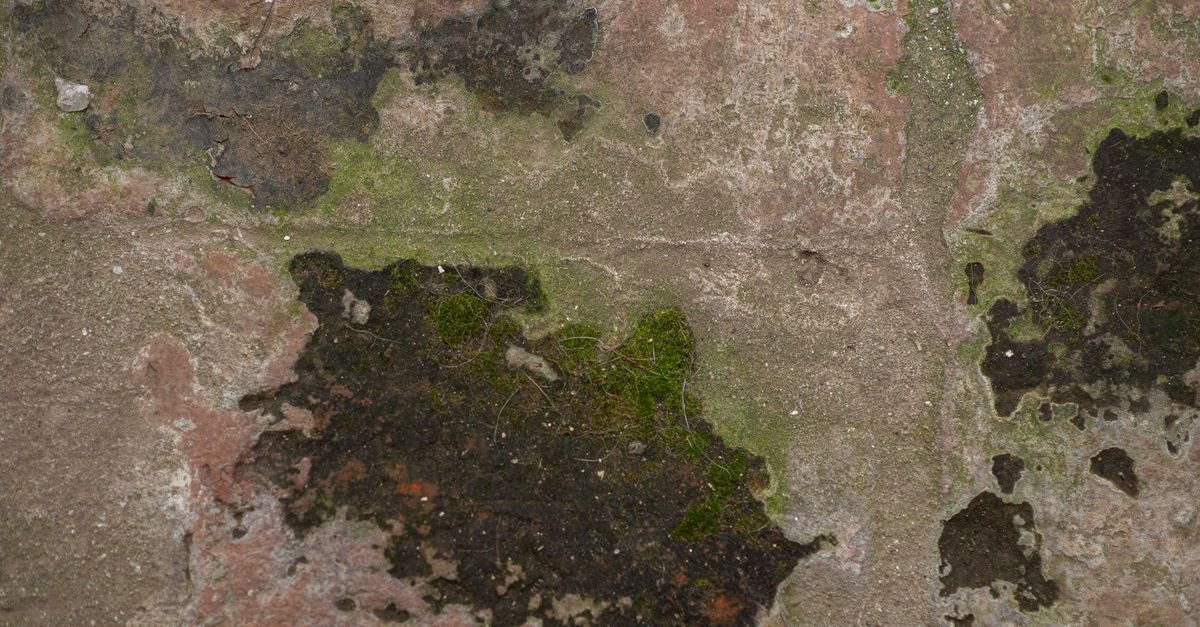
The controlling variable is water, not dirt. A two-season study of a building surface measured green algae reaching 87.1 µg/cm² cumulatively through a wet, dim autumn and winter, against 4.1 µg/cm² for cyanobacteria in the drier, brighter spring — roughly a twentieth of the winter figure. The same work recorded cyanobacteria spiking within hours of a rain event. Growth tracks moisture that closely.
Which means the wash is not really removing a stain. It is removing the thing that holds the next rainfall against your cladding for an extra day and a half. Take the film off and the wall dries at the speed the material was designed to dry at. That is why the benefit lands exactly where you would guess: north and east elevations, the bottom three feet where splashback reaches, and anything under a gutter that drips. Algae on siding cleaning covers which colour tells you what.
Cosmetic on Plastic, Structural on Mineral
Here is where the contractor lists go wrong by being too generous. “Growth damages your home” is true of some homes and flatly untrue of others, and the difference is chemistry rather than severity.
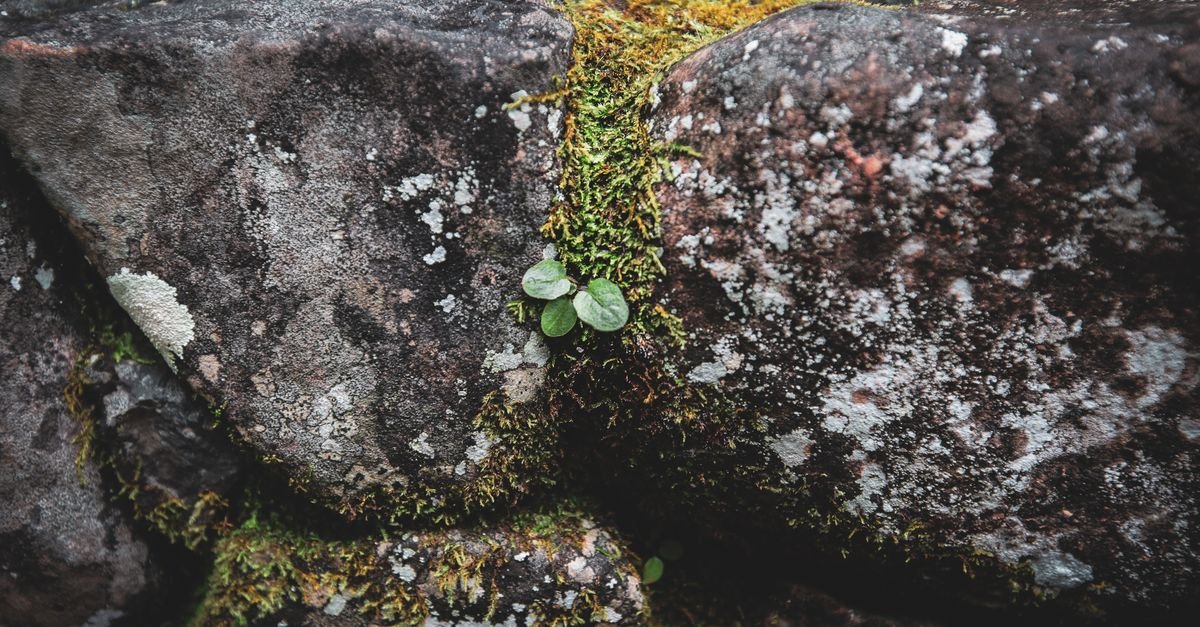
A metabolomic study of green algal biofilms on building materials found oxalic, acetic and citric acids in the film, which “efficiently chelate structural and charge-balancing cations (e.g., Al³⁺, Fe³⁺, Ca²⁺, Mg²⁺), thereby enhancing aluminosilicate dissolution” (biogeochemical deterioration of building materials by green algae, PMC13554127). In plainer words: the film makes acid, and the acid works on the binder.
So on stucco, render, mortar, brick, stone and fibre cement, the damage is real and the wash is maintenance. On PVC and intact coated metal, algae is photosynthetic and your cladding was never its food — it is a stain on a plastic plank. Clean it because you would like it clean. Do not let anyone sell you a rescue.
Roofs are the third case, and the one where the benefit is real and power washing is still the wrong tool. Moss anchors into the lap with rhizoids and lifts the shingle; lichen holds a layer of water that never dries. The Asphalt Roofing Manufacturers Association is unambiguous about the remedy: “DO NOT use a power washer or any type of brush or broom to clean algae from the roof surface”. Genuinely destructive growth, and the machine is genuinely not the answer — an awkward combination for anyone whose van says roof cleaning on the side. Removing moss off a roof is a chemistry job with a long wait built into it.
De-Icer Left on a Slab Is a Winter Problem
Concrete gets the second best-supported benefit on the list, and it has nothing to do with how the slab looks.

Everything spread on the road in January comes home in your wheel arches and drops onto the slab. The water evaporates; the chloride does not. Chloride is hygroscopic, so it pulls moisture out of the air and holds it in the surface pores, keeping the top few millimetres wetter than they should be through every freeze. The Pennsylvania Aggregates and Concrete Association puts the result plainly: de-icers “tend to amplify freeze-thaw deterioration which can lead to surface defects and possible structural failure”. Scaling — the shallow flaking that takes the smooth top off a drive in patches — is what that looks like three winters later.
The honest footnote is that this benefit needs water and a squeegee far more than it needs 3,000 PSI. A plain warm rinse on a day above freezing does it. And a related correction while you are down there: the grey film on paving is mostly mineral, not rubber. One study of road dust found mineral particles made up 77.2% of the 212–500 µm fraction against 0.5% for tyre-road wear particles. An oxidiser has no coloured organic bond to break in grit, which is why bleaching a merely dirty slab disappoints everyone who tries it. Cleaning garage floor concrete has the salt routine in full.
Washing Before Painting Is Not Cosmetic
If you are painting this year, this is the benefit with the best evidence behind it, and the one homeowners skip most often because the wall looks fine from the lawn.
A coating bonds to whatever is on the surface at the moment the brush arrives. If that is chalk — pigment left stranded after the binder has degraded — the new paint is gripping loose powder, and it will take the powder with it when it goes. What chalking actually means has the three tests that tell you whether you have it. Mildew is worse, because a rinse relocates it rather than killing it, and it grows back up through a fresh film.
How much does surface condition matter? The USDA Forest Products Laboratory ran the cleanest demonstration I have found, and it is not about washing at all — it is about how long bare wood sat in sunlight before being painted. Boards exposed 16 weeks needed refinishing within three years. Boards exposed one week went 13 years before peeling started. Panels not exposed at all were still in good condition after 20. Same primer, same two topcoats, same wood.
That trial measured UV weathering rather than dirt, so I am not going to sell it to you as a washing statistic. What it establishes is the size of the effect: surface condition at the moment of painting is worth years, not weeks. Chalk and mildew are different contaminants with the same consequence, and the wash is the cheapest hour in the entire job. Pressure washing a house for painting covers the order of operations, which is not the order most people use.
Ask the Contractor Where the Percentage Came From
Now the four that failed, and how each one failed, because “unsourced” is doing a lot of work in that word.
Property value. Every percentage I found — and there are several, all confidently different — traces back to a home services blog citing another home services blog. No appraisal body publishes one. There may well be a real effect, because a clean house shows better and shows faster. But “shows better” is a fair thing to say and a percentage is not.
Lifespan extension. Nobody publishes a number for how many years washing adds to siding or to a roof. Not the shingle manufacturers, not the cladding makers, not the trade bodies. The mechanism from the two sections above is sound; the arithmetic does not exist. If it did, a warranty department would have written it down by now, because warranty departments love a number.
Health. Taking mould and pollen off a wall is better than leaving them there. Every quantified outdoor claim attached to it — allergen reduction, respiratory improvement — is a plausible idea with no measurement behind it that I could find. Indoor mould has a serious literature. Your north elevation does not.
Eco-friendly. This one is backwards rather than unsourced. A pressure washer does use less water than a garden hose left running. But residential storm drains discharge untreated, so what you mix into the runoff decides the entire question.
What I can give you instead is the one figure here that is actually published. Homewyse’s May 2026 estimate puts professional driveway cleaning at $0.42 to $0.52 per square foot with a two-hour minimum labour charge — roughly $170 to $210 on a typical 400 square foot two-car drive. That is a number you can weigh against a real Saturday. A property-value percentage is not.
When the Honest Answer Is Leave It Alone
Here is the position, and it is the one no contractor blog will print: if nothing on the surface is holding water, there is no mechanical benefit to washing it, and you should buy it as appearance or not buy it at all.
The test runs in one line. Is there living growth on it? Is there de-icing salt in it? Is a coating going on it this year? Three noes means the wall is dirty, which is an entirely ordinary condition for the outside of a building, and the annual schedule you were sold is a subscription rather than maintenance. Vinyl and coated metal on a dry, sunny elevation can genuinely go years.
And where the answer is yes, it very often still does not need a machine. The siding trade body’s own wording is a soft cloth or a long-handled brush with soft bristles, held level and never aimed upward under the laps. A garden hose, a wash brush on a paint pole and ten minutes of detergent dwell handle more domestic cladding than the internet would like you to believe — power washing siding sets out what each material will actually take. Chemistry and patience do the work. Pressure is what you reach for once chemistry has failed, not before.
FAQ
What are the benefits of power washing a house?
The supportable ones: it removes growth that holds moisture against the cladding, it clears de-icing salt that drives freeze-thaw scaling on concrete, it prepares a surface so paint can bond, it is far faster than hand scrubbing, and it exposes damage hidden under the dirt. Appearance is a legitimate sixth reason, as long as it is named as appearance.
Does power washing increase property value?
No published figure supports a specific percentage. A clean exterior shows better and probably sells faster, but every percentage circulating online traces back to a marketing page rather than to appraisal data. Treat a quoted number as a sales tool rather than a finding.
Is power washing worth paying for?
It depends on whether a mechanism is at work. On mineral surfaces carrying algae or lichen, on salted concrete, or ahead of a paint job, yes. On clean, dry vinyl with nothing growing on it, you are paying for appearance. Professional driveway cleaning runs about $0.42 to $0.52 per square foot with a two-hour minimum, so roughly $170 to $210 on a two-car drive.
Does power washing remove allergens and improve health?
It removes mould, algae and pollen from the surface, which is better than leaving them there. What does not exist is a measured figure for outdoor allergen or respiratory benefit at the scale of a house. Anyone quoting one has invented it or repeated someone who did.
Can power washing extend the life of my siding or roof?
The mechanism is real and the number is not. Removing growth that retains moisture and produces acids does reduce degradation of mineral-based cladding. No manufacturer or trade body publishes how many years that buys, so treat “adds five years to your siding” as a claim with nothing underneath it.
Is power washing bad for the environment?
The machine itself uses less water than a garden hose running flat out. The chemistry is the issue: residential storm drains discharge untreated, so whatever you mix reaches the nearest watercourse more or less as you made it. Choose the mildest product that works and keep runoff on grass or gravel where you can.
Is power washing the same as pressure washing?
In domestic use the two words are interchangeable and usually mean the same machine. The strict trade distinction is that power washing adds heated water. Heat helps on grease and chewing gum, and makes no difference to algae, which is killed by chemistry rather than temperature.
Wash What Holds Water, Skip What Only Looks Dirty
Everything defensible here reduces to moisture and bonding. Growth holds water against a surface and, on anything with a mineral binder, quietly makes acid while it sits there. Salt holds water in the pores of a slab and waits for a frost. Chalk and mildew stop a coating gripping the wall you are about to spend two weekends painting. Those are mechanisms, they have sources, and they are worth a Saturday.
The percentage on your house value and the five years on your siding are not mechanisms. They are the part of the pitch that exists because “this wall will dry faster after it rains” does not fit on the side of a van. If your siding is plastic, your winters are dry and your paint is sound, the most honest advice on this page is to put the hose down.