Last Updated on September 24, 2026 by Umar Farooq
Cleaning steel siding is a normal house wash with one extra clause: steel rusts wherever the coating has been opened, so the wash is also the inspection, and it ends with a small pot of touch-up paint rather than with the hose.
That clause is the whole difference between this page and every other siding page on this site. Vinyl fails by melting and by letting water up behind the laps. Aluminium fails by denting and by chalking. Steel does neither of those things particularly well — it is stiffer, it holds a factory finish for decades — and then it does the one thing none of the others can. It rusts. Not across the face, where the paint is. At the edges, at the screws, and in the scratch you put in it with a ladder foot last March.
Four rules follow, and I will spend the page on them: know where the openings are, know how far the coating’s self-defence actually reaches, keep chloride off the breaches, and treat touch-up as part of the wash instead of a job for a weekend that never comes.
Rust Needs an Opening, and a Steel Wall Is Full of Them
Steel siding does not arrive as steel. It arrives as a steel core with a metallic coating on both faces — zinc, or a zinc-aluminium alloy — and a baked-on paint system over that, applied in a coil-coating plant to a moving strip before anyone cut a panel. Every face of that panel is sealed. The problem is that a wall is not made of faces.
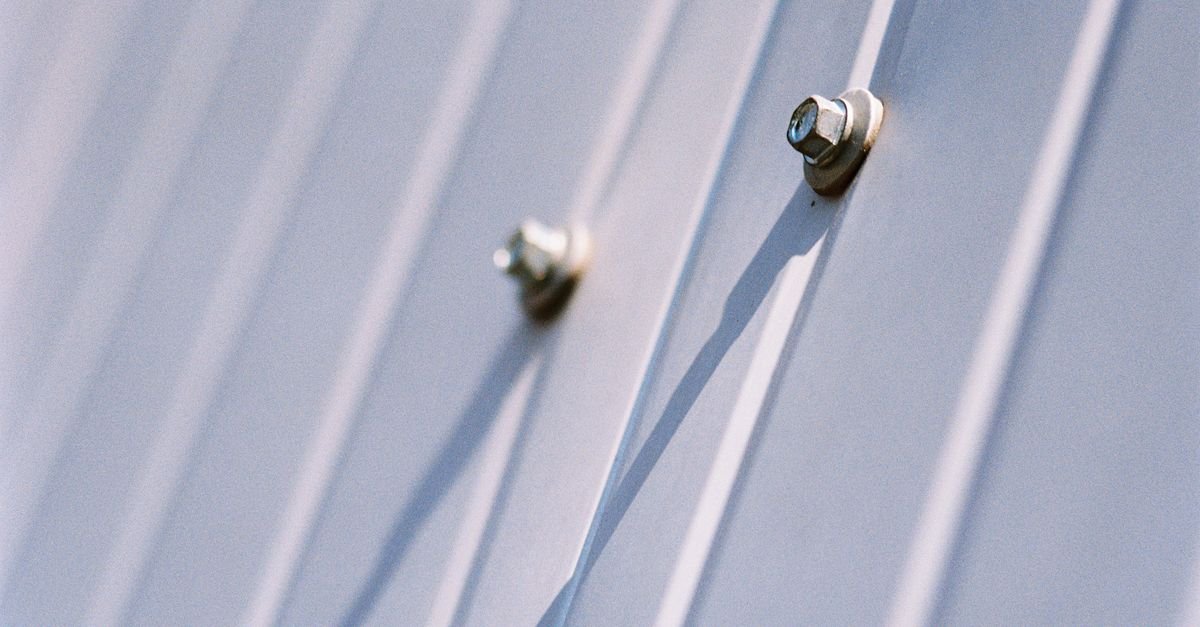
A wall is made of panels that have been cut to length, cut around windows, cut on the rake of a gable, trimmed at outside corners, and fastened through the nail hem with something sharp. Every one of those operations exposes the raw steel core along a line the coil coater never saw. Add the things that happen afterwards: a ladder foot, a wheelbarrow handle, a string trimmer working the bottom course, a dog, hail. The list of openings on an average house runs to the hundreds, and almost all of them are in three places — the bottom edge of the lowest course, the cut ends against trim, and wherever a fastener went in.
Here is why that is a steel sentence and not a metal sentence. Scratch aluminium and the fresh metal reacts with air in seconds, forms a transparent oxide film a few atoms thick, and that film stops the reaction going further. Aluminium heals a scratch by having one. Scratch steel and the iron oxide that forms does the opposite of sealing: it occupies substantially more volume than the metal it came from, so it lifts the paint at the edge of the scratch from underneath, exposing a little more steel, which rusts, which lifts a little more paint. Rust creeps sideways under a coating. That is the mechanism behind every blister you have ever seen with an orange middle, and it is why a scratch on a steel wall has a deadline attached and a scratch on an aluminium wall is a cosmetic complaint.
So: wash day is the day you find them. Not because washing is dangerous to steel — it mostly is not — but because it is the one afternoon a year you will be within arm’s reach of the bottom edge of every panel with the dirt off it.
Zinc Will Cover a Scratch a Quarter-Inch Wide
The coating under the paint is not passive. Zinc sits above iron in the galvanic series, which means when the two are wet and electrically connected, the zinc corrodes preferentially and the steel does not. The current throws across a gap. A scratch that goes through to bare steel is not immediately a rust site, because the zinc on either side of it is quietly protecting the bare strip in the middle.
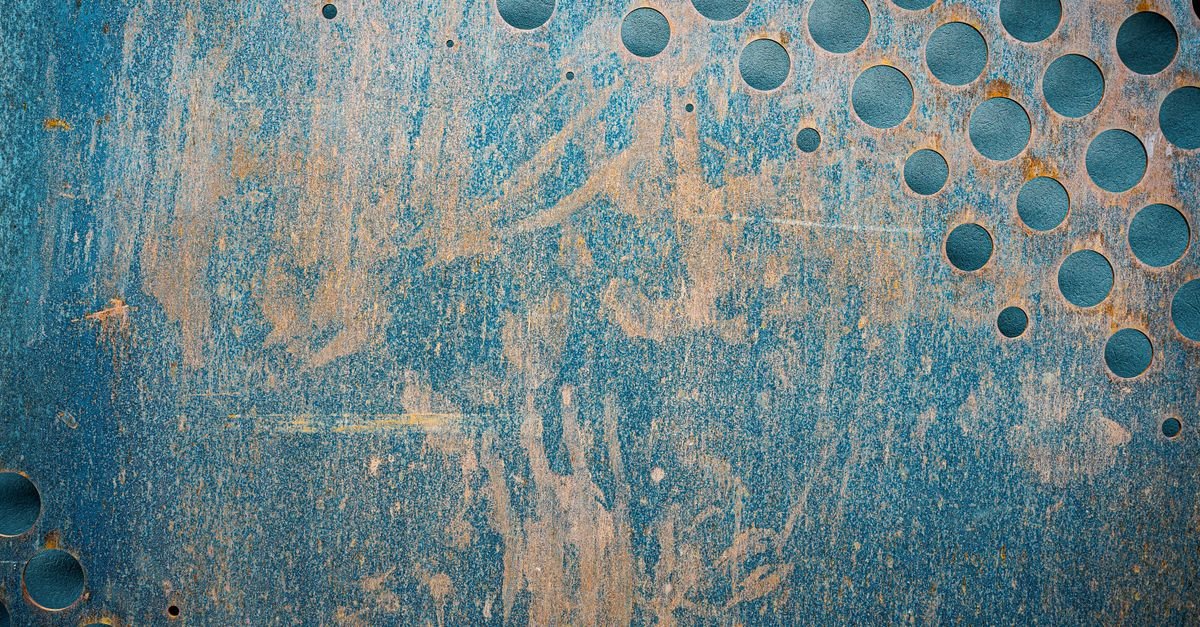
The American Galvanizers Association puts a number on the reach: “Even when the coating is scratched, and up to 1/4-inch of bare steel is exposed, the zinc will protect the steel from rusting” (AGA, What is Cathodic Protection?). That is a genuinely useful figure and it is also the entire budget. A quarter of an inch, from a metallic layer measured in fractions of a thousandth of an inch, is a generous gesture — but it is a gesture, not a warranty.
Two things shrink it. The first is that the protection depends on an electrolyte to carry the current, so how far it reaches varies with the environment; the AGA notes the distance is greater in salt-laden coastal air than in a dry climate, because the conductivity is better. The second is that the zinc is being consumed while it does this. A hairline scratch on a north wall may sit there for twenty years. A long, deep gouge, or a cut edge that has been raw since installation, is drawing on the same thin supply over a much longer boundary.
The practical translation is a sorting rule you can use from a ladder with a wet rag in your hand:
| What you find | What it means | What to do about it |
| Surface scuff, colour still there | Paint marked, coating intact | Nothing. Wash it and move on |
| Fine scratch showing grey metal | Through paint, zinc still working | Touch up when convenient |
| Scratch showing grey metal wider than a pencil lead | Past the quarter-inch comfort zone | Prime and touch up this weekend |
| Any orange at all, or paint lifting at a scratch edge | Rust has started and is travelling | Stop the wash, deal with it while the wall is accessible |
| Raw cut edge at a window or corner, no rust yet | Never sealed, running on zinc alone | Seal it. This is the one people skip |
Galvanized or Galvalume: What Is Under the Paint Matters
Two metallic coatings dominate residential steel panels, and they behave differently at exactly the places this article is about.
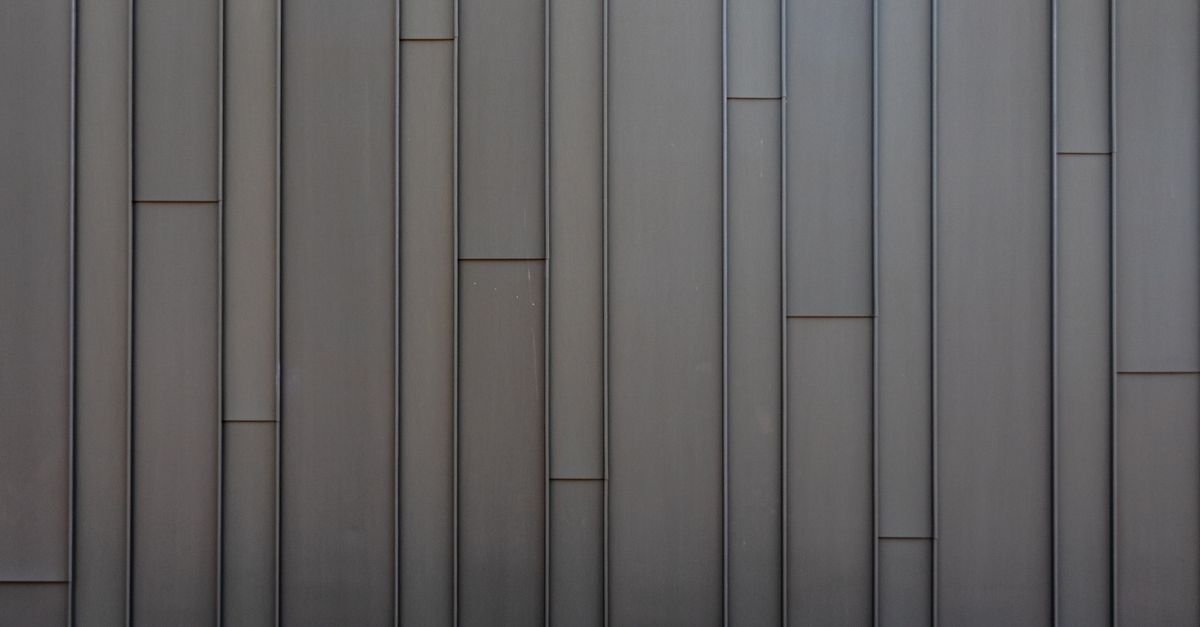
Galvanized is a pure zinc coating, specified by weight as a G number — G60, G90 and so on. Zinc is the better sacrificial metal of the two, which is why it remains the standard for fasteners and framing: where an edge is exposed, galvanized spends zinc to cover it.
Galvalume and its equivalents are a 55% aluminium, 43.4% zinc, 1.6% silicon alloy, specified as an AZ number. The aluminium majority makes it a much better barrier — it typically outlasts a galvanized coating of the same thickness across the face of the panel, which is why it dominates metal roofing. But barrier protection and sacrificial protection are different jobs, and there is simply less free zinc in the alloy to throw across a gap.
I will be careful about how hard I lean on that last point. The chemistry is not in dispute and the trade consensus is consistent — galvanized covers a cut edge better, Al-Zn lasts longer on the flat — but the technical notes that state it plainly are published as scanned PDFs I could not pull text from, and I will not quote a specification I have only read a summary of. Take it as mechanism plus trade practice, not as a figure.
Finding out which one you have takes ten minutes. The metallic coating designation is usually printed on the back of the panel, so an offcut in the garage, a spare, or the underside of a piece removed for a repair will tell you; failing that, the installer’s paperwork or the manufacturer’s product page will. It changes how relaxed you get to be about a bare cut edge, and it is the only spec on the wall nobody ever hands you a key to.
Cleaning Steel Siding Without Cutting Into the Coating
With the rust clause understood, the wash itself is unglamorous, and the manufacturers agree with each other to an unusual degree. EDCO, one of the larger US steel siding makers, publishes two mixes: one cup of a non-abrasive detergent containing less than 0.5% phosphate dissolved into five gallons of water, or one cup of household ammonia in five gallons of room-temperature water. Apply with a hand sprayer starting at the bottom and working up, then “take a soft bristle brush and rub the siding with a firm stroke” (EDCO, Care & Maintenance).
Note what is doing the work there. A brush and a firm stroke. The same page is direct about the alternative: “Care needs to be taken with pressure washing. A high enough pressure at close range can damage the finish. We recommend that you use a soft bristle brush and a low pressure of water when cleaning your EDCO siding.”
Steel is where the pressure conversation changes shape, and it changes in a way that surprises people. Residential steel panels are stiffer and thicker-gauged than the .019-inch aluminium they replaced, so denting is genuinely less of a worry than it is on an aluminium wall. That is not permission. It just moves the risk: you are much less likely to deform a steel panel and much more likely to cut a stripe through the paint and the metallic layer beneath it, which on aluminium would be ugly and on steel is the start of the mechanism in the section above.
So the ranking of tools for a steel wall goes:
| Tool | What it removes | What it costs you |
| Detergent, dwell, soft brush, garden hose | Dirt, pollen, light chalk | Time and a sore shoulder |
| Machine with the black soap nozzle, as an applicator | Nothing — it applies | Nothing. This is the good use |
| 40-degree tip, low pressure, 18 inches, moving | Dirt, growth, loose chalk | Fine, if the wand keeps moving |
| 25-degree tip up close, or any pause | Dirt, then paint, then zinc | A touch-up job you created |
| Wire brush or steel wool on a stain | The stain, plus the coating | Both, and a haze of rusting bristle fragments |
Treat 1,200 PSI as a ceiling rather than a target, fit the widest tip you own, stay a foot and a half off the wall, and keep the wand moving. The full pressure table for every cladding material is in power washing siding, and the detergent and surfactant side of it is covered in power washing chemicals — I am not going to restate a mix two sections away from a section about brushes.
One direction rule specific to metal cladding: never angle the jet upward under the laps or into the nail hem. The panel sheds rain falling downward. It is not built against water arriving from below, and the nail hem is where the fasteners are — which is to say, where the penetrations are.
Chloride Is the One Thing Steel Cannot Shrug Off
Every protective layer on that wall — the zinc, the aluminium-zinc alloy, the passive oxide on either — works by staying intact. Chloride ions are very good at locally breaking down exactly that kind of film, and they do it preferentially where the film is already thin or interrupted. On a steel wall, that means the cut edges, the fastener penetrations and the scratches. All the places from the first section.
EDCO is blunt enough about this to put a warranty behind it: “We discourage the use of deicing salts near your EDCO siding. Deicing salts can permanently damage your siding and void your manufacturer warranty.” The suggested alternative is gravel or sand. Read that as a statement about chloride rather than about winter — the salt does not know it came from a bag.
Which brings up the awkward part of a normal house wash. Household bleach is sodium hypochlorite plus sodium chloride plus a little sodium hydroxide, and the chloride rides along. A roughly 1% hypochlorite mix is the standard weapon against the black growth on a shaded elevation, and it is not forbidden on painted steel — but the rinse stops being housekeeping and becomes part of the job. Specifically:
- Rinse the bottom course, the drip edge and the starter strip twice. That is where every drop of solution on the wall eventually arrives and where the cut edges live.
- Do not let the mix dry on the wall, ever, and least of all on a sunny elevation where it will concentrate as the water leaves.
- Use it where something is actually growing, not as a general-purpose cleaner. Dirt does not need bleach.
- Rinse the flashing, the trim returns and any exposed fastener heads with plain water afterwards, not just the panel faces.
The chemistry of the mix itself, including the one combination that produces chlorine gas, is covered properly in sodium hypochlorite for pressure washing. The point here is narrower: on vinyl, leftover hypochlorite is a plant problem. On steel, it is a corrosion problem, and it lands on the breaches.
If your house has a driveway that gets salted, the bottom eighteen inches of the wall beside it is the part of the cladding with the shortest life expectancy, and a plain-water rinse of that strip a few times each winter is the cheapest maintenance available to you.
Keep Touch-Up Paint in the Bucket With Everything Else
Here is the opinion I will defend on this page: on steel siding, a wash that does not end in touch-up is half a job, and the half you skipped is the half that determines how long the wall lasts. The wash removes dirt for a season. The touch-up closes openings that would otherwise spend the next decade drawing down a metallic layer measured in ten-thousandths of an inch. One of those is maintenance and one of those is cosmetics, and most people do the cosmetics.
The timing argument is what makes it practical rather than nagging. Bare steel takes primer properly when it is clean, dry and free of loose oxide — which is precisely the condition the wall is in an hour after you rinse it, and precisely the condition it is not in on any other day of the year. You are already up the ladder. You already have your face six inches from the cut end of a panel. The pot of paint costs less than the coffee you will drink doing it.
The method is short:
1. Let the spot dry completely. Primer over damp steel is a way of sealing water in.
2. Take loose rust off with a nylon abrasive pad or a stiff plastic brush — not steel wool, not a wire brush. A carbon-steel brush sheds fragments that embed in the coating and rust there within weeks, giving you a freckled orange patch in the exact shape of your scrubbing.
3. Do not sand enthusiastically. You are trying to remove loose oxide, not reach bright metal. Aggressive sanding cuts away the zinc that is currently doing the protecting.
4. Wipe with a clean rag and a mild solvent, then let it flash off.
5. Rust-inhibiting metal primer on anything bare, thin, right to the edge of the sound paint.
6. Manufacturer colour-matched topcoat, applied with an artist’s brush, dabbed rather than stroked. A dab that follows the shape of the scratch disappears at three feet. A brush stroke across it does not.
7. Seal raw cut edges — the ends at trim, around windows, the rake cut on a gable — even where there is no rust yet. This is the item everybody leaves out.
Keep the offcuts. A scrap of the original panel in the garage is the only perfect colour match that exists, and it is worth more than the shelf space it occupies. If the house has been painted since, keep that can instead.
Is That Orange Stain Your Siding, or Your Sprinkler?
Not all orange on a steel wall is the wall. This matters because the three causes need three different responses, and two of them do not involve touching the panel at all.
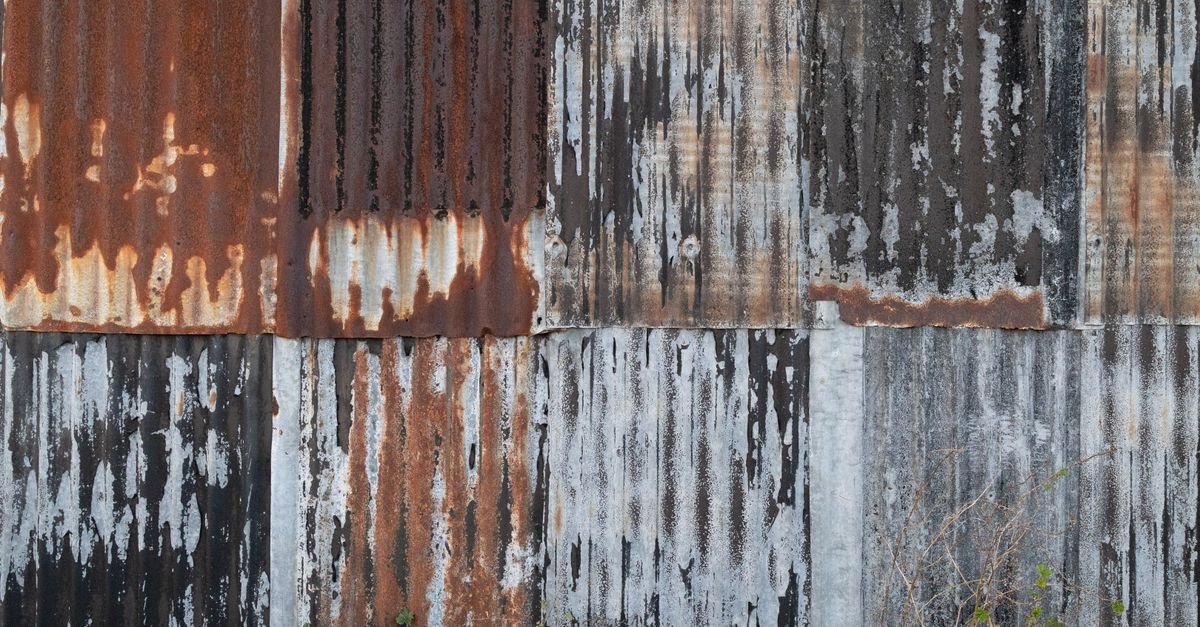
The panel itself. The stain begins at a point or a line — a scratch, a fastener, a cut end — and the paint immediately around it is lifted, blistered or flaking. Press it with a fingernail; if it gives, the corrosion is underneath. This is the one that needs the section above, and it needs it now rather than next year.
Something else above it. A steel fastener whose coating has worn, a bracket, a light fixture, a window screen frame, a satellite mount. The stain is a teardrop running downward from a single point and the paint around it is perfectly sound. Fix or replace the source; the mark on the panel is a stain and usually washes off, sometimes with a mild abrasive cleaner on a non-abrasive pad.
The water. Iron-bearing well or irrigation water leaves a fan-shaped orange stain at sprinkler height, and it is on everything within the arc — the concrete, the brick, the fence, the car — not only the siding. The EPA sets a secondary maximum contaminant level of 0.3 mg/L for iron, a non-enforceable guideline for cosmetic effects, and lists “rusty color; sediment; metallic taste; reddish or orange staining” as what you get above it (US EPA, Secondary Drinking Water Standards). That threshold is far below anything you would taste. It is not below what a sprinkler will paint on your wall twice a week all summer. Move the head or change the arc, because nothing you do to the siding will outlast the schedule.
Sort those three out before buying anything, because the usual outcome otherwise is a homeowner who sands and primes a panel that was never corroding and leaves the rusting bracket above it exactly where it was.
FAQ
Can you pressure wash steel siding?
Yes, with restraint, and the manufacturers would rather you did not. EDCO’s published position is that high pressure at close range can damage the finish and that a soft-bristle brush with low-pressure water is the recommended method. If you use a machine, treat 1,200 PSI as a ceiling, fit the 40-degree tip, stay 18 inches off the wall, keep the wand moving, and never aim upward into the laps or the nail hem. The panel will take more than that. The paint and the zinc under it will not.
What is the best cleaner for steel siding?
A mild detergent mix. EDCO specifies one cup of a non-abrasive detergent with less than 0.5% phosphate in five gallons of water, or one cup of household ammonia in five gallons, applied bottom-to-top with a hand sprayer and worked with a soft brush. Add a dilute sodium hypochlorite mix only where something is actually growing, and rinse it off thoroughly — especially along the bottom edge.
Does steel siding rust?
The faces do not, as long as the coating is intact. The openings do. Field cuts at windows, trim and gable rakes, fastener penetrations, and scratches deep enough to reach the steel core are where rust starts, and because iron oxide takes up more room than the steel it replaced, it lifts the paint at the edges and travels sideways. A steel wall does not rust all over. It rusts from its edges inward.
How do you remove rust from steel siding?
Work out where it is coming from first. If the panel is corroding, let it dry, take loose rust off with a nylon pad rather than a wire brush or steel wool, wipe it clean, prime anything bare with a rust-inhibiting metal primer, and dab on a manufacturer colour-matched topcoat. If something above the stain is rusting, fix that instead. Avoid aggressive sanding, which removes the zinc currently protecting the surrounding metal.
Will bleach damage steel siding?
A dilute mix used correctly and rinsed off is generally fine on a painted steel finish. Bleach carries chloride, and chloride attacks the protective zinc or zinc-aluminium layer precisely where it is already interrupted — cut edges, screw holes and scratches. Do not use it at full strength, do not let it dry on the wall, and rinse the bottom course and drip edge twice.
How often should steel siding be cleaned?
Once a year is the standard manufacturer recommendation, and spring is the sensible slot. The interval matters less on steel than the inspection does: the wash is your annual look at every cut edge and fastener on the house with the dirt off it. Coastal properties and walls next to a salted driveway benefit from an extra plain-water rinse a few times over winter.
Can you paint steel siding?
Yes, and it is one of the material’s real advantages over vinyl, which is locked to colours no darker than the original by heat distortion. Steel takes a full repaint with proper preparation: clean, dry, de-glossed, rust-inhibiting primer on any bare metal, quality exterior acrylic over the top. The wash you would do anyway is the first step of it.
What is the difference between galvanized and Galvalume steel siding?
Galvanized is a pure zinc coating on the steel core, specified as a G number. Galvalume is a 55% aluminium, 43.4% zinc, 1.6% silicon alloy, specified as an AZ number. The alloy is the better barrier and usually lasts longer across the face of a panel; the pure zinc is the better sacrificial metal at a cut edge, because there is simply more free zinc available to protect exposed steel. The designation is normally printed on the back of the panel.
Wash the Wall, Then Walk the Bottom Edge
Everything above reduces to one change in how you finish. When the rinse water stops, do not put the hose away yet. Go round the house with the sun behind you and look along the bottom course, the cut ends against every window and corner, and any fastener head you can see. That is a ten-minute lap, and it is the only part of the day that changes how long the cladding lasts rather than how it looks this month.
Steel siding is genuinely low-maintenance cladding. It is just low-maintenance in a specific way: nothing to seal, nothing to stain, nothing to repaint for decades — and about four square inches of exposed metal per window that will quietly decide the outcome. Find them while the wall is clean and you are already holding a brush.