Last Updated on October 6, 2026 by Umar Farooq
Electric vs gas pressure washer, which should you get? Most homeowners should choose electric. It covers cars, siding, decks, fences and normal driveways, it starts every time after six months in the shed, and it needs almost no maintenance. Gas earns its place only when you need 2.5 GPM or more, run a large surface cleaner, work far from any outlet, or clean for hours at a time.
The electric vs gas pressure washer debate is usually presented as an even fight, and it is not. For the way most people actually clean, once or twice a season for two or three hours, one of these is clearly the wrong tool. This guide gives you the numbers behind that verdict, and the narrow set of conditions that genuinely flip it.
Electric vs Gas Pressure Washer: The Short Answer
Buy electric if you are a homeowner with a normal lot, a nearby outlet and a few weekends of cleaning per year. Buy gas if you meet at least two of the conditions in the next section.
That is the whole recommendation. Everything below explains why, so you can check it against your own situation instead of taking our word for it.
Who Should Buy Gas Instead
You genuinely need a gas machine if any of the following are true. You want to run a 20-inch or wider surface cleaner, which needs 3.0 GPM or more. You clean regularly for three hours or more at a stretch. You work in places with no mains power, such as a paddock, a job site, or the far end of an acreage. You clean heavy mud off equipment, trailers or farm machinery.
If only one of those is true, and it is the driveway one, an upper-tier electric plus a smaller surface cleaner will still do the job. It will just take longer.
Head-to-Head Spec Comparison
| Spec | Electric | Gas |
| Typical PSI | 1,300-2,300 | 2,000-4,200 |
| Premium PSI | up to ~2,800 | 4,000+ (commercial) |
| Typical GPM | 1.1-1.8 | 2.0-4.0 |
| Premium GPM | 2.0-2.4 | 4.0-5.5 |
| Cleaning units (PSI x GPM) | 1,500-4,500 | 4,000-16,000+ |
| Weight | 15-45 lb | 55-130 lb |
| Noise at operator position | 75-80 dB | 85-100 dB |
| Startup | Push button, instant | Recoil pull, 1-5 pulls |
| Continuous runtime | Unlimited, thermal cutout only | Limited by tank, ~1-2 hr |
| Indoor or garage use | Yes, with a GFCI outlet | Never |
| Annual maintenance | Rinse filter, pump saver | Oil, plug, air filter, fuel care |
| Realistic lifespan | 200-500 hr consumer, 1,000+ hr induction | 500-1,500 hr |
| Point-of-use emissions | None | Carbon monoxide and exhaust |
Read that table with cleaning units in mind rather than PSI alone. A 2,000 PSI, 1.4 GPM electric produces 2,800 units. A 3,000 PSI, 2.5 GPM gas machine produces 7,500. That gap is real, and it is mostly flow, not pressure.
What PSI and GPM Each Class Really Delivers
Marketing pushes PSI because it is a big number. In practice, once you clear the pressure threshold a surface needs, extra pressure stops helping and starts risking damage.
Vinyl siding is happy at 1,300 to 1,800 PSI. Wood decking wants 500 to 1,200 PSI. Sound brick wants far less than most people expect, at or below 400 PSI. Concrete is the only common household surface that genuinely wants 2,500 PSI or more. Every one of those numbers except concrete is inside comfortable electric range, and our guide to what PSI you need breaks the thresholds down surface by surface.
Where gas pulls decisively ahead is flow. A 1.4 GPM electric and a 3.0 GPM gas machine can both remove the same stain, but the gas unit does it in roughly half the time because flow determines cleaning speed. If that trade matters to you, read what GPM you actually need next, and check your tap before assuming you can feed a high-flow pump at all.
Noise: The Difference You Will Notice First
Decibels are not intuitive, so here is the scale with familiar reference points.
| Sound source | Approx. dB | How it feels |
| Quiet suburban street | 40 | Background |
| Normal conversation | 60 | Easy talking |
| Vacuum cleaner | 70 | Raise your voice |
| Electric pressure washer | 75-80 | Talk loudly nearby |
| Residential gas pressure washer | 85-90 | Shouting only |
| Commercial gas unit | 90-100 | Ear protection advised |
| Chainsaw | 105-110 | Ear protection required |
Decibels are logarithmic. A 10 dB rise sounds roughly twice as loud to the human ear, so a 90 dB gas machine is not “a bit noisier” than a 78 dB electric. It is about twice as loud, and it is loud enough that hearing protection becomes sensible on long jobs.
This matters more than spec-sheet fans admit. It decides whether you can wash at 8 a.m. on a Saturday without annoying a neighbour, whether an HOA or apartment complex will tolerate it, and whether you can hear someone shout a warning while you are holding a high-pressure wand.
Weight, Storage and Moving It Around
A typical electric weighs 15 to 45 pounds. You carry it with one hand and store it on a shelf.
A residential gas machine weighs 55 to 130 pounds. It rolls on wheels, which is fine on a flat driveway and awkward everywhere else. Getting one up steps, onto a deck, into a truck bed or around a muddy side yard is a two-person job more often than people expect.
Storage differs too. An electric can live in a cupboard or on a garage shelf. A gas machine has fuel in it, so it needs a ventilated space away from pilot lights and living areas, and it has to sit level so oil does not migrate.
The Cord and Outlet Problem With Electric
This is the honest downside of electric, and it is not trivial. The machine has to stay within reach of a grounded outlet, and the cord is a genuine limitation.
Most electric pressure washers draw 13 to 15 amps. That is close to the limit of a standard 15-amp household circuit, so a long or thin extension cord causes voltage drop, which makes the motor run hot and pull even more current. That is how motors die.
Extension Cord Rules That Protect the Motor
| Cord length | Minimum wire gauge for 13-15 A | Notes |
| 25 ft | 14 AWG | 12 AWG is better and costs little more |
| 50 ft | 12 AWG | Practical maximum for most units |
| 75 ft | 10 AWG | Heavy, expensive, check the manual |
| 100 ft+ | Not recommended | Extend the water hose instead |
Three rules keep you out of trouble. Check the manual first, because some manufacturers prohibit extension cords outright rather than specifying one — Simpson prints “DO NOT use an extension cord with this electric pressure washer” twice in one manual, at DANGER level, and gives its reason as ground-fault protection rather than voltage drop. What that prohibition does not come with is a warranty consequence: cords appear nowhere in that manual’s warranty exclusions, which name inlet pressure, inlet temperature and storage temperature instead. So read the prohibition as a safety instruction, which is how it is printed, and not as a clause someone will quote back at you. Always use an outdoor-rated cord on a GFCI-protected outlet. And when you need more reach, add high-pressure hose after the machine rather than more cord before it, because hose costs you a little pressure while cord costs you motor life.
If your machine trips the breaker or cuts out mid-job, cord gauge is the first thing to check, followed by the outlet’s circuit rating and whether anything else is sharing it.
Carbon Monoxide and Ventilation With Gas
A gas pressure washer produces carbon monoxide. It is colourless, odourless and can build to dangerous levels fast in an enclosed space.
That rules out a lot of situations people assume are fine. Never run a gas machine inside a garage, even with the door open. Never run one in a basement, a barn with the doors shut, a carport with three walls, or under a deck. Never place it beside an open window or door where exhaust can drift indoors.
Electric has no such constraint. You can wash a car inside a garage bay in February, which for many people is the practical difference that ends the debate.
Emissions rules are also tightening. California regulates small spark-ignition engines rated at or below 19 kilowatts, the class that covers most portable outdoor power equipment, under its Small Off-Road Engines programme. Availability of new gas equipment varies by state, so check locally before you plan around it.
The Seasonal-Use Failure Mode That Decides Most Buyers
Here is the complaint you will find in every forum thread, and it is the single strongest argument for electric.
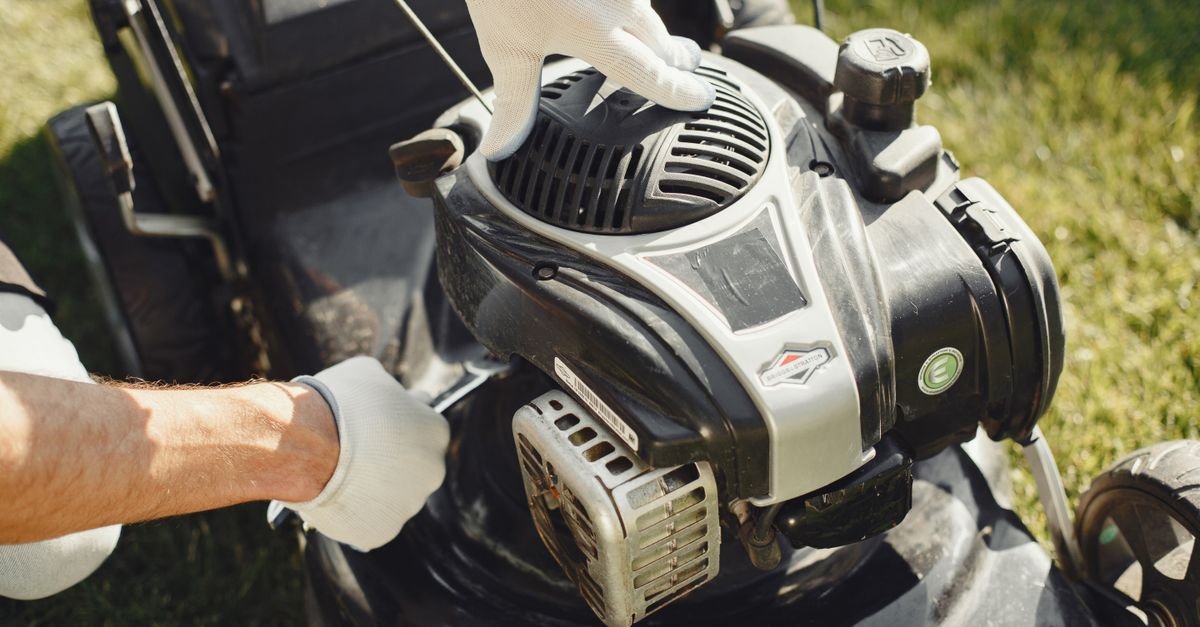
Small engines are punished by infrequent use. Gas pressure washers are used two or three times a year and then sit for six to nine months. Fuel breaks down, varnish forms, the carburettor’s tiny jets clog, and next spring the machine will not start.
The person who bought gas for “more power” then spends a Saturday cleaning a carburettor instead of cleaning a driveway. An electric that has sat untouched for a year starts on the first push of the button, because there is nothing in it to go stale.
Why Fuel Goes Stale in 30 Days
Modern pump gasoline usually contains up to 10 percent ethanol. Ethanol attracts water from the air, and the fuel begins to oxidise within about 30 days in a vented tank.
Two things follow. Water separates out and sits at the bottom of the tank and carburettor bowl, where it causes corrosion. The remaining fuel forms gum and varnish that block passages narrower than a human hair.
The fix is a routine, not a product. Briggs & Stratton’s winterising guide recommends adding fuel treatment to fresh fuel, running the engine for two minutes so the stabiliser circulates through the whole fuel system, then draining the pump and adding pump saver oil before storing the unit somewhere cool and dry. Skip the two-minute run and the stabiliser never reaches the carburettor, which is exactly where the problem starts.
Electric machines still need the pump protected from freezing, so nobody escapes storage prep entirely. Our winterising walkthrough covers both types, and if spring has already gone badly, see why it will not start.
Maintenance Burden Compared
| Task | Electric | Gas | Interval |
| Engine oil change | Not applicable | Required | 50 hr or annually |
| Air filter clean or replace | Not applicable | Required | 25-50 hr |
| Spark plug | Not applicable | Required | 100 hr or 2 years |
| Fuel stabiliser | Not applicable | Required | Every storage period |
| Carburettor cleaning | Not applicable | Occasionally | As needed |
| Pump oil check | Usually sealed | Often serviceable | Annually |
| Inlet filter rinse | Required | Required | Every use |
| Nozzle cleaning | Required | Required | As needed |
| Pump saver before storage | Required | Required | Annually |
| Rough annual time cost | ~20 minutes | ~2 hours | — |
The follow-up nobody answers: what happens if you skip it? On an electric, very little, because the failure mode is a worn seal after several seasons. On a gas machine, skipping fuel care is the direct cause of the no-start problem above, and skipping oil changes shortens engine life dramatically.
Five-Year Running Costs
The table below covers running and maintenance costs only, not purchase price, at roughly 25 hours of use per year. Prices are US averages and will vary.
| Cost item | Electric, 5 years | Gas, 5 years |
| Fuel (12.5 gal/yr at ~$3.50) | $0 | ~$220 |
| Electricity (37.5 kWh/yr at ~$0.17) | ~$32 | $0 |
| Engine oil and filter | $0 | ~$45 |
| Air filters | $0 | ~$40 |
| Spark plugs | $0 | ~$15 |
| Fuel stabiliser | $0 | ~$50 |
| Pump saver / winterising | ~$40 | ~$40 |
| Seals and O-ring kits | ~$25 | ~$35 |
| One carburettor clean or service | $0 | ~$60-90 |
| Five-year total | ~$97 | ~$470 |
Roughly $375 separates them over five years, before you count your own time. Add the two hours a year of gas maintenance and the gap widens further.
Fuel is the largest single line, and it scales with use. A contractor running 400 hours a year sees a far larger fuel bill but also gets far more work done per hour, which is precisely why the economics favour gas for professionals and electric for homeowners. If you are weighing that heavier tier, see commercial versus residential machines.
Expected Lifespan in Hours
Pressure washers are rated in hours, not years, and the two classes fail differently.
Consumer electric units with universal motors and axial-cam pumps typically last 200 to 500 hours. At 25 hours a year that is eight to twenty years, which is why so many people never wear one out. Premium electrics with induction motors and triplex pumps commonly reach 1,000 hours or more.
Gas engines are usually good for 500 to 1,500 hours if maintained. The engine often outlives the pump, and on many residential gas units the pump is not rebuildable, so a failed pump ends the machine.
The practical point: neither class dies of old age in normal home use. They die of cavitation from a starved water supply, of frozen water in the pump, or of stale fuel. All three are avoidable.
The Honest Middle Ground: Electrics at 2,300 PSI and Up
This is the part that has genuinely changed in the last few years, and most comparison articles have not caught up.
Upper-tier electric machines now reach 2,300 PSI and beyond, some paired with 1.8 to 2.4 GPM. That produces 4,100 to 5,500 cleaning units, which lands squarely in the territory that used to be gas-only. Induction motors run quieter, cooler and far longer than the universal motors in cheap units, and triplex pumps can be serviced rather than replaced.
What this means in practice: a strong electric will now run a 12 to 15 inch surface cleaner, clean a two-car driveway in about an hour, and strip a wood fence comfortably. Ten years ago that was a gas job.
What it does not change: the cord, the outlet, and the flow ceiling. No electric will feed a 20-inch surface cleaner, and no electric matches a 4.0 GPM engine-driven unit on mud. The middle ground has moved, but it has not disappeared.
Electric vs Gas Pressure Washer by Job Type
| Job | Better class | Why |
| Cars, boats, motorcycles | Electric | Lower PSI is safer on paint and trim |
| Patio furniture, grills, bins | Electric | Small areas, low soil load |
| Vinyl siding | Electric | 1,300-1,800 PSI is plenty |
| Wood deck or fence | Electric | High pressure damages soft wood |
| Sound brick and masonry | Electric | These surfaces need low pressure anyway |
| Concrete walkway | Electric, 2,000 PSI+ | Adequate with a small surface cleaner |
| Two-car concrete driveway | Either | Gas halves the time, electric still finishes |
| Large driveway, 20 in surface cleaner | Gas | Needs 3.0 GPM or more |
| Farm equipment, trailers, mud | Gas | Volume of debris, not stain difficulty |
| No outlet within 50 ft | Gas | The one hard constraint electric cannot solve |
| Inside a garage bay | Electric | Carbon monoxide rules gas out entirely |
| Apartment or HOA noise limits | Electric | 78 dB versus 90 dB |
Whichever class you choose, nozzle selection changes results more than the badge on the machine. Simple Green’s siding guidance, for example, calls for a 25 to 40 degree tip at a minimum of 18 inches, and the same discipline applies to both types. Our nozzle chart covers every colour and its safe use.
Where Each One Actually Fails
Electric fails on reach, on sustained heavy work, and on cheap construction. Budget units use plastic-bodied wobble pumps that cannot be serviced, and they overheat if you hold the trigger closed for long periods. The cord is a constant nuisance, and it is the reason people give up on electric more often than raw power is.
Gas fails on neglect. It fails to start after storage, it needs oil and filters you will forget, it is too loud for early mornings, it cannot be used anywhere enclosed, and it is heavy enough that you will avoid moving it. It also delivers enough pressure to damage siding, wood and mortar if you use the wrong tip, which is a real risk for a first-time user.
Neither of those is a dealbreaker. They are just the failure you should expect from the one you pick, so you can plan around it.
FAQ
Is an electric pressure washer powerful enough for a driveway?
Yes, for a normal residential driveway. Choose a unit around 2,000 PSI or more and pair it with a 12 to 15 inch surface cleaner. Expect roughly an hour for a two-car driveway rather than the 30 minutes a 3.0 GPM gas machine would take.
Do gas pressure washers clean better than electric ones?
They clean faster, not cleaner. The stain either lifts at a given pressure or it does not, and gas machines mostly win by moving more water per minute. On surfaces that need low pressure anyway, such as siding, wood and brick, there is no cleaning advantage at all.
How long does an electric pressure washer last?
Consumer models typically last 200 to 500 hours of use, which is often eight to twenty years for a homeowner. Models with induction motors and triplex pumps commonly exceed 1,000 hours. Freezing water in the pump kills more of them than wear does.
Can I use a gas pressure washer in my garage?
No. Gas engines produce carbon monoxide, which is odourless and can reach dangerous levels quickly indoors, even with the door open. If you need to wash inside a garage or barn, that decision is already made for you and the answer is electric.
Do electric pressure washers need winterising?
Yes. The motor is fine, but water left in the pump can freeze and crack the housing. Drain the machine, run pump saver antifreeze through it, and store it above freezing. It takes about five minutes.
Why won’t my gas pressure washer start after winter?
Almost always stale fuel. Ethanol-blended petrol degrades in about 30 days and leaves gum in the carburettor jets. Draining the fuel before storage, or adding stabiliser and running the engine for two minutes so it circulates, prevents nearly all of these no-starts.
Is 2,000 PSI electric enough for house siding?
More than enough. Vinyl siding cleans well at 1,300 to 1,800 PSI with a wide 25 or 40 degree tip held well back. Higher pressure raises the risk of driving water behind the siding, which is a far worse problem than dirt.
What size extension cord do I need for an electric pressure washer?
Use 14 AWG for 25 feet and 12 AWG for 50 feet on a 13-15 amp machine, always outdoor-rated and on a GFCI outlet. Beyond 50 feet, extend the water hose instead. Check the manual first, since some manufacturers prohibit cords entirely.
Are gas pressure washers louder than lawn mowers?
They are in the same range, roughly 85 to 95 dB at the operator position. The difference is duration, because you might mow for 30 minutes but wash a driveway for two hours. Hearing protection is worth wearing above 85 dB.
Which is cheaper to run over five years?
Electric, by a wide margin. Fuel, oil, filters, plugs, stabiliser and the occasional carburettor service put a gas machine near $470 over five years at 25 hours a year, against roughly $97 for an electric. That excludes purchase price and your own maintenance time.
Electric, Unless Two of Those Are True
In the electric vs gas pressure washer decision, electric wins for the overwhelming majority of homeowners. It handles every common household surface, it starts after a winter in storage, it costs about a fifth as much to run, it is roughly half as loud, and it can be used in a garage.
Gas is the right answer in a narrow set of cases: 20-inch surface cleaners, 3.0 GPM and up, all-day sessions, mud-caked equipment, or no outlet in reach. Two or more of those and you should buy gas without hesitation.
And check your water supply before you buy either one. A tap that only delivers 3 GPM will starve a 4 GPM gas pump, which turns an expensive machine into a slow, short-lived one.