Last Updated on September 26, 2026 by Umar Farooq
Removing salt stains from concrete is the easy half of the job: the white bloom is cosmetic, it comes off with warm water and a stiff brush, and the damage it has been sitting on top of all winter does not come off with anything.
That is an unusual thing to lead with on a cleaning page, so here is the mechanism. De-icing salt does not attack concrete the way acid does — no fizzing, no dissolved cement paste, nothing being eaten. What chloride does is keep the top few millimetres of the slab wetter than they would otherwise be, for longer, through more freezing cycles than the weather alone would have delivered. The concrete then does the damage to itself.
So the white marks are a receipt rather than an injury, and noticing them is useful: it means you are looking at the slab in March rather than ignoring it until the surface comes off in flakes. Clean the bloom. Then spend ten minutes reading what is underneath it, because that is the part with a cost attached.
Removing Salt Stains From Concrete: Warm Water and a Stiff Brush First
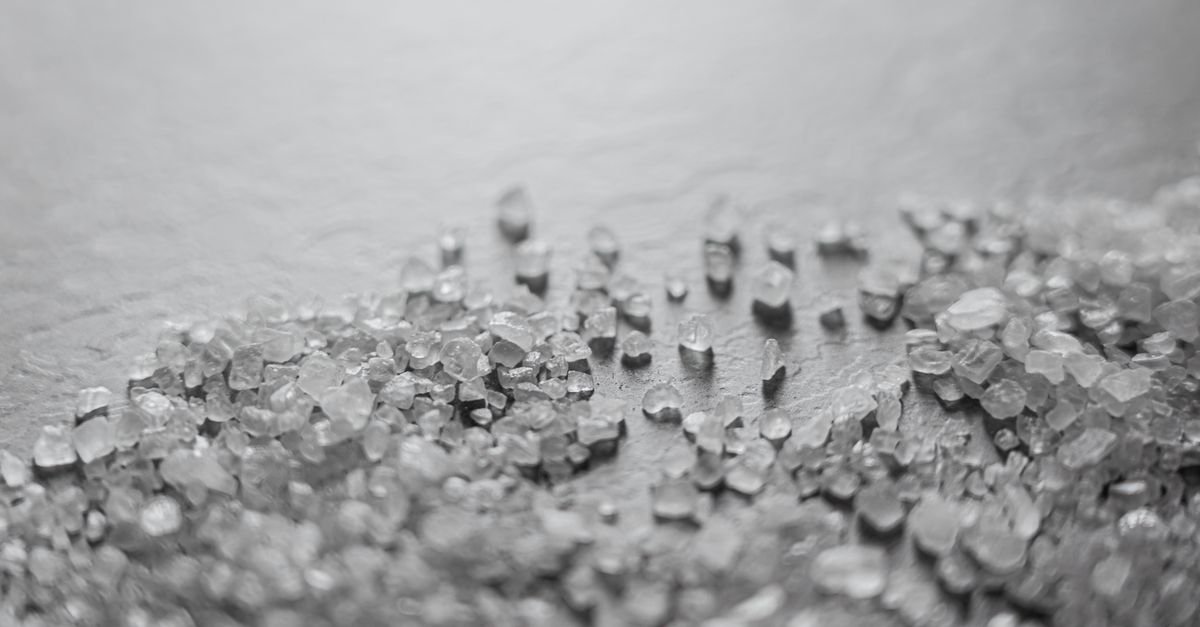
Chloride salts are among the most water-soluble things that will ever land on your driveway. Dissolving them was never the problem. The problem is what you do with the solution once you have made it.
The sequence that works, on a day above freezing, early enough that the slab dries before dark:
1. Sweep or blow the loose grains off dry. Undissolved salt is the easiest salt you will ever remove. Into a bag, not into the bed at the edge of the drive.
2. Wet the area with warm water. Warm, not hot — you are helping solubility, not sterilising anything. A watering can does it as well as a hose.
3. Work it with a stiff-bristled deck brush. Two minutes per square metre. A broom finish has grooves, and spraying never reaches the bottom of a groove.
4. Get the dirty water off the slab rather than into it. The step everybody skips. Squeegee it to a drain, or lift it with a wet vacuum on a garage floor. Flood the area and walk away and a good share of the dissolved chloride soaks back down, to reappear as a fresh bloom next week.
5. Rinse once more and squeegee again. Then let it dry fully before judging it, because wet concrete is uniformly dark and hides both success and failure.
No detergent, no bleach, no oxygen powder. There is no organic colour to break and no oil to emulsify — the four stain families and the chemistry each answers to are worth knowing so you can spot the case where none of the bottles apply. This is that case.
The trade body’s own advice is this dull. NRMCA’s information sheet on scaling tells homeowners to “hose off accumulation of salt deposited by cars on driveways and garage slabs” when conditions permit (NRMCA CIP 2, Scaling Concrete Surfaces). A hose. That is the published intervention from the people who make the concrete.
Why it keeps coming back until spring. Because you are not cleaning a stain, you are unloading a delivery. Every drive home in January brings more brine off the road in the wheel arches, onto the same two strips of slab. What reduces the load across a winter is doing this monthly and badly on whatever mild day turns up, rather than beautifully once in April.
The one case where a mild acid is justified. If the deposit has set into a hard crust a wet brush will not shift, or will not dissolve in warm water at all, you are probably looking at a carbonate — many blended ice melts carry carbonate fillers and anti-caking agents, and those do not simply rinse away. Dilute sulfamic acid or a proprietary efflorescence remover, on a dry slab, last step rather than first. Not muriatic acid, which dissolves the cement paste along with the deposit and leaves a rougher, thirstier patch behind — the argument in full is in what concrete cleaning acid does down in the paste. And never on the same afternoon as anything containing bleach.
And the tool most people reach for first is the wrong one — not because of damage risk, but because pressure is the wrong variable. A jet driven at a salt film forces brine deeper into the pores instead of carrying it away, which is a very loud version of the mistake in step four. The machine gets to stay in the garage feeling underused, which is its natural state for most of the jobs it gets blamed for.
Is That Salt Sitting On the Slab, or Coming Out of It?
Two white blooms on concrete look identical at arm’s length and have opposite fixes, and getting it wrong wastes a season. De-icer residue arrived from outside and wants flushing off. Efflorescence arrived from inside the slab and gets worse when you add water.
| De-icer residue | Efflorescence | |
| Where it came from | Road brine and ice melt, tracked or spread on | Soluble salts inside the slab, carried up by moisture |
| Where you see it | Wheel tracks, walking lines, the strip inside the garage door | Uniform patches, edges, low spots, near cracks and joints |
| Season | Late winter and early spring only | Any time, often worst after a wet spell |
| After a proper rinse and a full dry | Gone, until the next drive | Back within days or weeks |
| Vinegar drop | Little or no fizz — chloride is not a carbonate | Usually fizzes; the bloom is largely carbonate |
| Slab history | Any age | Common on slabs under a year old, or over a missing vapour barrier |
| The correct move | Dissolve it and remove the water | Dry-brush it off, then find the moisture path |
The most useful test takes three days and no products: clean a square metre properly, get the water off, let it dry completely. If the white stays away, it was on the slab. If it returns while the area around it stays clean, it is coming through the slab, and you have a drainage or vapour problem rather than a cleaning job.
The boundary, stated plainly, because these two get mixed up constantly: everything this site says about removing efflorescence from brick holds for true efflorescence on concrete too, including the rule that surprises people most — dry-brush it and keep the hose away, because washing it supplies the water that mobilises the next bloom. Correct for efflorescence, exactly wrong for de-icer residue, which you do want to dissolve and flush. Same colour, same powder, opposite instruction.
Under the Bloom: Scaling You Can Feel Before You Can See
The damage de-icers cause has a name, and it is not spalling — the trade calls this one scaling. NRMCA defines it as local flaking or peeling of a finished concrete surface after cycles of freezing and thawing, starting as small patches that later merge. Their severity ladder is worth having in your head: light scaling does not expose the coarse aggregate, moderate scaling exposes it and loses roughly 3 to 10 mm of surface mortar, and severe scaling has the stones standing proud of what is left.
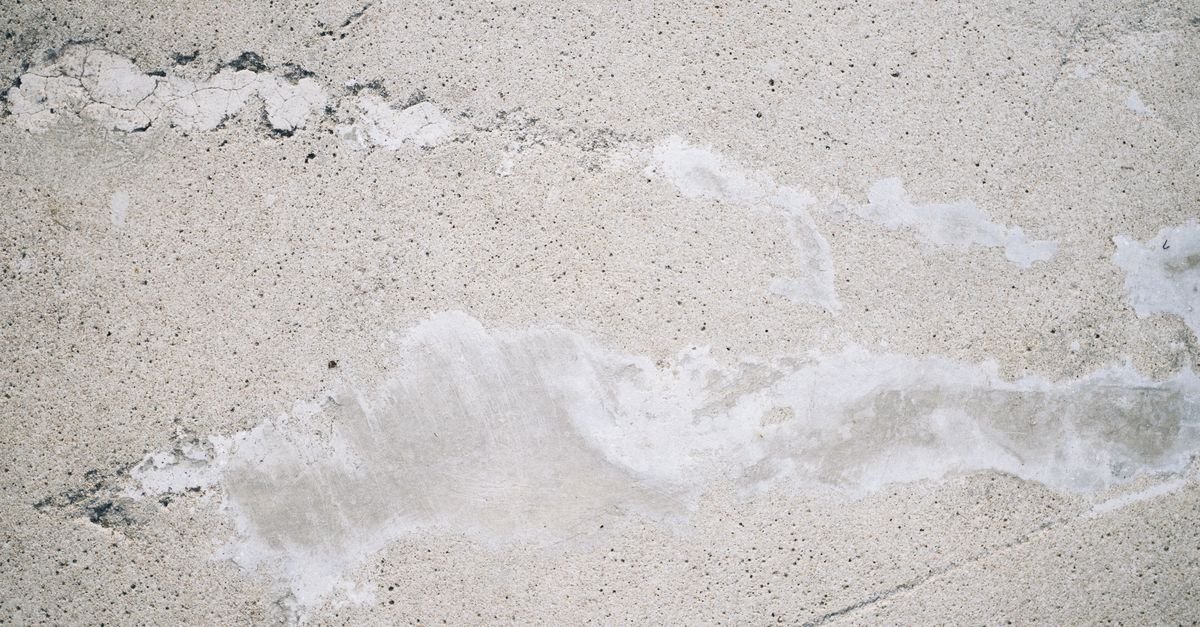
The homeowner-level mechanism is one sentence from the same document: de-icing chemicals make it worse “by increasing the saturation of concrete at the surface and the number of freezing and thawing cycles.” Saturation is the operative word. A dry slab can freeze all winter and be fine, because there is nothing in the pores to expand.
The research version is more interesting, and I went in expecting the popular one to hold. It does not, quite. A review prepared for Oregon’s transport department notes that moisture migrates *toward* zones of higher salt concentration by osmosis, adding to the ordinary hydraulic pressure in the pores — and that freezing-point depression cuts both ways, since a salty pore solution can mean fewer freeze events rather than more. The counter-intuitive part: a pioneering laboratory study found the worst damage at a low concentration of around 5% sodium chloride, with a moderately high 13% close to benign (Oregon DOT SPR 742, Understanding and Mitigating Effects of Chloride Deicer Exposure on Concrete).
Read that with your driveway in mind. The dangerous state is not a slab under a thick crust of rock salt; it is a damp slab carrying a weak, dilute film of brine — exactly what you create by sweeping the grains off, or hosing it down and leaving the puddles. Half a job on a wet slab in February is worse than no job at all.
Which De-Icer Actually Damages Concrete
Here is the sourced statement that reverses most of the bagging at the hardware store. NRMCA’s position is that de-icers composed of calcium chloride and sodium chloride — plain rock salt — “are considered acceptable for concrete,” and that you should never use ammonium sulfate, ammonium nitrate or magnesium-based salts, because “these are chemically aggressive and destroy concrete surfaces.” They add that magnesium products are used for road pre-treatment and arrive on your slab under the car whether you buy them or not.
The chemistry behind that has been photographed. Researchers at Michigan Tech, working with South Dakota’s transport department, submerged mortar cylinders in a 15% magnesium chloride solution at 4 °C and found crystals of calcium oxychloride forming in the air voids and cracks after 84 days, consuming the portlandite that holds the paste together (Sutter et al., *Cement and Concrete Research*, 2006). The reaction runs fastest just above freezing, between about 4 and 10 °C — and note what is missing from that experiment. The specimens never froze. This is chemical attack with no freeze-thaw involved at all.
Magnesium chloride is the ice melt most often sold as the gentle, pet-conscious option, and on those questions it may well be. On the question of your concrete, the industry’s answer is a flat no, which is the opposite of what the bag implies.
The Early Signs, Before Anything Flakes
- Fine sand at the low point after rain, or a gritty film that returns after every sweep. That is surface mortar leaving in instalments.
- A texture change underfoot — a patch like coarse sandpaper where the rest of the slab is smooth.
- Pits the size of a match head, first along joints, edges and the lip at the garage door, where water pools and salt concentrates.
- A dull, hollow note when you tap with a hammer handle, meaning the top layer has debonded even though it has not lifted yet.
Why Sealing It in October Makes It Worse
Every autumn somebody looks at a salt-marked driveway, decides a sealer is the answer before winter, and applies one to a slab loaded with chloride and still holding a fortnight of rain. That turns a slow problem into a trapped one: a film over a wet, salty surface locks both the water and the chloride into the exact few millimetres where the freezing happens, and blisters or peels on top of that.
NRMCA names the window, and it is not October — apply a breathable silane or siloxane sealer with the concrete “reasonably dry,” and “late summer with a few dry days preceding application is an ideal time.” How dry is dry enough, and the tests that answer it, are in driveway cleaning and sealing. If you have missed the window, you have missed it. Rinse monthly instead.
When It Is a Resurfacing Job, Not a Cleaning Job
Once the surface has scaled, no cleaner and no pressure setting restores it. The material is gone, and what you are looking at is absent mortar rather than a mark on top of anything.
NRMCA is blunt in both directions. Minor scaling “is a cosmetic issue and may not need to be repaired” — a slightly rough patch and nothing else, leave it and manage the salt. Light to moderate scaling takes a thin bonded resurfacing, a portland cement, latex-modified or polymer-modified cementitious overlay, but only after the unsound surface is cut back to something solid, and with one caveat stated plainly: “repair material will not match the color and characteristics of the original concrete.” Where scaling is excessive and still progressing, repair “may not be feasible,” which is the industry being polite about replacement.
One footnote with some irony in it. For cutting back that unsound surface, NRMCA lists a high-pressure washer alongside a hammer and chisel, sandblasting and a jackhammer. So the machine does have a role on a salt-damaged slab: it is on the demolition list.
FAQ
Will a pressure washer remove salt stains from concrete?
It will remove the visible bloom, and it is the least good way to do it. High-pressure water drives dissolved brine deeper into the pores instead of carrying it off the slab, so the white often returns as the concrete dries. Warm water, a brush and a squeegee beat it here, because the objective is to remove the solution rather than relocate it.
Does vinegar remove salt stains from concrete?
Sometimes, and for the wrong reason. Chloride salts need no acid at all — water dissolves them. Vinegar helps only where the deposit is carbonate rather than chloride, common with blended ice melts, and the fizz is the giveaway. It is also an acid on a calcium-based material, so repeated use etches the slab.
Why does the white residue keep coming back after I clean it?
Two possibilities with different answers. If it returns after every winter drive, you are re-loading the slab with road brine and the fix is a monthly rinse, not a better product. If it returns on a clean dry slab with no fresh salt near it, that is efflorescence arriving from inside the concrete, and adding water makes it worse.
Is concrete salt damage reversible?
The staining is. The surface loss is not. Scaled concrete has lost mortar no cleaner puts back, so the options are living with light scaling, bonding a thin cementitious overlay over light to moderate scaling, or replacing a slab where it is severe and still spreading. Any overlay will be a visibly different colour, so plan the repair to a joint line rather than feathering it into a bay.
What ice melt is safest for a concrete driveway?
By the concrete industry’s reckoning, sodium chloride and calcium chloride are the acceptable ones, while magnesium-based salts, ammonium sulfate and ammonium nitrate are to be avoided outright as chemically aggressive. Clean sand for traction beats all of them where you can get away with it, and no de-icer belongs on a slab in its first winter.
Clean the Bloom, Then Look Harder at the Slab
Warm water, a stiff brush, and getting the dirty water off the concrete rather than into it. That is the whole of removing salt stains from concrete, and it works better than anything sold for the purpose.
Then crouch down and run a hand over the strip where the tyres sit. Smooth and sound means a cleaning job and a monthly habit through the winter. Gritty, pitted, or giving up sand after rain means the bloom was never the story, and what you have is a decision about an overlay to make in a dry spell next summer.
Either way, do not seal it in the rain because winter is coming. The slab has survived the salt this far. It will not be saved by trapping it in.