Last Updated on September 26, 2026 by Umar Farooq
Cleaning artificial turf is a brushing job with a rinse attached, and not a pressure job at all — the trade body that writes the maintenance guidelines for these surfaces lists “high pressure sprays exceeding 500 psi” among the things that damage synthetic turf. That is lower than the soap setting on most machines. It is roughly a fifth of what the average gas unit produces at idle, and about a third of the figure the turf-cleaning industry itself circulates as safe.
I went looking for where the popular number comes from, because almost every page on the first results screen says 1,200 to 1,500 PSI with a wide tip at twelve inches. It appears on cleaning-service pages and turf-dealer blogs, quoting each other, and it appears in none of the Synthetic Turf Council’s published guidelines. The STC figure is 500. One of those two numbers has a document behind it.
The gap matters because synthetic grass is not a surface. It is a four-layer assembly — fibres, a coated backing, a few tons of loose granular material, and a compacted stone base with drain pipes in it — and only the top layer is visible. Everything that goes wrong when you take a wand to it goes wrong underneath.
Infill Is Ballast First, Blade Support Second
Ask why the infill is there and most answers start with cushioning. The trade body starts somewhere else. The STC’s landscape guideline says infill “is needed to help keep the synthetic grass installation from moving”, because it “provides an even distribution of weight that will minimize the expansion and contraction of turf when the temperature changes.” That is a description of ballast. A turf lawn is a plastic sheet lying on stone, and what stops it wandering and pulling at its seams on a hot afternoon is the weight of sand and rubber sitting on top of it.
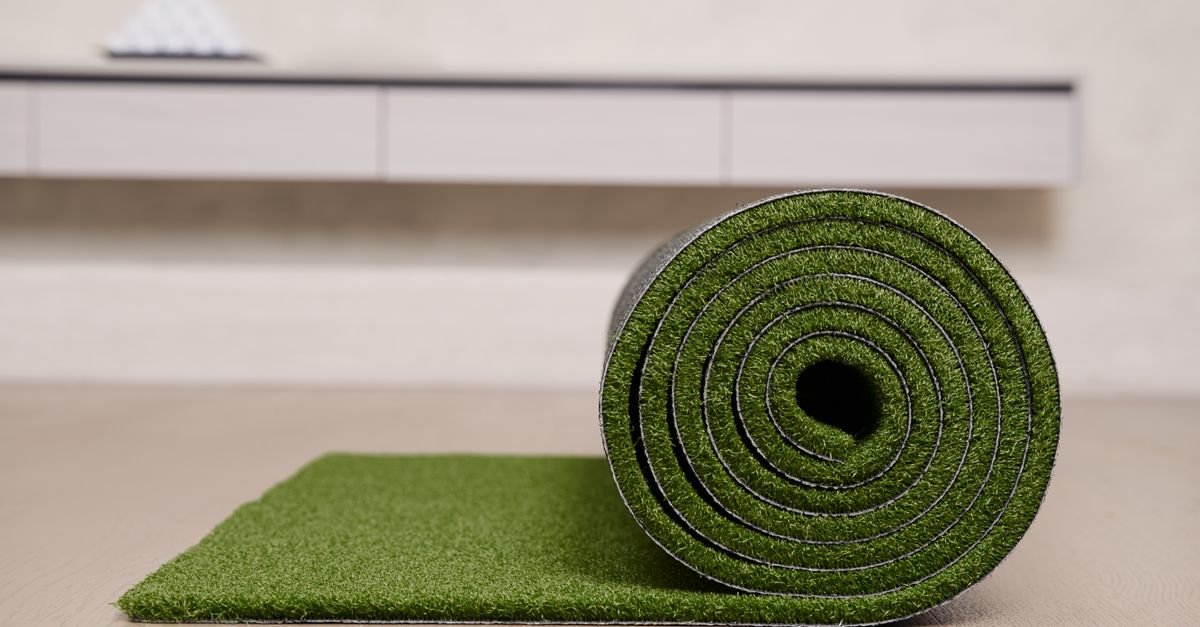
The second job is the one everyone knows. The STC’s field maintenance guideline puts it in nine words: infill “also protects the grass fibers from damage, and helps keep them upright.” Both halves are load-bearing. The granules hold the blades vertical, and they take the abrasion that would otherwise land on the fibres.
What that granular layer is varies more than people expect. The STC lists as acceptable infills: crumb rubber from recycled car and truck tyres, washed silica sands that are round through to sub-angular, heat-treated acrylic-coated silica sand, coloured crumb rubber, TPE-coated silica sand, and TPE and EPDM granules. Silica sand is the heavy one and the cheap one. Crumb rubber is lighter, springier and floats more readily on moving water. Coated sands resist bacteria and hold their colour, and they are the most expensive thing in the yard you can move around with a hose held wrong.
None of it is glued to anything, and that is the entire design. Infill works because it is loose enough to be brushed back level, which is also why a 25-degree fan at 2,000 PSI rearranges it into ridges and bald patches in about ninety seconds. You do not get holes. You get lumps where the infill piled up and a hard, shiny, thin-looking strip where it left, and the blades in that strip lie flat because nothing is holding them up.
What to do instead. Brush before you wet anything, and brush dry — the STC says plainly: “It is most effective to brush the surface when it is dry.” Use synthetic bristles, never metal or wire, which the same document lists among the things that damage turf. If infill has already moved, sweep it back in several directions rather than washing it back, then check depth by pushing a nail through to the backing on a grid and measuring against the installer’s spec.
Where 500 PSI Comes From
Here is the opinion, and it is the one part of this article a turf-cleaning company would not print. If your plan involves a pressure washer trigger and a turf lawn, the honest pressure is garden-hose pressure, and the 1,200-to-1,500 PSI figure circulating online is a number without a document.
The 500 psi figure appears in the Synthetic Turf Council’s Guidelines for Maintenance of Infilled Synthetic Turf Systems, in a list of things that may damage a synthetic turf surface. The full list is worth reading, because of the company that 500 psi keeps: “spiked shoes, animals, wire brushes, fires, fireworks, floods, chemical reactions, acts of God, the use of dry cleaning fluids or improper cleaning methods, high pressure sprays exceeding 500 psi, storage of heavy materials on the field.” Fireworks and a pressure washer, in the same sentence, from the industry’s own body.
One honest caveat, because this is a sports-field document and you have a garden. It is voluntary guidance written for infilled fields, and it says itself that it augments rather than replaces your installer’s warranty terms. What does not change between a field and a lawn is the construction: same polymers, same coated backing, same sand or rubber, same compacted stone. So read 500 psi as the figure to beat and your own warranty as the figure that binds you.
For scale, 500 PSI is below the safe working pressure for softwood decking, and below anything on a standard pressure washer nozzle chart at a useful distance. There are two ways to get there on a domestic machine: the black soap nozzle, which drops output to a dribble by design, or backing the tip off until impact pressure has fallen off a cliff — a couple of feet, not twelve inches. At which point you are holding a heavy, loud, expensive garden hose. That is the correct tool, arrived at expensively.
The Drainage You Cannot See Is a Stone Stack
The second thing a wand damages is the part nobody looks at. Water leaving a turf lawn does not run off it. It goes down — through the fibres, the infill and the coated backing, into a layer of compacted graded stone, and out through drain pipes or into the subsoil. The STC’s landscape guideline gives the design figure: permeable synthetic grass systems “are typically designed to drain 25″ of water per hour.”
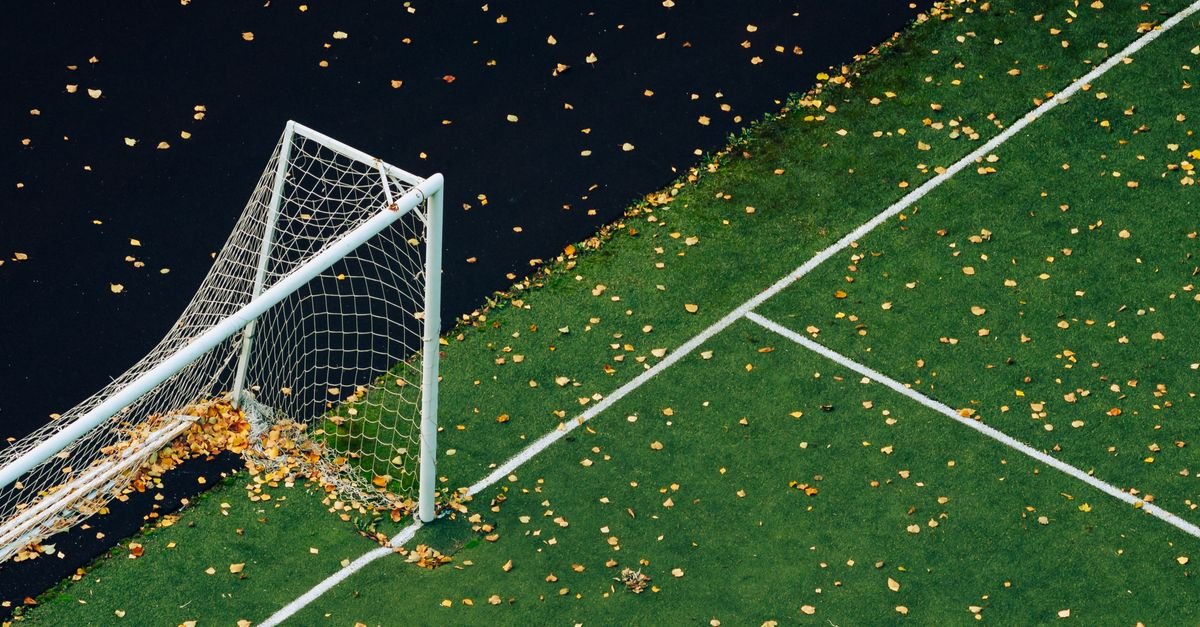
Twenty-five inches an hour sounds enormous until you convert it. Over a single square foot it works out at about a quarter of a gallon a minute. A modest homeowner gas machine puts out two and a half gallons a minute, into a wetted strip of roughly that size — something like ten times the design infiltration rate into one spot. Water that cannot go down goes sideways, which on a turf lawn means under the backing, carrying whatever the jet loosened with it.
What it carries is the problem. The STC maintenance guideline describes the clogging mechanism directly, and it is not about water at all: leaves and airborne debris left on the surface “will migrate into the system, inhibiting drainage and causing infill compaction.” A pressure washer is a machine for making fine material migrate. Every bit of dust, pollen, broken fibre and pulverised sand that was on top of your lawn is now several inches inside it, and the same document names what follows — contamination accumulating “deep within the infill layer” causes “surface hardening and water permeability issues.”
That failure does not show up on wash day. It shows up two springs later as a lawn that stays wet for an hour after rain and feels like pavement underfoot. The published fix is not a cleaning method. It is decompaction with specialist equipment, or partial removal and reinstallation of the infill “to get rid of embedded foreign matter that has contaminated the infill system.” Both are invoiced jobs.
What to do instead. Get the debris off before water touches it — blower, leaf rake, stiff broom, often enough that leaves never sit long enough to work their way in. Then rinse with volume rather than force. A hose on a fan spray moves dust off the blades without driving it downward, which is the same distinction between flow and pressure that makes GPM the number worth caring about on almost every surface.
Why Does the Urine Smell Come Back After Rinsing?
Because you rinsed the part that does not smell. Pet urine on turf is not a stain problem and barely a surface problem. Urine arrives, drains through the backing exactly as designed, and the organic residue lodges in the infill and against the base of the fibres, where it stays wet, warm and undisturbed.
What happens there is bacterial. Urine’s odour load is mostly urea, which is nearly odourless on its own; bacteria hydrolyse it into ammonia using an enzyme called urease. The mechanism is stated flatly in the peer-reviewed literature on animal-waste malodour: “Ammonia produced by the action of microbial ureases on urea is a well-recognized example,” and “microbial enzymatic breakdown of … waste metabolites is largely responsible for generating malodors” (Robins et al., *Journal of Feline Medicine and Surgery*). So the smell is not a residue you can rinse. It is a process, running continuously in a colony living in your infill, and it gets worse on the first humid day because everything bacteria do gets faster when it is warm.
That is why the two common approaches behave differently. A bacterial or enzymatic product is aimed at the process — it has to soak down to where the colony is, and it needs time, which means volume and dwell rather than pressure. An oxidiser is aimed at the moment: it kills and deodorises what it contacts, and on a surface draining at 25 inches an hour, what it contacts is the top fraction of an inch before the rest disappears into the stone. Which is why bleach on turf smells better for a fortnight and then does not.
Two things not to do. Do not make bleach the routine answer, both because it is not reaching the problem and because pouring sodium hypochlorite onto ammonia-saturated infill is a chloramine recipe in a space you are kneeling in. And do not reach for solvents: the STC guideline says specifically not to use cleaning chemicals containing alcohol or acetone.
What to do instead. Flood the spot with plain water first — the point is dilution, and plenty of it, because you are reaching the bottom of the infill rather than cleaning the top. Then apply an enzymatic or bacterial turf product at the label’s dilution and leave it for the labelled contact time. If the smell survives that, the published remedy is the one the STC gives for fluid spills, and it is honest about the scale: vacuum the infill out of the affected area, clean the turf with dish soap and water, then “you will need to install new infill.” The odour lives in the granules. Replacing them is not a failure of technique, it is the technique.
Keep the Burner Off the Blades
Turf fibres are polyethylene, nylon or polypropylene — three polymers, all thermoplastic, all of which soften before they do anything dramatic. The STC’s landscape guideline records what that looks like in the field, and the cause is not a pressure washer: there have been “random instances of fiber shrinkage and melting of polyethylene fibers due to high heat from reflective surfaces,” specifically low-emissivity window glass bouncing focused sunlight onto a lawn. Its advice is to stand in the yard on a hot afternoon before installation and find out where the reflection lands.
That sets the ceiling. If concentrated *sunlight* off a double-glazed window can shrink and melt these fibres, a hot-water machine running at 180 to 250°F is not the tool to test them with. The comparison is not exact — reflected glare cooks a fixed spot for hours, a wand passes in a second — but the direction is unambiguous and there is nothing on the other side of the ledger.
There is no chemistry argument for heat here either. Heat earns its fuel on grease and fats, thinning them so a surfactant can lift them, which is covered properly in the piece on the hot water nozzle. Nothing on a turf lawn is grease. Urine is water-soluble and already gone; the odour is biological; the grey film is mineral dust. None of those care what temperature the water is.
The nuance worth keeping is that warm water is not banned — it is prescribed. The STC’s own stain method is “a solution of hot, but not boiling, water and a field builder’s approved household detergent,” brushed with a stiff bristle brush and rinsed. A kettle’s worth of hot water scrubbed into a spot is inside published guidance. A burner and a wand are outside it.
What a Wand Will Never Fix
Most people arrive at a pressure washer after the easy things failed and the turf still looks wrong. Some of what looks like dirt is not dirt.
Flattened, shiny traffic lanes. That is fibre lay and infill compaction under the path everyone walks. Water will not stand a blade back up; brushing will. The STC notes that flattened fibres “can create a possible acceleration of wear,” so it is a wear problem, not a cosmetic one.
A lawn that has gone hard underfoot. Compacted infill. The published answer is mechanical decompaction with equipment built for it, or partial infill replacement. Pressure does not achieve this, and pressure is one of the things that got you here.
Anything at a seam or an edge. Seams are industrial adhesive and edges are where the turf is anchored — both are where a jet finds a lip to get under. If you use a machine at all, work parallel to the seam and never across it.
FAQ
Does cleaning artificial turf with a pressure washer ever work?
Only at pressures most people would not call pressure washing. The Synthetic Turf Council lists sprays above 500 psi among the things that damage synthetic turf, which rules out every standard nozzle on a domestic machine at a normal distance. If you use one, fit the soap nozzle or stand well back, keep the fan moving, and expect to re-brush the infill.
How often should artificial turf be cleaned?
Debris removal is the frequent job — weekly through autumn, because the published failure mode is debris migrating into the system and inhibiting drainage. Brushing to stand the fibres up and level the infill is monthly to quarterly depending on traffic. A deep clean or decompaction is a professional service measured in years.
What is the best cleaner for artificial grass?
For general dirt, an approved household detergent in warm water, brushed and rinsed, which is the STC’s own stain-removal method. For pet odour, an enzymatic or bacterial product given time to work down in the infill. Avoid anything containing alcohol or acetone solvents, and avoid petroleum-based products entirely.
Does bleach damage artificial turf?
The fibres are formulated to resist chlorinated pool water at safe concentrations, so dilute hypochlorite is not usually a fibre problem. It is a poor tool for pet odour, because turf drains too fast for it to reach the bacteria, and mixing it with urine-saturated infill risks chloramine gas. The STC’s position is that chemicals should not be used without consulting whoever built the installation.
Can I use hot water or a steam cleaner on artificial turf?
Warm water is fine and is in fact the published stain method — “hot, but not boiling,” with detergent and a brush. A hot-water machine or steam is a different proposition, because these fibres are thermoplastics and the trade body has recorded polyethylene shrinking and melting from reflected sunlight alone. There is no cleaning benefit on turf to offset that.
Brush It, Do Not Blast It
The most useful thing I took from these guidelines is how little of turf maintenance is about water. It is a broom, a blower, a tape measure and a bag of sand, and the only published pressure figure in any of it is a limit rather than a recommendation.
The decision this page reduces to is whether you pick up the broom or the hose first, and it is the broom every time. Dry debris removal, then brushing the pile back upright, then checking the infill depth — water is only for whatever staining survives all three. The infill is the one thing here you buy back by the bag, and a rinse is how it leaves.