Last Updated on September 25, 2026 by Umar Farooq
The honest answer to how to use jet washer equipment safely is that the order matters far more than the technique: water on first, air purged out, widest nozzle fitted, machine started last, and every bit of pressure bled off before anything comes apart. Get that sequence right and the machine will outlive the patio. Get it wrong on the very first afternoon and you can cook a pump before you have cleaned a single slab.
This page is written for the box still on the kitchen floor — for the person who has just cut the tape, found four nozzles, two hoses and a lance, and would quite like to know which end goes where.
Jet Washer, Pressure Washer, Power Washer: One Machine, Three Names
In Britain and Ireland it is a jet washer. In North America the identical machine is a pressure washer. “Power washer” is technically a third thing — a machine with a heater on board that delivers hot water — but people use the words interchangeably, and almost nothing sold for domestic use actually heats anything.
The difference you will notice is the units on the box. British and European machines are rated in bar, American ones in PSI. One bar is about 14.5 PSI, so a typical 120 bar domestic jet washer is roughly 1,740 PSI. Most home machines sit between 100 and 150 bar (1,450 to 2,200 PSI) at 5.5 to 8 litres a minute, or 1.4 to 2.1 GPM.
Flow is the number nobody prints in large type, which is a shame, because pressure only breaks the bond between the dirt and the surface — the water volume carries the mess away. The longer argument sits in our guide to what PSI pressure washer you need.
Set Up the Water Before You Touch the Power
A jet washer does not make water. It takes what your tap gives it and squeezes it through a very small hole. If the tap is mean, the machine starves, and a starved pump is a pump pulling air.
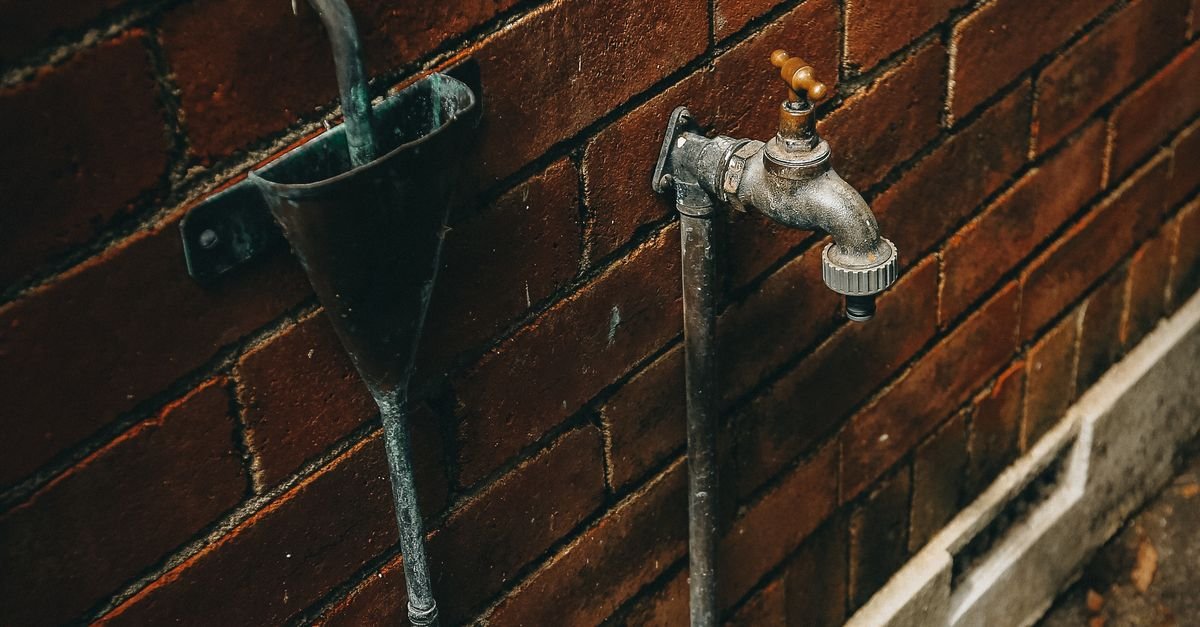
Work through this before anything is plugged in or pull-started:
1. Find the inlet filter. Unscrew the garden hose connector on the machine and look inside. There is a small mesh screen in there, usually white or grey plastic. It should be clean and seated. On a new machine it is occasionally loose in the box instead of fitted, which is a memorable way to learn what grit does to a valve seat.
2. Check the tap keeps up. Time how long your outside tap takes to fill a 10-litre bucket. Under a minute means roughly 10 litres a minute, which comfortably feeds any domestic machine. Over ninety seconds and you are already below what most jet washers ask for, and no amount of trigger squeezing will fix that.
3. Use a short, wide inlet hose. A standard half-inch garden hose is fine. Thirty metres of narrow hose still on the reel is not — friction eats flow before the pump ever sees it.
4. Connect the high-pressure hose to the gun and the machine. Push it home until the collar clicks, then tug it. A hose that has not latched will let go under load, at the moment you are least braced for it.
5. Turn the tap fully on. Not halfway. Fully.
Cold water only, unless the manual explicitly says otherwise. Hot water fed into a pump built for cold softens seals and warps plastic manifolds, and the machine will not mention it until the day it stops building pressure.
Purge the Air Out Before You Start the Motor
This is the step that separates machines that last ten years from machines that last two summers, and it takes thirty seconds.
With the tap on and the machine still switched off, point the lance somewhere harmless and squeeze the trigger. Water will cough, spit, and then run in a steady stream. Hold the trigger until that stream is genuinely steady — usually fifteen to thirty seconds. Now let go, and only now start the machine.
Here is the mechanism, because “purge the air” on its own sounds like ritual. A jet washer pump moves a fixed volume of water per stroke and relies on that water to fill the chamber and carry heat away from the seals. Start it with air in there and it has nothing to displace. The trapped air compresses and collapses instead of flowing, thousands of times a second, every collapse landing on the same small patches of metal and rubber. That is cavitation, and a few seconds of it does permanent damage.
My one strong opinion on this page: never start a new jet washer “just to hear it run”. It is the first thing most owners do — plug it in on the kitchen floor, press the switch, hear a satisfying whirr. That whirr is a dry pump. Running water through it first costs nothing and is the cheapest insurance the tool will ever get.
Starting Sequence for Electric and Petrol Machines
The two machine types want different things, and the instructions in the box tend to assume you already know which one you own.
Electric, in order:
1. Tap fully on, air purged, trigger released.
2. Plug into an RCD-protected socket, using an outdoor extension lead fully unwound — a coiled lead under load gets hot.
3. Squeeze and hold the trigger, then flick the switch, so the motor never has to start against a pressurised head.
4. Release the trigger. Most modern machines then cut the motor automatically. That silence is a feature, not a fault.
Petrol, in order:
1. Check the oil on the dipstick. Almost every small petrol engine has a low-oil cutout, and the commonest “won’t start” complaint is a machine that is simply refusing.
2. Fuel in, fuel tap open, choke closed if the engine is cold.
3. Tap fully on, air purged.
4. Squeeze the trigger and hold it while you pull the starter cord. Pulling against a pressurised pump is dramatically harder, and this is why people conclude their new machine is faulty on day one.
5. Once it fires, open the choke over the next thirty seconds.
One thing about petrol machines outweighs the rest of this section: they go outside and they stay outside. A farm owner in a NIOSH case report used an 11-horsepower petrol pressure washer to clean his barn. He worked about thirty minutes before carbon monoxide killed him (NIOSH, carbon monoxide hazards from small gasoline powered engines). A barn is not a sealed room. It did not matter. An open garage door is not ventilation, it is a doorway.
How to Use Jet Washer Controls Without Marking the Surface
You have three controls, and only one of them is a dial. The other two are the tip you fit and how far back you stand.
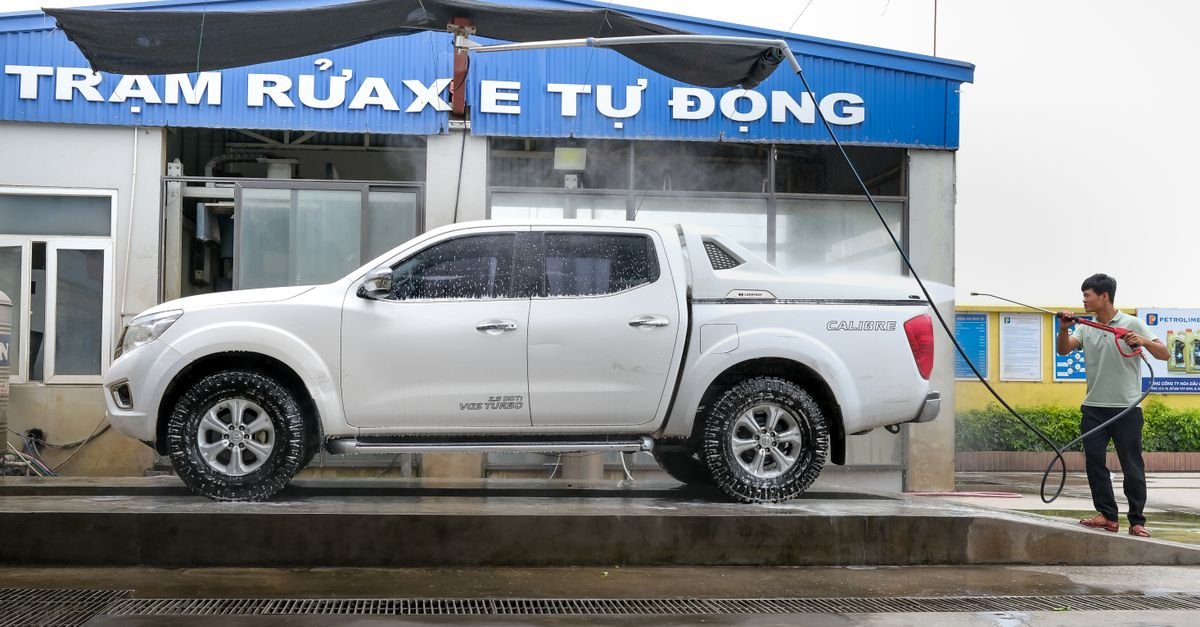
Fit nozzles with the machine off and the pressure gone
Kill the motor, squeeze the trigger until the spray dies to nothing, then change the tip. Pull the quick-connect collar back, push the nozzle fully in, release the collar, and tug the nozzle to confirm it has latched. A tip sitting in the socket but not locked will exit at full system pressure the first time you pull the trigger. It is small, it is metal, and it does not travel slowly.
Start every job on the widest tip you have — the 40-degree white one, or the widest setting on a variable lance. You can always go narrower. You cannot un-etch a paving slab. The colour codes are set out in the pressure washer nozzle chart, and the red 0-degree tip in your kit is not a cleaning nozzle. It is a paint stripper that came free with the machine.
Use the trigger lock every single time you stop
There is a small plastic catch on the gun. It exists because the trigger does not need a hand to pull it — a dropped lance, a boot, a curious dog, all count. Engage it whenever you are not actively spraying, including the four seconds you spend turning round to look at something.
The reason to be fussy is what high-pressure water does when it meets skin. It does not cut. It injects, leaving a mark the size of a pinhole while driving water and whatever was on the surface deep into the tissue. In reported series of these injuries, amputation rates reach 48%, and outcomes depend almost entirely on reaching surgical debridement within about six hours (case report literature, 2023). If the jet breaks your skin, you go to A&E that day. Not tomorrow, when it looks worse.
Start at 60 cm and walk in
Distance is a pressure control, and a more precise one than any dial. Impact force falls off steeply as the fan spreads. Begin about 60 centimetres (two feet) from the surface, keep the lance moving in long overlapping passes, and close the gap only if the dirt genuinely is not shifting.
Never hold the jet still. A stationary lance is how you get the stripe — that lighter, slightly furry line down the middle of a fence panel that only becomes obvious once everything dries.
Test somewhere nobody looks
Behind the shed. Under the bottom step. The end of the decking nobody walks on. Clean a hand-sized patch and let it dry fully before you judge it, because wet timber and wet render hide damage beautifully. If the patch fuzzes, greys, or shows the nozzle’s path, back off or go wider before you commit to the other forty square metres.
One surface never gets a test patch: the roof. The Asphalt Roofing Manufacturers Association is unusually blunt, stating that high-pressure washing systems are likely to damage asphalt roofing and should not be used (ARMA, algae discoloration of roofs). Roofs are washed with chemistry at hose pressure, or not at all.
Detergent Goes On Before the Pressure Does
Most first-time users skip detergent, because pressure feels like it is doing something and soap feels like a delay. It is the wrong way round.
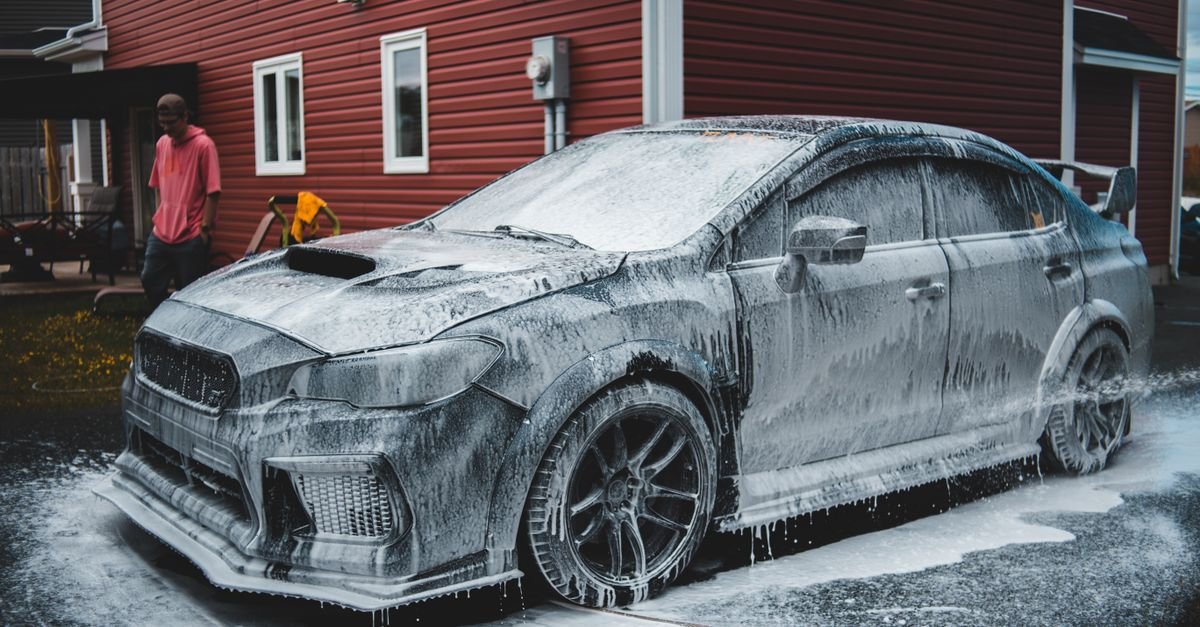
Fit the black soap nozzle — the one with the biggest hole, which drops the pressure to what feels like a dribble. That drop is deliberate. A downstream injector can only draw detergent when system pressure is low, so a machine that “won’t pull soap” is very often a machine with the wrong tip on the end.
Apply from the bottom upwards, which stops clean streaks running through dirt you have not treated yet. Let it dwell five to ten minutes and do not let it dry — a quick mist of plain water keeps a sunny wall workable. Then swap to your rinse tip and work top down, letting gravity help. Do that and the surface routinely comes clean at half the pressure you were preparing to use, which is half the risk of marking it.
Why You Should Not Leave It Idling in Bypass
When you release the trigger but the motor keeps running, the machine goes into bypass: the unloader valve sends water in a loop around the pump instead of out of the lance. No water is leaving, but the pump is still doing work on it, and all that work turns into heat in a volume of water roughly the size of a mug.
Left long enough, that water reaches temperatures that soften seals and O-rings. Some machines have a thermal relief valve that dumps the hot water on the ground to save itself, which looks exactly like a leak and startles people considerably.
The rule is worth taping to the handle: if you are not going to pull the trigger within about two minutes, switch the machine off. Moving the ladder, answering the door, refilling the soap bottle, standing back to admire a clean stripe — all of those run longer than two minutes, every time. Electric machines with a total-stop system handle this for you. Petrol machines will sit there quietly destroying themselves until you come back.
Shutting Down: Water Off, Pressure Out, Then Unplug
Packing up is where the damage that shows up next spring gets done. The sequence:
1. Stop the motor. Switch off, or on a petrol machine shut the engine down and close the fuel tap.
2. Turn the tap off at the wall.
3. Squeeze the trigger until nothing comes out at all. The high-pressure hose holds real pressure after the motor stops, and this step is what makes the next one safe.
4. Engage the trigger lock, then disconnect the inlet hose, then the high-pressure hose.
5. Drain the pump — a few pulls on the starter cord, or a second or two of an electric motor with no water connected.
6. Coil the hoses loosely and store the machine dry and off the floor.
That last point is most of maintenance. Jet washers rarely die from work. They die in garages over winter, when the water left inside the pump freezes, expands and cracks the head — and a cracked head usually costs more than the machine is worth. If yours lives anywhere that drops below freezing, the full procedure is in our guide on how to winterize a pressure washer. It takes fifteen minutes, once a year.
FAQ
Do you turn the water on before starting a jet washer?
Yes, always. Turn the tap fully on, squeeze the trigger until water runs in a steady stream with no spitting, release it, and only then start the machine. Running the pump dry, even briefly, damages the seals and can cavitate the valve surfaces.
How long can a jet washer run without spraying?
About two minutes as a working limit. With the trigger released the pump recirculates water internally and heats it rapidly, which softens seals and can trip the thermal relief valve. If there is any pause longer than that, switch the machine off rather than let it idle.
What is a good bar pressure for a domestic jet washer?
For general home use, 100 to 130 bar (roughly 1,450 to 1,900 PSI) handles cars, garden furniture, fences, decking and most patios. Flow matters as much as pressure — look for at least 6 litres a minute. Above 150 bar you are into concrete and stripping territory, and into the pressures that mark timber and render.
Can you run a jet washer from a water butt or a bucket?
Only if the manufacturer says so, and only with the correct suction kit. Most domestic machines expect to be fed by mains pressure and cannot lift water themselves. Running one from an unpressurised container without the right fitting starves the pump.
Why does my jet washer pulse or surge?
Pulsing almost always means the pump is not getting a steady supply. Check the tap is fully open, the inlet hose is not kinked and the filter screen is not blocked, then purge the air out again with the trigger held open. If it still surges on a good supply, the next suspect is a partly clogged nozzle.
The First Two Minutes and the Last Two Minutes Are the Whole Job
Almost everything that goes wrong with a new jet washer happens outside the cleaning. It happens in the two minutes before, when the pump is started dry or fed by a tap that cannot keep up, and in the two minutes after, when the machine is coiled up still full of water and left on a cold concrete floor until March.
The cleaning part is genuinely forgiving. Widest tip, 60 centimetres back, keep moving, test where nobody looks, and let the soap do the arguing. Do that and the worst thing you will produce is a patio with one very clean stripe across it and four hundred square feet of regret — which is a different problem, and at least the machine will still be working when you get to it.