Last Updated on September 23, 2026 by Umar Farooq
Can you pressure wash a rug? Only if it is a synthetic outdoor rug with a woven backing, and only at the lowest pressure your machine will produce — most other rugs come out of it worse than they went in. Wool felts. Jute browns. Cheap indoor rugs come apart at the glue line. And the rug that survives the water will still be ruined if it cannot dry.
That last part is the one nobody leads with, so I will. Most pressure-washed rugs are not lost to fibre damage. They are lost to going back down on the patio still damp in the middle and quietly composting by Thursday.
Rug by Rug: What Takes Pressure and What Falls Apart
Fibre is only half the question. Construction is the other half, and the half people skip.
| Rug type | Pressure wash? | The reason |
| Polypropylene or polyester outdoor rug, flat-woven | Yes, at low pressure | Plastic fibre, solution-dyed, no adhesive, drains fast |
| Nylon or olefin indoor rug, woven backing | With care | Fibre copes; drying is the hard part |
| Tufted rug with a latex secondary backing | No | The pile is glued in, not woven in |
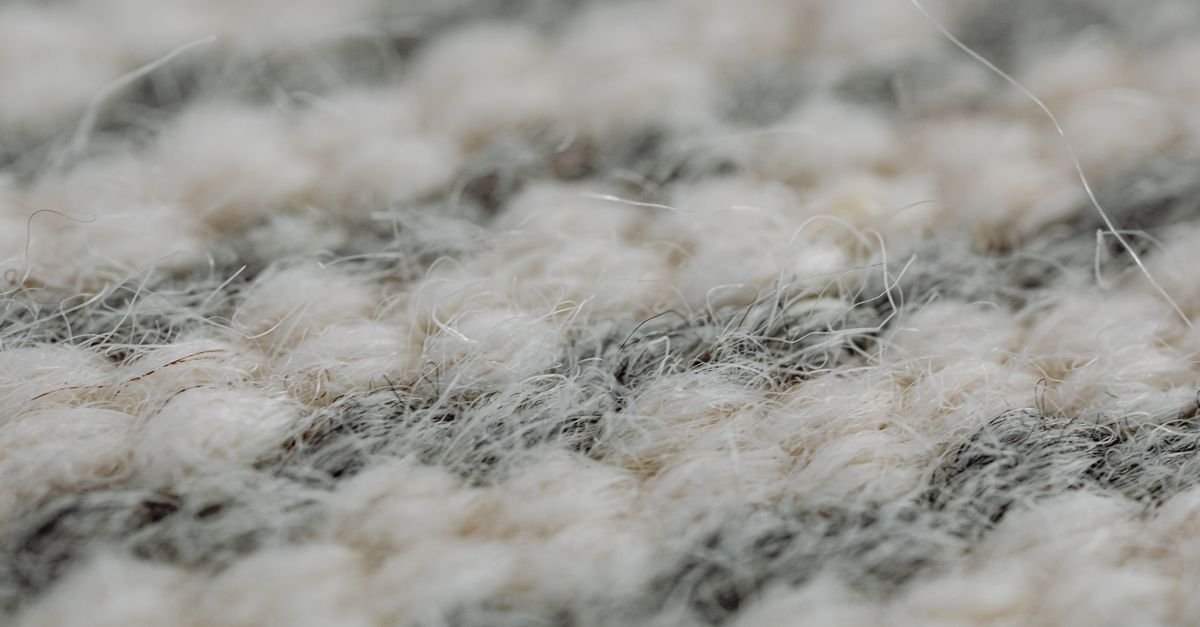
| Wool | No | Felts, shrinks, and moves its dye |
| Jute, sisal, seagrass | No | Browns, shrinks and rots |
| Viscose, “art silk”, real silk | No | Viscose loses its strength wet |
| Hand-knotted, antique, anything with a name | No | Specialist cleaner, no exceptions |
Flip the rug over before you decide anything. If the pattern shows through the back in woven yarn, the pile is part of the structure. If the back is a flat sheet of stiff, slightly rubbery cloth, the pile is tufted through a primary backing and held by latex adhesive. That adhesive is the whole rug, and aiming a pressure washer at it tests a glue joint designed for a vacuum cleaner.
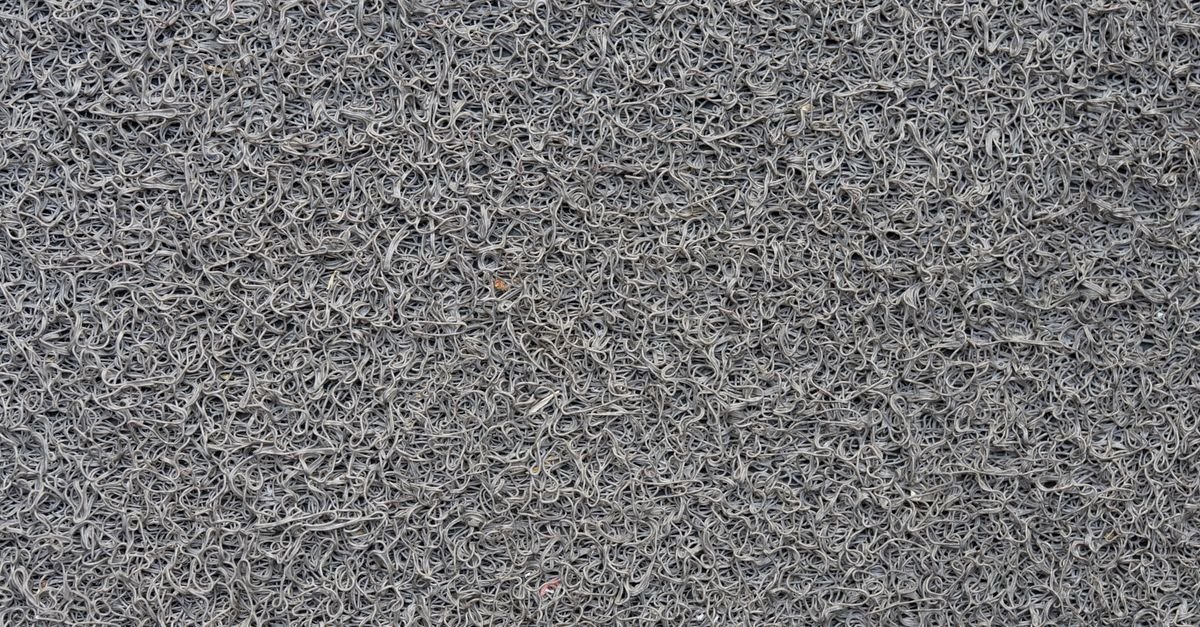
Synthetic outdoor rugs are the ones people are actually thinking of here. Woven polypropylene, dyed through the fibre rather than on the surface, built to sit in the rain — and the only category whose care label routinely says the words “hose it off.”
Four Ways a Rug Comes Apart Under a Wand
The failure modes are specific, and each has a different warning sign.
Fibre splitting. A jet driven into pile does not glance off the way it does off siding. It goes in, hits the backing and comes back up through the yarn. Twisted fibres untwist, staple fibres pull loose, and the patch reads as permanently matted. On wool it is worse: the scales interlock when agitated wet, which is felting, and felting does not come back.
Backing delamination. On a tufted rug, water forced through the pile gets between the primary and secondary backings and pushes them apart. You rarely see it on the day. You see it three weeks later as a ripple that will not lie flat.
Colour bleed. Saturation dissolves dye and the drainage carries it. Dark reds and navies move into cream borders and stay there — a wool and natural-dye problem far more than a polypropylene one.
Cellulosic browning. Jute and sisal are plant fibres full of lignin and natural oils. Soak them and those compounds wick to the surface and oxidise into brown blotches as the rug dries. Sisal Rugs Direct tells its own customers to never steam clean, wet shampoo or wash a jute rug, warning of warping, shrinkage, discolouration and mould. That is a company that sells jute rugs telling you not to get one wet.
Can You Pressure Wash a Rug and Actually Get It Dry?
Here is the opinion I will defend hardest on this page: the question is not whether your rug survives the water. It is whether you can get it dry inside twelve hours. If the answer is no, the rug is not dirty enough to be worth it.
Twelve hours is not my number. The Carpet and Rug Institute says carpet which is wet cleaned should be dry within 12 hours, and that properly extraction-cleaned carpet “should not be wet long enough to mold.” The EPA sets the outer wall: dried within 24 to 48 hours, and in most cases mould will not grow. Past that, you are not cleaning a rug, you are incubating one.
A pressure washer puts far more water into a rug than an extractor does and takes none of it back out, so the drying plan has to exist before you pull the trigger:
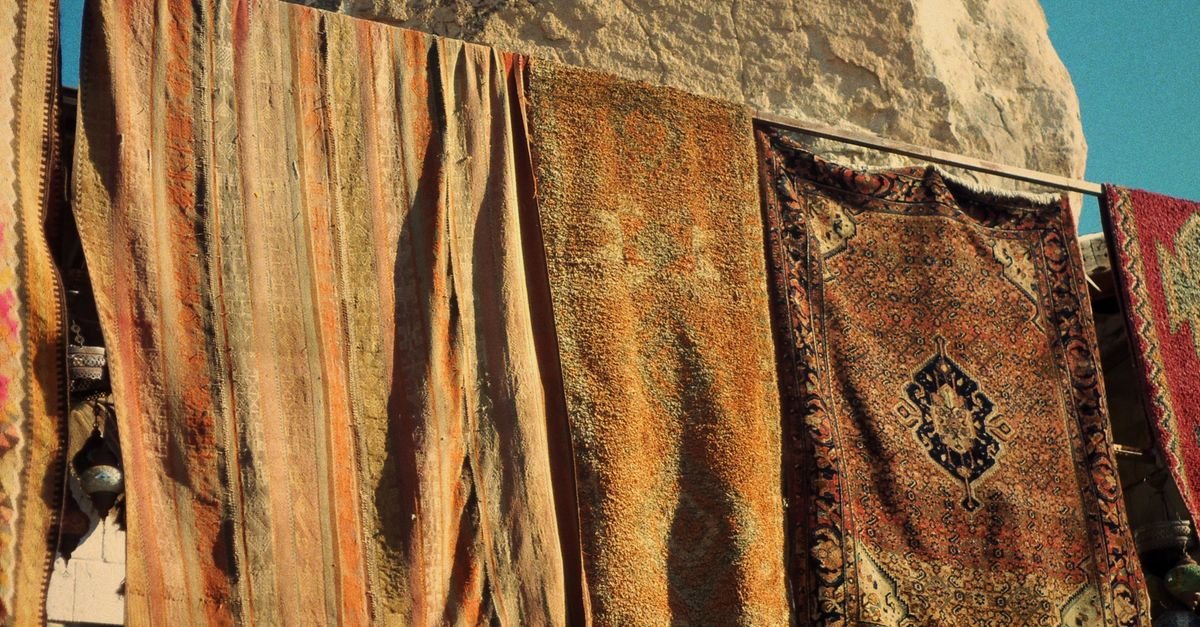
- Get it off the ground. Sawhorses, a railing, a fence, two patio chairs with the rug bridged between them. Lying flat, the underside never dries and it stains whatever it is on.
- Squeegee first, hang second. A squeegee or stiff broom across the pile removes a surprising amount of standing water in two minutes.
- Sun and moving air, both. Shade plus still air is how a rug stays damp for three days.
- Not on the decking. It marks the boards and slows the drying, which is an impressive double.
If the forecast is overcast, or it is October, or your only space is in shade, that is your answer. Wait for a better week.
The Hidden Corner Test Takes Ninety Seconds
Dampen a white cloth with warm water and a drop of your detergent, press it onto a hidden corner for thirty seconds, and look at the cloth. Any colour on it means the dye is not fast, and pressure washing will drag it across the whole rug.
Test the fringe and binding separately — different fibre, different dye bath, and they bleed first. Then run one short pass at that corner from three feet back. If the pile splays or fuzzes, you have your answer without having ruined anything visible.
Low Pressure, Wide Fan, Shallow Angle
I went looking for a rug manufacturer that publishes a maximum PSI the way Trex publishes one for decking. I could not find one, only care labels whose most aggressive instruction is “garden hose.” So I am not going to invent a rug PSI that nobody has tested. What I can give you is scale: painted wood is generally handled at 500–800 PSI, vinyl siding at 1,300–1,600, and rug pile is softer than either.
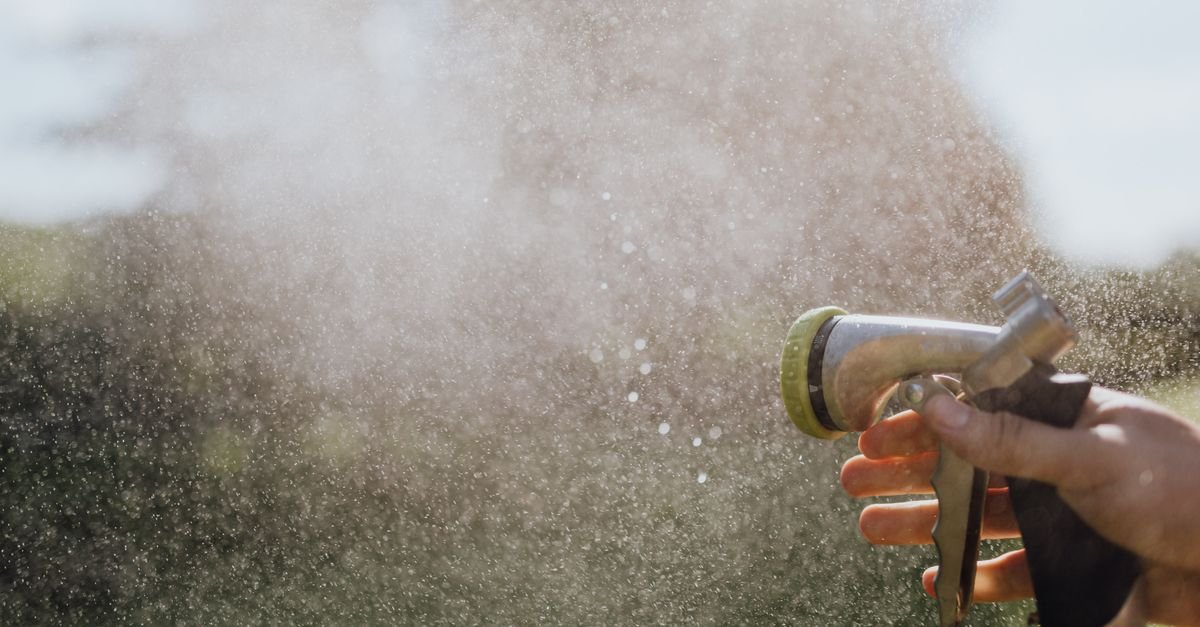
- White 40-degree tip to rinse, black to soap. Nothing narrower. Not the green 25, not the yellow 15, and certainly not a turbo — that is a 0-degree jet in a spinning cone and it will core through pile. Our pressure washer nozzle chart covers what each colour does.
- An electric in the 1,300–2,000 PSI range is ideal. If all you own is a 3,200 PSI gas machine, work at maximum distance or use the hose instead.
- Start three feet back. Close in only if the dirt is not moving, and stop the moment it does.
- Never spray perpendicular. Work at a shallow angle along the pile direction. Straight down forces water into the backing, the layer you are protecting.
- Chemistry before pressure. Wet the rug, apply a mild detergent through the black nozzle, work it in with a soft brush, dwell five to ten minutes without letting it dry, then rinse in both directions so no soap stays behind. Nine times out of ten it comes clean at a pressure that would not lift a sticker.
The same restraint applies to the rest of the set, which we covered in cleaning plastic patio furniture.
When the Rug Is Not Worth the Water
There is a version of this job where the honest answer is don’t, and the industry almost never says it. Do not pressure wash a rug you would be upset to lose. Anything hand-knotted, antique, silk, viscose or wool goes to a rug cleaner who washes it in a controlled bath and dries it in a heated room, and that costs a fraction of replacing it. Do not pressure wash a tufted rug to rescue it either — you will finish on the glue what the traffic started.
The surface underneath usually deserves the attention more anyway. A rug traps moisture and grows black film on whatever it sits on, and cleaning brick patio pavers is the job that actually changes how the space looks.
FAQ
Can you pressure wash a wool rug?
No. Wool fibre has overlapping scales that lock together when agitated wet — that is felting, the pile mats permanently and the rug shrinks. Saturation also destabilises the dyes, so colours migrate. Wool goes to a specialist who washes it cool, at controlled pH, and dries it fast.
What PSI is safe for a rug?
No rug manufacturer publishes one, which should tell you something. Use the lowest setting your machine has, a 40-degree white tip and at least three feet of distance. For scale, painted wood is generally handled at 500–800 PSI, and rug pile is softer than paint.
How long does a rug take to dry after pressure washing?
Aim for dry within 12 hours, the Carpet and Rug Institute’s benchmark for wet-cleaned carpet. Hung over a railing in full sun with moving air, a synthetic outdoor rug manages it. A thick rug left lying flat can stay damp underneath for days, and the EPA’s threshold for mould growth is 24 to 48 hours.
Can you pressure wash an outdoor rug on a deck?
Wash it off the deck, not on it. Lying flat, the rug traps water against the boards, marks them and stops its own underside drying. Move it to a driveway or a lawn slope where the water runs away, then hang it to dry elsewhere.
Will pressure washing get rid of the smell in a rug?
Only if it dries fast. A musty smell is usually mildew already living in the backing, and adding water without a drying plan makes it worse. If it comes back within a week of a thorough clean and a full dry, the growth is in the backing and the rug is finished.
Is a carpet cleaner better than a pressure washer for a rug?
For any indoor rug, comfortably. An extractor puts down a controlled amount of solution and vacuums most of it back out, so the rug is damp rather than soaked and dries in hours. A pressure washer only does the first half of that.
Synthetic, Low, and Dry by Sundown
That is the whole rule. A flat-woven synthetic outdoor rug, the widest nozzle you own, three feet of distance, detergent doing the real work, and a drying plan that beats twelve hours. And if it is a cheap synthetic that has spent four seasons outside and still smells like a pond afterwards, the correct tool was always a bin.
If the machine is already out and the rug is lying on the driveway looking at you, check the back of it first. If the pattern shows through in yarn, carry on gently. If it looks like a sheet of rubber, roll it up and put the wand down.