Last Updated on October 4, 2026 by Umar Farooq
The best soft wash system for most houses is chosen on two numbers — gallons per minute and tank gallons — and for a great many readers it is not a system at all, but a downstream injector and a soap nozzle fitted to the machine already in the garage.
The reason is that a roof and a painted wall do not have a dirt problem. They have a living layer growing into them, and the thing that kills a living layer is chemistry sitting on it for ten minutes. Pressure is the wrong tool, not a weaker version of the right one, and once you accept that the entire shopping list changes shape: you stop buying force and start buying delivery.
So this page is about the kit. What the categories actually are, which specification decides which, what sodium hypochlorite does to the metal parts nobody mentions, and the point at which buying a complete system genuinely beats bolting something onto what you own.
Three Suppliers, Three Pressures: 60, 500 and 300 PSI
Before any of the shopping, there is a problem with the category itself: it cannot agree on its own central number.
I read three supplier guides in one sitting. One states that soft washing “typically operates at a pressure of around 40-60 PSI”. A second describes standard soft wash pressure as “500 psi or less”. A third sells a complete gas-powered soft wash system and publishes it at 300 PSI. That is a tenfold spread between pages selling the same category to the same person, and none of the three is lying — they are describing a pump-up sprayer, a loose industry ceiling, and a specific gas pump, and calling all three “soft wash pressure”.
Here is the way out of it, and it is the one thing you need settled before you spend anything. In a soft wash system, pressure is a throw budget rather than a cleaning budget. It exists to get liquid from the gun up to the gable end. Nothing above the figure that achieves that distance does any additional work, and most of it does harm. That is why a soft wash pump is specified with a pressure ceiling where a pressure washer is specified with a pressure promise.
The two arguments underneath that sentence are already settled elsewhere on this site and I am not going to re-run them here. Power washing against soft washing has the full case for why force fails on a colonised surface, and soft wash siding cleaning has the method — bottom-up application, top-down rinse, and how much wall you can wet before the leading edge dries. Read either and you will know why the kit looks the way it does. What is left, and what nobody has written for you, is which kit to actually buy.
Your Pressure Washer Is Already Half a Soft Wash System
Start here, because for a large share of readers this section is the whole answer and the rest of the page is interesting rather than necessary.
A downstream injector is a venturi fitted after the pump. Water rushing past a restriction drops in pressure and pulls cleaning solution in from a tube in a bucket, and because it sits downstream the chemical never sees the pump, the unloader or the hot side of anything. Fit the black soap nozzle, the pressure at the tip collapses, the injector starts drawing, and the machine becomes a low-pressure chemical applicator for as long as that nozzle stays on.
The arithmetic is kinder than people expect. Real-world draw on a downstream injector runs nearer 10 to 14% than the advertised 20 to 30%, so a jug of 12.5% sodium hypochlorite arrives on the wall at roughly 1.25% — which happens to be ordinary house-wash strength. The chemical injector guide has the draw-ratio measurement procedure with a jug and a timer, and the 12v soft wash pump page already argues this position in plain terms: if you wash one house a year and own a pressure washer, you do not need a pump. I agree with it, which is why this page does not open with a recommendation.
What the injector genuinely cannot do is short and worth knowing. It fades as hose length grows and gives up somewhere past 150 feet. It cannot hold a strength you have chosen, only a strength it happens to produce. And it needs the soap nozzle on for the entire job, which means swapping to a green tip “just to rinse” undoes the point of the exercise.
If that list does not describe your Saturday, the honest shopping trip ends with an injector and a bottle of surfactant. It is the cheap answer, and it is cheap enough that it fell straight through the floor I used to screen everything else on this page. I kept it anyway, because it is the right recommendation for more readers than any product below it.
YAMATIC adjustable chemical injector kit, 3/8-inch quick connect. A venturi body with a metering valve on it, quick-connect plug and socket at both ends, a siphon tube with a filter, and the black soap nozzle you need for the thing to draw at all. Published for 2 to 5 GPM and a 4,500 PSI maximum working pressure, which is more machine than most readers own. The metering valve is the whole reason to take the adjustable version over a fixed one: it lets you choke the draw down when a 12.5% jug is landing hotter on the wall than you wanted, where a fixed body gives you one ratio and no vote. The limitation is in the listing’s own words, “stainless steel and brass”, and the next section but one explains why that makes it a wear part rather than a fitting.
Then keep the rest of the money. A manufacturer would rather I did not put that paragraph this high up the page.
Flow Is the Specification You Are Paying For
Once you do need more than the injector, the number you are buying is gallons per minute, because flow is simultaneously how much chemical lands per minute and how far the stream throws.

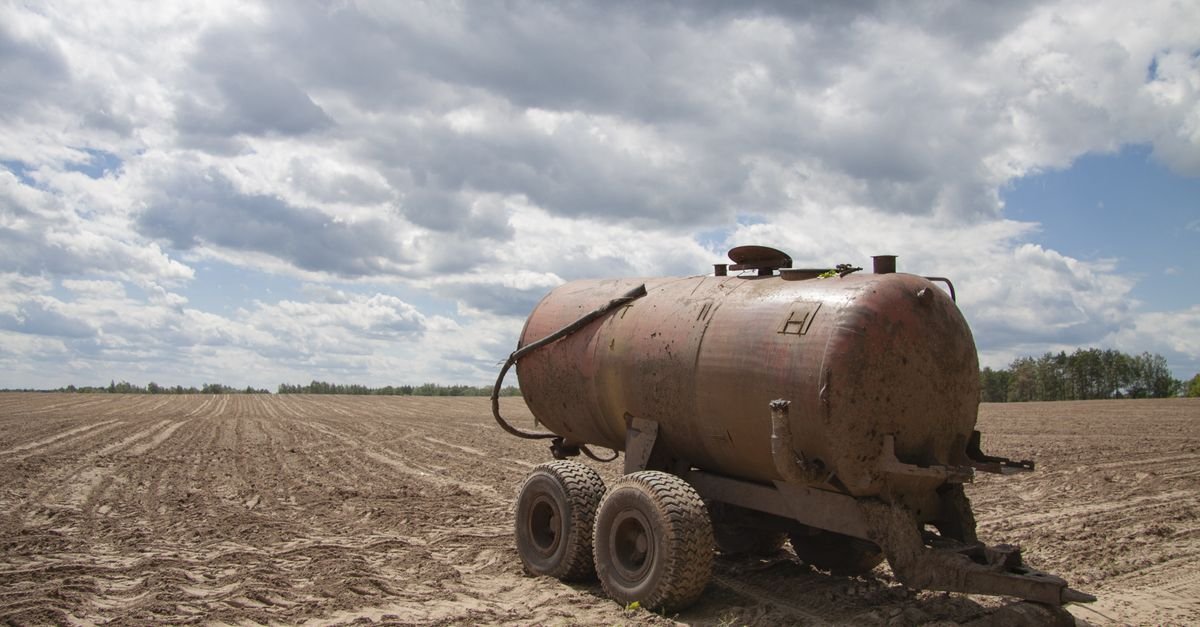
There is a reason that photograph is of farm equipment. Soft wash pumps are agricultural diaphragm pumps with a different sticker on the crate — the same three-chamber layout built for spraying crop chemicals, which is exactly the duty a bleach-and-surfactant mix represents. That heritage is also why the materials list is better than you would expect from the pressure washer aisle.
Three flow classes cover everything a house needs:
| Class | Published flow | Published pressure | Power | What it is for |
| Downstream injector on your machine | Your machine’s GPM | Your machine’s PSI, nozzle-dropped | None | One house, once a year |
| 12-volt diaphragm pump | about 3.2–5.3 GPM | 60–150 PSI | Leisure battery | Two storeys, a few jobs a year |
| Gas-driven diaphragm pump | up to 11.5 GPM | up to 300 PSI | Petrol engine | A crew, or a very large building |
The 12-volt band, the duty cycle behind it and the seal materials are covered in full on the 12v soft wash pump page, so take the numbers from there rather than from me. The top of the table is the interesting part, because the published specification is so far from what the category’s reputation suggests. Comet lists its P40 soft wash unit at 11.5 GPM and 300 PSI at 550 rpm, with three Viton diaphragms in a polypropylene and stainless body, 1-inch inlet, 3/4-inch outlet and a 1/2-inch bypass (Comet, P40-GR-CBP-E).
Read that against a homeowner gas pressure washer at 2.8 GPM and 3,000 PSI and the inversion is complete: four times the flow, a tenth of the pressure, out of a machine roughly the same size. Two spec sheets from the same trade, facing opposite directions, and the one with the smaller headline number is the one that cleans a roof.
For a homeowner the 12-volt band is almost always the right landing spot, and it is the one place on this page where a pump on its own is a sensible purchase: if you already own the tank, the hose and the gun, and the pump is the gap. Choose it on what its wet side is made of, because that is the specification that decides whether you still own it next spring.
Everflo EF5500-BOX, 5.5 GPM at 60 PSI. The bare agricultural diaphragm pump the whole category is assembled from, and the only listing I read that names every wetted part: “corrosion resistant Viton valves and Santoprene diaphragm”, in a fibreglass-reinforced polypropylene manifold with 1/2-inch FNPT ports. Hold that against the chart in the next section. Viton, Santoprene and polypropylene are precisely the three materials you want touching hypochlorite, and no brass or aluminium appears anywhere in the wetted path. It self-primes to eight feet and uses the standard sprayer-tank mounting pattern, so it bolts to a tank you already own. The limitation is that it is only a pump: threaded ports rather than quick-attach, no cord or strainer in the box, and the listing does not claim the automatic shut-off that Everflo’s on-demand version advertises.
YR Rowelaxy 12-volt sprayer pump, 5.5 GPM. The alternative if you would rather have fluorocarbon than Santoprene on the diaphragm. The listing names an FKM diaphragm specifically, which is the Viton family, and the box includes a fused power cord, a 1/2-inch inline strainer and stainless clamps, plus an adjustable pressure switch with dry-run and thermal-overload protection. That switch is the one thing the bare Everflo does not advertise. Two honest problems, both in the listing rather than the pump. It cannot keep its own pressure figure straight: the title says 60 PSI and a feature bullet says 75. And it carries a stray bullet advertising “Viton valves and Santoprene diaphragm” next to the FKM claim, which is somebody else’s copy pasted in. Buy it for the FKM and the strainer, not for the spec sheet.
And one to walk past, for the reason this page exists. DEEKOOL’s EF5500-BOX-QA is sold as a “12V soft wash pump” and a “12V bleach pump”, and describes its wet side only as “a high-quality diaphragm that is chemically resistant”, never once saying what the diaphragm is. That is not an isolated listing. Of the five 12-volt pumps whose feature lists I read in full, three named their elastomer and two did not, and one of the two was Everflo’s own on-demand version of the pump recommended above, which names the polypropylene manifold and then goes quiet about the diaphragm. A pump sold for hypochlorite that will not name its diaphragm has told you something.
Brass, Aluminium and 304 Stainless Fail the Hose Maker’s Own Chart
Now the part of the shopping list that gets specified by habit, because quick-connects, swivels and reel frames are bought on fit rather than on chemistry.
Kuriyama of America publishes a chemical resistance guide covering hose inner tubes and fitting metals, rated E for excellent, G for good and X for not recommended. Look up sodium hypochlorite and the metals column reads like a warning. At 5% and at 20% hypochlorite alike, carbon steel, 304 stainless, aluminium and brass are all rated X — not recommended. Only 316 stainless manages G. On the tube side, nitrile, nitrile/PVC and urethane are rated X at both strengths, while CPE and Hypalon are rated E (Kuriyama of America, Chemical Resistance Guide).
Sit with that 5% column for a second. Five per cent is weaker than almost anything you would mix for a roof, and it is already enough to put brass on the not-recommended list. Which means the brass quick-connect that came with every pressure washer accessory you own is, in a soft wash system, a consumable with a pleasant gold colour.
The practical shopping consequences are three:
- Buy the gun and nozzle holder in polypropylene or 316 stainless. Not brass, however nicely machined, and not aluminium however light.
- Prefer a reel with a stainless or plastic swivel. The swivel is the one fitting that is always wet and never dries, because it sits at the bottom of the coil.
- Accept the brass you cannot avoid, and flush it. Some fittings only exist in brass. The two-minute water flush at the end of the day is what keeps them alive, and the soft wash spray gun page has the full routine including the step everyone skips, which is cycling the valve while the clean water is running.
What goes in the tank, at what strength, and the one combination that produces chlorine gas is all set out on sodium hypochlorite for pressure washing — including the prohibition on anything acidic touching a system that still has bleach in it. That page sources it properly; I am not going to paraphrase a gas hazard.
A gun and nozzle set in the right material is the easiest item here to get wrong and the simplest to put right. Read the material line before the reach claim.
General Pump YG1635SR wash-down gun, 350 PSI at 16 GPM. This is the shape of gun a soft wash system wants and a pressure washer does not: a pressure rating low enough to be honest about the duty, and a flow rating three times anything a 12-volt pump can push at it, so the gun is never the restriction. The material line is why it is here, because the listing states “stainless steel internal construction” with a stainless swivel at the inlet, and the inlet swivel is the fitting that stays wet. Rear entry puts the hose behind your wrist instead of under it, which stops mattering about ten minutes into a job and then never stops mattering again. The limitation: General Pump does not say whether that stainless is 316 or 304, and the chart above rates those two differently.
MTM Hydro AJH soft wash nozzle and SG35 gun kit. The nozzle is the interesting half. It is a 0 to 60 degree adjustable fan sold in three flow bands, 2 to 3, 3 to 7 and 7 to 12 GPM, so you buy the one that matches your pump rather than hoping, which is the flow-first logic of this page turned into a part number. It works downstream of an injector as readily as off a soft wash pump, so it fits either half of this article. The SG35 gun is rated to 5,000 PSI and 12 GPM and made in Italy, overbuilt for this duty and none the worse for it. The limitation is the one I keep walking into: “made from robust materials” is the entire material disclosure, and on a hypochlorite line that is not an answer.
It is worth naming the gun not to buy, because the manufacturer publishes the evidence itself. General Pump’s YG1635S is the plain version of the gun above, same 350 PSI and 16 GPM, and its listing prints the material list in full: “Brass, Buna-N, Plastic”. Buna-N is nitrile. Go back up to the chart, where brass is X against 5% hypochlorite and the nitrile tube is X against it too. One gun family, two models, and the cheaper one publishes a wetted path built from the two materials the hose maker’s own chart rejects. That is the clearest thing on this page, and you can only see it because somebody filled the field in.
Minutes Per Tank, the Figure No Spec Sheet Prints
Here is the calculation that decides more soft wash purchases than any other, and I have not seen anybody publish it. It is my arithmetic, from two published numbers, and you can check it on a napkin.
Gallons in the tank, divided by gallons per minute at the gun, equals minutes of spraying before you stop. That is the whole model. Put the three flow classes against four common tank sizes and the result is startling:
| Pump flow | 15 gal | 35 gal | 55 gal | 100 gal |
| 4.0 GPM (small 12V) | 3.8 min | 8.8 min | 13.8 min | 25 min |
| 5.3 GPM (large 12V) | 2.8 min | 6.6 min | 10.4 min | 18.9 min |
| 11.5 GPM (gas P40) | 1.3 min | 3.0 min | 4.8 min | 8.7 min |
The Comet’s published 11.5 GPM empties a 55-gallon batch tank in under five minutes of held trigger. That is not a criticism of the pump. It is the explanation for why every gas soft wash rig you see photographed is sitting on a 100 to 300 gallon tank and a trailer: the pump is specified for a tank volume that does not fit in a car, and buying the flow without buying the volume just buys you more refills.
And a refill is not a neutral event. You mix again, slightly differently, and apply the new batch to a wall whose first section has been drying while you measured. The seam that leaves can last years, which is a point roof cleaning equipment makes with the five-gallon sprayer and which scales up unchanged.
So the opinion, and it is the strong one on this page: a bigger pump makes a homeowner soft wash system worse unless the tank grows with it. Match the two, or buy the smaller pump deliberately and enjoy the longer run time.
I would like to have given you gallons per square foot instead, since that is the question people actually ask. I went looking. The figures circulating — 200 to 600 square feet per gallon of mix, 2,000 to 4,000 per gallon of concentrate — all trace back to contractor forums quoting one another, and I could not find a single published coverage rate with a measurement behind it. So size the tank from flow and spraying minutes, which are both numbers you can verify yourself with a bucket.
On mixing: batching in the tank is simpler and proportioning at the gun is more consistent, and the trade-off is argued out properly on the soft wash spray gun page. Whichever you choose, soak the beds at the base of the wall first — protecting plants when pressure washing explains why the salt rather than the chlorine is what stays behind in the soil.
If the tank, the pump and a reel are all missing, an assembly bought as one unit is genuinely the better buy, because the parts arrive already specified against the same flow figure. But I went looking for the complete 12-volt soft wash system with a tank and a reel in the box, and it is not there. What exists, once you filter for a real tank and a real pump, is the agricultural spot sprayer this page already told you a soft wash pump is, and not one of them includes a reel. So the honest version of this recommendation is narrower than the sentence I opened it with: buy the assembly for the tank-and-pump match, and buy the reel separately.
NorthStar UTV spot sprayer, 55 gallon, 2.2 GPM at 70 PSI. A 55-gallon UV-stabilised polyethylene tank with moulded fill markers on a frame built for a UTV bed, with a 12-volt on-demand NSQ-series pump. The reason it survives the table above is the flow, and specifically how low the flow is: 2.2 GPM into 55 gallons is about twenty-five minutes of held trigger, the longest uninterrupted run of anything on this page. On this topic low flow is the feature and not the compromise. Two real limitations. The published spray height is 19 feet, which is second-storey wall and not roof, so the supplied gun is the part you replace with one of the two above. And nothing in the listing names the pump’s diaphragm or its valves.
Its nearest rival makes the argument for reading listings instead of titles. Ag Spray Equipment’s 55-gallon unit is titled “4.0 GPM High-Flo 12V Pump”, and its own first feature bullet states that the pump “delivers 2.2 GPM at 45 PSI”. That is a product page disagreeing with itself about the single number this article says decides the purchase. Its supplied handgun is also aluminium, which the chart above rates X.
Two Hundred Feet of Hose Changes Who Does the Walking
The last decision is the dullest and the one you will feel most, because hose length determines whether you move the tank or move yourself.
Soft wash hose is not pressure washer hose. It is a low-pressure chemical line — commonly 1/2-inch bore, rated in the low hundreds of PSI rather than the thousands — and the rating barely matters because the pump cannot approach it. What matters is bore and material. Bore, because at 5 GPM the friction loss through 3/8-inch line over a long run quietly eats the reach you paid a pump for. Material, because of the tube column in that Kuriyama chart: a nitrile tube is rated X against the exact liquid you bought the hose to carry.
Then the reel, which is not a luxury. Two hundred feet of half-inch hose holds about two gallons of solution, and dragging it wet across a gravel drive four times is how the outer cover fails first. A reel with a plastic or stainless swivel keeps the one permanently wet fitting out of the not-recommended column.
Before you buy length, though, check whether your problem is reach rather than distance — because reach has an answer that is not a pump at all. X-Jet publishes its M5 external-injection nozzle as washing “from the ground up to 40 ft”, with a variable 0 to 60 degree pattern, a 14-piece colour-coded proportioner set and a 15-foot hose assembly with an inline shutoff and a tank screen filter (X-Jet Technologies). It draws from a pail downstream of the pump, so the strength is set by a proportioner disc rather than by whatever the venturi feels like doing. For a two-storey wall and an existing machine, that is the least equipment on this page.
X-Jet M5 #13 kit, 4 to 4.5 GPM. Buy this against your machine’s flow and not its pressure. The #13 orifice is specified for 4 to 4.5 GPM and other orifices exist for other machines, so look up your own GPM before you check out, because the wrong orifice is the one way to get this purchase wrong. What arrives is the nozzle, the colour-coded proportioner discs, a 15-foot hose assembly with an inline shutoff and a tank screen filter. The solution is drawn outside the machine, so it never passes a hose, a quick-connect, a lance or a gun, which given everything above about brass removes the materials problem rather than managing it. One discrepancy worth counting on arrival: X-Jet’s own site publishes a 14-piece proportioner set and the Amazon listing says 15.
Forty feet of vertical reach does not mean forty feet of useful aim, mind. Beyond about the second-storey eaves you are watering the sky and hoping. Low pressure roof cleaning has the four honest ways to put solution on a roof and what each one actually reaches.
For the hose itself, buy the bore and buy it long enough to stand still, and check the tube material against the chart rather than the colour of the jacket.
Kuriyama Kuri Tec K1176, 1/2 inch by 300 feet, 300 PSI. The two numbers that matter are both right: half-inch bore, so friction loss does not quietly eat the reach you paid a pump for, and 300 feet, so the tank stays where you parked it. The 300 PSI rating is irrelevant in the best way, since a 60 PSI pump will never approach it. It is also made by the company whose chemical resistance chart this whole section is built on, which is either reassuring or ironic depending on your mood, because this is their general service PVC air and water hose rather than a chemical line, and that chart rates CPE and Hypalon tubes E against hypochlorite while not rating plain PVC at all. Right size, named material, unrated against this liquid. The tubes the chart actually endorses are supply-house items rather than Amazon ones, and if you are washing roofs for money that is the trip to make.
General Pump DHRA50300 A-frame reel, 3/8 inch by 300 feet. The fitting that is permanently wet and never dries is the reel’s inlet swivel, and this reel publishes it as stainless steel, which is exactly what the bullet list above asks for and what almost no consumer reel states at all. It also has a drum brake and a pin lock, so 300 feet does not unspool down the drive while your back is turned, and the A-frame is built for a trailer or a truck bed rather than a wall bracket. Two limitations. The drum capacity is published for 3/8-inch hose, so half-inch line takes up considerably more room than that figure suggests and you should measure before assuming the 300 feet above will fit. And the frame is powder-coated steel, which the chart rates X once the coating has gone.
Four Houses, and the Best Soft Wash System for Each
Four readers, four different right answers. Find yours and ignore the other three rows.
| Your house and habit | Buy | Skip |
| Single storey, siding and fence, once a year, pressure washer already owned | Downstream injector, soap nozzle, surfactant | The pump, the tank, the reel |
| Two storeys, siding only, pressure washer already owned | External-injection proportioning nozzle | The 12-volt system |
| Two storeys, roof and siding, wants a chosen strength | 12-volt pump, 35–55 gallon tank, 150–200 ft of chemical hose on a reel | Gas flow, and the trailer it needs |
| Several buildings a year, or a business | Gas diaphragm pump with a 100 gallon-plus tank | Nothing — but weigh the tow rating honestly |
Two patterns fall out of that table and both are worth saying out loud. The first is that three of the four rows include something being skipped, and in two of them the skipped item is the thing the category is named after. The second is that the only row where a big pump is correct is the row where a trailer is also correct. Flow and volume travel together or neither of them helps.
FAQ
What is the best soft wash system for a homeowner?
A 12-volt diaphragm pump in the 4 to 5.3 GPM band, a 35 to 55 gallon batch tank, 150 to 200 feet of chemical-resistant hose on a reel, and a polypropylene or stainless gun. That combination treats a two-storey roof and the whole exterior from ground level without a refill. If you own a pressure washer and wash one house a year, a downstream injector does the same job without adding a pump, a tank or a battery.
Does a downstream injector count as a soft wash system?
For a single-storey house, yes, through a downstream injector with the black soap nozzle fitted. The injector sits after the pump, so the chemical never passes through it. Expect roughly 10 to 14% draw, which turns a 12.5% hypochlorite jug into about 1.25% at the wall. The limits are hose length past about 150 feet and the fact that you cannot choose the strength, only accept the one the venturi gives you.
How many GPM does a soft wash system need?
Four to 5.3 GPM covers residential work and is the practical ceiling for a single 12-volt pump. Higher flow exists — Comet publishes its P40 at 11.5 GPM — but flow and tank size are one decision, and 11.5 GPM drains a 55-gallon tank in under five minutes of spraying. Buy flow only as far as your tank can feed it.
What size tank does a soft wash system need?
Divide the tank gallons by the pump’s GPM to get minutes of spraying. A 55-gallon tank behind a 5.3 GPM pump is about ten minutes, which covers an average house with no refill. Thirty-five gallons is enough for a single-storey property. Anything over 100 gallons is a trailer rather than a purchase, because solution weighs roughly the same as water.
Is a 12-volt soft wash pump better than a downstream injector?
It is more consistent, not more powerful. The pump delivers exactly what you mixed, at foot 200 the same as at foot 10, where an injector’s draw fades with hose length and back pressure. If your mix has to be a specification — a roof at a chosen strength, several jobs a year — the pump earns its place. If the injector already lands the number you were aiming for, it does not.
What materials should a soft wash system be made of?
Viton or Santoprene in the pump’s wet parts, a CPE or Hypalon hose tube, and polypropylene or 316 stainless fittings. Kuriyama’s chemical resistance guide rates carbon steel, 304 stainless, aluminium and brass as not recommended against sodium hypochlorite at both 5% and 20%, and rates nitrile and neoprene tubes the same way. Brass fittings still work; they just become wear parts.
Will a soft wash system damage my pressure washer?
Not if the chemical joins downstream of the pump, which is what a downstream injector and an external-injection nozzle both do. An upstream injector feeds chemical into the pump inlet, and running hypochlorite through a pressure washer pump that way shortens the life of the seals and the valves. Either way, a two-minute clean-water flush at the end of the day with the gun held open is what decides how long everything lasts.
Should I buy a soft wash system as a kit or build one from parts?
A kit arrives with the pump, tank, hose and gun already specified against one flow figure, which removes the mismatch that catches most self-builds — buying the pump first, then finding the gun and hose cannot pass what it makes. A parts build earns its effort when you want a tank size or 316 stainless fittings the kits do not offer. Either way, settle the flow figure before you buy the first item.
Your Shortlist Is Two Items Long
Whichever row of that table you landed on, the shopping list came out short. One group needs an injector and a nozzle. The other needs a pump and a tank that matches it. Nobody needed the trailer-mounted skid, and two of the four groups did not need a pump.
That is unusual for a category sold on completeness, and it happens because the only genuinely scarce thing in soft washing is not pressure, or flow, or even reach. It is ten uninterrupted minutes of a wet wall doing nothing. Buy the kit that delivers those ten minutes without a refill, and the rest of the catalogue is somebody else’s weekend.