Last Updated on September 25, 2026 by Umar Farooq
A pressure washer backfiring at the exact moment you switch it off, at full throttle, is not a fault at all — that bang is unburnt fuel lighting in a hot silencer, and the fix is a habit rather than a part: throttle down, let it idle for a few seconds, then stop it.
That is the case most people arrive here with, and it is the one the search results answer last. A bang while the machine is *running* is a separate question, and it splits again depending on which end of the engine the noise came out of. Intake or exhaust. Almost nothing written on this subject says so, and it is the single most useful question you can ask while you are standing there.
Start With the Shutdown: a Bang as You Switch Off Is Not a Fault
Here is what happens in the half second after you hit the kill switch.
The switch does not stop the engine. It grounds the ignition, so the spark stops. The flywheel, which weighs what it weighs and was spinning at working speed, keeps turning for another second or two. The throttle is still wide open, because you were cleaning with it. So the carburettor keeps doing its job: it keeps delivering a perfectly good charge of petrol and air into a cylinder that no longer has anything to light it with.
That charge gets pumped straight out through the exhaust valve, raw, into a silencer that has spent the last forty minutes getting hot. Somewhere in there it finds enough heat and enough oxygen, and it goes off. One bang, occasionally two, and then the engine is stopped and the garden is quiet and a neighbour is looking at you.
This has a proper name, which is part of why it is hard to find an answer. A backfire is combustion in the intake, while the engine is running. An afterfire is combustion in the exhaust, usually after the ignition has been cut. Nobody standing in their driveway says “my pressure washer afterfired,” and quite right too. They say it banged, popped, or went off like a gunshot, and the pages that use the technical word never meet them.
What to do about it costs nothing. Two pressure washer manufacturers publish shutdown procedures, and both of them put the throttle at idle *before* the ignition switch. BE Power Equipment’s operation manual: “Release spray gun trigger and let engine idle down. Turn the engine switch to the OFF position. ALWAYS point spray gun in a safe direction, squeeze spray gun trigger to release retained high water pressure” (BE Power Equipment, pressure washer operation manual). Water Cannon’s operator’s manual numbers it the same way: “If Engine Is Equipped With Throttle Lever, Position Lever To IDLE. Turn Engine Switch OFF” (Water Cannon, pressure washer operator’s instruction manual).
Neither of them explains why. I went looking for a manufacturer that connects that instruction to the bang and could not find one, which is frustrating, because the mechanism is not complicated: at idle the engine is drawing a fraction of the fuel it draws at full throttle, so there is far less unburnt charge available to reach the hot part.
So the sequence, in order, is: release the trigger, drop the throttle to idle, give it ten or fifteen seconds, switch off, then squeeze the trigger to dump the pressure the pump is still holding. That last step is a separate favour to your shoulder next time, and it is covered properly in pressure washer hard to start, which owns the machine that takes eight pulls.
One caution on the idling part, because forum advice on this drifts. “Let it idle down” means seconds. It does not mean two minutes with the trigger shut, because a pump running in bypass is heating the water trapped inside it the whole time. Cure a noise, boil a pump, call it a draw.
And here is the position I will defend, since it is the reason this page leads with the free answer rather than burying it under carburettor parts: a bang at shutdown is the most over-repaired symptom on a small engine. It gets answered with a spark plug, then a carburettor, then a coil, in that order of price, for a machine that is behaving exactly as designed. If it only ever happens as you switch off, at full throttle, you do not have a fault. You have a shutdown routine.
Pressure Washer Backfiring: Which End Did the Noise Come Out Of?
Everything from here on is for a machine that bangs while it is still running. The question that sorts it is where the sound left the engine, and you can answer it with your ears alone.
| When it happens | Where the noise comes from | What it is | What to read next |
| The instant you switch off, at full throttle | Silencer | Afterfire — unburnt charge in a hot exhaust | Nothing. Change the shutdown order. |
| A sharp spit or cough up through the air filter housing, usually under load | Intake side | True backfire — the mixture is lean | The lean section below |
| A duller thump or blat out of the silencer while running, often with sooty smoke | Silencer | The mixture is rich | The rich section below |
| A hard bang during starting, and the recoil cord kicks back at your hand | Either, and violently | Ignition timing has moved | The flywheel key section below |
| Fires, runs a few seconds, dies — with or without a pop | — | A fuel delivery fault, not a combustion-location fault | Not this page — that is the choke-and-bowl diagnosis |
To tell intake from exhaust, stand to one side with the machine running at working throttle and listen rather than look. The intake side is the air filter housing, which on most residential machines sits on the opposite side of the engine from the silencer. An intake pop arrives as a sharp, dry cough with a hesitation attached — the engine stumbles, spits, and picks up again. An exhaust pop is lower and wetter, and it does not usually take the revs with it. (If you genuinely cannot place it, stand the machine a few feet from a wall and listen from the other side. The reflection makes the side obvious in a way that standing over it does not.)
Two things not to do while you are listening. Do not take the air filter off to hear it better: an intake backfire with the element removed is an open flame an inch from the carburettor throat, and the carburettor throat is where the petrol vapour lives. And do not put a hand anywhere near the silencer to feel for it. You will find out how hot it is in a way that stays with you.
Running Lean Coughs Back Through the Carburettor
A lean mixture — too much air for the fuel available — does not burn faster. It burns slower. That is the bit that surprises people, and it is the whole mechanism.
The charge is still burning when the exhaust stroke finishes and the intake valve opens for the next cycle. There is now a live flame in the cylinder and a fresh, combustible column of air and petrol sitting in the intake tract on the other side of that open valve. The flame walks back up it and lights the lot, and the pressure spike comes out through the carburettor and the air filter with a crack. That is a backfire in the strict sense, and it is the only one of the four that genuinely goes the wrong way through the engine.
Subaru’s own service manual for the EX engine family — the same class of engine that sits on a lot of pressure washer frames — makes the diagnosis in one line: “if the engine begins to make a popping noise or backfire, the mixture of fuel and air is likely too lean in the throttle body” (Subaru EX / SP series engine service manual).
On a machine that lives in a shed most of the year, a lean condition comes from one of two directions:
Not enough fuel getting in. A pilot or main jet partly closed by varnish is the common one, and it is measured in thousandths of an inch. So is a blocked vent in the fuel cap, a browned inline filter, or a fuel valve somebody nudged to half open with a knee. The tell that separates a fuel restriction from an air leak is the choke: if the engine runs better with the choke *partly closed* after twenty minutes of work, the choke is not helping it start, it is compensating for fuel that is not arriving. The strip, the jets and what never goes through one are in pressure washer carburetor cleaning, which owns that job start to finish.
Unmetered air getting in. Air that enters downstream of the carburettor was never measured against any fuel, so it leans the mixture out with no warning. The usual routes are the gasket and insulating spacer between the carburettor and the cylinder head, a carburettor mounting nut that has worked loose against a machine that vibrates for a living, and a cracked or perished breather hose.
The standard trade test for an air leak is to puff a flammable aerosol around the carburettor base with the engine running and listen for the note to change. It works. I am still not going to tell you to spray carburettor cleaner at a running engine six inches from a silencer that is hot enough to light unburnt petrol on its own — that is the mechanism the first half of this article is about. Do the boring version instead: engine cold, put a spanner on the two carburettor mounting nuts and check they are properly tight, then take the carburettor off and look at the gasket and the spacer. A gasket that has taken a permanent set, a spacer with a hairline crack, or a bright witness mark across the mating face is your leak, and a gasket kit costs less than the aerosol.
Running Rich Sends the Pop Out of the Muffler
Rich is the same story told backwards, and it produces the same event as the shutdown bang — just continuously, while the engine is running.
A small-engine carburettor meters fuel against airflow through fixed brass holes. It cannot cut the fuel back when the air falls off, so restrict the air and the mixture goes rich by arithmetic. The cylinder cannot burn all of it in the time available, the leftovers go out with the exhaust gas, and the silencer lights them. You get a dull thump or a string of soft pops, usually worse when you let the revs fall, plus black smoke and a smell of raw petrol.
Four causes, in the order they actually occur on a pressure washer:
1. The choke, left partly closed. Far and away the most common, and nobody should feel daft about it. A machine with a restricted fuel circuit runs smoother on half choke, so people leave it there, and half choke is a permanently rich mixture. It is also why the lean section above and this one are frequently the same machine in two moods.
2. A blocked air filter. Hold the element up to daylight. If light will not pass, air will not either. A pressure washer stands inside its own spray cloud for forty minutes at a time, which is a far dirtier working life than the mower that shares its engine.
3. Too much oil in a foam element. Foam filters are meant to be oiled, and they are meant to be squeezed out afterwards. A dripping element restricts air and feeds oil into the intake at the same time.
4. A float set high, or a needle not sealing. Fuel level in the bowl sets the head the jets draw against. Too high and everything runs rich, all the time, at every throttle position.
Rich faults leave evidence everywhere, which is the good news. The exhaust colour is read in pressure washer smoking, which owns the colour-by-colour diagnosis, and the firing end of the spark plug keeps its own written record alongside it — dry black soot is rich, wet and greasy is oil. Two pieces of evidence, ten minutes, no parts.
A Sheared Flywheel Key Moves the Spark, Not the Engine
This is the one the search results skip, and it is the one that explains a sentence I kept finding on forums and almost never in articles: *it backfired once, really hard, and since then it has been a pig to start.*
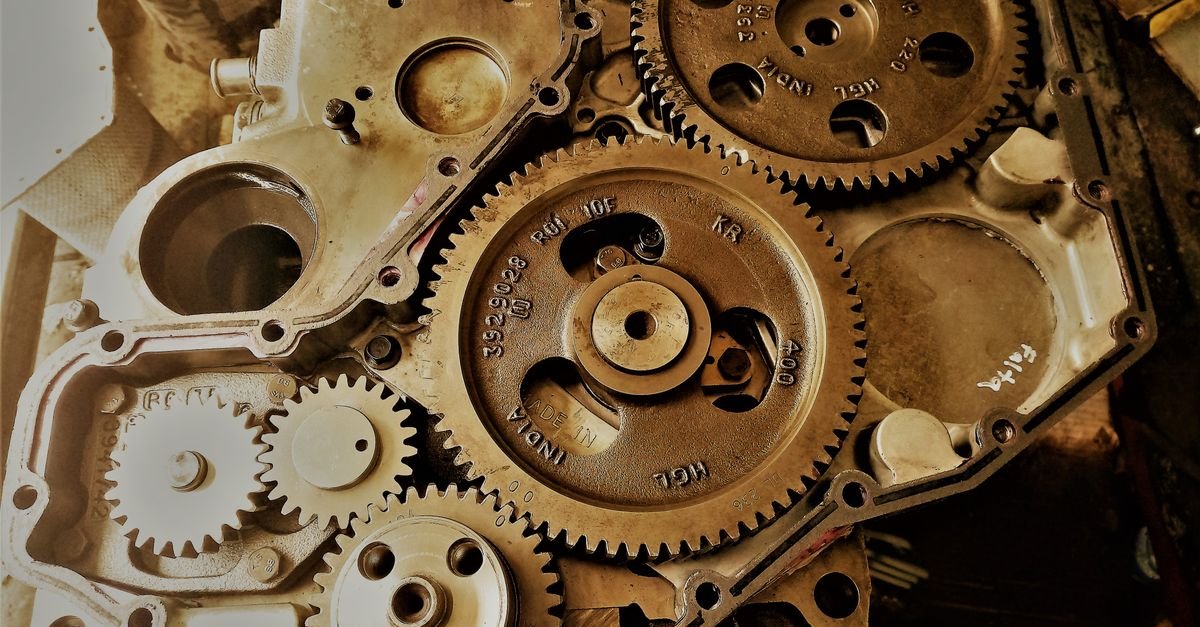
Start with a fact that is not widely known outside repair shops: your engine’s ignition timing is not adjustable, and it is not electronic in any sense you can change. Subaru’s EX-series manual states it plainly — the system is “a transistor controlled magneto system with the ignition timing set at 23 degrees (EX13/17/21) [27 degrees (EX27)] before the top dead center,” and “the magneto consists of a flywheel and ignition coil. The flywheel (which also works as a fan) is directly mounted on the crankshaft.” Kawasaki’s FJ180V service manual says the same thing in fewer words: “Ignition timing is no adjustment because of it is fixed.”
So where does the 23 degrees actually live? It is a physical relationship between the magnet cast into the flywheel and the throw of the crankshaft. Nothing measures it. Nothing corrects it. It is held by a small soft key sitting in a slot in the crankshaft, plus a tapered joint that the flywheel nut clamps up — on the EX engines, to 59.0–64.0 N m, which is 42.7–46.3 ft lb. Degrease both tapers before assembly, Kawasaki instructs, because a taper with oil on it does not grip.
Move that joint and you move the spark. The engine is mechanically untouched, every part still in perfect condition, and the ignition is now firing at the wrong moment for the rest of its life.
What shears the key. A hard stop, transmitted backwards through the crankshaft faster than the flywheel wants to slow down. A violent afterfire will do it. So will a kickback while starting, a hydraulic lock, or a flywheel nut that somebody left short of torque after taking the shroud off to clean the cooling fins.
What it feels like afterwards. Timing that has slipped early means the charge is lit while the piston is still travelling up, and the engine fights back against the recoil — a hard bang and a cord that snatches at your hand. Timing that has slipped late means the charge is still burning when the exhaust valve opens, which is a pop into the silencer plus a machine that is gutless and runs hot. Either way the give-away is the history, not the noise: spark and compression are fine, fuel is fine, and yet it has never been right since the day it banged.
How to look. Plug lead off and tucked away. Recoil and shroud off. Hold the flywheel, undo the nut, and draw the flywheel off with a puller rather than persuading it with a hammer — hammering a tapered joint is how crankshaft oil seals die. Then look at the key and at the two keyways. A sheared key is visibly stepped, chewed, or in two pieces, and the slot in the flywheel hub no longer lines up with the slot in the crankshaft. Replace it with the correct part for your engine, never a substitute in a harder metal, clean and degrease both tapers, and torque the nut to the figure in your engine manual.
One honest note, because I went looking for it. The trade describes the flywheel key as a deliberate fuse — soft on purpose, so it gives way before the crankshaft bends. It is a satisfying explanation and it may well be true. What I could find published is the fixed timing figure, the woodruff key, the degreased taper and the torque spec. Not one manual I read states that shearing is the key’s design intent. So take the mechanism, which is solid, and treat the fuse story as workshop lore until somebody prints it.
FAQ
Why does my pressure washer backfire when I turn it off?
Because you switched it off at full throttle. Cutting the ignition stops the spark but not the flywheel, so the carburettor keeps delivering fuel into a cylinder that cannot light it, and that raw charge goes out into a silencer hot enough to ignite it. Drop the throttle to idle for ten or fifteen seconds first, then switch off. BE Power Equipment and Water Cannon both publish shutdown procedures that put idle before off.
Is a pressure washer backfiring bad for the engine?
An occasional afterfire at shutdown is harmless in itself. Repeated popping while the engine runs is not, because the cause is a mixture that is wrong — lean running makes more heat than the valves and the piston were designed to shed, and rich running fouls plugs and glazes bores. A single very hard bang can also shear the flywheel key and move the ignition timing, which is a repair.
Why does my pressure washer backfire and then not start?
That sequence points hard at ignition timing rather than at fuel. Check the flywheel key: a hard backfire can shear it, letting the flywheel turn a few degrees relative to the crankshaft, and the spark then arrives at the wrong point in the stroke. The engine will still crank with good compression and still show a healthy spark at the plug, which is what makes it so confusing to diagnose from the outside.
What is the difference between a backfire and an afterfire?
Location and timing. A backfire is combustion in the intake tract, while the engine is running, and the noise comes out through the carburettor and air filter. An afterfire is combustion in the exhaust system, usually in the second after the ignition has been cut, and the noise comes out of the silencer. Most people searching for either one call it a bang, which is fair enough.
Can old fuel make a pressure washer backfire?
It can, by two separate routes. Petrol that has sat loses its light fractions and burns badly and incompletely, which leaves unburnt material to ignite in the exhaust. More importantly, the varnish that stale fuel leaves behind partly closes the carburettor jets, and a restricted jet is a lean mixture — which is the published cause of popping. Drain the tank and the carburettor bowl before diagnosing anything else.
Why does my pressure washer pop through the carburettor rather than the exhaust?
Because the mixture is lean. A lean charge burns slowly enough to still be alight when the intake valve opens for the next cycle, and the flame lights the fresh charge waiting in the intake. Look for a partly blocked jet, a blocked fuel cap vent, or unmetered air getting in past the carburettor base gasket or a loose mounting nut.
My machine only bangs when I let the throttle drop. What is that?
Deceleration popping out of the silencer is the classic rich symptom — a slug of fuel that the cylinder could not burn, finishing the job in the exhaust. Check the choke is fully open now the engine is warm, hold the air filter element up to a light, and look at the spark plug for dry black soot.
Throttle Down Before You Switch Off
Four causes, and they sort themselves the moment you ask where the noise left the engine. Out of the silencer as you switch off, at full throttle: a habit, not a fault. Out of the air filter while running: lean, so look at the jets and at the gaskets. Out of the silencer while running, with soot: rich, so look at the choke and the filter. And a hard bang that the machine never recovered from: the flywheel key, and the 23 degrees that no longer point where they did.
The useful thing is that three of those four cost nothing to investigate. Listening is free. Opening the choke is free. Holding a filter element up to daylight is free. Only the fourth needs a puller and an afternoon, and the fourth announces itself with a history rather than a symptom.
So finish today’s job the way the manuals say to finish it: trigger off, throttle to idle, count to ten, switch off, then squeeze the trigger until nothing more comes out of it. Your machine stops with a click instead of a bang, and your neighbour goes back to whatever they were pretending to do in the garden.