Last Updated on September 25, 2026 by Umar Farooq
A pressure washer extension cord needs to be 14 AWG at 25 feet and 12 AWG at 50 feet for a typical 13-amp machine, outdoor-rated, run out flat rather than left on its drum — and, according to the three manufacturers whose manuals I read for this, ideally not there at all. Two of them print a gauge table and a prohibition in the same document, which tells you how they feel about it.
The cord is the only part of this setup that nobody specs. People will compare two machines on PSI for an hour, then grab whatever orange cable is hanging on the garage nail. That cable is now the narrowest point in the entire power path, and the motor has no way to tell you except by running badly.
One boundary before we start, because these two problems get merged constantly. If your machine is opening a breaker, a GFCI or a thermal cut-out, that is a different article: pressure washer tripping breaker works through which device actually opened and what each one senses. This page is about the quieter failure — the machine that still runs, just worse, and the cord you are about to buy so it stops.
What a Motor Loses When the Volts Arrive Short
Every conductor has resistance. Push current through it and some of your voltage is spent as heat in the copper rather than arriving at the motor. That is voltage drop, and on a short, fat cord it is trivial. On a long, thin one it is not.
Here is the part that consumer content almost never says out loud: a motor does not lose performance in proportion to the volts it loses. Benshaw, which builds reduced-voltage starters for a living, states the relationship in its own white paper — “with reduced voltage starting, the torque is reduced by the square of the current or voltage reduction” (Benshaw, White Paper 03: Reduced Voltage Starting).
Square it out. At 90% of rated voltage, torque is 0.9 × 0.9 = 0.81. A 10% voltage drop is a 19% torque loss. Lose 15% and you are down to 72% of the torque you paid for. The number on the cord looks like a rounding error and the number at the pump shaft is not.
Then the loop closes. The motor still has the same pump to turn, so it draws more current to make up the missing torque. More current through the same thin cord means more voltage drop, which means more current again, and both the cord and the motor windings get hotter while this negotiation goes on. Sun Joe puts the whole chain in one sentence in its SPX3000-XT manual: using an extension cord “may cause a drop in line voltage resulting in loss of power and overheating” (Sun Joe SPX3000-XT operator’s manual).
What it feels like from the driveway: the machine sounds strained rather than loud, pressure is down but the pump is not pulsing, the motor grunts when you pull the trigger instead of picking up cleanly, and somewhere around the twenty-minute mark it stops of its own accord. None of that reads as “cord” to anyone standing there. It reads as “pump”.
Pressure Washer Extension Cord Gauge, Straight From the Manuals
Blogs give you a gauge. Manuals give you a gauge, a maximum length, and a note that the factory cord counts toward it — which is the bit that gets missed, because most electric machines already ship with 35 feet of cable attached.
Craftsman’s CMEPW1900 manual (120 V, 13 A, 1,900 PSI, minimum 15-amp source) prints a Minimum Gauge for Cord Sets table. This is the 12-to-16-amp row, which is where almost every homeowner electric machine sits:
| Total length of cord, 120 V | 25 ft | 50 ft | 100 ft | 150 ft |
| Machine drawing 12–16 A | 14 AWG | 12 AWG | Not recommended | Not recommended |
Sun Joe’s chart for its 13-amp SPX3000-XT has exactly one row — 25 feet, minimum 14 AWG — and then adds the constraint nobody applies: “Do not use an extension cord over 25 ft. The pressure washer comes equipped with a 35 ft power cable. Combined cord length must not exceed 60 ft.“
So the working rule for a 13-amp machine with a 35-foot factory lead:
- Up to 25 feet of extension: 14 AWG minimum, 12 AWG if you are buying anyway. The price difference on a 25-foot cord is small and the margin it buys is not.
- 25 to 50 feet: 12 AWG, and check that your manual permits it at all. Sun Joe does not. Craftsman says “DO NOT use an extension cord with this pressure washer” on page 3 and then prints the table on page 4, which is a document arguing with itself in public.
- 100 feet: the table says not recommended, and I have not found a manufacturer that disagrees. Not “use 10 gauge” — not recommended.
- Some makers are stricter still. Kärcher’s numbers for one of its machines are a full gauge heavier than Craftsman’s at the same lengths, and those are quoted in the tripping breaker article rather than repeated here.
The pattern across all of them is the same and it is worth naming: manufacturers are consistently tougher than the internet is. General advice sites will tell you 16 gauge is fine under 25 feet. Not one manual I opened says that. When the company that warrants the motor and the company selling you a cord disagree about the cord, back the one holding the warranty.
The Gauge Number Runs Backwards, and That Is the Whole Trap
American Wire Gauge counts how many times the wire was drawn down through a die, so a bigger number means a thinner conductor. Craftsman spells it out because it knows people get it wrong: “the smaller the gauge number of the wire, the greater the capacity of the cable, that is, 16 gauge has more capacity than 18 gauge” (Craftsman CMEPW1900 instruction manual).
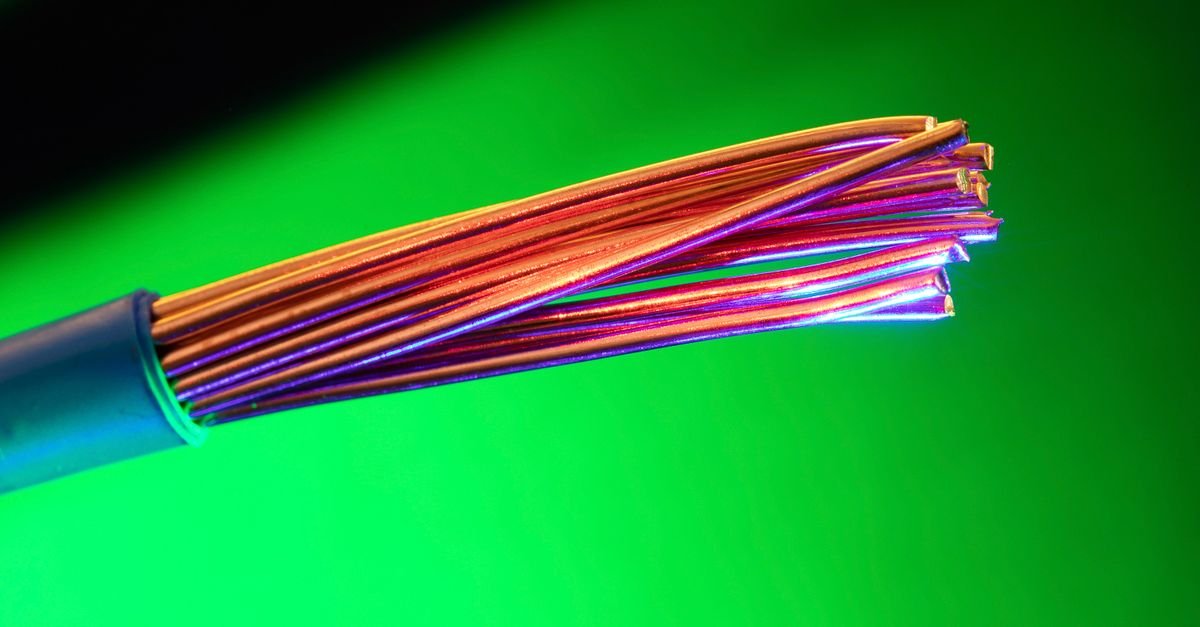
That is why a cord sold for a lamp and a cord sold for a motor are not the same object even when they look identical in the aisle. An 18-gauge lamp cord is carrying well under an amp over a few feet. Your machine is asking for thirteen, continuously, at the far end of a run. Same plug, same moulding, completely different job.
The genuinely misleading part is the amp rating printed on the packaging. You will find 100-foot 16-gauge cords with “13 A” on the label, and that number is not a lie — it is a thermal rating, describing the current the cord can carry without the jacket cooking. It says nothing whatsoever about how many volts survive the trip. A cord can be entirely within its own rating and still starve your motor, which is exactly the failure this article exists for.
Two more things the manuals are firm about:
- Three conductors, always. The ground is the low-resistance path a fault current is meant to take instead of taking you. Nothing here is worth removing a pin for, and an adapter that strands the ground is the same mistake with better manners.
- When in doubt, go heavier. Craftsman’s own wording: “If in doubt, use the next heavier gauge.” Nobody has ever regretted 12 gauge.
Outdoor Rating Is a Second, Unrelated Hazard
An undersized cord is a slow problem — heat, lost torque, a motor aging faster than it should. An indoor cord used outdoors is a different category entirely, and it fails in a way that involves you rather than the machine.

The jacket is the whole difference. Outdoor cords use a compound formulated to survive water, sunlight and cold without going brittle and splitting. Indoor cords do not, because they were never expected to lie in a puddle of your own runoff for two hours. The letters moulded into the jacket tell you which one you are holding: S for flexible service cord, J for the 300-volt junior rating, T for a thermoplastic jacket, O for oil resistance, and — the one that matters here — W for weather resistance and outdoor use. SJTW is the common outdoor homeowner cord. If there is no W in the code, it stays in the house.
The manuals use plainer language for the same thing. Sun Joe: use only cords “identified by marking ‘Acceptable for use with outdoor appliance; store indoors while not in use’.” If you are working outdoors in the wet, it also wants the plug and socket to be “of watertight construction”, and it is blunt about where the joints sit: “power cord connections should be kept dry and off the ground.”
That last one is free and almost nobody does it. You are standing there generating a running stream of dirty water, and the cord junction is lying in it. Put every connection on a bucket, a step, a paving slab, anything with a few inches of air under it. It takes ten seconds and it removes the single most common leakage path on the job.
The Cord Still Wound on Its Drum
This is the most under-covered item on the list, and it comes with a manufacturer warning in capital letters. Sun Joe’s manual states it flatly: “Power cords on drums should always be completely unwound to prevent the cord from overheating.”
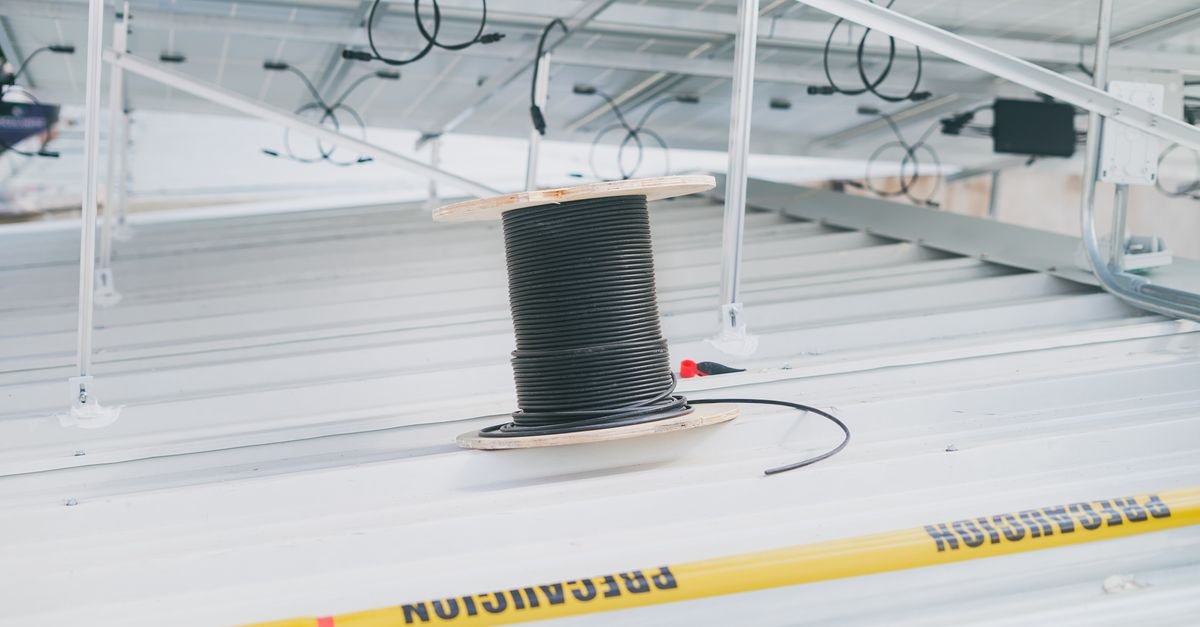
The mechanism is heat with nowhere to go. A conductor carrying current generates the same watts of heat whether it is laid out straight or wound on a reel — that part does not change. What changes is escape. Laid out along the ground, every inch of cord has open air on all sides and cool ground on one. Wound on a drum, the inner turns are buried under layer after layer of cord, each one both generating heat and insulating its neighbours. The heat that would have dissipated in seconds now has to work its way out through a solid cylinder of copper and plastic.
What eventually fails is not the copper. It is the insulation, which has a temperature rating, and which softens and degrades long before anything glows. That damage is permanent and invisible: you unwind the cord afterwards, it looks perfectly fine, and the jacket that was cooked in the middle of the reel is now the weak point in a cord you are going to use outdoors in the rain for another five years.
So: run out the whole cord, every time, even when you only need ten feet of it. Not a tidy coil by the outlet. Not a figure-of-eight tucked behind the machine. Flat on the ground in loose bends, then get the connections up off the wet.
I went looking for a published temperature figure — how much hotter a coiled cord runs than the same cord laid out, at a stated load — and could not find one from any manufacturer. The instruction is everywhere; the number is nowhere. So take the mechanism and the warning, and treat anyone quoting you a specific degree figure with the suspicion it deserves.
Cut Jackets, Crushed Cords and What the GFCI Sees
Both manuals I worked from carry the same instruction almost word for word: “Do not use damaged extension cords. Examine extension cord before using and replace if damaged.” It reads like boilerplate. It is not, and here is the part that makes it specific to pressure washing rather than general electrical hygiene.
Your machine’s GFCI does not protect your extension cord. On almost every electric pressure washer sold, the ground-fault device is moulded into the plug at the end of the machine’s own power cord. A GFCI watches what happens *downstream* of itself — it compares current going out with current coming back, and everything past it is covered. Plug that GFCI plug into an extension cord and the extension cord is now *upstream*. It sits between the wall and the only protective device in the chain, and the device cannot see it at all.
So a nicked jacket on the extension cord, sitting in your runoff, is leaking current to ground through a length of cable that nothing is monitoring. That is the whole reason some manufacturers refuse the cord outright rather than sizing one for you.
The fix is straightforward and costs nothing if your house already has it: plug into a GFCI-protected outdoor receptacle, so the extension cord is downstream of something. If it is not protected, that is a job for an electrician and it is worth doing regardless of pressure washers.
Three more rules, none negotiable:
- A cord that gets warm is a cord that is too small. Not a cord to keep an eye on, not a cord to use for the rest of the afternoon — a cord to stop using and replace with a heavier gauge. Warmth is the voltage drop showing up as heat, which means the motor is already going without.
- Never join two cords to make the length. Craftsman’s wording is that each individual extension must contain at least the minimum wire size, so daisy-chaining does nothing for your gauge problem. It does add another joint to sit in the water and another pair of contacts to warm up.
- Never repair a cord with tape. Electrical tape restores the look of a jacket and none of its function. Cords are cheap and copper does not heal.
Is It the Cord, or Is It the Machine?
The test is free, takes thirty seconds and settles the argument before you spend anything.
Unplug the extension cord entirely. Plug the machine directly into a wall outlet, on a circuit with nothing else drawing power. Run it. If the problem vanishes, nothing inside the machine has broken. The supply was the bottleneck and the motor was simply doing what it could with what arrived.
| What you see | Points at the cord | Points at the machine |
| Low pressure, pump sounds steady | Yes | Less likely |
| Motor grunts or labours when you pull the trigger | Yes | Possible |
| Stops after 15–25 minutes, restarts once cool | Yes | Possible |
| Fine on a short cord, poor on the long one | Yes | No |
| Cord or plug warm to the touch after use | Yes | No |
| Hums and will not turn at all | Possible | Yes |
| Pressure surging or pulsing rhythmically | No | Yes |
| Water leaking anywhere on the machine | No | Yes |
That last group is where you stop reading this page. A motor that hums and refuses to rotate has its own shortlist, and undervoltage is only one item on it — pressure washer motor hums but won’t start works through the rest in order. A machine that instead keeps shutting itself down when hot has causes beyond the supply, and the cord test rules out the cheapest one of them first.
And if the test says “the cord”, the honest next question is not which cord to buy.
FAQ
Can you use an extension cord with a pressure washer?
Sometimes, but check your own manual before you assume it. Of the three manufacturers I read for this article, one says an extension cord “is not recommended”, one says “DO NOT use an extension cord with this pressure washer”, and a third refuses one on the grounds that it sits upstream of the machine’s GFCI. If yours permits a cord, it will also specify a maximum length and a minimum gauge, and both of those are conditions rather than suggestions.
What gauge extension cord do I need for a pressure washer?
For a typical 13-amp, 120-volt machine, Craftsman’s published table gives 14 AWG for a total cord length of 25 feet and 12 AWG at 50 feet, with 100 feet and beyond marked not recommended. Sun Joe requires 14 AWG minimum at 25 feet and caps the combined length of factory cord plus extension at 60 feet. Buy 12 gauge if you are buying anyway — it costs a little more and removes the question.
Will a 100-foot extension cord work with a pressure washer?
The manufacturer tables say not recommended at that length, for any gauge, at 12 to 16 amps. The problem is not that the cord will catch fire; it is that the voltage arriving at the motor drops far enough to cost you real torque, and torque falls with the square of the voltage rather than in proportion to it. If the outlet is 100 feet from the job, move the machine and run water that far instead.
Does an extension cord reduce pressure washer pressure?
Yes, indirectly and more than people expect. The cord does not touch the water side at all, but a motor turning at reduced torque drives the pump less effectively, so output pressure falls. Because torque drops with the square of the voltage, a supply 10% low leaves roughly 81% of rated torque, and the effect on the gun is obvious long before anything trips or smells hot.
Can I use two extension cords together to reach further?
No. Joining cords does not improve the gauge problem — each individual cord still has to meet the minimum wire size on its own — and it adds a connection that will end up lying in the water you are producing. Buy the length you need in one piece, and if the length you need is not sold in one piece, that is the answer to a different question.
Is a 16-gauge cord ever acceptable for a pressure washer?
Not for a 13-amp machine, at any length, in any manual I opened. Sixteen-gauge cords are frequently sold with 13-amp ratings on the packaging, and that rating is real but thermal — it describes how much current the cord carries without overheating, not how many volts survive the journey. The gauge tables exist precisely because those two limits are different.
Why does my extension cord get warm when the pressure washer runs?
Because it is too small for the load. Warmth in a cord is voltage drop made visible: energy that was supposed to reach the motor is being spent heating copper instead. It is not something to monitor and carry on with. Stop, switch to a heavier gauge, and check that the cord was fully unwound rather than left on its reel, which makes the same load run considerably hotter.
Move the Machine, Not the Electricity
Here is the opinion this whole article has been walking toward, and it is the one I would actually spend money on: when you cannot reach, extend the water, not the power.
Fifty extra feet of garden hose costs you a little inlet flow, which you can check in a minute with a bucket and a watch. Fifty extra feet of extension cord costs you torque as the square of the voltage lost, heats the conductor, ages the motor windings, and adds two connections that will spend the afternoon in your runoff — upstream of the only ground-fault device in the chain. One of those failures produces a puddle. The other produces a repair bill, and occasionally a hospital visit.
The trade-off is not even close. A garden hose has no rating you can exceed, no gauge to get wrong, no reel that has to be unwound, and no consequence at all if it gets rained on. If the water still will not reach either, the honest answer might be a different machine entirely, and the power supply side of that decision is set out in electric vs gas pressure washer.
So: buy the 12-gauge outdoor cord, keep it short, run it out flat, get the joints off the ground, and replace it the first time it comes back warm. Then spend the rest of your effort on where the machine stands, which is the variable you can change for free.