Last Updated on September 25, 2026 by Umar Farooq
When a pressure washer motor hums but won’t start, the hum tells you the motor is energised and the rotor is not turning — which narrows the fault to five things: pressure trapped in the pump from the last use, a failed start capacitor, a pump seized solid, a jammed total-stop switch, or a supply voltage too low to break the motor away.
Two of those five cost nothing to rule out and take about ninety seconds between them. One of them costs a service visit. So the order you test in matters more than anything else on this page.
There is a small mercy buried in that noise. A machine that is completely dead is being unhelpful — it could be the outlet, the cord, the GFCI, the switch, the windings, anything. A machine that hums has already answered half of that: power is arriving, the switch is passing it, the windings are live. If yours is silent instead, this is the wrong page and why a pressure washer won’t start is the right one.
What the Hum Is Actually Telling You
A single-phase induction motor does not want to start on its own. Feed one winding with mains AC and you get a magnetic field that pulses back and forth rather than rotating, and a pulsing field pushes the rotor equally hard in both directions. That is the hum. It is a motor being shoved from two sides at once and going nowhere.
To make it turn, the machine has to create a second field that is out of step with the first. On a pressure washer that job belongs to a start capacitor and a start winding. Get that phase shift and the combined field sweeps round the stator, the rotor chases it, and the motor spins up. Lose it — or physically pin the rotor in place — and you are back to a pulsing field and a buzz.
Three things follow from that.
The motor is drawing its locked-rotor current while it hums. A stalled induction motor has no rotation, so it generates no back-EMF opposing the supply, and current climbs to several times the normal running figure. That heat lands in the windings, not in the water. Every second you hold that switch is a second of concentrated cooking.
So limit each attempt to a second or two. Press, listen, release, unplug. Not press-and-hope. The thermal cut-out or the breaker will eventually stop you, but they are a backstop rather than a plan, and a machine that has already tripped its thermal protector adds thirty minutes to the diagnosis before you have learned anything.
A click is a different fault from a hum. A single click with no buzz points at a switch, relay or pressure switch opening and closing. A sustained hum means current is genuinely in the motor. If your machine only clicks, stop reading the capacitor sections.
Three Ryobi Model Numbers Worth Checking First
This takes ninety seconds and it occasionally makes the whole job somebody else’s problem, which is why it goes here rather than at the bottom.
In August 2025, TTI Outdoor Power Equipment recalled Ryobi brushless electric pressure washers — models RY142300, RY142300VNM and RY142711VNM — because the capacitor could overheat and burst, forcefully ejecting parts. About 764,000 units in the US and 16,000 in Canada. TTI had received 135 reports of capacitors overheating, including 41 reports of explosions, resulting in 32 injuries and fractures to fingers, hands, faces and eyes. They sold at Home Depot and Direct Tools Factory Outlet between July 2017 and June 2024 for roughly $300 to $400, and the remedy is a free repair kit with a replacement capacitor (CPSC, 28 August 2025).
That recall is on this page for a specific reason: the part that failed is the exact part that makes a motor hum instead of turn. If you own one of those three models and it has started buzzing at you, do not open the housing. Go and claim the kit. None of which means Ryobi machines are generally suspect — three models, one component, a free fix. It does mean that checking a model number against the CPSC recall database is the cheapest thing you will do today, whatever badge is on your machine.
Pressure Washer Motor Hums but Won’t Start: The Order to Test In
Work down the table. It is sorted by what it costs you, not by what is most likely, because the two cheapest tests between them clear roughly half the field.
| # | Test | Costs | Rules out | Time |
| 1 | Water on, machine off. Squeeze the trigger until flow is steady, then switch on while still holding it | Nothing | Trapped pressure and air lock | 60 seconds |
| 2 | Unplug the extension cord. Plug the machine straight into a wall outlet with nothing else on the circuit | Nothing | Voltage drop | 30 seconds |
| 3 | Unplug. Try to turn the motor cooling fan or the pump coupling by hand | Nothing | Seized pump | 2 minutes |
| 4 | Note when the hum starts — at the switch, or only at the trigger pull | Nothing | Total-stop switch fault | 30 seconds |
| 5 | Everything above came back clean | A service quote | Start capacitor | Bench job |
If tests 1 to 4 all pass and the machine still hums, you have not failed. You have eliminated every free cause, and you now know the answer is inside the housing rather than on the driveway. That is worth having before anybody quotes you for anything.
Trapped Pressure Is the One You Can Fix for Nothing
Here is the scenario that catches most people, and it is not a fault at all.
You finished the patio last weekend, switched the machine off, wound the hose up and put it away. The high-pressure hose and the pump head kept their charge — water does not compress, so the system stays loaded until something lets it out. This weekend you flip the switch and the motor has to break away against a pump that is already pressurised. On a marginal capacitor, a cold morning, or a long cord, it cannot. It hums.

I went looking for manufacturer wording on this, half expecting it to be forum folklore. It is in the start-up procedure. Generac’s own support instruction is blunt about both halves of it: “Squeeze the trigger to purge the pump system of air. NEVER run the pressure washer without purging the system of air,” and after a failed start attempt, “point spray gun in safe direction, and squeeze spray trigger to release high pressure” before you try again (Generac, preparing and starting a pressure washer).
The sequence that fixes it:
1. Machine switched off and unplugged. Garden hose connected, tap fully open.
2. Point the gun somewhere harmless and squeeze the trigger. Let water run through until the flow is steady and no more air spits out — usually thirty seconds or so.
3. Keep holding the trigger. Plug in and switch on with the trigger still open.
4. The motor now starts into an open circuit with no pressure to fight.
Air is the other half of the same problem. A pump full of air after winter storage gives the motor a load it was never meant to start against, and it will chew the seals if you do get it running.
If holding the trigger starts the machine every single time, you do not have a fault yet. You have a start capacitor on its way out and a machine that still works if you humour it. Plan for that repair rather than being surprised by it in July.
When the Start Capacitor Has Given Up
Capacitors age. They lose capacitance quietly over years of heat cycles, and the phase shift they produce shrinks with them until one morning it is no longer enough to turn a pump over. This is the most common cause of a humming pressure washer, and it is also the one the search results explain worst — most of them stop at “replace the capacitor” as though it were a fuse.
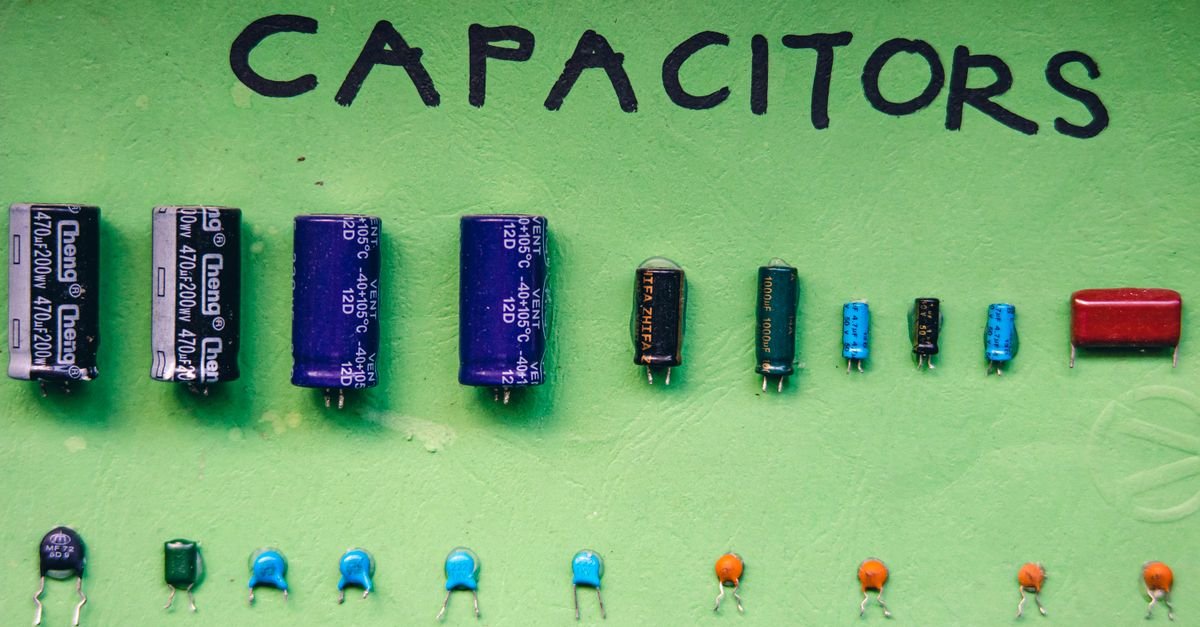
The pattern that points at the capacitor rather than at anything else:
- The hum is identical every attempt, with or without the trigger held, with or without water connected
- The pump turns freely by hand, so nothing is mechanically locked
- It sometimes catches if the motor is nudged into motion, then runs perfectly until you switch it off
- It got worse gradually — first only on cold mornings, then most of the time
- The machine sat unused for a long stretch, which is when electrolytic capacitors do their worst ageing
- If you can see it: a domed or split top, a brown crust around the seal, or a smell of fish or solvent
Now the part the rest of the internet skips, and the opinion I will not soften: for a homeowner, this is not a driveway repair, and the reason is stored energy rather than difficulty. A capacitor is a device whose entire job is to hold charge. Unplugging the machine does not empty it. Virginia Tech’s electrical safety guidance puts it plainly — capacitors “may store hazardous energy even after the equipment has been de-energized, and may build up a dangerous residual charge without an external source” — and the design standard it quotes for equipment built to be serviced is that a capacitor must fall to 50 volts or less within five minutes of access, and that the machine must do this by itself (Virginia Tech EHS, Capacitors).
Your pressure washer is not built to that standard. It has no access interlock, no published discharge time, and no bleed path you can confirm from outside the housing. So: do not put a meter probe, a screwdriver or a finger across a capacitor unless you already know how to discharge one safely and have the means to verify it is discharged. “Short it with a screwdriver” is advice that circulates freely and it is how people weld screwdrivers.
And if you want a picture of what a capacitor failing energetically looks like, the recall above counted 41 explosions and 32 injuries to fingers, hands, faces and eyes, from a part sitting inside a sealed housing doing nothing more provocative than its job. The part itself is cheap. The access is easy. Neither of those is the reason to be careful.
Take it to a service centre, tell them the motor hums and the pump turns freely by hand, and you have handed them the diagnosis. The bench time is usually short.
A Pump That Cannot Turn Locks the Motor With It
On almost every homeowner electric machine the pump is direct-driven off the motor shaft. There is no clutch, no belt and no slip. If the pump cannot rotate, neither can the motor, and a healthy capacitor will sit there humming at a mechanical problem it has no way to solve.

Three things lock a pump, and the first one accounts for most of them:
Freeze damage. Water expands as it turns to ice, and a pump head full of water in an unheated garage has nowhere to put that expansion except into the aluminium around it. Pistons jam, seats distort, and sometimes the head itself cracks — often a hairline you cannot see until it is under pressure. Of everything on this page, this is the one that most often ends with a new machine, and it is the one that costs nothing at all to prevent — draining the pump before winter is a two-minute job at the end of the season.
Mineral scale. A machine left standing full of hard water lays scale on the piston walls and valve seats. Slower than freezing, less dramatic, same end state: parts that will not move.
Dried seals. After a long dry storage, seals stiffen and grip. The mildest version, and the one most likely to free up.
The test, with the machine unplugged: find the cooling fan at the back of the motor, or the coupling where motor meets pump, and try to turn it by hand. If it moves freely, the pump is not your problem and you are back to the capacitor. If it turns stiffly but turns, push pump saver through the inlet and work it gently — dried seals often come back. If it will not move at all, the pump is seized, and on a homeowner electric machine the pump is the most expensive assembly on the frame. Get the part price for your specific model before you commit to anything, because the honest answer is sometimes that the machine has already finished.
Not Enough Volts to Break Away
This one surprises people, because the machine is obviously getting power — it is humming, after all. The catch is that starting torque in an induction motor scales with the *square* of the applied voltage. Drop the supply by ten percent and you have not lost ten percent of your starting torque; you have lost about nineteen, because 0.9 squared is 0.81. Lose twenty percent of your voltage and more than a third of the torque goes with it.
A motor in that state behaves exactly like one with a tired capacitor. It hums, it draws heavy current, and it never breaks away. Plenty of machines get diagnosed as capacitor failures when the actual fault is a hundred feet of thin orange cable on a reel.
The usual suspects are boring and free to eliminate:
- A long or undersized extension cord, especially one still coiled on its drum
- Two cords joined end to end, which is never the same thing as one long cord
- A long cable run to an outbuilding, or a circuit already carrying a freezer
- A generator sized for running watts rather than for the starting surge
The test is the same one for all of them. Plug the machine directly into a wall outlet, on a circuit with nothing else running, with no extension cord at all. If it fires up, nothing was ever wrong with the machine. If it still hums, the supply is in the clear and you can stop shopping for cable. The related question of a machine that starts but keeps opening a protective device is covered in pressure washer tripping breaker.
A Sticking Total Stop Switch Fakes the Same Symptom
Most electric pressure washers use a Total Stop System — a pressure switch that energises the motor when you pull the trigger and cuts it a second after you let go. It is a good feature and it prevents a great deal of bypass heating. It is also a mechanical switch sitting in the wettest, limiest part of the machine, and mechanical switches stick.
A TSS fault imitates a capacitor fault closely enough to cost people money, so the distinction is worth knowing. Listen to *when* the hum arrives:
- Hums the instant you flip the power switch, trigger untouched. On a TSS machine the motor should be silent until you pull the trigger. A hum with the gun closed suggests the switch contacts are stuck closed, or the plunger is jammed against its seat by scale or corrosion.
- Silent at the switch, hums only when you pull the trigger. The switch is doing its job. The fault is downstream of it — capacitor, pump or supply.
Limescale is the common cause where the water is hard, and it is one of the reasons machines that live on well water age faster than the spec sheet suggests. Diagnosing a stuck pressure switch properly means opening the housing, which puts you back beside a capacitor. Same rule applies.
The Point Where You Put the Screwdriver Down
Everything above this point is a check you can run in a driveway with nothing in your hands. This is where that stops, and the reason is not that the work is difficult.
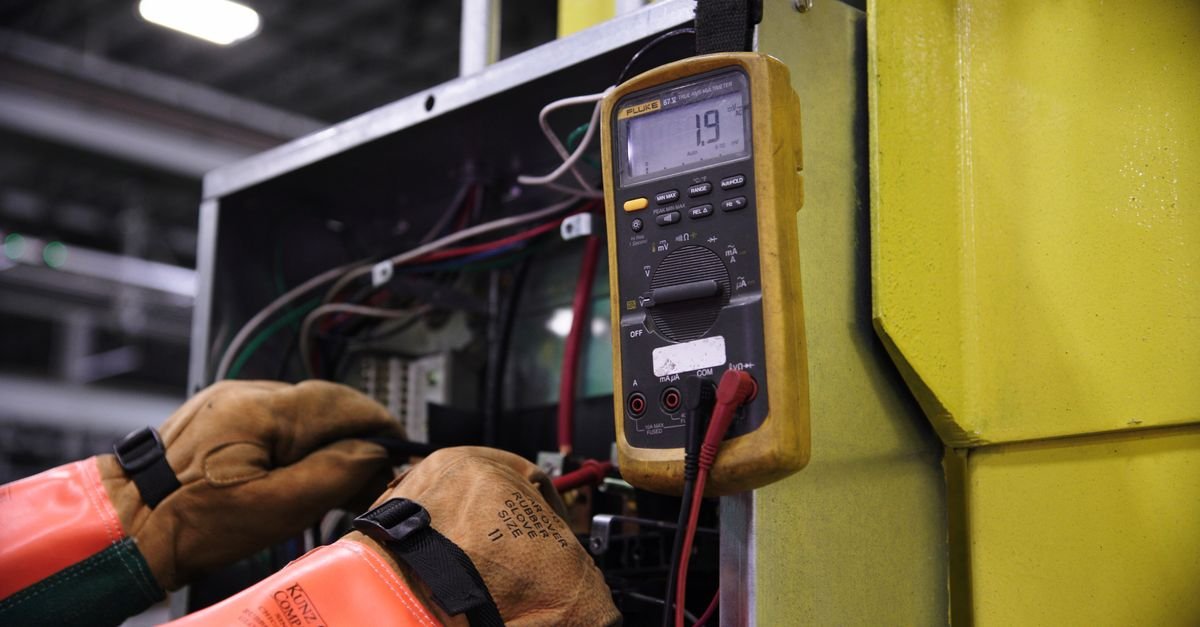
Stop and hand it to a service centre if any of these is true:
- You can see a capacitor that is domed, split, weeping or crusted at the seal
- There is a burning smell, or the housing is hot after two seconds of humming
- The breaker or GFCI opens on every attempt
- The pump will not turn at all by hand after freezing weather
- There is water inside the motor housing
- The machine appears on an active recall — that repair is already paid for
- You do not have a way to discharge a capacitor and confirm it is discharged
And the one that is not negotiable: if the machine is under warranty, opening the housing is very likely the end of it. The buzzing will still be there in a week. The warranty will not come back.
FAQ
Why does my electric pressure washer hum but not start?
The hum means mains power is reaching the motor windings while the rotor stays still, so the fault is between “the motor is energised” and “the motor turns.” In practice that is trapped pressure in the pump, a failed start capacitor, a mechanically seized pump, a stuck total-stop switch, or a supply voltage too low to produce starting torque. Rule out the first and the last before suspecting anything inside the housing, because both are free.
Can a bad capacitor make a pressure washer hum?
Yes, and it is the most common single cause. A single-phase motor cannot start without a phase-shifted second field, and the start capacitor is what produces it. When capacitance drops far enough, the field stops rotating and starts pulsing, the rotor gets pushed equally hard in both directions, and all you hear is the buzz. The classic tell is a motor that will run perfectly once it is nudged into motion.
How do I tell a seized pump from a dead capacitor?
Unplug the machine and try to turn the motor’s cooling fan or the pump coupling by hand. A capacitor fault leaves the shaft turning freely, because nothing is mechanically wrong. A seized pump will be stiff or immovable. That one check separates a bench repair from a pump replacement and takes about two minutes.
Can I replace a pressure washer capacitor myself?
The part is cheap and the access is usually simple, but a capacitor holds a charge after the machine is unplugged and there is no interlock on a consumer pressure washer guaranteeing it has bled down. Unless you already know how to discharge one safely and can verify with a meter that it has discharged, this belongs on a service bench. Shorting the terminals with a screwdriver is common advice and a genuinely bad idea.
Why does my pressure washer hum only when I pull the trigger?
That is the total-stop switch doing exactly what it should — the motor is meant to be silent until the trigger closes the pressure switch. So the switch is fine and the fault is beyond it. Work through trapped pressure, supply voltage and the pump before assuming the capacitor, since the first two cost nothing.
Is it safe to keep pressing the switch while the motor is humming?
No, and it makes the diagnosis harder. A stalled motor draws locked-rotor current because there is no rotation generating back-EMF to oppose the supply, and that current goes into heating the windings. Limit each attempt to a second or two, unplug between tries, and if the motor housing gets hot, leave it half an hour before touching anything.
My pressure washer hummed all spring and now it does nothing at all. What changed?
Usually the thermal protector, which opens when the windings overheat and resets itself once they cool. Give it thirty minutes unplugged and out of the sun. If it hums again after cooling you are back where you started, and the underlying fault has simply been getting worse each time it was asked to start against a load it could not move.
Squeeze the Trigger Before You Suspect the Motor
Five causes, and the two free ones are at the top of the list for a reason. Hold the trigger open while you switch on, and plug straight into the wall with no cord. Between them that is ninety seconds, it costs nothing, and it resolves a genuinely large share of humming machines before anybody opens anything.
If it still hums after that, turn the shaft by hand. Free means capacitor. Locked means pump. That single check is the difference between a short bench repair and a conversation about whether the machine is worth keeping, and you can make it in your own garage with no tools at all.
What I would not do is the thing the search results all quietly suggest — order a capacitor, open the housing on a Sunday afternoon and hope. The component that failed in 764,000 recalled machines did so by bursting, and the one in yours has been storing energy since the last time it worked. Let someone with a meter and a bleed resistor be the one to meet it.