Last Updated on September 25, 2026 by Umar Farooq
A pressure washer leaking water from pump seams, fittings or valves is showing you one of six different faults, and the exact spot the water comes from — not how much of it there is — is the entire diagnosis. Three of those six are not a pump failure at all. One of them is the machine working exactly as designed.
The trouble is that a pressure washer is a device whose whole working life is spent soaked. Asking where the water is coming from, while the thing is dripping from every surface it owns, is not a fair question. Oil at least has the decency to leave a trail. Water evaporates, spreads along castings by capillary action, and gives you nothing to follow.
So the first ten minutes are not about fixing anything. They are about getting the machine dry enough to tell you the truth.
Find the Wet Spot Before You Find the Fault
You need three things: a towel, a sheet of kitchen roll, and the discipline not to start ordering parts yet. Kitchen roll is the best diagnostic instrument in the garage, because water marks paper instantly and holds the shape of where it landed.
Work through it in this order, because each step isolates a different part of the water path:
1. Shut everything down and towel the pump bone dry. The whole casting, the fittings, the underside, the frame rail below it. Wipe the inlet and outlet couplings last so you know they started dry.
2. Lay a sheet of kitchen roll flat under the pump, not scrunched. A folded cardboard box works too, but paper reacts faster.
3. Water on, machine off. Open the tap, leave the engine or motor off, and watch for thirty seconds. Anything wet at this stage is on the inlet side — the garden hose coupling, the inlet filter housing, the inlet fitting’s washer. Mains pressure is somewhere around 40 to 70 PSI, so there is no pump pressure involved in this leak at all.
4. Start it and hold the trigger open for a minute, spraying at a wall or a paving slab. Leaks that appear only now are on the high-pressure side, and that includes the manifold seam.
5. Release the trigger and leave it idling for thirty seconds, then look again. Water that shows up only in this window is the bypass and thermal relief story, which is a different section and usually good news.
Then read the paper. Where the marks land sorts the fault before you touch a spanner:
| Where the water appears | Which stage it showed up | What it usually is |
| Ring around a threaded coupling | Step 3 or 4 | O-ring or washer, not the pump |
| The seam where the front block meets the back of the pump | Step 4, growing as it warms | Worn packings or low-pressure seals |
| A small fitting on the pump head pointing at the ground | Step 5 only | Thermal relief valve, working |
| Along a bolt head or under a bolt flange | Step 4 | Loose manifold bolts |
| Middle of a smooth casting, nowhere near a joint | Step 4, same when cold | A crack, almost always frost |
| Fine mist you can feel rather than see | Step 4 | A pinhole — stop, this one is dangerous |
One warning about that last row before we go further. A high-pressure pinhole produces a jet you can barely see and that will go through skin without you registering it as an impact. If the machine has one, shut it off. Never run a hand or a finger along a pressurised casting looking for a leak. High-pressure injection injuries leave a mark the size of a pinhole and are treated as surgical emergencies, so if a jet does break your skin, that is an emergency room today rather than a look at it tomorrow.
Pump or Fitting? A One-Minute Test
Most of the panic in this topic comes from one mistake: a leak arriving near the pump gets called a pump leak. It usually is not. Generac’s own troubleshooting splits water leaks into three families that have nothing to do with each other — the pump, the garden hose connection, and the gun, lance or high-pressure hose (Generac, troubleshooting pressure washer water leaks). Two of those three are rubber rings that cost less than a coffee.
The fastest way to tell them apart is the shape of the leak, and you can read it in under a minute.
- Fitting leaks make a ring. Water appears all the way round a thread or a quick connect and runs down from that collar. Under pressure it often sprays sideways as a fine fan rather than dripping, because it is escaping through a gap of a few thousandths of an inch.
- Pump leaks come from a seam or a face. They weep downward, they do not spray, and they get worse as the machine warms up rather than staying constant.
- Fitting leaks do not care about temperature. Packing leaks very much do. A leak that is barely there in the first minute and running freely after ten is internal.
If a coupling is wet, wrap a dry strip of kitchen roll around the joint, run the machine for thirty seconds and look at the strip. Wet on the collar means the joint. Wet only on the bottom edge, where drips from above have landed, means the water came from somewhere higher up and the coupling is innocent. Then check the obvious: the inlet washer, the O-rings inside both quick connects, and whether the hose was cross-threaded the last time it went on in a hurry. The sizing, material and replacement routine for those rings is a five-minute job that ends a surprising share of these.
Only when every threaded joint stays dry does the pump become the suspect.
Weeping at the Manifold Seam Is Worn Packings
This is the classic, and it has a very specific address: the horizontal joint where the front block of the pump — the manifold, usually brass or anodised aluminium — bolts onto the crankcase behind it.
AR North America publishes it as a single line in its troubleshooting table, and the phrasing is worth reading carefully: “Water Leakage From Under Manifold. Slight Leakage.” Probable cause, “worn packing.” Solution, “install new packing” (AR North America, troubleshooting). Note that the manufacturer’s threshold for action is *slight* leakage. Not a stream. A drip is already the diagnosis.
The mechanism explains why the seam is the only place it can appear. Each plunger passes through the manifold and into the crankcase, and each one is sealed twice: a high-pressure packing at the front holding back several thousand PSI, and a low-pressure seal behind it whose job is to stop whatever gets past the first one from reaching the oil. Between those two seals is a drain gallery that vents to atmosphere, and atmosphere, on almost every pump ever built, is the gap between manifold and crankcase. So water that defeats the high-pressure packing does not go into the oil first. It goes onto your driveway first, which is the machine giving you a free early warning it has no obligation to give.
Cat Pumps describes the same failure from the parts side: a worn seal or O-ring “can allow water or the pumped fluid to leak internally or externally, which can be visible as a leak or a drip” (Cat Pumps, water leak causes and solutions).
Three things wear packings out, and only one of them is honest work:
- Bypass heat. Hold the machine at idle with the trigger released and the same water circulates through the pump, warming on every pass. Pumptec, which builds high-pressure pumps, puts the limit plainly: liquid in the pump should never reach 140°F, because at that point Viton and Buna seals become “too malleable, almost like chewing gum,” and stop sealing. Buna-N is what most consumer pumps use. That is the whole argument for not letting the machine idle while you move a ladder.
- Grit. Sand, iron and scale act as lapping compound between the packing lip and the plunger. Well water and a missing inlet screen do more damage here than hours ever will.
- Sitting dry. Packings stay pliable because water passes over them. A pump stored dry for eight months comes out with the elastomer shrunk and set, which is why a machine can develop a weep over winter without having done any work at all.
That last one also produces the leak that fixes itself. A pump that has sat all winter sometimes weeps at the seam for the first thirty to sixty seconds of the season and then stops, as the packings take up water and swell back to shape. I went looking for a manufacturer willing to print that as normal and found none, which is fair — nobody wants to publish a blessing for a leak. The practical rule: if it stops inside a minute and does not return once the pump is hot, it was storage. If it comes back as the machine warms, it is wear, and a warm pump weeping at the seam is the most repairable failure a pump has.
When the Machine Is Supposed to Dump Water
One of the six spots is not a fault at all, and it sends healthy machines to repair shops every summer.
If your machine puts water on the ground only during a pause — trigger released, engine still running, pump hot — look for a small brass or plastic fitting screwed into the pump head and pointing downward. That is a thermal relief valve, and dumping hot water is its entire job. It lets the overheated water out so cooler mains water can come in behind it, which is what stops the seals cooking while you take a phone call. It is the only component on the machine that is doing well when it is wet.
Three questions separate a working valve from a failed one. Is the venting intermittent and tied to pauses, or constant? Is the pump hot when it happens, or was the machine started two minutes ago? And does the spray at the wand go weak at the same time? A valve venting from a cold pump has failed open, usually on a grain of grit, and it is a cheap part. The full split between thermal relief, pressure relief and the unloader — three things that all get called “the relief valve” — is covered properly here.
Torque the Bolts Before You Order a Kit
Here is the fix that costs nothing, and it gets skipped because it is not satisfying. Generac lists loose bolts, alongside worn seals and a cracked housing, as a cause of water leaking from the pump. Loose bolts are the cheapest entry on any troubleshooting list and the one nobody checks, because free fixes have terrible marketing.
The manifold is clamped against the crankcase by four to eight socket-head bolts, and that clamp load is what holds the seal stack compressed. Three things quietly reduce it: vibration from a single-cylinder engine, thermal cycling between a cold start and a pump head running at 120 to 140°F, and the seals themselves relaxing slightly in their first hours of use. Lose enough clamp and water finds the joint before any packing has actually worn out.
Doing it properly takes five minutes:
1. Machine off, water off, trigger squeezed to release any trapped pressure, and the pump cold. Not warm. Aluminium that has been at running temperature will read differently.
2. Find the right hex key or socket and seat it fully. These heads are shallow and rounding one turns a five-minute job into an afternoon with an extractor.
3. Work diagonally across the pattern, the way you would a wheel, not round the outside. Even clamp is the point.
4. Go in small increments, two or three at a time, until each one is snug and then a touch beyond. Stop there.
The thing to resist is leaning on it. These bolts thread into aluminium, and stripping a manifold bolt hole is a considerably more expensive problem than the leak you came to fix. Torque figures are real but they are per-pump-family — consumer manifold bolts sit in the single-digit foot-pound range on many machines, which is far less than instinct suggests — and the only figure worth using is the one in the service manual for your casting number. If retorquing stops the weep, you are done. If it returns within an hour of running, the bolts were never the problem and the packings are.
Frost Damage: The Leak No Kit Fixes
Water expands by roughly nine percent when it turns to ice, and an aluminium manifold is the softest thing in the argument. This is the expensive entry on the list, and it has a signature you can read without taking anything apart.
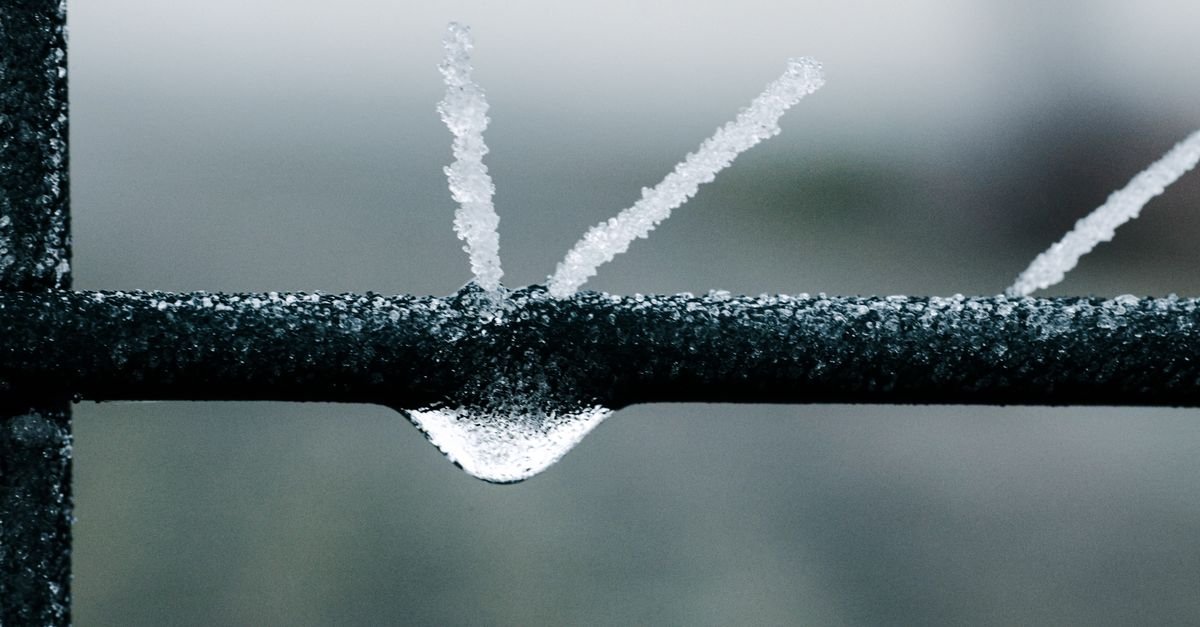
A frost crack gives you four tells at once:
- The water comes from the middle of a casting, not from a seam, a bolt or a fitting. Dry the block, run it at pressure, and watch for a bead forming along a line rather than a drop forming at an edge.
- It is identical cold and hot. Packing leaks grow with temperature. A crack does not care.
- Tightening changes nothing. If the bolts made no difference, that is information.
- The timing is spring. The machine worked fine in October and leaks in April, having done no work in between. Ice is not subtle about scheduling.
Cracks are often hairline and frequently hidden — under the unloader boss, behind the inlet fitting, along a casting web. A useful trick is to dry the pump, run it, and look for the leak while the water is still moving rather than after it has spread.
Freezing has a second, quieter victim inside the same pump. Cat Pumps lists a cracked plunger among its water-leak causes, with thermal shock and pressure spikes as the origin, and adds the part people miss: a cracked plunger “could allow water or the fluid pumped to seep and even pass-through seals,” so the damaged plunger then destroys the seals running on it. That is why a freeze-damaged pump sometimes leaks from the seam and from a casting, and why fitting a packing kit to a pump with a chipped plunger buys you about one afternoon.
There is no honest repair here. Epoxy on an aluminium casting that thermally cycles and vibrates at a few thousand PSI is a way of postponing the decision rather than making it. On a triplex you can sometimes buy a replacement manifold. Everywhere else it is a new pump, for a failure that thirty seconds of pump saver before storage would have prevented entirely.
Can You Keep Using a Pressure Washer Leaking Water From Pump Seals?
For a seam weep, for one session, with one check first: yes. For a cracked casting or a visible jet, no, and the reasons are different from what most people assume.
The risk with a weeping packing is not that the pump runs dry — it has an entire mains supply behind it. The risk is direction. The packing that has started passing water outward is the same one holding water back from the low-pressure seal behind it, and once that second seal goes, the water arrives in a crankcase that has no filter and no drain. Check the oil before you carry on, and check it again afterwards. Pump oil that has turned pale and opaque means water has crossed into the crankcase, which is a related but separate fault with its own urgency and its own article — treat it as a stop, not a shrug.
Two other things worth knowing while you decide:
- A seam leak is also a flow leak. Water escaping at the packing is water not reaching the nozzle, so a weeping pump often arrives alongside pressure that has quietly sagged over a season. If both showed up together, that is one fault, not two.
- A cracked casting propagates. Every trigger pull is a pressure cycle, and cracks grow along pressure cycles. A weeping crack today is a casting that opens further, and an aluminium pump head failing at working pressure is not a leak, it is debris.
The rule I would use: a slow weep at the seam gets you through the job you are already halfway through. It does not get you through another season.
The Honest Call on an Axial Pump
Here is the opinion, and it is about timing rather than money: on a sealed axial or wobble-plate pump, a weep at the manifold seam is not a repair to schedule — it is a clock, and the only cheap version of this decision is the one you make in the first week.
The mechanism is the whole argument. Those pumps ship with no published exploded diagram and no seal kit sold by part number, because they were designed on the assumption that nobody would ever open one. So the fix is a bolt-on replacement pump, and that price does not change whether you buy it in May or September. What changes is everything behind the seal. Every hour you run a weeping pump pushes a little more water past the low-pressure seal into oil that cannot be drained on most of these units, and water in a crankcase becomes rust on the journals and scoring on the bearings. Wait long enough and a pump swap on a perfectly healthy engine turns into a machine with play in the shaft, which is the point at which people start pricing whole new machines instead.
On a triplex the arithmetic inverts, because the parts exist and the pump is worth the labour:
| What you found | Triplex pump | Axial or wobble-plate |
| Ring leak at a coupling | O-ring, minutes | O-ring, minutes |
| Weep at the manifold seam | Packing kit, an afternoon | Replacement pump, decide now |
| Drip only during pauses, hot pump | Thermal valve, working | Thermal valve, working |
| Weep that stops after retorquing | Done, free | Done, free |
| Water from the middle of a casting | New manifold if available | Replacement pump |
| Milky oil alongside the weep | Seal kit, and check the crank | Replacement pump |
And before anyone prices a whole new machine: the engine or motor bolted to that pump is almost certainly untouched by any of this. Water leaks stay on the water side.
FAQ
Why is my pressure washer leaking water from the pump?
In most cases, worn low-pressure seals or packings. Water that gets past the high-pressure packing on a plunger vents to atmosphere at the joint between the manifold and the crankcase, which is why the classic symptom is a weep from that horizontal seam that grows as the machine warms up. Loose manifold bolts, a failed thermal relief valve, a frost-cracked casting and a leaking coupling O-ring produce the same puddle from different places.
Is it normal for a pressure washer to leak water from the pump?
Some of it is. A thermal relief valve venting hot water during a pause with the machine idling is designed behaviour, not a fault. A pump that has been stored dry over winter can also weep for the first thirty seconds or so as the packings take up water. What is not normal is a leak that grows as the machine heats up, or one that is present from a cold start every time.
Can I use a pressure washer that is leaking water from the pump?
For a single session, if the leak is a slow weep at the seam and the pump oil is still clear. Check the oil before and after. If it has turned pale and opaque, water has crossed into the crankcase and the machine should come out of service. If the leak is a fine jet you can feel, or comes from the middle of a casting, stop immediately.
How do I tell a pump leak from a hose fitting leak?
Dry everything, wrap a strip of kitchen roll around each threaded joint and run the machine for thirty seconds. Fitting leaks appear as a ring around the collar and often spray sideways as a fine fan. Pump leaks come from a seam or a casting face, weep downward rather than spraying, and get worse as the pump warms.
Why does my pressure washer leak water when the trigger is not pulled?
That pattern points at the thermal relief valve. With the trigger released, water recirculates inside the pump and heats up, and the valve opens to dump some of it so cooler water can enter. It should be intermittent and tied to a hot pump. A valve that drips from a cold pump at startup has failed open and is an inexpensive replacement.
Can a cracked pressure washer pump be repaired?
Not reliably. Epoxy on an aluminium casting that vibrates and cycles between cold and working pressure delays the decision rather than fixing it. A triplex may have a replacement manifold available by part number; otherwise a cracked head means a replacement pump. Frost is the usual cause, and draining or using pump saver before storage prevents it outright.
Do I need to replace the whole pump if the seals are leaking?
It depends on which pump you own. Triplex plunger pumps have packing and seal kits sold by part number and are designed to come apart. Axial cam and wobble-plate pumps, which are what most homeowner machines carry, have no published seal kit, so the practical repair is a bolt-on replacement pump. Look for a drain plug and a sight glass — if there is neither, assume no kit exists.
Most of These Leaks Are Not the Pump
Count what actually landed on the list. Of the six places water comes from, one is a coupling O-ring, one is a valve doing exactly what it was fitted to do, and one is a set of bolts that need a socket and nothing else. Three of the six cost you nothing but the ten minutes it took to find them. Only two involve buying a part, and only one is terminal.
That is why the towel and the kitchen roll come before the parts catalogue. A puddle under a pressure washer tells you almost nothing; a dry machine run for sixty seconds tells you everything. Dry it, run it, read the seam.
And if it does turn out to be the packings — that leak is the pump asking for a packing kit before it asks for a crankshaft. Most people wait. You do not have to.