Last Updated on September 25, 2026 by Umar Farooq
Cleaning mold from siding is a kill, not a scrub. A fungicidal wash has to sit on the wall long enough to oxidise a living colony, then get rinsed off gently — and none of that matters for long unless you also find out why that particular wall is still wet at lunchtime.
Two houses on the same street get the same wash on the same weekend. One is still clean four years later. The other is speckled again by August. The difference is almost never the product in the sprayer. It is that one of those walls dries and the other one does not.
This is the whole-house, any-material version of the problem: what the growth actually is, how far into your particular cladding it gets, and how to read the shape of the stain to find the water feeding it. If your walls are vinyl specifically, the step-by-step, dilution ratios and rinse order live in how to remove mold from vinyl siding, which covers that material properly. This page is about the biology and the cause.
Mold Is Eating Something, and It Is Not the Siding
Mould is not a stain. It is a colony of fungus, alive, with a food supply — and working out what it is eating tells you almost everything about how hard it will be to remove.
The US Forest Products Laboratory puts the requirements plainly: ideal conditions are “warm, moist climates, oxygen, and a substrate that serves as a nutrient source for mildew” (Bussjaeger et al., Mildew and mildew control for wood surfaces). The EPA is blunter still — mould “can grow on virtually any organic material as long as moisture and oxygen are present” (EPA, Mold Course Chapter 2).
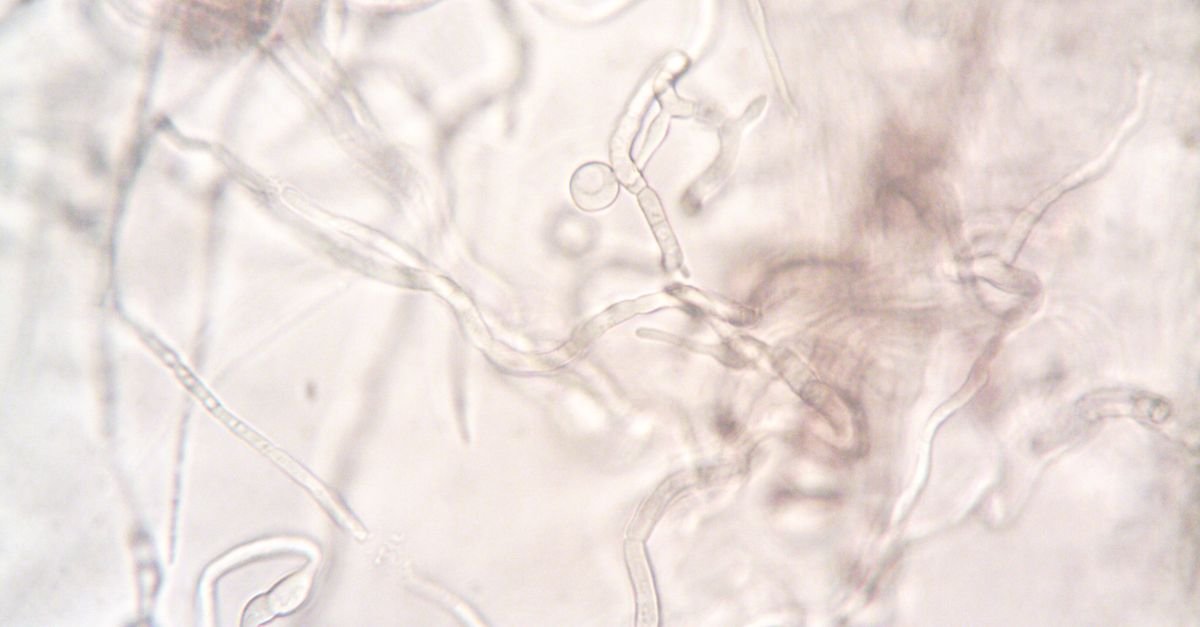
Read those two sentences next to each other and a useful thing falls out. Oxygen is free. Warmth is seasonal and out of your hands. That leaves two levers: the food and the water. On a vinyl or metal wall the food is not the cladding — it is the film that lands on it. Pollen in April, tree sap, exhaust soot, lawn clippings, dead insects, the fine grey grit thrown up off the road. That film is organic material spread thin across a surface that holds still. On a timber wall, the wall itself is on the menu.
Spores are not the problem, incidentally. Spores are in the air constantly, in every yard, all year, and there is nothing to be done about that. The problem is that one wall of your house booked them a room.
Mold, Mildew, or Algae — a Thirty-Second Call
Three things get called mould and only two of them are fungi.
Mildew is flat, powdery, and black or dark grey, usually in fine speckles that merge into a haze from a distance. Mould proper is fuzzier and raised, more often in a defined patch, and it can be black, green, brown or a dirty white. Both are fungi and both behave the same way under a chlorine wash.
Algae is not a fungus at all. It is a simple plant, it photosynthesises, and it needs light — which is why it turns up as an even green film or a streak running down from a water path rather than a patch tucked under a soffit. It is a different organism with a different habit, and it gets its own treatment elsewhere on this site. The good news for anyone standing in front of a wall with a bucket: the same oxidising wash destroys all three, so you do not need to make this call to get started. You need it to understand why the growth is where it is.
The field test takes a minute. Dab a spot with household bleach on a rag and wait. Fungal growth and algae lighten or vanish. Dirt does not change at all, and neither do the small hard black dots of artillery fungus, which are spore packets cemented onto the surface and do not care about chemistry.
Killing It and Removing It Are Two Different Jobs
This is the part almost every article on this topic skips, and it is the reason so many people wash a wall twice a year for the rest of their lives.
A fungicidal wash kills. Water removes. They are separate steps that happen at separate times, and a pressure washer only does the second one. Pressure does not kill fungus — it exfoliates it. It takes the pigmented top layer off and leaves the living base sitting down in the surface texture with its food supply intact, which is why a pressure-only wash looks perfect on Sunday and starts freckling again about five weeks later.

Before you turn the pressure up, turn it down. A sodium hypochlorite solution at roughly one percent at the wall, with a surfactant in it so it clings instead of running off, left to dwell for ten to fifteen minutes without drying, will kill a colony that 3,000 PSI cannot. The dwell time is the kill. Everything after it is housekeeping. The mix itself, including the one combination that produces chlorine gas, is covered in siding cleaning solution — I am not going to restate ratios here.
What confuses people is that a dead colony and a live one are the same colour when wet. The wall looks identical either way for the first hour. You only find out which job you did in six weeks’ time.
Two failure modes, then, and they look nothing alike:
- Removed but not killed. The wall goes clean, then speckles return in the same pattern within four to eight weeks. Classic signature of a pressure-only wash, or a vinegar wash, or a chemical wash rinsed after ninety seconds because it looked done.
- Killed but not removed. The black lightens to a flat grey or brown shadow and stops changing. That is usually dead pigment locked into a paint film or a porous surface. Annoying, but you have actually won — it will not spread, and it will not darken.
If you are unsure which one you are looking at, wait. A dead stain stays exactly the same shade for months. A live colony gets darker.
Cleaning Mold From Siding: How Deep It Gets Depends on the Material
Here is where the all-materials version of this job diverges from the vinyl version, and it is the difference between a wall that comes back perfect and a wall that comes back “better.”
On a non-porous cladding you are cleaning a film that sits on top. On a porous or painted cladding you are cleaning *into* something, and there is a point past which the mark stays even after the organism is dead.
| Cladding | Is the material itself food? | Where the colony actually sits | What is left after a proper kill | Realistic return interval |
| Vinyl and polymer | No | In the surface film and the embossed grain | Clean, unless the panel has chalky oxidation underneath | 2–4 years |
| Aluminium and steel | No | In the chalked, degraded paint film | Even colour if the chalk comes off, stripes if it half comes off | 2–4 years |
| Fibre cement | Barely — the cellulose is bound in cement | In the film and the top of the coating | Usually clean | 3–5 years |
| Painted or engineered wood | Partly — the coating binders and any dirt | Under and into the paint film | A flat grey shadow that will not lift | 1–3 years |
| Bare or stained softwood | Yes, outright | Down into the surface wood cells | Greying where the fungus was; sanding territory | 1–2 years |
| Stucco and masonry | No, but the pores hold water for days | Deep in the pore structure | Patchy — often needs a second application | 2–4 years |
A few of those rows deserve their own sentence.
Fibre cement is the material people most often over-attack, because it looks and feels indestructible. Allura’s cleaning bulletin says the most suitable method is a low-pressure water spray and a soft, non-metallic brush, and that if you insist on a machine you should use a wide fan tip, stand six feet back and not exceed 1,500 PSI (Allura, Cleaning Fiber Cement, TB M05.A). Six feet is further than most people have ever stood from a wall they were washing. That figure is not there to protect the cement — it is there to protect the factory coating, which is the only thing between the mould and a surface that stays damp.
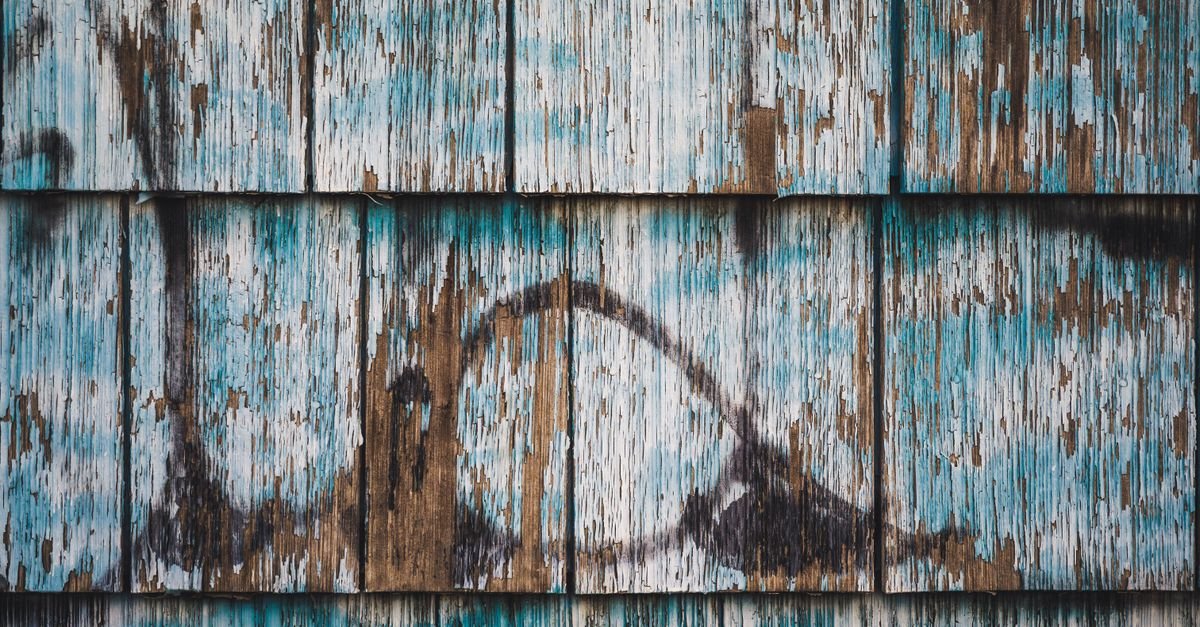
Painted wood is the one that generates the angriest emails. The Forest Products Laboratory work notes that mildew growth on finishes causes “discoloration and premature failure of the finish.” The hyphae get under the paint film, not just on it, so the pigment they leave is inside the coating. You can kill every cell and still be looking at a grey wall. That is not a failed wash. That is a coating at the end of its life, and no amount of chlorine will turn it back into paint.
Bare cedar and softwood is the only cladding where the wall itself is the nutrient source. It does not need a film to get started, which is why a freshly installed and unfinished timber wall on a shaded elevation can grow mould in its first season while the vinyl house next door takes four years.
For how hard you can actually spray each of these without causing damage, power washing siding has the pressure figures per material. The short version for this page: the pressure you need for mould is low, because pressure is not what is doing the killing.
Drying Time Is the Real Variable, Not the Compass
Everyone knows the north wall is the bad one. Almost nobody knows why, and the why matters, because the compass is only a proxy for the thing that is actually driving this.
The variable is hours per day that the wall is wet. The EPA’s guidance for wet building materials is that they need to dry “within 24–48 hours” to avoid mould growth. That is an indoor number for soaked materials, but the direction of travel is the same outdoors: a surface that re-wets with dew every night and does not fully dry before the next nightfall is a surface running a permanent culture.
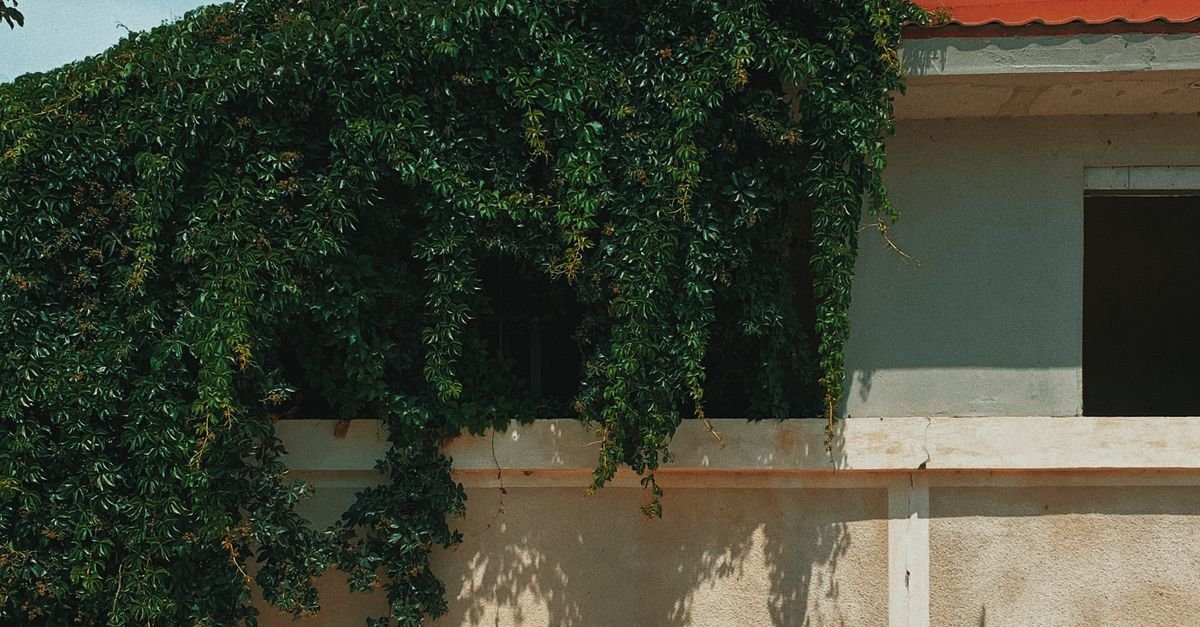
A south wall in June gets dew burnt off it by nine in the morning. A north wall in a wet November might not have a genuinely dry hour for a fortnight. Same house, same paint, same spore load in the air, wildly different outcome — and the difference is measured in drying hours, not in degrees of bearing.
Which brings me to the opinion on this page, and it is one I will defend: a south-facing wall with a hedge growing against it will grow more mould than a north-facing wall standing in open air. The compass gets the blame because it is the easy thing to check. Airflow is what actually does it.
Still air sits against a wall as a boundary layer of humid air a few millimetres thick, and that layer is what keeps the surface from drying. Moving air strips it away. So anything that stops air crossing the wall extends the wet hours: a fence line within half a metre, a dense shrub planted tight to the house, a deep porch roof, a narrow side return between two buildings that never sees a breeze. Those side returns are consistently the filthiest part of any house I have looked at plans for, and they are frequently east or west facing.
Do the walk-around with that in mind and the pattern usually reorganises itself. It is not “the north side is dirty.” It is “the three metres of wall behind the big hydrangea is dirty, and so is the alley between the house and the garage, and the north side is a bit dirty because it is also in shade.”
The Stain Is a Map of Where the Water Is
Growth that is evenly spread across a whole elevation is an ambient problem: shade, humidity, low airflow, no single culprit. Growth with a *shape* is a leak, and the shape tells you which one.
This is the most useful ten minutes of the entire job. Do it before you mix anything, with the wall still dirty, because once it is clean you have destroyed the evidence.
| What the growth looks like | What is almost certainly causing it | The fix |
| Narrow vertical stripe running from high up, straight down | Gutter overflowing or leaking at one joint, every storm, same spot | Clear the gutter, reseal the joint |
| Dark band along the top course, under the eave | Missing or failed drip edge soaking the fascia and wetting the wall behind | Roofing fix, not a cleaning fix |
| Fan or arc shape 300–600mm above the ground, sharp top edge | A sprinkler head clipping the wall at 5am | Re-aim the head. Sprinklers should never touch siding |
| Even band along the bottom 300mm, on every elevation | Splash-back from a downspout at the foundation, or soil and mulch piled against the wall | Downspout extension, drop the grade away |
| Halo or plume around a vent, worst in winter | Dryer or bathroom vent blowing warm wet air against the cladding | Extend or redirect the duct |
| Sharp-edged fuzzy patch mid-wall, nothing above it | Water inside the wall — failed flashing, a window sill, a pipe | Stop cleaning. Get it inspected |
That last row is the one to take seriously. A defined patch of raised, fuzzy growth in the middle of a wall with no water source above it means the moisture is coming from the other side of the cladding. Washing it off removes the only symptom you had.
The sprinkler check is worth doing properly rather than guessing. Set the system to run and go and stand in the garden and watch it, like a stakeout with worse coffee. Heads drift over the years, a mower clips one, and a head that used to throw a clean arc across the lawn now puts a fine mist on the wall twice a week at dawn. It is the single most common cause of a mysterious stripe on an otherwise healthy house.
What Actually Changes the Return Interval
The wash is the smallest part of this. If you want to know whether you will be doing it again next year or in five years, none of the answer is in the bucket.
| What you change | Effort | What it buys you |
| Downspout extension, 1.5m clear of the foundation | An hour and about the price of lunch | Usually eliminates the bottom-band case outright |
| Re-aim drifted sprinkler heads | Twenty minutes | Removes the most common single-stripe case |
| Cut shrubs back 450–600mm from the wall | An afternoon with secateurs | Restores airflow — the biggest lever on any shaded elevation |
| Trim overhanging branches | A day, or a tree service | More sun hours, less debris, less drip after rain |
| Clear gutters twice a year | Two hours, plus a ladder you respect | Removes the stripe source before it starts |
| Plain-water rinse of the shaded walls every few months | Twenty minutes with a hose | Removes the food film, which is a fungicide by other means |
That last one is underrated to the point of being ignored. You cannot stop spores landing. You can absolutely stop them finding anything to eat. A hose-down of the two worst elevations every few months costs nothing and removes the pollen and soot film before it becomes a substrate, and on a non-porous cladding that alone can double the interval between real washes.
Everything on that list is about water and air. Nothing on it is a cleaning product. That is not an accident — it is the actual answer to “why does it keep coming back.”
FAQ
What kills mold on siding permanently?
Nothing kills it permanently, because the spores are in the air and will land again. What changes is how long it takes to re-establish. A proper chlorine or oxygen-bleach kill with a full dwell removes the colony; fixing drainage, airflow and the food film is what stretches the return from months to years. Anyone selling a permanent solution is selling a coating, not a cleaner.
How often should I be cleaning mold from siding?
On non-porous cladding in a dry, open, sunny site, every three to five years is realistic. On a shaded, humid or wooded lot, or on bare timber, expect every one to two years. If you are doing it more often than annually, the wall has a water source you have not found yet — go back and read the shape of the stain before mixing another batch.
Will a pressure washer get rid of mold on siding?
It will get rid of the colour. It will not reliably get rid of the organism, because pressure removes the pigmented surface layer and leaves the living base in the surface texture. That is why pressure-only washes tend to return in four to eight weeks. Use the machine to apply and to rinse, and let the chemistry and the dwell time do the killing.
Does mold on siding mean there is mold inside the wall?
Usually not. Ambient growth across a whole shaded elevation is a surface problem living on airborne film. What does suggest an internal problem is a defined, raised, fuzzy patch in the middle of a wall with no gutter, vent or sprinkler above it — that pattern means the moisture is arriving from behind the cladding, and it wants an inspection rather than a wash.
Is vinegar good for cleaning mold from siding?
It is the weakest of the realistic options. Household vinegar is about five percent acetic acid; it lightens a thin surface film and knocks back the visible stain, but it does not reliably reach a colony sitting down in a textured or porous surface. The usual result is a wall that looks better for three weeks. For a faint haze above a vegetable bed it is fine. For established black growth, oxygen bleach is the better plant-safe choice.
Can I clean mold off wood siding the same way as vinyl?
Same chemistry, different expectations and much lower pressure. Wood is the one cladding where the wall itself is food, so growth starts sooner and gets into the surface cells rather than sitting on a film. Expect some greying to remain after the kill, expect a shorter interval before it returns, and keep the pressure down — furred wood fibres are a sanding job, not a rinsing job.
Why is the mold worse on one side of my house?
Because that wall spends more hours per day wet than the others. Shade is the usual reason, which is why north and east elevations get blamed, but restricted airflow does the same thing on any bearing. A wall behind a hedge, a tight side return between house and garage, or anything under a deep soffit will hold a humid layer against the surface long after the rest of the house has dried.
Do I need to kill the mold before painting over it?
Yes, and it is not optional. Paint applied over a live colony fails early — the growth carries on underneath and pushes through, and the moisture that fed it is still in the substrate. Kill it, rinse it, let the surface dry fully, and deal with whatever was keeping that wall wet before the first coat goes on.
Fix the Wet, Not the Black
Cleaning mold from siding comes down to three things in a specific order. Kill it with chemistry and dwell time, because pressure only removes the colour. Know what your cladding is made of, because a film on vinyl and a colony in a paint film are not the same job and will not give you the same result. Then go and find the water.
The material table decides how good the wall will look afterwards. The moisture source decides how long it stays that way — and of the two, the second one is the only thing you have any real control over.
So before you put the sprayer away, do the lap. Look at the shape of what you just removed, extend the downspouts, aim the sprinklers at the grass they were bought for, and give the shrubs half a metre of daylight. The chlorine bought you a clean wall this weekend. The secateurs are what keep it.