Last Updated on September 23, 2026 by Umar Farooq
Pressure washing truck paint is safe at 1,200–1,900 PSI with a white 40-degree tip, and that is the least interesting number in this article. Paint is the easy part. What actually costs truck owners money is the six feet of frame rail they cannot see, the plastic tub bolted into the bed, and a set of aluminium wheels that react badly to the cleaner sold specifically for them.
A truck is not a tall car. It is a tall car with a cargo box, a lot of exposed underside, and an owner who drives it places a sedan would not go. Every one of those differences changes how you wash it, and none of them appear on the nozzle chart that came in the box.
Five things go wrong on a truck that rarely go wrong on a car: spraying upward into seals you cannot get above, starving the machine of flow and reaching for a narrower tip to compensate, washing a bed with the drop-in liner still bolted in, putting acid brightener on a coated aluminium wheel, and attacking diesel film with pressure instead of degreaser. Those five are most of this article.
Same machine, same tips, entirely different geometry.
Ride Height Is the Real Difference
A current crew-cab half-ton — F-150 SuperCrew, Ram 1500 Crew Cab — stands roughly 77 inches at the roof. That is six foot five. Your wand is about two feet long and your shoulder is about four and a half feet off the ground.
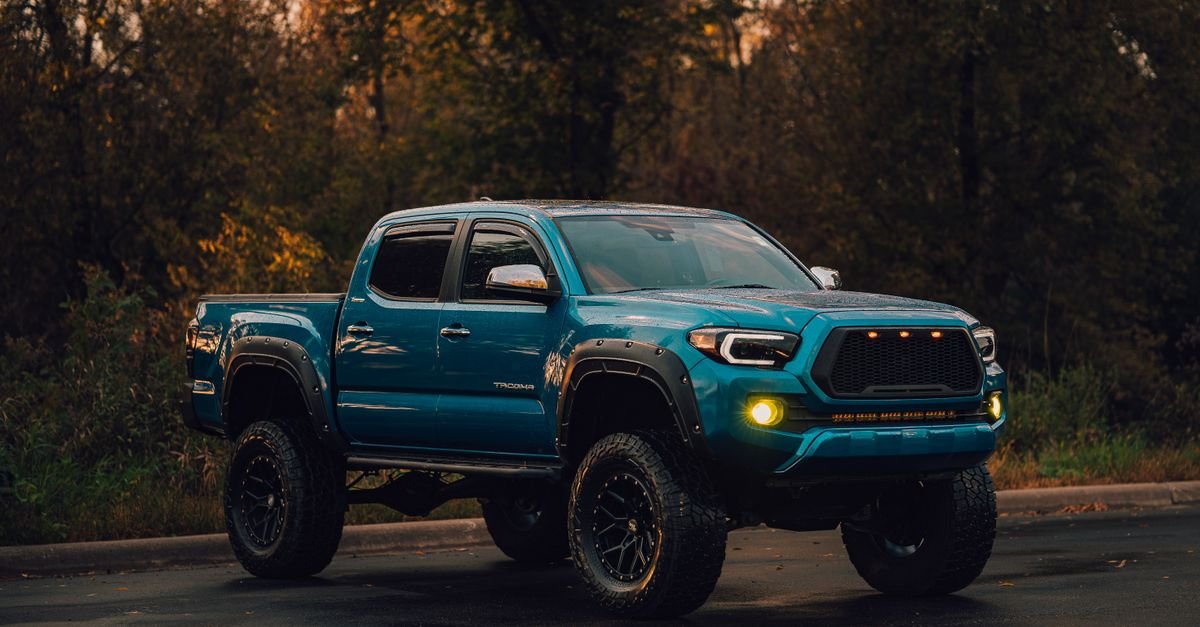
Do the arithmetic and you arrive at the problem: on the top third of a truck, you are spraying upward.
Upward is the direction everything on a vehicle is designed not to resist. Door seals, mirror caps, roof drip rails, rocker panel lips, bed rail caps, the rubber at the base of the windscreen — all of it sheds rain falling down. Point a fan up under the lap and you are no longer rinsing the truck, you are filling it. It is the same mechanism that puts water behind vinyl siding, and it is the single most common way a truck ends up with a door card that smells of pond.
The rule that fixes it is short: never let the jet travel upward into an overlap. Below the sill line, spray up all you like — there is nothing under there that minds. Above the sill, the spray goes level or down, always.
Everything else on a truck body follows the ordinary vehicle numbers. White 40-degree tip, 1,200–1,900 PSI at the panel, roughly 18 inches back, wand kept moving. If you want the full tip-by-tip breakdown, it lives in the pressure washer nozzle chart.
Reaching the Roof of a Crew Cab
A telescoping lance is the real fix. Extending the wand to five or six feet puts the tip above the roof line, which turns an upward jet into a level one, and doubles your working distance by accident.
A step works, as long as it is a step. A folding stool on level ground is fine. Standing in the bed is not — wet plastic, a wand that kicks, and you are now above the cab aiming down into the seals you were trying to protect.
Soap from the ground, rinse from the top. Detergent does not need reach; a foam cannon throws usable coverage three to six feet. Only the rinse needs height, and the rinse is the short half of the job.
The non-answer is standing back and turning the pressure up to make up the distance. That works right until the moment you step closer without swapping tips.
Gallons Move Mud, PSI Does Not
Here is the opinion this article rests on, and it is not the one the box wants you to have.
On a truck, GPM matters more than PSI, and it is not close. PSI breaks the bond between the dirt and the surface. GPM carries the dirt away. On a sedan with a fortnight of road film, the bond is the hard part. On a truck with a half-inch of dried field clay up the rear quarter, the bond is nothing and the *mass* is everything — you are not cleaning, you are moving material.
The numbers make the case. A homeowner electric runs 1,300–2,000 PSI at 1.2–1.6 GPM; a homeowner gas machine runs 2,000–3,200 PSI at 2.0–2.8 GPM. The useful half of that advantage is the flow, not the pressure — twice the water per minute shifts mud twice as fast at the *same* safe 40-degree fan.
Which matters because of what short flow does to people. The truck is not coming clean, so the hand reaches for the green tip, and then the yellow, and somewhere in there a stripe appears on the tailgate. Under-flowed machines are how owners talk themselves into over-pressured tips. If you are choosing a machine with a truck in mind, what GPM pressure washer do I need is the number worth arguing about.
One rule before any of it: pre-rinse the whole truck before anything touches it. Dried mud is grit, grit is sandpaper, and a loaded wash mitt is a device for putting swirl marks into a clear coat. Rinse, foam, wait five to ten minutes, rinse again. Only then does a mitt come out.
Road Salt Under the Frame Rails
Salt does not corrode metal by itself. Dissolved in water it makes an electrolyte, and an electrolyte turns a slow oxidation reaction into a fast one. Which means the damage is not done while you are driving through the slush — it is done afterwards, in the garage, while the salty film sits there being damp.
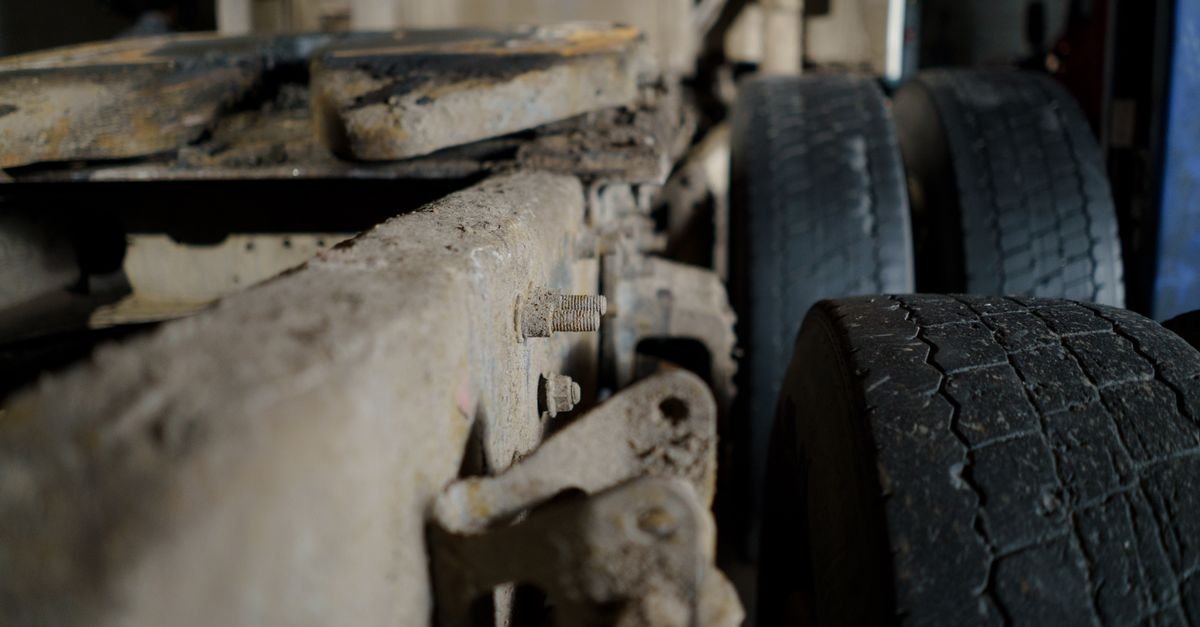
A pickup frame is a boxed steel section with drain holes in it. Salt spray goes in through those holes, water follows, and the inside of the rail becomes the one part of the truck that never dries and never gets looked at. Add leaf spring packs, the rear crossmember, brake line routing and the inner lips of the rear arches, and you have a list of places that need rinsing far more urgently than the bonnet does.
The technique is unglamorous:
- Green 25-degree tip, about 12 inches, which is the one place on a truck the green tip belongs.
- Work along the rails end to end rather than in circles, and give the arches and spring packs longer than feels necessary.
- Volume beats pressure here too. Salt is soluble. It does not need breaking loose, it needs diluting and flushing, so a long rinse with plenty of water outperforms a short angry one.
- Stay off ABS sensor connectors, rubber steering and CV boots, wiring loom clips, and exhaust heat shields — the shields dent if you look at them firmly.
Two warnings for the part where you are on your back under a truck. First, that is exactly the posture in which a hand ends up in front of a nozzle. A 69-year-old man stripping rust from pipework took a jet of well water to the forearm and came away with three five-centimetre lacerations and air driven through the tendons; he went in the same day, the wounds were left open, and he was fully healed by day 29 (case report, 2024). Speed is what made that a good outcome. If a jet breaks your skin, it is an emergency room the same hour, not a plaster.
Second, if you are doing this in February, the truck is not the thing at risk. Water left in a pump overnight below freezing cracks the head, and a cracked head usually costs more than the machine — how to winterize a pressure washer covers the thirty seconds that prevents it.
Pressure Washing Truck Beds and Drop-In Liners
This is the section the car articles cannot write, and it is the one that decides whether the truck rusts.
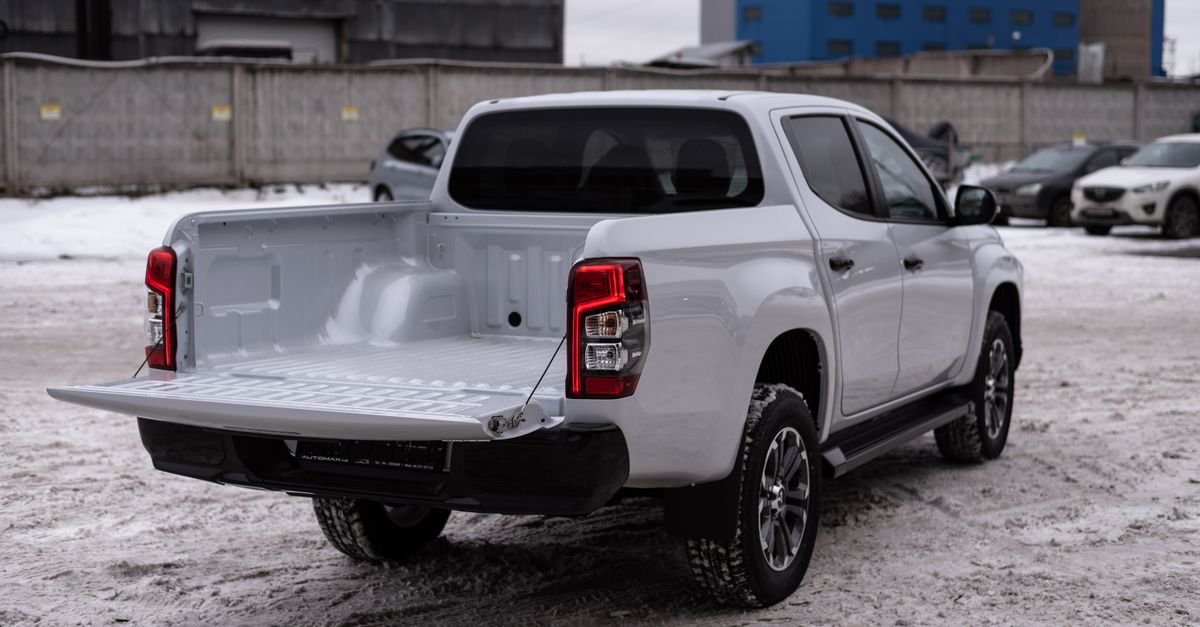
A spray-in liner — the textured polyurea coating applied to the bare metal — is genuinely tough and genuinely awkward. The texture that stops your toolbox sliding around also holds grit in every one of its thousands of little peaks, so it does not rinse clean the way smooth paint does. Green at 25 degrees is fine on it. What actually works is detergent and dwell: foam it, leave it the full ten minutes, agitate with a stiff brush, then rinse. Narrowing the tip to make up for skipping the soak is the reverse of the correct move.
A drop-in liner is a different animal, and it is the one I would go and look at today. It is a moulded plastic tub bolted over painted steel, and there is a gap between the two. Grit gets in that gap. Water gets in that gap. Neither comes out. The plastic then holds the moisture against the paint and abrades it every time the truck flexes, which is why so many otherwise tidy trucks are rotten in exactly the shape of a bed liner.
Pressure washing a bed with a drop-in liner still fitted makes that worse, not better — you are injecting water into the gap through every bolt hole and edge and then closing the tailgate on it. Once a year, take the fasteners out, lift the liner, and wash and dry what is underneath. It is an annoying afternoon that buys you a decade.
While the bed is open, the rest of the list: stake pockets, the bed rail caps (adhesive-mounted, so sweep past rather than dwelling on an edge), the tailgate hinge gap, and the bed drain holes, which are usually blocked with the compressed remains of something organic.
Aluminium Brightener Is Not a Wheel Cleaner
Car wheels are usually painted or powder-coated alloy. Truck wheels very often are not — polished aluminium, mill-finish aluminium, coated aluminium and actual chrome all turn up on trucks and trailers, and all four look similar and behave completely differently under a chemical.
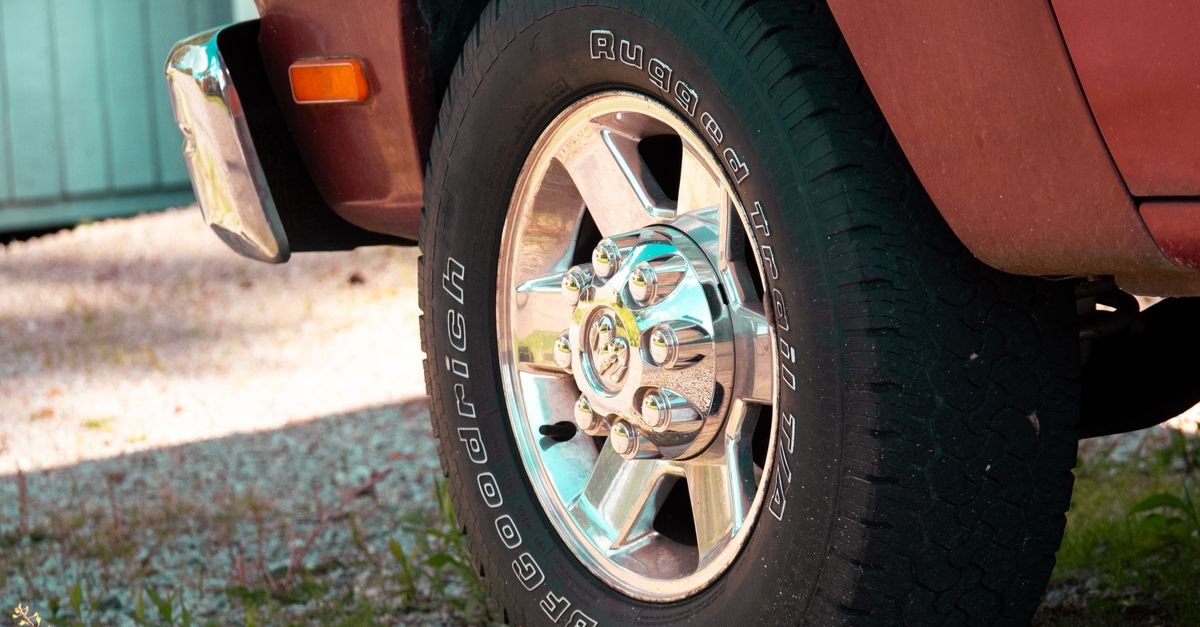
Alcoa, which makes a very large share of the aluminium wheels on North American trucks, publishes two instructions that almost nobody follows. Let the wheel cool below 35 degrees C before you clean it, and rinse it with water first “to prevent scratching and erosion” before any brush or cleaner touches it (Alcoa Wheels, How to Clean). A hot wheel flashes chemicals dry into a stain you cannot polish out, and a dry brush on a dusty wheel is an abrasive pad.
Then there is the aisle labelled *aluminium brightener*. Those products are acid blends, and they work by etching oxidation off bare aluminium. On a coated or polished wheel there is no oxidation layer to remove, so what they etch instead is the finish — permanently, in streaks, usually on the side of the truck that faces the road.
And the part that actually matters more than any of it: do not let an acid wheel cleaner meet a bleach-based truck soap. Sodium hypochlorite “releases chlorine gas when it comes in contact with acids,” in the plain words of the ATSDR guidance. A wheel well is a small, sheltered, badly ventilated space that you are kneeling inside. Rinse thoroughly between chemicals, and never mix them in a bucket to save a step.
Chrome deserves one line of its own: it is a thin plating over steel, and once there is a chip, a high-pressure jet gets under the edge and lifts the plating outward from the chip. Keep the fan wide and the distance honest around chrome, or hand-wash it and lose ninety seconds.
Chrome, Step Bars and Diesel Film on the Tailgate
The back of a diesel pickup collects something a petrol car does not: exhaust film. Soot bound into oily road grime, laid in a sheet across the tailgate and rear bumper, usually darkest exactly where everyone puts their hands.
Pressure does nothing to it. It is not a bonded-dirt problem, it is a grease problem, and grease answers to an alkaline degreaser and time. Spray it, give it five to ten minutes without letting it dry, then rinse at the ordinary 40-degree setting. Fleet washes use hot water for this because heat thins the oil; if you have only cold, dwell time is the substitute and it works.
Step bars want the opposite attention. Their top surfaces take salty boots and their undersides attract upward spray, which is a poor combination for powder coat — wash them level, not from beneath.
And if the truck carries vinyl graphics, the swept 45-degree angle that protects paint is precisely wrong there. A spray sweeping across a decal finds the edge and peels it. Keep the fan square on to a graphic, wide, and moving.
FAQ
What PSI is safe for pressure washing a truck?
1,200–1,900 PSI at the surface, with a 25- to 40-degree tip. A 2,000–2,800 PSI machine fitted with a white 40-degree tip at 18 inches lands inside that range, because the rated figure is measured at the nozzle orifice, not at your tailgate.
Can you pressure wash a truck undercarriage?
Yes, and on a salted truck it is the most useful thing you can do. Use a green 25-degree tip at about 12 inches, work the frame rails, arches and spring packs, and stay off ABS connectors, rubber boots and exhaust heat shields.
Can you pressure wash a spray-in bed liner?
Yes. A 25-degree tip is fine on polyurea spray-in liners. The texture traps grit, so detergent and a ten-minute dwell with a stiff brush do more than extra pressure ever will. Never use a turbo nozzle in a bed.
Should I remove a drop-in bed liner before washing?
Once a year, yes. Grit and water collect between a drop-in liner and the painted bed, and washing with it fitted drives more water into that gap. Unbolting it, cleaning underneath and drying it properly is where most bed rust gets prevented.
Will a pressure washer damage chrome or aluminium truck wheels?
The water rarely does; the chemistry usually does. Let wheels cool below 35 degrees C, rinse before you brush, and keep acid-based aluminium brighteners away from coated, polished or chrome wheels — they etch the finish rather than the oxidation.
How often should I wash a truck in winter?
Every week or two while roads are being salted, and as soon as possible after a heavily salted drive. The corrosion happens while the salt film sits damp on the vehicle, so the rinse matters more than the shine.
Can I pressure wash a lifted truck’s suspension?
Yes, and a lift makes it easier because you can get under without a jack. Keep a wide fan and 12 inches or more from shock bodies, boots, bushings and sensor wiring, and rinse aftermarket coatings rather than scrubbing them.
The Underside Is the Part That Rusts
Everything above the sill line is about not making things worse — wide fan, level or downward, 18 inches, keep it moving. Everything below it is the actual job. The frame rails, the arches, the spring packs and whatever is living under the drop-in liner are what decides how the truck looks in eight years, and none of it shows up in the photo you take afterwards.
So if you have half an hour and a dirty truck, spend twenty minutes of it on your back with a green tip and ten on the paint. It is the wrong way round from how it feels, and it is the right way round for the truck.