Last Updated on September 23, 2026 by Umar Farooq
A pressure washer soap dispenser is not a pump. It is a reservoir — a place to keep the detergent — and the machine’s venturi injector does every bit of the lifting. That single fact explains almost everything else about how these systems behave, including why the tank on the side of your machine gives you no advantage over a bottle sitting on the ground.
The word “dispenser” gets used for three physically different things: an onboard tank moulded into the frame, a clear siphon tube you drop into your own container, and a bare brass barb on the pump manifold. They look nothing alike. They all do the same job, badly or well, and knowing which one you own decides what you pour in and how much of it you need.
A Tank, a Tube, or a Barb on the Pump
Go and look at your machine before reading further. You are looking for one of these three things, and it takes about ten seconds to find out which.
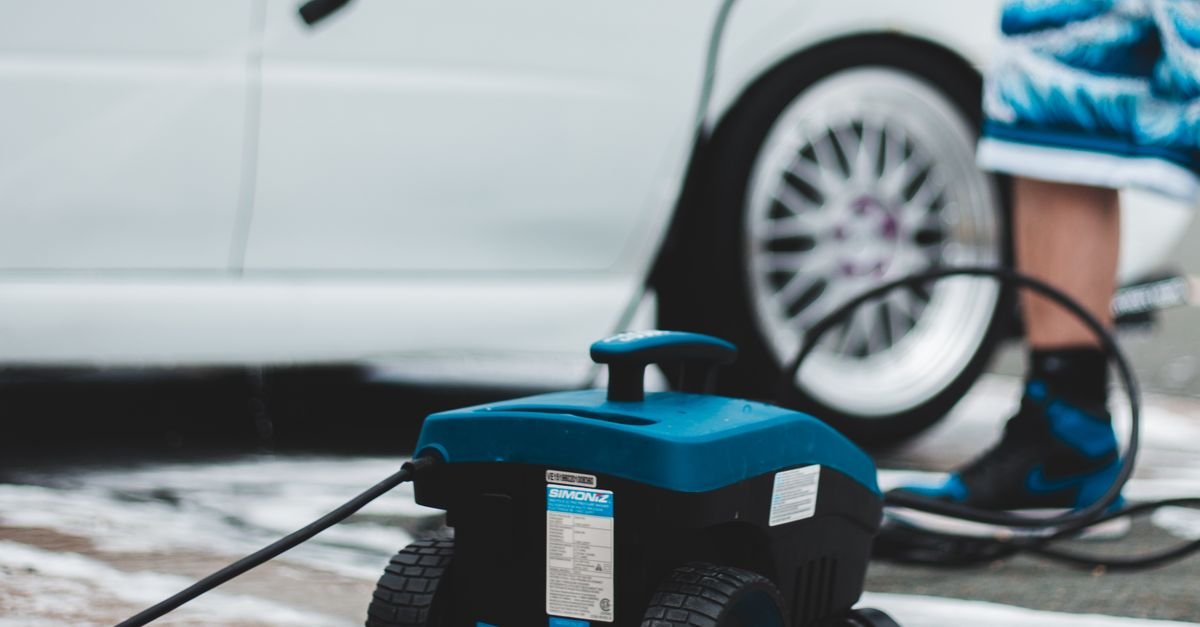
The onboard tank. A moulded plastic reservoir clipped or bolted to the frame, usually with a screw cap or a flip lid on top. Some slide out. Some have two. You pour detergent straight in and a pickup tube inside carries it away.
The siphon tube. A length of clear flexible hose, roughly three to five feet, with a small weighted mesh filter on the loose end. It plugs onto a barb near the pump outlet. You drop the filter end into a detergent bottle or a bucket.
The bare barb. A brass or plastic nipple sticking out of the pump manifold with nothing attached. No tube supplied. This is the honest version: the manufacturer has given you the injection port and left the plumbing to you.
| Onboard tank | Siphon tube | Bare barb | |
| Where the detergent sits | Clipped to the frame | Your own bottle or bucket | Whatever you attach |
| Capacity | Fixed, usually small | Whatever you set down | Whatever you set down |
| Swap product mid-job | Empty and refill | Lift the tube across | Lift the tube across |
| Flush with clean water | Awkward | Drop it in a water bucket | Drop it in a water bucket |
| Can you see the mix level | Sometimes | Always | Always |
| Typical machine class | Electric homeowner | Gas homeowner | Prosumer and commercial |
There is a fourth thing people call a soap dispenser that genuinely is not one: a foam cannon. That bolts onto the gun, carries its own bottle, and never touches the machine’s injector at all. It is a different device solving the same problem, and our foam cannon vs foam gun comparison covers when it is the better answer.
Your Onboard Tank Is a Siphon Tube in a Box
Here is the part manufacturers are quiet about. An onboard detergent tank is not pressurised, is not pumped, and contributes nothing to getting detergent into the water stream. It is a moulded plastic bottle with a tube in it, mounted where a bottle would otherwise stand. A siphon tube in a box.
The suction comes from the injector further down the line, which drops the pressure past a small side port and pulls liquid up. No pressure drop, no suction — which is why the wide black nozzle is mandatory and why a green tip gives you clear water no matter how full the tank is.
That mechanism has three consequences nobody prints on the packaging.
The tank cap has to breathe. As liquid leaves, something has to replace it. Most caps have a tiny vent hole or a deliberately loose thread. Block that vent — with dried detergent, with a cap done up too tight, with a replacement cap from a different model — and the tank draws a vacuum against itself and stops feeding. The symptom looks exactly like a blocked injector and is not one.
You will never get the last inch out. The pickup tube sits just off the floor of the tank, so there is always a residue depth it cannot reach. Tilting the machine to chase it is how people end up with detergent in places detergent should not be.
A cracked tank is an air leak. The siphon side runs on suction, so a hairline split above the liquid line lets the injector drink air in preference to soap. Air is easier to move than detergent. The injector will always take the easy option.
And now the opinion, which I will back before I move on: the onboard tank is the worst of the three dispensers, and it appears most often on the cheapest machines because it photographs like a feature. Count what it costs you. It holds less than a full job needs. You cannot swap product without emptying it. You cannot drop it into a bucket of clean water to flush it. On two-tank models it often shares a line with the other tank. A three-dollar length of clear tube into a bucket beats it on every one of those points, and the bucket lets you see the mix level from ten feet away.
Which Machines Got Which Soap Dispenser
Dispenser format tracks machine class closely enough to predict. Pressure and flow ranges below are the usual homeowner-to-commercial spread.
| Class | Typical PSI | Typical GPM | Usual dispenser |
| Electric, homeowner | 1,300–2,000 | 1.2–1.6 | Onboard tank, sometimes two |
| Gas, homeowner | 2,000–3,200 | 2.0–2.8 | Siphon tube into your own bottle |
| Gas, prosumer / commercial | 3,200–4,400 | 3.0–4.0+ | Bare barb, or an inline injector on the hose |
The pattern is not an accident. Electric machines are sold on tidiness, and a tank looks tidy. Commercial machines are sold to people who already own buckets and have strong views about what goes in them.
Two things worth knowing before you go looking for a fault. First, some entry-level machines have no detergent system at all — no tank, no tube, no barb. If there is nothing on the pump manifold and nothing in the manual, you have not broken anything, you simply do not have one, and a foam cannon is your only route. Second, a machine can have a tank *and* a siphon tube, selected by a dial. That is the two-tank arrangement, and it has a trap of its own further down.
Simpson’s own guidance splits its instructions exactly this way — tank first, siphon hose second — which is a decent confirmation that these are two different user experiences rather than one feature with two shapes.
Mixing for a Tank Is Not Mixing for a Bucket
Detergent comes two ways and the label is not always loud about which you have bought.
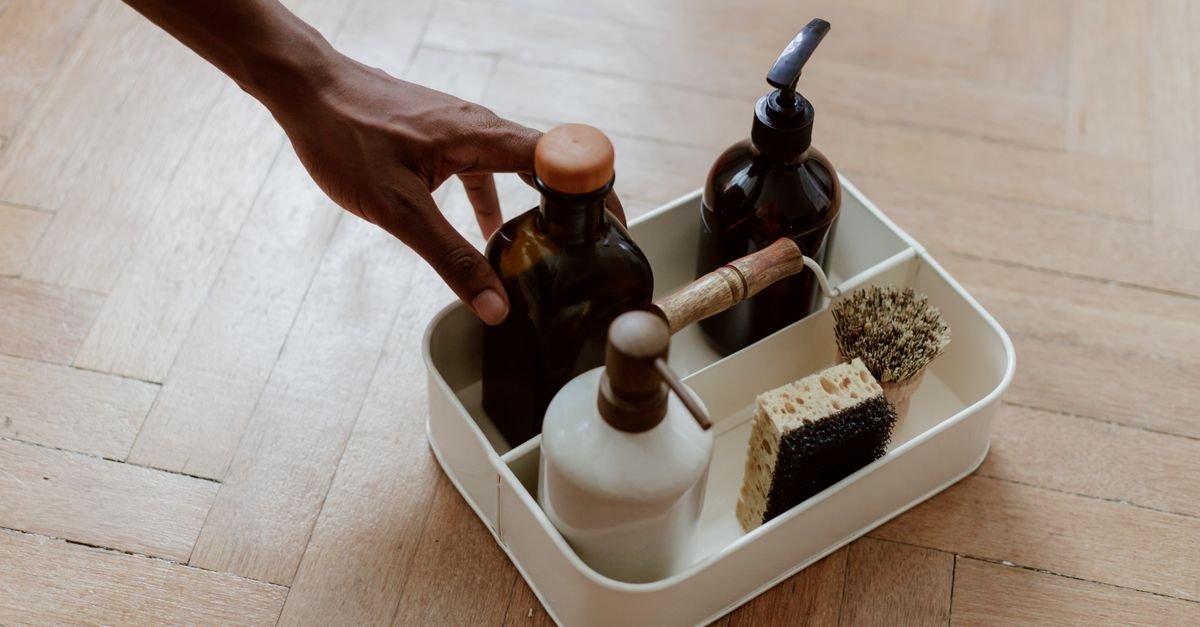
Ready-to-use goes in as supplied. It is already thin, already diluted, and priced accordingly — you are largely buying water in a bottle with a handle.
Concentrate must be mixed before it goes anywhere near the dispenser. Generac’s support guidance is explicit that concentrated detergents have to be mixed to the correct ratio first, and ready-to-use products can go in neat. Pouring concentrate into a tank and then topping it with water does not count as mixing. It gives you syrup at the bottom, water at the top, and a pickup tube sitting in the syrup.
Four rules that apply to a tank and not to a bucket:
- Mix in a separate jug, never in the tank. You cannot stir a tank, and the pickup tube is at the bottom where the heavy stuff settles.
- Use warm water. Concentrates dissolve properly in warm water and sullenly in cold. A fully dissolved mix lifts; a partly dissolved one leaves grit in the filter.
- Fill to the moulded line, not the neck. Detergent sloshing out of the vent while you drag the machine across a driveway is a small disaster with a long cleanup.
- The pour test beats the ratio. If it pours like milk it will siphon. If it pours like syrup it will not, whatever the bottle claims. I keep coming back to that test while reading manufacturer dilution tables, because it measures the thing the injector actually cares about and a ratio on a label does not.
One more thing that surprises people: whatever you mix, the injector dilutes it *again* on the way through. It pulls a small stream of detergent into a much larger stream of water, so the solution landing on the wall is considerably weaker than the one in the tank. That is normal and intended. It is also why “I mixed it exactly as the label said and it seems weak” is such a common complaint — the label ratio usually assumes a bucket and a brush, not a venturi.
How Much Detergent One Job Actually Swallows
I went looking for a published figure for typical onboard tank capacity and could not find one stated as a class number — manufacturers list it per model and often only in the manual, not on the spec page. So rather than give you an average I cannot stand behind, here is how to learn your own machine’s appetite in one job.

1. Fill the tank to the moulded line and note where the liquid sits.
2. Fit the black nozzle and apply detergent to a measured area — one car, one section of fence, one garage door.
3. Stop, and look at the level again.
Now you know, for your machine and your mix, roughly how much surface one fill covers. Write it on the tank with a marker. It is the single most useful number about your soap system and no manufacturer will give it to you.
Two predictions before you run it. You will use more than you expect, because detergent only flows while the trigger is held and people hold the trigger far longer than they think. And you will run out mid-job at least once, which is exactly where the tank format hurts: refilling means stopping, finding the jug, and mixing again while the detergent already on the wall is quietly drying — the one thing detergent must never be allowed to do.
Apply bottom to top so the runs do not streak ahead of the coverage, let it dwell 5 to 10 minutes without drying, then rinse top to bottom and let gravity help. If the surface is drying faster than you can cover it, you are working too large a section, not mixing too weak.
The Selector Dial and the Two-Tank Trap
Machines with more than one tank, or with a tank plus a siphon tube, route them through a selector — a dial, a lever, or a collar you twist. It is a small part that causes a disproportionate amount of trouble.
Dials have detents, and between them is nothing. A selector parked halfway between tank one and tank two draws from neither. There is no warning, no change in sound, and the machine sprays perfectly clean water while you wonder what is wrong with your detergent.
Left on “soap”, it keeps drawing. Some selectors only gate the line when returned to the off position. Switch to a high-pressure tip to rinse and the injector stops pulling, but any residual suction while you fiddle with the trigger is still slowly emptying a tank you thought you had closed.
Two tanks can share one line. On several designs the selector merges both feeds into a single passage before the injector. Put a chlorine mix in one and a wax in the other and the passage holds a little of each. The results are not dangerous but they are disappointing, and the smell is memorable.
The habit that fixes all three: before you change product, return the selector to off, drop a fresh tank or the siphon tube into clean water, and run the machine on the soap setting for a minute. One minute of clean water is the answer to a surprising number of questions on this site.
Rinse It Out or Grow Something in It
Dried detergent is what kills soap systems. Not pressure, not age, not hard work — evaporation. A tank left with an inch of dilute mix in it over a warm month concentrates as water leaves, and what remains is a sticky film on the tank floor, in the pickup tube, and in the injector passages downstream.
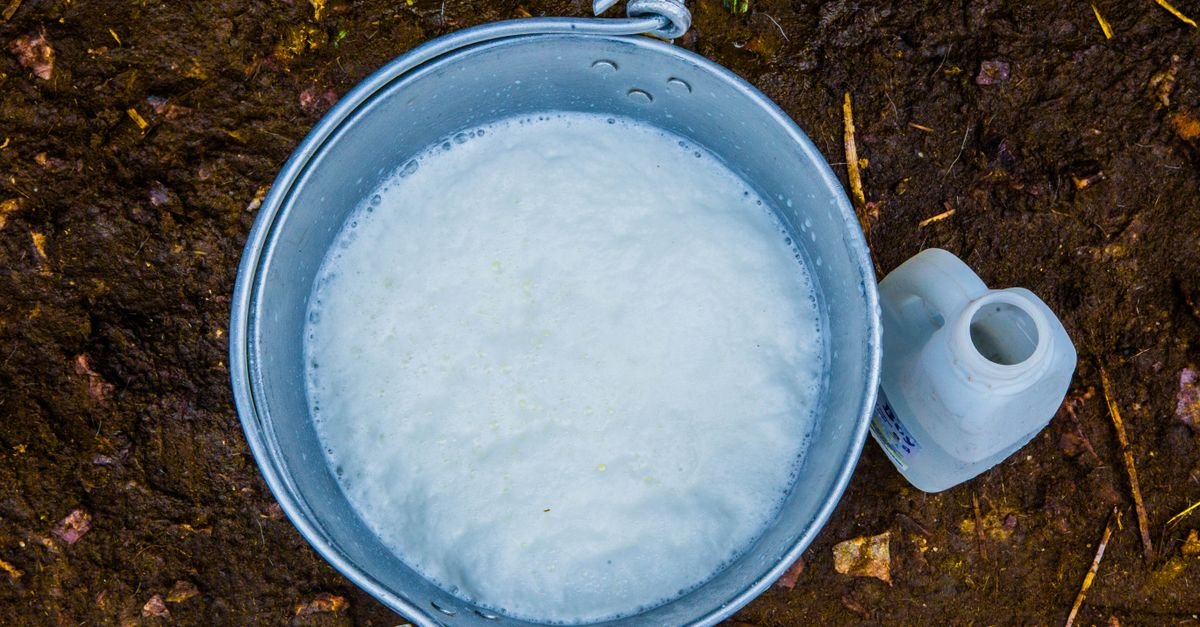
There is a biological version too. Dilute detergent in a warm plastic tank with a vented cap is a reasonable culture medium, and a tank that has sat through a summer can come back with a slick lining and a smell that does not rinse out in one pass. Nobody puts this in the brochure.
The end-of-job routine, which takes about three minutes:
- Empty whatever is left in the tank back into your jug, or pour it away
- Refill the tank with clean warm water
- Fit the black nozzle and run the machine for 60 seconds, which flushes the tank, the pickup tube, the selector and the injector in one pass
- Empty the tank again and leave the cap off overnight so the inside dries
For a siphon tube it is simpler: drop the filter end into a bucket of clean water and run the same 60 seconds. Then pull the mesh filter off, rinse it, and look at it. A filter that has gone stiff and grey is telling you how long it has been since the last flush.
Before freezing weather, empty the dispenser completely. A tank full of water freezes and splits just as a pump head does, and while a cracked tank is cheaper to replace than a cracked pump, you will be replacing both if you skip the rest of the routine — see how to winterize a pressure washer for the full storage sequence.
When Your Pressure Washer Soap Dispenser Draws Nothing
If the dispenser is full and nothing is coming out, stop here — this is a fault-finding job rather than a how-it-works one, and it has its own guide.
Three things account for most of it. The wrong nozzle is fitted, and only the black low-pressure tip lets the injector draw at all. The detergent is too thick to lift. Or the small mesh filter on the siphon tube has clogged with dried product.
Work through those first, then the rest in order of likelihood — cap vent, split tube, check valve, hose length, supply pressure. Our guide to a pressure washer soap dispenser not working covers all eight causes with the tests that separate them, including how to tell an injector fault from a restriction further downstream.
FAQ
What is a pressure washer soap dispenser?
It is the reservoir that holds detergent and feeds it to the machine’s injector — either an onboard tank moulded into the frame, a clear siphon tube you drop into your own bottle, or a bare barb on the pump that you attach your own tube to. It holds the detergent; it does not move it. The injector does that, using suction created when water pressure drops at the nozzle.
Do all pressure washers have a soap dispenser?
No. Plenty of entry-level machines have no detergent system at all, and some commercial units deliberately leave the injection port bare so the operator fits their own. Check the pump manifold for a brass barb and check the manual before concluding something has failed. If there is genuinely nothing there, a foam cannon on the gun gives you detergent without touching the machine.
Can I put bleach in the soap dispenser?
Only if the injection happens after the pump, which on consumer machines it almost always does. Downstream injection means the chemical never passes through the pump seals. On the rarer machines where detergent is drawn in before the pump, sodium hypochlorite will attack the rubber and brass inside it. Check which you have before pouring, and flush with clean water for a full minute afterwards either way.
How do I fill a pressure washer soap dispenser?
Mix concentrate with warm water in a separate jug first, never in the tank itself, then pour the finished mix in up to the moulded fill line. Ready-to-use detergent goes in as supplied. Leave the vent in the cap clear, and do not fill to the neck — the tank needs the headroom and the machine gets dragged around more than you think.
Why does my dispenser empty so fast?
Because detergent draws the whole time the trigger is held with the low-pressure tip fitted, and most people apply for far longer than they estimate. Onboard tanks are also small. The practical fix is to work in sections, release the trigger while you reposition, and mark your tank so you know in advance whether one fill will cover the job.
Can I use a bucket instead of the onboard tank?
If your machine has a siphon tube, yes, and it is usually better — you can see the level, mix any volume you like, swap products by lifting the tube, and flush the system by moving it to a bucket of clean water. If your machine only has a sealed onboard tank, you are stuck with it unless the tank itself detaches.
How often should I clean the soap dispenser?
After every job that used detergent. Sixty seconds of clean water through the tank or siphon tube prevents nearly every blockage these systems suffer, because the blockages are dried detergent rather than wear. Pull and rinse the mesh filter on a siphon tube every few uses, and leave the tank cap off to dry between jobs.
Fill It Thin, Empty It Every Time
The soap dispenser is the least clever part of a pressure washer and the part that causes the most confusion, mostly because the word “dispenser” implies it is doing something. It is not. It is a container. The injector downstream does the work, and it will only work when the black nozzle has dropped the pressure enough to let it.
So the whole discipline comes down to two habits. Mix thin enough that it pours like milk, in a jug, with warm water, before it goes anywhere near the tank. Then run clean water through the system for a minute when you finish, every time, including the time you are tired and it is getting dark.
And if you own a machine with a tank and you have been quietly resenting it — a clear tube and a bucket is a legitimate upgrade, not a workaround. The bucket has never once needed its cap vent cleaned.