Last Updated on September 23, 2026 by Umar Farooq
Sodium hypochlorite for pressure washing is sold at 10% or 12.5% — roughly twice the strength of the supermarket jug — and it needs diluting down to about 1% for siding, 2 to 3% for concrete and 3 to 4% for a roof, with a surfactant mixed in so it stays on the wall long enough to work.
That is the short version, and if you only read the table further down you will still get the job right. But the reason people get it wrong is almost never the ratio. It is that sodium hypochlorite behaves nothing like a detergent, and everyone treats it like one.
A detergent lifts. Hypochlorite oxidises. It does not loosen the green off your siding so the water can carry it away — it kills the organism growing there and bleaches the pigment out of what is left. Those are different jobs with different rules, and the rules are why a wall can go from green to white in four minutes with no pressure involved at all.
I have spent a while reading what the exterior cleaning trade says about this chemical against what the chemistry says, and the gap is wider than I expected. A great deal of what circulates as fact is one supplier’s blog post quoting another supplier’s blog post. Where there is a real source, I have linked it. Where there isn’t, I say so.
For the wider picture — degreasers, acids, which family removes which stain — the four families of power washing chemicals covers the whole shelf. This page is the deep end of one bottle.
What Sodium Hypochlorite for Pressure Washing Actually Kills
Everything on the “it has gone green” list is alive. Algae, mildew, mould, lichen, the black streaks running down a north-facing roof — these are colonies, not dirt. They have rooted into the pores of the surface, and the part you can see is the smallest part of them.
That is why pressure alone fails so reliably. A jet knocks the top off a colony. The colony is still there, in the pores, fed by the same shade and the same damp, and it is back in six to eight weeks looking exactly as it did. Hypochlorite goes the other way: it breaks down the cell walls and oxidises the pigment, so what comes off the wall is dead and what stays behind is dead too. Same surface, same shade, twelve months or more before it returns.
What it will not touch, in any concentration, at any dwell time:
- Oil and grease. Wrong chemistry entirely. That is an alkaline degreaser’s job.
- Rust and red clay staining. Acid, usually oxalic.
- Efflorescence and hard water scale. Also acid.
- Ground-in traffic film and general dirt. Needs a surfactant and agitation, not a biocide.
The cost of getting this wrong is not the wasted afternoon. It is the person who decides the hypochlorite “isn’t strong enough” for an oil stain and goes back for the 12.5% neat, which does nothing to the oil and quite a lot to the plants downhill.
One more piece of the mechanism, because it explains three of the rules further down. A hypochlorite solution sits at pH 11 to 13, held stable by caustic soda, and that high pH is the only reason the jug in your garage is still a jug rather than a cloud. Push the pH down and the solution converts towards hypochlorous acid, which kills faster — and far enough down, it stops being a liquid problem and becomes chlorine gas. Hold that thought until the last section.
12.5% Against the 6% Jug Under Your Sink
This is the most common reason a mix ratio found online produces the wrong result. Two people follow the same instruction with two different bottles and get two different walls.
| Source | Typical sodium hypochlorite | Where you buy it |
| Supermarket bleach | 5–6% | Any grocery aisle |
| “Concentrated” household bleach | 7–8% | Grocery, read the label |
| Pool liquid chlorine | 10–12.5% | Pool supply |
| Trade SH | 10% or 12.5% | Pressure washing supplier, in 5-gallon carboys |
A 12.5% jug does roughly twice the work per litre of a 6% one. That is not a difference you can eyeball. Follow a professional 1:4 instruction with supermarket bleach and you land at 1.2% when you wanted 2.5% — and then conclude that sodium hypochlorite does not work, which is the opposite of the lesson on offer.
The arithmetic is not hard, and doing it once beats guessing forever:
Final % = stock % ÷ total parts
One part of 12.5% SH in four parts water is five parts in total, so 12.5 ÷ 5 = 2.5%. One part of 6% bleach in one part water is two parts total, so 6 ÷ 2 = 3%. Every ratio in the next section comes from that one line, and you can check my working, which I would encourage — I have now seen enough supplier tables that do not survive a calculator.
Worth knowing before you shop: pool liquid chlorine and trade SH are chemically the same thing, often from the same producer. The pool aisle version is frequently cheaper and fresher, because pool stores sell it fast.
Mix Ratios: House Wash, Roof, Concrete
Every figure here is the strength landing on the surface, which is the only number that matters. Start at the weak end of the range. You can always reapply; you cannot put the colour back into a hydrangea.
| Surface | Target on the surface | From 12.5% SH | From 6% household bleach |
| Painted wood, stained fence, soffits | 0.5–1% | 1 : 12 to 1 : 20 | 1 : 6 to 1 : 10 |
| Vinyl siding, general house wash | 1–1.5% | 1 : 9 to 1 : 12 | 1 : 4 to 1 : 5 |
| Concrete, brick, pavers | 2–3% | 1 : 4 to 1 : 5 | 1 : 1 to 1 : 2 |
| Asphalt shingle roof (no pressure) | 3–4% | 1 : 2 to 1 : 3 | roughly 1 : 1 |
| Stucco and EIFS | 1% or less | 1 : 12 or weaker | 1 : 5 or weaker |
Read “1 : 9” as one part SH to nine parts water, ten parts in total.
Three things that will quietly ruin a correct ratio:
The downstream injector dilutes your bucket again. A downstream injector pulls somewhere around 10:1 to 20:1, water to chemical, and a long hose run weakens it further. That is why trade instructions look so alarming: 12.5% drawn neat through a 10:1 injector arrives on the wall at about 1.1%, which is a textbook house wash. Dilute the bucket to house-wash strength first and then downstream it, and you have diluted it twice, and you will spend the afternoon wondering why nothing is happening.
Cold and shade slow the reaction down. Hypochlorite works faster warm. A north wall in November needs either more dwell time or a slightly stronger mix, not more pressure.
Heavy growth wants a second weak pass, not one strong one. Two applications at 1.5% with a rinse between them beat a single pass at 4% on a wall that has paint on it. The kill is a function of concentration and time, and time is the half you get for free.
One caveat on roofs: the 1:1 figure above is widely used in the trade, but the Asphalt Roofing Manufacturers Association deliberately does not publish a universal dilution, because mixing directions vary by shingle maker. If the roof is the job, your shingle manufacturer’s number beats mine, and the no-pressure method for shingles is the article to follow.
Surfactant Is the Part Nobody Buys
Here is the opinion, and it is the one I would defend hardest on this page. If your mix is not working, the answer is almost never stronger sodium hypochlorite. It is that you did not buy the surfactant.
The mechanism is simple enough to be annoying. A hypochlorite solution has essentially the surface tension of water — around 72 millinewtons per metre. Sprayed at a vertical wall, it beads, it runs, and it is in the flowerbed inside fifteen seconds. Fifteen seconds of contact on a surface that needs eight minutes. A surfactant drops that surface tension to roughly a third of it, so the solution wets the wall and stays there as a clinging film instead of a set of racing droplets.
Same chemical. Same concentration. Several times the contact time, for a couple of ounces per gallon.
It does a second job as well, and that one gets forgotten. Hypochlorite has no detergency at all — none. It kills the algae and bleaches the stain, but the dead biofilm and the road dirt sitting on top of it still have to be lifted and carried away, and only a surfactant does that. A wall washed with pure SH comes out pale and still faintly grubby, and the usual diagnosis is “needs more bleach.”
Practical notes:
- Dose at roughly 1 to 2 ounces per gallon of mixed solution, or whatever the label says, and add it last.
- Buy one sold as a chlorine-stable surfactant or soft wash soap. Ordinary detergents are oxidised by hypochlorite within minutes, and some of them curdle.
- Dish soap is not this. It has no biocide, it is too thick for most downstream injectors to draw, and it is formulated for hot water and a sponge doing the actual work.
- More is not better. Over-surfacted mixes foam so heavily you cannot see the surface, and you will rinse twice.
If the growth is on vinyl specifically, the strengths and the order of operations are worked through surface by surface in removing mould from vinyl siding.
Dwell Time, and the ARMA Roof Exception
Five to ten minutes covers nearly everything: siding, fences, patios, concrete, furniture.
The rule that travels with the number matters more than the number. Never let it dry on the surface. Dried hypochlorite has stopped cleaning and started marking, and on dark paint, glass and anodised trim that mark can be permanent. On a hot wall in direct sun you have three or four minutes, not ten. Work small sections, chase the shade, and re-mist a panel rather than watching it go chalky.
The roof is the documented exception, and the number comes from the industry body rather than the forums. ARMA specifies that its household bleach and water solution “should be left on the roof for at least 15 minutes but no more than 20 minutes” before a gentle rinse — and in the same guidance, in capital letters, that a power washer should not be used on shingles at all (ARMA, Algae Discoloration of Roofs). Both halves of that are instructions rather than suggestions. The 20-minute ceiling exists because past it the solution is drying, and drying on a roof means streaking you will be looking at for years.
Two habits that cost nothing and prevent most streaking:
- Apply bottom to top. Solution running down a dry wall leaves clean stripes that set. Running down an already-wet wall, it does not.
- Rinse top to bottom. Gravity is the only free labour on the job.
And rinse properly. A surface still carrying hypochlorite when you pack up goes on oxidising overnight, which is fine on concrete and less fine on a painted door you thought you had masked.
Your Jug Is Weaker Than Its Label Says
Sodium hypochlorite decomposes on the shelf. It is not stable, it never was, and the label prints the strength it had when it left the plant.
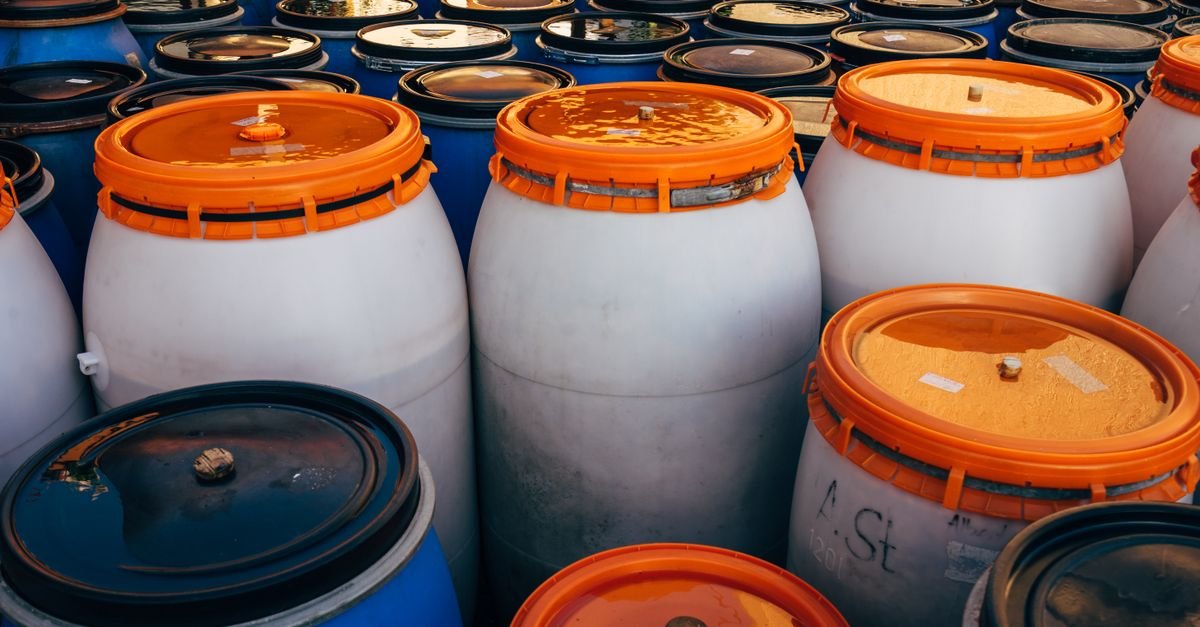
I went looking for a hard number on how fast a 12.5% jug goes off, because every trade page quotes “30 to 60 days” with complete confidence. What I found was that they are all quoting each other. I could not locate a primary measurement behind that figure, so I am not going to hand it to you as a fact.
What there is peer-reviewed data for is the dilute end, and it is more reassuring than the folklore. In a controlled six-week study, 0.5% solutions kept in opaque bottles at about 21 degrees C lost only 6 to 7% of their free available chlorine across five to six weeks — one set sprayed daily, one left sealed (Stability of Free Available Chlorine Levels in Dilute Sodium Hypochlorite Solutions, 2022). Dark, cool and capped is genuinely durable.
Which points at the real culprits, all three of which you control:
- Heat. Decomposition accelerates sharply as temperature rises. A carboy in a van in July is in the worst place available to it.
- Light. UV drives the reaction directly. This is the whole reason SH ships in opaque containers, and the reason decanting into a clear jug is a bad idea that looks tidy.
- Concentration. Strong solutions decompose faster than weak ones, which is why the 12.5% carboy is the vulnerable item and your mixed bucket is not.
So: buy it fresh, buy quantities you will actually use, store it capped and upright in the coolest dark corner you have, and write the purchase date on the jug with a marker. If a mix that worked in spring does nothing in August, suspect the jug before you suspect your technique. A pool test strip on a heavily diluted sample will tell you in thirty seconds whether you still have a chemical or an expensive salt solution.
Flush It Out or Buy New Seals
This is the section the homeowner guides skip, and it is the one with a repair bill attached.
Hypochlorite does not stop being an oxidiser because the job is finished. Left sitting in a chemical hose, an injector or a pump overnight, it goes to work on:
- Nitrile and Buna-N O-rings and seals, which harden, crack and then weep. These are what most machines ship with.
- Brass and aluminium fittings, which pit and go chalky.
- Carbon steel springs inside unloader and injector check valves — a failure that presents as low pressure weeks later, long after anyone connects it to the bleach.
- Stainless, eventually, through chloride pitting. Slower, but not immune.
The flush takes two minutes and it is the last job of every day, not the first job of the next one:
1. Drop the chemical hose into a bucket of clean water.
2. Fit the black soap nozzle and run the machine until you have pulled a couple of gallons through — injector, chemical hose, downstream line, all of it.
3. Swap to a rinse tip and send clean water through the wand for another thirty seconds.
4. Wipe the fittings down. Hypochlorite creep leaves a white crust exactly where you will next put your hands.
The hard rule, with no exceptions: never run sodium hypochlorite through an upstream injector or an onboard detergent tank. Both routes send it through the pump itself, where it meets the seals, the valves and the plunger packings all at once. Downstream injection exists precisely so the chemical never touches the pump, and it only works with the black tip fitted, because a downstream injector is a venturi that needs a pressure drop before it will draw anything at all.
If you would rather not own an injector, a pump-up garden sprayer or a 12V soft wash pump applies SH perfectly well and keeps it out of the machine entirely. For a homeowner doing one house a year, that is the cheaper and more sensible answer — the sprayer costs less than one set of pump seals.
Soak the Garden Before You Start, Not After
Sodium hypochlorite kills plants. Not “may harm under certain conditions” — it is the same oxidation that killed the algae, and a hydrangea is considerably more elaborate than an alga. It burns through the waxy cuticle on the leaf and destroys the chlorophyll underneath, and the damage shows up a day or two later, once you have packed up and gone home.
The routine takes four minutes and is close to completely effective:
1. Soak the plants, the grass and the soil before the first drop of chemical leaves the wand. Wet foliage carries a film of clean water, so anything landing on it arrives already diluted and runs off instead of soaking in.
2. Keep them wet while you work. A pass with the garden hose between sections is enough.
3. Rinse everything thoroughly when you finish, including the ground where the runoff pooled.
4. Tarp what you cannot rinse — vegetable beds, new planting, anything that would be missed.
Bleach neutralisers are worth having for the shrubs directly under a wall you have just soft washed. They are insurance for the bit you missed, not a replacement for the pre-wet.
Keep pets inside until the surface has been rinsed and has dried. Cats walk across treated patios and then wash their feet, which is a sequence with an obvious ending.
Nothing Acidic, Nothing Ammoniated, Ever
Everything above this heading is about doing a better job. This section is about not going to hospital, so it gets no qualifiers.
Sodium hypochlorite plus acid makes chlorine gas. Not “can, under certain conditions.” The ATSDR states it flatly: sodium hypochlorite “releases chlorine gas when it comes in contact with acids” (ATSDR, Medical Management Guidelines for Chlorine). Remember the pH point from the first section — the caustic in that jug is the only thing holding the chlorine in solution. An acid takes it away. Outdoors in a breeze you may get a lungful and a bad afternoon. In a garage, under a carport, or in the footwell of a van where the jugs live, you may not.
Sodium hypochlorite plus ammonia makes chloramine vapours, which do much the same thing to an airway. Ammonia turns up in glass cleaners and in plenty of general-purpose cleaners, so this is not an exotic risk requiring exotic products.
The practical version:
- Never combine two products in one bucket unless the manufacturer states that specific pair is fine.
- Never run an acid through equipment that still has SH in it. This is the accident that actually happens — not a deliberate mix, but a rust remover pulled through an injector nobody flushed. It is also the second reason the flush in the previous section is not optional.
- Store jugs separated, upright, capped and labelled. Most accidental mixes are a tipped container in a van, not a decision.
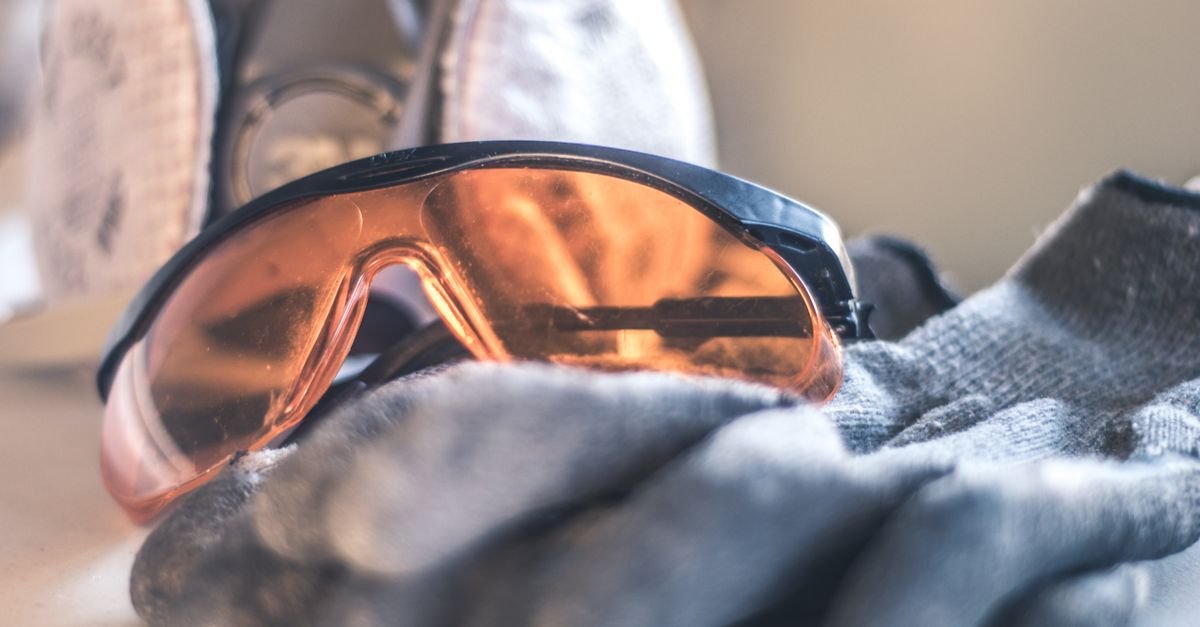
- Gloves, sealed eye protection, old clothes. Nitrile rather than latex, and wraparound goggles rather than safety glasses, because overhead work means the solution comes back down. Hypochlorite locates your one good pair of jeans with genuinely impressive accuracy.
- Splash in an eye: flush for 15 minutes and get it looked at. Do not stop early because it has started feeling better.
Mix in open air, downwind, with one cap off at a time. It is a dull routine and it is meant to be.
FAQ
What is SH in pressure washing?
SH is shorthand for sodium hypochlorite, the active ingredient in bleach. The trade uses the abbreviation because pressure washing suppliers sell it at 10% or 12.5% rather than the 5–6% in household bleach, and calling it “bleach” invites people to reach for the wrong bottle and then wonder why the wall is still green.
Can I put sodium hypochlorite in my pressure washer?
Through a downstream injector, yes — that is how most house washing is done, and the chemical never passes through the pump. Never through an upstream injector or an onboard detergent tank, because both routes send it through the pump, where it attacks the seals and valves. Flush the injector and chemical hose with clean water afterwards either way.
What is the mix ratio of SH for a house wash?
Aim for about 1 to 1.5% on the surface. From 12.5% SH that is roughly 1 part SH to 9–12 parts water; from 6% household bleach it is about 1 part to 4–5 parts water. If you are downstream injecting, remember the injector dilutes again by 10 to 20 times, so the bucket needs to be considerably stronger than the target.
How long does sodium hypochlorite last in storage?
Less than the label implies, and heat and sunlight decide it. Dilute solutions kept dark and cool are surprisingly durable — one controlled study measured only 6–7% loss of free available chlorine over five to six weeks. Concentrated 12.5% stock in a hot, sunlit garage degrades far faster. Buy it fresh, store it cool and dark, and date the jug.
Will sodium hypochlorite damage my pressure washer?
Only if you leave it in there. It oxidises nitrile seals, pits brass and aluminium fittings, and corrodes the springs inside unloader and injector valves. Two minutes of clean water pulled through the injector and wand at the end of the day prevents essentially all of it.
Do I need a surfactant, or can I just use more bleach?
You need the surfactant. Without it the solution runs off a vertical surface in about fifteen seconds, which makes the concentration irrelevant — nothing stays in contact long enough to work. A surfactant also lifts and carries away the dead growth, which hypochlorite on its own cannot do at all.
Weak Mix, Long Dwell, Low Pressure
That is the whole method, and it runs against everyone’s instinct. Mix it weaker than you think, add the surfactant so it stays where you sprayed it, give it five to ten minutes without letting it dry, then rinse at the lowest pressure that lifts it. Two gentle passes beat one aggressive pass on every surface a house is made of.
The chemical does the work. The machine is only how you put it on and how you take it off — and if you give it the last two minutes of the day with clean water running through the injector, it will still be your machine next season.