Last Updated on September 24, 2026 by Umar Farooq
Pressure washer hose fittings come in exactly four thread standards you are likely to meet — M22 x 1.5, 3/8″ NPT, 1/4″ NPT and 3/4″ garden hose thread — and the most common leak on a home machine is two M22 fittings that look identical and are one millimetre apart.
That millimetre is the whole article, really. It is also the reason a lot of people buy a second hose when what they needed was a four-dollar brass reducer.
This page is about threads, standards and the adapters between them. Quick-connect couplers — the push-and-pull collar sort — are a separate system that bolts onto the end of these threads, and they get their own page. Here we are dealing with the parts that screw.
What “M22 x 1.5” Actually Describes
M22 x 1.5 is a metric thread. The 22 is the major diameter in millimetres — measured across the crests of the thread, not the hole — and the 1.5 is the pitch, the distance from one thread crest to the next. That is the entire specification. It tells you nothing about flow, nothing about pressure rating, and nothing about whether your hose will seal.
It is a parallel thread, not a tapered one. Screw an M22 male into an M22 female and the two parts do not wedge against each other and stop. They run down smoothly until something physically bottoms out. That distinction matters more than it sounds, and we will come back to it when we get to tape.
On a typical home machine, M22 shows up in two places: the pump outlet, where the high-pressure hose attaches, and the trigger gun inlet, where the other end of that hose attaches. Some manufacturers — Kärcher’s K-series being the obvious one — use a proprietary bayonet or click fitting at the gun instead, which is a business decision dressed as engineering.
The Millimetre That Leaks: M22-14 vs M22-15
Here is the part that catches people. The thread on an M22-14 and an M22-15 fitting is the same: 22mm across, 1.5mm pitch. They screw together happily. They tighten. They look finished.
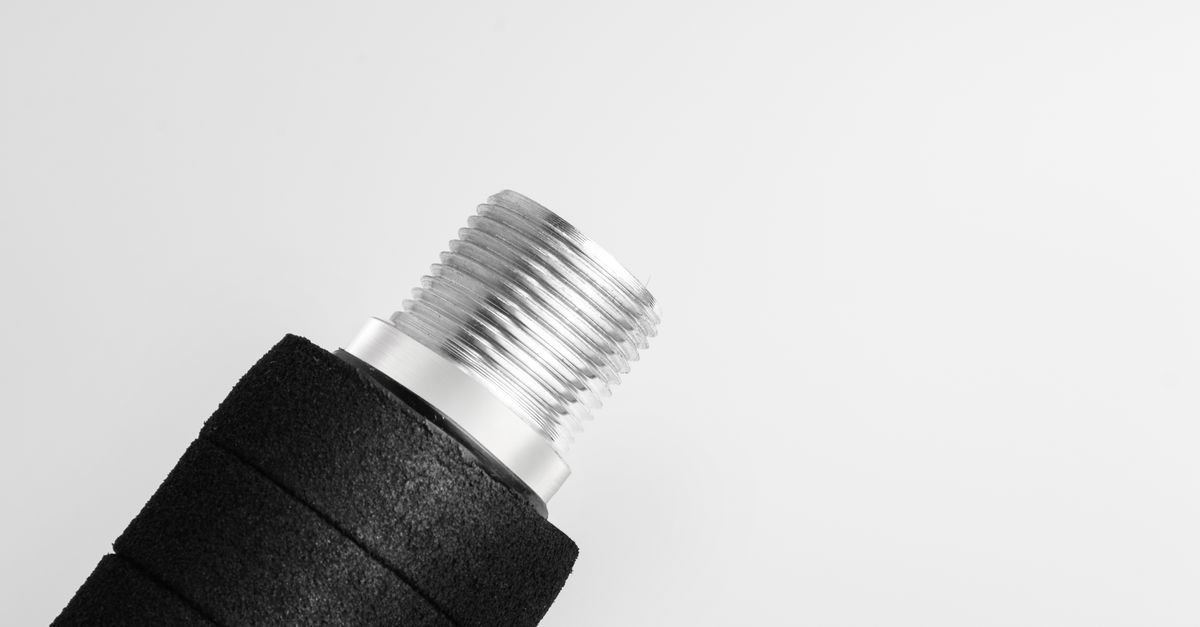
The number 14 or 15 refers to something else entirely — the diameter of the stem, the small raised nose sticking out of the centre of the male fitting, and the matching bore it seats into inside the female. A 14mm stem in a 15mm bore leaves a one-millimetre gap that the O-ring was never sized to bridge. A 15mm stem will not seat properly in a 14mm bore at all. Either way you get a joint that holds fine with the trigger off and weeps or sprays the moment the pump loads up.
Roughly speaking — and brands do change this without announcing it — M22-14 is the gas-machine standard and covers most aftermarket hoses and accessories, while M22-15 turns up on a specific set of electric units: Sun Joe, AR Blue Clean, Stanley, Mi-T-M, Campbell Hausfeld and a few others. Simpson, Generac, Briggs & Stratton, Craftsman, Ryobi and most Kärcher gear sit on 14mm (AR Blue Clean’s own guide keeps an updated list).
Fixing it costs almost nothing. An M22-15 to M22-14 reducer is a single brass part, and it is the one adapter I would keep in the drawer whether or not you think you need it.
This is the opinion, and I will state it plainly: do not buy a replacement hose for a leaking connection until you have measured the stem. A hose is thirty to sixty dollars. The reducer that actually fixes a 14-into-15 mismatch is a few dollars, and the O-ring that fixes the other half of these leaks costs less than a coffee. Every fitting retailer would rather sell you the hose. Measure first.
O-Rings Seal These Joints, Not the Threads
This is the mechanism almost every fittings guide skips, and it explains most of the mistakes that follow.
A parallel thread cannot seal on its own. M22 and garden hose thread are both parallel, so neither one holds water by thread contact — they hold water by squeezing something soft. M22 uses an O-ring seated in the female fitting. Garden hose thread uses a flat rubber washer in the female coupling. The thread’s only job is to pull the two faces together hard enough to compress that rubber.
Three consequences follow, and they are all practical:
- A leak at an M22 joint is usually a dead O-ring, not a dead fitting. They flatten, harden and split, and they do it faster if the machine is stored somewhere that freezes. Look before you buy anything.
- Tightening harder does not fix a parallel-thread leak. Once the rubber is compressed, more torque just deforms it further and eventually cracks the fitting. If a quarter turn past snug has not stopped the drip, torque is not the answer.
- Never put PTFE tape on an M22 or a garden hose thread. Tape belongs on tapered threads. On a parallel thread it jams the nut early, which can stop the faces meeting and stop the O-ring seating at all — so the tape you added to cure the leak is now causing it. I have read this advice given backwards on a genuinely surprising number of forum posts.
A high-pressure pinhole is also not a cosmetic problem. A fitting weeping at 2,500 PSI is a jet, and a jet that breaks skin is a surgical emergency with a six-hour clock on it, however small the mark looks. Never run a finger along a high-pressure leak to find it. Use a piece of cardboard, with the trigger released.
NPT Is Tapered, Which Is Why It Takes Tape
NPT — National Pipe Taper — is the American imperial standard, and it behaves in the opposite way to everything above. The thread narrows along its length at a rate of 1 in 16, and that wedge is what makes the seal. There is no O-ring. The metal jams into itself (Engineering ToolBox, NPT thread dimensions).
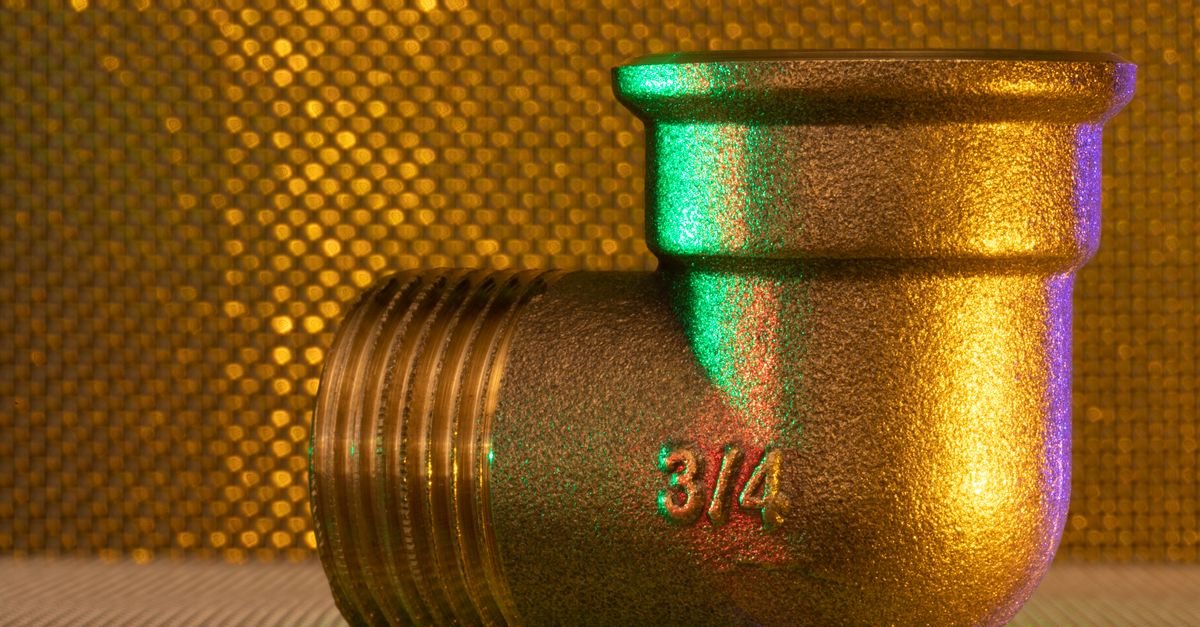
Two NPT sizes show up on pressure washers, and it is worth seeing all four standards on one table:
| Thread | Outside diameter | Threads per inch | Where you find it |
| 1/4″ NPT | 0.540″ (13.7mm) | 18, tapered | Lance-to-nozzle ends, small accessory ports, gauge ports |
| 3/8″ NPT | 0.675″ (17.1mm) | 18, tapered | Hose ends, gun inlets, most quick-connect bodies |
| M22 x 1.5 | 0.866″ (22mm) | ~16.9, parallel | Pump outlet and gun inlet on most consumer machines |
| 3/4″ GHT | 1.0625″ (27mm) | 11.5, parallel | Machine water inlet, garden hose, outside tap |
Because NPT seals on thread interference, it *does* want thread sealant: two to three wraps of PTFE tape in the direction the thread turns, starting a thread or two back from the end so no tape shreds into the pump. This is the only one of the four where tape is correct.
The other NPT habit worth knowing is that it will not run down forever. Hand-tight plus one to two turns with a wrench is normal. If a tapered fitting is still spinning freely after four or five turns, the threads are damaged or you are not on NPT at all.
Garden Hose Thread Is the Other End of the Machine
Everything so far lives on the high-pressure side. The inlet side is different and much simpler: 3/4″ garden hose thread, also written 3/4″-11.5 NH or NHR, with a major diameter of 1.0625″ (26.99mm) and 11.5 threads per inch, under ANSI/ASME B1.20.7. Parallel thread, flat rubber washer, no tape.
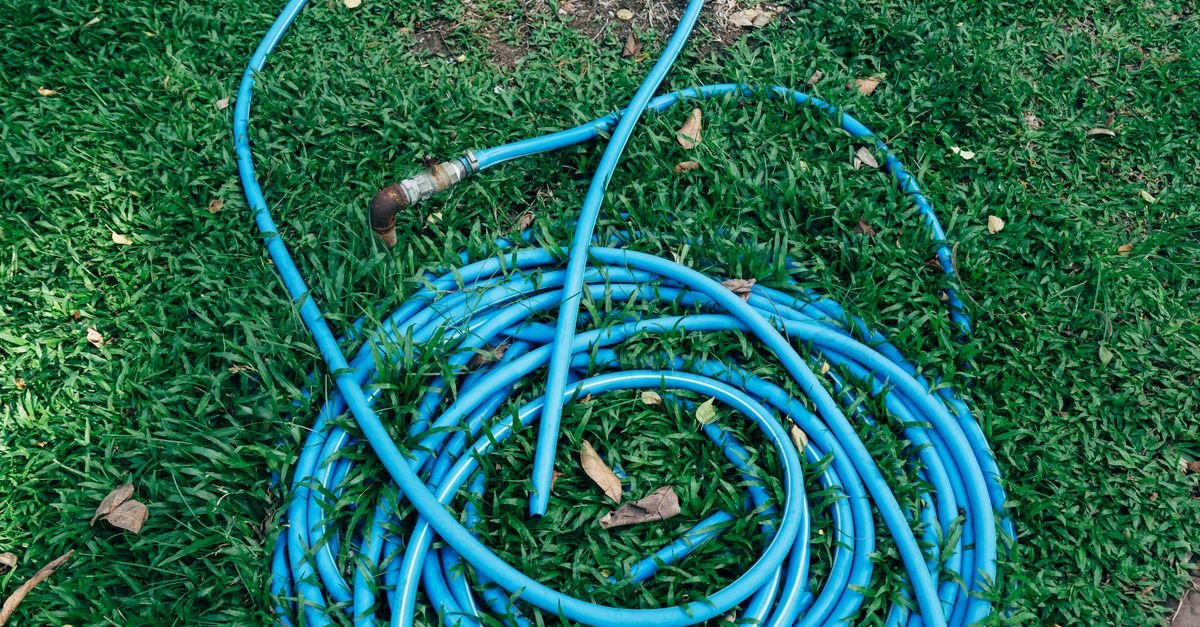
The inlet fitting matters more than its low pressure suggests, because the inlet is where machines starve. If the washer is missing or perished, the coupling can draw air rather than water, and a pump pulling air instead of water cavitates — thousands of tiny vapour bubbles collapsing against the valve seats every second. That is how a weekend of cleaning quietly shortens a pump’s life. If your machine is stuttering or losing pressure for no obvious reason, the inlet washer is a thirty-second check, and a machine with no water coming out at all very often starts in the same place.
Two inlet details worth doing once:
- Fit the inlet screen. Most machines ship with a small mesh filter that sits inside the GHT inlet. It is the cheapest pump protection available, and it is also the part most likely to still be sitting in the box.
- Use a GHT swivel or a short leader hose. A rigid connection at the inlet transfers every twist of the garden hose straight into the plastic inlet fitting, which is usually the weakest threaded part on the whole machine.
How Do You Tell Which Thread You Have?
You need a ruler with millimetres on it, or ideally a cheap digital caliper. Measure across the thread crests on the male fitting — the outside diameter — and the standard falls out of that one number, because the four are nowhere near each other:
- About 13.7mm — 1/4″ NPT
- About 17mm — 3/8″ NPT
- About 22mm — M22 x 1.5
- About 27mm — 3/4″ garden hose thread
That is roughly five millimetres of clearance between each pair. If you are within a millimetre of one of those figures, you have your answer, and you never have to count a thread pitch.
Only once you know it is M22 do you measure the second number: the stem in the centre of the male fitting, or the bore inside the female. 14mm or 15mm. This is the measurement almost nobody takes, and it is the one that decides whether the joint seals.
If you have no caliper, the comparison trick is good enough for the M22 question. Hold your machine’s fitting directly against the fitting on the hose you are trying to attach. A one-millimetre difference in stem diameter is obvious when the two are touching and invisible when they are three feet apart on a shelf, which is exactly why this mistake gets made in the store.
Tapered or parallel is the last check, and it is the easy one. Look along the thread — if it is visibly narrower at the tip than at the base, it is NPT. Parallel all the way, it is M22 or GHT.
Swivels, Adapters and the Order to Stack Them
An adapter is just a part with a different thread at each end. The ones actually worth owning are a short list:
| Adapter | What it solves |
| M22-15 male to M22-14 female | The electric-machine mismatch, and the most common one by far |
| M22 male to 3/8″ NPT female | Getting a standard hose or accessory onto a consumer pump |
| M22 female to 3/8″ NPT male | The same problem approached from the other end |
| 1/4″ NPT to 3/8″ NPT | Lance and nozzle-end accessories |
| 3/4″ GHT to 3/4″ NPT | Plumbing a machine to something that is not a garden tap |
A swivel is a fitting whose nut turns independently of its body, so the hose does not have to rotate while you tighten it and does not wind itself into a corkscrew while you work. On threaded ends this is usually an M22 swivel nut on the hose, and it is the most useful upgrade to a stock hose — not because it adds performance, but because a hose that cannot untwist will kink, and a kink is a restriction.
The stacking rule is short and worth following: one adapter per joint. Every threaded joint is a leak site, a small flow restriction and a lever arm. Two adapters bolted end to end at the pump outlet turn a compact fitting into a four-inch brass cantilever hanging off an aluminium pump head, and in that argument the pump head loses. If you find yourself needing three adapters in a row, buy the hose with the right end already on it. That is the one time the new hose genuinely is the answer.
Before winter, break the threaded joints apart, check the O-rings and washers, and store the machine drained. Water left in a pump over winter expands when it freezes and cracks the head, and a cracked head usually costs more than the machine is worth — the full winterizing routine is here.
FAQ
Are all pressure washer hose fittings the same size?
No. Four thread standards are in common use: M22 x 1.5 on most pump outlets and trigger guns, 3/8″ NPT and 1/4″ NPT on hose ends and accessories, and 3/4″ garden hose thread on the water inlet. M22 then splits again into 14mm and 15mm stem sizes, which share a thread and do not seal against each other.
Can I use Teflon tape on M22 fittings?
No. M22 is a parallel thread that seals on an O-ring inside the female fitting, so tape does nothing useful and can hold the two faces apart so the O-ring never compresses. Tape belongs on tapered NPT threads only.
What size is a standard pressure washer hose?
The hose itself is usually 1/4″ internal bore on home machines and 3/8″ on prosumer and commercial ones. That is the bore, not the fitting — a 1/4″ hose very often has M22 or 3/8″ NPT ends on it, which is why hose size and fitting size get confused so often.
Why does my pressure washer hose leak at the connection?
In order of likelihood: a flattened or split O-ring, an M22-14 fitting screwed into an M22-15 coupler, PTFE tape wrongly applied to a parallel thread, or a fitting cracked by over-tightening. Replace the O-ring first — it is the cheapest possibility and the most likely one.
Can I connect a garden hose to the pressure washer outlet?
Only through an adapter, and only for very low-pressure work. Garden hose thread and garden hose construction are not rated for high pressure. A standard garden hose has no braid reinforcement and will balloon and burst well below what a pump puts out.
Measure the Stem Before You Buy the Hose
Four standards, two measurements, and one rubber ring doing most of the actual sealing. That is the whole system, and it is considerably less complicated than the parts wall at the hardware store makes it look.
So if you are standing in the garage with a fitting that drips, take the caliper to it before you take your wallet to it. Measure across the crests to find the standard, measure the stem to find the M22 variant, and check the O-ring while you are in there. Nine times out of ten the fix is already in the drawer, and the new hose can stay on the shelf where it belongs.