Last Updated on October 4, 2026 by Umar Farooq
The best pressure washer hose is the one whose bore matches the length you are buying, because I read 43 listings and found that every hose narrower than 3/8 inch is sold at 150 or 200 feet — the exact lengths where a narrow bore costs the most, and four of them put “3/8” in the title because that is the size of the coupler.
That is a finding about arithmetic rather than about marketing. This site already publishes two manufacturers’ friction-loss charts, and they disagree with each other by a factor of two. It does not matter. The gap between the bores is wider than the gap between the charts, so you can settle the whole purchase by reading one number off a listing and multiplying it by the length you want.
So this is not a guide to what a hose is. The bore and length decision is already written up properly, as is what consumes a hose until it lets go, and I link those rather than re-arguing them. What nobody had done was run the published charts against the hoses actually for sale at a length worth buying, so I did: 13 search phrasings, 43 distinct hose listings read bullet by bullet, three reels discarded because a reel is a different purchase. Then I read a hose manufacturer’s own catalogue to find out which of those numbers a maker is willing to print.
200 Feet of Quarter-Inch Costs 760 PSI at 3 GPM
Start with the arithmetic that decides a long hose, because it makes most of the rest of a listing irrelevant.
Ultimate Washer’s loss chart gives 180 PSI per 100 feet of 1/4-inch hose at 2 GPM, rising to 380 PSI at 3 GPM. Hydro Tek’s chart puts 3/8-inch hose at 2 GPM at 25 PSI per 100 feet; Ultimate Washer puts 3/8-inch at 3 GPM at 120. Loss scales with length, so doubling the feet doubles the figure. Both charts, and the fact that neither states its assumptions, are laid out on the hose guide and I am using its numbers rather than deriving my own.
Run them out to the lengths this market actually sells:
| Run | 1/4 inch at 2 GPM | 1/4 inch at 3 GPM | 3/8 inch at 3 GPM |
| 100 ft | 180 PSI | 380 PSI | 50–120 PSI |
| 150 ft | 270 PSI | 570 PSI | 75–180 PSI |
| 200 ft | 360 PSI | 760 PSI | 100–240 PSI |
Read the bottom row. On a 2,800 PSI homeowner gas machine, 200 feet of 1/4-inch hose at 3 GPM spends about 27 per cent of the machine inside the hose. The same 200 feet in 3/8-inch costs between 100 and 240 PSI depending on whose chart you believe.
And that is the useful part of the two charts disagreeing. They are a factor of 2.4 apart about 3/8-inch hose, which looks like a reason to distrust both. But inside the single chart that publishes both bores, measured the same way by the same people, the bore is worth a factor of 3.2 at 3 GPM. The disagreement between the sources is smaller than the difference the sources agree on. That is as settled as this subject gets.
Two honest limits on the table. The lowest published point for 1/4-inch is 2 GPM, which is above what an electric machine flows, so on a 1.4 GPM electric the loss is below 270 PSI at 150 feet and neither chart will tell me how far below. And I am not extrapolating either chart upward: the figures stop at the flows printed, and a listing that claims a flow range beyond them does not get to borrow a number I do not have.
Eight Hoses Narrower Than the Fitting in the Title
Of the 43 hose listings, eight are narrower than 3/8 inch — seven at 1/4 inch and one at 5/16. Every single one of them is sold at 150 or 200 feet. There is not one narrow-bore hose in this census at 50 feet, where the loss would be a third of what it is at 150 and where a lighter hose is a genuine pleasure to drag around.
That is backwards from the physics, and it is worth sitting with. The narrow bore is only on offer at the lengths that punish it hardest.
Then there is how you find out. Four of those eight put 3/8 in the title:
- Heliwoo’s *150FT Pressure Washer Hose 4200PSI Steel Braid with 3/8” QC*, whose second bullet is headed “1/4” Diameter Pressure Washer Hose”.
- POHIR’s *Pressure Washer Hose 150 ft with 3/8” Quick Connector*, whose first bullet describes a “Reasonable selection of 1/4″ inner diameter”.
- Two NAVOHEVEN 150-footers, both titled “with 3/8” Quick Connect”, both of which open the bullets with 1/4″ ID.
In all four the 3/8 is the coupler on the end, not the hole down the middle. Both numbers are true. Only one of them is the specification you are buying, and it is the one in smaller type. A fifth narrow hose, TechSweepPro’s *150FT Pressure Washer Hose 4200PSI M22 Fitting*, leads on the thread instead and then names a 1/4-inch hose in bullet one and a 3/8-inch quick connect in bullet two, so you get both sizes and no indication which belongs to what.
To be fair to the market, three of the eight are straight about it. maXpeedingrods and Heliwoo both title a narrow hose “x 1/4″”, and one NAVOHEVEN listing states in its contents line that the package holds “150 ft 1/4″ ID steel-braided pressure washer hose with 3/8″ quick-connect fittings & 2 pcs M22 14mm Adapter Set” — the whole fitment picture in one sentence, and the best bullet in the census.
The reason this matters more on a long hose than a short one is the table above. Two listings publish a flow range, and both publish the same one: RIDGE WASHER gives “2.5 GPM to 5 GPM” on a 3/8-inch hose, and POHIR gives “Flow rate is 2.5 GPM to 5 GPM” on a 1/4-inch one. The same sentence, on two bores, one of which the charts say stops being the right choice at 3 GPM. ProPulse, which manufactures hose for the trade, specifies its 1/4-inch consumer line for “gas and electric cold-water pressure washers up to 2.5 GPM” — so a maker puts the top of that bore at the bottom of POHIR’s claimed range. Work out what your machine actually flows and the sentence falls apart on its own.
One Burst Figure, Five Working Pressures, Five Safety Factors
Twenty-three of the 43 listings publish a burst pressure. Eighteen of those twenty-three publish the same one: 16,000 PSI.
That number sits next to five different working pressures. RIDGE WASHER pairs it with 4,000. Three listings pair it with 4,200, four with 4,500, nine with 4,800, and an Innconee half-inch hose pairs it with 6,000. Divide each pair out and the implied safety factor comes to 4.00, 3.81, 3.56, 3.33 and 2.67 to one.
None of those is impossible, which is exactly why the number survives. So I went and read how a manufacturer states it instead. ProPulse, a Schieffer company in Iowa that supplies pressure washer OEMs, publishes a six-line specification block for each of ten hose families in its product catalogue, and not one of them contains a burst pressure. What every block contains instead is a multiplier:
Burst (Min) 3:1 Working Pressure
The ratio is not constant either. It is 2.5:1 on the thermoplastic jetting line, 3:1 across most of the range, and 4:1 on the two-wire Arm-A-Flex (ProPulse product catalogue, PDF). The burst figure is derived from the working pressure and the construction, not measured independently and printed next to it.
Hold the two conventions together and the arithmetic does something useful. If 16,000 PSI is a real minimum burst for one construction, then on a 3:1 design that construction’s working pressure is about 5,330, and on a 4:1 design it is 4,000. The only listing in the whole census whose pair lands exactly on a ratio the manufacturer uses is RIDGE WASHER’s 4,000 and 16,000. The nine listings claiming 4,800 against the same 16,000 imply 3.33:1 — a ratio ProPulse does not apply to anything. Raising the working pressure by 800 PSI while leaving the burst figure where it was is a transfer out of the margin, and nothing on the page says it happened.
Heliwoo manages to collapse the whole distinction into four words. Two of its listings state that “Burst working pressure is up to 16000 PSI” — a phrase that specifies nothing, assembled out of the two terms the purchase actually turns on.
Three listings do better, and they deserve naming because they are the only ones in the census publishing a pair nobody else uses. YAMATIC’s black 3/8-inch hose states 4,000 working and 12,000 burst. Its non-marking sibling states 4,200 and 13,000. A NAVOHEVEN 150-footer states 4,000 and 13,500. Those are 3.00, 3.10 and 3.38 to one: three different numbers for three different products, which is what a specification looks like even when you cannot verify it.
So here is the opinion, and it will save you reading most of any hose listing: ignore the burst figure entirely. Not because the hoses are weak — there is no evidence either way here — but because the number has been printed too many times to carry information, and because the company that makes hose for a living declines to print it at all. Buy on the working pressure, clear your machine’s maximum by a quarter, and spend the attention you just freed up on the bore. How a hose then spends that margin on your driveway is a separate argument and a better one.
Forty-Three Listings, Column by Column
Every row is a distinct hose listing read in full. The three hose reels the searches returned are excluded, because a reel is a different object with a different failure mode.
| What the listing publishes | Count of 43 |
| A burst pressure | 23 |
| A burst pressure of exactly 16,000 PSI | 18 |
| A hose bore narrower than 3/8 inch | 8 |
| …of which carry “3/8” in the title | 4 |
| A maximum water temperature | 33 |
| A minimum bend radius | 12 |
| A named reinforcement construction or braid count | 18 |
| A flow rate in GPM | 2 |
| An impulse or fatigue life | 0 |
| An outside diameter | 0 |
| An SAE or EN standard by name | 1 |
Two of those rows need a word of care, because on one of them the manufacturer is no better and on the other it is far better.
Nobody publishes an outside diameter — including the maker. Not one listing in 43, and not one of the ten families in ProPulse’s catalogue either. So this is an industry habit rather than a marketplace failing, and the consequence lands on anyone who owns a reel: a drum’s capacity figure is written against a hose of some particular wall thickness, and no hose anybody sells will tell you whether it is that hose. A reel listing in the same set of searches instructs the buyer to “make sure the pressure value of your pressure washer hose is lower than 4000 psi”, so the reel end of this market knows the hose is the variable. The hose end will not supply the dimension.
Impulse life is the one specification the maker publishes and the marketplace does not. Every ProPulse block carries an “Impulse Life” of 100,000+ or 200,000+ cycles — a fatigue figure, which is the thing that actually governs a hose with a trigger on the end of it, since the pressure rises and falls every time you let go. Zero of 43 listings publish one. If you want a single question to ask a hose seller, it is that one, because nobody in the consumer market has been asked it.
And the only standard named anywhere in the census is on the worst-written page in it. OCPTY’s *Hot Water Pressure Washer Hose 3/8″ x 100ft 6000 psi* specifies a “3/8″ Double Wire Braid (R2) Hose” and explains that “The ‘R2’ refers to the hose conformity with the SAE (Society of Automotive Engineers) 100 R2 standard.” That is a real and useful reference. It appears in a bullet list whose first entry reads: “It is likely the main sewer jetting hose included in the package.” A listing speculating about what is in its own box.
The Only Published Bend Radius Sits in a Patent
Twelve listings publish a minimum bend radius. They publish two values, and the two values come out of the same family of copy.
Six of them — the TechSweepPro and KARHDIR hoses — say the hose has “a bend radius of less than 3 inches”. Six others, across maXpeedingrods, NAVOHEVEN and CADEGUO, say it “bends easily to a tight 1″ radius” or “flexes smoothly to a 1″ bending radius”. A seventh, from POHIR, promises “smaller bend radium” and gives no figure, which at least has the virtue of not committing to anything.
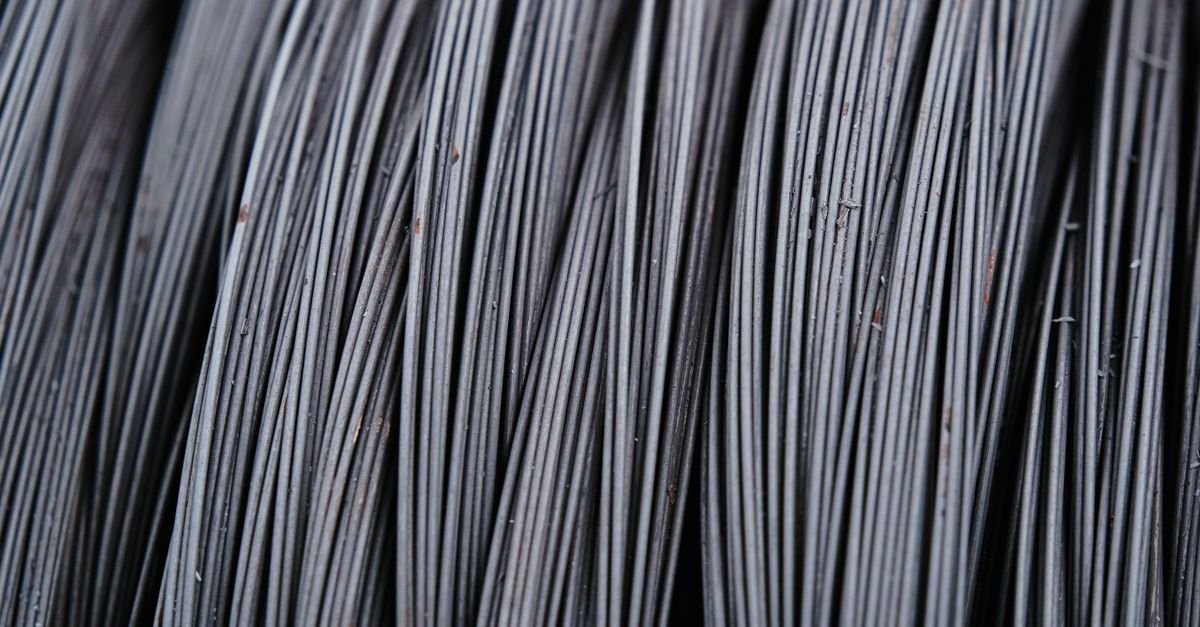
So I went looking for a figure from somebody who makes hose, and came up empty twice. ProPulse’s catalogue publishes a bend radius for none of its ten hose families. Hotsy, which builds hot-water machines, publishes a full data block for its 3/8-inch single-wire line — a max pressure, a wire count of 1, a 250°F feed temperature, 3/8″ MPT swivel fittings at both ends, and a note that the hose is built to exceed the EN1829-2 standard — and gives no bend radius either. What it gives instead is “durable bend restrictors on both ends, with a 24-inch bend restrictor on the gun end”. Two feet of rubber whose job is to stop you finding out.
The one place a number exists is a patent. US 7,222,644, *High-pressure hose and pressure washer*, assigned to FNA Group, claims a hose in which “the inner radius of the annular core ranges from about 3.2 to about 3.3 mm” — a quarter-inch bore — with a flexible braided reinforcing sheath, “a burst pressure of at least about 12,000 psi”, and “a minimum bend radius of no greater than 38 mm at ambient pressure” (US7222644B2). Thirty-eight millimetres is an inch and a half. The patent exists because, in its own words, “Known consumer grade high-pressure hoses typically are made of very stiff materials to accommodate high pressures” and are therefore “unsuitable for use with consumer pressure washer applications, which mandate that the hose be highly flexible.”
Hold that against the listings. A patent was granted for getting a quarter-inch hose down to an inch and a half. Six listings claim a 3/8-inch hose bends to one inch. I am not going to call that false, because I have not bent one and nobody publishes a test method. I will say that the tighter of the two figures in that copy family beats a patented result on a smaller bore, that the same family’s other six listings say under three inches for apparently the same hose, and that a specification which arrives in two values depending on which page you land on is not a specification.
One line of separation, since the subjects sit next to each other: the site’s drain jetting page records that no manufacturer or trade body publishes a minimum bend radius for jetter hose. That still holds. Jetter hose and pressure washer hose are different products, and the figure above is a patent claim about the second one rather than a published rating for anything you can buy.
The patent hands over one more thing for free. Its own framing of 12,000 PSI burst against an operating pressure of at least 3,000 is “leaving a 300% safety margin” — which is 4:1 described the long way round, and the same ratio ProPulse reserves for its two-wire hose. Not one listing in this census publishes a 3,000-and-12,000 pair.
248 Degrees on the Bullet, 140 From the Factory
Thirty-three of 43 publish a maximum water temperature, and the figures run against brand reputation rather than with it.
The unbranded steel-braid hoses overwhelmingly claim 248°F, which is 120°C, and several state a working range of “35°F to 248°F”. Nine of them claim 4,800 PSI and 248°F in the same sentence. Simpson, which manufactures pressure washers, says of its Monster hose that “It is built for water temperatures up to 140° F” and puts the words “Cold Water” in the product title.
Then the catalogue settles it, because ProPulse publishes both numbers for ten hoses and they move independently — sometimes in opposite directions:
| ProPulse hose | Working (max) | Temperature (max) |
| Consumer Clean, 1/4″ textile braid | 3,100 PSI | 140°F |
| Commercial Cleanstream, 3/8″ 1-wire | 4,000 PSI | 140°F |
| Commercial Clean Rubber, 3/8″ 1-wire | 4,000 PSI | 250°F |
| Commercial Arm-A-Flex, 3/8″ 2-wire | 4,785 PSI | 212°F |
| Commercial Hot Clean, 3/8″ 2-wire | 6,000 PSI | 250°F |
Look at rows three and four. The 4,000 PSI single-wire rubber hose is rated to 250°F. The 4,785 PSI two-wire hose is rated to 212°F and carries the line “NOT FOR HOT WATER OR STEAM” in the maker’s own capitals. More pressure, less heat, and an explicit prohibition — because a temperature ceiling lives in the polymer of the tube and the cover, not in the steel. The compound in a seal decides what hot water does to it, and the same is true of a hose wall.
Which makes the market’s favourite pairing the odd one out. Nine listings sell 4,800 PSI and 248°F together; the manufacturer’s nearest equivalent by pressure refuses hot water outright. Three figures can all be honest here. What cannot be checked is any of them, because not one listing in 43 names the rubber in the tube or the cover. Thirty-three temperature claims, zero materials behind them.
The same copy family disagrees with itself too. KARHDIR’s and TechSweepPro’s 200-footers carry near-identical bullets and claim 212°F; the 4,800 PSI versions of the same text claim 248°F; one Heliwoo listing claims 248°F while a sibling with the same construction claims 140°F. If you are buying for a burner, those are the pages to walk past.
One more row from the catalogue, because it bears directly on the half-inch hoses at the top of this market. ProPulse’s Commercial Hot Clean is one hose in two bores, and it publishes “Working (Max): 6000 PSI (3/8″) or 3987 PSI (1/2″)”. Same construction, wider hole, a third less pressure. Two listings in my census sell 1/2-inch hose rated at 6,000 PSI.
A Long Run Chooses the Machine for You
Four questions, and the first one makes two of the others irrelevant.
1. What does your machine flow? Not its PSI. The gallons. Everything below is downstream of this, and the charts are indexed on it.
2. At the length you want, what does the bore cost? Take the loss per hundred feet for your bore at your flow, multiply by the length in hundreds, and set it against your machine’s rating. At 50 feet almost nothing matters. At 200 feet, on a gas machine, the bore is the purchase.
3. Which machine is the narrow one actually for? This is the part no listing will tell you, and it is the honest end of the arithmetic. A 150-foot 1/4-inch hose on a 1.4 GPM electric machine is the right hose — lighter, smaller to coil, below the resolution of any chart in loss, and far less likely to drag your machine over when you pull it round a corner. On a 2.8 GPM gas machine the same hose is the restriction. Every narrow-bore listing in this census is sold as fitting “most electric or gas-powered pressure washers”. The arithmetic says pick one.
4. What is on each end, and what is on your machine? Most of this market ships 3/8-inch quick connects with a pair of M22-14mm adapters in the bag, which covers a lot of gas machines and misses a specific set of electric ones. Which M22 you own is two measurements rather than one, and a 14mm stem in a 15mm bore weeps the moment the pump loads. YAMATIC is the only brand in the census that raises it unprompted: “M22 systems require an additional adapter.”
A fifth thing is not a specification and will still cost you an afternoon. If the hose is going on a reel, nobody has published its outside diameter, so check the drum’s capacity claim against the bore it was written for before you order 200 feet of anything.
Five Hoses Whose Pages Agreed With Themselves
These are not the hoses with the biggest numbers. They are the ones where the title, the bullets and the arithmetic all said the same thing, which in this category turned out to be a selection criterion on its own.
Simpson 41030, 100 ft x 3/8 inch. The best-specified page in the census, and it is specified by saying what the hose is made of rather than what it survives. “Dual-braided steel over polyester construction”, a “translucent polyurethane outer jacket” that is non-marring and “up to 3 times more abrasion resistant than rubber”, both end fittings named separately — “3/8″ Male quick connect plug x 3/8″ Female quick connect socket” — and “4-inch bend protectors at each end”. It states 140°F and puts “Cold Water” in the title so you cannot miss it. A 3/8-inch bore at 100 feet is the length and bore most people with a gas machine should be buying, and the polyurethane jacket is the part that earns its place on light-coloured concrete.
The limitation is the one it is honest about: 140°F means this is not a hose for a burner, and if you own one it is disqualified on its own page. It publishes no burst figure either, which after reading the catalogue I count in its favour rather than against it. The 150-foot version, the 41032, is the same hose and the same specification if you need the reach.
YAMATIC 3/8″ x 100 FT, 4000 PSI. The listing that told me something nobody else would. Its fitment bullet ends “M22 systems require an additional adapter” and its last line adds “*Not for garden hose faucets” — a page warning you about the two mistakes that generate the most returns in this category instead of claiming compatibility with a list of brand names. Its pressure pair, 4,000 working and 12,000 burst, is one of only three in the census that is not the shared 16,000, and at 3:1 it lands on a ratio its industry actually uses.
Two limitations. Three to one is the thinnest of the three independent pairs here, and while a hose’s safety factor is set by application rather than by a universal rule, it is below the 4:1 design factor the hose guide on this site cites for hydraulic hose. And its 212°F claim arrives with no compound named, the same as everyone else’s.
YAMATIC 3/8″ Non-Marking, 100 FT. The same brand’s grey-jacket version, and the one to buy if what you clean is pale. It publishes a range rather than a ceiling — “Built as a hot water pressure washer hose for use up to 250°F and flexible for cold-water operation down to 15°F” — a 4,200 and 13,000 pair that is again its own rather than the category’s, and it describes the cover as the thing doing the not-marking rather than leaving you to infer it from the colour.
The limitation is that 250°F, which is the joint-highest claim in the census and arrives with no cover or tube compound named. Given that a hose maker rates its own 4,785 PSI two-wire line at 212°F and tells you not to put hot water through it, treat this as a cold-water hose with a comfortable margin. If you own a burner, buy from somebody who names the rubber.
Pressure-Pro CHA0502GB, 3/8″ x 50 ft, 2-wire. The only listing here from a company whose own operations manual this site has cited for years, and the only short hose in the census built like a long one. It names the reinforcement as a count rather than as an adjective — “2-Wire Steel Braided Construction” — and publishes a 250°F rating, a non-marking grey jacket and 3/8-inch quick-connect couplers at both ends. Fifty feet of 3/8-inch is the length at which the friction table stops mattering altogether, which is exactly why this is the hose to own if you can work within the reach.
Two limitations, and the first is real. “Rated Up to 6,000 PSI” is a ceiling phrasing rather than a working pressure, and 6,000 PSI is roughly twice what any domestic machine produces, so the rating is not the reason to buy it — the second wire braid and the temperature figure are. And fifty feet is fifty feet. If you have been reaching for 150, this does not solve the problem, it moves your machine.
Blu Shield “The Slayer” Hybrid, 1/2″ x 100 ft, 3500 PSI. Here because it is the only listing in the census that names its thread exactly rather than approximately — “1/2″ Male NPT” — alongside its construction, “Hybrid PVC tube with braided polyester reinforcement”, a 140°F rating, and the machines it replaces by name. It is also the only half-inch hose here whose pressure claim sits where a maker’s half-inch figure sits: 3,500 PSI against ProPulse’s 3,987, where the other two claim 6,000.
Then the limitation, which for most readers is disqualifying, so I will put it plainly: this is the wrong hose for a consumer machine. Half-inch bore belongs above roughly 8 GPM, the 1/2-inch male NPT ends will not meet a 3/8-inch quick connect or an M22 thread without an adapter at each end, and stacking adapters at a pump outlet turns a fitting into a lever. Buy it if your machine is already plumbed in 1/2-inch NPT. If you had to look that up, buy one of the four above. The page also promises a “Limited-Year Warranty”, which is not a term, and I would read the real one before relying on it.
Six Pages With an Argument Against Buying Them
Read in full, not linked. In four of the six the reason is that the page contradicts itself about the thing you are buying, which is a harder failure than silence.
The 4,800 PSI copy family. Nine listings across TechSweepPro, NAVOHEVEN, CADEGUO, POHIR and Heliwoo carry near-identical bullets claiming 4,800 PSI working against 16,000 burst at 248°F — the pairing the catalogue above makes hardest to believe. Two of them, both 200-footers, contain the sentence “this 50-foot line features upgraded steel-wire braiding”. A CADEGUO 150-footer’s contents line reads “Your purchase includes: 1 × 50ft High-Pressure Washer Hose”. A Heliwoo 150-footer closes with “This 100FT washer hose will help you can move farther”. Four listings in one family cannot state the length of the product in the box, and length is half of what you are buying.
Heliwoo’s 150 ft, 4200 PSI kink-resistant hose. The sharpest single example. The title says 4200PSI. Bullet one is headed “5/16” Diameter Power Washer Hose” and then says “4500 psi power washer hose fits most electric or gas pressure washers, bursting working pressure of up to 16,000 PSI”. The last bullet is headed “50FT Pressure Washer Hose” and refers to “This 50FT washer hose”. One page, two lengths, two working pressures, a bore that appears nowhere else in the category, and the invented term.
OCPTY’s hot water 3/8″ x 100ft, 6000 psi. The bullets hold the only SAE reference in the census and also the sentence “It is likely the main sewer jetting hose included in the package”, plus “Capability:of swiveling” and a bullet ending mid-thought with a stray quotation mark. No working pressure appears in the bullets at all; the 6,000 is in the title and uncharacterised. There may be a perfectly good R2 hose behind that page. It is not a page I can audit.
ROADFAR’s hot water 3/8″ x 100ft, 6000 psi. The same product shape and a different failure: the bullets are a short encyclopedia entry about pressure washer hoses in general. “Pressure washer hose diameters typically range from 1/4 inch to 3/8 inch… Smaller diameter hoses are more flexible and easier to handle, while larger diameter hoses can handle higher water flow rates.” Then “Max. PSI:6000” with no statement of what kind of maximum, no temperature anywhere, and no reinforcement named — on a hose whose title sells hot water.
maXpeedingrods 4800PSI, 150FT x 1/4″. Honest about the bore in the title, which is more than four of its competitors manage. Its bullets then publish neither a pressure figure nor a temperature — the 4,800 lives only in the title — while claiming an “8-strand fine steel wire braiding structure” that “flexes smoothly to a 1″ bending radius”. The 3/8-inch sibling describes the identical reinforcement as “8-layer” in one bullet and “8-strand” in the next. A construction described two ways on one page is a construction nobody checked.
ProPulse / Schieffer 3/8″ x 100 ft thermoplastic jetter hose. Refused with real regret, because its bullets are the best construction disclosure in the census and they come from the manufacturer whose catalogue carried half this article: “one layer of 1/8″ high tenacity polyester textile braid that is chemically bonded”, a black TPU cover “oil, weather, ozone, and abrasion resistant”, ISO 9001, and “Pin test each crimp to confirm proper internal crimp” — a process claim about the end of a hose that fails first. Not one of those five bullets contains a number. No working pressure outside the title, no burst, no temperature. And it is a sewer-jetter line sold with a nozzle, which is a different job from washing a driveway. If you are jetting drains, go and read it. For the reader who typed this article’s title, it is the wrong product with the right manufacturing, and the catalogue is where that company’s numbers live.
FAQ
What is the best pressure washer hose for a 3,000 PSI machine?
A 3/8-inch bore, 50 to 100 feet, with a working pressure of 3,750 PSI or better and a coupler or M22 thread matching what is on your machine. Among the listings I read, the Simpson Monster in 100 feet is the closest thing to that description with a manufacturer’s specification behind it. Skip the burst figure when you compare.
Is a 1/4 inch pressure washer hose worth buying at 150 feet?
On an electric machine at 1.2 to 1.6 GPM, yes — it is lighter, it coils smaller and the published charts put its loss below anything you would notice. On a gas machine at 2.5 GPM or more, no. Ultimate Washer’s chart puts 1/4-inch hose at 380 PSI per 100 feet at 3 GPM, so 150 feet is 570 PSI gone before the water reaches the tip.
How do I tell if a hose is really 3/8 inch?
Read the bullets, not the title. In four of the eight narrow-bore listings I read, the “3/8” in the title was the size of the quick connect on the end while the hose itself was 1/4 inch. The inner diameter is usually in the first bullet or printed on the jacket, and a listing that only ever says “3/8 quick connect” has not told you the bore at all.
Why do so many pressure washer hoses claim 16,000 PSI burst pressure?
Because the figure travels with the copy rather than with the hose. Eighteen of the 23 listings that publish a burst pressure publish 16,000, sitting next to five working pressures from 4,000 to 6,000. A hose maker never publishes a burst number at all — ProPulse prints “Burst (Min) 3:1 Working Pressure”, or 2.5:1, or 4:1, because the figure is derived from the working pressure rather than measured beside it.
Can I use a 248°F hose on a hot water pressure washer?
Treat the claim carefully unless the listing names the compound in the tube and cover, because none of the 33 temperature claims I read did. For scale: ProPulse rates its 4,785 PSI two-wire hose at 212°F and marks it “NOT FOR HOT WATER OR STEAM”, while rating a 4,000 PSI single-wire rubber hose at 250°F. Pressure and temperature are independent, and on that pair they run opposite.
Does a longer hose need a bigger bore?
Yes, and that is the whole decision above 100 feet. Loss is created by flow and multiplied by length, so the longer the run the more a narrow bore costs you. Both charts this site publishes agree that 3/8-inch at homeowner flow loses almost nothing over 200 feet, while 1/4-inch at the same length loses hundreds of PSI.
Should I buy a hose with the reel or separately?
Separately, and for a reason this census makes concrete: no hose listing publishes an outside diameter, and neither does the manufacturer’s catalogue, while a reel’s capacity figure is written against one. Buying the two apart at least lets you choose the bore and the working pressure deliberately, then check the drum’s claim against the bore it assumed.
Two Hundred Feet Is a Bore Decision
If you take one thing from 43 listings and one catalogue, take this: the only number on a long-hose page that changes your afternoon is the inner diameter, and it is the number most likely to belong to the coupler rather than the hose. The 16,000 is a multiplier somebody printed as a measurement. The 248°F is unsupported by any named material. The one-inch bend radius is tighter than a claim a patent office thought worth protecting on a smaller hose.
Find your flow, take the bore that flow needs, then buy the shortest length that still reaches the far corner of the house. Two hundred feet of the wrong hole is a slower afternoon and a heavier one, and the hole is the one thing you cannot change afterwards with an adapter.