Last Updated on September 26, 2026 by Umar Farooq
Cleaning soffit and fascia is the one exterior job where the surface you are washing is a deliberate hole and the trim under it is a loose metal cover held on by gravity and two laps — so the chemistry goes on with a sprayer and a brush, the rinse runs outward towards the gutter, and the only part of the eave a machine should meet head-on is the flat face of the fascia.
Every other wall on your house is trying to keep water out. The soffit is not. It is an opening, sized and specified as an opening, and it is the only component on the building that is supposed to let something through. It is also very bad at telling the difference between air and 1,500 PSI of soapy water.
That is the whole difficulty, and it is why this job does not compress into “siding, but higher up”. Siding is solid, vertical and lapped to shed falling water. A soffit is perforated, horizontal and above your head, with a gutter parked in front of it. Three separate problems, none of which a wall has.
Half Your Attic’s Airflow Comes In Through That Panel
The strip of panel under your eaves is not a ceiling with some holes punched in it as an afterthought. It is the intake half of a two-part system, and the roof depends on it.
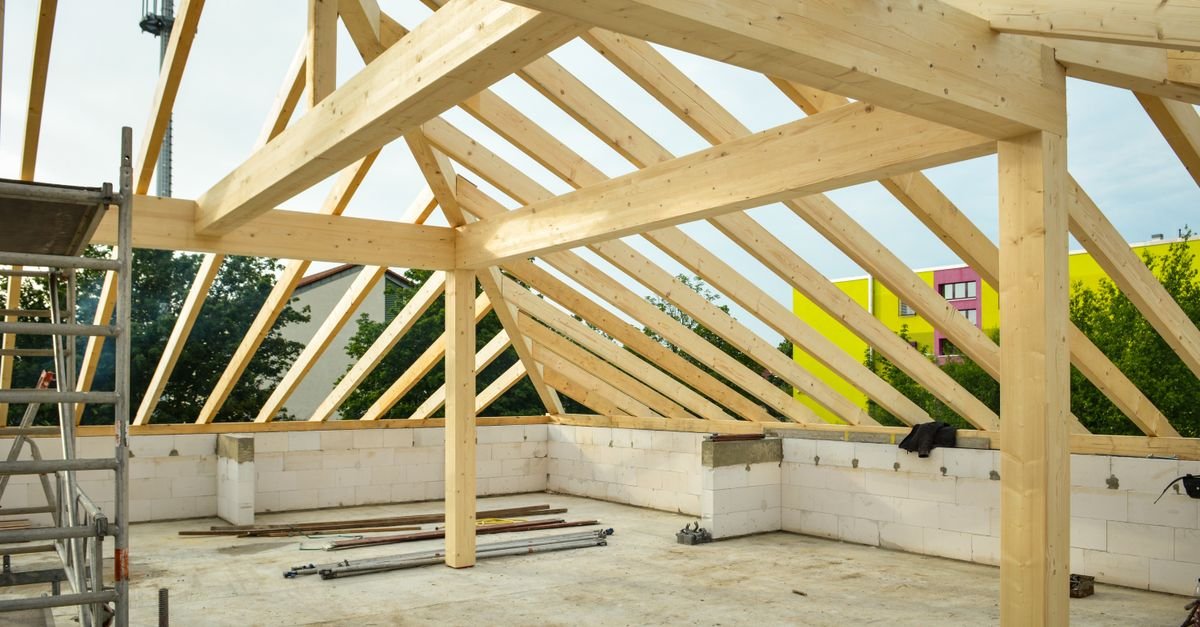
Quality Edge, which manufactures soffit and fascia, sets it out in a sentence: proper ventilation “consists of 50% intake under the eaves and 50% exhaust near or at the peak of the roof,” and “the exhaust must be at least 3 feet higher than the intake system” (Quality Edge, Soffit & Fascia Quick Tips). Air is meant to be moving inward and upward through that panel every hour of every day. You are pointing a wand at the inlet of a chimney.
That there has to be an opening at all, and how big the code says it has to be, is argued properly on cleaning gutter guards, which uses the residential code’s minimum ventilating area to explain why you never rinse a guard from below. That argument belongs to that page and I am not going to re-derive it here. What belongs here is the other number, the one the panel maker publishes about the panel itself.
Quality Edge’s plank soffit carries a note next to its ventilation figure: “the NFA is based on 1 vented panel in a 12 inch square in order to achieve the stated 11.4 NFA.” Net free area — genuinely open, air-passing area — of 11.4 square inches in every square foot of soffit, from a pattern of one vented row to every two solid ones. That figure is the manufacturer’s; the arithmetic after it is mine. A forty-foot eave at eighteen inches deep is sixty square feet of panel, which puts roughly four and three-quarter square feet of that run in the open-area column. Call it a cat flap every ten feet, and you are standing under it with a wand.
The second thing worth knowing is what the holes open into, because “the attic” is optimistic. On new construction the panel spans open rafters or trusses, so behind the perforations is the eave cavity, the insulation baffle and the underside of the roof deck. On a re-side — which is most houses — the panel went up under an existing plywood or board soffit that nobody removed, and the instructions say so plainly: J-channel “can be attached directly to the existing wood soffit.” That leaves a shallow dead space between two soffits, unventilated on its own account, invisible from anywhere, and lined with old timber.
Quality Edge is also blunt about why the ventilation exists: “by preventing trapped moisture, vented soffits help prevent moisture problems like rotting, mold and ice build-up.” The panel is there to take moisture out of the roof space. It is a poor return on that arrangement to spend a Saturday putting moisture in.
The Fascia Cover Is Never Nailed Through Its Face
Below the soffit, closing the ends of the rafters and carrying the entire weight of a full gutter, is the fascia. On a small minority of houses that is a painted board and nothing else. On most of the rest it is a timber sub-fascia with a folded aluminium cover over it, and the cover is the part people think they are cleaning.
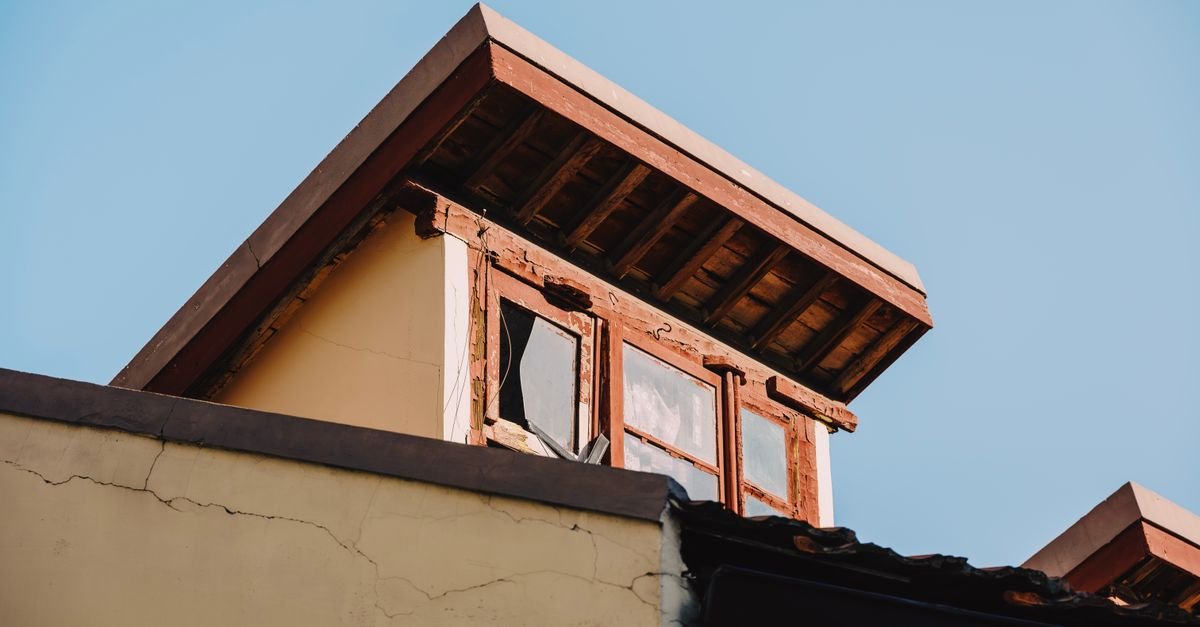
Here is how that cover is actually attached, from two manufacturers who agree with each other almost word for word.
Rollex, in its soffit and fascia installation instructions: “when installing fascia, the bottom leg should cover the end of the soffit panel. The top of the fascia cover can slide into the existing drip edge or it can slide behind the gutter.” And then, in brackets, the instruction that defines the whole component: “(Do not face nail.)” (Rollex, Installation Instructions for Rollex Soffit and Fascia Products).
Quality Edge says the same in capitals — “DO NOT FACE NAIL” — and adds the dimension that makes it a specification rather than a preference. For standard pre-engineered fascia, “it is recommended to pre-drill a hole 1/16 inch larger than the nail diameter in the bottom edge before nailing every 5 feet.”
Read that assembly slowly, because it is the argument.
The top edge is not fastened at all. It slides up behind the drip edge or behind the gutter and stays there because it is trapped, in the same way a roof tile stays down. The bottom edge is fastened every five feet, through a hole deliberately made wider than the nail so the metal can grow and shrink with the season. And the bottom leg of that cover folds under and laps over the cut end of the soffit panel, which itself was “cut to the required length minus 1/4 inch to allow for movement” and is sitting loose in a channel.
Nothing in that is a defect. It is a design for a specific load: water falling out of the sky, landing on the roof, leaving at the drip edge and dropping into the gutter. Every lap in it faces down and out, every fastener is oversized so the metal can move, and no part of it is sealed, because a sealed cover would buckle by August. The manufacturer measured the load the part was built for and wrote the clearances into the instructions.
A jet is not falling water. Aimed upward at the joint between gutter, fascia and soffit, it arrives at the one seam in the whole eave that opens towards you — the bottom leg of the fascia cover, lapping the soffit’s cut end — and there is no fastener between there and the next nail five feet away to stop it going in. Rollex has a line about what is behind that cover: “you never want bare wood exposed after you’ve finished the job.” Bare timber, unpainted on the back face, is what a fascia cover exists to keep dry.
What happens when it does not stay dry is described, again by the panel maker, in the section on ice dams: water backing up “under roof shingles and behind fascia boards, soaking roof decking and wall sheathing, damaging exterior and interior walls, peeling paint and ruining ceilings,” leading on to “wood rot, bug infestation, mold and degradation of structural integrity.” Quality Edge is describing a winter problem. The list of consequences does not care how the water got behind the board.
Whether your fascia has already been quietly getting wet is a different question with an answer you can check in ten minutes from the ladder — the thumb test, the drip-edge check and the rest of the inspection are in gutter cleaning and maintenance.
Cleaning Soffit and Fascia With a Gutter in the Way
Washing anything above your head is awkward for reasons that have nothing to do with soffits — the runoff comes back down onto you, the reaction force pushes the wand where you did not point it, and holding a working distance while looking up is not a skill anybody has. That argument is made in full on cleaning a pergola, which is the other overhead job on this site, and it holds here without amendment.
What a pergola does not have is a gutter bolted across the front of the thing you are trying to reach.
A K-style gutter is roughly five inches deep front to back, and it hangs with its front bead sitting at or slightly above the plane of the roof edge. It is, geometrically, a shelf mounted directly in front of the fascia at the exact height you need to work. That produces three problems in sequence.
You cannot get a tip square to the fascia at all. The fascia’s face is behind the gutter for its entire length except the few inches below the trough. Whatever you spray at the fascia is really being sprayed at the outside of the gutter, and a jet hitting that curved front bead leaves at an angle nobody chose.
The only line to the soffit is upward and inboard. To clear the gutter and land on the panel, the spray has to rise past the front bead and travel back towards the wall. That path ends at the wall line, where the soffit sits in a J-channel with the quarter inch of movement clearance behind it. The one direction the geometry offers you is the one direction the assembly cannot take.
Stepping back does not work the way it does everywhere else. On a wall, distance is your real pressure control — a foot further back drops impact pressure meaningfully and costs you nothing. Under an eave, the target is above you, so stepping back barely lengthens the throw and mostly just steepens the angle towards the house. You lose the control you rely on and worsen the one thing you were trying to fix. This is the single job where the wand fights you rather than the surface.
Then the run-back. A fan tip meeting a horizontal surface nine or ten feet up does not splash sideways and disperse the way it does on a wall; it comes straight back down as a sheet, and the gutter and fascia edge catch part of it and deliver it in a line along whatever is under the eave. That is you, the ladder, the path and the beds, in that order. Sealed goggles are not a suggestion on this job, and the reasoning behind that is on the pergola page too.
So the honest position is that the machine’s role here is small and specific: the outside face of the gutter, and the sliver of fascia below it, aimed level or slightly down, from the side rather than from underneath. Everything above that line is reached with something that does not have a trigger on it.
Punched Holes or a Grille Cut Into Plywood
Before any of this matters you need to know what is over your head, and there is a faster test than tapping it: look at where the holes are.
If the perforations run continuously along the panel, or in a strip down its centre, you have a modern vinyl or aluminium soffit system — a floating panel in a channel. If instead the underside is solid plywood or boards with occasional rectangular grilles screwed into it every few feet, you have a timber soffit with separate vents, which means paint, a substrate that absorbs water, and a completely different set of limits. Continuous holes mean a panel. Occasional holes mean a board.
| Material | How to spot it | What goes wrong | Working limit |
| Vinyl | Moulded round perforations in a lightly textured panel; every end disappears into a channel; no fastener heads visible anywhere | Goes brittle in cold weather; a panel knocked out of its channel will not go back without working along the run from one end | Warm day only, 40° tip on the fascia face, hose pressure on the panel |
| Aluminium | Punched perforations with the metal slightly dished around each hole; a nicked edge shows bright silver under the paint | Dents permanently, and older paint chalks so pressure removes it unevenly and leaves bands | Below the vinyl range, 40° tip, and a soft brush wherever the cloth test comes back loaded |
| Painted timber | Plywood sheets or boards with separate rectangular grilles let in every few feet, and nail or screw heads in the face | Paint loss, raised grain and a substrate that stays wet for days | 500–800 PSI, 40° tip, and stop at the first sign of a lifting edge |
Two of those rows have their own articles behind them and I am not going to restate the working. The full pressure-by-material table, and why you hold the tip level against a wall, is in power washing siding. The chalk test — a dry hand across the panel, and what a loaded palm means for whether you are cleaning a surface or removing one — is in cleaning aluminum siding, and it applies to an aluminium soffit exactly as it applies to an aluminium wall, with the added cruelty that the soffit is the elevation you cannot see from the ground.
Pre-1978 house with a painted timber fascia and flaking paint is a different job again, and the flaking is the tell. Washing it disturbs it, and where those chips land is the entire reason the lead rules exist.
Chemistry Reaches Where the Wand Must Not
Here is the opinion I will defend on this page: the soffit is the one surface on your house where I would not use the pressure washer as the cleaning tool at all, and the reason is that the two companies that manufacture the component do not either.
Klauer Manufacturing, which makes aluminium soffit and fascia, publishes its care method in two sentences: “if it collects surface dirt, an occasional washdown with a simple garden hose will do. All you’ll really need is a soft bristle brush.” For heavier soiling it moves to a detergent solution and the same brush, and then adds a caution that reads oddly until you remember the finish is paint: “rinse thoroughly after with your garden hose and avoid any rigorous rubbing unless you want to potentially damage the gloss of your finish. Outside of this easy cleaning routine, no other maintenance is required” (Klauer, How to Care for Aluminum Soffit Panels and Fascia).
A hose and a soft brush. Rollex says the same thing on its own fascia product page — its products are “virtually maintenance free. Simply spray with clean water to maintain like-new appeal.” I went looking for a published pressure limit for a soffit panel from anybody who makes one, and I came up empty — no PSI ceiling, no tip specification, no distance. The pages ranking for this query all supply that missing number themselves, generally as “start on the lowest setting and test an area,” which is decent advice and is nobody’s published figure. The makers did not decline to name a pressure because they forgot. They named a hose.
Klauer also gives the mechanism for why the panel gets dirty and stays dirty, and it is the one sentence on this topic that ties the whole page together: “it’s not just wood soffits and rot; if moisture is allowed to penetrate aluminum soffit, mold and mildew can occur if you don’t clean your gutters.” Moisture behind aluminium grows mould behind aluminium. The soffit’s dirt problem is downstream of the gutter, which is why the gutter is step one.
One warning on chemistry, from the same page: Klauer’s mildew mix is the industry-standard detergent, trisodium phosphate and household bleach solution, and it carries an explicit ceiling — “you should not use any stronger concentration or you risk damaging your accessories.” That is the same mix and the same caution the vinyl siding makers publish, so use your ordinary house-wash strength and no more. There is nothing about being nine feet up that makes a stronger mix work faster.
On direction, this job needs a rule the site has not had to write before. The house convention is to apply chemical bottom to top and rinse top to bottom, and the exception is that a rinse carrying dissolved material goes bottom to top so it does not stain what you have not reached yet. A soffit is neither case, because a horizontal plane above your head does not have a top or a bottom. It has an inboard end at the wall and an outboard end at the fascia, and that is the axis that matters: rinse from the wall line outward, so the dirty water leaves at the fascia edge and drops into the gutter. Rinsing the other way drives everything at the J-channel and the quarter-inch movement gap behind it. The vertical rule still governs the fascia and the wall below, which are ordinary surfaces and get rinsed downward as usual.
The sequence, then:
1. Clean the gutters first. Klauer puts this ahead of touching the soffit at all, twice a year, for exactly the reason quoted above. It also means you only wash the fascia once.
2. Wet the fascia, the wall below and any planting. A dry fascia under a soffit you are about to soak will collect every streak the panel produces.
3. Apply the mix with a pump sprayer or a low-pressure soft-wash nozzle, one bay at a time, from outboard so you are not walking under fresh chemical.
4. Let it dwell five to ten minutes and re-mist before it dries. Overhead surfaces dry faster than walls because air moves on both faces, so work smaller sections than you think you need.
5. Brush with a soft brush on a pole, drawing along the panel’s ribs rather than scrubbing across the perforations. Across the holes is how you push the film into them.
6. Rinse at hose pressure, wall line outward, finishing over the fascia and into the gutter.
7. Now the machine. Gutter face and fascia face, 40-degree tip, level or angled slightly down, worked from the side. This is the part of the eave that behaves like a normal painted surface, and it is the only part.
If a mark will only come off from directly underneath, it is a brush mark, not a wand mark. That is not a compromise. That is the manufacturer’s method with a longer handle on it.
FAQ
Can you pressure wash soffits and fascia?
The fascia face and the outside of the gutter, yes — a 40-degree tip, held level or angled slightly down, worked from the side rather than from below. The soffit panel itself, no. It is a perforated component with published net free area in every square foot, its outer end sits loose inside the lapped bottom leg of the fascia cover, and neither of the two manufacturers whose care guidance I could find names a pressure washer in it at all. Both name a garden hose and a soft brush.
How often should you be cleaning soffit and fascia?
Twice a year is the sensible rhythm, and it should follow the gutters rather than lead them, because a blocked gutter is what dirties the eave in the first place. Klauer puts gutter cleaning twice yearly ahead of soffit cleaning for that reason. Shaded and north-facing eaves grow biological film faster and may want the spring visit doing properly and the autumn one doing at all.
What is the best cleaner for soffits and fascia?
An ordinary house-wash mix: detergent with a surfactant, plus sodium hypochlorite only if something is actually growing up there. The panel makers publish the familiar detergent, trisodium phosphate and bleach solution and then cap it — do not exceed the recommended concentration, because the finish is paint and a stronger mix damages it. Nothing acidic, nothing abrasive, and no rigorous scrubbing, which takes the gloss off a coated panel faster than the weather does.
Why do the vents go black before the rest of the panel?
Because that is where the air goes, and everything travelling in the air goes with it. A vented panel is a filter that runs continuously for twenty years, so the perforated strip accumulates a fine film at the rate the house breathes while the solid parts only collect what lands on them. It is also the part a brush drawn across the holes will push the film into rather than off, which is why you work along the ribs instead.
Can water actually get into the attic through soffit vents?
That is precisely what they are for, minus the water. The intake side of a roof’s ventilation is under the eaves by design, and a wand aimed upward is delivering water along the same path the air takes — into the eave cavity, past the insulation baffle, onto the underside of the deck. The awkward part is the timescale: nothing shows that day. What shows is a ceiling stain near the eaves, a musty roof space, or flattened insulation in one spot, months later, by which time nobody connects it to a Saturday in April.
Should I take the soffit panels down to clean behind them?
No. They are a locked, floating system — each panel engages the lock of the one before it and is cut short of the channel to let the material move — so removing one means working along the run from an end, and putting it back means getting every panel re-engaged while standing on a ladder. If the space behind the panel genuinely needs attention, that is a roofing visit, not a cleaning one.
The Fascia Takes the Machine, the Soffit Takes a Brush
Eleven point four square inches of open area per square foot, a fascia cover fastened only along its bottom edge through a hole cut wider than the nail, and a soffit panel trimmed a quarter of an inch short at each end so it can move. Those three numbers are the eave, and every one of them was published by the company that made the part. None of them describes anything you can safely put a jet into.
So the division of labour is fixed by the hardware rather than by taste. Gutters out first, chemistry and a soft brush on the panel, rinse from the wall line outward so the water leaves over the fascia and into the trough it was always meant to leave by, and the machine reserved for the flat painted face below the gutter line. The soffit is the only surface on your house that was built with holes in it on purpose, and the people who put them there published a cleaning method with a hose in it and no wand anywhere.