Last Updated on September 25, 2026 by Umar Farooq
Vinegar for cleaning hard water stains genuinely works, and it is the one outdoor cleaning job where it does — because the white crust is calcium and magnesium carbonate, and acetic acid converts carbonate into a salt the rinse water can carry off.
That is a strange sentence to write on a site that has spent several articles explaining why vinegar is the wrong bottle — wrong for algae, for oil, for rust, for anything that arrived in a tin. Hard water scale is the exception, and the same property that makes vinegar good at it makes it dangerous on about half the surfaces the scale lands on.
Scale Is a Mineral You Can Dissolve, Not a Stain You Can Bleach
Most of what people call a stain is colour — algae is pigment in the pores, rust is iron bonded into the surface, and both need something that attacks the colour itself. Hard water spotting is not colour at all. It is a solid, sitting on top, in the shape of the drop that dried there.
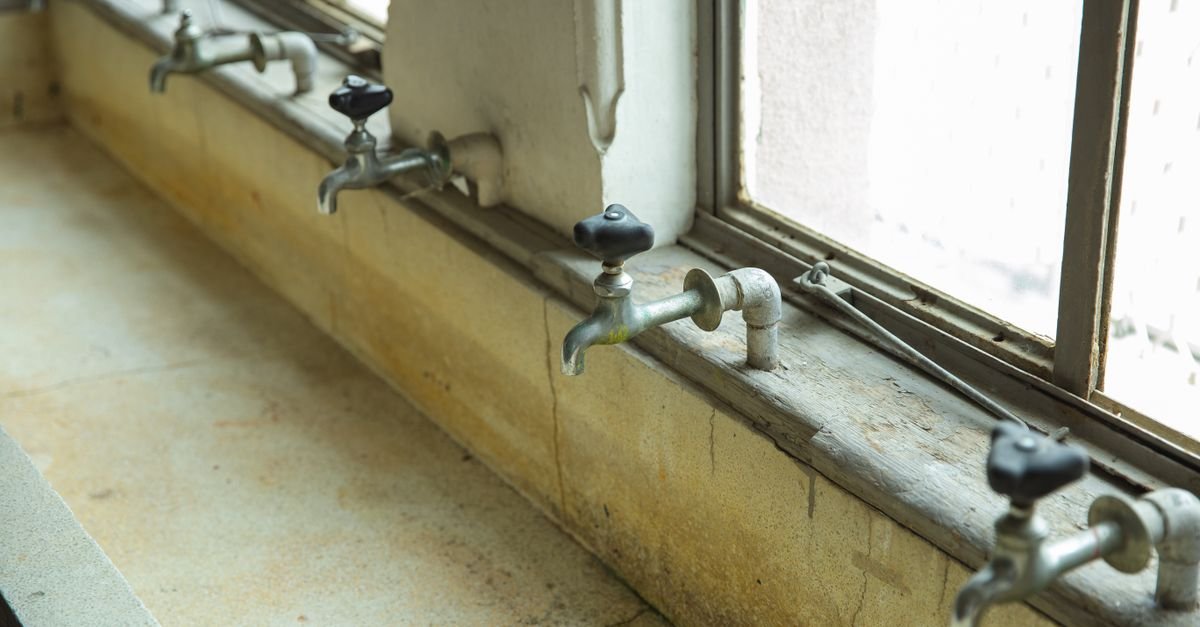
Hardness is dissolved rock. USGS puts it plainly: “in most water, nearly all the hardness is due to calcium and magnesium,” dissolved “especially from limestone, dolomite, and gypsum.” Their bands tell you whether this is a one-off or a standing chore: 60 mg/L or less as calcium carbonate is soft, 61 to 120 moderately hard, 121 to 180 hard, and over 180 is very hard (USGS WRIR 02-4045, Table 3). Above 180 you are not cleaning a mistake. You are on a maintenance schedule.
Now the part that makes acid the right answer. PubChem gives calcium carbonate a water solubility of 0.001%, then quotes the pharmacopoeial identification test word for word: “Practically insoluble in water and in alcohol. Dissolves with effervescence in diluted acetic acid” (PubChem CID 10112). That is not a cleaning blog’s claim. It is the official method for confirming a white powder *is* calcium carbonate, and it happens to be vinegar.
The product of that reaction is calcium acetate, which PubChem — citing the CRC Handbook of Chemistry and Physics — puts at 37.4 grams in 100 cc of water. Against 0.001 grams per 100 mL for the carbonate you started with, the acid has made the deposit roughly 37,000 times more soluble. Nothing gets scrubbed off. The crust simply stops being a solid.
That is the whole trick, and also the limit. There is no calcium carbonate in a grease mark, an algal pigment or a tyre scuff, which is why the bottle that cleared your tap in ten minutes will sit on a green patio all afternoon and achieve nothing.
One cousin worth naming: the white bloom on new brickwork is the same chemistry running backwards — salts pushed *out* of the wall rather than left *on* it by evaporation. That changes the fix entirely, and removing efflorescence from brick starts with a dry brush.
Vinegar for Cleaning Hard Water Stains: Two Dials, Strength and Dwell
There are two variables here, and the internet reliably turns the wrong one up. Distilled white vinegar is about 5% acetic acid; the bottle labelled “cleaning vinegar” is usually 6%. That is a 20% increase in available acid, which sounds worthwhile and almost never is.
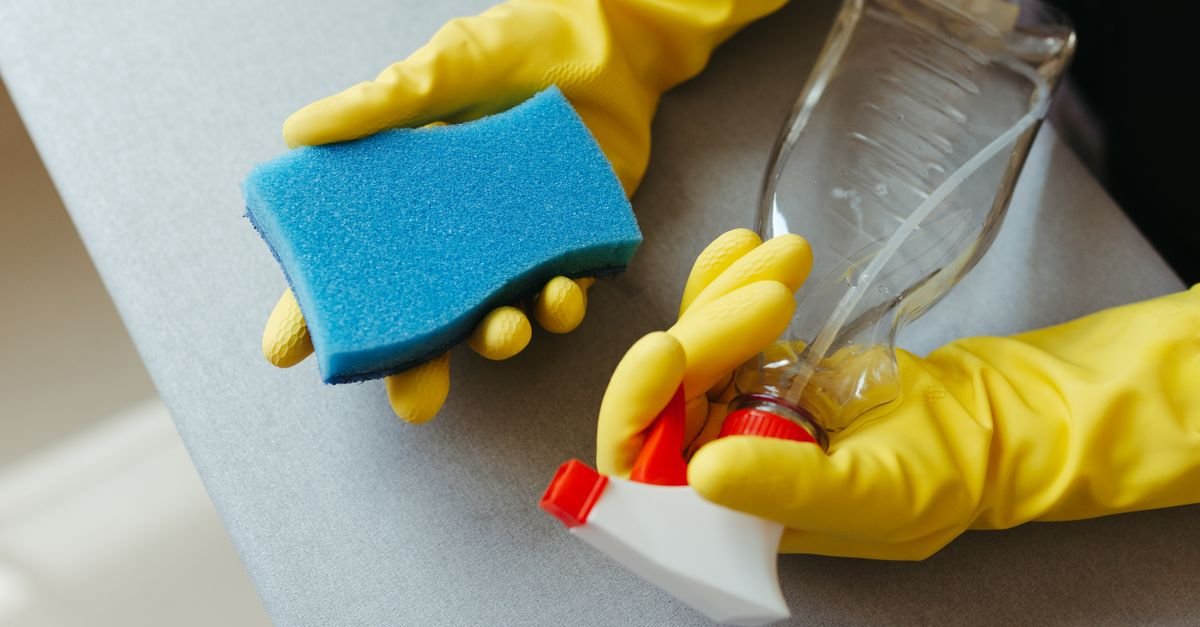
Here is why. A sprayed film is a very small amount of acid against a very large amount of carbonate. The reaction starts fast, the acid at the interface gets spent, and the whole thing quietly stalls — usually within a few minutes, long before the deposit is gone. Then it dries, and a dried film has stopped being a solution at all. It is a thin layer of salt with a smell.
So dwell is not a waiting game, it is a re-wetting game, and that is the opinion this page stands on: fifteen minutes of 5% vinegar kept genuinely wet will beat an hour of 6% that dried after four. The dial that matters is contact with fresh acid, not the number on the label.
| Do this | Because |
| Re-mist every two to three minutes, or lay a vinegar-soaked cloth over the deposit | A saturated compress is a reservoir; a spray is a single dose |
| Warm the vinegar to about hand temperature first | Reaction rates rise with temperature, and warm liquid wets a crusty surface better |
| Agitate wet with a nylon brush or white non-scratch pad part way through | Brushing clears the spent film and exposes fresh deposit — more than any strength increase does |
Fifteen minutes with a compress, one round of brushing, a second application if needed, then rinse hard and dry the surface. If two full cycles have not shifted it, stop — a third will not work either, and the next section explains why.
One thing not to do: 30% horticultural vinegar sits in the same aisle and burns skin and eyes. It is a weedkiller with a cleaning rumour attached.
Does the Dish Soap Actually Do Anything?
The recipe is everywhere — a cup of vinegar, a tablespoon of dish soap, shake, spray. Enough people search for it that it deserves a straight answer rather than a repeat of the recipe. It does help, but not for the reason the recipe implies.
The surfactant buys dwell. Vinegar is about 95% water and behaves like it: sprayed on a tap or a pane, it beads and runs off in seconds. A surfactant drops the surface tension so the mix sheets out and clings. Given that dwell is the dial that matters, two or three extra minutes of wet contact on a vertical surface is a real gain — and it is exactly why commercial descalers are sold as gels and clinging foams.
The second effect is arguably bigger. Deposits on fixtures are rarely bare mineral. There is a film over them: soap scum, body oils on a shower screen, road film and wax on car glass, greasy aerosol on a kitchen tap. Acid cannot dissolve carbonate it never reaches. The detergent lifts the film; the acid then gets at the deposit. On a heavily filmed surface that is the difference between vinegar working and vinegar “not working.”
What it does not do is make the acid stronger. Dishwashing liquids sit on the alkaline side of neutral, so every drop consumes a trace of your acid. At a tablespoon per cup that is negligible — but the direction is wrong, which means the instinct to add more soap makes the mix steadily worse. Any recipe telling you to double the soap for tougher stains has it backwards.
I went looking for a measured comparison — same deposit, acid alone against acid plus surfactant, with a number attached. I found recipe posts quoting recipe posts. So I will not give you a percentage: the mechanism is sound, the effect is real, the size of it is unmeasured.
And whatever you add, it is never a chlorinated cleaner. That has its own section below.
The Deposit That Refuses to Fizz
Before a second bottle goes in the trolley, put one drop of plain vinegar on the deposit and watch it for thirty seconds. Fizzing means carbonate, and carbonate comes off. No fizz means something else, and there are three candidates.
Silica. USGS lists silica separately from hardness for a reason — “commonly less than 30 mg/L,” reaching “as much as 250 mg/L” in alkaline water, and it “forms hard scale.” Silica scale is amorphous rather than crystalline, and household acids do essentially nothing to it; industrially it comes off with hydrofluoric acid or mechanically. If the spots laugh at vinegar, the fix is a non-scratch pad and patience rather than a stronger bottle.
Etching. The deposit may already be gone and what you are seeing is damage to the material underneath. That is overwhelmingly the story on glass, where prolonged mineral contact alters the surface itself and leaves nothing to dissolve. The wet test and the polishing options live in how to get hard water stains off of windows — that page owns the etched-glass question, including when a glazier is the honest answer.
Soap curd. The grey-white smear on a shower tray is often not scale but the reaction product of soap and hard water — fatty acid salts, a detergent problem rather than an acid one. It feels waxy rather than gritty, and a fingernail leaves a shiny track. That one wants degreaser.
Thirty seconds of watching a drop saves most people an afternoon and one unnecessary purchase.
Four Places the Bottle Stays Shut
Here is the uncomfortable symmetry at the centre of all this. The deposit you want gone is calcium carbonate. So is limestone, marble, travertine, lime mortar and a great deal of decorative aggregate. Acid cannot tell the difference between the mineral on the surface and the mineral the surface is made of.
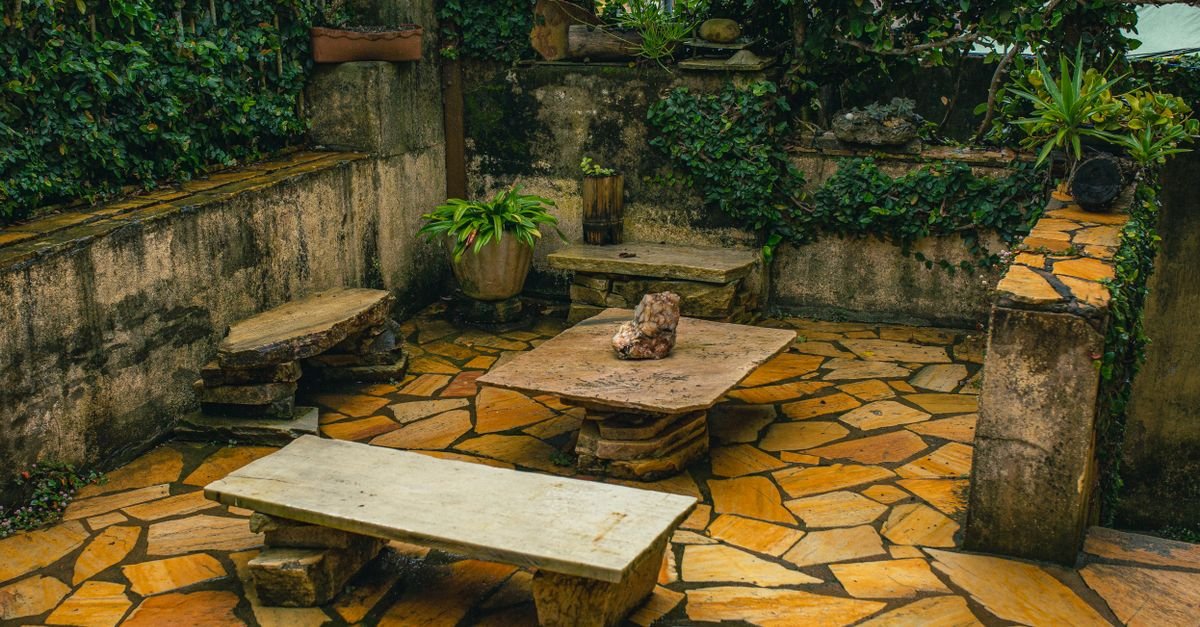
Calcareous natural stone. Limestone, travertine and marble are off the list permanently, not conditionally. Acid etches them on contact, and the result is a dull patch in the polish rather than a stain — which means no cleaner fixes it afterwards. The full compatibility rundown, including how to identify what your slabs are, is in the patio cleaning solution guide.
Calcareous things that do not look like stone. Lime mortar joints, limewash, terrazzo with marble chips, cast stone and plenty of decorative aggregate carry the same vulnerability without announcing it. If a sprinkler has scaled a wall, the joints are more acid-sensitive than the bricks.
Unsealed concrete. Acetic acid dissolves cement paste at the surface and leaves the slab more porous than it found it. That argument is made in full, with the studies, in cleaning concrete with vinegar. The short version here: a mineral ring on a path can go with a dilute mix and a short dwell, but a monthly vinegar habit on flatwork is a slow way of sanding your driveway.
Coatings and finishes. Sealed or polished concrete, anodised aluminium, lacquered brass, powder-coated fixtures, stone sealers and self-cleaning or reflective glass coatings all fail before the deposit does, and the failure shows up as a dull patch rather than as clean. Chrome, enamel, ceramic, porcelain, stainless steel and ordinary uncoated glass are fine.
The test that settles it costs nothing: one drop on a hidden corner, thirty seconds, then look.
Rinse the Bleach Off Before the Vinegar Comes Out
This site sends people out with sodium hypochlorite constantly, because it is the correct chemistry for algae and mildew on almost every exterior surface. Which means the sequence that produces chlorine gas is not exotic here. It is an ordinary Saturday.
ATSDR states it without hedging: sodium hypochlorite “releases chlorine gas when it comes in contact with acids” (ATSDR, Medical Management Guidelines for Chlorine). Vinegar is an acid. So is every descaler on the shelf. The mixing vessel does not have to be a bucket — a sill still damp with hypochlorite runoff will do, with your face a foot above it.
So the order is a rule, not a preference:
- Bleach work first, on its own, ideally on its own day.
- Rinse everything heavily afterwards — walls, glass, sills, fixtures, ground — and let it dry completely before any acid appears.
- Never pre-mix the two, never run both through one sprayer without flushing it, and never add a chlorinated product to a vinegar mix because the deposit is stubborn.
- Store the jugs apart, and keep ammonia away from both.
Outdoors is not the protection people assume when they are crouched directly over the reaction.
FAQ
Does vinegar really remove hard water stains?
On carbonate deposits, yes — dilute acetic acid is the official identification test for calcium carbonate precisely because it dissolves it with visible effervescence. It converts the deposit into calcium acetate, roughly 37,000 times more soluble in water, so the rinse carries it off. Fresh and moderate deposits go in one or two cycles; thick layered crust usually needs a purpose-made descaler at higher acid strength.
How long should I leave vinegar on hard water stains?
Ten to fifteen minutes, kept continuously wet, then brush and rinse. Leaving it an hour is worse than it sounds: a sprayed film stalls within a few minutes as the acid at the surface is used up, then dries into a salt residue. A vinegar-soaked cloth held against the deposit beats a longer wait every time, because it keeps replacing the acid instead of just extending the clock.
Is vinegar and dish soap better than vinegar alone for hard water stains?
Usually yes, for two reasons unrelated to acid strength. The surfactant lowers surface tension so the mix clings to vertical surfaces instead of running off, which buys real dwell time, and it lifts the film of soap scum, body oil or road grime sitting over the deposit and blocking the acid. A tablespoon per cup is plenty — dish soap is mildly alkaline, so extra soap consumes acid rather than adding any.
Will vinegar and baking soda remove hard water stains?
No, and it is worse than either ingredient alone. Acid and base neutralise each other on contact, so the impressive fizzing is the two reagents destroying one another and leaving a weak salt solution. If you want soda’s mild abrasion, use it as a paste after the acid step and after rinsing — never in the same container.
Can vinegar damage the surface under the stain?
On limestone, travertine, marble, lime mortar and other calcareous materials, yes — immediately and permanently, because the surface is chemically the same thing as the deposit. On unsealed concrete it dissolves cement paste and raises porosity over repeated use. On sealed, polished, anodised, lacquered or coated surfaces it dulls the finish. On chrome, enamel, ceramic, stainless steel and plain glass it is fine. One drop on a hidden corner for thirty seconds tells you which group you are in.
What removes hard water stains when vinegar does not?
First work out why it failed. If it did not fizz at all, you are looking at silica, etching or soap curd, and none of those responds to a stronger acid. If it fizzed but only partly cleared, you are under-dosed rather than wrong, and a descaler based on phosphoric, sulfamic or citric acid carries more acid per application than 5% vinegar. A wet non-scratch pad is the honest last step, and the only option for silica.
Aim It at Carbonate and Nothing Else
Vinegar earns its place on exactly one kind of mark: a mineral deposit left behind by evaporating water. On that job it is not a folk remedy but the same reaction a laboratory uses to identify the compound. Keep it wet, give it fifteen minutes, brush it, rinse it, and expect a second cycle on anything thick.
Then put it away. It will not touch algae, oil, rust or paint, and on limestone, travertine, marble or a sealed finish it does damage you cannot undo. The drop test takes thirty seconds and answers both questions at once — whether the deposit will go, and whether the surface survives the attempt.
And if the same three windows keep scaling up every summer, the bottle is not the answer to that. Go and watch where your sprinkler is actually throwing water.