Last Updated on September 25, 2026 by Umar Farooq
Cleaning fiber cement siding means a garden hose, a soft nonmetal brush and a side-to-side stroke in the direction of the plank — and if a pressure washer comes out at all, James Hardie’s own care guide caps it below 1,500 psi, through a wide fan tip, from a minimum of six feet away.
Six feet is the figure that stops people, and it should. Six feet is not a washing distance. Six feet is roughly the distance at which you can no longer tell whether the wall is getting any cleaner, which turns out to be the entire point of the instruction.
Fiber cement behaves like nothing else on a modern house. It will not flex and pop like vinyl, nothing is eating it the way things eat wood, and unlike brick it arrives wearing a factory paint job that is doing all of the actual weather resistance. Five rules cover it: protect the coating rather than the board, brush rather than spray, follow the plank, keep abrasives off it entirely, and treat a white bloom as a plumbing question rather than a cleaning one.
The Board Is Mostly Cement, and the Rest Is Paper
Fiber cement is portland cement, silica sand and cellulose fibre — wood pulp, essentially — mixed wet, pressed into a board and cured. The cement and sand give it hardness and fire resistance. The cellulose gives it enough tensile toughness that you can nail through it without the whole plank splitting, which plain cement board would happily do.
That recipe explains most of its behaviour. There is organic material in there, but it is locked inside a mineral matrix, so mould growing on a fiber cement wall is living on the film of dirt and pollen sitting on the paint rather than on the board. It will not rot. It will not feed anything. It also will not shrug off a jet the way people assume a cement product should, because the hard part of the assembly is not the part you are looking at.
The other thing the recipe explains is porosity. Cured fiber cement is a mineral sponge with a very fine pore structure. Sealed under coating it does not care about rain. Opened up — a chipped edge, a field cut nobody sealed, a patch where the finish has been washed off — it absorbs water, holds it, and then hands you freeze-thaw damage two winters later.
You Are Not Cleaning the Board. You Are Cleaning Its Paint.
This is the mental switch that makes every manufacturer instruction on this page make sense at once. Nothing in the care literature is protecting the cement. All of it is protecting the finish.

Your boards arrived in one of two states. Factory-finished — James Hardie’s ColorPlus and the equivalents from other makers — means multiple coats applied and heat-cured in a plant, under conditions no painter on a ladder can reproduce. Primed means the board came with a primer and somebody painted it on site after it went up.
That difference decides whose instructions you are actually following, and James Hardie says so plainly in its Homeowner Care & Maintenance Guide: “For paint applied in the field, refer to the paint manufacturer for washing and maintenance requirements” (James Hardie Homeowner Care & Maintenance Guide). If a decorator put two coats of acrylic on your house in 2019, the fiber cement company has handed the question to the paint company. Your siding warranty and your coating warranty may be held by two organisations who have never met.
The same document opens with the sentence that governs everything after it: “Damage to siding and trim arising from improper cleaning or maintenance may not be covered by the James Hardie warranty.” And on factory finish it is stricter than most people expect — ColorPlus touch-up is for nicks and nail holes only, and “if the touch up area is larger than the size of a dime, the use of touch-up is NOT recommended.” Larger than a dime and the advice is to replace the board. That tells you exactly how repairable a baked factory coating is once you have taken a stripe out of it, which is to say: it is not.
Cleaning Fiber Cement Siding: The Numbers the Makers Publish
Three separate companies make this stuff, publish care documents, and have no particular incentive to agree with each other. They agree.
| Source | What it actually says |
| James Hardie, Homeowner Care Guide | “A low pressure water spray and a soft medium bristle (nonmetal) brush is most suitable for cleaning fiber cement products. Acid and high pressure washing can damage the fiber cement surface and is not recommended.” |
| James Hardie, pressure washer warning | “Use a wide fan tip, keep a minimum of 6 feet from the wall and keep the pressure below 1500 psi.” |
| Nichiha, care and maintenance bulletin | “DO NOT use high-pressure washers as the extreme psi blast can damage paint, loosen or remove caulks and sealants, and even damage the siding surface.” |
| James Hardie, cleaning frequency | “Wash down the exterior surfaces every 6 to 12 months with a garden hose.” |
Nichiha’s wording carries a detail the others leave out, and it is the one I would take most seriously. Caulks and sealants. A fiber cement wall is not weathertight because the boards are waterproof — it is weathertight because somebody ran flexible sealant at the butt joints, the trim junctions and every penetration. James Hardie specifies an elastomeric joint sealant meeting ASTM C920 Grade NS, Class 25 or higher, precisely because those joints are expected to move. A jet at close range will find a tired bead of sealant long before it marks the board, and the damage from that is invisible until the sheathing behind it is not.
Here is the opinion, and it is the only one on this page. That 1,500 psi figure is a harm-reduction number, not a recommendation. Read the two James Hardie statements in order: the company says high pressure washing is not recommended, and then, in a footnote marked “PRESSURE WASHER WARNING”, tells you what to do if you insist. It is a speed limit posted on a road they have already told you not to drive down. Nobody at that company thinks 1,499 psi is a good idea. They think you are going to do it anyway. For where that figure sits against every other cladding on a typical street, power washing siding has the full comparison.
Why a Brush Beats the Machine on a Wall This Hard
The physics here is genuinely interesting, and it explains why fiber cement is the one material where the machine loses on merit rather than on caution.
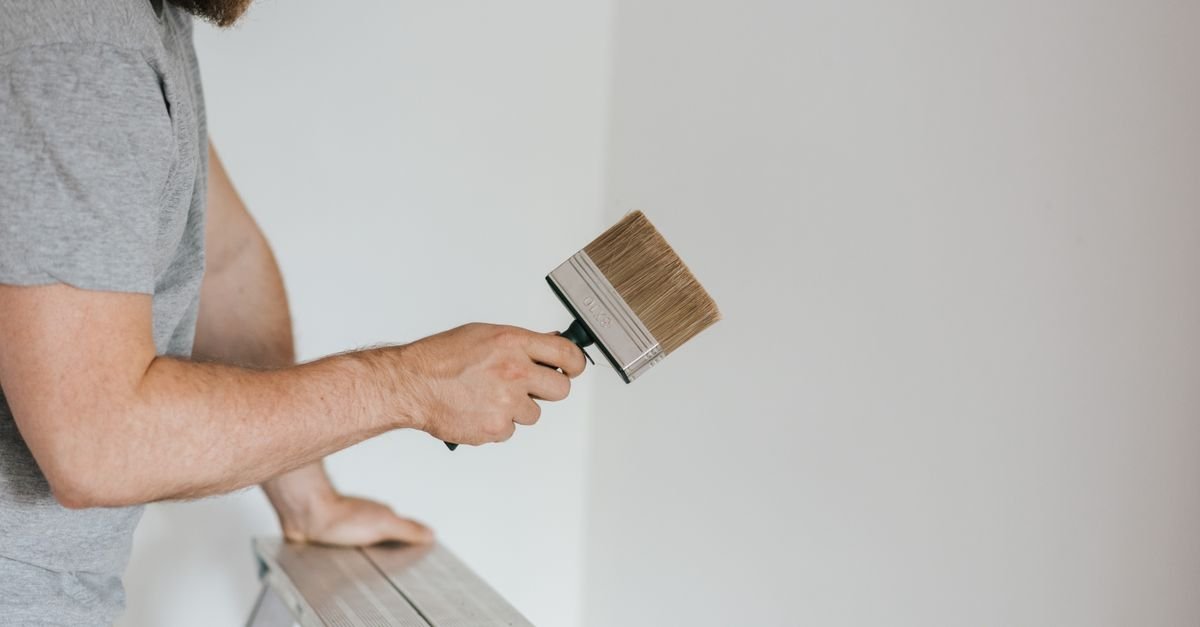
A pressure washer delivers force perpendicular to the surface. It is an impact tool. What holds algae, mould and general grey film onto a painted wall is not mechanical interlock — it is adhesion, and adhesion fails under shear, not under impact. A bristle dragged across the surface applies shear directly at the bond. That is why agitation outperforms pressure on almost every vertical surface, and it is why the industry’s answer to a stubborn wall is a longer handle rather than a bigger pump.
Then there is the texture. Most fiber cement lap siding is moulded with a woodgrain pattern, and the grain valleys are exactly where the grime sits. A fan jet fired from six feet away arrives spread out and slowed down, and it has no mechanism for reaching into a groove it is hitting at a glancing angle. A flagged bristle bends into that groove and sweeps it. So the machine is caught in a bind of its own making: at the distance the manufacturer permits, it does very little, and at the distance where it would work, it is no longer permitted.
Direction matters too, and both major makers specify it. James Hardie says to work in a side-to-side motion in the direction of the plank. Allura adds the case Hardie leaves out — on panel siding rather than lap, scrub up and down. The logic is the same in both: your strokes should run parallel to the joint lines, so you are never driving water into a horizontal lap or a vertical panel seam, and any faint scuffing you leave runs along a line the eye already expects to see. Bristle choice and pole length get their own treatment in the house siding cleaning brush guide; for fiber cement the short version is soft to medium, nonmetal, and nothing that has taken a permanent bend.
The Dust Is the Part That Is Actually Regulated
Everything above is about not hurting the wall. This section is the one where the wall is fine and you are not.

Fiber cement contains crystalline silica, and cutting or abrading it releases the respirable fraction — the particles small enough to reach the deep lung, where they cause silicosis. This is not a cautious-blogger hazard. It is a regulated one, with a number attached. NIOSH states that “fiber-cement products can contain as much as 50% crystalline silica,” and its own field measurements found that workers cutting siding with power saws had uncontrolled exposures to respirable crystalline silica ranging “between 0.02 to 0.17 milligram per cubic meter, which was up to 3.4 times the NIOSH recommended exposure limit” of 0.05 mg/m³ (NIOSH Publication 2015-185, Reducing Hazardous Dust Exposure When Cutting Fiber-Cement Siding). Half the board, by weight, can be the thing you must not breathe.
The good news, and I want to be precise about it, is that washing fiber cement is a wet process and does not generate respirable dust. Water is the control. You are not at risk hosing a wall down.
You are at risk at the exact moment a cleaning job stops being a cleaning job. That moment is recognisable: a stain will not lift, patience runs out, and somebody fetches an abrasive pad, a wire brush, an orbital sander or — genuinely, people do this — a sandblaster. Allura’s cleaning bulletin covers it in one line: abrasive blasting and acid washing can damage the fiber cement and are not recommended. The manufacturer is protecting the board. NIOSH is protecting your lungs. They happen to be pointing at the same tool.
One related habit worth adopting if your siding is new. Allura’s guidance is that cut dust and construction debris should be removed immediately after installation, and that dry cut dust on pre-finished board comes off with a dry soft cloth, taking care not to rub or apply pressure. If the board was wet when it was cut, do not try to wipe the slurry off at all — it comes off with a soft cloth soaked in roughly one part white vinegar to five parts water. Cement slurry that dries on a factory finish is cement bonded to your paint, and by the time you notice it you are sanding, which brings you back to the paragraph above.
White Bloom on a Wall That Is Only Two Years Old
A chalky white deposit on fiber cement is usually efflorescence, and it is one of the few marks on a house that is arriving from the inside out.
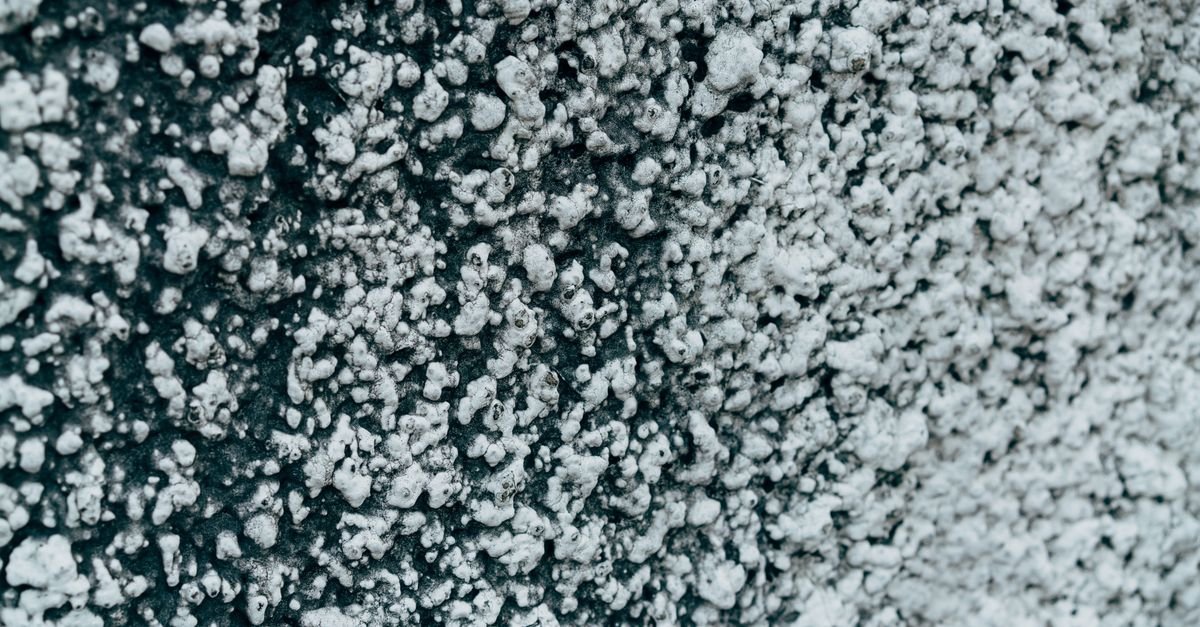
Allura’s technical bulletin sets out the three conditions, all of which must be present: water-soluble solids in the building material, enough moisture in the wall to dissolve them into solution, and a path for that solution to reach the surface (Allura, Technical Bulletin M02.A, Efflorescence: Cause and Treatment). Remove any one of the three and it stops. Since the salts came with the cement and the path is the pore structure, the only lever you actually have is the water.
Which is why the same bulletin adds a sentence I would print out and stick to the ladder: efflorescence may also be a sign of water intrusion behind the siding. Most fiber cement efflorescence traces back to boards that were soaked before they went up — stacked uncovered on site through a wet fortnight — and that version fades over a season or two. But if a bloom appears on a wall that has been dry and painted for years, or keeps coming back in the same patch under a window, the wall is telling you where the water is. Cleaning it off is treating the receipt rather than the purchase.
For removal, Allura publishes a ladder rather than a single mix: one part household white vinegar to three parts water as a 25% solution, escalating to 33% (one part vinegar to two parts water) or 50% (one to one) only if needed. The method is wet the surface with plain water and let it stand 5 to 10 minutes, saturate with the vinegar solution and give it 10 minutes, scrub lightly with a soft bristled brush or sponge, then rinse everything thoroughly from the top down — plants included.
Note the tension, because it is real and nobody flags it. James Hardie says not to use acid. Vinegar is an acid. My reading is that the two documents are talking about different things — “acid washing” in a cladding bulletin means the muriatic and phosphoric masonry washes, not a quarter-strength solution of table vinegar — but I am not going to pretend the wording reconciles itself. Follow the company that made your board. If that company says no acid, then on their wall the answer to efflorescence is a dry brush, patience, and finding the leak.
Bleach on Hardie: Two Manufacturers, Two Answers
Here is a genuine disagreement between two companies making the same material, and it is worth knowing about before you mix anything.
James Hardie’s cleaning guidance for oil, grease and organic contaminants is mild liquid dishwashing soap and water, with the explicit instruction: “Do not use harsh chemicals, such as bleach or acid” (James Hardie, tips for cleaning your siding). For mould and mildew it sends you to a mildew-specific cleaner and tells you to follow that label. Nichiha’s care bulletin, on the same problem, tells you to add bleach to the cleaning solution.
Both are right about their own product, because the argument is not about the cement. It is about the coating, and about what each company’s paint chemists signed off on. A sodium hypochlorite mix that a field-applied acrylic shrugs off may dull a baked factory finish, or may not — and only one organisation has run that test on your boards.
So the rule for fiber cement is duller than the rule for vinyl, and better: start with the mildest thing on the list, test it on a board nobody looks at, and escalate only if the mild version failed. If you are working out ratios, the siding cleaning solution page covers what each ingredient is for — just apply the fiber cement discount to every strength on it.
Three universal instructions run through all three manufacturers’ documents, and they are the ones people skip:
- Work small sections. Adjust the size to the drying conditions, not to your ambition.
- Never let a cleaner dry on the surface. This is the single most common way a wash leaves a mark worse than the one it removed.
- Wash and rinse top to bottom, so nothing drips dirty water across what you have already done.
Add one more from the same documents that has nothing to do with cleaning day: keep vegetation trimmed back, keep sprinklers off the wall, and maintain the ground clearance — typically six inches. A wall that never stays wet does not need washing nearly as often.
FAQ
Can you pressure wash fiber cement siding?
The manufacturers say no, and then tell you how to do it anyway. James Hardie’s position is that high pressure washing is not recommended and that a low-pressure water spray with a soft medium-bristle nonmetal brush is most suitable. Its pressure washer warning, for people who use one regardless, specifies a wide fan tip, a minimum of six feet from the wall and pressure below 1,500 psi. Nichiha does not offer a number at all — its bulletin says DO NOT use high-pressure washers, full stop.
What is the best cleaner for Hardie board?
Water and a soft brush for ordinary dirt, and mild liquid dishwashing soap and water for grease or organic contamination. James Hardie names dish soap specifically and says not to use harsh chemicals such as bleach or acid. For mould and mildew it directs you to a mildew-specific cleaner used according to its own label instructions.
How often should fiber cement siding be washed?
Every 6 to 12 months with a garden hose, per James Hardie’s care guide. That interval is deliberately unambitious — it is a rinse to stop dirt, pollen and salt accumulating, not a deep clean. Houses near the coast, under trees, or on a shaded elevation that stays damp will want the shorter end of it.
Why is my fiber cement siding turning white?
Most likely efflorescence: soluble salts carried out of the board by moisture, left behind as the water evaporates. On newer houses it usually traces back to boards that got soaked before installation. On an older wall it can indicate water getting in behind the siding, which is a different and more expensive conversation. Chalking on a field-applied paint is the other candidate, and it rubs off on your hand as a fine powder rather than sitting as a crust.
Does cleaning it wrong void the warranty?
It can. James Hardie states that damage to siding and trim arising from improper cleaning or maintenance may not be covered by its warranty, and Allura says it will not take responsibility for damage arising from improper cleaning either. That is not the same as the warranty being cancelled — it means the damage you caused is yours, which is the normal arrangement and only surprising because nobody reads the guide until afterwards.
Is fiber cement dust actually dangerous?
Yes, when it is cut or abraded dry. NIOSH puts the crystalline silica content of fiber cement products at as much as 50%, and measured uncontrolled cutting exposures up to 3.4 times its recommended limit. Washing the wall with water does not produce respirable dust. Sanding, wire-brushing or blasting it does, which is another reason the manufacturers rule abrasives out.
Protect the Finish, Not the Cement
The board on your wall will outlive most of what is attached to it. The thirty thousandths of an inch of paint on the front of it will not, and every instruction in this article — the six feet, the soft bristles, the stroke along the plank, the ban on abrasives — exists to protect that layer and nothing else.
So the honest version of cleaning fiber cement siding is a bucket, a soft brush on a pole, mild soap and a slow Saturday. If that feels like an anticlimax after buying a machine, take heart: it also works on the car.