Last Updated on October 4, 2026 by Umar Farooq
What PSI pressure washer for vinyl siding is actually safe? Use 1,300–1,600 PSI with a 40-degree nozzle held about 18 inches from the wall. That is enough to rinse away dirt, pollen and loosened mildew without forcing water behind the panels. Most homeowners do not need more, and going higher is where the damage starts.
If you already own a bigger machine, you do not have to buy a smaller one. A 2,000–2,800 PSI washer is fine as long as you control the pressure that actually reaches the wall — with the nozzle, the distance and the soap setting. The number printed on the box is not the number hitting your siding.
The bigger surprise: some siding manufacturers do not want you using a pressure washer at all. That conflict is covered below, because it decides whether your warranty survives the wash.
Quick Answer: Safe PSI for Vinyl Siding
| Situation | Recommended PSI | Nozzle | Distance |
| Routine dirt, dust and pollen | 1,200–1,500 | 40° (white) | 18–24 in |
| Mildew or algae after detergent dwell | 1,300–1,600 | 40° (white) | 18–24 in |
| Older, chalky or faded siding | 1,000–1,300 | 40° (white) or soap tip | 24 in+ |
| Siding with any cracked or loose panel | Do not pressure wash | — | Repair first |
| Second story reached from the ground | 1,500–2,000 with high GPM | 40° (white) | As far as the fan still cleans |
| Insulated or foam-backed vinyl | 1,000–1,300 | 40° (white) | 24 in+ |
The ceiling nobody states clearly: stay under roughly 1,800 PSI on vinyl unless a specific manufacturer document tells you otherwise. Advice floating around the internet recommending 2,500–3,000 PSI for siding is repeating a number meant for concrete. Vinyl is a thin polymer skin hanging on nails with open lap joints — it is not a driveway.
What PSI Pressure Washer for Vinyl Siding Damages It?
Damage does not usually look like a hole. It looks like this, in order of how commonly it happens:
1. Water driven behind the panels. Vinyl siding is designed to shed water downward. It is *not* sealed. Spray angled upward pushes water under the lap, into the sheathing and insulation, where it does not dry. This is the number-one failure and it can happen at 1,300 PSI if your angle is wrong.
2. Chalking rubbed off. Older vinyl develops a chalky oxidized layer. High pressure scours it unevenly and leaves permanent light and dark streaks that show up only after the wall dries.
3. Panels knocked loose or cracked. Vinyl becomes brittle in cold weather. Below about 50°F, a direct hit that would be harmless in summer can crack a panel.
4. Trim, vents and light fixtures flooded. Soffit vents, dryer vents and exterior outlets are open by design.
5. Sealant and window flashing forced open. Concentrated spray at a window edge finds the weakest joint.
Note the pattern: most vinyl siding damage is caused by angle and water intrusion, not raw PSI. Getting the pressure right is necessary but not sufficient — rule 3 below matters just as much.
Rule 1: Check What Your Siding Manufacturer Actually Says
This is where most guides quietly mislead readers.
CertainTeed, one of the largest vinyl and polymer siding manufacturers in North America, states plainly in its own cleaning guidance: *”We do not recommend power washing vinyl or polymer siding as it can cause moisture intrusion, damage, and/or discoloration.”* They recommend a hose-connected house-wash system instead. You can read it directly in the CertainTeed vinyl siding cleaning guide.
Other manufacturers permit pressure washing with limits. The industry cleaning guidance historically has allowed a pressure washer when the stream is kept level with the panels rather than angled upward.
What this means for you:
- Find your siding brand before you wash. Check the build documents, a leftover panel in the garage, or the stamp on the back of a panel behind a removable trim piece.
- If your manufacturer prohibits pressure washing, a hose-end applicator or soft wash keeps your warranty intact.
- If you cannot identify the brand, treat 1,300–1,600 PSI with a 40-degree nozzle as your ceiling and never spray upward.
No competitor page ranking for this query tells you this. It is the single most useful thing on this page.
Rule 2: The Nozzle Controls More Than the PSI Rating
A pressure washer’s rated PSI is measured at the pump. What the wall feels depends on how that flow is spread out.
| Nozzle | Spray angle | Vinyl siding verdict |
| Red | 0° | Never. Cuts a pencil-width jet. Will mark or hole vinyl instantly. |
| Yellow | 15° | No. Meant for concrete and paint stripping. |
| Green | 25° | Only on sound siding, from 24+ inches, if 40° cannot shift the dirt. |
| White | 40° | The correct choice. Wide fan, gentle impact, good coverage. |
| Black | Soap / low pressure | Use for applying detergent. Drops pressure to roughly 300 PSI. |
| Turbo / rotary | Rotating 0° | Never on siding. |
Simple Green’s siding guidance recommends a 25–40 degree nozzle at low pressure with a minimum 18-inch working distance, applying cleaner bottom-to-top and rinsing top-to-bottom — you can see the full method in their vinyl siding cleaning instructions.
A 2,500 PSI machine with a 40-degree nozzle at 24 inches is genuinely gentler on siding than a 1,600 PSI machine with a 15-degree nozzle held at 6 inches. The nozzle and the distance are your real pressure controls. For a full breakdown of every tip, see our pressure washer nozzle chart.
Rule 3: Spray Down and Across — Never Up
If you remember one thing from this article, remember this one.
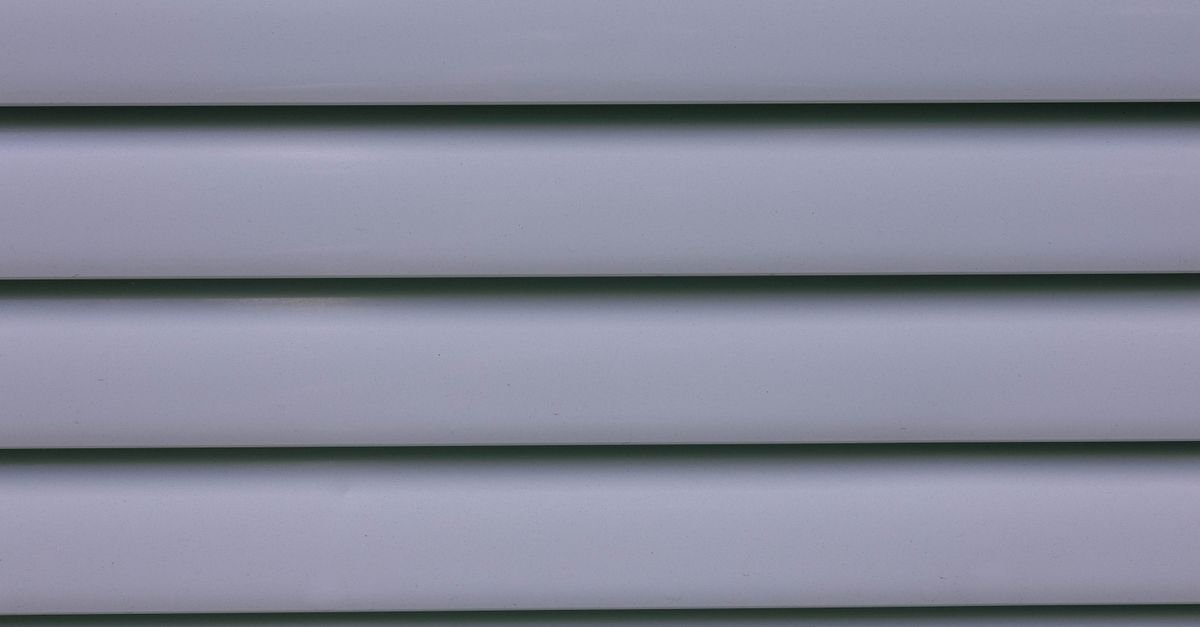
Vinyl siding panels overlap like roof shingles: each course laps over the one below it, leaving an open gap along the bottom edge. Water running down the face flows over the laps harmlessly. Water sprayed upward goes straight into that gap.
Do this instead:
- Hold the wand so the spray hits the wall level or angled slightly downward.
- Work in horizontal passes, moving side to side.
- Start at the top of a section and work down when rinsing.
- Never stand at the base of a wall and point the wand up at the second story. Use an extension wand or a telescoping lance so the spray stays level.
This single mistake causes more siding-related moisture problems than incorrect PSI. Water that gets behind vinyl has no fast drying path and can reach sheathing, house wrap and insulation.
Rule 4: GPM Matters More Than PSI for a Whole House
For siding, flow rate does the work that pressure cannot.
PSI is impact force. GPM (gallons per minute) is rinse volume. Washing a house is mostly a rinsing job — you are moving detergent and loosened grime off a large area, not cutting stains out of concrete.
| Machine profile | PSI | GPM | House-washing result |
| Small electric | 1,600 | 1.2 | Works, but slow on a full house |
| Mid electric | 2,000 | 1.4 | Good balance for a 1-story home |
| Large electric / small gas | 2,300 | 1.8 | Comfortable for most 2-story homes |
| Mid gas | 2,800 | 2.5 | Fast, but requires disciplined technique |
A 1,600 PSI / 1.2 GPM machine and a 1,600 PSI / 2.0 GPM machine feel identical against your hand, but the second one finishes a house in roughly half the time because it carries away far more water per pass. If you are buying specifically for siding, prioritize GPM over PSI. Our PSI vs GPM explanation covers the trade-off in detail.
Rule 5: Let Detergent Do the Cleaning
Mildew, algae and the grey-green film on a shaded north wall are biological. Pressure knocks the visible layer off but leaves the roots in the surface texture, which is why untreated walls look dirty again within weeks.
The correct sequence:
1. Pre-wet the wall and surrounding plants with plain water.
2. Apply a siding-safe detergent with the black soap nozzle, working bottom to top so runs do not streak dry siding.
3. Let it dwell for the time on the label — usually 5–10 minutes. Do not let it dry on the surface.
4. Rinse top to bottom with the 40-degree nozzle at 1,300–1,600 PSI.
5. Rinse plants again.
Skipping the dwell time is why people reach for higher pressure. The pressure is compensating for chemistry that was never given a chance to work.
Rule 6: Adjust for Siding Age, Color and Temperature
| Condition | Adjustment |
| Siding older than ~15 years | Drop to 1,000–1,300 PSI. Oxidation makes the surface fragile. |
| Dark colors (deep blue, hunter green, brown) | More visible streaking. Keep passes even and overlapping. |
| Air temperature below 50°F | Postpone. Cold vinyl is brittle and cracks more easily. |
| Direct hot sun on the wall | Wash early or late. Detergent drying on hot siding leaves streaks. |
| Insulated / foam-backed vinyl | Stay at the low end, 1,000–1,300 PSI. |
| Any loose, cracked or missing panel | Repair before washing. Water will find the gap. |
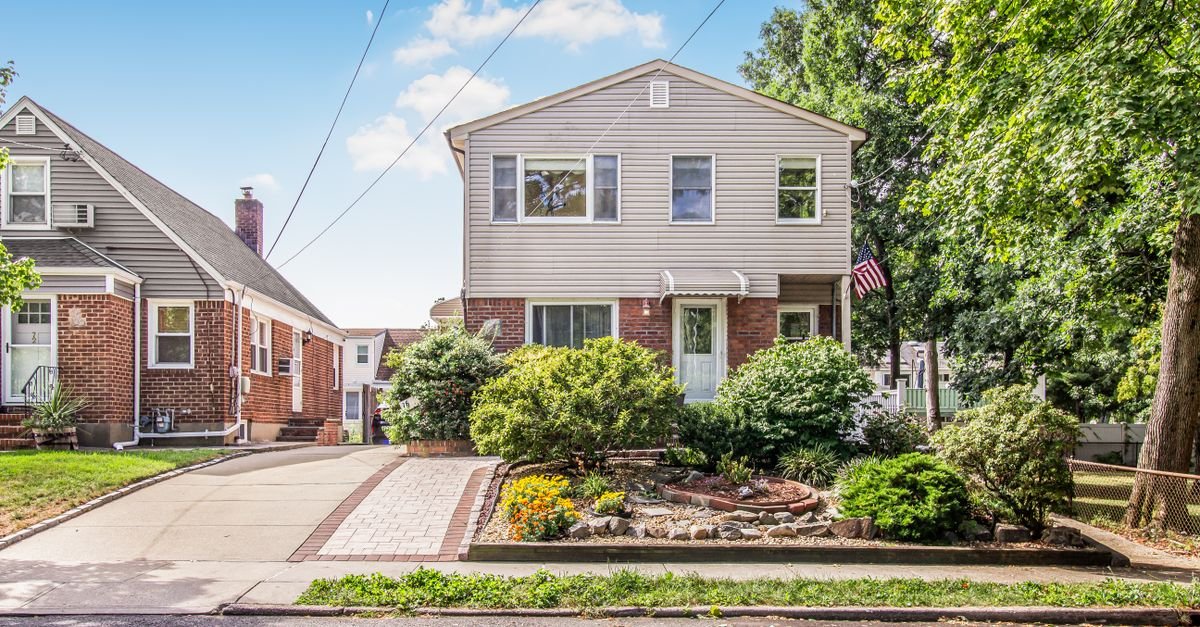
Do the chalk test first on older siding: wipe a hidden section with a dark cloth. Heavy white residue means significant oxidation — use a hose and a soft brush rather than a pressure washer, because a wash will strip it unevenly.
Rule 7: Protect the Openings Before You Start
Vinyl siding is full of intentional holes.
Before the first trigger pull:
- Close and latch all windows and doors.
- Cover exterior outlets, doorbell cameras, security cameras and light fixtures.
- Note where dryer vents, soffit vents and gable vents are — spray past them, never into them.
- Tape or cover the meter base and any open electrical penetration.
- Move furniture and grills clear of the wall.
- Pre-wet landscaping.
Never operate a pressure washer while standing on a ladder. The wand kicks back when you pull the trigger, and wet rungs plus a reaction force is how people fall. For a second story, use a telescoping wand from the ground or hire a professional.
What Size Pressure Washer for Vinyl Siding Should You Buy?
If you are buying specifically for house washing:
| Home type | Target spec | Type |
| Single-story, small footprint | 1,800–2,000 PSI, 1.4+ GPM | Electric |
| Single-story, average footprint | 2,000–2,300 PSI, 1.6+ GPM | Electric |
| Two-story | 2,000–2,500 PSI, 1.8+ GPM | Electric or small gas |
| Two-story plus driveway and deck | 2,500–2,800 PSI, 2.3+ GPM | Gas |
Note that the higher recommendations exist for reach and speed, not because siding needs the pressure. A 2,500 PSI machine still washes siding at 1,300–1,600 effective PSI through nozzle choice and distance.
Check your water supply before buying a high-GPM machine. Fill a 5-gallon bucket from your outdoor spigot and time it. If it takes 60 seconds, you have 5 GPM available — plenty. If it takes 3 minutes, you have about 1.7 GPM and a 2.5 GPM washer will starve and cavitate.
Soft Washing vs Pressure Washing Vinyl Siding
Soft washing applies a cleaning solution at very low pressure — roughly garden-hose level, often through a downstream injector — and lets chemistry do the work.
| Factor | Pressure washing | Soft washing |
| Pressure at the wall | 1,300–1,600 PSI | Under 500 PSI |
| Risk of water intrusion | Moderate, angle-dependent | Low |
| Effect on mildew roots | Removes surface only | Kills the organism |
| Regrowth timeline | Weeks to months | Often a year or more |
| Manufacturer acceptance | Varies; some prohibit it | Generally accepted |
| Speed | Faster | Slower dwell time |
Soft washing is the better choice if your siding is over 15 years old, if your manufacturer prohibits pressure washing, if the problem is biological growth rather than dirt, or if you have had any past moisture issue in the walls.
Common Mistakes That Ruin Vinyl Siding
Using the highest PSI available. More pressure does not clean faster on siding; it just risks the wall. A dirty wall needs detergent and dwell time, not force.
Holding the wand too close to chase a stain. Effective pressure roughly quadruples when you halve the distance. A stubborn stain needs a second detergent application, not a closer nozzle.
Spraying upward under the laps. Covered above. It is the most damaging habit and the hardest to unlearn.
Washing in freezing or near-freezing weather. Cold vinyl cracks.
Using bleach-heavy mixes without dilution control. Undiluted bleach damages plants, can discolor siding and corrodes metal fixtures. Follow label dilution.
Ignoring the drying inspection. Streaks, chalk removal and loosened panels are frequently invisible on a wet wall. Walk the perimeter after it dries and check inside for damp drywall near exterior walls.
FAQ
What PSI pressure washer for vinyl siding is safest?
1,300–1,600 PSI with a 40-degree nozzle at 18 inches is the safe working range for most vinyl siding. Drop to 1,000–1,300 PSI for siding older than 15 years or foam-backed insulated panels.
Is 2000 PSI too much for vinyl siding?
A 2,000 PSI machine is fine to *own* for siding, but do not deliver 2,000 PSI to the wall. Fit a 40-degree nozzle, stay at least 18–24 inches back, and use the soap setting for detergent. The rated PSI is the pump output, not the impact on the panel.
Will 3000 PSI damage vinyl siding?
Yes, if applied directly at close range. 3,000 PSI at 6 inches with a narrow nozzle will crack panels, strip chalking and force water behind the laps. A 3,000 PSI machine can still be used safely on siding with a 40-degree nozzle at 24+ inches, but it leaves very little margin for a mistake.
What size pressure washer do I need for vinyl siding on a 2-story house?
Aim for 2,000–2,500 PSI and at least 1.8 GPM, paired with a telescoping extension wand. The extra flow and reach matter far more than extra pressure. Do not solve the height problem by standing on a ladder or by angling the spray upward from the ground.
Can you pressure wash vinyl siding without damaging it?
Yes, when you use 1,300–1,600 PSI, a 40-degree nozzle, an 18-inch minimum distance, a level or downward spray angle, and detergent with proper dwell time. Confirm your manufacturer permits pressure washing first — some, including CertainTeed, recommend against it.
What nozzle should I use on vinyl siding?
The white 40-degree nozzle for rinsing, and the black soap nozzle for applying detergent. Green 25-degree only on sound siding from 24+ inches. Never use red 0-degree, yellow 15-degree or a turbo nozzle.
How far should I hold the pressure washer from vinyl siding?
At least 18 inches, and 24 inches is safer on older or darker siding. Effective impact rises sharply as you close the distance, so treat distance as an active control rather than a rough guideline.
Should you pressure wash siding before painting it?
Vinyl siding is rarely painted, but if you are preparing it for a coating, the wall must be clean, chalk-free and completely dry. Chalking must be removed or the paint will not bond. Follow the coating manufacturer’s drying requirement rather than a fixed number of hours.
Does pressure washing void a vinyl siding warranty?
It can. Some manufacturers explicitly advise against power washing, and damage traced to it may not be covered. Check your specific brand’s cleaning documentation before you start, especially on siding still under warranty.
How often should vinyl siding be washed?
Once a year is typical, usually in spring. Shaded north-facing walls in humid climates may need attention twice a year for algae. Walls in dry, open locations may go two years between washes.
Eighteen Inches Does More Than the PSI Does
What PSI pressure washer for vinyl siding? 1,300–1,600 PSI, a 40-degree white nozzle, and 18 inches of distance. That combination cleans a house safely and is well within what any modern homeowner machine can deliver.
But the PSI number is the easy part. The wash succeeds or fails on three things the pressure rating cannot control: whether you spray level instead of upward, whether you let detergent dwell instead of raising pressure, and whether your siding manufacturer permits pressure washing at all.
Get those three right and 1,400 PSI will clean your house beautifully. Get them wrong and no PSI setting will save the wall.