Last Updated on October 4, 2026 by Umar Farooq
The best pressure washer for cars is chosen on flow and on what is in the box, not on pressure — because every machine sold for this job already reaches the top of the published safe window for paint, and the number that decides whether your foam clings to a door or runs off it before you reach the roof is gallons per minute.
Two things go wrong on a driveway and they look unrelated. The first is a mark on a panel that was not there an hour ago, usually a soft grey halo where the lance sat still for a second too long. The second is foam: you cover the car in something that looks like a shaving advertisement, walk round to fetch the mitt, and by the time you get back there is a tidemark of soap round the sills and bare paint on the roof. Nothing cleaned. You just rinsed it with slightly slippery water.
Both have the same cause, which is that the specification people buy on has almost nothing to do with either. So this page is built on what the manufacturers actually publish, what they conspicuously do not, and what forty electric machine listings and twenty-one foam cannon listings say when you read all of them instead of the first three.
The Only Washing Number Honda Publishes Is a Distance
Start with the thing that is missing, because it reframes the whole purchase: no car manufacturer publishes a pressure limit for washing a car.
I went looking for one on the maker’s side, and what comes back is a distance and a list of parts. Honda’s exterior care guidance for the 2026 HR-V says “Keep sufficient distance between the cleaning nozzle and the vehicle body,” and then stops giving you numbers and starts naming things. “Take particular care around the windows. Standing too close may cause water to enter the vehicle interior.” “Do not spray water directly onto the camera or the area around it. Water may enter the lens and cause the camera to malfunction.” And the one nobody sees coming: “Do not spray water onto the fuel fill door directly. A high-pressure spray may cause it to open.”
A jet can pop the fuel flap. That is not a paint problem, it is a geometry problem, and it tells you what the maker is actually worried about — the places where a panel has an edge, a hinge or a hole behind it.
So the vehicle side of this gives you exactly one lever, and it is free. Distance. The machine side gives you PSI and GPM, and here is the honest position on the first of those: on a car, pressure is the one line on the spec sheet you cannot usefully spend money on. The published safe window for vehicles is 1,200 to 1,900 PSI with a 25- to 40-degree tip. The smallest corded machine in this article reaches the top of that window. The biggest reaches nearly twice it. You are not shopping for pressure; you are shopping for a machine that can be turned down, and the turning down is done with the tip and the standoff rather than with the badge.
Which tip for which part of the car belongs to the nozzle guide for vehicles, and the wash order — wheels first, pre-rinse, foam, dwell, contact, rinse the shuts, dry — belongs to the full car cleaning jet wash sequence. Read that one before you buy anything, because a good share of the people who think they need a bigger machine need a different order of operations.
Thin Foam Comes Out of a 1.25 Millimetre Hole
Now the foam, which is where the money actually goes and where almost every listing in the category goes quiet.
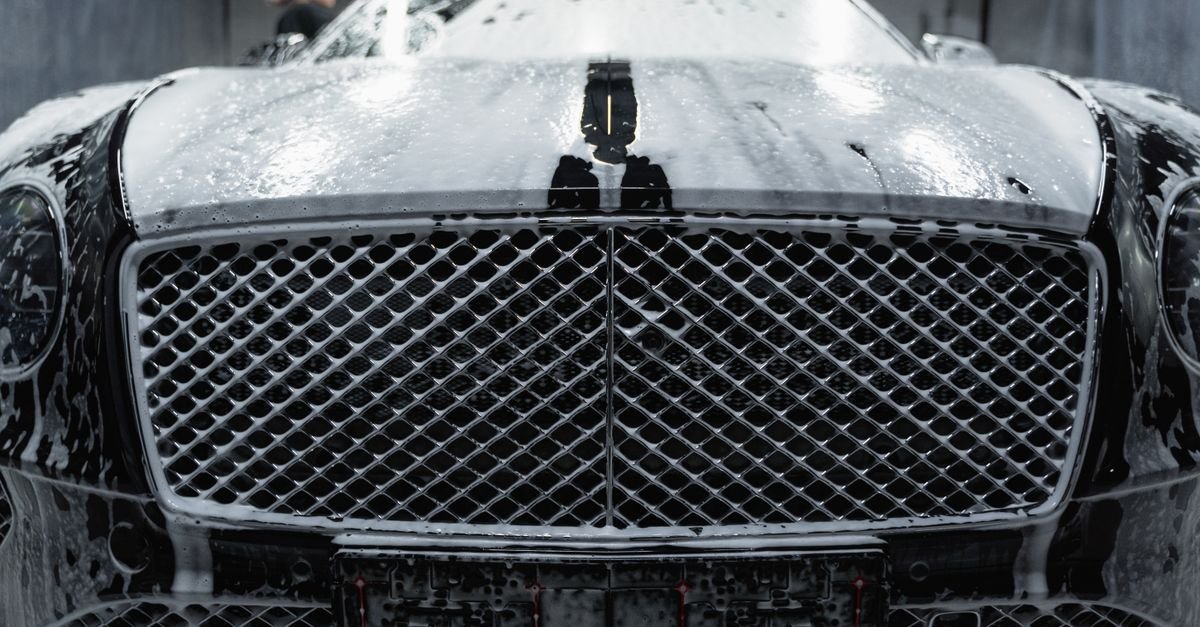
A foam cannon is a bottle, a venturi, a mesh and — the part nobody mentions — a nozzle. There is a brass orifice at the front of it, sized exactly the way the coloured tips that came with your machine are sized. MTM Hydro, which makes the Italian cannon the detailing trade treats as the default, sells those orifices as separate parts and explains why in its own words: they “are meant to allow foam cannons to be used on a variety of machines with varying PSI and GPM,” and the sizes exist “to more accurately accommodate a machine requiring a larger or smaller orifice which is estimated in the ranges of flow exceeding 4 gallons per minute or below 2 gallons per minute.”
Then it tells you how to pick one, and this is the free, checkable action nobody else on this subject publishes: “When attempting to determine the correct orifice size use a nozzle selection chart with your machine specification of GPM and PSI. You can also look at the side of the nozzles provided with your pressure washer for a number sequence.” A tip stamped 25030 is a 25-degree fan with a 3.0 orifice, so a cannon on that machine wants the 3.0 orifice — 1.1 mm — rather than the 1.25 mm one that comes installed on almost everything.
That is the mechanism behind runny foam, and it is not the soap. A standard cannon ships with a hole sized for a machine bigger than yours, and too much hole at too little flow means the mixture reaches the mesh without the velocity to whip air into it. Large wet bubbles, too much water in them, off the panel inside a minute. The thickness-versus-dwell trade and the cannon-against-gun comparison are settled over on foam cannon vs foam gun; what the orifice chart adds to it is a third option besides buying more flow or accepting a foam gun, which is to change the hole.
Two of the cheap cannons already ship the smaller orifice as a spare, so the manufacturers know. They just disagree about when to fit it. One Tool Daily listing says to use the 1.1 mm “when your pressure is below 1500 PSI”. Another Tool Daily listing, for the same 1.1 mm part, says it “creates thicker foam than the original one below 2500 PSI”. Same company, same component, two thresholds a thousand PSI apart.
Fifteen Amps Is the Ceiling on Both Numbers
Here is a check you can run on any corded machine before you buy it, using nothing but the listing’s own figures.
Power leaving a nozzle, in horsepower, is PSI multiplied by GPM divided by 1714 — a standard fluid-power identity — which in watts is roughly PSI x GPM x 0.435. This is my arithmetic rather than a manufacturer’s, and it only runs in one direction, which is the useful one: whatever a pump wastes, it cannot make more water power than the motor is fed.
Corded machines publish what they are fed. The listings here that give an amp rating give 13, 14, 14.5 or 15 at 120 volts, which is 1,560 to 1,800 watts going in. Run 1,800 watts back through the identity and you get a ceiling of about 4,100 for PSI multiplied by GPM on a 15-amp corded machine — at a hundred per cent efficiency, which no motor and pump pair has ever managed.
Nine of the forty electric listings I read advertise a PSI-times-GPM product above that ceiling, and that sounds damning and mostly is not, because three brands explain it themselves. Westinghouse states its figures as “1.76 max GPM (at lowest pressure), and 2000 rated PSI and 1.2 rated GPM” — four numbers, two of them maxima occurring at opposite ends of the same curve. Greenworks is plainer still on its 2700 PSI machine: “GPM ranges from 1.2 GPM to 2.3 GPM with included nozzles.” And its 3000 PSI model prints “Cleaning Units 3300 C.U.” on a listing headlined 3000 PSI and 2.0 GPM, a product of 6,000 — its own cleaning-units figure is 45 per cent lower than its own two headline numbers multiplied together, and sits under the physical ceiling. Nothing is hidden. It is printed in three places nobody reads together.
Carry the caveat or the check overclaims: a maximum PSI and a maximum GPM are not always offered as concurrent, so a high product on a reputable listing is likelier to be a non-concurrent rating than a lie. One listing below is the exception.
And this is the paragraph where a car turns out to be the lucky case. Everywhere else on this site, a machine whose two maxima live at opposite ends of the curve is a disappointment — a driveway wants pressure and flow at the same instant and cannot have them. A car does not. You foam at the low-pressure, high-flow end, with a big orifice open and the motor loafing. You rinse at the high-pressure, low-flow end, with a 40-degree tip and eighteen inches of air. The two halves of the wash use the two ends of the curve at different moments, so the non-concurrency that ruins a flatwork machine costs you nothing here. A car is the one job where you get to use the whole spec sheet, just not all at once.
Half the Car Machines Ship Without the Car Tip
Of the forty electric listings, twenty-five publish the nozzle angles in the box. Fourteen of those twenty-five do not include a 40-degree white tip — and several of the fourteen have the word “Cars” in the title.

The standard omission set is 0, 15, 25, turbo and soap. So the machine arrives able to strip, able to scour, able to spin a 0-degree jet in a circle and pretend it is a fan, and unable to do the gentlest thing on its own box without a second trip to the checkout. There is no link here for a white tip, because beyond the fitting there is nothing to choose between them — buy any 1/4-inch quick-connect 40-degree in the orifice size stamped on the tips you already own.
Greenworks 1800 PSI (1.1 GPM) Electric Pressure Washer, PWMA Certified. The one I would point most people at before anything bigger, and it is here for its accessory list rather than its motor: a 40-degree nozzle described in the listing as “gentle cleaning”, a soap applicator, a 20-foot hose and a 35-foot cord with inline GFCI. Rated pressure is 1,800 PSI, which lands at the top of the published vehicle window rather than well past it, and the listing carries a third-party performance certification mark, which in this category is rare enough to notice. The limitation is flow: 1.1 GPM is the lowest figure in this comparison, below the threshold MTM Hydro names for dropping to a smaller cannon orifice and barely half the only published flow requirement in the cannon aisle. Fit the 1.1 mm orifice from the start and expect to foam a panel at a time.
Finding what your own machine really flows is a separate small job, and the plate figure, the tap and the hose do not always agree — establishing your actual GPM covers it properly.
One Cannon in Twenty-One Publishes Its Flow Floor
I read every foam cannon and snow foam lance listing I could reach that attaches to a pressure washer. Twenty-one of them. The disclosure count:
- One publishes a minimum flow. Amazon Basics, and the wording is specific: it works with “a pressure washer (flow of at least 2.0 GPM and a minimum pressure of 70 bar-1000psi)”.
- Eight publish a pressure window with a floor in it, usually 1,000 to 3,000 or 1,000 to 3,600 PSI. A floor is useful. It is also half the specification.
- Twelve publish a maximum PSI and nothing else — 3,600, 4,000, 5,000. A ceiling tells you the thing will not burst, and nothing at all about whether your machine can drive it.
- One publishes no pressure or flow figure at all, and reassures you instead that it “outputs amazing foam with both electric and gas powered pressure washers.”
So the recommendation on the cannon itself is short and comes without a link: buy the one that publishes a flow floor, which at the time of writing is the Amazon Basics 1-litre cannon. Not because the brass is better, since I have no evidence it is, but because it is the only one in twenty-one that tells you what it needs — and in a category where the specification is the scarce thing, disclosure is the specification. These are small accessories rather than equipment, and there is no version of this page where I pretend you should spend more on one.
Then the part that makes the category awkward. That published floor of 2.0 GPM is above the rated flow of every machine in this article bar one, and roughly double the rated flow of the machines that come with a foam cannon in the box. Westinghouse’s cannon-included electrics publish 1.1 or 1.2 rated GPM. Sun Joe’s publishes 1.1. The one manufacturer willing to commit to a number has set it where the bundles cannot reach, and every bundled cannon publishes no flow requirement at all, so nobody is technically contradicting anybody. The mismatch is only visible if you put the two halves of the aisle side by side, which neither listing invites you to do.
Best Pressure Washer for Cars, Picked on What the Listing Admits
Four more machines, each chosen because its listing gave me enough to check, and each with the thing it gets wrong stated plainly.
Active 2.0 GPM Electric High-Pressure Washer, 1800 PSI, 15A. The pick of the page, on one line of arithmetic: it is the only machine I found whose rated pressure sits inside the published vehicle window and whose flow reaches the 2.0 GPM the one disclosed cannon asks for. Everything else here buys flow by also buying pressure you then have to avoid using. Universal threading — 3/4-inch garden hose in, M22-14mm out — so aftermarket guns, cannons and hoses fit without an adapter hunt, and the listing names a five-piston pump with replaceable parts rather than a sealed wobble plate. Two limitations. It publishes no nozzle angles anywhere, so the listing will not tell you whether a 40-degree tip is in the box. And 1,800 times 2.0 is 87 per cent of what a 15-amp supply could make with no losses, so read those as the ends of the curve rather than one operating point.
Chemical Guys PM2000 PRO Electric Pressure Washer, 2030 PSI. Here for being the only listing in forty that publishes its electrical input: “14.5-AMP 1680W MOTOR”, alongside 2,030 PSI, 1.77 GPM, a 25-foot hose and a 35-foot cord. It also answers the question the rest of the aisle ducks, in a bullet headed “WILL IT WORK WITH MY FOAM CANNON” — yes, universal connections, no adapters. Hose and cord length matter more here than they look, because a saloon is fifteen feet long and you walk round it four times. The limitation is the one its own candour exposes: those two hydraulic figures imply 1,563 watts of water power against the 1,680 watts it says are going in, which is 93 per cent, and no motor and pump pair does that. I am linking it anyway and saying so, because a listing that hands you enough to catch it beats one that hands you nothing.
Kärcher K2300PS. The one for washing the car every fortnight for a decade, and the case is the motor and the nozzle set rather than the numbers: an induction motor instead of a universal one, 2,300 PSI at 1.2 GPM, four quick-connect nozzles including the 40-degree white tip and a soap nozzle, dual detergent tanks, a hose reel, and a listing stating the performance was independently tested and certified. A car wash is the most trigger-heavy job a homeowner gives a machine — panel, mitt, panel, mitt — and what that constant stopping and starting does to a motor is argued properly elsewhere. It is the duty an induction motor exists for. The limitation is flow again: at 1.2 GPM this machine’s answer to foam is the onboard tanks rather than a cannon, which is a thinner kind of foam. A turbo nozzle is also in the box, and it has no business near a car.
Greenworks 2700 PSI (2.3 GPM Max) Brushless Electric Pressure Washer. Here for one parenthesis. The listing says “2.3 MAX GPM (GPM ranges from 1.2 GPM to 2.3 GPM with included nozzles)”, which is the most honest sentence in the category: it names the variable, gives the range, and tells you the nozzle is what moves you along it. That is the behaviour a car wants — fit the cannon or the wide tip and the machine walks itself to its high-flow, low-pressure corner. Brushless motor, cast aluminium axial pump. The limitation is the headline: 2,700 PSI is 800 past the top of the published vehicle window, so you are paying for output a car never wants, and if a car is all you own this is more machine than the job needs. Worth it if there is a driveway behind it.
Reviewed, and Deliberately Not Linked
Three listings I read in full and will not send you to. Two of them fail the check this page is built on; one of them fails something simpler.
Westinghouse ePX3050 Electric Pressure Washer, with Foam Cannon. The disclosure here is genuinely good — “2100 max PSI and 1.76 max GPM (at lowest pressure), and 1800 rated PSI and 1.2 rated GPM” — and I used Westinghouse’s own wording earlier to explain how the curve works. The problem is the box. The nozzle set is 15 degrees, 25 degrees and turbo, on a machine titled for cars, so it cannot be set up for paint without a second purchase. And the included cannon runs on 1.2 rated gallons a minute against the 2.0 GPM the only cannon that publishes a floor asks for. Both halves of the car kit are the wrong size for the car. Not linked, and the same reasoning applies to the ePX3500 sibling, which ships 0, 15, 25 and turbo under a title that also begins with cars.
Baococo Electric Pressure Washer, 4500PSI 2.8 GPM. The only outright arithmetic failure in forty listings, and it is not close. 4,500 PSI times 2.8 GPM is 12,600, against a ceiling of roughly 4,100 for anything running off a 15-amp socket at perfect efficiency. That is three times over, the listing publishes no amp rating or wattage anywhere, and there is nothing in it offering the non-concurrent reading that rescues the Westinghouse and Greenworks figures. The second problem is the instruction manual written into the bullets: it recommends the 0-degree red tip for “wheel wells, crevices”, which is the narrowest jet the machine can make, aimed into a wheel arch full of liner clips, sensors and flexible covers. Reviewed as a warning. No link.
Ryobi Automotive Pressure Washer. Named for exactly this job, and the listing publishes no PSI, no GPM, no amp rating, no model number and no nozzle list. Five bullets of adjectives — “strong, consistent water pressure”, “powerful water flow”, “high-quality materials” — and not one figure to check any of them against. There may be a decent machine behind it. I cannot tell you, and neither can the page: you cannot size a cannon orifice to it, you cannot tell whether the white tip is included, and you cannot look the model up because the model is not given. A listing that publishes nothing is not asking you to trust the machine. It is asking you to trust the listing. No link.
FAQ
What PSI pressure washer is best for washing a car?
Anything that can be held at 1,200 to 1,900 PSI on the panel, which is nearly every corded machine on sale. The published safe window for vehicles is 1,200 to 1,900 with a 25- to 40-degree tip, and because fan angle and distance both reduce what actually lands, a machine rated 1,800 to 2,300 PSI sits inside that window at normal working distance. No car manufacturer publishes a pressure figure of its own; Honda’s guidance is to keep sufficient distance and take particular care around the windows.
Do I need 2 GPM for a foam cannon?
The only foam cannon listing that publishes a flow requirement asks for at least 2.0 GPM and 1,000 PSI. Most domestic electric machines publish 1.1 to 1.4 rated GPM, so most people are running a cannon below the only stated floor in the category. The fix is usually not more soap and not a bigger machine — it is the smaller 1.1 mm orifice, which MTM Hydro sells separately and two budget cannons already include as a spare.
Why does my foam slide off the car before I can rinse it?
Because the orifice in the cannon is sized for more flow than your machine has. Too large a hole at too little flow means the mixture reaches the mesh without the velocity to entrain air, so the bubbles come out large and wet, carry too much water and drain under their own weight. Fit the smaller orifice, half-fill the bottle with warm water, and keep the car in shade.
Does a car pressure washer come with the right nozzle?
Often not. Of twenty-five electric listings that publish their nozzle angles, fourteen leave out the 40-degree white tip, including several titled for cars. The standard set is 0, 15, 25, turbo and soap. Read the accessory bullet before you buy, and add a white tip in the orifice size stamped on the tips the machine does ship with.
Should I buy a machine with a foam cannon in the box?
Only if its rated flow is high enough to drive one. A cannon bundled with a 1.2 GPM machine will foam, thinly, and the cannon is a small accessory you could buy on its own with a known orifice size. Buy the machine for its flow, its nozzle set and its hose and cord length, then buy the cannon that tells you what it needs.
Flow Buys the Foam and the Tip Buys the Paint
If you remember two numbers from this page, make them 2.0 and 1.1. Two gallons a minute is the only flow requirement anyone in the foam cannon aisle has committed to in writing, and 1.1 millimetres is the orifice that makes a cannon work on the machines that cannot reach it.
Everything else here was found by reading rather than by testing: that the fuel flap is on Honda’s list and the paint is not, that fourteen of twenty-five nozzle sets omit the tip the paint needs, that one cannon in twenty-one says what it wants, and that a 4,500 PSI machine on a wall socket is asking for three times the water power the socket can hand it. None of that required a test bay. It required opening forty listings instead of three.
Buy the flow, check the accessory bullet for a white tip, fit the small orifice, and spend the money you saved on pressure you were never going to use on a second bucket and a grit guard.