Last Updated on October 4, 2026 by Umar Farooq
The best surface cleaner for pressure washer owners is the widest deck your pump can still spin at full speed, which for most homeowners is a 15-inch head rather than the 20-inch one stacked at eye level — because a deck too wide for your flow slows down, stops blending its own passes, and stripes the slab exactly the way the wand you have just put down was striping it.
You know the afternoon. The first pass looked excellent. The second pass looked excellent and slightly different, and by the time you stepped back far enough to see the whole driveway it had turned into corduroy. So you went over the pale bits, which made them paler, and now the thing has a history.
That is not a technique failure and it is not fixable by trying harder, because the three variables involved — nozzle height, travel speed and overlap — are not things a human arm holds steady for forty minutes. A rotating bar inside a shroud holds all three for you. Buying the wrong one hands two of them straight back.
So this page is about the specification that decides it, which is flow, and about five other specifications that decide whether the head is still working in three years. It is not about how the tool works: that is written up in full on the component page, and I would rather link it than re-argue it.
Striping Is Geometry, and You Can Buy Your Way Out
Everything a surface cleaner sells you is a consequence of two design choices: the nozzles sit at a height set by hardware rather than by your judgement, and they move along a path set by a bar rather than by your shoulder. Take the human out of both and the three drifting variables stop drifting.
That is the whole appeal, and the catch is that the bar has no motor. It is driven by the reaction force of its own two jets, which means it is driven by flow, which means the buying decision is a flow decision from the first page of the catalogue onward. How a surface cleaner is actually built, and why flow rather than pressure governs it is the component explanation, with the swivel, the bar, the skirt and the stall mechanism laid out properly. Read that one if you want the physics; everything below assumes it.
The buying consequence is the part nobody prints on a box: a surface cleaner is the only pressure washer accessory that gets worse as it gets bigger. A nozzle too large wastes pressure. A hose too long wastes a little flow. A deck too wide reproduces the exact fault you bought it to cure, and does so consistently, which is somehow more insulting.
Too Much Disc for Too Few Gallons
Here is the mistake, and I have now read it made in both directions by two manufacturers who make the equipment.
Alkota, which builds pressure washers, publishes sizing guidance saying a 4 GPM machine takes a 12 to 20-inch head, 5 to 8 GPM takes 24 to 30 inches, and that 2 to 3 GPM machines are “simply not big enough for a surface cleaner attachment.” Meanwhile Simpson, which builds both machines and heads, sells a 15-inch surface cleaner it rates down to 1.8 GPM. One says the tool starts at 4 GPM. The other sells you one at under half that.
Both are telling the truth about different products, and the reader standing in the aisle has no way to know that, because the number on the front of the box is inches.
The trade’s rule of thumb — 4 to 5 inches of deck per GPM — is already covered on the component page, along with what a wider deck costs you in walking pace. What is not covered there is what happens on the wrong side of it, and the industry has a word for it: shadowing, or striping. Individual jet paths stop merging and start being visible, in arcs, permanently, at a constant rate. The pale curved bands on a professionally cleaned car park are almost always this, and they are the reason an oversized head is a worse mistake than an undersized one.
This site already publishes the figure that makes the point: Simpson’s recommended minimum for its steel 15-inch head is 2,200 PSI and 2.3 GPM, not a diameter and a wish. That is a floor, which is the number consumer listings almost never give you, and the whole buying decision turns on finding it.
Same 15 Inches, Two Different Flow Floors
This is the thing that convinced me diameter is close to useless as a buying signal, and it comes from one manufacturer’s own catalogue.
Simpson lists two 15-inch universal surface cleaners. Both are 15 inches. Both carry a powder-coated steel shroud, two stainless nozzles and a quarter-inch quick connect. Both top out at 3,700 PSI. And their published minimums are not the same: the older 80165 wants 2,200 PSI and 2.3 GPM, while the current 80299 is rated from a recommended minimum of 1,500 PSI and 1.8 GPM.
Same width. A floor half a gallon apart. The difference is not the disc — it is the orifice size in the two tips, which is what actually sets how much water the head needs to spin and how hard each jet lands. The deck is a shroud with wheels on it. The nozzles are the specification.
So the rule I would give anyone shopping is short: ignore the inches until you have found the minimum GPM, and if the listing does not publish one, treat that as a missing spec rather than a lenient one. Kärcher publishes “up to 4.0 GPM” for its 15-inch metal head and no floor at all. SurfaceMaxx’s own selection guide gives PSI windows for every head in its range and not one flow figure. The governing variable is frequently the one left off the page, which is a strange way to sell a flow device. And where it is on the page it is not always sane: an 18-inch stainless head currently listed on Amazon publishes a required minimum of 2,000 PSI and 1.8 GPM, a lower floor than Simpson claims for a deck three inches narrower. A published floor beats no floor. It is still not a promise that 1.8 gallons will drive 18 inches of deck without striping.
I checked how common the omission is while choosing the heads on this page, by pulling live listings rather than brochures. Of roughly two dozen surface cleaners, four published a minimum GPM, and three of those four were Simpson’s. That is why Simpson appears twice below, and it is not brand loyalty: it is the only maker in this category that routinely prints the number that governs the tool.
If you own an electric machine or a small gas unit in the 1.8 to 2.2 GPM band, a head with a genuinely low published floor is the one worth having, and it will be an 11, 12 or 15-inch unit rather than anything wider. Below about 1.8 GPM, no manufacturer I checked publishes a head for you, and a wand with a 25-degree tip is the honest answer.
Powerhorse 12in. Stainless Steel Surface Cleaner. The smallest deck I could find that is built like a tool rather than a toy: a 12-inch cleaning path, two rotating nozzles, a heavy-duty stainless steel casing, a splash-free skirt, rated to 4,000 PSI. Twelve inches is also the width the trade rule points a 2 GPM machine at, which is why this is the shape to be shopping for on a strong electric or a small gas unit rather than the 20-inch stacked at eye level. The limitation is exactly the subject of this page: Powerhorse publishes a pressure ceiling and no flow requirement whatsoever. There is no minimum GPM anywhere on the listing, so you are buying on deck width and the trade rule rather than on anything the manufacturer has committed to in writing. At 12 inches that is a defensible bet. At 18 it would not be.
Finding your machine’s real number is its own small job — the plate figure, the supply at the tap and the hose you are using do not always agree, and what GPM pressure washer you actually need and how to establish what you have covers that properly.
Jet Count, Bar Material, and Tips You Can Replace
Three specifications live under the shroud, and only one of them is ever advertised.
Jet count. Two is standard. Three and four-jet bars exist on commercial heads, and the reason is not more cleaning — it is more overlap per revolution at a given bar speed, which is what a hot-water contractor wants on a grease-loaded floor. More jets also split the same flow more ways, so a four-jet bar on a domestic machine is four weak jets instead of two adequate ones. On anything under 4 GPM, two is correct.
Bar material. Stainless or anodised aluminium. The bar is a pressure vessel spinning at speed with a nozzle threaded into each end, and the failure that matters is thread damage at the nozzle boss rather than the tube splitting. Aluminium bosses do not forgive a long wrench. Stainless does, a bit.
Whether the tips come out. This is the one to check and nearly nobody does. Screw-in tips are a consumable you can replace in ten minutes. Pressed-in consumer nozzles are not meant to come out at all, and the manufacturer will tell you so if you look — which kind of head you own decides how you clear a blocked jet, and finding that out with a spanner already in your hand is the wrong order.
A head with serviceable tips and an available swivel rebuild kit is a tool. A sealed head with pressed nozzles is a consumable with a handle. Both are legitimate purchases; only one of them is still a purchase in five years. If you already own the head and the bar has gone slow or the swivel is weeping, parts are usually the cheaper path than a whole new disc.
General Pump 2103220 Swivel Assembly with Grease Fitting. This is what a rebuildable head looks like from the parts side: the rotary union for General Pump’s Hammerhead surface cleaners exists as its own part number, orderable on its own, and it carries a grease fitting, so the bearing behind the seal can be fed rather than left to run itself dry. If your bar has slowed or the union has started to weep and your head is one of these, this is a repair rather than a replacement. Two limitations, stated plainly. It fits the Hammerhead family and nothing else, and a sealed consumer swivel has no equivalent part and never will. And the listing is bare: no bearing type, no seal compound, no temperature rating, no flow figure. What you are buying is the fact that it is orderable at all, which in this category is most of the argument.
Plastic Shroud, Steel Base, or Stainless Throughout
Housing material is sold as a durability story and it is really a temperature story.
Simpson’s steel-shrouded 15-inch heads are rated to a maximum inlet temperature of 140°F and marked cold water only. Kärcher’s FR 50, a commercial 19.69-inch unit, publishes a hot-water-resistant stainless steel housing and a maximum temperature of 176°F alongside 3,625 PSI and 475 GPH — note the unit, because that is 7.9 GPM wearing a different badge, and a spec sheet that makes you convert is a spec sheet worth reading twice.
The reason those two numbers differ is not the metal. It is the elastomers in the swivel behind it. Standard rotary seals give up above about 140°F, and hot-water duty needs faces and O-rings rated to 250°F and beyond. So “stainless” on a surface cleaner is shorthand for a whole specification — seal compound, bearing type, skirt material — and buying the stainless deck without the rated swivel buys you a shiny disc that still fails at the one moving joint.
The honest breakdown, with no hedging:
- Plastic or polypropylene shroud. Light, cheap, and fine for a driveway twice a year with cold water. It will craze in UV eventually and it does not love being dragged over a kerb.
- Powder-coated steel. The homeowner default. Rigid, heavier, and the coating is what rusts first — usually at the skirt rivets.
- Stainless throughout. Worth it for hot water, weekly use, chemical work, or outdoor storage. Not worth it for a once-a-season slab, where you are buying mass you then have to carry.
If you run hot water, or you are cleaning grease rather than algae, the rated stainless head is the only one that survives the duty — and the rating has to be printed rather than inferred from the finish.
BE Power Equipment 24in. Whirl-A-Way Stainless Steel, 85.403.010. Rare in this category, and the reason it is here: the listing publishes the numbers that actually decide the purchase. Stainless steel housing, hot or cold water, 4,000 PSI, a 180°F temperature rating, 8.0 GPM, and the nozzle set given by its own part number — which tells you the tips are a consumable you can order rather than a sealed fitting. For a hot-water rig lifting grease off a workshop floor, that is the spec sheet you want to see before you spend anything. The limitations are size and who it is for: 24 inches at 8.0 GPM is a trailer-mounted machine’s head, not a 4 GPM homeowner’s, and a four-figure accessory is a business expense. Note too that the bare 8.0 GPM never says whether it is the floor or the ceiling. And for the record, Simpson’s powder-coated steel 20-inch hot-water head publishes a higher maximum temperature than this one, at 212°F, which is further proof that the rating lives in the swivel’s elastomers and not in the shell.
What the Casters and the Swivel Are Doing Down There
Two components nobody compares, and both of them decide what the finish looks like.
The casters are not for pushing. They set the nozzle standoff, which is the single variable a wand cannot hold, and anything that changes that height changes the impact. Three points of contact is more stable on a crowned driveway than four; a floating or sliding skirt holds height on an uneven slab where a hard caster rides up on a high spot and lets the jets reach. Kärcher specifies non-marking swivel casters on the FR 50, which sounds like detailing and is not: a hard black wheel laid onto wet, freshly cleaned pale concrete leaves a grey line, and you will find it exactly where you cannot get back to.
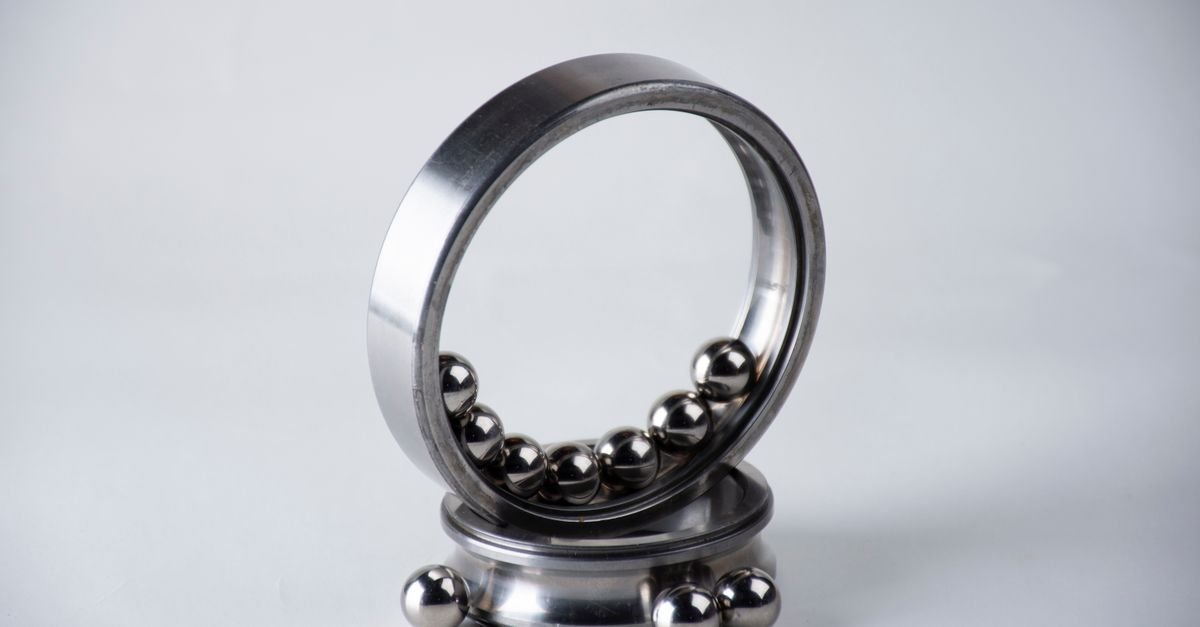
The swivel is the one part that has a service life. The rotary union carries pressurised water from a stationary fitting into one turning at two thousand revolutions a minute or more, and professional units do it on a hardened shaft with high-load ball bearings and a tungsten carbide or ceramic seal stack. Consumer units run bushings instead and, as the trade puts it plainly, will not survive an eight-hour day. If the spec sheet says “double ceramic bearings”, as Kärcher’s does, someone has thought about the part that wears.
Two things to look for on a listing, neither of which appears in the headline:
1. Is the swivel a named, orderable part? If it is, the head is rebuildable. If the parts diagram stops at “surface cleaner, assembly”, it is not.
2. Is there a weep hole? A small drain port beside the swivel is a designed warning light, not a leak. Water appearing there means the seal kit is due now, before the water reaches the bearing grease.
Buying for the bearing rather than the badge is unglamorous and it is the difference between a head that lasts a decade and one that develops a wobble in its second summer.
A Vacuum Port Buys Containment and Costs Flow
A vacuum-port head has a second set of outlets around the skirt that connect to a wet vacuum, so the dirty water leaves through a hose instead of across your lawn. These are sold to contractors and increasingly to homeowners with a storm drain at the bottom of the drive, and the specification that matters is not the port size. It is the flow window.
Bull Dog Pro Sirocco publishes capture figures per size, and they are the most useful numbers in this whole category: its 12-inch vacuuming head takes 3 to 4 GPM for 98% capture and needs 90 CFM of vacuum, while the 21-inch takes 5.5 to 6.5 GPM and needs 170 CFM. Read that again, because it is a second flow floor stacked on the first. The head has a window to spin, and the capture has a narrower window inside it — too little water and the bar is lazy, too much and you are outrunning the vacuum and the overspray escapes anyway.
Hydro Tek, which builds the industrial water vacuums these pair with, states the purpose without any marketing around it: its vacuums “put you in control of where the waste water from your pressure washing equipment goes. This is especially important when cleaning up oil or working with cleaning chemicals that could harm the environment.”
That is the real reason to buy one, and it is a legal question as often as a tidiness question — what the runoff rules actually require, and where captured wash water is allowed to go is the piece to read before you buy the hardware, because a drum of recovered water with nowhere to go is not an improvement on a puddle.
You also need the vacuum, which is usually the larger purchase and almost never mentioned in the same listing. If the containment is the point — oil, lead paint, a kerb that drains straight to a gully — buy the port built into the head rather than trying to add recovery afterwards.
Erie Tools 21in. Stainless Steel Surface Cleaner with Vacuum Port. A 21-inch stainless steel housing with the recovery port already in the skirt, a dual-handle wand with its own trigger gun, a 3/8-inch quick connect inlet, and a published maximum water temperature of 212°F — which matters, because containment work is usually hot-water work and most cold-rated heads stop around 140°F. If you have the wet vacuum and the disposal route sorted, this is the head that completes the set. The limitation is this article’s whole subject in concentrated form: the listing publishes 4,000 PSI and not one flow figure. No minimum to spin the bar, and nothing at all about the capture window that Bull Dog’s own figures show is the narrower of the two constraints. On a 21-inch vacuuming head that is two numbers missing rather than one, and you will have to establish both yourself, against your machine’s data plate and your vacuum’s CFM.
The Perimeter, the Steps and the Last Inch
Now the part the product pages leave out, because it is three jobs the disc hands straight back to you.
The perimeter. A shroud cannot reach the last inch against a wall, a garage threshold, a kerb or a planting bed. You will finish every job with a wand and a 25-degree tip, working a narrow border, at a different standoff from the disc. Blending that border to the field is a real skill and it is the commonest place a surface-cleaned slab still looks wrong.
Anything not flat. Steps, slopes steeper than a gentle fall, gravel, and every vertical surface. A head sold for walls exists; a head sold for flatwork used on a wall is a way to lose a skirt.
The chemistry. This is the honest limit, and it is the one that sells the most unnecessary heads. A surface cleaner is a mechanical even-ness device. It does not dissolve anything. Organic staining, rust, tyre marks and oil all still need the right product and the dwell time to go with it, and a slab that was grey because it is old will still be grey, very evenly, afterwards. If an afternoon of wand work left dark patches rather than stripes, the problem was never your arm.
And one more thing a disc genuinely cannot do: unstripe a striped slab. Marks that are shading will even out when the whole plane gets the same treatment. Marks that are etched are grooves, and a surface cleaner will clean the grooves.
Best Surface Cleaner for Pressure Washer Owners, Sorted by GPM
Four machine classes, four answers. Find your rated flow first; everything else follows from it.
Electric, 1.2 to 1.6 GPM. Nothing. There is no head with a published floor you meet, and the one you buy will draw slow arcs on your patio. Keep the wand and spend the money on detergent and a pump-saver bottle. This is the recommendation I expect to be argued with, and it is still the right one.
Small gas or a strong electric, 1.8 to 2.4 GPM. An 11 to 15-inch head with a published minimum at or below your flow. The 15-inch with a 1.8 GPM floor is the single most useful product in this category for homeowners, because it is the only common size that is honestly specified that low — and I could not find it listed on Amazon at all, which is why the head reviewed earlier for this band is a 12-inch instead. Work the slab in strips and accept that it is faster than a wand rather than fast.
Mid-size gas, 2.5 to 3.4 GPM. A 14 to 16-inch head, and this is where the tool stops being a compromise. You are above every published floor, the bar runs at the quick end of its range, and the finish is genuinely even. Buy serviceable tips and a named swivel.
Simpson Cleaning 80165 Universal 15in. Steel Surface Cleaner. This is the head whose numbers made the argument at the top of this page, and it is still the cleanest specification in the consumer range: a published window of 2,200 PSI and 2.3 GPM minimum, up to 3,700 PSI and 3.4 GPM maximum. A 2.5 to 3.4 GPM machine sits inside that window end to end, which is the condition under which this tool stops being a compromise. Powder-coated steel shroud, two stainless nozzles, a quarter-inch quick connect that fits most wands, and a nozzle cleaning tool in the box — included because the tips are meant to be maintained rather than thrown away with the head. The limitations are printed too, which is rather the point: cold water only, and 3.4 GPM is the ceiling, so if you are about to buy a 4 GPM machine, buy the head afterwards.
4 GPM and up. 16 to 20 inches, stainless, with ball bearings in the swivel. At 4 GPM the trade rule allows 20 inches and the sensible purchase is 16 to 18, because a deck run near its ceiling cleans thinner and a deck run in the middle of its window cleans evenly and gives you headroom if you ever upgrade the pump. There is a harder reason to stop short of 20 inches than walking pace, and it came out of reading the listings rather than the catalogue: Simpson’s 20-inch industrial head publishes a maximum of 4,500 PSI and 3.8 GPM, so a 4 GPM machine is already over its printed flow ceiling. The inches went up and the usable flow went down.
Simpson 16.5in. Stainless Steel Surface Cleaner, 80625. The head that fits this band on its own published figures: a window of 2,000 PSI and 2.5 GPM minimum up to 4,000 PSI and 4 GPM maximum, on a 16.5-inch deck — which is the 16 to 18 inches the trade rule asks for at 4 GPM rather than the 20 the shelf pushes at you. Stainless steel shroud and stainless nozzles, a quarter-inch quick connect, and a nozzle cleaning tool, so the tips stay a serviceable part. The limitations are real and both are on the listing: it is cold water only with a 140°F maximum, and 4 GPM is its published ceiling rather than the middle of its window, so a 4 GPM machine is at the top of the range and a future 4.5 GPM machine is outside it.
FAQ
What size surface cleaner do I need for a 4 GPM pressure washer?
The trade rule of 4 to 5 inches of deck per GPM puts a 4 GPM machine on 16 to 20 inches, and Alkota’s published guidance says 12 to 20 inches for that flow. Sixteen to eighteen is the better buy. A 20-inch head at 4 GPM is running at the thin end of its window, so you walk slower to get the same result and you have no margin if the supply drops.
How do I find my pressure washer’s GPM before buying a head?
The data plate on the frame or the pump, not the box and not the listing title. Then sanity-check the supply, because a pump cannot deliver what the tap and hose are not giving it. A machine rated 3.0 GPM fed through a long, narrow garden hose on a half-open tap is not a 3.0 GPM machine that afternoon, and the head will tell you so by slowing down.
Are surface cleaner swivels replaceable, or do I buy a new head?
It depends entirely on the head, which is why it is a buying criterion rather than a repair question. Professional units are built around a rebuildable rotary union with an orderable seal kit. Sealed consumer swivels are replaced outright once they leak. Check whether the swivel appears as its own part number before you buy, because by the time it weeps the answer is fixed.
Do I need a vacuum port surface cleaner for my driveway?
For a normal domestic slab draining onto grass, no. The port, the hose and the wet vacuum are a significant outlay for a benefit you may not need. Where it becomes the right tool is oil, lead paint, a drive that falls straight to a storm drain, or any work where the wash water has to be collected rather than directed. The hardware is the easy half; the disposal route is the hard half.
Should I buy a surface cleaner or just hire one for the weekend?
If the slab is a one-off and you have no second flat area, hiring is the better arithmetic, and so is hiring the machine with it so the pair are matched. Buying makes sense when you have a drive plus a patio plus a garage floor, because the setup time stops being the dominant cost. The thing not to do is buy a head for a machine you are about to replace, since the flow floor you are shopping against is the number most likely to change.
Will a surface cleaner work with a hot water pressure washer?
Only one rated for it, and the limit is in the seals rather than the shell. Cold-water heads commonly cap out around 140°F, while a hot-water-rated unit will publish something closer to 176°F and run elastomers specified well above that. Putting hot water through a cold-rated swivel does not fail dramatically. It fails three weeks later, as a weep.
Too Narrow Is a Slow Afternoon; Too Wide Is Stripes
Those two sentences are the entire decision, and they are not symmetrical. An undersized head costs you time, which you can choose to spend. An oversized one reproduces the fault you were trying to cure, on a surface you then have to live with, and no amount of going over it again will blend an arc that the bar is too slow to blend itself.
So the order is: find your rated GPM, find the head’s published minimum GPM, and only then look at the diameter. If a listing will not print the floor, that is information about the listing rather than permission to guess. Two manufacturers disagree by more than two gallons about where this tool even starts, and the only person in the transaction who can settle it is the one holding the data plate.